
LEAD ANALYST
Utkarsh Khirodkar is a Lead Market Research Analyst at MetaStat Insight, specializing in market intelligence, technology sector assessments, and competitive strategy.

Explore how major players like Honeywell and Siemens influence the Wireless Gas Detectors market through innovation and compliance.
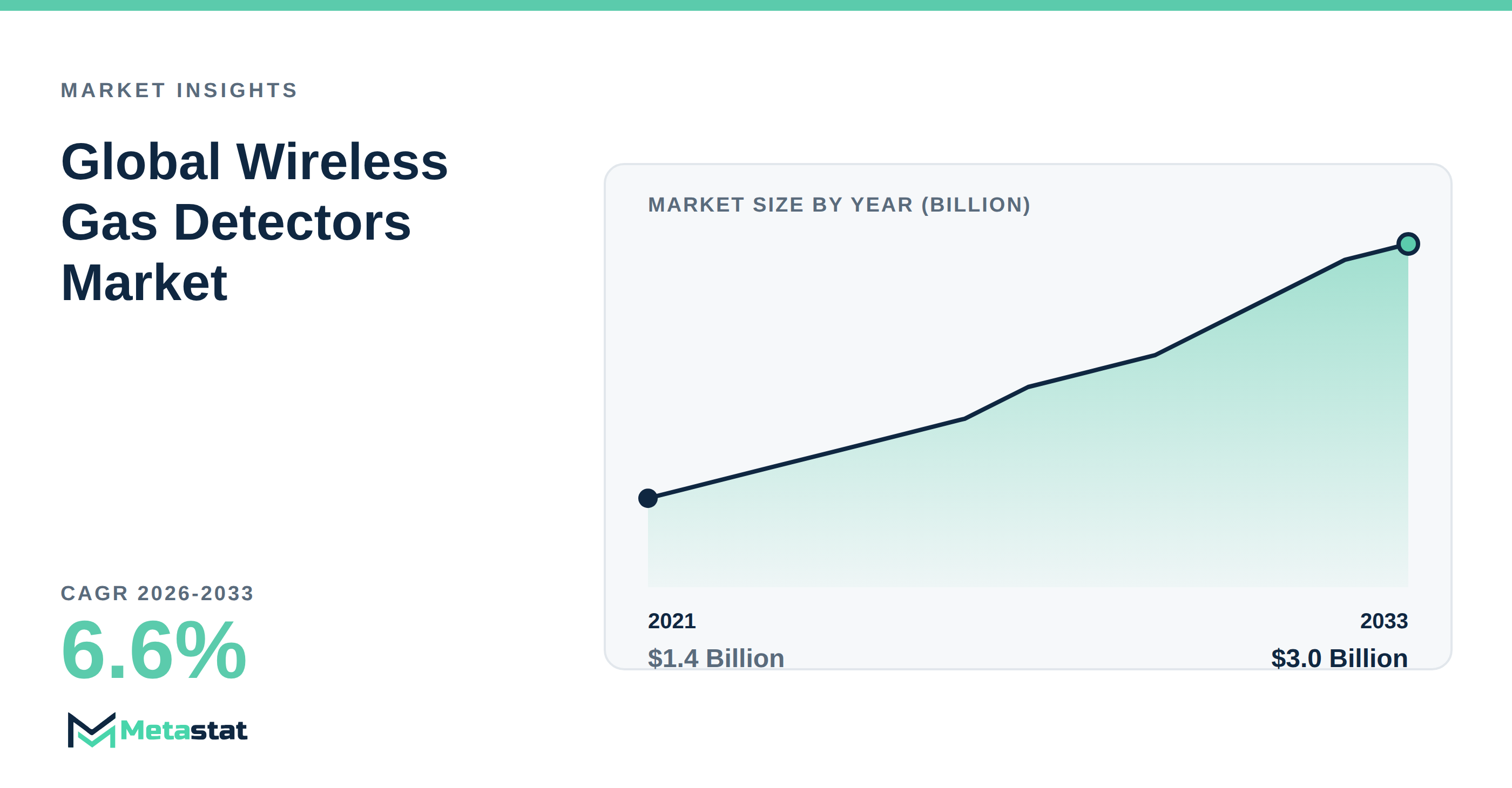
The Wireless Gas Detectors market has experienced significant growth and transformation in recent years, driven by technological advancements, regulatory compliance, and increasing safety concerns. This blog outlines the competitive landscape of the market by highlighting key players and their respective positions, shedding light on what factors determine their success in this evolving industry.
Honeywell International Inc distinguishes itself in the Wireless Gas Detectors market due to its commitment to innovation and adherence to strict safety regulations. The company invests heavily in research and development, ensuring its products meet the evolving demands for safety and efficiency across various sectors, particularly in oil and gas. This focus helps Honeywell maintain a competitive edge while addressing the increasing demand for effective gas detection systems.
Drägerwerk AG & Co. KGaA aligns its product development with rigorous regulatory standards, thereby enhancing its reputation in the Wireless Gas Detectors market. Targeting high-risk industries, including chemical and petrochemical sectors, where stringent safety regulations dictate the need for reliable gas detection solutions, strengthens Drägerwerk's market position. This alignment secures their market share and builds trust among clients reliant on compliance with safety regulations.
MSA has positioned itself because a leader in the Wireless Gas Detectors market by prioritizing advanced sensing technologies. The company integrates innovations including electrochemical sensors and non-dispersive infrared (NDIR) technologies into its products. These advancements enhance detection accuracy and ensure rapid response times, making MSA a preferred choice for industries focused on safety and operational efficiency. This strategic positioning enables MSA to capture growth opportunities effectively.
Emerson Electric Co. enhances its offerings in the Wireless Gas Detectors market by leveraging Internet of Things (IoT) capabilities. By integrating connected systems and data analytics into its detection technologies, Emerson enables real-time monitoring and alerts that support proactive safety measures. This strategy attracts businesses seeking comprehensive solutions for gas monitoring, reinforcing Emerson’s position in an increasingly digital industrial environment.
ABB emphasizes sustainable practices in its product development within the Wireless Gas Detectors market. The company recognizes the growing environmental concerns and regulatory requirements that necessitate eco-friendly solutions. By concentrating on sustainability, ABB not only meets current compliance needs but positions itself favorably for future growth, addressing the increasing industry demand for green technologies.
Siemens improves operational efficiency within the Wireless Gas Detectors market by incorporating advanced analytics and automation into its offerings. The company's emphasis on data management and predictive maintenance enables clients in various sectors to streamline their processes and enhance safety protocols. This commitment to operational improvement attracts customers looking for reliable and effective gas detection systems, facilitating their continued expansion in the market.
Teledyne Gas and Flame Detection offers a diverse range of wireless gas detectors tailored for various applications, including residential and commercial sectors. This product diversity caters to unique customer needs, positioning Teledyne because a versatile player in the market. By adapting its product line to meet different regulatory and safety requirements, Teledyne enhances its appeal across multiple industries, fostering broader adoption of its technologies.
The competitive dynamics within the Wireless Gas Detectors market are heavily influenced by innovation, regulatory compliance, and the integration of advanced technologies. Companies including Honeywell, Drägerwerk, and MSA lead the charge in adopting these trends, ultimately shaping the market's trajectory because it responds to evolving safety standards and technological advancements.
The full analysis is in Global Wireless Gas Detectors Market.
Tags
LEAD ANALYST
Utkarsh Khirodkar is a Lead Market Research Analyst at MetaStat Insight, specializing in market intelligence, technology sector assessments, and competitive strategy.

PRINCIPAL CONSULTANT - ENTERPRISE AI & EMERGING TECHNOLOGIES
Banking & Finance · Electronics and Semiconductor · Energy and Power · Healthcare IT · Information & Technology · Professional Services
Vijay Gunti is a Principal Consultant at MetaStat Insight, bringing over two decades of experience across enterprise digital transformation, technology strategy, and intelligent systems.

PRINCIPAL CONSULTANT - QUALITY SYSTEMS & COMPLIANCE
Electronics and Semiconductor · Machinery & Equipment · Professional Services
Omkar Phadtare is an Industry Consultant at MetaStat Insight, specializing in quality systems, regulatory compliance, and standards benchmarking to drive data-driven market intelligence and strategic industry research.

ENERGY & INFRASTRUCTURE INDUSTRY CONSULTANT
Automotive and Transportation · Electronics and Semiconductor · Energy and Power · Machinery & Equipment
Saurabh Vasant Ganvir consults for Energy & Infrastructure Industry at MetaStat Insight, specializing in renewable energy, solar EPC, and electric vehicle (EV) infrastructure markets.

LEAD CONSULTANT - COMMUNICATION, TELECOM, AND IT
Electronics and Semiconductor · Information & Technology · Machinery & Equipment · Professional Services
Ravindra Sathe Consultants for Communication, Telecom, and IT at MetaStat Insight. He leads the firm's industry research initiatives across telecommunications infrastructure, digital connectivity, enterprise networking, and emerging information technology domains.