
Explore the key drivers transforming the Smart Manufacturing market as it evolves towards a projected value of USD 1,114.3 billion by 2033.
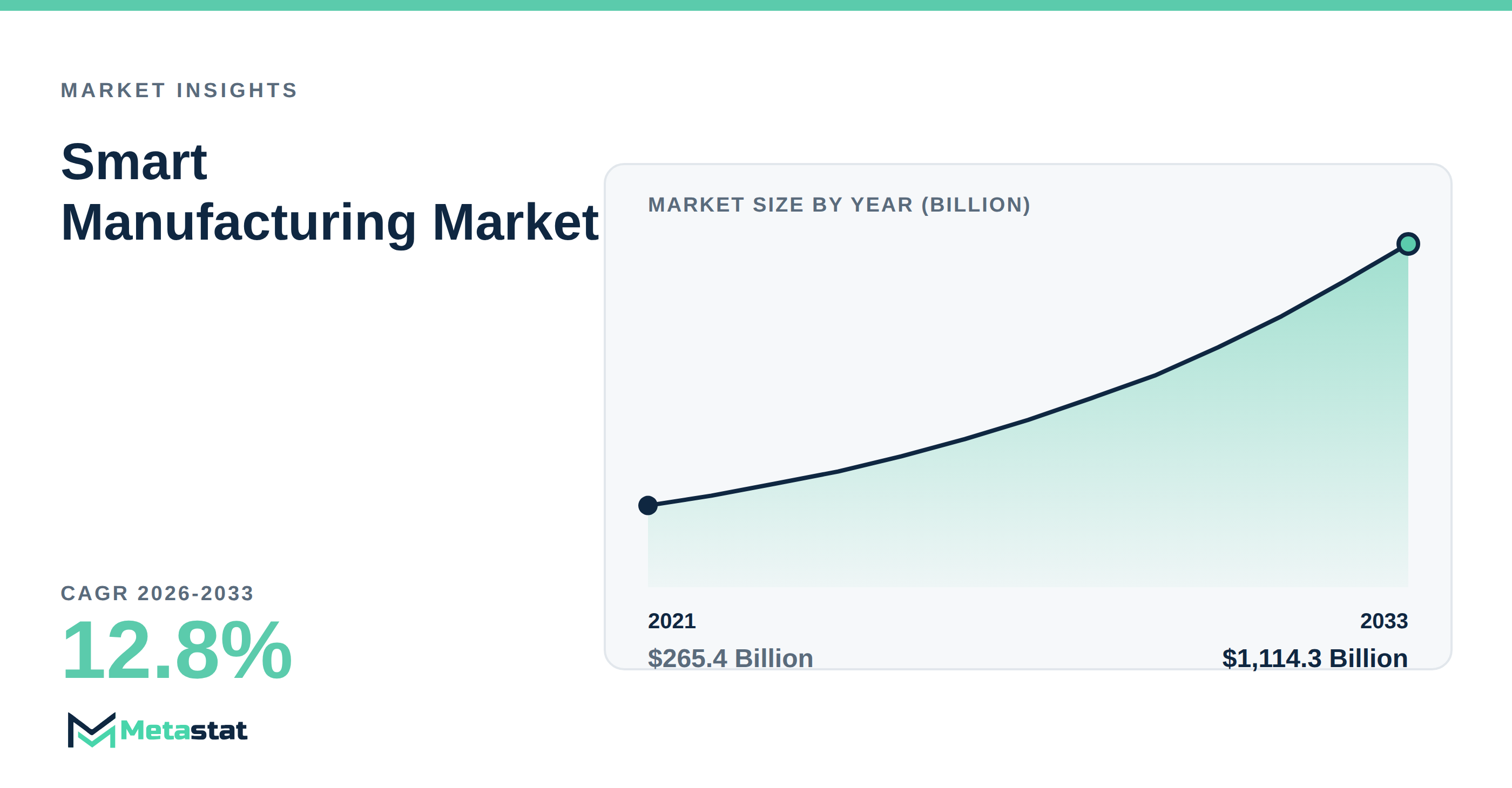
The Smart Manufacturing market is experiencing significant transformation, influenced by technological advancements and evolving operational needs. The market is projected to grow from USD 425 billion in 2025 to USD 1,114.3 billion by 2033, reflecting a compound annual growth rate of 12.8%. Below are six critical factors shaping this market.
1. Favorable capital investment environments drive growth
Investment environments have a profound impact on the growth of the Smart Manufacturing market. Economic indicators including GDP growth and increasing venture capital foster conditions ripe for technological advancements and digital transformation. Enhanced public-private collaboration boosts manufacturers' capacity to innovate and adopt cutting-edge technologies, all of which improve operational efficiency. Industries that prioritize productivity and cost-control initiatives are set for strong growth, expected to achieve a CAGR of 12.8% from 2025 to 2033.
2. Digital transformation accelerates
Digital transformation serves because a key driver of growth within the Smart Manufacturing market. Investments in automation, artificial intelligence, and sophisticated software solutions are crucial for maximizing operational efficiency. Industries including automotive and healthcare are increasingly adopting these technologies to optimize their processes and enhance production agility. The shift towards utilizing real-time data and engaging in predictive analysis improves supply chain management and enriches decision-making capabilities. This digital leap is projected to significantly boost market growth.
3. Regulatory compliance presents challenges
Regulatory compliance is a notable challenge for the Smart Manufacturing market. The tightening of regulations in various regions escalates operational costs and demands significant resources for adherence. Compliance requirements lead to implementation delays, limiting manufacturers' ability to innovate swiftly. Macroeconomic elements like inflation and geopolitical tensions exacerbate these challenges by impacting supply chain reliability. Companies navigate these complexities to develop sustainably while capitalizing on emerging opportunities in the market.
4. Geopolitical tensions disrupt supply chains
Geopolitical tensions introduce considerable risks for the Smart Manufacturing market, especially for sectors that rely on global supply chains. Trade imbalances and tariff disputes raise operational costs and create uncertainty. The rapid evolution of automation technologies necessitates ongoing investment, putting pressure on companies looking to remain competitive. These challenges highlight the need for strategic management of supply chain resilience, enabling organizations to promptly address market demands while minimizing risks associated with potential disruptions.
5. Sustainability initiatives gain importance
Organizations are increasingly focusing on sustainability initiatives, emphasizing decarbonization and circular economy principles. These approaches align with rising consumer expectations for sustainable practices and compliance with environmental regulations. Manufacturers adopting eco-friendly strategies enhance customer loyalty and improve market positioning, driving long-term growth. This focus on sustainability encourages innovation, resulting in investments in green technologies that enhance operational efficiency while tackling environmental challenges.
6. Emerging technologies redefine competitive dynamics
Advanced technologies, including industrial robotics, the Industrial Internet of Things (IIoT), and predictive analytics, are redefining competitive dynamics within the Smart Manufacturing market. These innovations empower manufacturers to streamline processes, reduce costs, and improve productivity. The growing demand in regions like Asia Pacific supports this trend, allowing companies to seize new market opportunities. Investing in these technologies positions firms strategically in a competitive landscape, enabling them to leverage advanced capabilities effectively.
In conclusion, the Smart Manufacturing market is shaped by numerous factors that drive innovation and efficiency. Understanding these dynamics equips stakeholders to navigate the evolving landscape, ensuring sustainable growth and competitiveness in the future. For further insights into the market, explore the Global Smart Manufacturing Market.
Tags
About the Authors

LEAD ANALYST
Utkarsh Khirodkar is a Lead Market Research Analyst at MetaStat Insight, specializing in market intelligence, technology sector assessments, and competitive strategy.

INDUSTRY CONSULTANT - CHEMICALS & ADVANCED MATERIALS
Chemicals and Materials · Machinery & Equipment · Packaging
Amit Gadhekar Consultant for Chemicals and Materials at MetaStat Insight, directing sector-specific intelligence, research, and strategic consulting across global chemical and processing markets.

PRINCIPAL CONSULTANT - QUALITY SYSTEMS & COMPLIANCE
Electronics and Semiconductor · Machinery & Equipment · Professional Services
Omkar Phadtare is an Industry Consultant at MetaStat Insight, specializing in quality systems, regulatory compliance, and standards benchmarking to drive data-driven market intelligence and strategic industry research.

ENERGY & INFRASTRUCTURE INDUSTRY CONSULTANT
Automotive and Transportation · Electronics and Semiconductor · Energy and Power · Machinery & Equipment
Saurabh Vasant Ganvir consults for Energy & Infrastructure Industry at MetaStat Insight, specializing in renewable energy, solar EPC, and electric vehicle (EV) infrastructure markets.

LEAD CONSULTANT - COMMUNICATION, TELECOM, AND IT
Electronics and Semiconductor · Information & Technology · Machinery & Equipment · Professional Services
Ravindra Sathe Consultants for Communication, Telecom, and IT at MetaStat Insight. He leads the firm's industry research initiatives across telecommunications infrastructure, digital connectivity, enterprise networking, and emerging information technology domains.