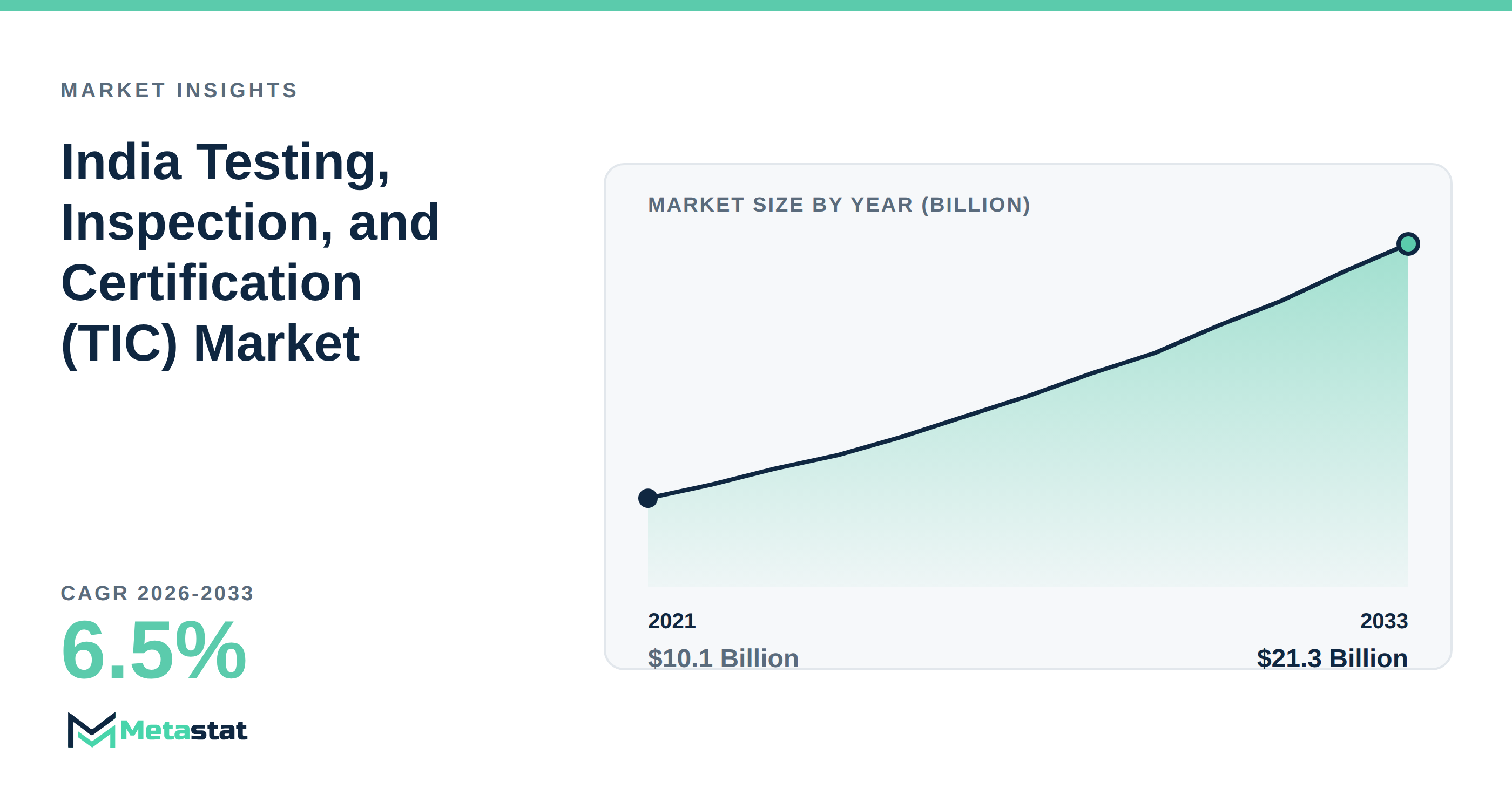
The India Testing, Inspection, and Certification (TIC) market is rapidly expanding, reaching USD 21.3 billion by 2033. Buyers ask key questions to ensure effective supplier partnerships.
The India Testing, Inspection, and Certification (TIC) market is on a clear upward trajectory, projected to reach USD 21.3 billion by 2033. This growth underscores the necessity for buyers to ask critical questions when choosing TIC service providers. With proper inquiries, organizations improve operational effectiveness and maintain competitiveness in a changing environment.
1. How do you ensure compliance with changing regulations?
Regulatory compliance is essential in the India Testing, Inspection, and Certification (TIC) market. Buyers should inquire about suppliers' strategies for staying updated with evolving regulations. While compliance requirements frequently change, particularly in sectors like automotive and healthcare, suppliers that prioritize adherence position themselves advantageously. This focus on compliance helps clients meet safety and quality standards, thereby reducing risks related to non-compliance.
2. What technologies are integrated into your processes?
Technological advancements play a vital role in enhancing efficiency within the TIC market. Understanding the specific technologies that suppliers utilize, including automation and artificial intelligence, is crucial for buyers. These technologies lead to improved data management and faster service delivery while significantly cutting operational costs. Organizations employing modern technologies facilitate quicker turnarounds without sacrificing quality, especially important for sectors including consumer products and pharmaceuticals.
3. Can you elaborate on your experience in my specific industry?
Expertise in particular industry sectors is fundamental for effective TIC services. Buyers should seek suppliers with proven expertise in their industry, whether automotive, food and beverage, or construction. Suppliers familiar with the specific regulations and operational intricacies of different sectors offer customized solutions that meet their clients' needs. This industry insight enhances reliability in testing and certification processes, fostering confidence in compliance.
4. What is your commitment to sustainability and environmental compliance?
With rising demands for sustainable practices, buyers should inquire about suppliers' commitments to environmental compliance. The TIC market in India reflects a growing trend toward eco-friendly solutions driven by regulations and consumer expectations. Suppliers that integrate sustainability into their certifications not only comply with environmental standards but strengthen their brand image. This commitment attracts clients who prioritize sustainability in their procurement choices.
5. How do you handle supply chain risks?
Emerging concerns regarding supply chain vulnerabilities necessitate thorough discussions about risk management. Buyers should seek to understand how suppliers address potential disruptions that affect service delivery. Companies should establish partnerships with TIC providers that implement effective risk management strategies, ensuring compliance and maintaining quality control throughout the supply chain. This proactive risk management enhances overall resilience, enabling businesses to navigate challenges effectively.
6. What are your pricing models and how do they adapt to market fluctuations?
Pricing structures are a fundamental consideration for buyers in the India Testing, Inspection, and Certification (TIC) market. Understanding how suppliers determine their pricing is crucial for evaluating the cost-effectiveness of their services. Buyers should ask how these pricing models adjust in response to market changes including inflation and variations in raw material costs. A transparent pricing structure that reflects dynamic market conditions aids buyers in effectively managing their budgets while ensuring quality services.
These questions provide essential touchpoints for buyers in the India Testing, Inspection, and Certification (TIC) market. By focusing on regulatory compliance, technology integration, industry expertise, sustainability, risk management, and pricing models, buyers make informed decisions that promote operational efficiency and foster long-term growth.
The full analysis is in India Testing, Inspection, and Certification (TIC) Market.
Tags
About the Authors

LEAD ANALYST
Utkarsh Khirodkar is a Lead Market Research Analyst at MetaStat Insight, specializing in market intelligence, technology sector assessments, and competitive strategy.

PRINCIPAL CONSULTANT - ENTERPRISE AI & EMERGING TECHNOLOGIES
Banking & Finance · Electronics and Semiconductor · Energy and Power · Healthcare IT · Information & Technology · Professional Services
Vijay Gunti is a Principal Consultant at MetaStat Insight, bringing over two decades of experience across enterprise digital transformation, technology strategy, and intelligent systems.

PRINCIPAL CONSULTANT - QUALITY SYSTEMS & COMPLIANCE
Electronics and Semiconductor · Machinery & Equipment · Professional Services
Omkar Phadtare is an Industry Consultant at MetaStat Insight, specializing in quality systems, regulatory compliance, and standards benchmarking to drive data-driven market intelligence and strategic industry research.

LEAD CONSULTANT - COMMUNICATION, TELECOM, AND IT
Electronics and Semiconductor · Information & Technology · Machinery & Equipment · Professional Services
Ravindra Sathe Consultants for Communication, Telecom, and IT at MetaStat Insight. He leads the firm's industry research initiatives across telecommunications infrastructure, digital connectivity, enterprise networking, and emerging information technology domains.