
Explore the key factors affecting costs and pricing in the Low-voltage Ceramic Capacitor market, including raw materials, technology, and supply chains.
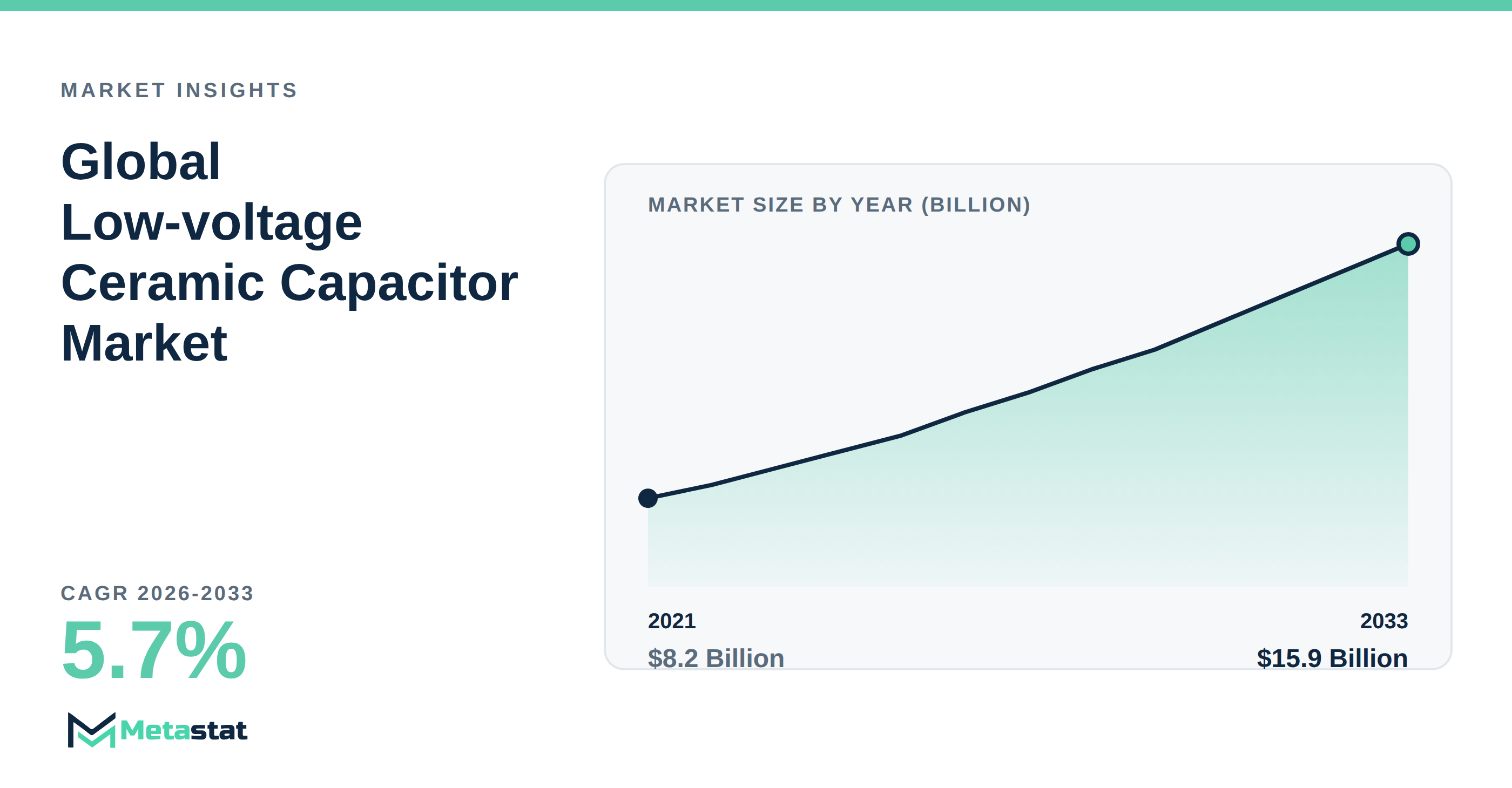
The Low-voltage Ceramic Capacitor market is witnessing significant growth, with projections indicating it will reach USD 15.9 billion by 2033. Buyers gain a better understanding of the factors influencing costs and pricing, which are critical for effective procurement strategies. Below are the primary elements that directly impact expenses and the potential for buyer leverage.
1. Raw Material Prices Significantly Impact Costs
Variations in raw material prices substantially influence the overall cost structure of low-voltage ceramic capacitors. Key materials, including ceramic dielectric and metal electrodes, account for considerable production costs. Price volatility resulting from shifts in market demand and supply constraints leads to increased manufacturing expenses. Buyers negotiate effectively, especially in a climate of rising material costs. By understanding the sourcing strategies of suppliers like Murata Manufacturing and TDK Corporation, buyers work towards securing more favorable pricing.
2. Innovations in Technology Enhance Production Efficiency
Recent advancements in capacitor manufacturing technology contribute to reduced production costs, benefiting both buyers and suppliers. Manufacturers investing in more efficient processes, including automation and enhanced materials, achieve economies of scale. These innovations lower operational expenses, allowing companies to provide competitive pricing. Buyers gain when firms like TAIYO YUDEN and Vishay Intertechnology adopt efficient production processes, which often results in cost reductions that are reflected in the pricing throughout the supply chain.
3. Compliance with Regulations Raises Operational Costs
Adhering to stringent regulations poses challenges that escalate operational costs for manufacturers. Increased industry standards necessitate investments in quality control and certification processes, influencing pricing strategies. Buyers are advised to prioritize suppliers that actively maintain compliance with regulatory standards, which reduces risks. Companies like KYOCERA AVX Components Corporation, which emphasize compliance, often incorporate these efforts into more stable pricing approaches.
4. Supplier Resilience in Supply Chains Affects Availability
The robustness of supply chains is crucial for determining pricing within the Low-voltage Ceramic Capacitor market. Disruptions, including geopolitical tensions and unforeseen events, can create material shortages, driving costs higher. Buyers should engage with suppliers demonstrating solid supply chain management practices. For instance, firms like SAMSUNG ELECTRO-MECHANICS have invested in enhancing local supply chains to improve availability and minimize exposure to external disruptions, which influence pricing for buyers.
5. Demand from Key Sectors Influences Market Pricing
Growing demand for low-voltage ceramic capacitors in key applications, including consumer electronics and automotive sectors, significantly shapes market pricing. Buyers benefit from being aware of which sectors are expanding and directing their purchasing accordingly. For example, the increasing adoption of electric vehicles enhances demand, fostering competition among suppliers to fulfill this requirement. Staying informed about market trends empowers buyers to negotiate better rates with manufacturers targeting high-demand segments.
6. Geopolitical Events Impact Trade Costs
Geopolitical factors introduce uncertainties that complicate international trade and affect costs for buyers. Tariffs and trade barriers increase the pricing of imported capacitors, prompting manufacturers to adjust their pricing strategies accordingly. Buyers should remain vigilant regarding geopolitical developments that could impact sourcing decisions. Engaging with local suppliers or those with diverse sourcing strategies provides an advantage in managing potential cost increases arising from geopolitical tensions.
Understanding the various factors influencing costs and pricing in the Low-voltage Ceramic Capacitor market is essential for buyers aiming to optimize their procurement strategies. By closely monitoring raw material costs, technological advancements, regulatory compliance, supply chain practices, application demand, and geopolitical events, buyers enhance their leverage and effectively navigate this dynamic market.
The full analysis is in Global Low-voltage Ceramic Capacitor Market.
Tags
About the Authors

LEAD ANALYST
Utkarsh Khirodkar is a Lead Market Research Analyst at MetaStat Insight, specializing in market intelligence, technology sector assessments, and competitive strategy.

PRINCIPAL CONSULTANT - ENTERPRISE AI & EMERGING TECHNOLOGIES
Banking & Finance · Electronics and Semiconductor · Energy and Power · Healthcare IT · Information & Technology · Professional Services
Vijay Gunti is a Principal Consultant at MetaStat Insight, bringing over two decades of experience across enterprise digital transformation, technology strategy, and intelligent systems.

PRINCIPAL CONSULTANT - QUALITY SYSTEMS & COMPLIANCE
Electronics and Semiconductor · Machinery & Equipment · Professional Services
Omkar Phadtare is an Industry Consultant at MetaStat Insight, specializing in quality systems, regulatory compliance, and standards benchmarking to drive data-driven market intelligence and strategic industry research.

ENERGY & INFRASTRUCTURE INDUSTRY CONSULTANT
Automotive and Transportation · Electronics and Semiconductor · Energy and Power · Machinery & Equipment
Saurabh Vasant Ganvir consults for Energy & Infrastructure Industry at MetaStat Insight, specializing in renewable energy, solar EPC, and electric vehicle (EV) infrastructure markets.

LEAD CONSULTANT - COMMUNICATION, TELECOM, AND IT
Electronics and Semiconductor · Information & Technology · Machinery & Equipment · Professional Services
Ravindra Sathe Consultants for Communication, Telecom, and IT at MetaStat Insight. He leads the firm's industry research initiatives across telecommunications infrastructure, digital connectivity, enterprise networking, and emerging information technology domains.