
Explore the key forces reshaping the Agribusiness market, from rising food demand to regulatory challenges and technological advancements.
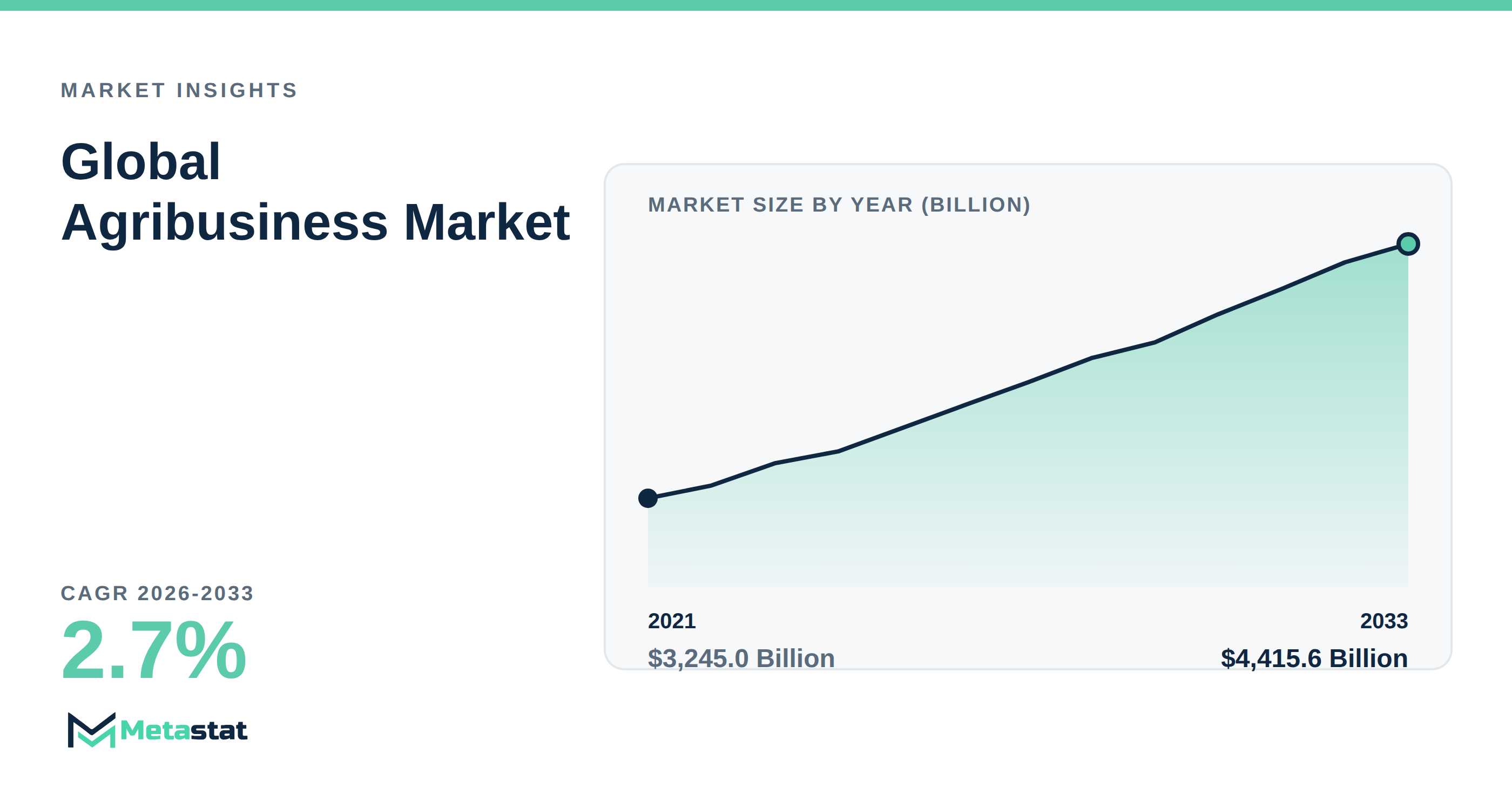
The global Agribusiness market currently holds a substantial valuation of USD 3,566.9 billion for 2025, with projections indicating it will reach USD 4,415.6 billion by 2033. This anticipated growth reflects various factors reshaping the agribusiness landscape, emphasizing the importance for stakeholders to understand these dynamics for effective navigation within the market.
1. Rising food demand accelerates innovation
The increasing global population and evolving dietary preferences drive significant demand for food products. This escalating need necessitates innovative agricultural solutions, particularly in key regions including Asia Pacific, which commands a 43.2% market share. Companies investing in advanced technologies, including precision agriculture and modern farm management solutions, are strategically addressing this demand. The emphasis on innovation enhances operational efficiencies and strengthens competitive positioning within the Agribusiness market.
2. Investment in sustainable practices shapes market dynamics
Growing awareness surrounding sustainability profoundly influences segments within the Agribusiness market. Investments in sustainable farming practices tackle environmental issues while catering to changing consumer demands. Firms that develop environmentally friendly products, including organic fertilizers and sustainable crop protection solutions, secure a strategic position to capture emerging market segments. With sustainability solidifying itself because a critical market driver, these investments pave the way for long-term success.
3. Regulatory complexities challenge market growth
Heightened regulatory scrutiny creates substantial complexities for participants in the Agribusiness market. Compliance with rigorous environmental standards necessitates significant investment, particularly impacting smaller operators. These regulatory requirements reshape operational practices and cost structures. Companies that establish strategic compliance plans and invest in technology for efficiency are better prepared to navigate these challenges, ensuring sustained growth within a demanding regulatory environment.
4. Technological advancements transform agricultural practices
Technological innovation significantly influences the reformation of the Agribusiness market. The integration of artificial intelligence, automation, and data analytics actively reshapes farm management practices. By leveraging precision agriculture technologies, farmers optimize resource use, leading to increased crop yields while simultaneously reducing operational expenses. Companies adopting these next-generation technologies enhance productivity, thereby improving their competitive standing within the market.
5. Regional dynamics influence market trends
Regional characteristics considerably shape the Agribusiness market. The Asia Pacific region, with its extensive agricultural landscape and large population, leads in market share and growth prospects. Conversely, North America and Europe face unique challenges and opportunities influenced by varied regulatory frameworks and consumer preferences. Companies adapt their strategies to address these regional dynamics effectively, ensuring they remain competitive and well-positioned in specific markets.
6. Supply chain resilience is crucial for success
Effective supply chain management is essential for achieving success within the Agribusiness market. Companies confront issues related to sourcing raw materials, fluctuating commodity prices, and logistical vulnerabilities. Strategic investments focused on enhancing supply chain resilience strengthen operational capabilities, enabling firms to respond effectively to changing market conditions. By aligning supply chain strategies with sustainability objectives, companies not only meet consumer expectations but improve their overall market standing.
Navigating the complexities of the Agribusiness market necessitates a thorough understanding of the forces driving growth and innovation. Companies prioritizing sustainability, embracing technological advancements, and comprehending regional dynamics position themselves favorably for success in this continuously evolving environment. For further insights, view the Global Agribusiness Market.
Tags
About the Author

LEAD ANALYST
Utkarsh Khirodkar is a Lead Market Research Analyst at MetaStat Insight, specializing in market intelligence, technology sector assessments, and competitive strategy.