
Explore key factors influencing the Furnace market, including capital investment, digital transformation, and sustainability initiatives driving industry evolution.
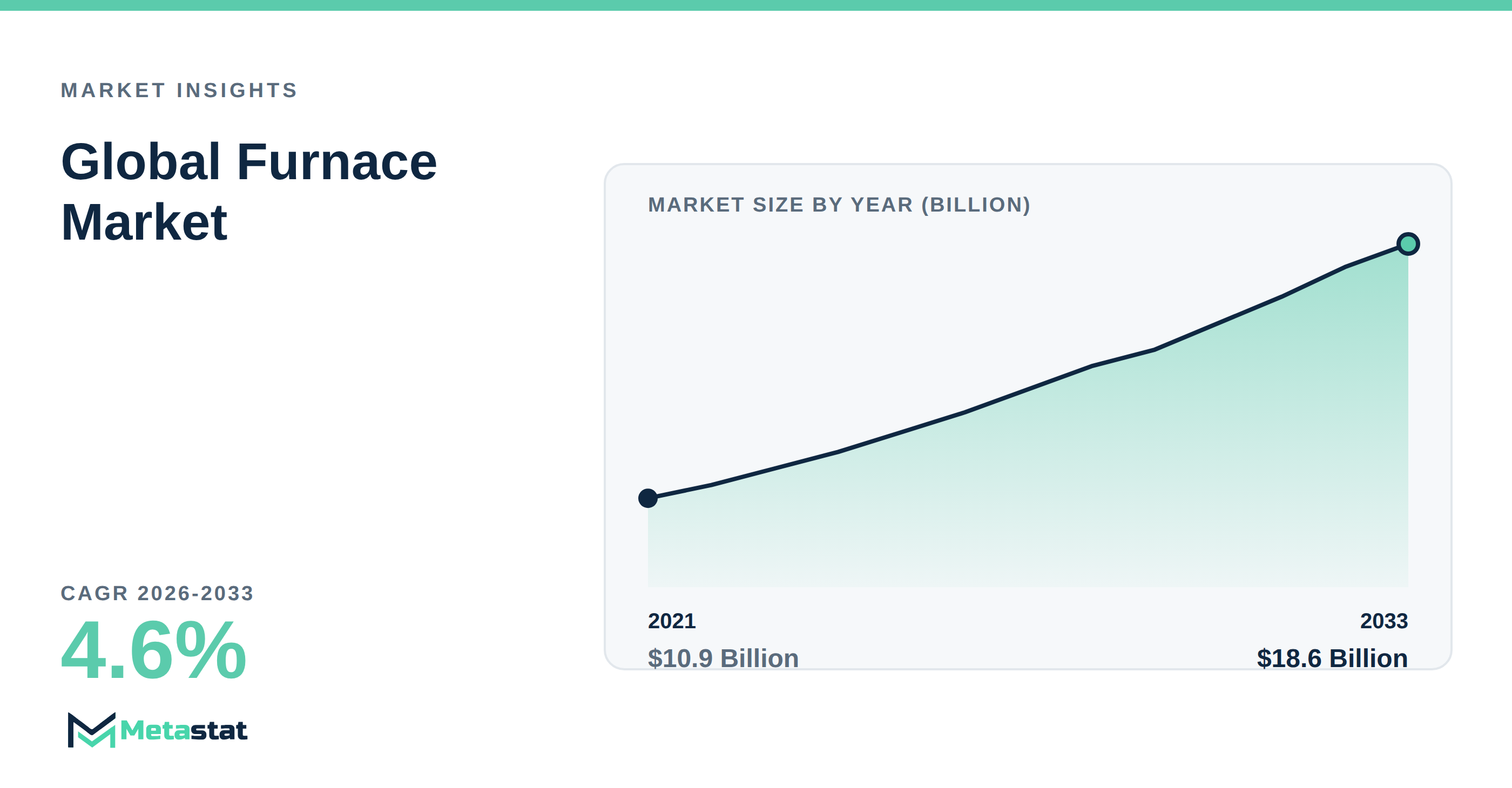
The global Furnace market is experiencing significant transformation, driven by various forces that influence demand and operational practices. Understanding these dynamics is crucial for manufacturers, suppliers, and industry stakeholders. This article highlights key factors reshaping the furnace market landscape.
1. Capital investment is driving market growth
Increased capital investments in construction, manufacturing, and renewable energy propel growth in the Furnace market. These sectors require efficient heating and melting solutions to support ongoing projects. The demand for electric arc and induction furnaces is rising, resulting from companies striving to optimize production capabilities and minimize operational costs. This trend enhances market competitiveness because manufacturers invest in advanced technologies, ultimately supporting the industry’s expansion.
2. Digital transformation accelerates efficiency
Digital transformation reshapes the furnace market by integrating automation and artificial intelligence into manufacturing processes. These technologies streamline production and improve quality control, leading to better operational efficiency and lower costs. Industries involved in metal melting, steelmaking, and heat treatment benefit significantly from advancements in digital tools, allowing for faster decision-making and reduced downtime. Embracing these changes enables companies to align with regulatory pressures for sustainability.
3. High capital investment poses challenges
Despite opportunities for growth, high capital investment requirements present barriers for smaller enterprises entering the Furnace market. The significant costs associated with advanced systems deter competition, leading to potential market consolidation. Fluctuating raw material prices and inflationary pressures complicate the financial landscape, compelling existing players to adopt cautious strategies for expanding their furnace capacities. This limitation impacts the overall growth potential of the market.
4. Geopolitical tensions create market instability
Geopolitical fragmentation introduces challenges for the furnace market, producing trade deficits and tariff friction. Increased tariffs on imported components raise production expenses for manufacturers, necessitating adjustments in pricing strategies. Supply chain instabilities affect material availability, jeopardizing operational efficiencies. Manufacturers navigate these complexities while ensuring compliance with evolving environmental regulations, making strategic decisions that impact competitiveness and growth.
5. Emerging regional demands boost market opportunities
Regions like Asia Pacific exhibit strong growth prospects, primarily driven by expanding manufacturing capabilities and urbanization. The demand for efficient heating solutions spans various sectors, enhancing the need for advanced furnace technologies. Investments in infrastructure modernization facilitate the adoption of innovative designs, prompting suppliers to diversify offerings to maintain competitiveness. Companies leveraging regional insights effectively capture market share by addressing local needs.
6. Sustainability initiatives drive innovation
Industries prioritize sustainability, prompting the furnace market to adapt by adopting energy-efficient technologies and practices. Manufacturers focus on reducing emissions and optimizing energy consumption to comply with global environmental standards. This shift toward greener solutions supports compliance and attracts investments, promoting long-term growth. The transition to low-emission furnaces reflects the industry's commitment to environmental stewardship, which plays an essential role in purchasing decisions.
The Furnace market is shaped by various factors, including capital investment, digital transformation, geopolitical dynamics, regional demand, and sustainability initiatives. Each of these forces contributes to shaping the industry's future landscape, presenting both challenges and opportunities for stakeholders. Understanding these dynamics is essential for navigating the evolving market successfully. For more detailed insights, visit the Global Furnace Market report.
Tags
About the Authors

LEAD ANALYST
Utkarsh Khirodkar is a Lead Market Research Analyst at MetaStat Insight, specializing in market intelligence, technology sector assessments, and competitive strategy.

INDUSTRY CONSULTANT - CHEMICALS & ADVANCED MATERIALS
Chemicals and Materials · Machinery & Equipment · Packaging
Amit Gadhekar Consultant for Chemicals and Materials at MetaStat Insight, directing sector-specific intelligence, research, and strategic consulting across global chemical and processing markets.

PRINCIPAL CONSULTANT - QUALITY SYSTEMS & COMPLIANCE
Electronics and Semiconductor · Machinery & Equipment · Professional Services
Omkar Phadtare is an Industry Consultant at MetaStat Insight, specializing in quality systems, regulatory compliance, and standards benchmarking to drive data-driven market intelligence and strategic industry research.

ENERGY & INFRASTRUCTURE INDUSTRY CONSULTANT
Automotive and Transportation · Electronics and Semiconductor · Energy and Power · Machinery & Equipment
Saurabh Vasant Ganvir consults for Energy & Infrastructure Industry at MetaStat Insight, specializing in renewable energy, solar EPC, and electric vehicle (EV) infrastructure markets.

LEAD CONSULTANT - COMMUNICATION, TELECOM, AND IT
Electronics and Semiconductor · Information & Technology · Machinery & Equipment · Professional Services
Ravindra Sathe Consultants for Communication, Telecom, and IT at MetaStat Insight. He leads the firm's industry research initiatives across telecommunications infrastructure, digital connectivity, enterprise networking, and emerging information technology domains.