
Explore six key factors reshaping the Quinoa Seeds market, including health trends, capital investments, and regional dynamics that influence market strategies.
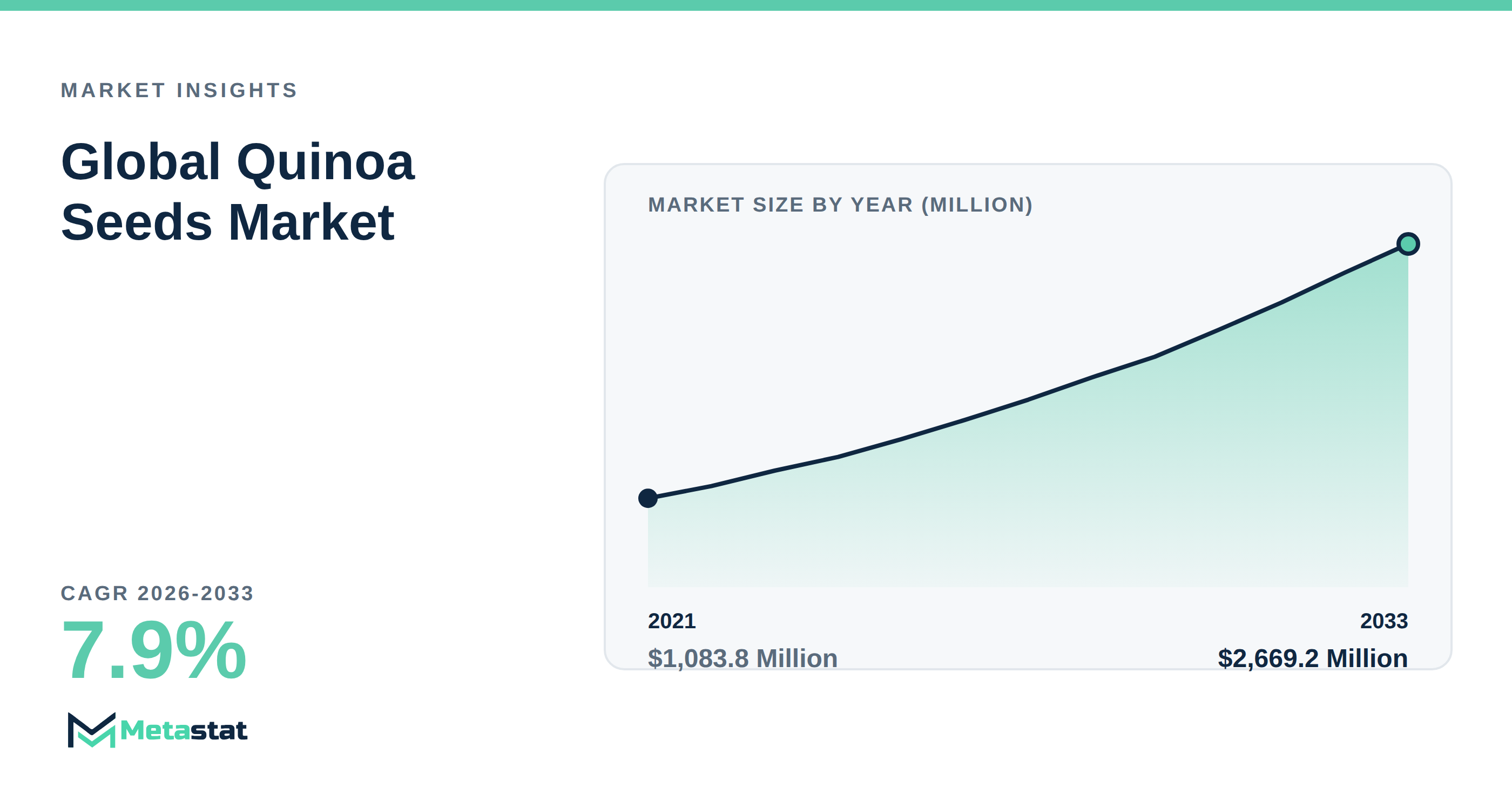
The Quinoa Seeds market is undergoing notable transformations driven by various factors that impact its growth trajectory. The market is expected to increase from USD 1,452.4 million in 2025 to USD 2,669.2 million by 2033. Understanding the dynamics at play is essential for stakeholders aiming to capitalize on emerging opportunities.
1. Increasing consumer awareness of health benefits
Growing health consciousness serves because a primary driver of demand in the Quinoa Seeds market. More consumers are prioritizing nutritious options rich in protein and essential amino acids. Rising interests in plant-based diets and the advantages associated with superfoods make quinoa an appealing choice. Brands that effectively communicate these health benefits in their marketing strategies draw in health-oriented consumers, thereby enhancing their market share.
2. Capital investment enhancing market expansion
Investment across various sectors significantly influences the Quinoa Seeds market. An increase in capital availability allows companies to modernize operations, expand distribution networks, and adopt advanced technologies. This favorable investment climate supports heightened production capacities and better service delivery to consumers, creating a conducive environment for sustained market growth.
3. Macroeconomic challenges impacting pricing
The Quinoa Seeds market faces challenges from macroeconomic factors that affect profitability. Inflationary pressures and rising production costs have led to increased prices for quinoa products, which could discourage price-sensitive consumers. Compounding these challenges are supply chain disruptions and geopolitical instability, affecting trade flows and product availability. Addressing these obstacles requires strategic pricing and resource management to maintain market competitiveness.
4. Regulatory landscape shaping market entry
Compliance with strict agricultural and food safety standards plays a critical role in the Quinoa Seeds market. Various regulations across regions dictate product quality and safety, influencing market entry strategies for producers. Understanding these regulations is vital for companies looking to navigate compliance costs while maintaining competitive pricing structures, which impacts overall market profit margins.
5. Fragmented supply chain complicating market dynamics
The Quinoa Seeds supply chain exhibits significant fragmentation, involving numerous small-scale producers. While this fragmentation creates challenges in scaling operations and achieving efficiencies, it presents opportunities for strategic partnerships and collaborations. Companies that enhance their logistics and distribution frameworks position themselves better to meet consumer demand amid a complex supply chain environment, potentially increasing customer satisfaction and market reach.
6. Regional demand shaping growth strategies
Emerging regional demands are instrumental in driving the Quinoa Seeds market. With substantial shares in North America and Europe, the interest in quinoa is rising within Asia Pacific and South America. This geographical diversity prompts producers to adapt their strategies to cater to varying consumer preferences, thereby creating opportunities for market expansion. Infrastructure advancements in these regions further facilitate access to consumers, supporting growth in the Quinoa Seeds market.
Understanding the intricate dynamics of the Quinoa Seeds market allows stakeholders to navigate challenges and seize opportunities. By focusing on health trends, regulatory compliance, and consumer preferences, companies position themselves for success in this evolving landscape.
The full analysis is in Global Quinoa Seeds Market.
Tags