
Explore the competitive landscape of the Europe Waterborne Coatings market, focusing on key player positions and their impact on growth and innovation.
The competitive landscape of the Europe Waterborne Coatings market is characterized by diversity and innovation. A range of companies operate within this sector, each employing unique strategies to enhance their market presence. This article outlines six critical positions in the market that illustrate the ongoing trends and developments.
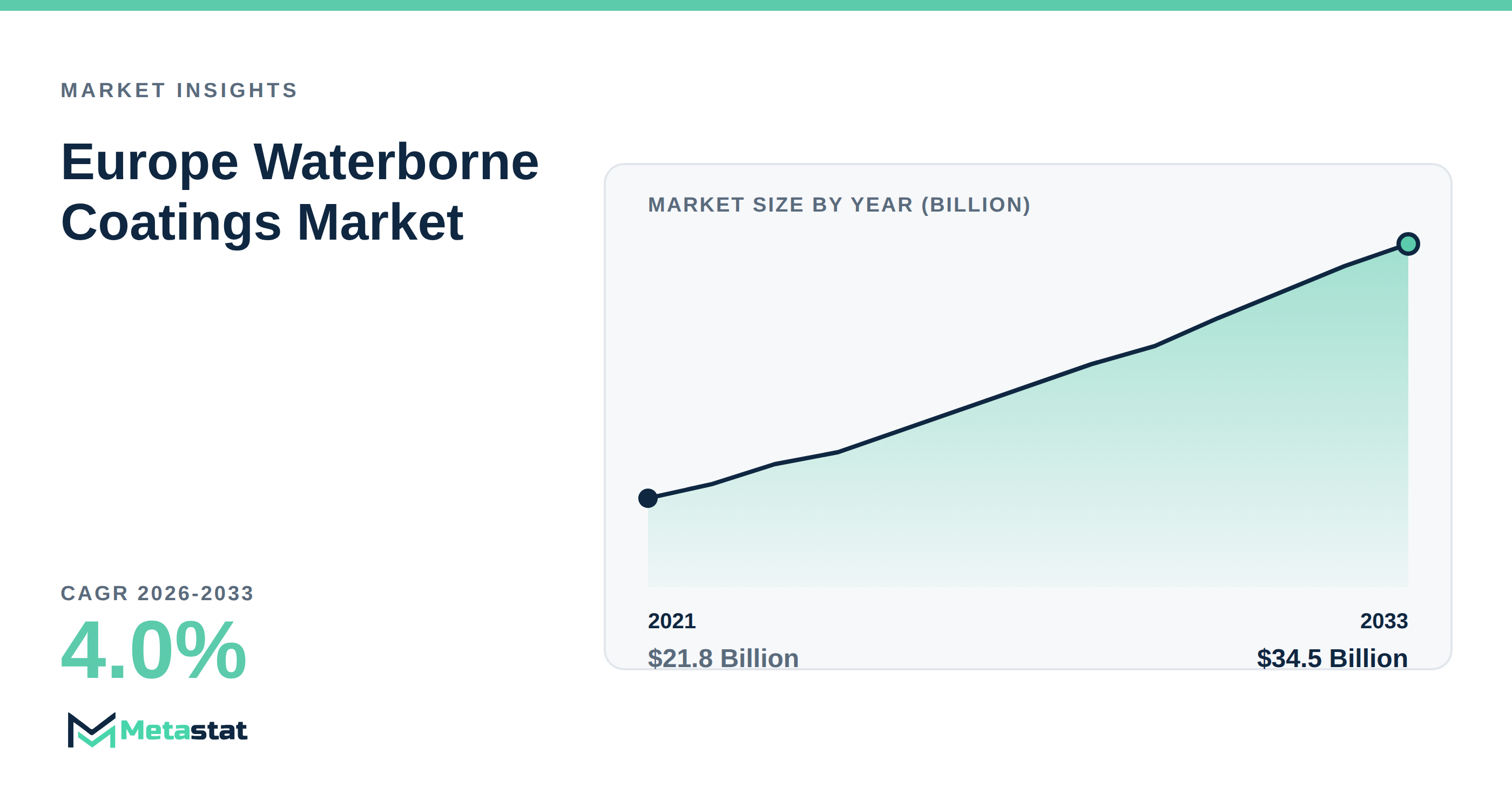
1. Acrylic coatings dominate the market share
Acrylic coatings account for roughly 40% of the Europe Waterborne Coatings market. This significant share results from their versatility and strong performance characteristics, especially in the building and construction sectors. Demand for acrylic coatings is driven by their low volatile organic compound (VOC) emissions, aligning with stringent environmental regulations. While urbanization increases and sustainability becomes increasingly essential, manufacturers invest in innovative acrylic formulations to enhance durability and application efficiency, solidifying their market dominance.
2. Polyurethane exhibits significant growth potential
The Polyurethane segment is expected to grow at a CAGR of 5.1%, reflecting rising adoption across multiple industries, particularly in automotive and construction. Polyurethane’s appeal lies in its durability and flexibility, catering to environmental compliance needs. Companies concentrate on developing next-generation formulations that maintain high performance while minimizing environmental impact. This commitment to innovation positions polyurethane coatings favorably within the Europe Waterborne Coatings market, providing strong potential for increased market share.
3. Regulatory compliance reshapes product offerings
Stringent environmental regulations greatly influence the competitive strategies of players in the Europe Waterborne Coatings market. Adhering to VOC reduction standards drives innovation in product formulations, prompting manufacturers to develop environmentally friendly solutions. Smaller companies often face heightened challenges in fulfilling these regulations due to increased compliance costs. In contrast, larger companies with substantial resources are better prepared to adapt, strengthening their competitive advantage while smaller firms struggle to maintain their market presence.
4. Infrastructure investments boost market demand
Investment in infrastructure development across Europe stimulates growth in the waterborne coatings market. Increased public and private expenditure leads to heightened construction activities, driving demand for coatings that meet both aesthetic and functional requirements. Companies that effectively leverage these infrastructure projects enhance their market visibility. This upward trend encourages waterborne coating manufacturers to broaden their product lines and improve formulations, aligning with emerging industry standards.
5. Supply chain dynamics impact pricing strategies
Geopolitical tensions and supply chain complexities significantly affect the operational environment of the Europe Waterborne Coatings market. Disruptions in sourcing raw materials impact production timelines and costs. Companies navigate these challenges by diversifying suppliers and optimizing transportation networks. Strategic pricing remains essential because manufacturers manage cost pressures while maintaining profitability. This dynamic environment fosters innovation and encourages companies to streamline operations to preserve competitive advantages.
6. Emerging technologies drive innovation
Advancements in technology play a crucial role in shaping competitive positioning within the Europe Waterborne Coatings market. Integrating eco-friendly materials and improved formulations enhances product performance, appealing to environmentally conscious consumers. Companies that actively invest in research and development gain tailored solutions that meet specific industry demands, positioning themselves because leaders in innovation. This technological focus not only reinforces the market's growth potential but addresses consumer expectations for sustainable products.
In conclusion, understanding these positions within the Europe Waterborne Coatings market illuminates the connections between technological innovation, regulatory compliance, and market dynamics, offering crucial insights for stakeholders navigating this evolving environment. For a comprehensive analysis, refer to the Europe Waterborne Coatings Market.
Tags
About the Authors

LEAD ANALYST
Utkarsh Khirodkar is a Lead Market Research Analyst at MetaStat Insight, specializing in market intelligence, technology sector assessments, and competitive strategy.

INDUSTRY CONSULTANT - CHEMICALS & ADVANCED MATERIALS
Chemicals and Materials · Machinery & Equipment · Packaging
Amit Gadhekar Consultant for Chemicals and Materials at MetaStat Insight, directing sector-specific intelligence, research, and strategic consulting across global chemical and processing markets.