
Explore the competitive landscape of the Streaming and Video Services market, including key players and their strategies for growth and innovation.
The competitive picture within the Streaming and Video Services market is shaped by various factors that dictate how each player positions itself. Understanding these dynamics provides critical insights for operators and buyers in this expanding sector.
1. Market expansion fuels competitive growth
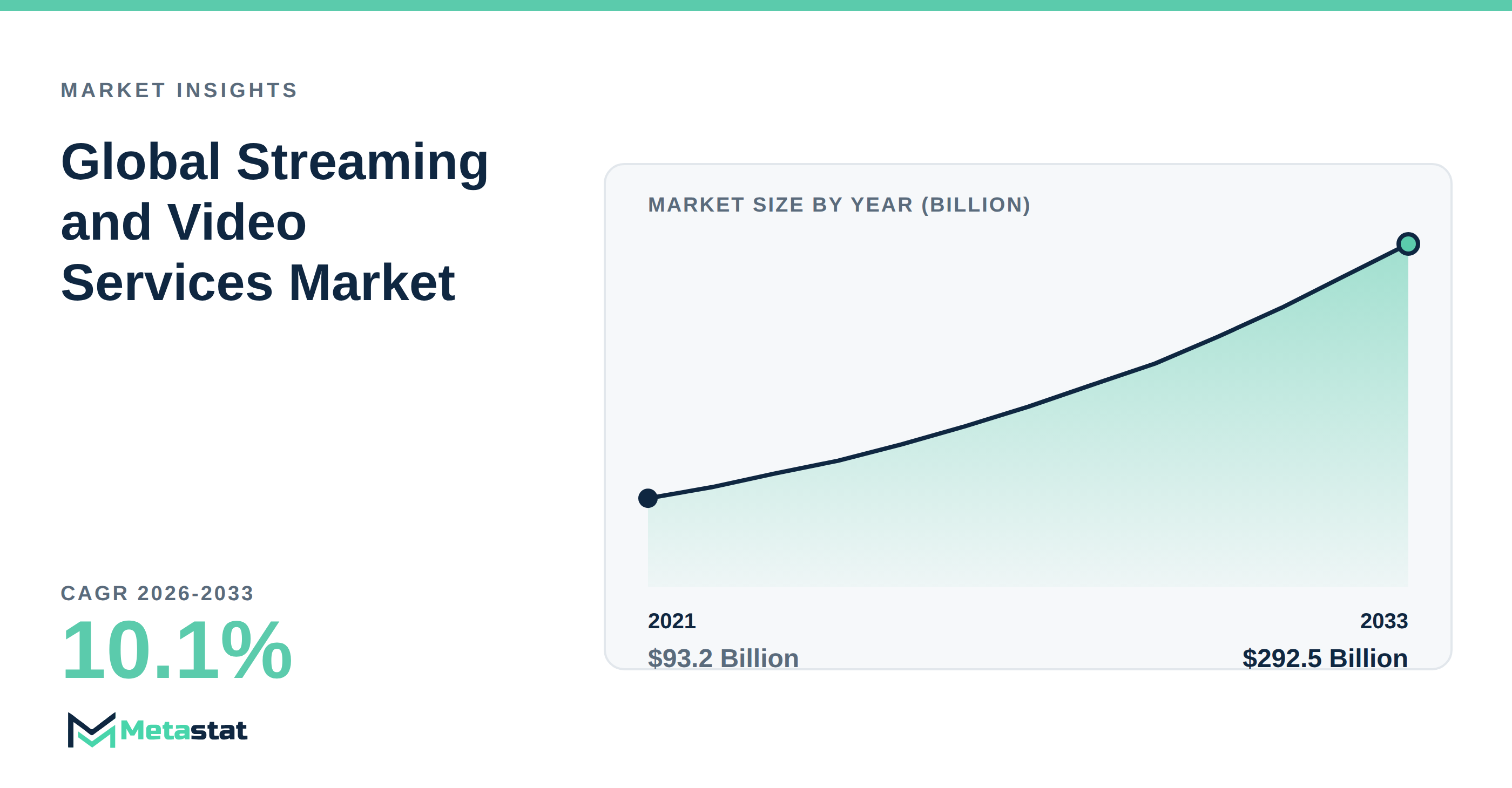
The Streaming and Video Services market, valued at USD 135.4 billion in 2025, is projected to surge to USD 292.5 billion by 2033. This substantial growth presents opportunities for major players like Netflix, Amazon, and Disney, who invest heavily in original content and advanced technologies to attract new subscribers. While the market expands, companies innovate to secure a larger audience share while responding to evolving consumer preferences.
2. Subscriber growth drives revenue strategies
Subscriber growth serves because a key driver in the Streaming and Video Services market. Firms that successfully transition traditional cable users to streaming platforms witness an increase in average revenue per user (ARPU). The Subscription Video on Demand (SVOD) segment, projected to grow from USD 59 billion in 2026 to USD 105.4 billion by 2033, demonstrates the importance of innovative pricing strategies and diverse content offerings for maximizing subscriber retention and engagement.
3. Technological innovation provides a competitive edge
Investments in technology enable companies to create superior user experiences, crucial for maintaining competitiveness. Industry leaders, including Apple, Google, and Roku, leverage advancements in artificial intelligence and enhanced content delivery systems to boost viewer engagement. This technological focus streamlines content production processes and allows quick adaptation to consumer demands, facilitating tailored recommendations and interactive content.
4. Regulatory compliance poses operational challenges
Regulatory requirements present significant operational hurdles for streaming service providers. Companies navigate a labyrinth of legal frameworks while ensuring their content adheres to local regulations. This often necessitates considerable investment in compliance infrastructure and legal expertise, impacting profitability. Major players like Warner Bros. Discovery and Paramount remain proactive amid shifting regulatory environments to maintain their competitive positions.
5. Geopolitical risks shape market strategies
Geopolitical issues significantly influence how companies operate in different regions. Trade disputes and tariff impositions complicate licensing agreements and content distribution, affecting profitability. Firms including Tencent and Alibaba adjusts their strategies based on these geopolitical dynamics, necessitating a sharp understanding of how local market conditions influence operational efficiencies and consumer engagement.
6. Content diversity enhances competitive positioning
Successful streaming companies prioritize diverse content libraries to attract a broad range of viewers. The increasing consumer preference for niche genres, including documentaries and regional entertainment, motivates organizations like Netflix and iQIYI to invest heavily in original programming. This strategy not only drives subscriber growth but cultivates long-term loyalty among audiences seeking unique and engaging content.
In summary, multiple factors influence competitive positioning in the Streaming and Video Services market. Companies that strategically navigate subscriber growth, technological advancements, and regulatory challenges are well-positioned to thrive in this expanding sector. For further detail on market dynamics, explore the Global Streaming and Video Services Market.
Tags
About the Authors

LEAD ANALYST
Utkarsh Khirodkar is a Lead Market Research Analyst at MetaStat Insight, specializing in market intelligence, technology sector assessments, and competitive strategy.

PRINCIPAL CONSULTANT - ENTERPRISE AI & EMERGING TECHNOLOGIES
Banking & Finance · Electronics and Semiconductor · Energy and Power · Healthcare IT · Information & Technology · Professional Services
Vijay Gunti is a Principal Consultant at MetaStat Insight, bringing over two decades of experience across enterprise digital transformation, technology strategy, and intelligent systems.

LEAD CONSULTANT - COMMUNICATION, TELECOM, AND IT
Electronics and Semiconductor · Information & Technology · Machinery & Equipment · Professional Services
Ravindra Sathe Consultants for Communication, Telecom, and IT at MetaStat Insight. He leads the firm's industry research initiatives across telecommunications infrastructure, digital connectivity, enterprise networking, and emerging information technology domains.