
Explore the key factors affecting pricing in the Insights-as-a-Service market, including digital transformation, compliance costs, and more.
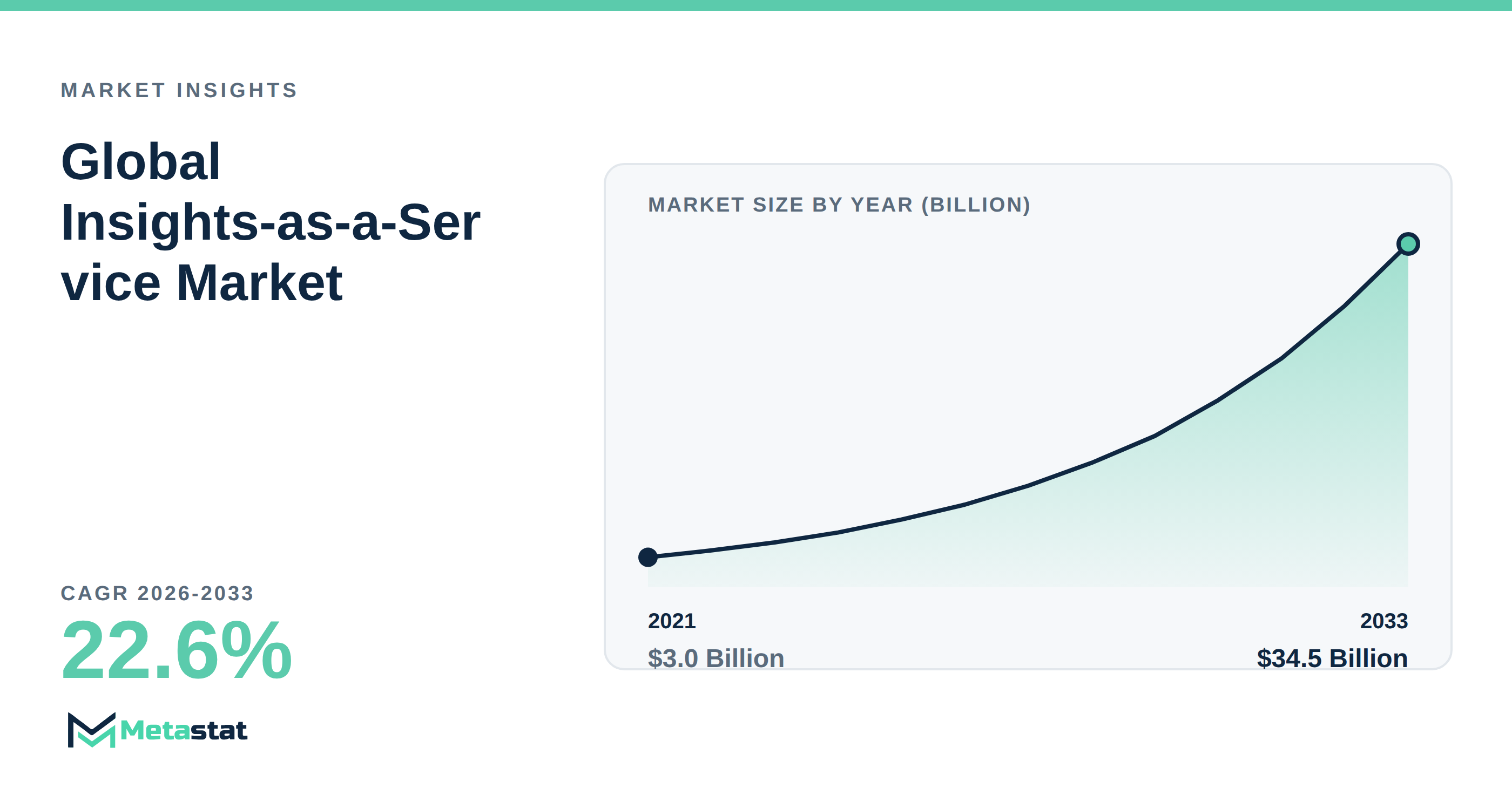
The Insights-as-a-Service market is on an impressive trajectory, with projections indicating a value of USD 34.5 billion by 2033. Understanding the elements that influence pricing and costs becomes essential for organizations looking to leverage these services effectively. Below are significant considerations that buyers should focus on when navigating this market.
1. Digital transformation initiatives drive pricing dynamics
Investment in digital transformation significantly impacts pricing within the Insights-as-a-Service market. Organizations increasingly allocate funds to upgrade their digital capabilities, aiming for enhanced operational efficiency. Rapid advancements in technology lead to higher service costs, driven by the need for companies to integrate innovative analytics solutions. This trend particularly affects sectors like healthcare and financial services, which face growing demands for tailored insights. Consequently, informed buyers influence their pricing by clearly defining their requirements and expectations for scalability and functionality.
2. Compliance and regulatory requirements affect pricing
Regulatory compliance imposes essential frameworks that organizations adhere to when adopting Insights-as-a-Service solutions. The costs associated with maintaining data security and privacy compliance significantly influence overall pricing structures. Companies invested in regulated sectors including finance and healthcare frequently encounter additional expenses related to compliance. Understanding these requirements allows buyers to negotiate better terms and assess the true value of services concerning their compliance obligations.
3. The impact of capital investment on service pricing
High capital investment requirements hinder adoption rates in the Insights-as-a-Service market. Organizations consider the substantial costs associated with implementing advanced analytics solutions, often restricting smaller enterprises from accessing these services. Inflationary pressures and geopolitical uncertainties exacerbate this issue, leading businesses to adopt cautious approaches toward technology investments. Buyers should be aware of these financial challenges and seek flexible pricing models that accommodate varying budget capacities.
4. Demand for advanced analytics enhances service value
The increasing reliance on advanced analytics significantly influences the pricing landscape in the Insights-as-a-Service market. Organizations are keen to capitalize on predictive and prescriptive insights to remain competitive across various sectors. This demand for sophisticated analytics capabilities translates into higher service costs, because providers invest in technologies and methodologies that deliver superior insights. Buyers should evaluate the potential ROI of these advanced solutions, which justify higher initial costs through improved decision-making and operational efficiency.
5. Market fragmentation affects buyer leverage
Market fragmentation presents both challenges and opportunities for buyers in the Insights-as-a-Service sector. Numerous providers offer varied solutions, which complicate decision-making. This fragmentation leads to inconsistent pricing models and service offerings, making it essential for buyers to conduct thorough comparisons before committing. By leveraging competitive bids and seeking consolidated services, organizations enhance their bargaining positions, ultimately leading to more favorable pricing arrangements.
6. Technological advancements require continuous investment
Ongoing technological advancements drive continuous investment in the Insights-as-a-Service sector. Organizations keep pace with innovations in artificial intelligence and machine learning to ensure their analytics capabilities remain competitive. This requirement leads to fluctuating costs, because companies invest in training and upgrading their systems. Buyers should understand that while these investments elevate service quality, they contribute to the overall pricing structure. By prioritizing vendor relationships and ongoing training, organizations maximize their returns on these investments.
In summary, navigating the Insights-as-a-Service market requires a deep understanding of the factors shaping pricing dynamics. Buyers who recognize the influence of digital transformation, compliance requirements, capital investment, demand for advanced analytics, market fragmentation, and the need for technological investment are better positioned to make informed decisions. By proactively managing these elements, organizations optimize their investments in insights-driven strategies and support sustainable growth.
The full analysis is in Global Insights-as-a-Service Market.
Tags
About the Authors

LEAD ANALYST
Utkarsh Khirodkar is a Lead Market Research Analyst at MetaStat Insight, specializing in market intelligence, technology sector assessments, and competitive strategy.

PRINCIPAL CONSULTANT - ENTERPRISE AI & EMERGING TECHNOLOGIES
Banking & Finance · Electronics and Semiconductor · Energy and Power · Healthcare IT · Information & Technology · Professional Services
Vijay Gunti is a Principal Consultant at MetaStat Insight, bringing over two decades of experience across enterprise digital transformation, technology strategy, and intelligent systems.

LEAD CONSULTANT - COMMUNICATION, TELECOM, AND IT
Electronics and Semiconductor · Information & Technology · Machinery & Equipment · Professional Services
Ravindra Sathe Consultants for Communication, Telecom, and IT at MetaStat Insight. He leads the firm's industry research initiatives across telecommunications infrastructure, digital connectivity, enterprise networking, and emerging information technology domains.