
The Energy Retrofit market is seeing significant growth, driven by regulatory pressures, technological advancements, and rising urbanization. Explore six transformative trends impacting the industry.
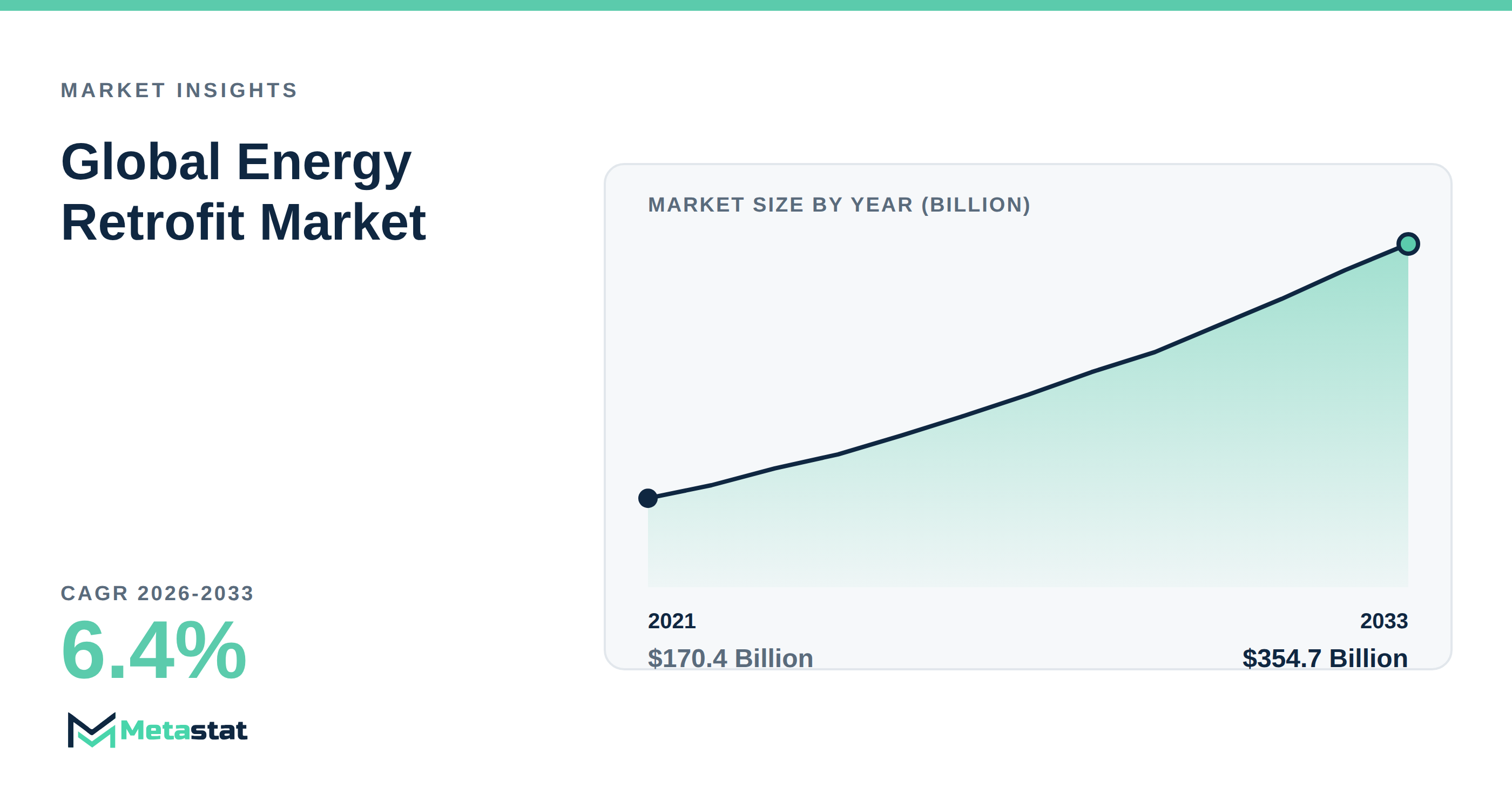
The Energy Retrofit market is on a significant growth trajectory, projected to expand from USD 215.9 billion in 2025 to USD 354.7 billion by 2033, reflecting a compound annual growth rate (CAGR) of 6.4%. Various forces reshape the sector, notably the demand for energy-efficient upgrades and the evolving regulatory landscape. Below are six key trends influencing the Energy Retrofit market.
1. Regulatory pressures intensify demand for upgrades
Increased government mandates surrounding energy efficiency compel property owners to undertake retrofitting projects. Stricter regulations aim to minimize carbon emissions and promote sustainability initiatives. This trend is particularly notable in commercial and public sectors, where compliance with emissions standards becomes a vital aspect of operational strategies. Organizations investing in energy retrofits benefit from long-term savings on utility costs and improved building performance, making regulatory compliance a driving force in market growth.
2. Technological advancements streamline retrofitting processes
Innovations in technologies, including advanced energy management systems and smart controls, are transforming the Energy Retrofit market. These advancements enhance the efficacy of retrofitting projects, enabling properties to achieve better energy efficiency with reduced operational costs. The integration of IoT devices allows for real-time monitoring and management of energy consumption, further encouraging retrofitting. Companies adopting these technologies experience improved project execution times, providing a competitive edge in the marketplace.
3. Rising urbanization fuels demand for energy-efficient buildings
Growing urban populations increase the need for efficient energy solutions, driving investments in retrofitting existing structures. Urban areas often face pressure to upgrade aging infrastructure, creating substantial opportunities for energy-efficient upgrades. This trend is particularly pronounced in regions like Asia Pacific, where rapid urbanization aligns with the global push toward sustainability. Building owners in urban settings prioritize retrofitting to enhance energy performance and meet contemporary energy standards.
4. Deep Energy Retrofits gain traction
The Deep Energy Retrofits segment is projected for robust growth, anticipated to achieve a CAGR of 7.9% in the upcoming years, fueled by rising demand for comprehensive energy-efficient solutions. Stakeholders prioritize these upgrades to achieve marked reductions in energy consumption and carbon emissions. Technological developments in insulation and HVAC systems facilitate these deep retrofits, attracting investments because firms target higher energy efficiency ratings. This segment's expansion aligns with broader sustainability goals.
5. Supply chain resilience remains a challenge
Supply chain disruptions significantly affect the Energy Retrofit market, complicating access to essential materials and technologies needed for retrofitting projects. Geopolitical tensions and fluctuating prices create an atmosphere of uncertainty, which delays project timelines and increases costs. Companies are increasingly focused on enhancing supply chain resilience to mitigate these risks, impacting overall market potential. Strategic sourcing and adaptive logistics strategies are becoming essential for maintaining operational efficiency amid these challenges.
6. Competitive landscape encourages innovation
Market fragmentation promotes a competitive environment where established players and emerging startups alike drive innovation. Companies including Siemens AG, Schneider Electric SE, and Honeywell International Inc. consistently invest in research and development to advance energy-efficient solutions. This dynamic encourages collaboration and strategic mergers and acquisitions, further enhancing market capabilities. Firms that adapt quickly to evolving market demands position themselves favorably for future growth in the Energy Retrofit sector.
These six forces reshape the Energy Retrofit market, illustrating the complexity and potential for growth within this sector. Stakeholders should consider these trends when strategizing for energy-efficient upgrades and compliance with emerging regulations. For a comprehensive analysis and further insights, refer to the Global Energy Retrofit Market.
Tags
About the Authors

LEAD ANALYST
Utkarsh Khirodkar is a Lead Market Research Analyst at MetaStat Insight, specializing in market intelligence, technology sector assessments, and competitive strategy.

PRINCIPAL CONSULTANT - ENTERPRISE AI & EMERGING TECHNOLOGIES
Banking & Finance · Electronics and Semiconductor · Energy and Power · Healthcare IT · Information & Technology · Professional Services
Vijay Gunti is a Principal Consultant at MetaStat Insight, bringing over two decades of experience across enterprise digital transformation, technology strategy, and intelligent systems.

ENERGY & INFRASTRUCTURE INDUSTRY CONSULTANT
Automotive and Transportation · Electronics and Semiconductor · Energy and Power · Machinery & Equipment
Saurabh Vasant Ganvir consults for Energy & Infrastructure Industry at MetaStat Insight, specializing in renewable energy, solar EPC, and electric vehicle (EV) infrastructure markets.