
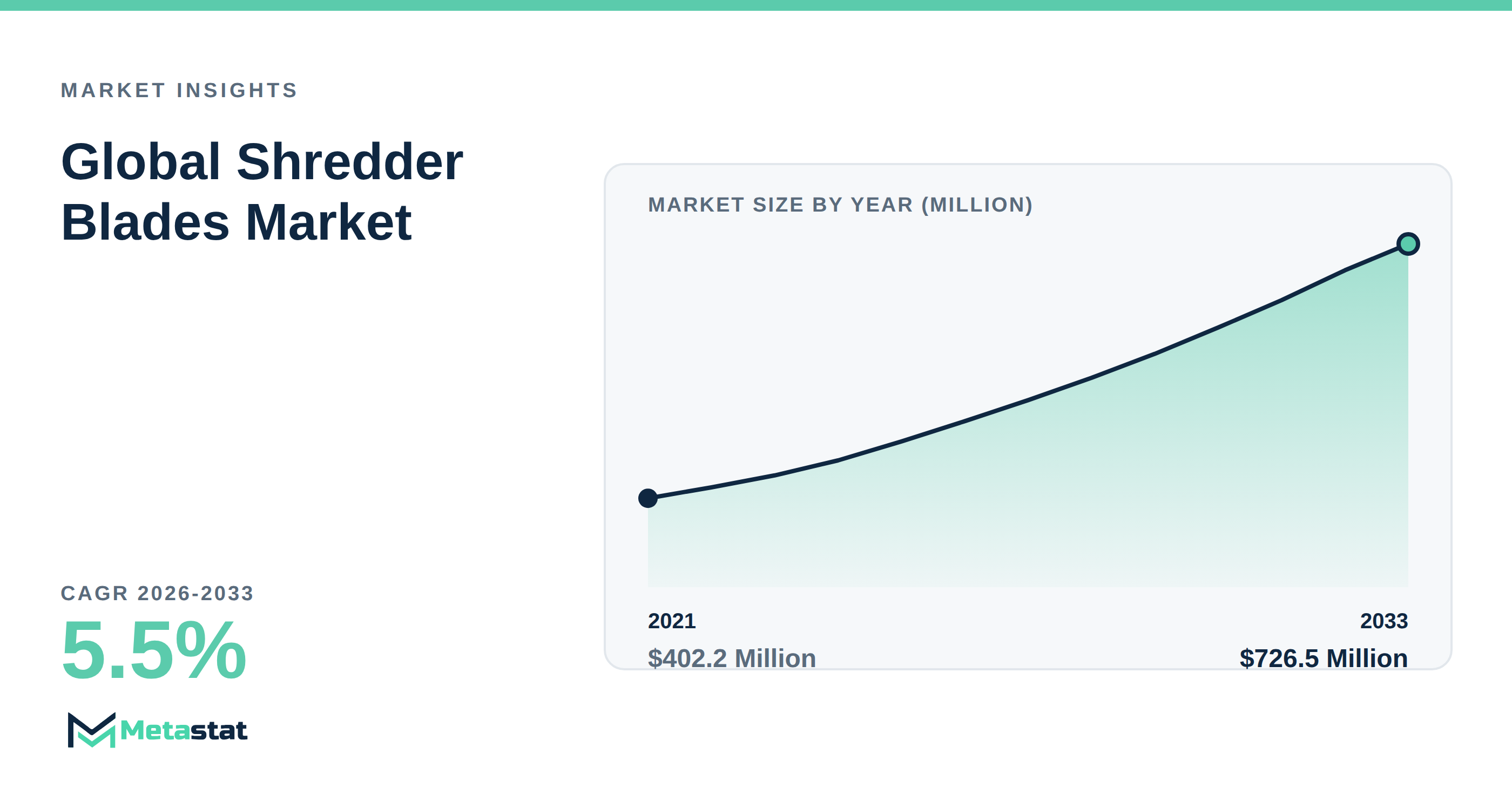
Explore six transformative trends in the Shredder Blades market, including innovations in metallurgy, sustainability efforts, and regulatory compliance.
The Shredder Blades market is experiencing dynamic change driven by several key factors. These elements influence market growth and reshape the strategies of manufacturers and end-users alike.
1. Innovations in metallurgy enhance performance
Advancements in metallurgy, including improved hardfacing and resilient coatings, boost the durability and efficiency of shredder blades. These developments allow blades to endure high-stress environments, enhancing their effectiveness across various applications, including recycling and waste management. Enhanced blade longevity results in reduced operational costs for buyers, reinforcing the trend towards high-performance shredding solutions.
2. Growing sustainability initiatives drive demand
Increased focus on sustainability significantly impacts the Shredder Blades market. Industries prioritize eco-friendly waste management practices, leading to heightened demand for shredding solutions that support recycling and resource recovery. Manufacturers respond by developing environmentally friendly materials and designs. This trend aligns with consumer expectations for sustainable products, creating a competitive edge for companies that emphasize sustainability in their offerings.
3. Regulatory compliance shapes product offerings
Stricter regulatory standards surrounding waste disposal and recycling reshape the Shredder Blades market. Compliance with these regulations drives manufacturers to innovate and produce blades that meet or exceed environmental standards. For buyers, this scenario presents an opportunity to invest in high-quality, compliant shredding solutions that fulfill operational needs while enhancing corporate responsibility in waste management.
4. Replacement cycles influence aftermarket dynamics
Replacement cycles and the economics of regrinding play a crucial role in the Shredder Blades market. Regular maintenance and regrinding of blades reduce long-term operational costs and extend the lifespan of shredders. This trend cultivates a robust aftermarket segment, where manufacturers and suppliers capitalize on ongoing service and replacement needs, ensuring a steady revenue flow while maintaining customer satisfaction.
5. Diverse applications drive innovation in blade design
The Shredder Blades market adapts to varying application stress profiles, driven by unique material processing challenges across different industries. From food processing to textile recycling, the demand for customized blade designs is increasing. Manufacturers invest in versatile designs that cater to specific applications, enhancing operational efficiency and driving demand for innovative products tailored to diverse customer needs.
6. Supply chain resilience impacts production
The current supply chain landscape significantly influences the availability of materials for shredder blade manufacturing. Fluctuations in sourcing and logistics affect production timelines and costs for manufacturers. Buyers benefit from understanding these dynamics, because resilient supply chains lead to more consistent product availability and pricing stability, easing procurement challenges and nurturing long-term partnerships.
The Shredder Blades market is being reshaped by technological advancements, increased sustainability, regulatory pressures, and the need for innovation across various applications. Companies that adapt to these trends will strengthen their market position and ensure future growth.
The full analysis is in Global Shredder Blades Market.
Tags
About the Authors

LEAD ANALYST
Utkarsh Khirodkar is a Lead Market Research Analyst at MetaStat Insight, specializing in market intelligence, technology sector assessments, and competitive strategy.

INDUSTRY CONSULTANT - CHEMICALS & ADVANCED MATERIALS
Chemicals and Materials · Machinery & Equipment · Packaging
Amit Gadhekar Consultant for Chemicals and Materials at MetaStat Insight, directing sector-specific intelligence, research, and strategic consulting across global chemical and processing markets.

PRINCIPAL CONSULTANT - QUALITY SYSTEMS & COMPLIANCE
Electronics and Semiconductor · Machinery & Equipment · Professional Services
Omkar Phadtare is an Industry Consultant at MetaStat Insight, specializing in quality systems, regulatory compliance, and standards benchmarking to drive data-driven market intelligence and strategic industry research.

ENERGY & INFRASTRUCTURE INDUSTRY CONSULTANT
Automotive and Transportation · Electronics and Semiconductor · Energy and Power · Machinery & Equipment
Saurabh Vasant Ganvir consults for Energy & Infrastructure Industry at MetaStat Insight, specializing in renewable energy, solar EPC, and electric vehicle (EV) infrastructure markets.

LEAD CONSULTANT - COMMUNICATION, TELECOM, AND IT
Electronics and Semiconductor · Information & Technology · Machinery & Equipment · Professional Services
Ravindra Sathe Consultants for Communication, Telecom, and IT at MetaStat Insight. He leads the firm's industry research initiatives across telecommunications infrastructure, digital connectivity, enterprise networking, and emerging information technology domains.