
Explore the key elements driving costs and pricing strategies in the biosimulation market, focusing on technology, compliance, outsourcing, and more.
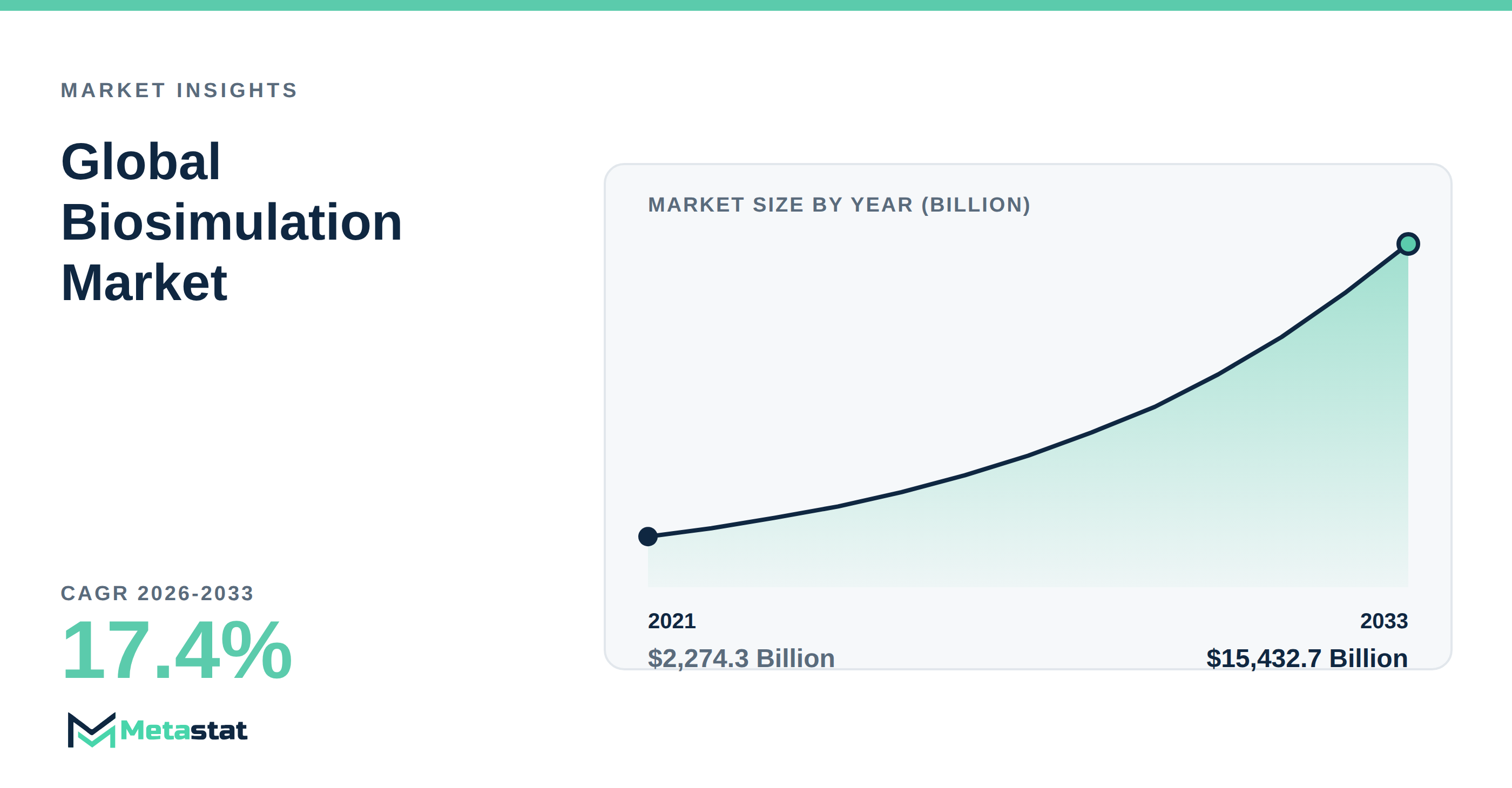
The biosimulation market is evolving rapidly, expected to grow from USD 4,275.3 billion in 2025 to USD 15,432.7 billion by 2033. This transformation is influenced by a variety of factors affecting costs and pricing strategies. Understanding these components helps stakeholders navigate financial implications effectively.
1. Technological investments shape operational costs
Investment in advanced technologies significantly influences costs within the biosimulation market. Companies prioritize automation and artificial intelligence to enhance efficiency and streamline processes. These shifts result in considerable upfront investments, which strain budgets but lead to long-term savings and improved productivity in drug development.
2. Regulatory compliance shapes market expenses
Strict regulatory requirements impose significant costs in the biosimulation market. Organizations face high capital investments for certifications and validations necessary for compliance. These financial burdens disproportionately affect smaller companies, limiting their ability to invest in biosimulation capabilities. Companies navigate these challenges to maintain their competitive edge while managing operational expenses.
3. Outsourcing influences service pricing
The trend of outsourcing biosimulation services is reshaping the pricing structure in the market. Pharmaceutical companies increasingly seek partnerships with contract research organizations (CROs) to reduce development timelines and costs. This strategic outsourcing allows firms to access specialized expertise while optimizing resource allocation, ultimately impacting overall project expenses in biosimulation initiatives.
4. Demand for personalized medicine drives innovation costs
The growing emphasis on personalized medicine creates increased complexity in biosimulation projects, which subsequently drives up costs. Organizations invest in developing patient-specific biosimulation models, requiring sophisticated technology and expertise. This focus on tailored therapies increases development expenses but aligns with evolving market dynamics, ensuring that companies meet patient needs effectively.
5. Competition and market saturation pressure pricing
While the biosimulation market expands, competition intensifies, leading to pricing pressures across the board. Companies encounter challenges in maintaining margins while delivering innovative solutions amid growing client expectations. The need for differentiation requires continuous innovation, which strains budgets further. Firms balance the demand for competitive pricing with sustaining operational viability.
6. Workforce skills gap impacts operational efficiency
A shortage of skilled professionals in the biosimulation field complicates operational efficiency and cost management. Companies encounter difficulties in finding qualified personnel capable of leveraging advanced biosimulation technologies. Addressing this skills gap necessitates investment in training and development, ultimately impacting the bottom line owing to organizations striving to enhance their capabilities.
7. Global supply chain dynamics affect production costs
Geopolitical tensions and supply chain disruptions influence the cost structure within the biosimulation market. Fluctuating material costs and logistical challenges lead to unpredictable pricing, complicating budget planning for companies. By adopting strategies to mitigate these risks, firms manage their financial exposure better and ensure smoother project execution.
These factors highlight the interconnected nature of costs and pricing in the biosimulation market. Understanding and strategically addressing these elements will help companies to adapt to changes, optimize operations, and sustain competitive advantages because the market continues to grow.
The full analysis is in Global Biosimulation Market.
Tags
About the Authors

LEAD ANALYST
Utkarsh Khirodkar is a Lead Market Research Analyst at MetaStat Insight, specializing in market intelligence, technology sector assessments, and competitive strategy.

SENIOR RESEARCH ANALYST
Biotechnology · Food and Beverages · Medical Devices · Packaging
Snehal Pasalkar is a Research Analyst at MetaStat Insight, operating at the intersection of life sciences research, competitive strategy, and market intelligence.