
Explore the essential elements affecting pricing in the quinoa seeds market, offering insights for buyers and stakeholders navigating this growing sector.
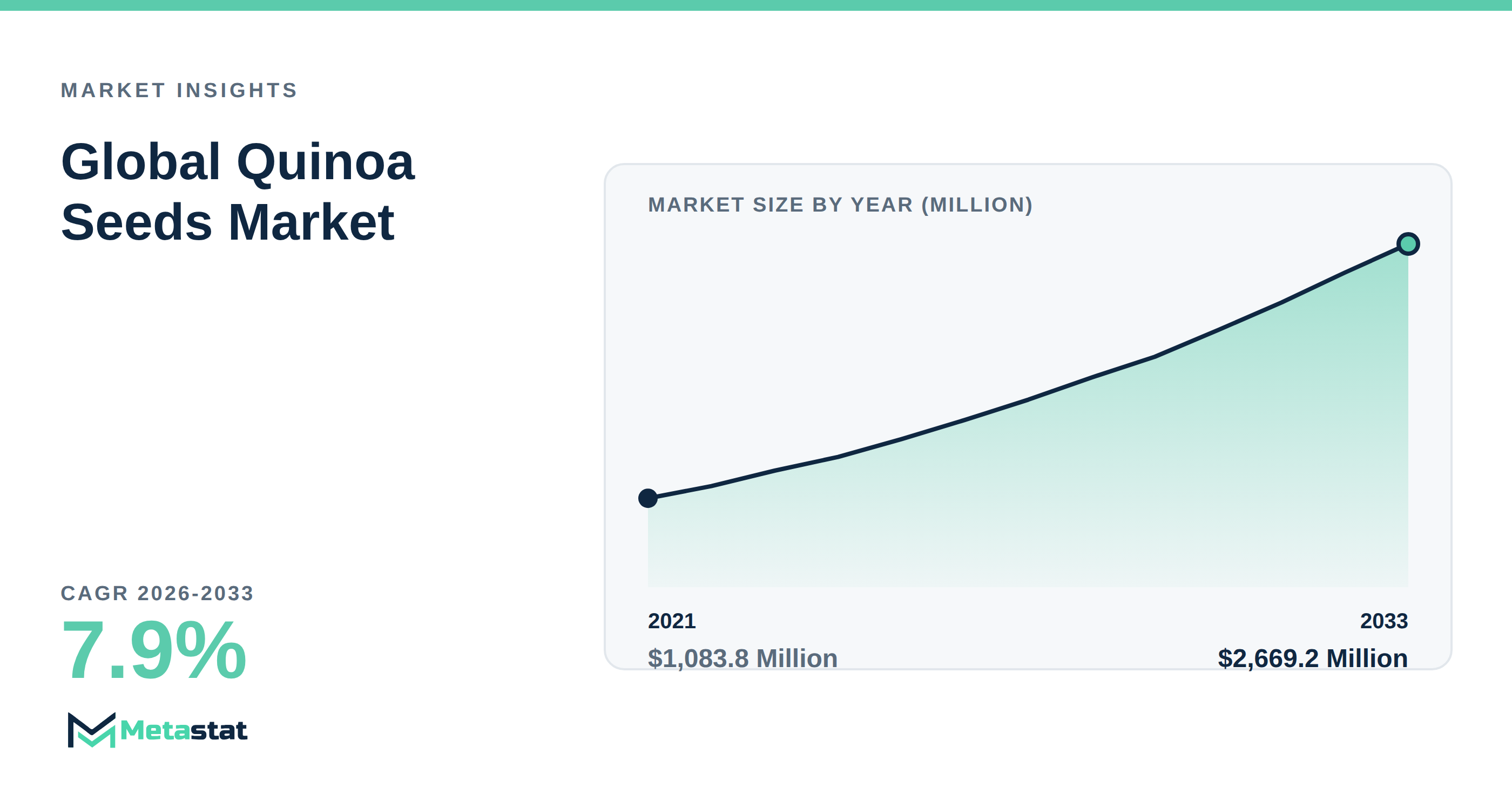
The Quinoa Seeds market is projected to grow from USD 1,485.2 million in 2025 to USD 2,729.6 million by 2033, reflecting a compound annual growth rate (CAGR) of 7.9%. Understanding the various elements that impact pricing provides valuable insights for buyers and stakeholders in this evolving market.
1. Rising Demand for Organic Quinoa
The growing interest in organic products significantly influences pricing in the quinoa seeds market. Organic quinoa seeds typically command higher prices due to increased production costs and a price premium driven by consumer willingness to pay more for sustainably sourced ingredients. This trend supports the expansion of organic farming, enabling producers to capitalize on the rising demand for environmentally friendly options. Consequently, buyers seeking organic quinoa navigate a market with higher prices, reflecting the inherent costs associated with organic cultivation.
2. Varietal Diversity and Market Preferences
Consumer preferences for various quinoa types, including white, red, black, and multicolor, impact pricing strategies. White quinoa remains dominant due to its mild flavor and versatility, while red and black varieties gain traction for their unique flavors and health benefits. The diversification in varietals encourages farmers to cultivate multiple types, leading to variable pricing based on supply and demand dynamics. Buyers consider these factors when sourcing quinoa seeds, because varietal preferences directly affect availability and cost.
3. Technological Advancements in Production
Recent innovations in removing saponin and advanced post-harvest processing techniques enhance quinoa seeds' quality and marketability. Improved processing reduces bitterness and enhances palatability, allowing for better integration into a variety of food products. However, these advancements often come at a higher cost for producers. Buyers should assess how these technological improvements influence pricing, because increased production expenses result in elevated price points for premium-quality quinoa seeds.
4. Supply Chain Dynamics and Geographic Diversification
The growth of quinoa cultivation outside traditional Andean regions and the geographic diversification of production significantly shape pricing structures. While countries outside these areas begin to grow quinoa, they contribute to supply chain resilience and reduce reliance on South American exports. This increase in supply helps stabilize prices; however, demand fluctuations and environmental factors still influence overall market pricing. Buyers should stay informed about sourcing options across different regions, evaluating how local agricultural practices affect costs.
5. Regulatory Compliance and Certification Costs
Producers face complexities related to regulatory compliance, particularly with organic certifications and food safety standards. Meeting these regulations leads to heightened operational costs, which are passed down to buyers. For quality-conscious consumers, understanding the implications of compliance requirements assists in navigating pricing in the quinoa seeds market. Buyers find opportunities to negotiate costs by collaborating with suppliers emphasizing compliance and sustainability.
6. Retail Dynamics and Distribution Channels
The distribution channels through which quinoa seeds are sold significantly influence pricing. Retailers, including hypermarkets, supermarkets, and online platforms, develop distinct pricing strategies based on their market positioning and target demographics. The rise of e-commerce has improved access to a broader array of quinoa seed products, making pricing more competitive. Buyers should evaluate their purchasing channels for quinoa seeds, because these will impact overall costs and availability.
7. Increasing Supply Chain Efficiency through Collaboration
Strategic sourcing partnerships and contract farming enhance quinoa supply chain efficiency. Collaborations between producers and retailers lead to favorable negotiation terms and lower costs for buyers. These partnerships enable access to high-quality quinoa seeds while reducing risks associated with supply disruptions. By establishing strong relationships within the supply chain, buyers leverage these collaborations to secure better pricing.
Understanding the various factors influencing pricing in the Quinoa Seeds market empowers buyers to make informed sourcing decisions. While the market continues to evolve, stakeholders should remain aware of these dynamics to navigate the competitive landscape effectively. For a comprehensive overview, consult the Global Quinoa Seeds Market report for detailed insights into the sector.
Tags
About the Authors

LEAD ANALYST
Utkarsh Khirodkar is a Lead Market Research Analyst at MetaStat Insight, specializing in market intelligence, technology sector assessments, and competitive strategy.

LEAD PRINCIPAL ANALYST, PHARMA AND HEALTHCARE
Food and Beverages · Healthcare · Healthcare IT · Medical Devices
Ajay Devgire is the Lead Healthcare Analyst at MetaStat Insight, leading strategic research and market intelligence initiatives across the global healthcare domain.

SENIOR RESEARCH ANALYST
Biotechnology · Food and Beverages · Medical Devices · Packaging
Snehal Pasalkar is a Research Analyst at MetaStat Insight, operating at the intersection of life sciences research, competitive strategy, and market intelligence.