
Explore key factors influencing costs and pricing strategies in the Tightening Process Monitoring market, helping buyers make informed decisions.
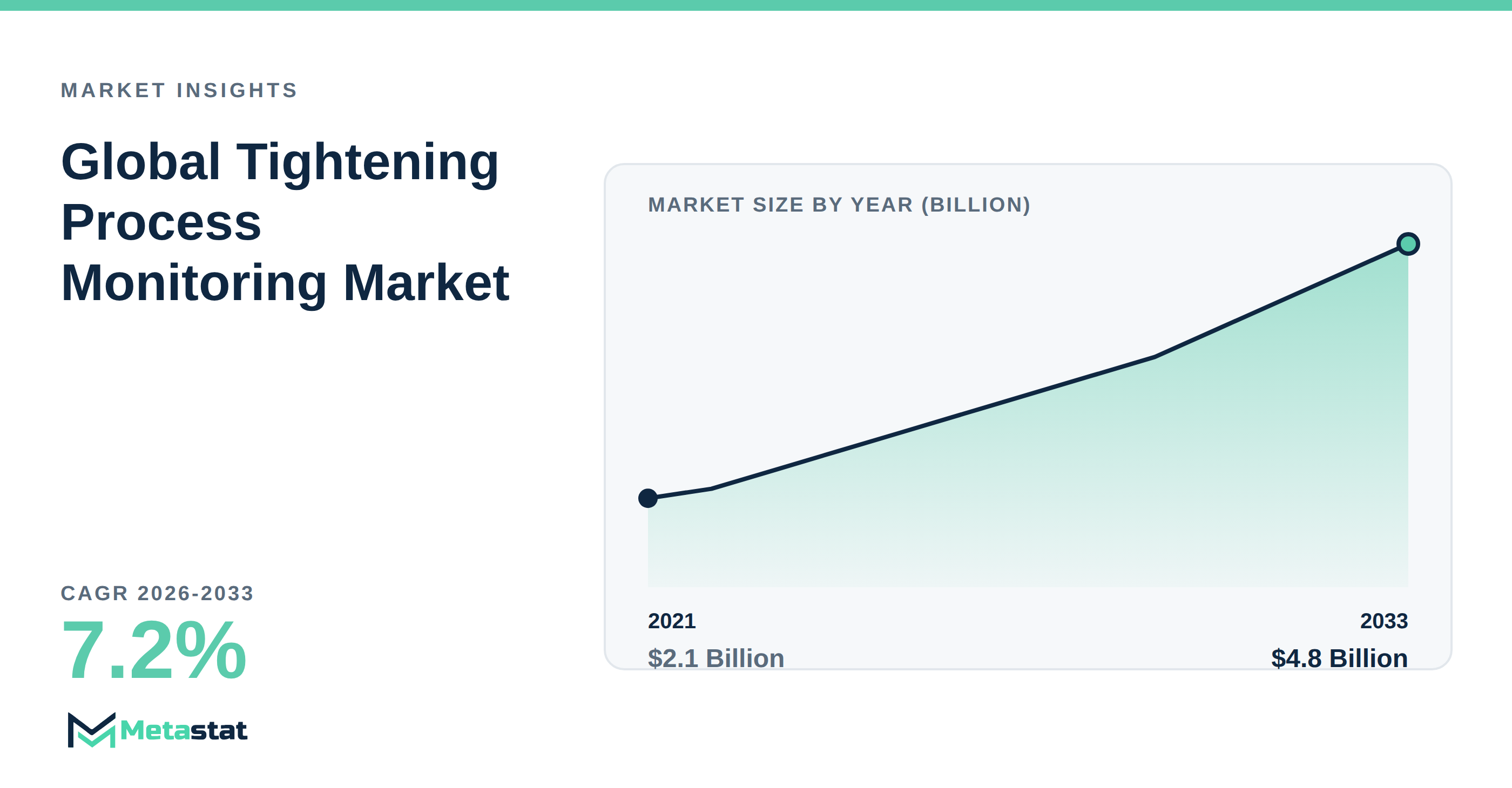
The dynamics in the Tightening Process Monitoring market significantly influence pricing strategies for various solutions. With the market expected to achieve a value of USD 4.8 billion by 2033, understanding the underlying cost factors becomes essential for buyers and operators. This blog highlights crucial insights impacting costs and pricing in this market.
1. Compliance with Safety Regulations Raises Costs
Stricter safety and quality regulations impose heightened costs on manufacturers within the Tightening Process Monitoring market. Compliance requires significant investment in advanced monitoring technologies and training to ensure that tightening solutions meet industry standards, particularly in sectors like automotive and aerospace. This additional financial burden leads to higher prices for end-users, because companies pass on compliance costs to maintain profitability.
2. Technological Advancements Drive Pricing Variability
While technology rapidly evolves, so do the costs associated with Tightening Process Monitoring solutions. Investments in next-generation technologies, including automated monitoring systems and integrated tightening control systems, can be substantial. While these advancements enhance operational efficiency, they introduce variability in pricing. Buyers who prioritize investing in the latest technologies secure long-term cost benefits through improved efficiency, but initial expenses fluctuate.
3. Supply Chain Disruptions Influence Operational Costs
The Tightening Process Monitoring market faces challenges stemming from supply chain instability. Disruptions in logistics, coupled with fluctuations in component availability, increase operational costs for manufacturers. When manufacturers encounter delays in sourcing essential components, they often resort to expedited shipping or alternative suppliers, leading to increased prices. Buyers experience these rises in manufacturing costs, because companies adjust pricing strategies accordingly.
4. Investment in Automation Enhances Cost Efficiency
Investing in automation technologies significantly impacts the costs associated with Tightening Process Monitoring solutions. Automation reduces manual errors and streamlines processes, ultimately lowering operational costs over time. While the initial capital investment is considerable, ongoing efficiency gains offset the costs. Buyers benefit from considering the long-term savings potential of automated systems, allowing for improved operational margins and reduced pricing pressures.
5. Market Fragmentation Creates Diverse Pricing Models
Market fragmentation in the Tightening Process Monitoring arena leads to varying pricing models among suppliers. Companies adapt to regional demands, compliance requirements, and levels of competition, resulting in a wide spectrum of pricing structures. Buyers find that negotiating with multiple suppliers yields better deals, because different companies offer distinct solutions at competitive rates. Understanding these variations empowers buyers to leverage their purchasing power effectively.
6. Economic Conditions and Inflation Pressure Margins
Macroeconomic factors, including inflation and fluctuating raw material costs, apply considerable pressure on profit margins within the Tightening Process Monitoring market. Rising costs lead companies to increase prices in an effort to maintain profitability. Buyers are impacted by these economic conditions, necessitating a keen awareness of market trends and pricing dynamics. Being informed of these influences guides purchasing decisions and timing.
7. Demand for Sustainable Solutions Shapes Pricing Strategies
A growing emphasis on sustainability within the manufacturing sector influences the pricing of tightening solutions. Companies increasingly invest in eco-friendly practices and technologies, which involve higher initial costs. While industries pivot towards sustainable practices, buyers seeking compliance with environmental standards should be prepared for potential price adjustments. Investing in sustainable solutions yields long-term benefits, making it crucial for buyers to consider the value of eco-friendly options in the context of pricing.
The insights outlined above offer a comprehensive understanding of the factors influencing costs in the Tightening Process Monitoring market. By recognizing these dynamics, buyers navigate pricing complexities and make informed decisions that align with their operational objectives.
The full analysis is in Global Tightening Process Monitoring Market.
Tags
About the Authors

LEAD ANALYST
Utkarsh Khirodkar is a Lead Market Research Analyst at MetaStat Insight, specializing in market intelligence, technology sector assessments, and competitive strategy.

INDUSTRY CONSULTANT - CHEMICALS & ADVANCED MATERIALS
Chemicals and Materials · Machinery & Equipment · Packaging
Amit Gadhekar Consultant for Chemicals and Materials at MetaStat Insight, directing sector-specific intelligence, research, and strategic consulting across global chemical and processing markets.

PRINCIPAL CONSULTANT - QUALITY SYSTEMS & COMPLIANCE
Electronics and Semiconductor · Machinery & Equipment · Professional Services
Omkar Phadtare is an Industry Consultant at MetaStat Insight, specializing in quality systems, regulatory compliance, and standards benchmarking to drive data-driven market intelligence and strategic industry research.

ENERGY & INFRASTRUCTURE INDUSTRY CONSULTANT
Automotive and Transportation · Electronics and Semiconductor · Energy and Power · Machinery & Equipment
Saurabh Vasant Ganvir consults for Energy & Infrastructure Industry at MetaStat Insight, specializing in renewable energy, solar EPC, and electric vehicle (EV) infrastructure markets.

LEAD CONSULTANT - COMMUNICATION, TELECOM, AND IT
Electronics and Semiconductor · Information & Technology · Machinery & Equipment · Professional Services
Ravindra Sathe Consultants for Communication, Telecom, and IT at MetaStat Insight. He leads the firm's industry research initiatives across telecommunications infrastructure, digital connectivity, enterprise networking, and emerging information technology domains.