
Discover key questions buyers ask suppliers in the High-Pressure Acid Leach (HPAL) Plant market to ensure strategic partnerships and operational success.
The High-Pressure Acid Leach (HPAL) Plant market is experiencing significant growth, primarily fueled by the increasing necessity for battery-grade nickel. Buyers venturing into this evolving market or considering partnerships with suppliers should pose essential questions to ensure their needs align with industry standards and expectations. This article outlines critical inquiries that guide decision-making and supplier selection in this sector.
1. How does your technology optimize nickel extraction?
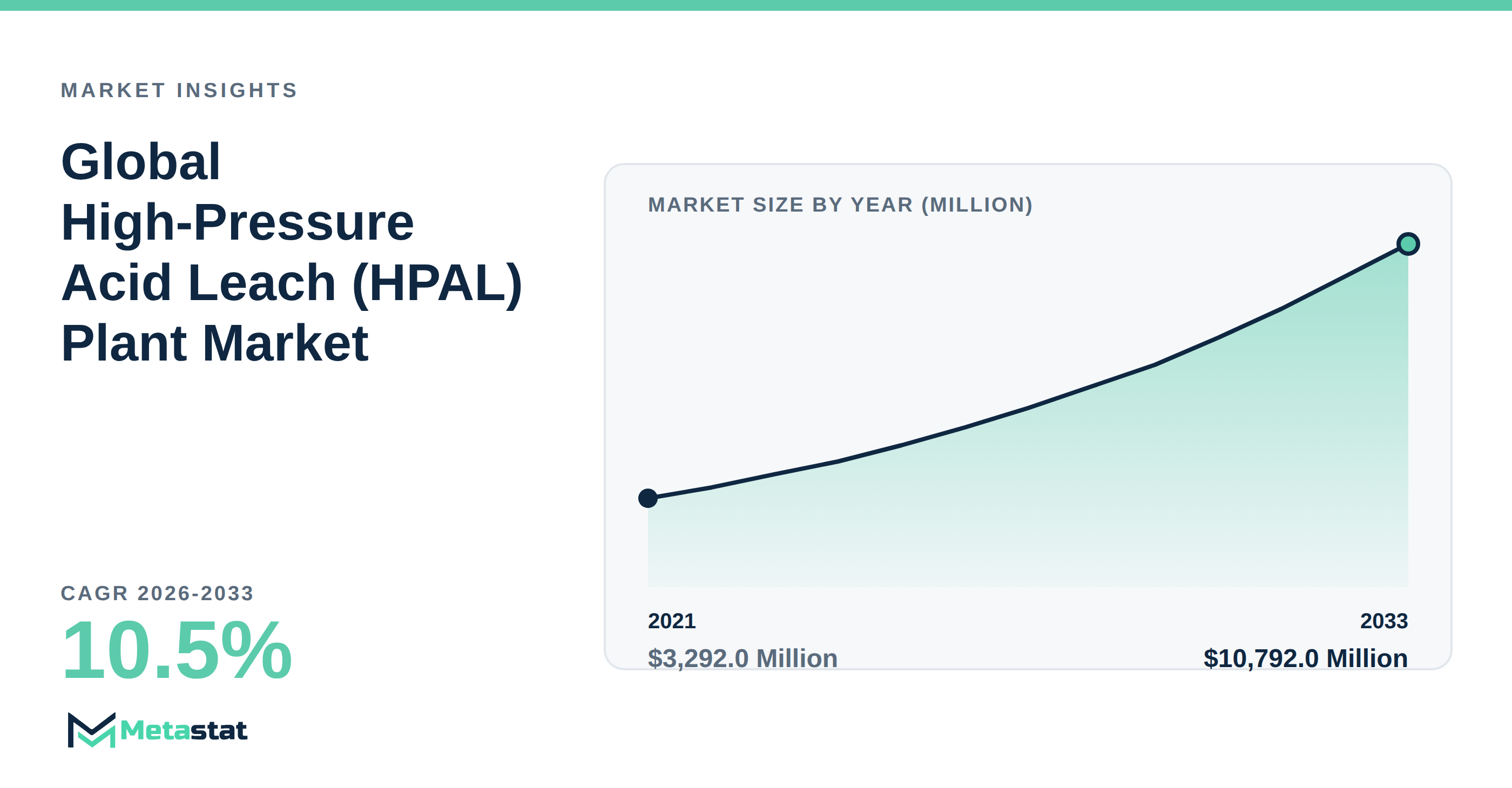
Understanding a supplier's technological innovations is crucial for buyers. Advanced extraction methods, particularly those focused on automation and process efficiency, play a vital role in enhancing yields. With the market anticipated to attain a value of USD 10,792 million by 2033, having efficient extraction processes is essential for suppliers to ensure operational viability. Buyers should seek evidence of how a supplier’s technology reduces costs and enhances recovery rates, which directly influences profitability in nickel production.
2. What is your strategy for managing sulfuric acid supply?
Sulfuric acid price fluctuations significantly impact overall production costs in HPAL facilities. Suppliers should clearly articulate their strategies for managing acid supply to maintain profitability amidst market volatility. A robust approach to securing stable supplies and effectively utilizing sulfuric acid is crucial for operational efficiency. Buyers should evaluate how suppliers adapt to changing market conditions to safeguard their production capabilities and costs.
3. How do you address environmental compliance and sustainability?
Environmental regulations exert considerable influence on HPAL operations. Suppliers should provide insights into their compliance strategies, particularly in waste management and emissions reduction. The market's shift towards sustainable processing necessitates that suppliers investing in eco-friendly practices position themselves favorably for long-term growth. Buyers should prioritize suppliers committed to adhering to stringent environmental standards and promoting responsible material sourcing.
4. What innovations are you implementing to improve process efficiency?
Buyers should inquire about a supplier's commitment to innovation, especially concerning advancements in HPAL autoclave technology. Enhanced designs for autoclaves substantially affect energy consumption and throughput, subsequently reducing operational costs. Understanding a supplier's investments in research and development and their ability to adapt modern technologies provide insights into their capacity to effectively meet future market demands.
5. How do you plan to support capacity expansions?
The continuous growth of the High-Pressure Acid Leach (HPAL) Plant market means suppliers should outline their capacity expansion plans. Buyers assess how suppliers intend to scale operations to match the rising nickel demand, particularly in resource-rich regions. A defined strategy for expansion demonstrates a supplier's ability to adapt to evolving industry dynamics and meet buyer expectations.
6. What partnerships do you have in place to ensure resource availability?
Strategic partnerships significantly enhance a supplier's operational capabilities within the HPAL market. Buyers should inquire about collaborations with technology providers, raw material suppliers, and industry stakeholders. Such alliances improve sourcing efficiency and drive innovation. Suppliers actively engaged in partnerships signal a commitment to enhancing their operational stature, which is essential for sustained success in the market.
7. How do you ensure quality feedstock availability?
Securing reliable quality feedstock is crucial for HPAL operations. Buyers should evaluate how suppliers source their limonite and other nickel laterite feeds. Ensuring a consistent supply of quality inputs directly impacts operational efficiency and production feasibility. Suppliers with established relationships and effective logistics strategies are better positioned to mitigate risks associated with feedstock availability.
In summary, these questions create a framework for buyers in the High-Pressure Acid Leach (HPAL) Plant market to evaluate potential suppliers effectively. The responses to these inquiries illuminate a supplier's expertise, commitment to sustainability, and readiness to scale operations. This understanding ultimately shapes the buyer's decision-making process and strategic partnerships.
The full analysis is in Global High-Pressure Acid Leach (HPAL) Plant Market.
Tags
About the Authors

LEAD ANALYST
Utkarsh Khirodkar is a Lead Market Research Analyst at MetaStat Insight, specializing in market intelligence, technology sector assessments, and competitive strategy.

INDUSTRY CONSULTANT - CHEMICALS & ADVANCED MATERIALS
Chemicals and Materials · Machinery & Equipment · Packaging
Amit Gadhekar Consultant for Chemicals and Materials at MetaStat Insight, directing sector-specific intelligence, research, and strategic consulting across global chemical and processing markets.