
Explore the factors driving regional differences in the Packaging market, highlighting Asia Pacific's growth and North America's challenges.
Recent trends indicate a stark divergence in the growth of the global Packaging market across different regions. The Asia Pacific region leads with a commanding market share of 42.7%, while North America follows at 25.4%. This blog post analyzes the reasons behind these regional differences and highlights what businesses should consider.
What accounts for Asia Pacific's growth lead?
The Asia Pacific region experiences significant growth in the Packaging market, driven by rapid urbanization and rising disposable incomes. Consumers in countries like China and India increasingly emphasize convenience, leading to an uptick in demand for packaged goods. This demographic shift supports the expansion of various packaging formats, particularly flexible packaging, which is anticipated to rise from USD 496.7 million in 2026 to USD 722.8 million by 2033, reflecting a CAGR of 5.5%.
Improvements in infrastructure, including logistics and distribution networks, further enhance market access for manufacturers. Enhanced capabilities facilitate timely delivery of packaging solutions, contributing to consistent growth in the sector. While market conditions improve, companies have opportunities to innovate and align offerings with changing consumer preferences.
North America's growth: The impact of consumer preferences
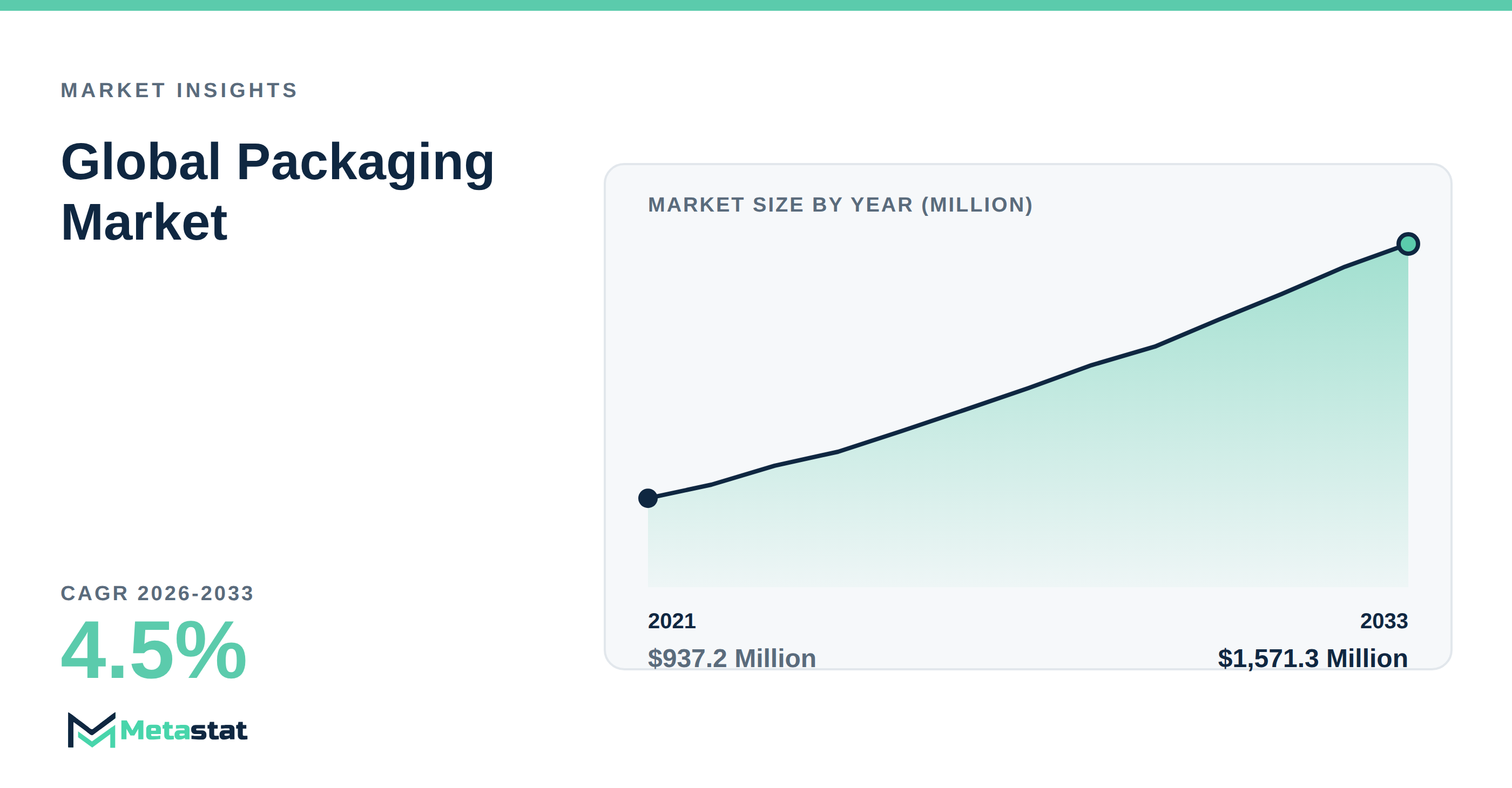
In contrast, the North American Packaging market is expected to achieve a valuation of USD 380.2 million by 2033, with a stable CAGR of 4.5%. The region’s growth, while positive, lags behind that of Asia Pacific. A significant factor is the increasing preference for convenience and sustainable packaging solutions among consumers. Companies are responding by emphasizing eco-friendly practices, which align with shifting consumer expectations.
Regulatory compliance further shapes the landscape in North America. Companies are compelled to meet stringent environmental regulations while ensuring the safety and quality of their packaging. This compliance strategy influences operational costs and may slow down the pace of innovation, in contrast to the dynamic responses observed in the Asia Pacific. The emphasis on sustainable packaging, though beneficial long-term, creates additional operational hurdles in the short term.
Inflationary pressures affecting both regions
Both Asia Pacific and North America are grappling with inflationary pressures that affect their respective growth trajectories. Rising costs for raw materials, energy, and labor impact profitability across the Packaging market. North American manufacturers face significant challenges in optimizing budgets for product development and innovation due to these rising expenses. The flexible packaging segment, in particular, suffers from volatility in petroleum-based materials, which complicates cost management.
In Asia Pacific, while rising inflation poses challenges, the overall market growth remains resilient, driven by consumer demand. Manufacturers in this region pursue innovative solutions to balance cost pressures while enhancing product offerings, allowing for sustained growth potential.
Technological advancements and the competitive landscape
Technological advancements play a critical role in shaping the Packaging market across both regions. In Asia Pacific, companies invest heavily in automation and digital transformation to streamline operations and enhance production efficiency. This technological integration aligns with rapid urbanization, further supporting market expansion. Businesses that leverage technology effectively respond to market changes and consumer preferences, which enhances competitiveness.
Conversely, North American players focus on compliance solutions, often at the expense of rapid innovation. While technological improvements are present, the pace lags compared to the advancements seen in Asia Pacific. Companies falling behind in adopting new technologies risk losing market share to more agile competitors well positioned to meet evolving consumer demands.
What does the future hold for the Packaging market?
Looking ahead, regional divergence in the Packaging market will likely persist. The Asia Pacific region is expected to continue leading with greater growth opportunities, facilitated by urbanization and consumer demand. Businesses in this region are well-positioned to capitalize on innovative packaging solutions that meet sustainability goals.
In contrast, North American companies navigate inflationary pressures and regulatory compliance challenges while striving to remain competitive. The emphasis on sustainability, though essential, may require longer timelines to fully realize its potential. Ultimately, organizations in both regions should adapt to these dynamics by investing in innovation, sustainability, and operational efficiency to maintain competitive positions in the evolving Packaging market.
For a detailed analysis of market trends and competitive strategies, refer to the Global Packaging Market.
Tags
About the Authors

LEAD ANALYST
Utkarsh Khirodkar is a Lead Market Research Analyst at MetaStat Insight, specializing in market intelligence, technology sector assessments, and competitive strategy.

SENIOR RESEARCH ANALYST
Biotechnology · Food and Beverages · Medical Devices · Packaging
Snehal Pasalkar is a Research Analyst at MetaStat Insight, operating at the intersection of life sciences research, competitive strategy, and market intelligence.

INDUSTRY CONSULTANT - CHEMICALS & ADVANCED MATERIALS
Chemicals and Materials · Machinery & Equipment · Packaging
Amit Gadhekar Consultant for Chemicals and Materials at MetaStat Insight, directing sector-specific intelligence, research, and strategic consulting across global chemical and processing markets.