
The Recruitment and Staffing market exhibits significant regional differences. This post explores why North America leads while Asia Pacific and South America lag behind.
The Recruitment and Staffing market demonstrates notable regional diversification, highlighting the contrast in growth trajectories among various areas. Understanding these disparities is essential for businesses aiming to refine their hiring strategies and seize growth opportunities.
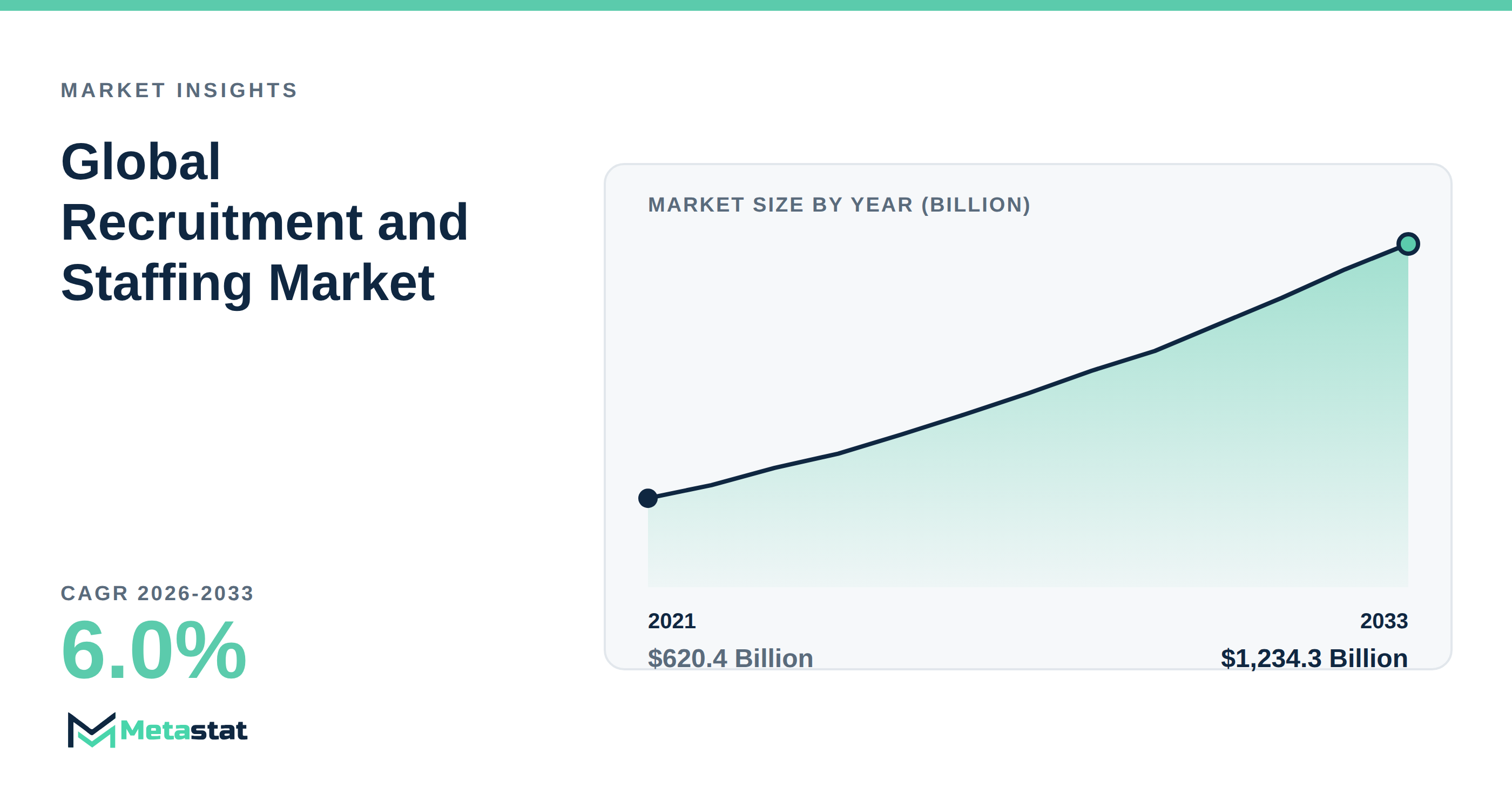
Which regions are leading and lagging in the Recruitment and Staffing market?
North America and Europe currently lead the Recruitment and Staffing market, supported by strong economic conditions and high levels of technological adoption. Specifically, North America is projected to experience robust growth, driven by ongoing investments in AI-enabled recruitment automation. This approach enhances the efficiency of hiring processes, thereby allowing companies to attract top talent more effectively.
In contrast, regions like Asia Pacific and South America exhibit considerable growth potential but face distinct challenges. The Asia Pacific region is witnessing significant economic progress and increasing workforce participation, which elevates the demand for recruitment services. However, the competitive framework in this region is fragmented, making it difficult for many firms to gain a solid market presence. South America, while abundant in opportunities, grapples with complexities within the labor market and inconsistent regulatory requirements that impede rapid growth.
What drives the divergence between regions?
The differences in growth rates across these regions stem from various factors, including regulatory environments, economic stability, and levels of technological advancement. North America's regulatory framework encourages innovation and entrepreneurial activity, enabling quicker adaptations to fluctuations in the labor market. In contrast, regions with more stringent compliance requirements encounter extended hiring processes, negatively impacting their operational efficiency.
The pace of technological adoption varies considerably among regions. North American companies increasingly utilize advanced algorithms and machine learning tools within their recruitment strategies, enhancing candidate sourcing and selection. This technology gap contributes to a slower growth rate in areas that have not embraced similar innovations in their hiring practices.
How do economic conditions shape the Recruitment and Staffing market?
Economic factors significantly affect recruitment dynamics. In North America, GDP growth correlates directly with increased hiring, because organizations respond proactively to rising consumer demand. This link between economic expansion and workforce growth reinforces North America's leading position in the market.
Conversely, economic challenges in regions including South America and parts of Europe introduce barriers for recruitment. Inflationary pressures and elevated costs associated with talent acquisition diminish demand for staffing services, resulting in reduced market activity. Companies operating in such environments contend with financial limitations that hinder their ability to invest in effective recruitment solutions and attract top talent.
What strategic actions do organizations take in response to these trends?
Organizations aiming to strengthen their recruitment strategies across diverse regions should prioritize understanding local market dynamics and regulatory conditions. For instance, businesses in rapidly developing areas like Asia Pacific achieve a competitive advantage by adopting innovative recruitment technologies that streamline hiring processes and enhance candidate engagement.
Constructing strong employer brands remains critical for attracting top-tier talent. In tight labor markets, particularly in high-demand fields including technology and healthcare, investing in employer branding and promoting positive candidate experiences are essential strategies for overcoming talent shortages.
Organizations should consider adopting flexible and contingent workforce models. This strategy allows companies to respond swiftly to changes in market conditions, enabling them to scale their talent acquisition efforts in accordance with fluctuations in demand. Such agility fosters operational resilience and promotes long-term growth in a fluctuating market environment.
This analysis illustrates the distinct regional dynamics shaping the Recruitment and Staffing market, influencing each area's growth trajectory. North America maintains its leadership position thanks to favorable economic conditions and advanced technological integration, while regions like Asia Pacific and South America hold promise but encounter challenges. By navigating these complexities, organizations optimize their recruitment strategies to secure the talent necessary for success in an increasingly competitive environment. For more detailed insights, refer to the Global Recruitment and Staffing Market.
Tags
About the Authors

LEAD ANALYST
Utkarsh Khirodkar is a Lead Market Research Analyst at MetaStat Insight, specializing in market intelligence, technology sector assessments, and competitive strategy.

PRINCIPAL CONSULTANT - ENTERPRISE AI & EMERGING TECHNOLOGIES
Banking & Finance · Electronics and Semiconductor · Energy and Power · Healthcare IT · Information & Technology · Professional Services
Vijay Gunti is a Principal Consultant at MetaStat Insight, bringing over two decades of experience across enterprise digital transformation, technology strategy, and intelligent systems.

PRINCIPAL CONSULTANT - QUALITY SYSTEMS & COMPLIANCE
Electronics and Semiconductor · Machinery & Equipment · Professional Services
Omkar Phadtare is an Industry Consultant at MetaStat Insight, specializing in quality systems, regulatory compliance, and standards benchmarking to drive data-driven market intelligence and strategic industry research.

LEAD CONSULTANT - COMMUNICATION, TELECOM, AND IT
Electronics and Semiconductor · Information & Technology · Machinery & Equipment · Professional Services
Ravindra Sathe Consultants for Communication, Telecom, and IT at MetaStat Insight. He leads the firm's industry research initiatives across telecommunications infrastructure, digital connectivity, enterprise networking, and emerging information technology domains.