
Explore the contrasting digital advertising landscapes of Saudi Arabia and the UAE, highlighting growth drivers, challenges, and strategies for success.
The Middle East Digital Advertising market presents a complex picture, with Saudi Arabia and the UAE charting divergent paths in growth and adoption. Understanding the factors that contribute to these differences is essential for businesses looking to optimize their marketing strategies in this dynamic environment.
What drives the growth in Saudi Arabia's digital advertising?
Saudi Arabia's digital advertising landscape evolves rapidly, influenced by a young and tech-savvy population engaged with online content. Increased investment in digital infrastructure supports this trend, because more consumers access the internet via smartphones and computers. Saudi Arabia's Vision 2030 initiative emphasizes the importance of digital transformation across sectors, further encouraging businesses to allocate greater portions of their advertising budgets to digital formats.
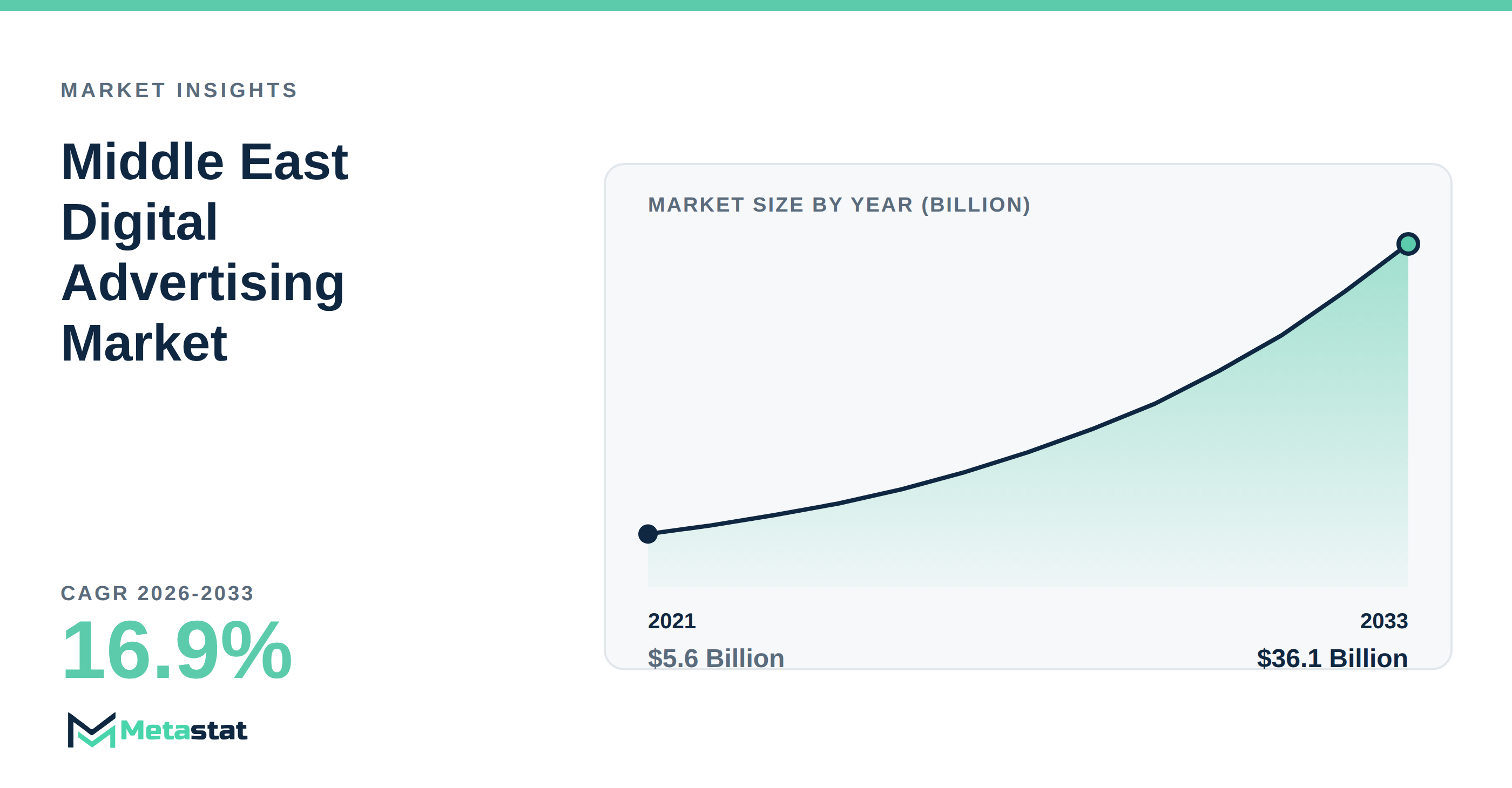
The market, valued at USD 10.3 billion in 2025, is projected to expand to USD 36.1 billion by 2033, reflecting the region's commitment to digital marketing strategies. Sectors including retail and e-commerce in Saudi Arabia are particularly capitalizing on this growth, using search and social media advertising to effectively connect with their target audiences.
How does the UAE maintain its leading position?
The UAE has established itself because a frontrunner in the Middle East Digital Advertising market through strategic investments and a favorable regulatory environment. A diverse economy bolsters a thriving digital landscape, enabling businesses from various industries to leverage advanced technologies. Advertisers benefit from enhanced analytics tools that facilitate personalized marketing campaigns, resulting in increased engagement and conversions.
The emphasis on tourism and hospitality promotes significant advertising spend, particularly in the travel and luxury sectors. Social media advertising flourishes, with platforms like Instagram and TikTok driving strategies that resonate with local consumers. The UAE's rising smartphone penetration supports this trend, with the smartphone advertising segment expected to grow substantially.
What challenges do these markets face?
Despite notable growth, both Saudi Arabia and the UAE encounter challenges that could impact their positions in the digital advertising market. Regulatory compliance remains an obstacle, particularly with stringent data protection regulations. These regulations necessitate substantial investments in technology and processes, often diverting funds from innovation and strategy implementation.
Inflationary pressures on advertising budgets pose concerns. Rising costs constrain budgets, affecting the overall effectiveness of advertising campaigns. Geopolitical risks introduce uncertainties that influence consumer confidence, making it crucial for businesses to adapt their strategies accordingly.
What accounts for the distance between the two regions?
The divergence between Saudi Arabia and the UAE's digital advertising markets results from differing economic structures and consumer behaviors. The UAE's diverse economy promotes broader digital adoption across various sectors, while Saudi Arabia focuses primarily on retail and e-commerce for growth. Consequently, the UAE attracts a wider array of advertising investments, whereas Saudi Arabia's market remains more concentrated.
Cultural factors influence content localization strategies. In Saudi Arabia, the emphasis on Arabic-language creative enhances engagement, prompting advertisers to invest in localized campaigns. In contrast, the UAE's multicultural environment necessitates a more varied approach to content, allowing companies to employ a broader range of advertising strategies.
How should businesses navigate the diverging paths?
For businesses aiming to succeed in the Middle East Digital Advertising market, grasping these regional dynamics is paramount. Tailoring advertising strategies to meet local tastes, preferences, and compliance requirements considerably enhances effectiveness. Leveraging advanced tools, including AI-driven analytics, aids in optimizing campaigns and maximizing returns on investment.
Investment in technology and infrastructure is vital for both regions. While digital advertising evolves, companies that embrace change and prioritize data-driven decision-making will position themselves for sustained growth in this competitive landscape.
In summary, while both Saudi Arabia and the UAE lead the Middle East Digital Advertising market, their diverging paths present unique opportunities and challenges. By understanding these dynamics, businesses make informed decisions and effectively capitalize on the expanding market.
For a detailed analysis of the market, refer to the Middle East Digital Advertising Market.
Tags
About the Authors

LEAD ANALYST
Utkarsh Khirodkar is a Lead Market Research Analyst at MetaStat Insight, specializing in market intelligence, technology sector assessments, and competitive strategy.

PRINCIPAL CONSULTANT - ENTERPRISE AI & EMERGING TECHNOLOGIES
Banking & Finance · Electronics and Semiconductor · Energy and Power · Healthcare IT · Information & Technology · Professional Services
Vijay Gunti is a Principal Consultant at MetaStat Insight, bringing over two decades of experience across enterprise digital transformation, technology strategy, and intelligent systems.

LEAD CONSULTANT - COMMUNICATION, TELECOM, AND IT
Electronics and Semiconductor · Information & Technology · Machinery & Equipment · Professional Services
Ravindra Sathe Consultants for Communication, Telecom, and IT at MetaStat Insight. He leads the firm's industry research initiatives across telecommunications infrastructure, digital connectivity, enterprise networking, and emerging information technology domains.