
This blog delves into the driving forces, challenges, and future outlook of the Pickup Truck market, emphasizing growth opportunities through innovation and sustainability.
Understanding the dynamics of the Pickup Truck market highlights the factors propelling its growth trajectory. This analysis focuses on the surging demand for larger vehicles and how evolving consumer preferences significantly shape market trends.
What factors are driving demand in the Pickup Truck market?
The Pickup Truck market is experiencing robust demand, primarily fueled by changing consumer preferences towards larger and more versatile vehicles. While urbanization progresses globally, consumers increasingly seek vehicles that cater to both personal and professional needs. The versatility of pickup trucks makes them an attractive option for families, outdoor enthusiasts, and businesses alike. This shift is evident in the rising disposable income levels, particularly in developing regions, which enhances purchasing power and encourages investments in larger vehicles.
North America serves because the predominant market, holding a significant share primarily driven by lifestyle choices and practical applications. The projected market valuation for North America is USD 151.5 billion by 2033, reflecting strong growth supported by both personal and commercial users. The region's preference for pickup trucks stems from a robust supply chain and well-established infrastructure, facilitating vehicle sales and servicing effectively.
Which segment within the Pickup Truck market is leading growth?
The full-size light-duty pickup truck segment is anticipated to demonstrate notable growth, with a projected market valuation of USD 140.6 billion by 2033. This expansion reflects a strong consumer inclination towards vehicles that offer both utility and comfort. Full-size light-duty pickups are increasingly favored across various demographics, including families and commercial enterprises.
Another significant segment is compact pickup trucks, expected to achieve a compound annual growth rate (CAGR) of 6.8%, rising from USD 35.6 billion in 2026 to USD 56.2 billion by 2033. This segment appeals to urban drivers seeking vehicles that provide cargo capacity without sacrificing maneuverability, aligning perfectly with lifestyle trends. The enhancements in fuel efficiency, safety features, and connectivity offered by manufacturers contribute to their rising popularity.
How are technological advancements shaping the Pickup Truck market?
Technological integration within the Pickup Truck market enhances operational efficiencies and drives product innovation. Many manufacturers are adopting advanced technologies including automation, digital solutions, and electric powertrains to streamline production processes and improve overall performance. The increasing attention towards battery electric pickup trucks, anticipated to experience a robust growth rate of 21% during the forecast period, indicates a shift towards sustainable solutions in the market.
While consumers become more eco-conscious, demand for electric and hybrid variants intensifies. The integration of innovative features including advanced safety systems and improved connectivity options enhances the appeal of these vehicles, particularly among tech-savvy consumers, thereby stimulating growth. Compliance with regulatory standards motivates manufacturers to innovate continuously, ensuring their offerings meet new criteria regarding emissions and fuel efficiency.
What challenges exist for the Pickup Truck market?
Despite the promising growth trajectory, the Pickup Truck market faces several challenges. Regulatory compliance, particularly concerning emissions and safety standards, necessitates considerable investments from manufacturers. These financial requirements impact operational costs and potentially delay new model introductions. Macroeconomic conditions, including inflationary pressures and geopolitical tensions, introduce uncertainties into supply chains, affecting production timelines and costs.
Manufacturers adapt to these conditions by optimizing supply chain strategies and enhancing operational efficiencies. The market's fragmentation, characterized by various players ranging from established automakers to new entrants, intensifies competition and necessitates strategic mergers and partnerships to broaden product offerings. This competitive environment presents both challenges and opportunities because companies strive to maintain market share and address consumer needs.
What is the strategic outlook for the Pickup Truck market?
The future of the Pickup Truck market remains positive, driven by a commitment to innovation and sustainability. Manufacturers are focusing on research and development investments to enhance operational efficiencies and align with growing consumer preferences towards electric and hybrid vehicles. Strategic collaborations among industry players are vital for resource sharing, enhancing research and development capabilities and optimizing product lines.
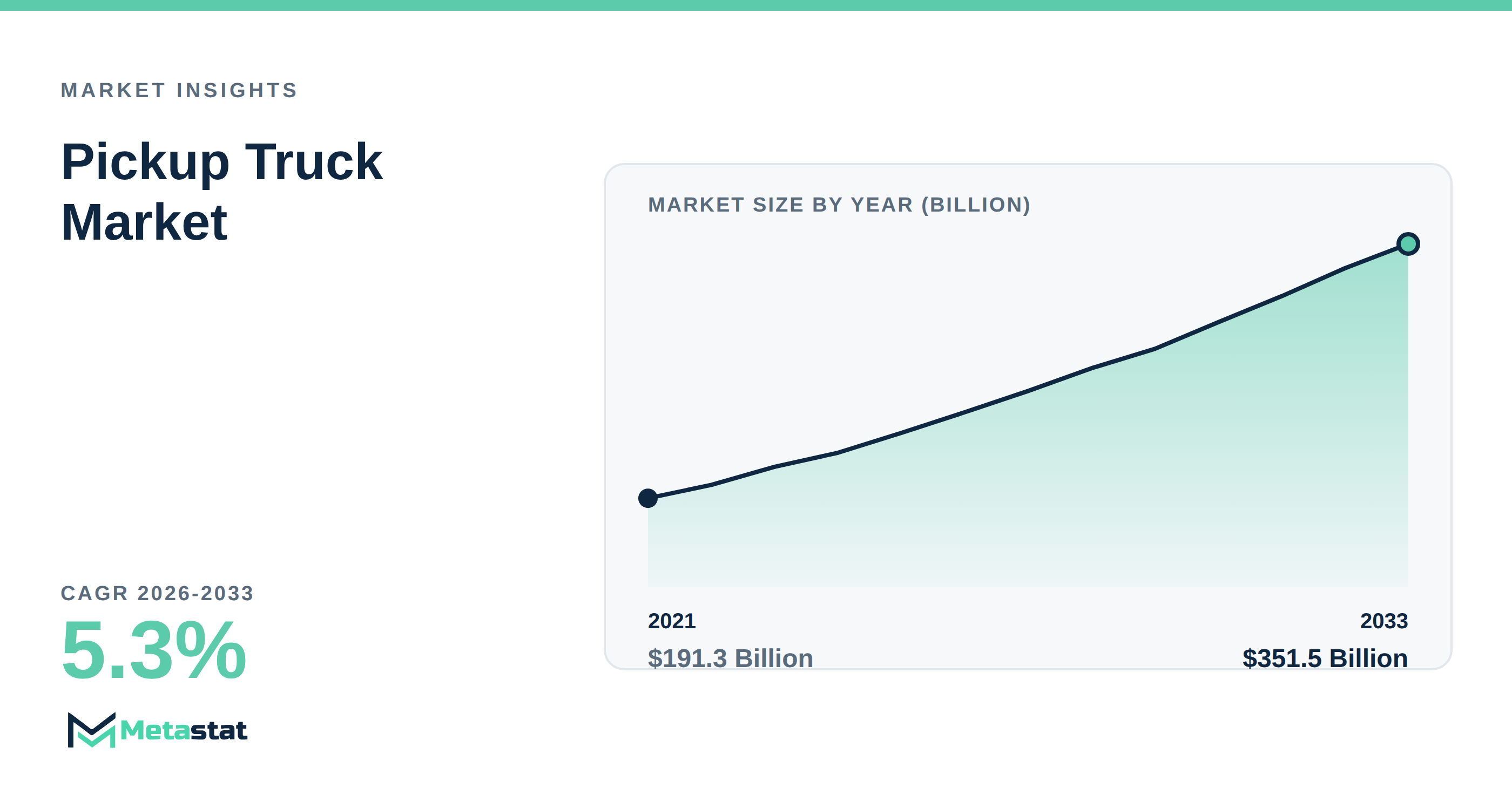
Overall, the Pickup Truck market is poised for substantial growth, with projections indicating an increase from USD 232.5 billion in 2025 to USD 351.5 billion by 2033, representing a CAGR of 5.3 percent. Stakeholders in this market should prioritize adapting to changing consumer preferences, investing in sustainable practices, and leveraging technological advancements to capture new growth opportunities. For a detailed analysis, consult the Global Pickup Truck Market.
Tags
About the Authors

LEAD ANALYST
Utkarsh Khirodkar is a Lead Market Research Analyst at MetaStat Insight, specializing in market intelligence, technology sector assessments, and competitive strategy.

ENERGY & INFRASTRUCTURE INDUSTRY CONSULTANT
Automotive and Transportation · Electronics and Semiconductor · Energy and Power · Machinery & Equipment
Saurabh Vasant Ganvir consults for Energy & Infrastructure Industry at MetaStat Insight, specializing in renewable energy, solar EPC, and electric vehicle (EV) infrastructure markets.