
This blog delves into the growth factors and challenges of the Industrial Metaverse market, emphasizing technological integration and regional investments.
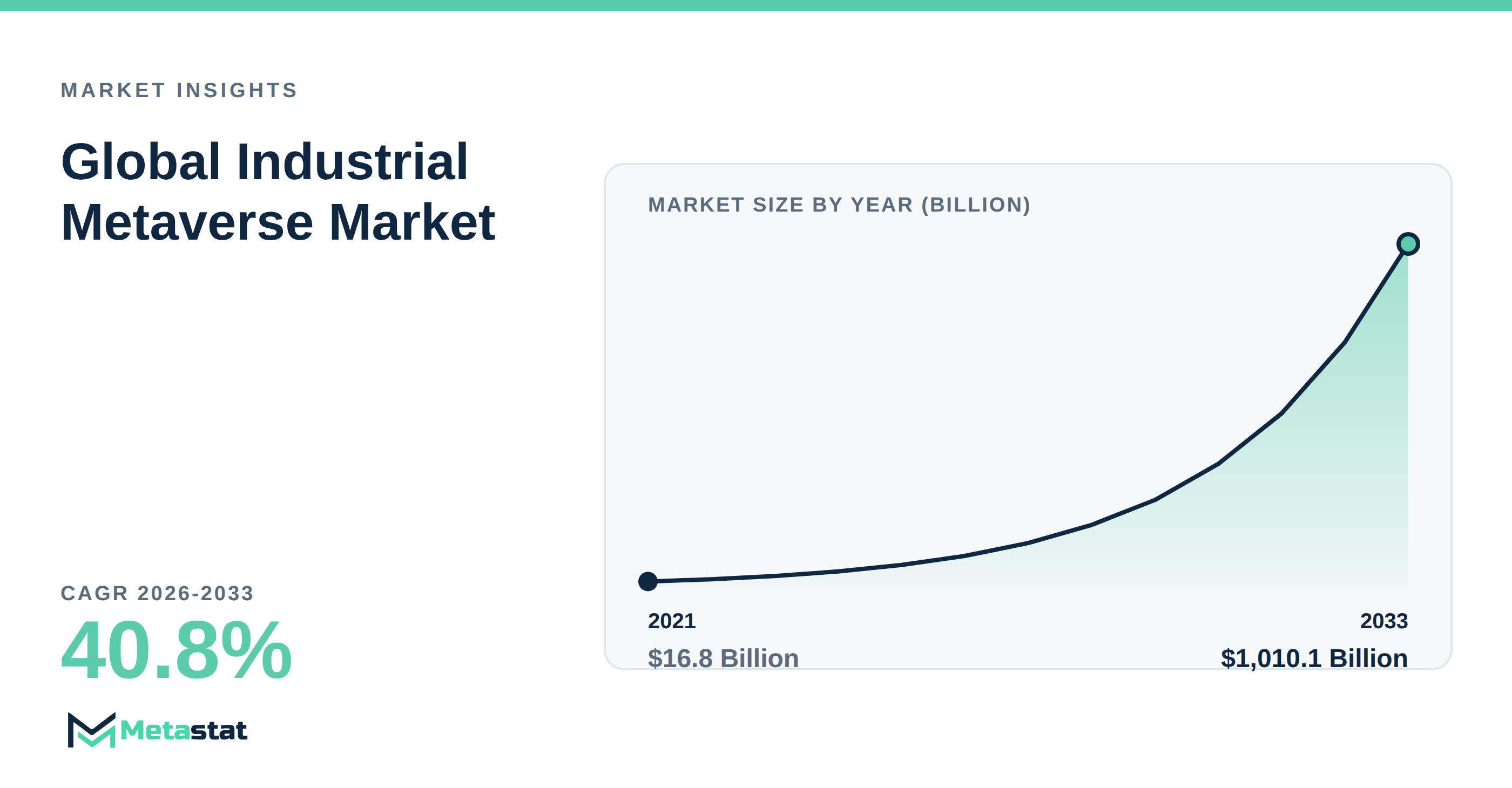
The Industrial Metaverse market is set for transformative growth, expected to reach USD 1,010.1 billion by 2033. This evolution highlights the increasing integration of cutting-edge technologies including augmented reality (AR), virtual reality (VR), and artificial intelligence (AI). Identifying these trends is essential for decision-makers keen on leveraging innovations for competitive advantage.
What factors are driving the growth of the Industrial Metaverse market?
Multiple factors contribute to the growth of the Industrial Metaverse market. A significant driver is the substantial investment across various sectors in digital transformation initiatives. Industries including automotive, healthcare, and manufacturing are channeling resources into innovative technologies to boost productivity and operational efficiency. The increasing adoption of AR and VR for training and simulation applications is gaining momentum, with companies recognizing their potential to reduce costs and enhance outcomes.
Forecasts indicate that augmented reality is expected to surge from USD 13 billion in 2025 to USD 144 billion by 2033. This growth responds to the demand for dynamic user experiences and immediate data visualization. Meanwhile, virtual reality is projected to escalate to USD 274.6 billion within the same timeframe, showcasing its role in creating immersive training settings and improving collaboration across teams.
How is regional investment shaping the Industrial Metaverse?
Regional dynamics significantly influence the growth of the Industrial Metaverse market. North America, Europe, and Asia Pacific are leading regions for investments focused on updating infrastructure and improving operational capabilities. Such investment encourages innovation and presents opportunities for local players to address specific market demands.
A favorable macroeconomic environment drives this trend, because conditions like low interest rates promote venture funding. Rising GDP growth rates enhance consumer spending, empowering organizations to allocate funds for digital transformation efforts. Nevertheless, geopolitical tensions and supply chain disruptions pose challenges that complicate these investment landscapes.
What challenges does the Industrial Metaverse market face?
While demonstrating impressive growth potential, the Industrial Metaverse market confronts critical challenges, especially concerning regulatory compliance. Stricter rules regarding data privacy and security impede innovation and slow down deployment processes. Companies frequently encounter heightened operational burdens to meet compliance obligations, which hinder their ability to adopt new technologies effectively.
The prevailing economic context, characterized by inflation and currency fluctuations, adds complexity to financial planning. Organizations navigate these challenges while striving to maintain profitability and competitive positioning within the market. Infrastructure gaps and connectivity issues obstruct broader adoption rates, particularly in regions that lack the necessary technological backbone to support advanced applications.
How is technological integration enhancing operational efficiency?
Technological integration within the Industrial Metaverse is essential for improving operational efficiency across various sectors. The swift uptake of automation and AI facilitates the streamlining of processes and minimizes resource waste. Industries including automotive and healthcare capitalize on these advancements to enhance workflows and optimize resource allocation.
Investment in AI technologies promotes superior decision-making and predictive analytics crucial for competitive advantage. Companies adopting these tools deliver better services and products, stimulating demand in the Industrial Metaverse market. Aligning technological advancements with operational productivity and cost-efficiency initiatives fosters sustained growth and opens avenues for further investment in innovative solutions.
What future outlooks should organizations consider?
The strategic outlook for the Industrial Metaverse market highlights the importance of responding to corporate imperatives, including innovation, sustainability, and efficiency. Firms emphasizing these aspects position themselves to seize emerging opportunities. By integrating next-generation technologies and pursuing sustainable practices, companies enhance their competitive standing.
Investment in R&D remains vital because organizations navigate the evolving landscape of the Industrial Metaverse. Balancing compliance with regulatory standards while pursuing innovation poses challenges, but it offers pathways for differentiation. The Industrial Metaverse market presents significant opportunities alongside notable obstacles. Understanding the growth drivers, regional dynamics, and the significance of technological integration equips organizations to strategically position themselves for success. For a detailed analysis, refer to the Global Industrial Metaverse Market.
Tags
About the Authors

LEAD ANALYST
Utkarsh Khirodkar is a Lead Market Research Analyst at MetaStat Insight, specializing in market intelligence, technology sector assessments, and competitive strategy.

PRINCIPAL CONSULTANT - ENTERPRISE AI & EMERGING TECHNOLOGIES
Banking & Finance · Electronics and Semiconductor · Energy and Power · Healthcare IT · Information & Technology · Professional Services
Vijay Gunti is a Principal Consultant at MetaStat Insight, bringing over two decades of experience across enterprise digital transformation, technology strategy, and intelligent systems.

LEAD CONSULTANT - COMMUNICATION, TELECOM, AND IT
Electronics and Semiconductor · Information & Technology · Machinery & Equipment · Professional Services
Ravindra Sathe Consultants for Communication, Telecom, and IT at MetaStat Insight. He leads the firm's industry research initiatives across telecommunications infrastructure, digital connectivity, enterprise networking, and emerging information technology domains.