
Explore the growth drivers and emerging trends within the Heavy Lifting and Haulage market, highlighting key segments and opportunities for businesses.
The Heavy Lifting and Haulage market is projected to expand significantly, with its value increasing from USD 267.2 billion in 2025 to USD 445.6 billion by 2033. This remarkable growth, driven by the rising demand for advanced lifting solutions across various sectors including construction, power generation, and oil and gas, presents key implications for industry players eager to capitalize on this upward trend.
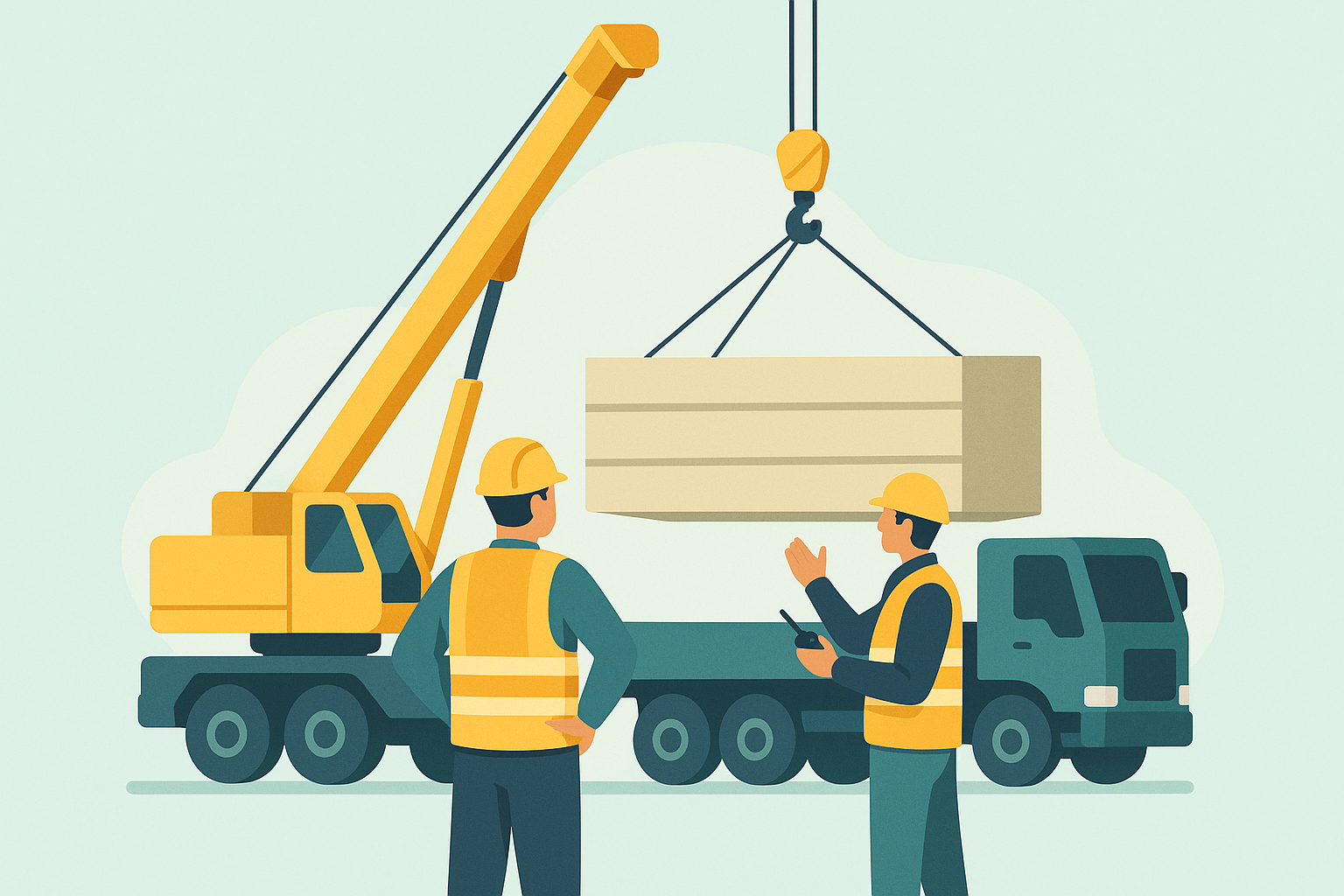
What is driving the growth of the Heavy Lifting and Haulage market?
Robust demand in the Heavy Lifting and Haulage market arises from significant investments in infrastructure and energy projects globally. The construction sector serves because a key driver, with governments and private entities prioritizing the upgrade and modernization of infrastructure assets. This trend translates into heightened demand for advanced lifting equipment capable of addressing the operational challenges associated with large-scale projects.
Current projections indicate that North America commands the largest market share at 31.3%, closely followed by Asia Pacific at 29.0%. By 2033, North America is expected to generate USD 129.2 billion in revenue, reflecting consistent infrastructure investments. In contrast, the Asia Pacific region experiences rapid urbanization and industrialization, further enhancing market growth.
Which segments are leading the market growth?
Among various product categories within the Heavy Lifting and Haulage market, Hydraulic Gantry Systems and Strand Jack Gantry and Tower Lift Systems exhibit notable growth potential. The segment for Hydraulic Gantry Systems is anticipated to rise from USD 40.7 billion in 2026 to USD 57.9 billion by 2033, demonstrating a compound annual growth rate (CAGR) of 5.2%. Innovations in technology contribute to improving efficiency and safety during operations.
In comparison, the Strand Jack Gantry and Tower Lift Systems segment is on track to experience even more substantial growth, with projected revenues reaching USD 53.5 billion by 2033, supported by a CAGR of 7.6%. These systems provide effective and versatile solutions, making them increasingly favored in infrastructure and industrial applications.
How are technological advancements shaping the market?
Technological innovations play a pivotal role in fostering demand for Heavy Lifting and Haulage equipment. Industry players adopt advanced technologies, including automation and artificial intelligence, to enhance operational efficiency and productivity. These advancements streamline processes, lower labor costs, and improve planning and execution accuracy.
Digital transformation is becoming a critical focus in sectors including construction and civil infrastructure. Enhanced project management solutions, coupled with real-time data analytics, allow companies to optimize resource allocation and mitigate risks. These technological improvements contribute not only to refined project timelines but to cost savings, significantly impacting the overall market environment.
What challenges should market participants be aware of?
Despite the promising growth prospects, participants in the Heavy Lifting and Haulage market encounter several challenges. Regulatory compliance imposes stringent requirements that increase operational costs and result in project delays. Companies, notably smaller enterprises, may struggle to adapt to evolving regulations, which hinders financial flexibility and innovation.
Geopolitical tensions disrupt supply chains, leading to trade deficits and tariff complications. These dynamics complicate logistics, resulting in elevated costs and delays. Successfully balancing regulatory compliance with operational cost management becomes vital for firms striving to thrive in this complex environment.
What opportunities exist for companies in the Heavy Lifting and Haulage market?
Emerging trends present significant opportunities for companies within the Heavy Lifting and Haulage market. The increasing emphasis on sustainability and eco-friendly practices encourages firms to invest in advanced technologies and lifting solutions that lessen environmental impact. This shift aligns with growing regulatory pressures advocating for sustainable development.
Strategic consolidation through cross-industry mergers and acquisitions enables companies to leverage complementary capabilities, optimizing value chains and enhancing process automation. Organizations that respond to these emerging trends stand to capture substantial market share while addressing the evolving needs of their clients.
Understanding the dynamics within the Heavy Lifting and Haulage market is crucial for companies seeking to navigate its complexities. By focusing on technological advancements, regulatory compliance, and emerging trends, firms seize growth opportunities and enhance their competitive positioning in this expanding market. For further details, refer to the Global Heavy Lifting and Haulage Market.
Tags
About the Authors

LEAD ANALYST
Utkarsh Khirodkar is a Lead Market Research Analyst at MetaStat Insight, specializing in market intelligence, technology sector assessments, and competitive strategy.

ENERGY & INFRASTRUCTURE INDUSTRY CONSULTANT
Automotive and Transportation · Electronics and Semiconductor · Energy and Power · Machinery & Equipment
Saurabh Vasant Ganvir consults for Energy & Infrastructure Industry at MetaStat Insight, specializing in renewable energy, solar EPC, and electric vehicle (EV) infrastructure markets.