
Investment in LLM Firewall solutions is rising, driven by regulatory compliance and digital transformation. Understanding these trends is crucial for stakeholders.
Investment in LLM Firewall solutions is on the rise, yet misconceptions about the drivers behind this growth persist. A common misinterpretation is viewing the increasing market value solely because a reflection of heightened awareness around cybersecurity risks. While this aspect certainly contributes, the reality extends far beyond a reactive response to threats.
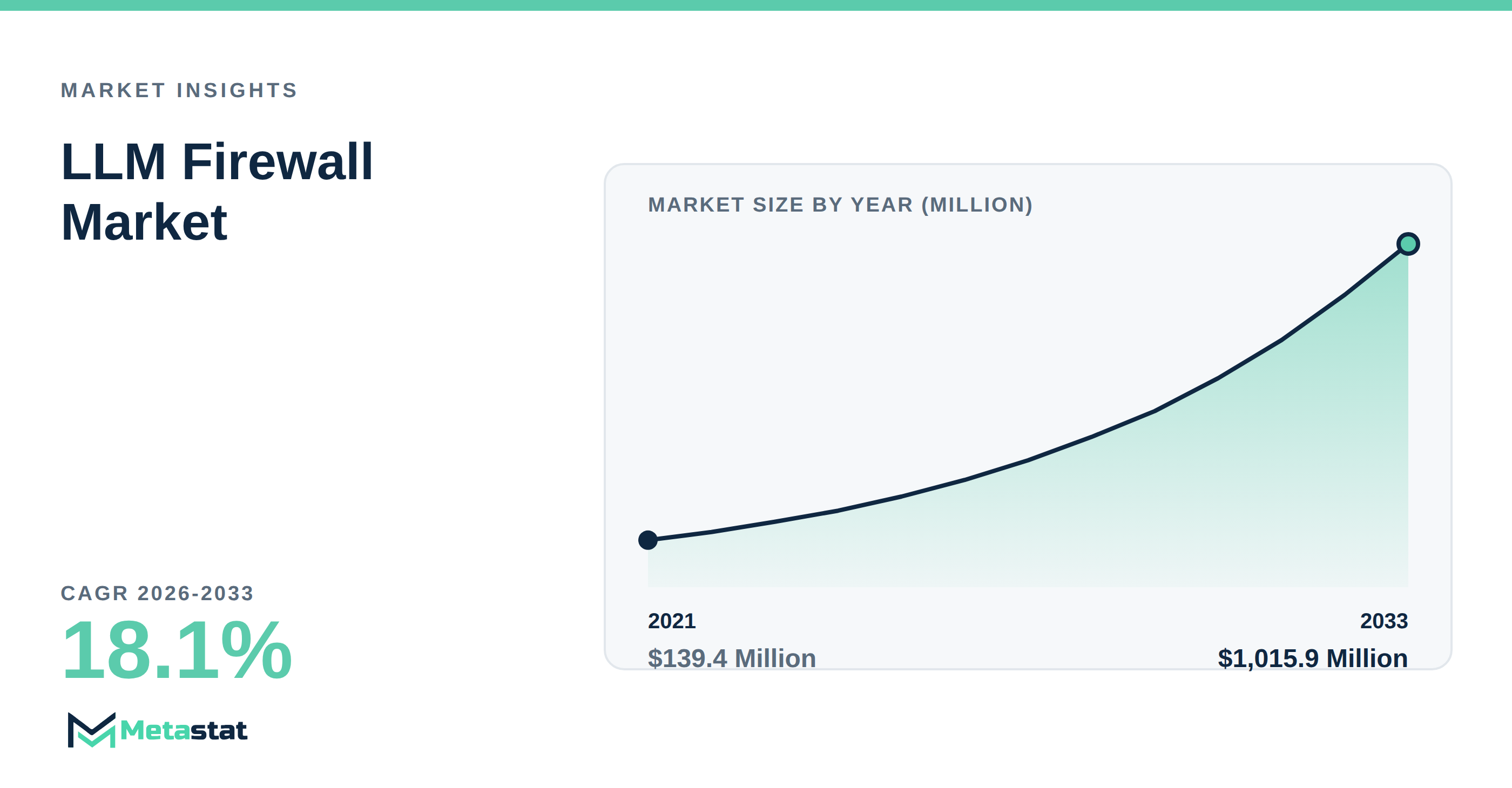
Organizations are not simply buying more LLM Firewall solutions to shield themselves from existing dangers; they are investing in advanced protective measures that align with regulatory compliance and long-term strategic goals. The projected market value increase from USD 268.4 million in 2025 to USD 1,015.9 million by 2033, indicating a compound annual growth rate (CAGR) of 18.1%, reflects a robust commitment to proactive digital resilience. Sectors including finance and healthcare, which handle sensitive data, illustrate this trend by prioritizing investments that not only safeguard information but ensure adherence to regulations like the EU AI Act and the NIST AI RMF.
The expansion is driven by the digital transformation sweeping across industries. The integration of advanced technologies, including artificial intelligence and machine learning, into cybersecurity frameworks becomes essential in enhancing the effectiveness of LLM Firewalls. Organizations recognize that neglecting to adopt these innovations leads to vulnerabilities that compromise their operations. Hence, the demand is a strategic alignment with contemporary technological advancements rather than merely a reaction to threats.
Vendor consolidation within the LLM Firewall market highlights the competitive dynamics at play. Larger firms are acquiring specialized providers to enhance their security capabilities and broaden service offerings, ultimately leading to more comprehensive firewall solutions. This consolidation allows organizations to benefit from integrated technologies that address multifaceted security challenges. The observed market growth stems from a powerful combination of acquisitions and the evolution of products designed to meet complex digital demands.
However, organizations face challenges in navigating the regulatory landscape and maintaining compliance with stringent data protection laws. Rising operational costs and inflationary pressures hinder their capacity to invest adequately in LLM Firewall technologies. Companies in economically constrained regions encounter particular difficulties, facing restrictions on budget allocations for advanced cybersecurity solutions, which slows overall demand.
Latency and false-positive rates remain critical factors impacting user experience. Companies benchmark their solutions against industry standards to ensure performance optimization while reducing disruptions. This emphasis on user experience transforms into a competitive differentiator because firms strive to ensure that robust security does not compromise efficiency.
On the technological front, the ongoing debate over open-source and commercial offerings illustrates diverse organizational strategies. Open-source solutions offer flexibility and cost-saving opportunities, whereas commercial products provide enhanced support and reliability. Consequently, organizations are evaluating their options, assessing how each aligns with their strategic objectives and regulatory obligations.
Investment trends indicate a notable increase in budget allocations for enterprise AI security, driven primarily by the combat escalating cyber threats. The anticipated growth in the LLM Firewall market is thus underpinned by a dual emphasis on immediate security needs and long-term compliance imperatives. Stakeholders should recognize that the surge in investment reflects a broader commitment to establishing resilient cybersecurity frameworks capable of adapting to the evolving digital landscape.
The complexity of the LLM Firewall market requires organizations to adopt an informed and proactive approach. The anticipated growth driven by digital transformation, regulatory compliance, and technological integration requires understanding the underlying factors influencing market dynamics. For stakeholders looking to navigate the challenges and seize opportunities in this crucial area of cybersecurity, awareness of these trends remains essential.
The full analysis is in Global LLM Firewall Market.
Tags
About the Authors

LEAD ANALYST
Utkarsh Khirodkar is a Lead Market Research Analyst at MetaStat Insight, specializing in market intelligence, technology sector assessments, and competitive strategy.

PRINCIPAL CONSULTANT - ENTERPRISE AI & EMERGING TECHNOLOGIES
Banking & Finance · Electronics and Semiconductor · Energy and Power · Healthcare IT · Information & Technology · Professional Services
Vijay Gunti is a Principal Consultant at MetaStat Insight, bringing over two decades of experience across enterprise digital transformation, technology strategy, and intelligent systems.

LEAD CONSULTANT - COMMUNICATION, TELECOM, AND IT
Electronics and Semiconductor · Information & Technology · Machinery & Equipment · Professional Services
Ravindra Sathe Consultants for Communication, Telecom, and IT at MetaStat Insight. He leads the firm's industry research initiatives across telecommunications infrastructure, digital connectivity, enterprise networking, and emerging information technology domains.