
Explore key trends in the Marketing Technology (MarTech) market, including AI adoption, personalization strategies, regulatory impacts, and sector-specific growth drivers.
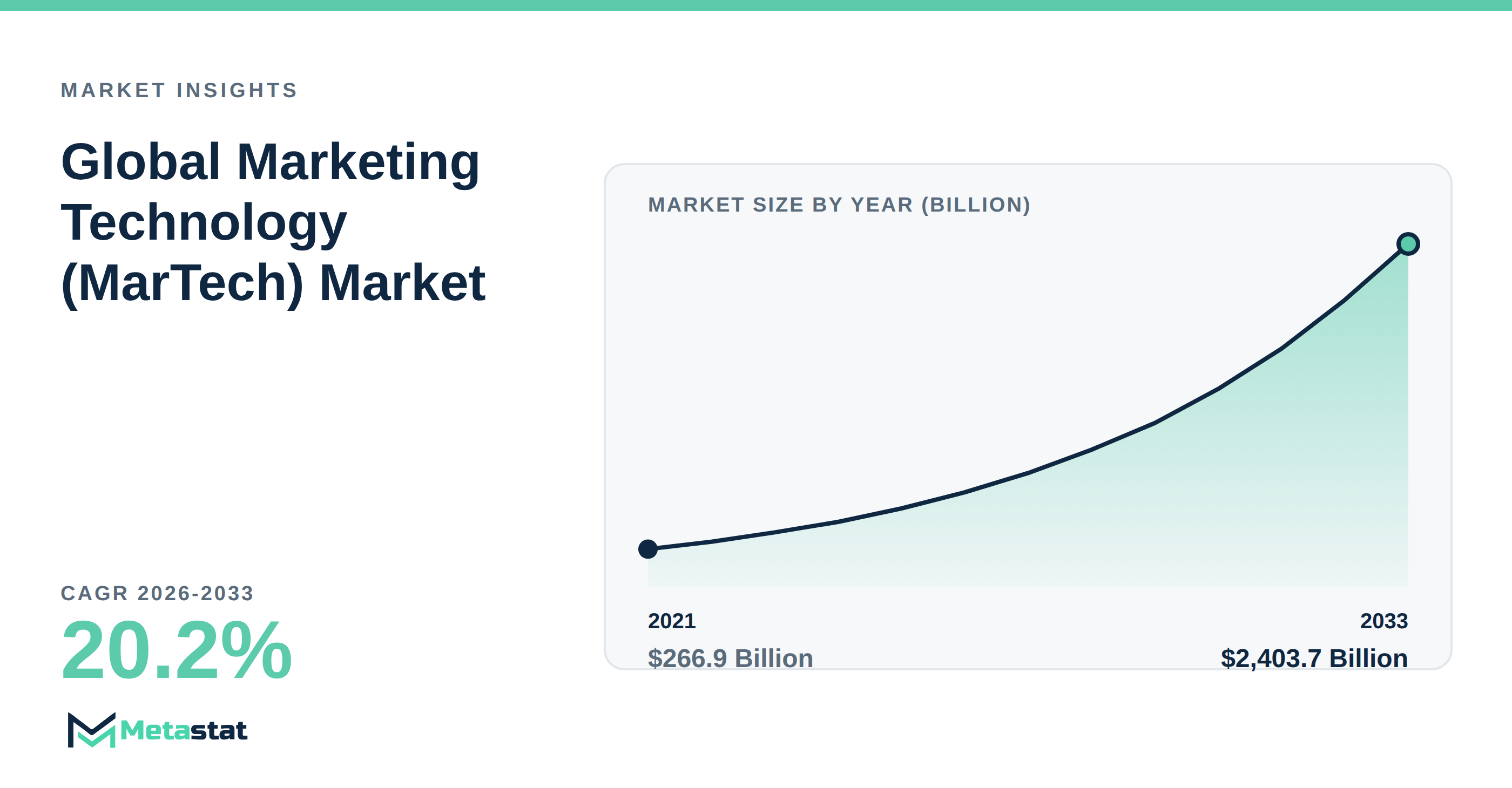
The Marketing Technology (MarTech) market is on a path to substantial transformation, with its valuation expected to escalate from USD 551.5 billion in 2025 to an impressive USD 2,403.7 billion by 2033. This remarkable growth reflects a compound annual growth rate (CAGR) of 20.2% throughout the forecast period. Stakeholders within the industry should pay close attention to key developments, because these will shape strategies and investment decisions in the near future.
How AI-driven innovations will reshape the market
Artificial intelligence and automation are poised to transform the Marketing Technology (MarTech) market significantly. The adoption of AI-driven marketing automation tools allows organizations to optimize their marketing processes, leading to enhanced efficiency and effectiveness in campaigns. Businesses utilizing these technologies anticipate improved customer engagement and retention, which in turn contributes to better overall performance.
Generative AI plays a pivotal role in reshaping content creation and personalization initiatives. By automating routine tasks, marketers concentrate on strategic initiatives and creative aspects, ultimately boosting productivity. This capability is likely to attract organizations seeking to enhance their marketing strategies and deliver higher returns on investment.
The rise of personalization and omnichannel strategies
Increasingly sophisticated personalization strategies and the orchestration of omnichannel marketing are experiencing heightened focus within the MarTech landscape. Organizations are prioritizing the delivery of tailored experiences to consumers across all touchpoints. By implementing advanced customer data platforms, businesses consolidate customer data to craft more personalized marketing strategies that resonate with their target audience.
The transition toward integrating multiple channels ensures consistent messaging, which improves customer interactions and satisfaction. While brands implement these strategies, they position themselves to take full advantage of evolving consumer expectations, thereby fostering revenue growth.
The impact of regulatory changes and economic factors
Regulatory compliance is set to heavily influence marketing strategies over the next several years. Stricter data privacy regulations force organizations to allocate resources towards compliance mechanisms, necessitating a reassessment of data collection and usage practices. Companies will increasingly concentrate on maintaining compliance while ensuring that their marketing capabilities remain effective.
Macroeconomic factors, including rising inflation, could impact marketing budgets. Organizations find themselves reevaluating their investment strategies in response to escalating costs of goods and services. Successfully navigating these economic challenges will be crucial for businesses aiming to sustain growth and remain competitive in the MarTech space.
Growth within specific sectors driving demand
The retail and e-commerce sectors are anticipated to be significant drivers of demand for MarTech solutions. While businesses depend more on digital platforms for customer engagement, the necessity for innovative marketing strategies becomes vital. Enhanced data analytics capabilities empower organizations to tailor their marketing efforts, ensuring effective engagement with diverse customer segments.
Small and medium-sized enterprises (SMEs) increasingly recognize the importance of adopting MarTech solutions, contributing to broader market penetration. Organizations that implement these marketing tools effectively are likely to observe improved customer loyalty and retention, owing to their ability to meet evolving consumer demands.
What organizations should focus on
While the Marketing Technology (MarTech) market advances, organizations should prioritize intelligent automation and analytics capabilities to maintain competitiveness. Investing in cloud-based solutions and integrated marketing technology will enable businesses to adapt to changing consumer behaviors and market dynamics efficiently.
The ongoing digital transformation necessitates that organizations embrace innovations in AI and marketing analytics to further enhance their capabilities. By doing so, businesses respond to real-time customer interactions, optimizing both engagement and satisfaction.
For a comprehensive analysis of the factors driving these shifts in the Marketing Technology (MarTech) market, organizations access the Global Marketing Technology (MarTech) Market.
Tags
About the Authors

LEAD ANALYST
Utkarsh Khirodkar is a Lead Market Research Analyst at MetaStat Insight, specializing in market intelligence, technology sector assessments, and competitive strategy.

PRINCIPAL CONSULTANT - ENTERPRISE AI & EMERGING TECHNOLOGIES
Banking & Finance · Electronics and Semiconductor · Energy and Power · Healthcare IT · Information & Technology · Professional Services
Vijay Gunti is a Principal Consultant at MetaStat Insight, bringing over two decades of experience across enterprise digital transformation, technology strategy, and intelligent systems.

LEAD CONSULTANT - COMMUNICATION, TELECOM, AND IT
Electronics and Semiconductor · Information & Technology · Machinery & Equipment · Professional Services
Ravindra Sathe Consultants for Communication, Telecom, and IT at MetaStat Insight. He leads the firm's industry research initiatives across telecommunications infrastructure, digital connectivity, enterprise networking, and emerging information technology domains.