
Explore the distinct factors driving the Mobility Technologies market in North America and Asia Pacific. Understand their unique challenges and opportunities.
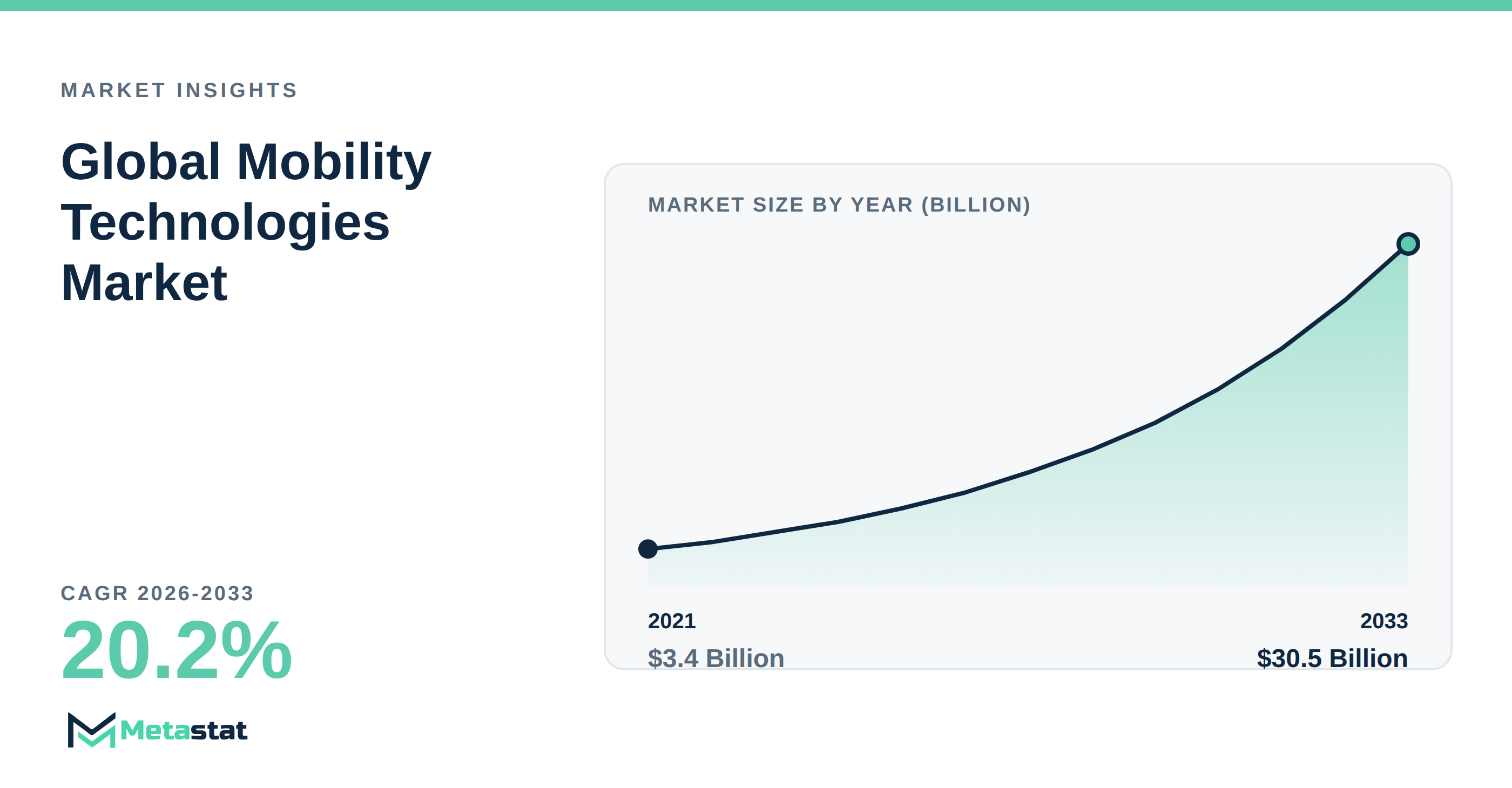
North America currently leads the Mobility Technologies market, holding a substantial 38.4% share, while Asia Pacific follows closely with 34.7%. This divergence raises the question: what factors contribute to these differences in market performance? Understanding the underlying reasons for these regional contrasts provides valuable insights for stakeholders evaluating their strategies in the evolving landscape of mobility solutions.
What drives North America’s market leadership?
North America benefits from a combination of advanced infrastructure, high adoption rates of new technologies, and a strong emphasis on research and development. The region's well-established automotive industry, represented by major players including Tesla, Ford Motor Company, and General Motors, facilitates innovation. Companies in North America invest heavily in technology integration, particularly in areas including connected vehicles and autonomous driving, resulting in rapid advancements.
Consumer preferences in North America have shifted significantly towards convenience and connectivity. The popularity of ride-hailing platforms, which is projected to rise from USD 2.3 billion in 2026 to USD 7.9 billion by 2033, illustrates this trend. The demand for enhanced mobility solutions drives companies to prioritize user experience and invest in next-generation upgrades, further reinforcing the region's market leadership.
Why is Asia Pacific showing rapid growth potential?
The Mobility Technologies market in Asia Pacific is experiencing notable growth driven by urbanization and increasing consumer demand for flexible transportation options. The region's expanding urban population necessitates integrated transport solutions that improve accessibility and reduce congestion. This trend is particularly evident in cities enhancing their infrastructure and promoting shared mobility services.
Investment in Mobility-as-a-Service (MaaS) technologies exemplifies the region's potential, with estimates indicating a market value of USD 3.8 billion by 2033. Enhanced collaboration between mobility service providers, local governments, and technology firms supports comprehensive transport solutions that address urban challenges. These partnerships are essential, because they enable access to a broader range of transportation options, including ride-sharing, public transit, and bike-sharing.
What challenges does each region face?
Despite its leadership, North America faces significant challenges often tied to regulatory compliance and supply chain complexities. Strict regulations require companies to invest heavily in compliance mechanisms, which stifle innovation and limit market entry for smaller firms. Geopolitical tensions affect supply chain stability, influencing costs and the ability to source materials efficiently.
Asia Pacific, while presenting strong growth opportunities, faces hurdles. Infrastructural gaps impede the efficient deployment of advanced mobility solutions. Connectivity issues in certain areas hinder the adoption of technologies essential for enhancing mobility experiences. Regulatory environments often vary across different countries, complicating compliance for businesses operating in multiple markets.
How companies capitalize on regional strengths?
For North American firms, leveraging their established infrastructure and investing in research and development will be crucial for maintaining market leadership. Companies like Mercedes-Benz Group AG and BMW Group enhance their offerings through innovative technologies while concentrating on sustainability efforts that align with increasing regulatory pressures. Partnerships aimed at improving operational efficiency and compliance could position these players favorably against emerging competition.
In Asia Pacific, firms should capitalize on the region's urbanization and evolving consumer preferences by expanding their service offerings. Investment in digital platforms and strategic partnerships with local governments and technology providers will facilitate the growth of integrated transport solutions. By emphasizing user experience and accessibility, companies distinguish themselves in this competitive landscape.
The Mobility Technologies market presents a complex mix of regional dynamics, where understanding the strengths and challenges of each area is essential for developing effective strategies. By aligning operational efforts with market demands and regulatory frameworks, companies navigate the evolving landscape and position themselves for success.
For a comprehensive analysis of market trends and forecasts, readers access the Global Mobility Technologies Market.
Tags
About the Authors

LEAD ANALYST
Utkarsh Khirodkar is a Lead Market Research Analyst at MetaStat Insight, specializing in market intelligence, technology sector assessments, and competitive strategy.

ENERGY & INFRASTRUCTURE INDUSTRY CONSULTANT
Automotive and Transportation · Electronics and Semiconductor · Energy and Power · Machinery & Equipment
Saurabh Vasant Ganvir consults for Energy & Infrastructure Industry at MetaStat Insight, specializing in renewable energy, solar EPC, and electric vehicle (EV) infrastructure markets.