
Explore the diverging trends in the Post-acute Care market, focusing on North America's leadership and Europe's challenges in healthcare delivery.
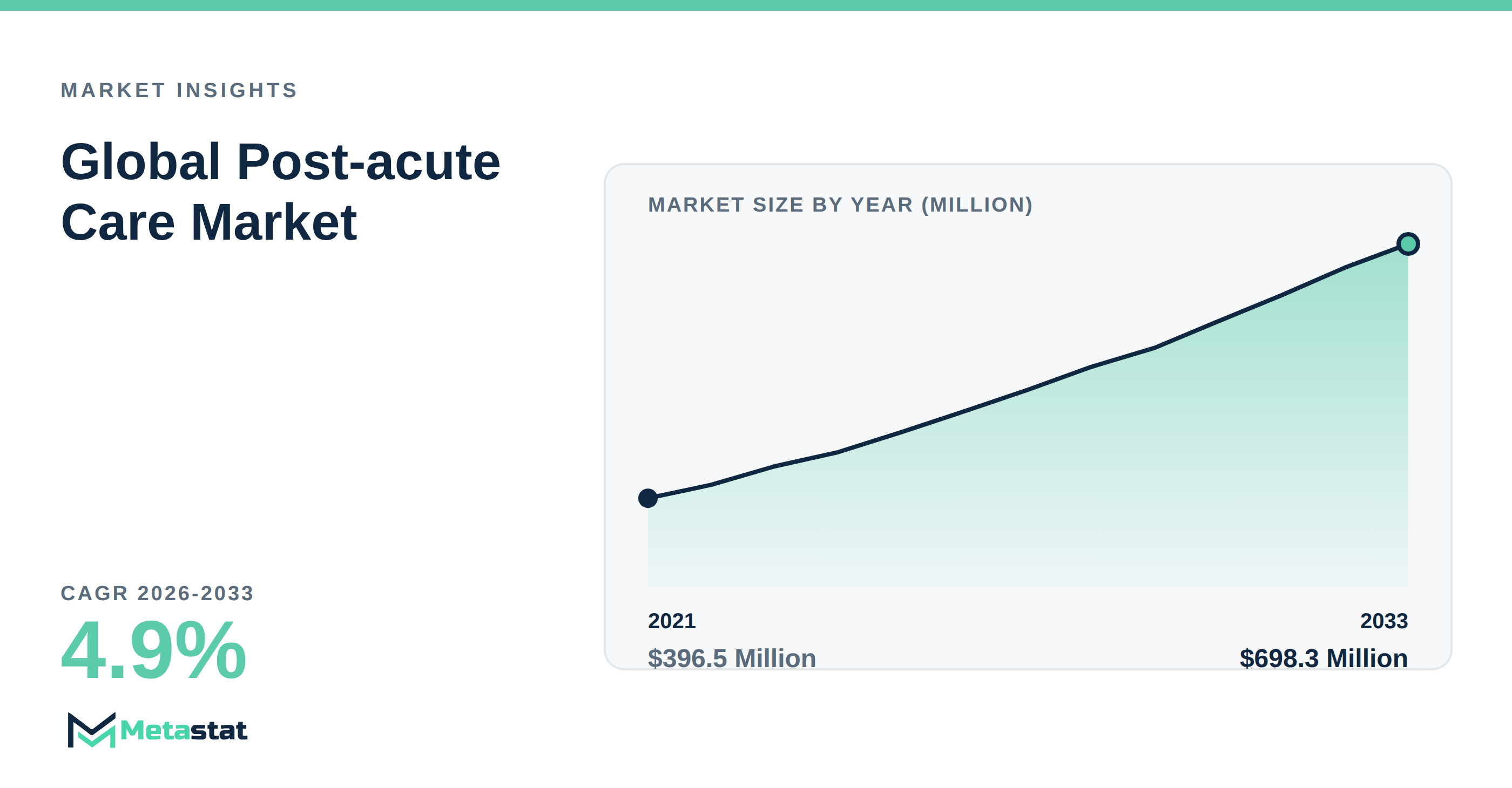
Understanding the differing trajectories of the Post-acute Care market across regions reveals significant insights into healthcare dynamics. North America commands the largest share, holding 41.1% of the global market. In contrast, Europe occupies 25.1%, illustrating diverging trends influenced by demographic, economic, and regulatory factors.
What drives North America's market leadership?
North America’s robust presence in the Post-acute Care market arises from several interrelated factors. The aging population is a primary driver, because older adults typically require more specialized post-acute services. Elevated healthcare expenditures in the region facilitate greater investment in care delivery systems. Ongoing enhancements in healthcare infrastructure and technology further stimulate growth by improving access to services and patient outcomes.
Demand for home health services is rapidly expanding, with this segment expected to reach USD 299.4 million by 2033, indicating a CAGR of 5.1% from its value of USD 210.9 million in 2026. The shift towards in-home care solutions reflects a broader transition to integrated care models, specifically designed to meet the needs of an aging population.
How does Europe compare in the Post-acute Care market?
Europe’s market, while trailing North America, demonstrates promising growth due to evolving healthcare policies that emphasize integrated care solutions. Increasing chronic conditions among the aging population necessitate a more coordinated approach to post-acute care. This shift is reflected in the region's focus on rehabilitation and therapy services, projected to achieve a CAGR of 4.7% and reach USD 172.3 million by 2033.
Despite positive growth indicators, Europe faces significant challenges related to regulatory compliance, which hinders service expansion. Navigating diverse regulations across member states introduces operational burdens, differing from the often more streamlined practices seen in North America. This complex regulatory environment delays the adoption of emerging healthcare technologies, potentially impacting service quality and accessibility.
What are the emerging trends in Asia Pacific?
The Asia Pacific region, which holds an 18.6% market share, exhibits distinct dynamics. Rapid urbanization and increasing healthcare investments are contributing to a rising demand for post-acute care services. Countries like India and China are making strides to enhance their healthcare infrastructure, aiming to meet the growing need for specialized care.
Infrastructure development significantly enhances service access. Ongoing modernization across healthcare systems facilitates a shift towards more patient-centered care models. The adoption of digital health solutions, including telehealth, is gaining momentum, aligning with consumer preferences for convenient and flexible care options.
How do market challenges differ across regions?
While all regions encounter challenges, the nature of these obstacles varies considerably. North America deals with rising operational costs driven by inflation and the demands of regulatory compliance. A shortage of qualified healthcare professionals exacerbates these challenges, because providers struggle to maintain adequate service levels amid increasing demand.
In Europe, the fragmented regulatory landscape complicates compliance and operational efficiency, which stalls service innovation. Economic disparities among European countries lead to inconsistencies in healthcare delivery, influencing overall market growth.
Asia Pacific faces unique challenges, because logistic disruptions and supply chain instability degrades the quality of service delivery. The competitive environment remains diverse, with numerous providers competing for market share. Strengthening healthcare capability through regulation, investment, and technology adoption will be vital for shaping the region's post-acute care landscape.
What does this divergence mean for stakeholders?
For stakeholders in the Post-acute Care market, recognizing these regional differences is essential for strategic positioning. North American organizations leverage their advanced infrastructures to innovate care delivery and enhance patient outcomes. European providers navigate the regulatory framework to boost operational efficiency while adapting to consumer demands for integrated care.
In Asia Pacific, healthcare providers should strive to connect emerging technologies with existing healthcare frameworks to seize growth opportunities. By aligning service offerings with regional demands, stakeholders improve market responsiveness and patient satisfaction.
To understand the full scope of these dynamics and how they influence the future of care delivery, detailed insights are available in the Global Post-acute Care Market.
Tags
About the Authors

LEAD ANALYST
Utkarsh Khirodkar is a Lead Market Research Analyst at MetaStat Insight, specializing in market intelligence, technology sector assessments, and competitive strategy.

LEAD PRINCIPAL ANALYST, PHARMA AND HEALTHCARE
Food and Beverages · Healthcare · Healthcare IT · Medical Devices
Ajay Devgire is the Lead Healthcare Analyst at MetaStat Insight, leading strategic research and market intelligence initiatives across the global healthcare domain.