
Dive into the dynamics driving the Street Furniture market, including growth factors, technological advancements, key segments, and future outlook.
The demand for the Street Furniture market is gaining momentum, driven by significant changes in urban planning and sustainability initiatives. One of the primary factors fueling this growth is the substantial capital being invested in urban infrastructure. While cities evolve, the need for functional and visually appealing public spaces has never been greater. This transformation highlights the importance of street furniture in enhancing community engagement and urban aesthetics.
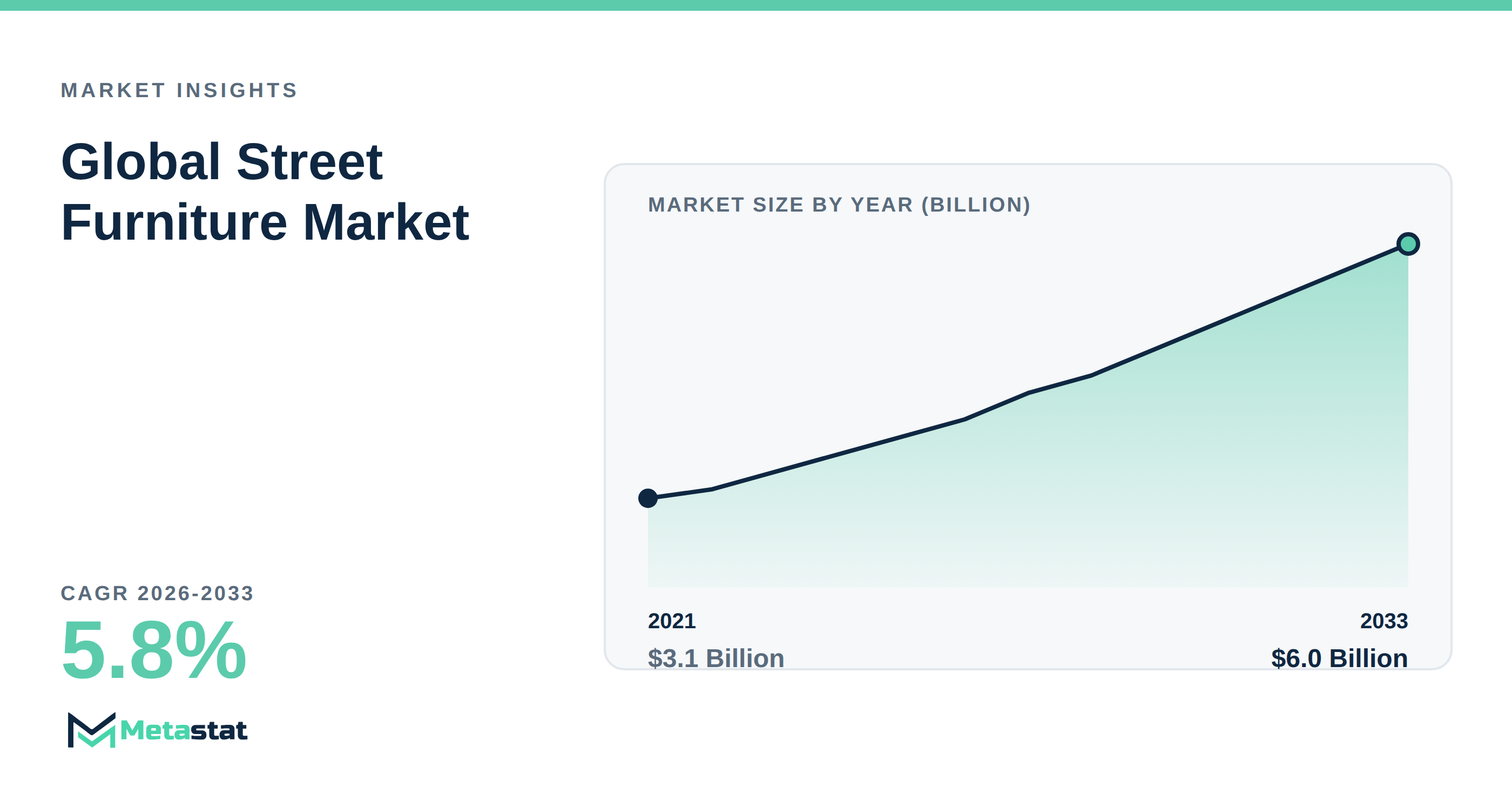
What factors are driving growth in the Street Furniture market?
Investment in urban infrastructure significantly supports the expansion of the Street Furniture market. Public and private sectors recognize that enhancing public spaces is a necessity due to rising urbanization trends globally. These investments lead to improved amenities that draw more pedestrians and create engaging community areas. The importance of incorporating functional and visually appealing street furniture in parks and recreational spaces drives substantial investments in this sector.
The rising focus on sustainability and eco-friendly materials aligns with urban goals to foster greener cities. Buyers display greater awareness regarding their purchasing choices, preferring products that support environmental responsibility. This shift prompts manufacturers to explore innovative materials and designs that cater to these consumer preferences, strengthening market demand.
How is technological advancement influencing the market?
Technological advancements play a crucial role in the evolution of the Street Furniture market. Integrating smart technologies into public amenities enhances user experiences and modernizes urban spaces. Innovations, including solar-powered lighting and interactive displays, add value to public areas, attracting both municipalities and residents.
While digital transformation shapes consumer behaviors, a growing preference for street furniture that incorporates technology and sustainability emerges. This trend allows manufacturers to develop products that not only meet the aesthetic needs of urban planners but enhance the overall functionality of public spaces.
What obstacles does the Street Furniture market face?
Despite the growth opportunities, the Street Furniture market encounters several challenges. Strict regulatory compliance often imposes requirements that increase operational costs for manufacturers. Companies allocate resources to meet these compliance standards, slowing down innovation. This situation affects pricing strategies and market entry, creating barriers to adopting new solutions.
Rising inflation and escalating material costs present significant financial burdens on manufacturers. These pressures lead to increased prices for street furniture, which reduces consumer demand. Geopolitical tensions and disruptions in supply chains complicate the market, impacting the availability of essential materials and components for production.
What are the key market segments and their growth prospects?
The global Street Furniture market comprises various categories, including benches and seating, tables and picnic furniture, litter and recycling bins, bollards and barriers, among others. The benches and seating segment leads the market, with projections indicating growth from USD 1.4 billion in 2026 to USD 2.1 billion by 2033, reflecting a compound annual growth rate (CAGR) of 6% during this period. This growth is attributed to increasing urbanization and the rising demand for comfortable seating in parks and recreational areas.
The tables and picnic furniture segment is on track to achieve a value of USD 0.8 billion by 2033, driven by the growing focus on outdoor social interactions. The litter and recycling bins segment is anticipated to reach USD 0.7 billion, reflecting heightened emphasis on environmental sustainability. Incorporating eco-friendly materials into product designs is critical for meeting consumer expectations and regulatory requirements.
What does the future hold for the Street Furniture market?
The future strategic outlook for the Street Furniture market indicates significant growth potential. Ongoing investments in urban development and enhancements to public spaces create opportunities for suppliers. Companies that capitalize on innovation and sustainability in their offerings are likely to position themselves favorably in a competitive environment.
Strategic investments in smart city initiatives and eco-friendly practices will further enhance market prospects. While urban areas evolve, the demand for street furniture that aligns with modern consumer preferences is projected to increase. Stakeholders in the Street Furniture market should concentrate on adaptation and innovation to leverage these emerging trends.
For further insights and a comprehensive analysis of market dynamics, consider exploring the Global Street Furniture Market.
Tags
About the Author

LEAD ANALYST
Utkarsh Khirodkar is a Lead Market Research Analyst at MetaStat Insight, specializing in market intelligence, technology sector assessments, and competitive strategy.