
The Business Continuity Management (BCM) Software market is evolving rapidly, driven by regulatory demands and technological advancements. This blog explores key factors influencing its growth and the challenges organizations face.
The Business Continuity Management (BCM) Software market is set for considerable transformation, influenced by shifts in organizational priorities and the tightening of regulatory frameworks. This evolving landscape presents both opportunities and challenges for businesses aiming to enhance their operational resilience. Organizational leaders grasp these dynamics to navigate the complexities of BCM solutions effectively.
What does the projected growth indicate?
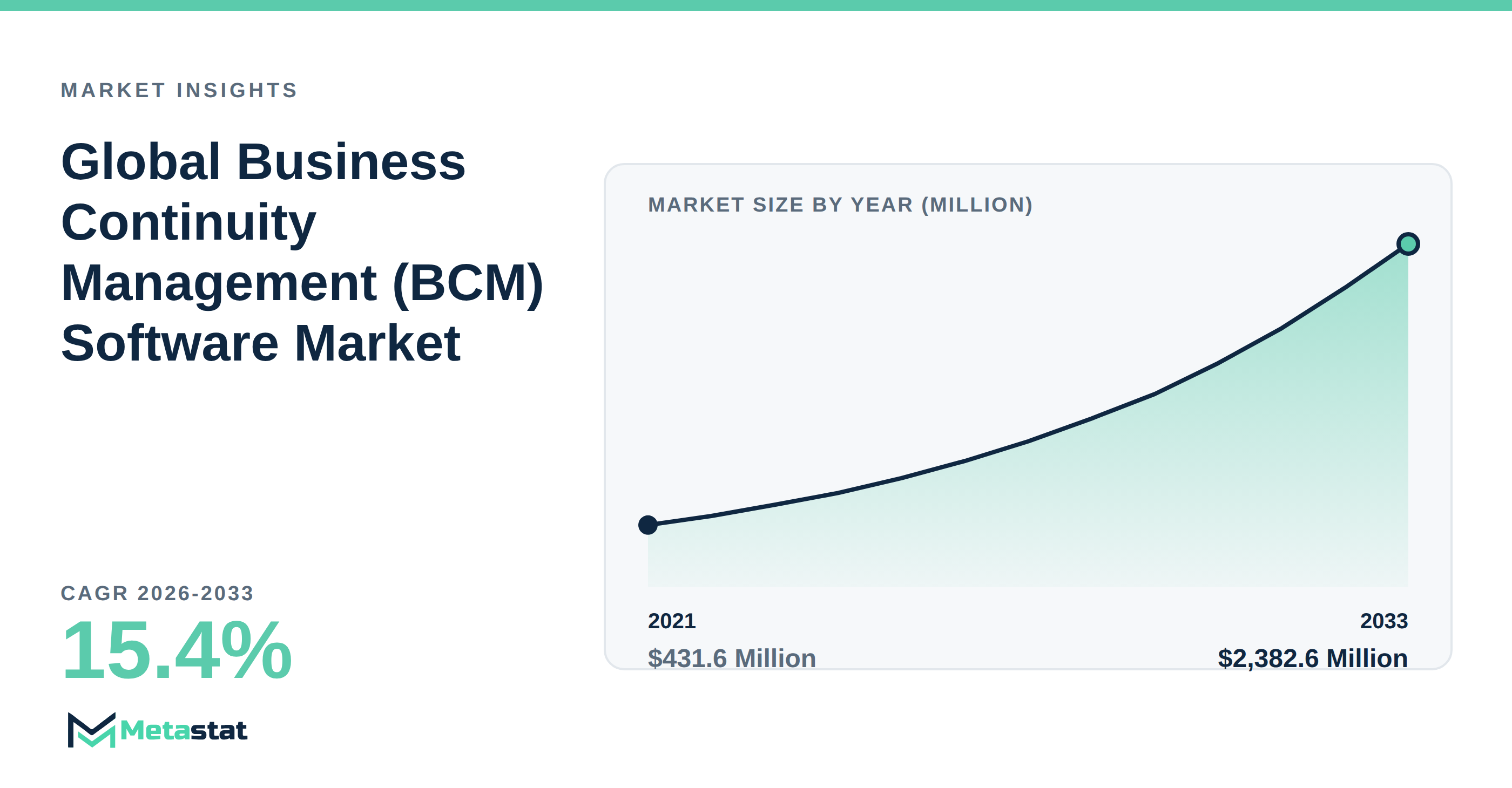
The BCM Software market's value is expected to increase from USD 757.3 million in 2025 to USD 2,382.6 million by 2033. This substantial growth illustrates a compound annual growth rate (CAGR) of 15.4%, reflecting the growing awareness among organizations of the critical need for effective BCM systems in light of increasing disruptions. This growth is not merely a numerical trend; it signifies a broader recognition of the importance of robust BCM strategies, particularly in response to evolving regulatory requirements and an enhanced focus on risk management.
What factors are driving demand?
Various interconnected factors contribute to the rising demand for BCM solutions. A primary driver is the heightened emphasis on compliance with regulations, particularly the Digital Operational Resilience Act (DORA). This regulation necessitates that organizations bolster their operational resilience. Consequently, businesses are prioritizing continuity strategies that adeptly handle operational interruptions. The need for cyber resilience is becoming integral to these strategies, establishing BCM solutions because essential tools for organizations striving to protect their operations. The growing focus on third-party risks and vulnerabilities within supply chains particularly influences sectors like healthcare and finance, where uninterrupted service is vital for maintaining confidence.
What challenges should organizations anticipate?
Despite optimistic outlooks, the BCM Software market has its challenges. Strict regulatory compliance limits operational flexibility, especially for industries facing stringent norms. Economic factors, including inflationary pressures, further complicate matters by tightening budgets. Organizations often find themselves balancing immediate financial concerns with the long-term investments that BCM solutions demand. Infrastructure limitations create deployment bottlenecks that hinder effective adoption of cloud-based systems. These challenges distort the perception of growth in the market, because many organizations prioritize short-term financial stability over strategic resilience planning, hindering their ability to implement effective BCM strategies.
What emerging opportunities are present in this market?
Emerging trends within the BCM Software market reveal significant opportunities for innovation and expansion. The integration of advanced technologies, including artificial intelligence and machine learning, enables organizations to enhance their risk assessment and response capabilities. This technological progression allows businesses to formulate sophisticated continuity plans capable of adapting to varied disruptions. While small and medium enterprises (SMEs) increasingly recognize the value of BCM strategies, demand rises for tailored solutions addressing their specific operational needs. Growth in regions including Asia Pacific highlights the necessity for businesses to invest in localized BCM strategies aligned with the global supply chains they utilize.
How should organizations approach their BCM strategies?
Organizations adopt a comprehensive approach to their BCM strategies, factoring in the changing regulatory landscape, technological advancements, and organizational resilience needs. Effective BCM planning requires the integration of risk assessment processes, crisis management protocols, and data recovery strategies that align with industry regulations. Understanding interdependencies across operations and mapping potential disruptions are vital for establishing a resilient framework. While the market evolves, investing in solutions that promote collaboration and adaptability will be crucial for enhancing operational resilience.
The Business Continuity Management (BCM) Software market is on track for impressive growth, driven by shifting organizational demands and regulatory influences. Keeping pace with these changes will allow organizations to navigate the complexities of BCM solutions effectively. For an in-depth analysis, readers access the Global Business Continuity Management (BCM) Software Market.
Tags
About the Authors

LEAD ANALYST
Utkarsh Khirodkar is a Lead Market Research Analyst at MetaStat Insight, specializing in market intelligence, technology sector assessments, and competitive strategy.

PRINCIPAL CONSULTANT - ENTERPRISE AI & EMERGING TECHNOLOGIES
Banking & Finance · Electronics and Semiconductor · Energy and Power · Healthcare IT · Information & Technology · Professional Services
Vijay Gunti is a Principal Consultant at MetaStat Insight, bringing over two decades of experience across enterprise digital transformation, technology strategy, and intelligent systems.

LEAD CONSULTANT - COMMUNICATION, TELECOM, AND IT
Electronics and Semiconductor · Information & Technology · Machinery & Equipment · Professional Services
Ravindra Sathe Consultants for Communication, Telecom, and IT at MetaStat Insight. He leads the firm's industry research initiatives across telecommunications infrastructure, digital connectivity, enterprise networking, and emerging information technology domains.