
Explore the complexities driving growth in the US Agricultural Spray Drone market, from financial investments to regulatory challenges and sustainability.
The US Agricultural Spray Drone market is often misinterpreted owing to the perception that it is merely a sector experiencing growth driven by technology alone. While advancements in technology undeniably play a significant role, the factors influencing this market extend beyond just innovative products. An in-depth analysis of critical drivers, challenges, and market expansion reveals a more intricate framework essential for decision-making among stakeholders.
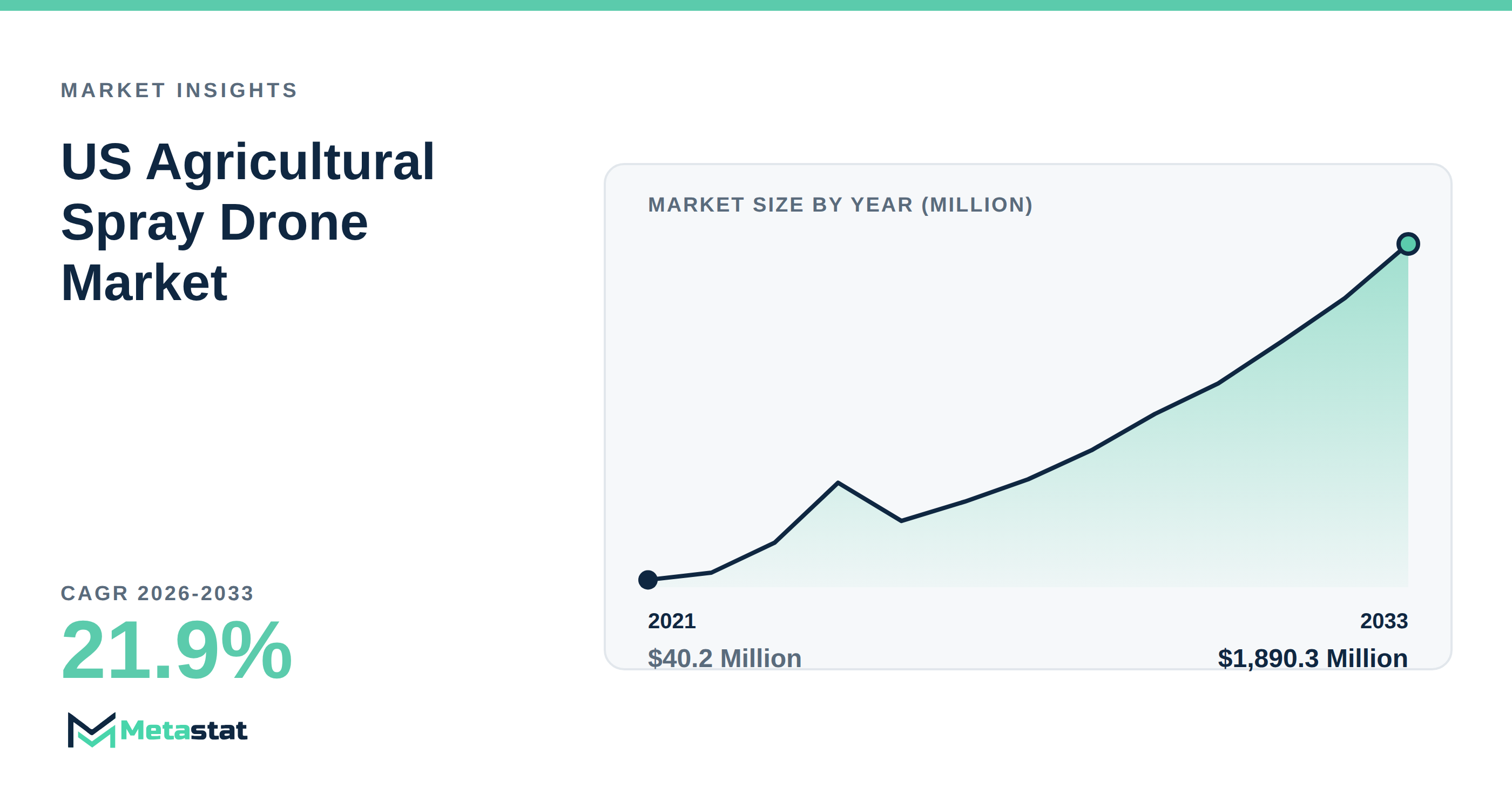
Projected growth for the market indicates a substantial escalation from USD 365.2 million in 2025 to approximately USD 1,890.3 million by 2033, reflecting an impressive annual growth rate of 21.9%. This significant trend results from an increasing focus on precision agriculture, allowing farmers to optimize resources and enhance crop yields while reducing environmental impacts. However, comprehending the broader dynamics at play is crucial for stakeholders aiming to effectively navigate this evolving landscape.
How do financial investments impact the market?
Investment in agricultural technology substantially boosts the adoption of agricultural spray drones. Enhanced capital investment stimulates innovation, because farmers integrate sophisticated agricultural practices into their operations. Factors including the transition towards precision farming and effective resource management compel agricultural producers to invest in drone technology. The upsurge in venture funding complements the existing landscape, enabling the development of new capabilities that significantly enhance operational productivity.
The emphasis on digital transformation within the agricultural sector streamlines legacy processes, facilitating the shift to agricultural spray drones. This collective movement towards sustainability and efficiency positions the market for considerable growth in the years ahead.
What challenges are hindering growth?
Despite its promising outlook, the US Agricultural Spray Drone market contends with substantial obstacles stemming from stringent regulatory compliance requirements. The task of navigating the intricate regulatory environment presents barriers for new entrants, stifling innovation and hindering adoption rates. Regulatory agencies impose rigorous standards demanding extensive documentation, testing, and approval processes, elongating timelines for product introductions and stifling competitiveness within the market.
Supply chain disturbances caused by geopolitical tensions and raw material shortages complicate production schedules. Such barriers solidify the necessity for companies to allocate resources strategically towards compliance, often reallocating funds that could otherwise support essential research and development initiatives. This diversion restricts firms’ ability to innovate or improve product offerings, ultimately impacting their competitive positioning within the market.
What role does sustainability play in market dynamics?
The increasing focus on sustainable farming practices plays a crucial role in driving growth within the US Agricultural Spray Drone market. The transition towards environmentally-friendly techniques prompts demand for targeted spraying methods that reduce chemical usage. Producers increasingly recognize the advantages of drones for facilitating precise applications of herbicides, pesticides, and fungicides, ultimately promoting crop health and minimizing detrimental environmental effects.
Advancements in drone technology are vital, because manufacturers invest in next-generation functionalities that address ecological concerns while enhancing operational efficiency. This alignment with sustainability objectives augments market appeal, allowing agricultural stakeholders to align their practices with emerging environmental, social, and governance (ESG) considerations.
In what ways are new applications driving market potential?
Emerging applications in the US Agricultural Spray Drone market signify a considerable opportunity for expansion. The demand for precision agriculture technologies continues to grow, fueled by the increasing necessity for efficient applications of herbicides, pesticides, insecticides, and liquid fertilizers. Technological advancements in drone capabilities enhance operational efficiencies, rendering these drones suitable for various agricultural needs.
In particular, innovations in hybrid vertical take-off and landing (VTOL) systems broaden market potential, enabling effective operation across diverse agricultural terrains. Farmers are progressively adopting these advanced solutions to optimize resource use while improving productivity levels. The integration of drones with data analytics systems enables real-time monitoring and informed decision-making, thereby enhancing overall agricultural efficiency.
While the agricultural sector embraces these technological advancements, strategic collaborations among industry participants foster an environment conducive to innovation. Partnerships between drone manufacturers and agricultural technology firms facilitate the creation of integrated solutions that address specific market requirements, thus further propelling market growth.
How stakeholderses adapt to market changes?
For stakeholders to fully capitalize on the growth potential within the US Agricultural Spray Drone market, adopting adaptable strategies becomes imperative. Prioritizing investments in research and development allows companies to maintain competitiveness while addressing regulatory challenges. Firms should explore collaboration strategies that broaden market reach and enhance technological capabilities.
By committing to sustainable practices and aligning operations with precision agriculture trends, stakeholders appeal to environmentally-conscious consumers. Focusing on comprehensive solutions that enhance crop health and resource efficiency positions participants favorably within this changing market structure.
The US Agricultural Spray Drone market presents substantial growth opportunities, founded on factors beyond mere technological advancements. Stakeholders navigating regulatory complexities, emphasizing sustainability, and embracing innovative applications will secure long-term success. For a more detailed examination, refer to the complete report on the US Agricultural Spray Drone Market.
Tags
About the Author

LEAD ANALYST
Utkarsh Khirodkar is a Lead Market Research Analyst at MetaStat Insight, specializing in market intelligence, technology sector assessments, and competitive strategy.