
Explore the dynamics driving the Hybrid Electric Vehicle Conversion Kit market, including technology, consumer preferences, and regional factors affecting growth.
The rapid expansion of the Hybrid Electric Vehicle Conversion Kit market highlights various technological advancements and evolving consumer preferences. Contrary to common assumptions, the forces behind this market's growth extend beyond environmental concerns. Understanding these dynamics provides valuable insights for stakeholders and decision-makers in the automotive industry.
What factors are driving demand for hybrid electric vehicle conversion kits?
Several elements fuel the growth of the Hybrid Electric Vehicle Conversion Kit market, including rising awareness of environmental issues, increasing fuel prices, and the need for regulatory compliance. These factors create a clear expectation for manufacturers and consumers to embrace hybrid technologies. While consumers become more conscious of their carbon footprints, their interest in sustainable transportation solutions intensifies.
The automotive industry experiences a notable shift towards hybrid solutions attributed to governments worldwide enforcing stricter emissions regulations. Such regulatory frameworks influence manufacturers' product offerings while incentivizing consumers to invest in conversion kits that enhance the sustainability of their vehicles.
How do regional dynamics influence market growth?
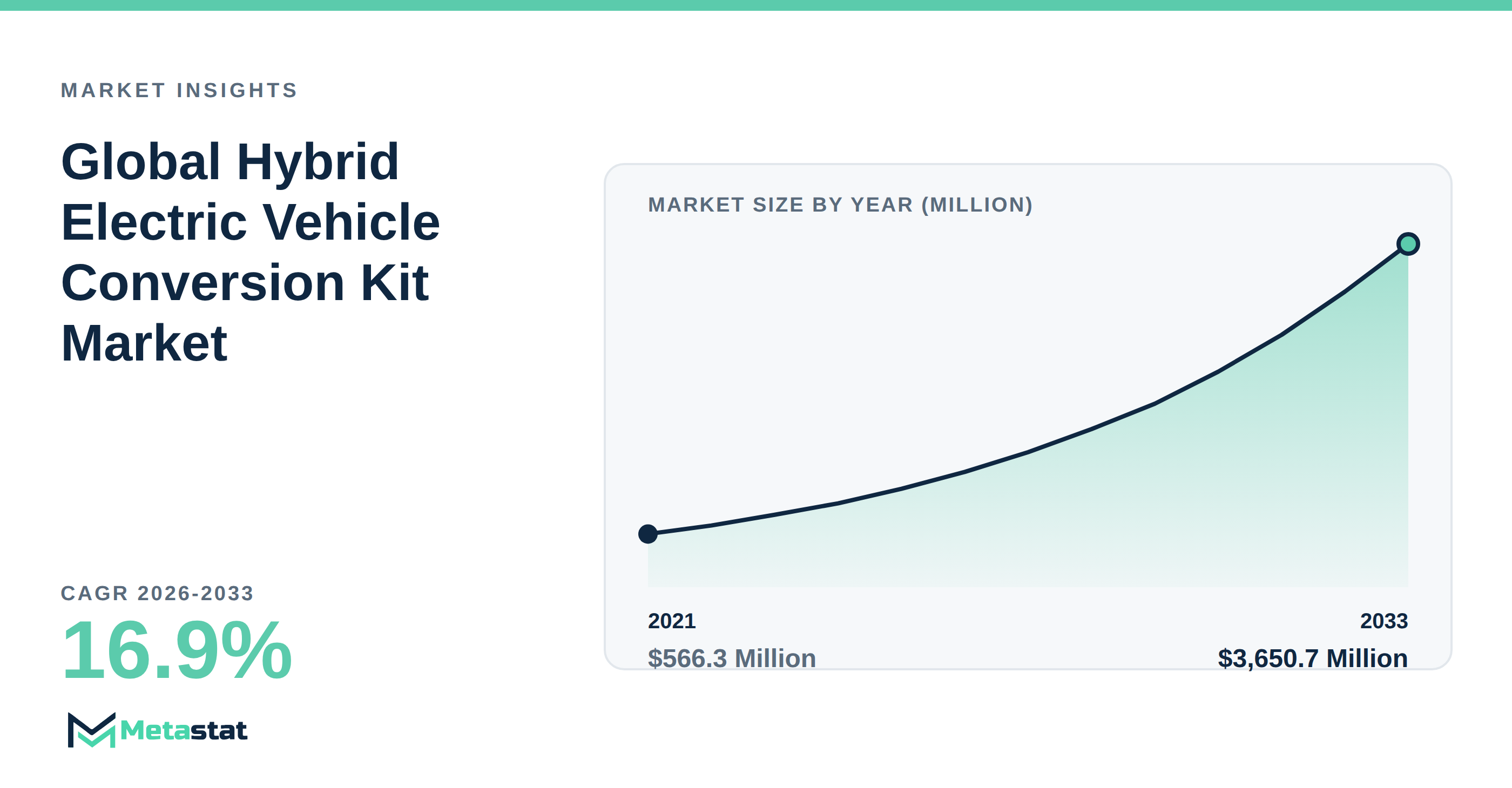
Regional dynamics significantly shape the Hybrid Electric Vehicle Conversion Kit market. North America leads the market with a 38.3% share of total revenue, reflecting a strong inclination towards hybrid technologies. Consumer demand in this region is set to grow steadily, reaching approximately USD 1,282.1 million by 2033.
In contrast, Europe and Asia Pacific are adapting to changing market conditions, maintaining shares of 25% and 25.2%, respectively. Both regions exhibit a growing interest in environmentally friendly solutions, which collectively emphasizes sustainable practices. This demand encourages manufacturers to enhance their offerings, ensuring that product development aligns with regional consumer preferences and regulatory requirements.
Why is technological advancement vital for market growth?
Technological innovation remains crucial to the evolution of the Hybrid Electric Vehicle Conversion Kit market. Investment in advanced battery systems, electric motors, and power electronics boosts hybrid vehicle performance and longevity. For example, battery systems are expected to grow significantly, with their market value anticipated to increase from USD 390.4 million in 2026 to around USD 1,200 million by 2033.
The emphasis on technology integration not only fosters market competitiveness but aligns with broader sustainability goals. Manufacturers allocate resources to research and development in creating next-generation solutions that meet both consumer expectations and regulatory standards. This maturation of technology is essential, enabling manufacturers to deliver high-performance products while addressing environmental challenges.
What challenges are hindering market progress?
Despite a promising outlook, various macroeconomic challenges hinder the growth of the Hybrid Electric Vehicle Conversion Kit market. Inflationary pressures result in increased production costs, leading to higher prices for conversion kits that discourage potential consumers. Supply chain disruptions complicate the timely availability of essential components, impairing manufacturers' ability to respond to demand efficiently.
Geopolitical tensions introduce uncertainty within the market. Trade restrictions and tariff frictions lead to delays in sourcing critical materials necessary for hybrid vehicle conversions. Such challenges create a complex operational environment for manufacturers and suppliers, necessitating agile responses to navigate these constraints.
How are consumer preferences shaping the market?
The Hybrid Electric Vehicle Conversion Kit market is significantly influenced by changing consumer preferences. An increasing number of consumers favor eco-friendly products, demonstrated by the projected growth of the passenger cars segment, expected to rise from USD 703.1 million in 2026 to approximately USD 2,003.5 million by 2033. This trend illustrates a shift toward adopting hybrid technologies among vehicle owners.
Investment in infrastructure development to support hybrid vehicle adoption complements this demand. Improved access to charging networks and public-private partnerships facilitate broader integration of hybrid technologies into existing transportation systems. Stakeholders in various sectors recognize the commercial advantages associated with investing in sustainability initiatives, contributing to the overall market expansion.
In conclusion, the Hybrid Electric Vehicle Conversion Kit market presents an evolving landscape shaped by technological advancements, regional dynamics, and changing consumer behaviors. Stakeholders remain adaptable, addressing challenges while leveraging growth opportunities to capitalize on this expanding market.
For detailed insights and projections about this evolving market, refer to the Global Hybrid Electric Vehicle Conversion Kit Market.
Tags
About the Authors

LEAD ANALYST
Utkarsh Khirodkar is a Lead Market Research Analyst at MetaStat Insight, specializing in market intelligence, technology sector assessments, and competitive strategy.

ENERGY & INFRASTRUCTURE INDUSTRY CONSULTANT
Automotive and Transportation · Electronics and Semiconductor · Energy and Power · Machinery & Equipment
Saurabh Vasant Ganvir consults for Energy & Infrastructure Industry at MetaStat Insight, specializing in renewable energy, solar EPC, and electric vehicle (EV) infrastructure markets.