The Smart Waste Management market is expanding rapidly, driven by urbanization and technology. Understanding these dynamics helps organizations adapt and prosper.
The Smart Waste Management market is often misunderstood, with misconceptions surrounding its growth and potential. While many view it because merely a response to rising urban waste levels, the market encompasses various segments fueled by regulatory changes and technological advancements. To truly grasp its trajectory, it is essential to examine the underlying dynamics that define this evolving landscape.
What drives growth in the Smart Waste Management market?
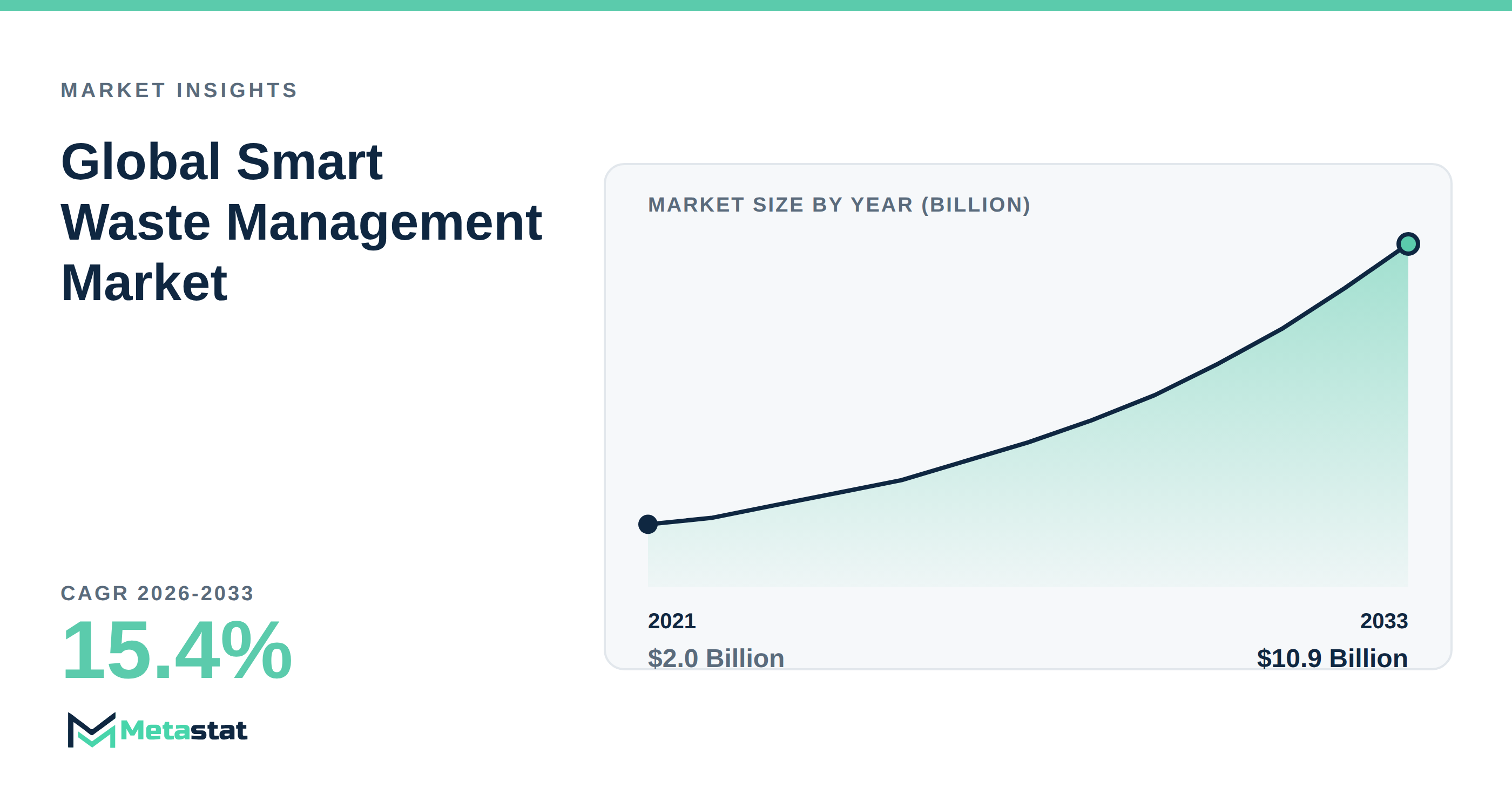
Market growth is significantly influenced by the urgent need for efficient waste management solutions in urban areas. Rapid urbanization and increasing population densities have heightened the demand for smarter systems that enhance operational efficiency. The market was valued at USD 3.4 billion in 2025 and is set to expand to USD 10.9 billion by 2033, indicating a substantial compound annual growth rate (CAGR) of 15.4% during this period. This upward trajectory reflects a broader trend where city planners and organizations prioritize integrating advanced technologies, including IoT sensors and data analytics, into waste management practices.
How do regulatory dynamics shape the market?
Regulatory frameworks significantly influence the Smart Waste Management market. Diverse environmental policies across regions create various levels of adoption and investment in smart waste solutions. For instance, North America holds the largest market share at 37.2%, driven by stringent regulations that compel municipalities to adopt innovative waste management methods. This trend illustrates a clear connection between regulations and market dynamics, because organizations increasingly face requirements to comply with environmental standards. Consequently, this compliance compels systems to improve, leading to accelerated growth in areas including waste treatment and recycling.
Why is technology adoption critical?
The integration of advanced technologies plays a crucial role in the Smart Waste Management market. Fleet Management solutions, for example, are projected to increase from USD 0.7 billion in 2026 to USD 1.5 billion by 2033, achieving a CAGR of 11.3%. The rising need for effective waste collection and route optimization emphasizes the necessity of adopting smart technologies. Organizations implementing IoT sensors and automated solutions benefit from enhanced operational efficiencies, cost reductions, and improved service delivery. This technological shift supports the aim of minimizing environmental impact while optimizing resource management.
What are the emerging opportunities?
Emerging opportunities within the Smart Waste Management market are characterized by shifts in consumer behavior and an increased focus on sustainability. The demand for solutions addressing e-waste and organic waste management is on the rise, reflecting changing societal attitudes toward waste disposal. The e-waste segment is projected to achieve a value of USD 1.6 billion by 2033, driven by the rising usage of consumer electronics and heightened regulatory standards regarding electronic waste disposal. Similarly, the Organic Waste segment is expected to grow at a CAGR of 16.8%, driven by organizations seeking effective methods for composting and recycling organic materials.
The emphasis on sustainability and circular economy practices presents additional prospects for innovation. Companies increasingly invest in research and development to create next-generation waste management solutions that prioritize eco-friendliness and resource recovery. This trend aligns with global efforts to transition toward greener practices, promoting the adoption of smart technologies within the industry.
What challenges remain in the Smart Waste Management market?
Despite the promising growth trajectory, challenges persist in the Smart Waste Management market. Regulatory compliance presents significant hurdles, because increasing regulations require substantial investments in compliance mechanisms. These additional expenses deter smaller companies and hinder the growth of existing players. Economic fluctuations complicate investment decisions, affecting overall capital availability for innovative technologies. This landscape creates uncertainty that organizations navigate to remain competitive.
Geopolitical fragmentation introduces operational complexities, influencing procurement strategies and supply chain dynamics. Companies encounter challenges related to resource availability and cost fluctuations, because disruptions affect material sourcing and service delivery. Addressing these challenges requires proactive strategies and adaptability, highlighting the importance of continuous innovation and investment in resilient waste management solutions.
Ultimately, understanding the Smart Waste Management market involves recognizing its multifaceted dynamics. By comprehending the driving forces behind its growth and the challenges that lie ahead, organizations better position themselves to seize opportunities and navigate the evolving landscape. To explore the specifics of these trends, delve deeper into the Global Smart Waste Management Market report for detailed insights.
Tags
About the Authors

LEAD ANALYST
Utkarsh Khirodkar is a Lead Market Research Analyst at MetaStat Insight, specializing in market intelligence, technology sector assessments, and competitive strategy.

INDUSTRY CONSULTANT - CHEMICALS & ADVANCED MATERIALS
Chemicals and Materials · Machinery & Equipment · Packaging
Amit Gadhekar Consultant for Chemicals and Materials at MetaStat Insight, directing sector-specific intelligence, research, and strategic consulting across global chemical and processing markets.

PRINCIPAL CONSULTANT - QUALITY SYSTEMS & COMPLIANCE
Electronics and Semiconductor · Machinery & Equipment · Professional Services
Omkar Phadtare is an Industry Consultant at MetaStat Insight, specializing in quality systems, regulatory compliance, and standards benchmarking to drive data-driven market intelligence and strategic industry research.

ENERGY & INFRASTRUCTURE INDUSTRY CONSULTANT
Automotive and Transportation · Electronics and Semiconductor · Energy and Power · Machinery & Equipment
Saurabh Vasant Ganvir consults for Energy & Infrastructure Industry at MetaStat Insight, specializing in renewable energy, solar EPC, and electric vehicle (EV) infrastructure markets.

LEAD CONSULTANT - COMMUNICATION, TELECOM, AND IT
Electronics and Semiconductor · Information & Technology · Machinery & Equipment · Professional Services
Ravindra Sathe Consultants for Communication, Telecom, and IT at MetaStat Insight. He leads the firm's industry research initiatives across telecommunications infrastructure, digital connectivity, enterprise networking, and emerging information technology domains.