
Explore the driving factors and challenges impacting the dynamic Carbon Offset and Credit market, and find out how businesses effectively navigate this evolving landscape.
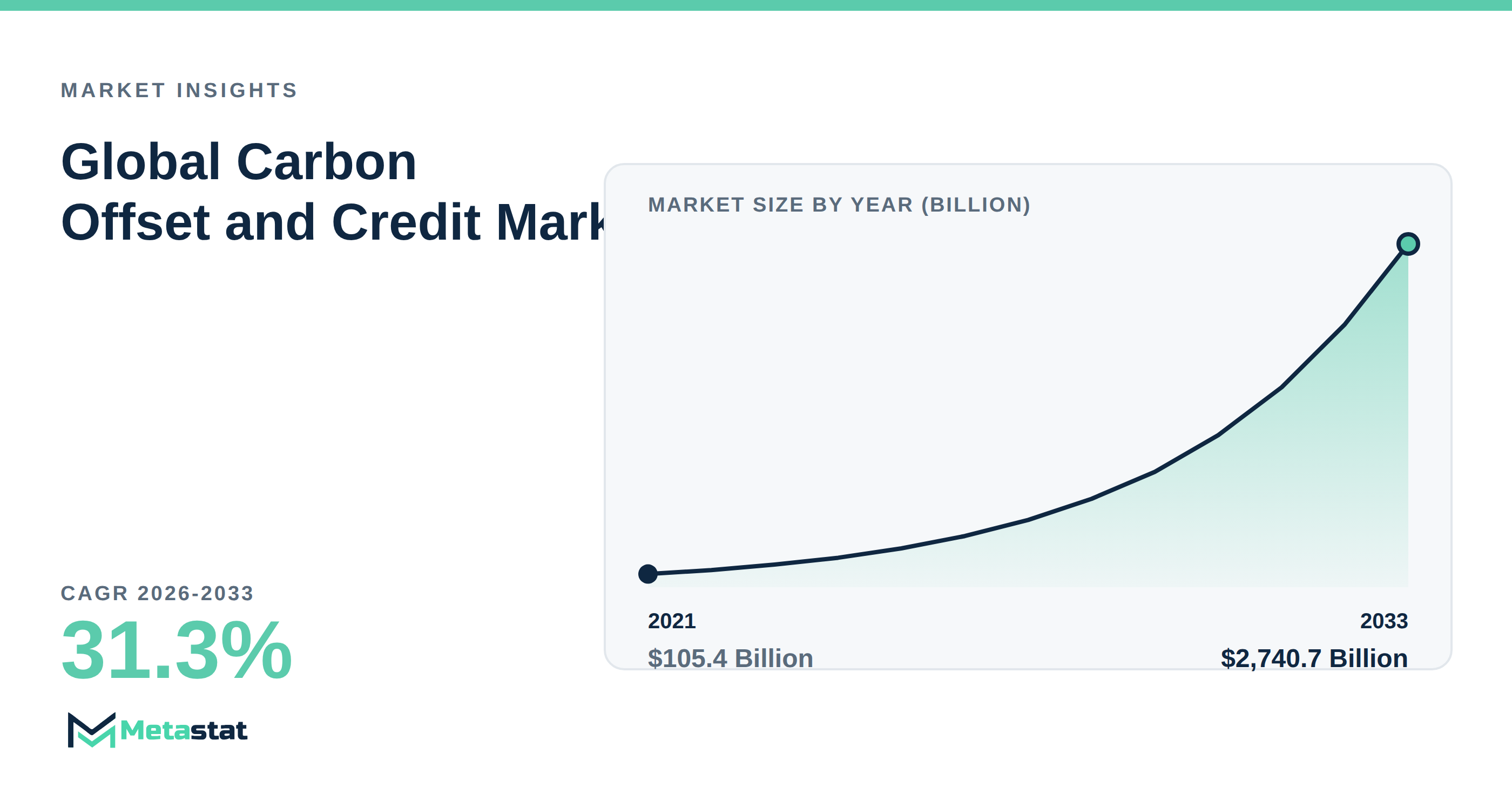
The substantial growth forecast for the Carbon Offset and Credit market prompts an important question for businesses: how theys navigate this evolving landscape to capitalize on emerging opportunities? With the market estimated at USD 310.2 billion in 2025 and anticipated to reach USD 2,740.7 billion by 2033, organizations understand the factors propelling this expansion.
What factors are fueling market growth?
Several key elements drive the impressive growth of the Carbon Offset and Credit market. A significant impetus stems from increased regulatory pressures that mandate businesses to reduce greenhouse gas emissions. These regulations compel organizations across various sectors to engage in carbon offset initiatives, thus stimulating demand for carbon credits. Companies confronting stakeholder scrutiny regarding their environmental impact prioritize investments in carbon credits to enhance sustainability profiles.
This emphasis on sustainability is particularly evident among large corporations and small to medium-sized companies. Corporations prioritize environmental responsibility to satisfy both consumer expectations and regulatory compliance. By offsetting their carbon footprints, businesses experience an influx of investment in carbon credits, further propelling market growth.
Why are voluntary carbon credits gaining traction?
The voluntary carbon credit segment is projected to exhibit significant growth, with projections indicating an increase from USD 30.4 billion in 2026 to USD 342.6 billion by 2033, reflecting a compound annual growth rate (CAGR) of 41.4%. This surge largely stems from an intensified focus on corporate sustainability initiatives. Organizations increasingly recognize their impact on climate change and actively seek avenues to mitigate their carbon emissions through verified projects.
Technological advancements enhance the credibility and tracking of voluntary carbon credits, rendering them more appealing to buyers. The integration of blockchain technology contributes to heightened transparency, resulting in increased participation from organizations across various sectors. With a clear pathway to sustainability, businesses exhibit a greater willingness to invest in voluntary carbon credits within broader corporate social responsibility efforts.
What challenges inhibit market growth?
While the Carbon Offset and Credit market presents promising growth opportunities, several challenges hinder its expansion. One primary challenge is the complexity of regulatory compliance. The requirement for strict adherence to varying legal mandates across jurisdictions leads to operational delays and increased costs. Companies navigating these diverse regulations often encounter substantial documentation and verification hurdles, which impede efficient engagement in carbon credit transactions.
In addition to regulatory challenges, rising input costs dampen market stability. Price fluctuations for materials and components necessary for carbon management significantly impact overall project profitability. The challenge of attracting and retaining skilled talent to manage compliance and navigate complex carbon credit transactions complicates operational dynamics. Consequently, businesses adopt strategies to address these hurdles while pursuing carbon offset initiatives.
What technologies are shaping the market?
Emerging technologies play a crucial role in enhancing the efficiency and transparency of carbon credit trading. Innovations in artificial intelligence, data analytics, and automation facilitate better tracking and management of carbon credits, providing organizations advanced tools to comply with regulations and optimize offset strategies. This digital transformation supports market growth by streamlining processes and decreasing costs associated with manual operations.
While businesses increasingly invest in these technologies, the accessibility and credibility of carbon credits improve. This shift not only attracts larger corporations but encourages participation from small to medium-sized enterprises, diversifying the buyer landscape. The resulting competitive dynamics foster innovation within the market, creating a cycle of growth that benefits all stakeholders.
How businesseses capitalize on the evolving landscape?
For organizations aiming to thrive in the rapidly evolving Carbon Offset and Credit market, several strategies enhance their positioning. Embracing technology to streamline carbon management processes is essential. Organizations should explore partnerships with carbon credit providers to access innovative solutions tailored to their sustainability objectives. Collaborating with field experts opens doors to new opportunities while ensuring compliance with regulatory mandates.
Companies should maintain flexibility in their purchasing strategies, particularly in response to market fluctuations and pricing volatility. This adaptability aligns operational practices with sustainability goals and enables organizations to prioritize long-term success in the carbon credit landscape.
The trajectory of the Carbon Offset and Credit market indicates substantial potential, driven by a confluence of regulatory pressures, technological advancements, and a growing commitment to sustainability. Stakeholders who align their strategies with these trends will enhance their competitive positioning while contributing to a more sustainable future.
For comprehensive insights into market trends, refer to the Global Carbon Offset and Credit Market.
Tags
About the Authors

LEAD ANALYST
Utkarsh Khirodkar is a Lead Market Research Analyst at MetaStat Insight, specializing in market intelligence, technology sector assessments, and competitive strategy.

PRINCIPAL CONSULTANT - ENTERPRISE AI & EMERGING TECHNOLOGIES
Banking & Finance · Electronics and Semiconductor · Energy and Power · Healthcare IT · Information & Technology · Professional Services
Vijay Gunti is a Principal Consultant at MetaStat Insight, bringing over two decades of experience across enterprise digital transformation, technology strategy, and intelligent systems.