
Explore the disparities in the Decentralized Ventilation Systems market across regions, examining leading markets and factors driving their growth.
Disparities in the growth of the Decentralized Ventilation Systems market among regions arise from a combination of regulatory frameworks, infrastructure investments, and consumer preferences. Understanding these variances is crucial for stakeholders aiming to capitalize on market opportunities.
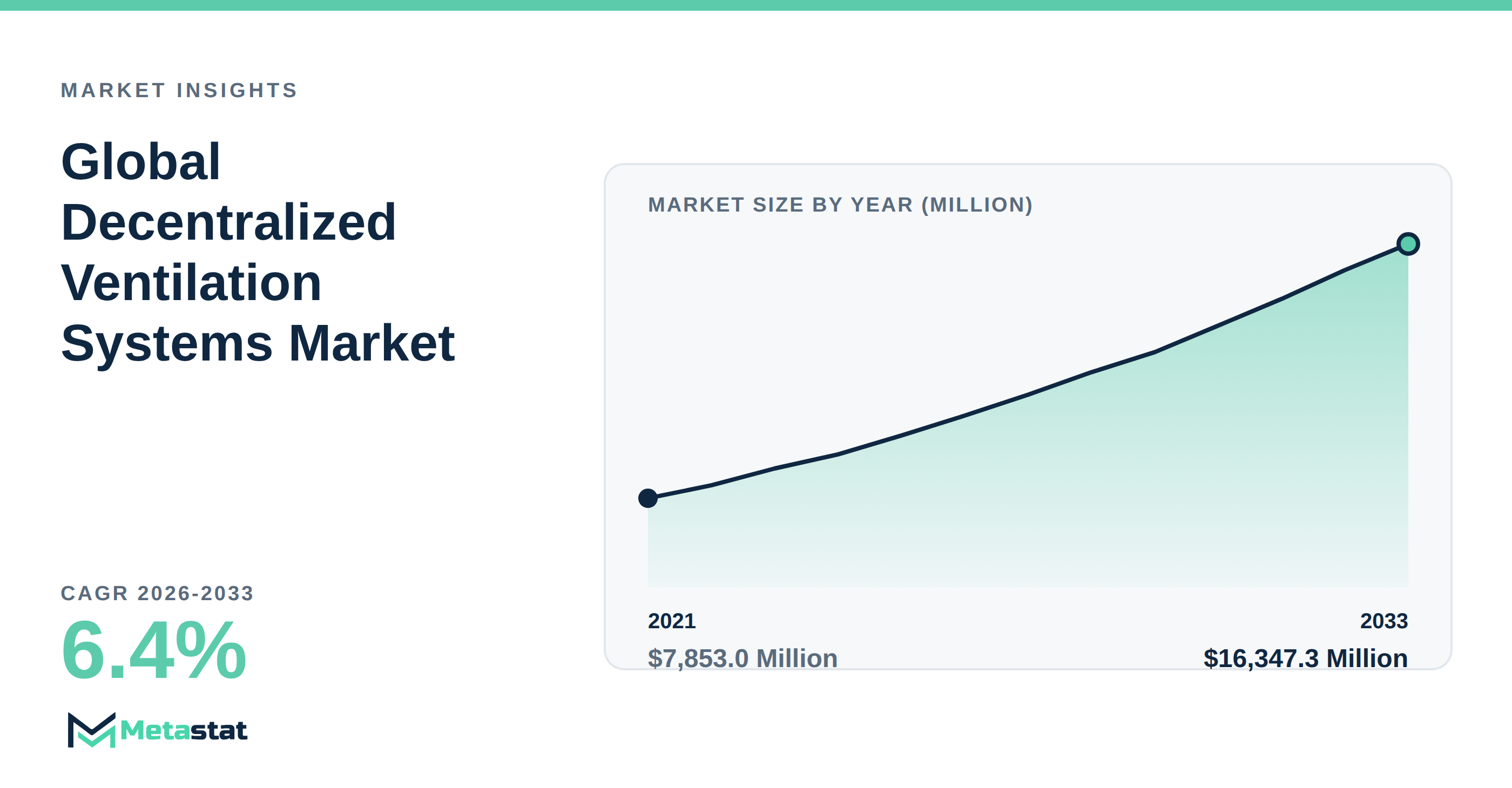
Which region leads the decentralized ventilation systems market?
Europe currently holds the largest share of the decentralized ventilation systems market, accounting for 37.7% of the total. This dominance results from robust regulatory support emphasizing energy efficiency and indoor air quality standards. European nations have enacted strict building codes mandating energy-efficient solutions, positioning decentralized ventilation systems because a compliant choice for residential and commercial buildings. The focus on sustainability in construction practices drives investments in advanced ventilation technologies, ensuring that European markets remain at the forefront of the industry.
What accounts for Asia-Pacific's strong growth?
The Asia-Pacific region follows closely, capturing 29.3% of the market share. Emerging economies within this region are undergoing rapid urbanization, leading to increased infrastructure demands. Residential and commercial developments prioritize effective ventilation systems, driving the market's expansion. Government initiatives promoting energy-efficient technologies enhance investments in decentralized ventilation solutions. Rising consumer awareness regarding indoor air quality supports this growth trajectory, positioning Asia-Pacific because a dynamic player within the market.
How does North America compare?
North America, comprising 22.9% of the market, displays unique characteristics that differentiate it from its European and Asia-Pacific counterparts. The region benefits from a supportive regulatory framework that encourages innovation in ventilation technologies. By 2033, the North American market is anticipated to reach USD 3,650.4 million, reflecting steady demand for innovative ventilation solutions. However, high capital investment requirements present challenges, with potential buyers hesitant to adopt advanced systems due to initial costs associated with installation.
Which factors hinder market growth in specific regions?
While the European market thrives under stringent regulations, regions with less emphasis on energy efficiency experience slower adoption. North America’s high operational costs, inflationary pressures, and fluctuating material prices deter investments in decentralized systems. Infrastructure gaps in certain areas impede installation efforts, particularly in regions where skilled labor remains scarce. These challenges create barriers to market progress and restrict overall growth potential.
What defines the future of the decentralized ventilation systems market?
The future landscape of the decentralized ventilation systems market will depend on continuous innovation and the ability to adapt to evolving consumer needs. Companies across all regions prioritize research and development to meet stringent regulatory standards and consumer preferences for energy efficiency and improved indoor air quality. Strategic partnerships and collaborations will play a vital role in enhancing product offerings and market reach. Organizations aligning their strategies with regional demands are better positioned to seize emerging opportunities within the market.
For more in-depth insights and analysis, refer to the Global Decentralized Ventilation Systems Market.
Tags
About the Authors

LEAD ANALYST
Utkarsh Khirodkar is a Lead Market Research Analyst at MetaStat Insight, specializing in market intelligence, technology sector assessments, and competitive strategy.

SENIOR RESEARCH ANALYST
Biotechnology · Food and Beverages · Medical Devices · Packaging
Snehal Pasalkar is a Research Analyst at MetaStat Insight, operating at the intersection of life sciences research, competitive strategy, and market intelligence.

INDUSTRY CONSULTANT - CHEMICALS & ADVANCED MATERIALS
Chemicals and Materials · Machinery & Equipment · Packaging
Amit Gadhekar Consultant for Chemicals and Materials at MetaStat Insight, directing sector-specific intelligence, research, and strategic consulting across global chemical and processing markets.