
Explore the rapid growth of the premium segment in the India K-Beauty/Skincare market, driven by consumer demand and innovative practices.
The premium segment of the India K-Beauty/Skincare market is significantly outpacing other categories, with projections indicating a leap from USD 10.6 billion in 2026 to USD 56.5 billion by 2033. This growth, driven by a compound annual growth rate (CAGR) of 27.1%, highlights a remarkable shift in consumer behavior towards high-quality skincare solutions.
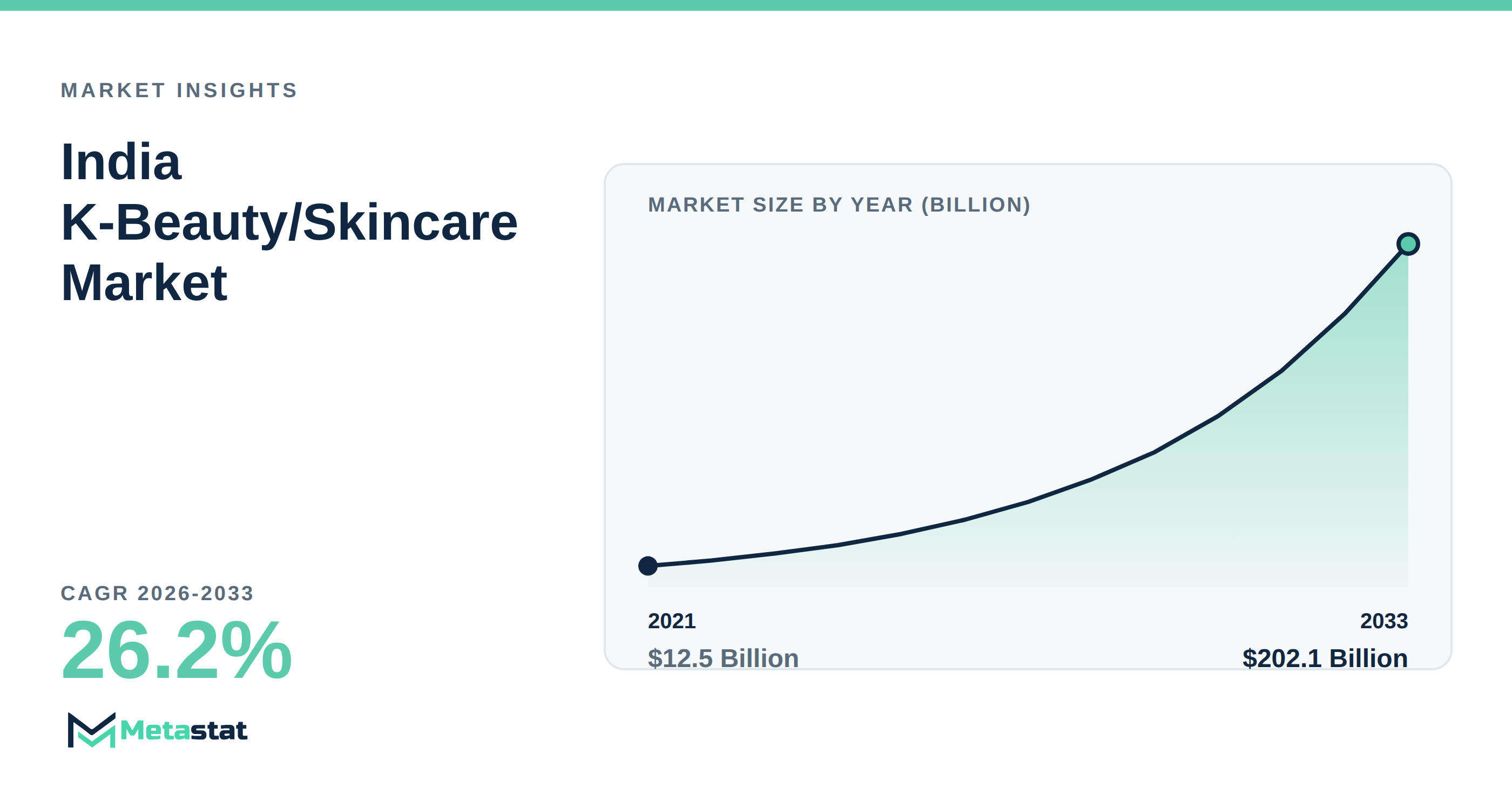
This surge in the premium segment results from an increasing consumer focus on the effectiveness of skincare products. While awareness of skincare benefits rises, consumers are more inclined to invest in products that promise superior results. This change reflects a broader trend where Indian consumers, particularly those in urban areas, are willing to allocate more of their budgets on premium and effective skincare options.
Social media engagement is a crucial factor in the visibility of premium skincare brands. Influencers play an important role in shaping consumer attitudes, drawing attention to the effectiveness and luxury associated with these products. Their endorsements significantly influence purchasing decisions, leading to increased trials and encouraging repeat purchases. This trend highlights the importance of tailored marketing strategies that appeal to younger demographics, who value authenticity and brand equity.
Technological advancements in product formulation contribute to the momentum in the premium segment. Brands innovate by integrating unique ingredients and modern technologies that enhance product efficacy. Such developments set premium offerings apart from their lower-tier counterparts, allowing brands to command higher price points. Sustainability emerges because an important trend within the premium category, because consumers increasingly prefer brands that prioritize ethical practices and environmentally friendly packaging. This alignment with consumer values strengthens brand loyalty and drives further growth within this segment.
While the masstige segment, expected to reach USD 96.8 billion by 2033 with a CAGR of 27.4%, continues to grow, it does not match the momentum of the premium category. This segment caters to consumers who seek quality at accessible prices but often falls short when compared to the premium segment's offerings. Many consumers are now opting for higher-priced products due to their proven effectiveness and exclusive branding, reinforcing the premium segment's position in the market.
The mass segment remains a vital component because well, projected to reach USD 48.8 billion by 2033. This growth is mainly fueled by rising disposable incomes and urbanization. However, it lacks the growth pace observed in the premium segment, because many consumers transition from mass-market products to premium alternatives, further solidifying the latter's dominance.
For brands aiming to excel in the India K-Beauty/Skincare market, grasping the dynamics of these segments is essential. Companies are focusing on product differentiation, innovative formulations, and sustainable practices to meet the rising demand for premium products. Those that align their strategies with shifting consumer trends are likely to enhance their market standing amid increasing competition.
This evolution within the India K-Beauty/Skincare market demonstrates the promising future for premium brands, fueled by consumer awareness, digital engagement, and innovation. To capitalize on this growth, stakeholders adapt their strategies, emphasizing the attributes that drive success in the premium segment.
For more in-depth insights and forecasts on the India K-Beauty/Skincare market, visit the India K-Beauty/Skincare Market report.
Tags
About the Author

LEAD ANALYST
Utkarsh Khirodkar is a Lead Market Research Analyst at MetaStat Insight, specializing in market intelligence, technology sector assessments, and competitive strategy.