
Investment in rail infrastructure modernization drives growth, with passenger and freight segments expanding significantly in the coming years.
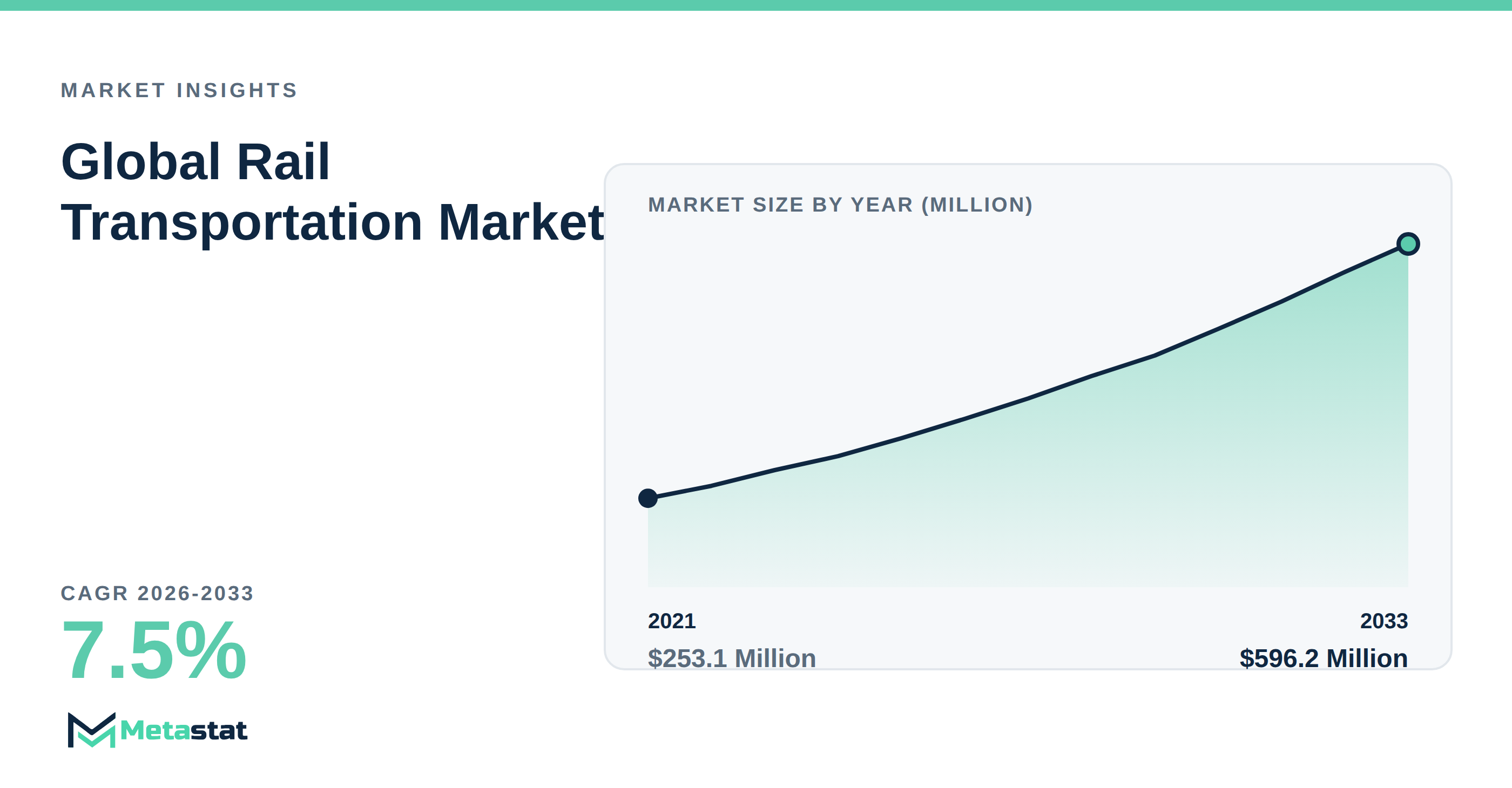
Investment in rail infrastructure modernization is a key driver of growth in the Rail Transportation market. Increasing urbanization and the demand for effective public transportation options have led governments and private entities to prioritize enhancements to rail networks. This trend benefits both passenger rail transport and rail freight segments, resulting in a projected market value of USD 596.2 million by 2033.
Passenger rail transport is set for substantial growth, rising from USD 217.8 million in 2026 to USD 348.7 million by 2033, indicating a CAGR of 7%. The growing preference for sustainable transportation solutions has prompted urban areas to expand rail services, effectively addressing road congestion. Rail systems provide an efficient alternative to crowded road networks, aligning with government initiatives aimed at improving urban mobility.
Emerging demands in the Asia Pacific region have intensified investments in passenger rail services, particularly in countries like China and India. These nations are experiencing rapid urbanization, leading to considerable increases in commuter populations. Enhanced rail connectivity significantly contributes to meeting the need for reliable public transport solutions within these densely populated areas.
Simultaneously, the rail freight sector is projected to achieve an estimated value of USD 247.4 million by 2033, growing at a CAGR of 8.2%. This expansion is driven by various industries, including agriculture and construction, which increasingly rely on rail transportation to efficiently move goods. Technological advancements, along with an emphasis on sustainability in freight transport, play a critical role in enhancing operational efficiencies and reducing environmental impacts.
Investment in technology is essential for optimizing rail operations. Rail operators are integrating digital tools and automation to streamline processes, resulting in reduced operational costs and improved service delivery. These advancements not only lower costs but improve the overall passenger experience, attracting more users and increasing ridership levels.
However, challenges persist in the Rail Transportation market. Regulatory compliance, particularly regarding safety and emissions standards, poses significant hurdles. Companies encounter increased operational complexity and costs associated with meeting stringent regulations, particularly impacting smaller players entering the market. This scenario leads to a more consolidated environment among established firms.
Macroeconomic factors including inflation and currency volatility challenge financial planning and investment strategies in the industry. Companies navigate these external factors carefully while maintaining competitiveness and ensuring profitability.
Geopolitical factors introduce uncertainties into the market, particularly affecting international rail operations. Trade frictions and varying regulations across regions increase compliance overhead for companies, complicating cross-border logistics. Some market players require adaptive strategies to manage these geopolitical risks effectively.
Emerging regional demands in South America and Africa represent additional opportunities for growth in the Rail Transportation market. Investments in rail networks aim to improve connectivity and support economic development, leading to the formation of new trade routes. These developments enhance market access, ultimately benefiting regional economies and increasing rail service adoption.
The Rail Transportation market exhibits significant growth potential driven by infrastructure investments, technological advancements, and evolving consumer preferences. The emphasis on sustainability and efficiency will play a crucial role in shaping the sector's future. Stakeholders should strategically prioritize investments in modernization and innovation to capitalize on emerging opportunities while addressing regulatory and geopolitical challenges. For further insights, explore the Global Rail Transportation Market.
Tags
About the Authors

LEAD ANALYST
Utkarsh Khirodkar is a Lead Market Research Analyst at MetaStat Insight, specializing in market intelligence, technology sector assessments, and competitive strategy.

ENERGY & INFRASTRUCTURE INDUSTRY CONSULTANT
Automotive and Transportation · Electronics and Semiconductor · Energy and Power · Machinery & Equipment
Saurabh Vasant Ganvir consults for Energy & Infrastructure Industry at MetaStat Insight, specializing in renewable energy, solar EPC, and electric vehicle (EV) infrastructure markets.