
LEAD ANALYST
Utkarsh Khirodkar is a Lead Market Research Analyst at MetaStat Insight, specializing in market intelligence, technology sector assessments, and competitive strategy.

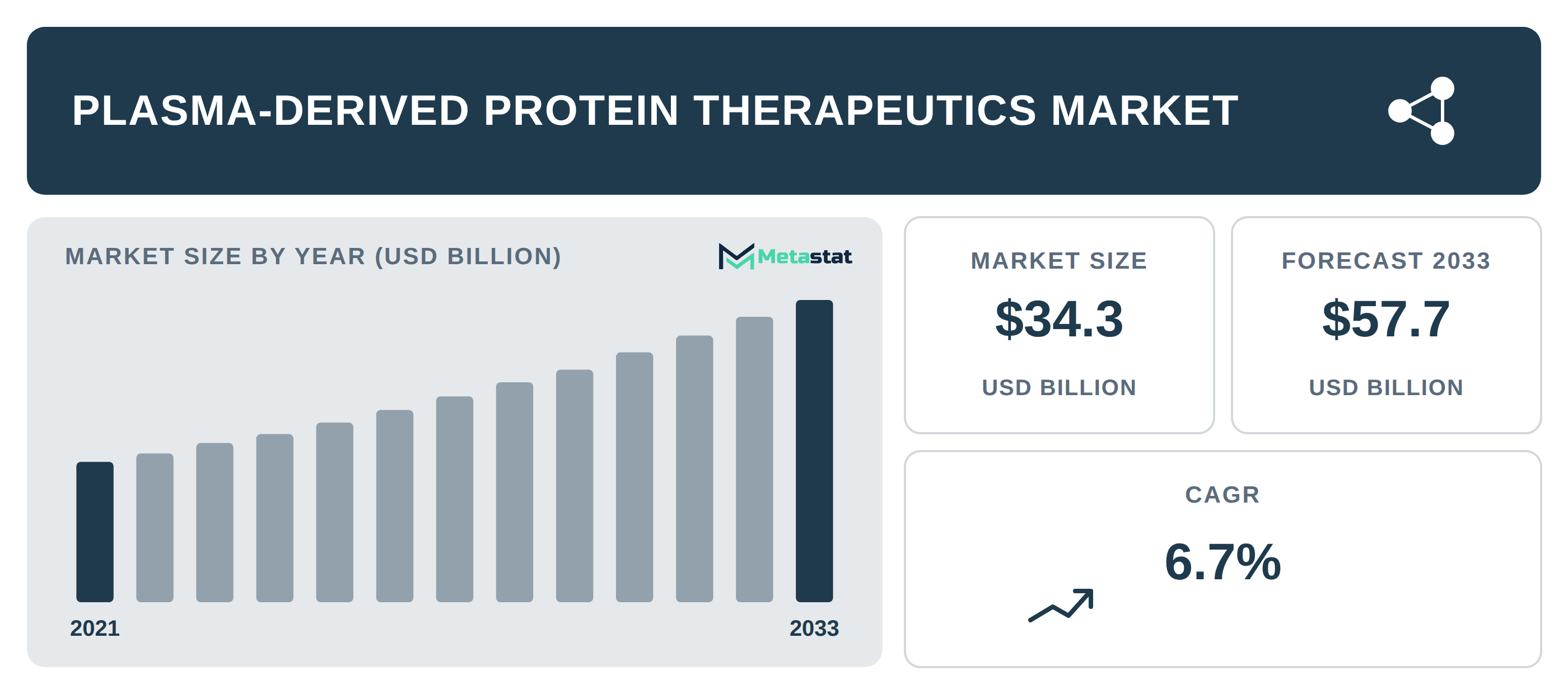
Metastat Insights announces the release of its report on the Plasma-Derived Protein Therapeutics market, projected to grow from USD 34.3 billion in 2025 to USD 57.7 billion by 2033, at a CAGR of 6.7%. The report analyzes drivers, challenges, segmentation, and key players in the market.
Metastat Insights has published "Global Plasma-Derived Protein Therapeutics Market Size, Share, By Product Type (Immunoglobulins, Albumin, Coagulation Factors, Alpha-1 Antitrypsin, C1 Esterase Inhibitor and Other Plasma-Derived Proteins), By Primary Immunodeficiency (PID) (Secondary Immune Deficiency, Chronic Inflammatory Demyelinating Polyneuropathy (CIDP), Myasthenia Gravis, Hematology & Coagulation Disorders, Respiratory Disorders and Critical Care & Trauma), By Route of Administration (Intravenous, Subcutaneous, Intramuscular and Topical and Local Administration), By End-User (Hospitals and Clinics, Specialty Plasma Centers, Homecare and Research & Academic Institutes), Industry Analysis, Growth, Trends, and Forecast, 2026-2033", highlighting the market's value of USD 34.3 billion in 2025, projected to reach USD 57.7 billion by 2033, with a compound annual growth rate (CAGR) of 6.7%.
Several factors contribute to the increasing demand for Plasma-Derived Protein Therapeutics. A significant driver is the heightened need for immunoglobulins and albumin, which are essential in treating various immunodeficiencies and chronic diseases. The market is benefiting from advancements in plasma collection techniques, which enhance supply dynamics. An increase in donor awareness has improved plasma availability, leading to competitive pricing and greater accessibility for end users, particularly hospitals and specialty plasma centers. The immunoglobulins segment alone is expected to grow from USD 17.9 billion in 2026 to USD 29.7 billion by 2033, reflecting a CAGR of 7.5%.
Despite the growth potential, the Plasma-Derived Protein Therapeutics market faces several challenges. Regulatory compliance is stringent, impacting product approval timelines and operational costs for key players. Fluctuating raw material costs and pricing volatility present additional hurdles that manufacturers navigate. Macroeconomic factors, including inflationary pressures, further complicate production and pricing strategies. Companies that effectively address these challenges are better positioned to capitalize on market opportunities.
The Plasma-Derived Protein Therapeutics market segments into product types including Immunoglobulins, Albumin, Coagulation Factors, Alpha-1 Antitrypsin, C1 Esterase Inhibitor, and Other Plasma-Derived Proteins. The Immunoglobulins segment, for instance, is anticipated to grow from USD 17.9 billion in 2026 to USD 29.7 billion by 2033, reflecting a CAGR of 7.5%. By route of administration, intravenous methods dominate, valued at USD 26.2 billion in 2026 and projected to reach USD 38.5 billion by 2033, due to their rapid onset of action and effectiveness in emergency treatments. This growth is driven by a rising prevalence of chronic diseases among patients.
Key players in the Plasma-Derived Protein Therapeutics market include CSL Behring, Takeda Pharmaceutical Company Limited, Grifols, S.A., and Octapharma AG. These companies operate within the competitive environment by focusing on innovation, regulatory compliance, and strategic investments in research and development. Their efforts contribute to the overall growth and evolution of the market, ensuring the availability of effective therapies for patients in need.
For a more comprehensive analysis, readers are invited to explore the full report on the Global Plasma-Derived Protein Therapeutics Market.
Related Report
Global Plasma-Derived Protein Therapeutics MarketLEAD ANALYST
Utkarsh Khirodkar is a Lead Market Research Analyst at MetaStat Insight, specializing in market intelligence, technology sector assessments, and competitive strategy.

LEAD PRINCIPAL ANALYST, PHARMA AND HEALTHCARE
Food and Beverages · Healthcare · Healthcare IT · Medical Devices
Ajay Devgire is the Lead Healthcare Analyst at MetaStat Insight, leading strategic research and market intelligence initiatives across the global healthcare domain.