
LEAD ANALYST
Utkarsh Khirodkar is a Lead Market Research Analyst at MetaStat Insight, specializing in market intelligence, technology sector assessments, and competitive strategy.

Global AI in Asset Management Market Size, Share, By Technology (Machine Learning, Natural Language Processing, Generative AI and Large Language Models, Agentic AI and Autonomous AI, Computer Vision, Intelligent Automation and Robotic Process Automation, and Others), By Asset Type (Equities, Fixed Income, Multi-Asset, Alternatives and Private Markets, Cash and Liquidity, and Others), By Application (Investment Research and Idea Generation, Portfolio Construction and Optimization, Risk Management and Compliance, Trading and Execution, Performance Analytics and Attribution, Investment Operations and Process Automation, Client Servicing and Distribution, and Others), By End Use (Traditional Asset Management Firms, Alternative Investment Managers, Pension and Retirement Funds, Insurance Asset Managers, Sovereign Wealth Funds, Endowments and Foundations, Banks, Wealth Managers and Private Banks, and Family Offices and Other Institutional Investors), Industry Analysis, Growth, Trends, and Forecast, 2026-2033
Report ID
MSI-4921
Published
August, 2026
Pages
250 Pages
Format
Historical
Base year
Forecast
Forecast period
Report Details
Choose Your License
Global AI in Asset Management Market
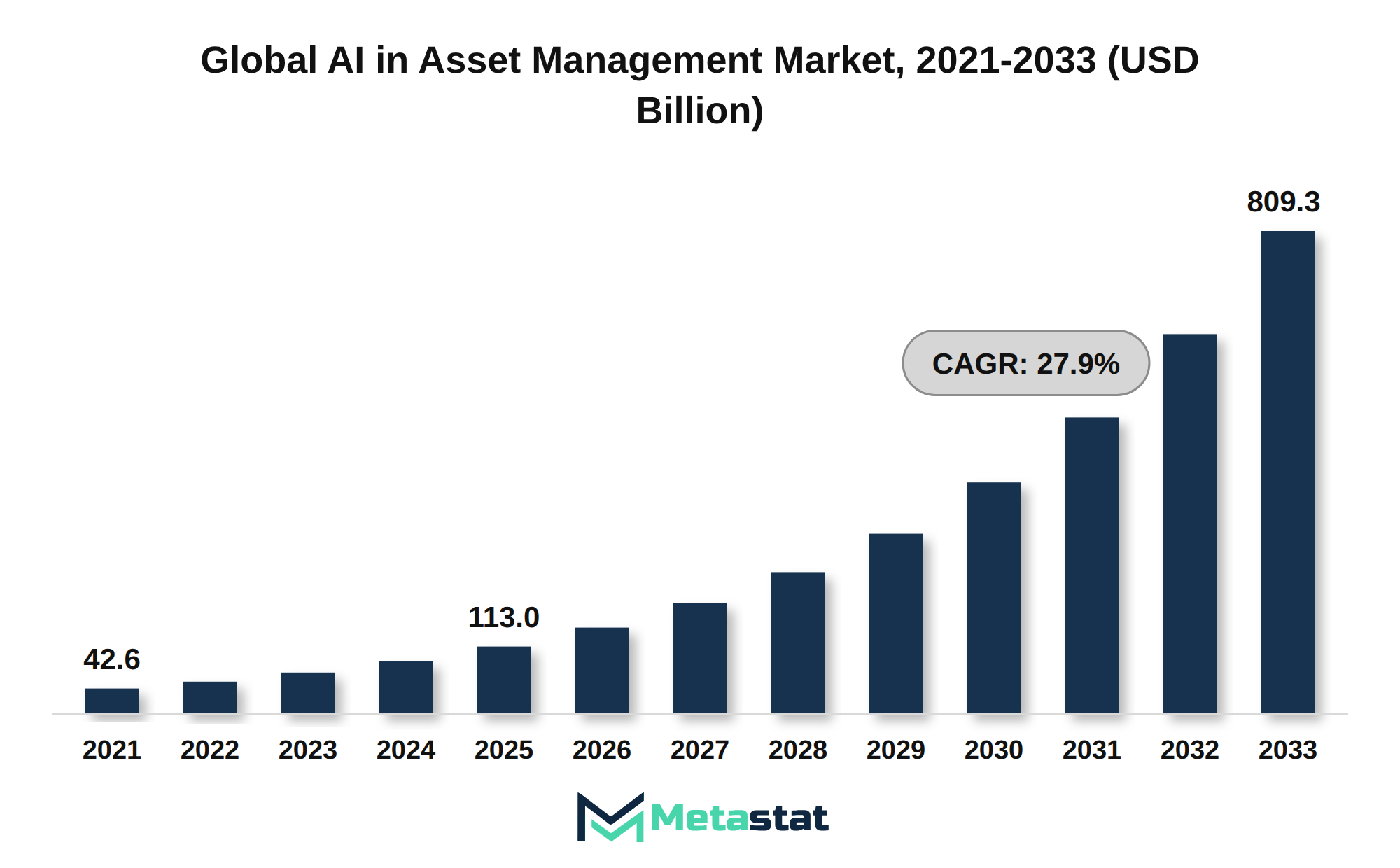
The global AI in Asset Management market was valued at USD 113 billion in 2025 and is projected to reach USD 809.3 billion by 2033, growing at a CAGR of 27.9% over the forecast period.
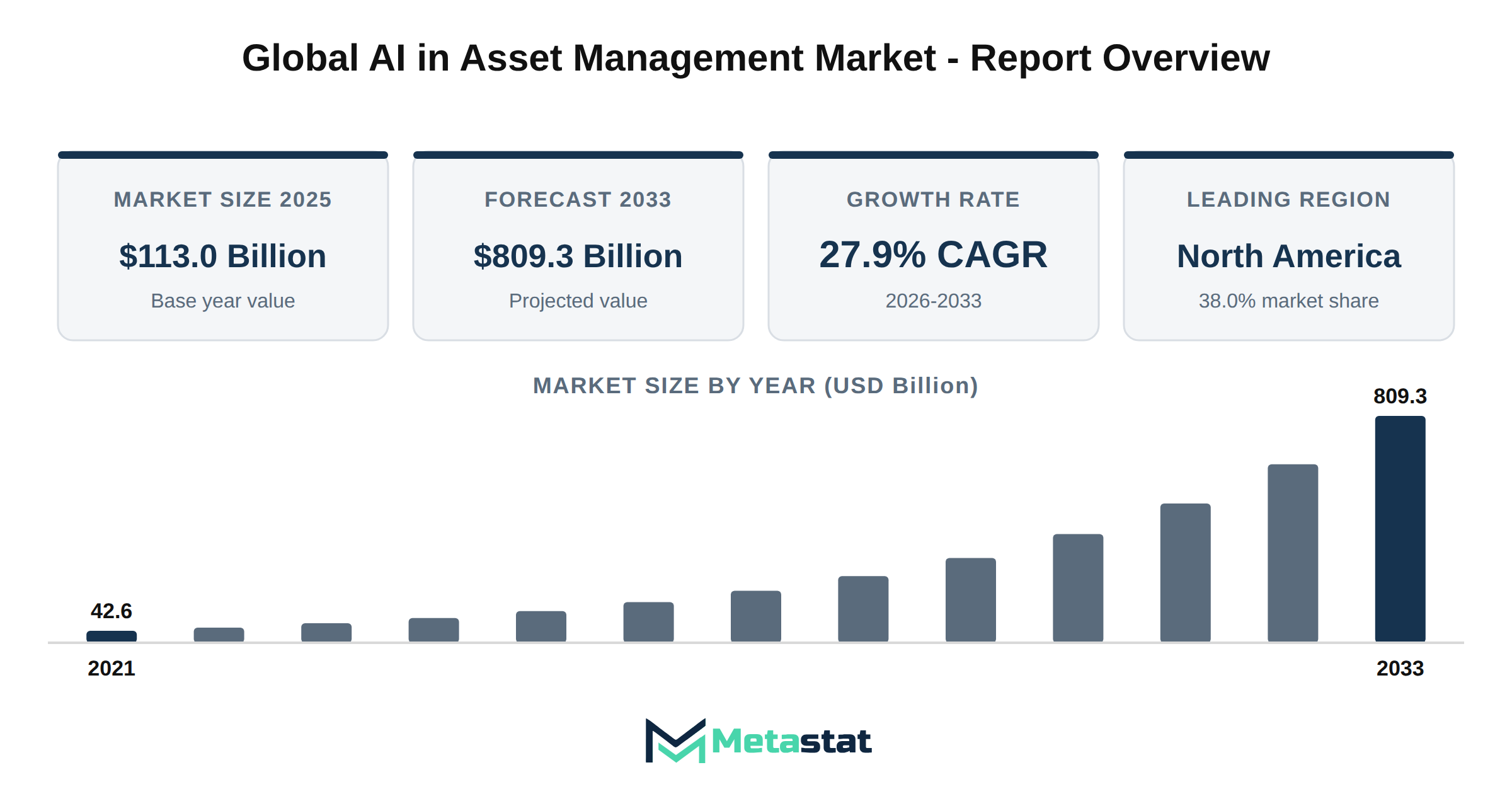
The AI in Asset Management market reached a valuation of USD 113 billion in 2025, with projections indicating substantial growth to USD 809.3 billion by 2033. This growth reflects a compound annual growth rate (CAGR) of 27.9 percent during the forecast period. Historical values show the market starting at USD 42.6 billion in 2021 and expanding to USD 69.5 billion in 2023. The transition to AI technologies in asset management is driven by increasing demand for data-driven decision-making and enhanced operational efficiencies.
North America holds the largest regional market share at 38 percent, followed by Europe at 27 percent, and Asia Pacific at 25 percent. This regional distribution highlights the concentration of advanced technologies and investment in AI solutions among leading financial institutions. North America is expected to generate a market value of USD 284.1 billion by 2033, maintaining a CAGR of 27.9 percent. The growing emphasis on regulatory compliance and risk management in financial operations fuels the adoption of AI solutions across various sectors.
The market segmentation shows a diverse landscape, with technology categories including Machine Learning (ML) projected to increase from USD 78.1 billion in 2026 to USD 378.6 billion by 2033, reflecting a CAGR of 25.3 percent. Natural Language Processing (NLP) is anticipated to reach USD 118.6 billion by 2033, indicating a strong trend towards AI applications that enhance communication and data analysis. Generative AI and Large Language Models contribute significantly to growth within the technology segment.
Asset types in the market include equities, fixed income, multi-asset, and alternatives. Equities are expected to grow from USD 67.6 billion in 2026 to USD 322.4 billion by 2033, demonstrating a CAGR of 25 percent. Fixed income assets are projected to reach USD 188.7 billion by 2033, emphasizing the need for AI-driven analysis in a complex investment landscape. The focus on diverse asset types enables firms to optimize their portfolios and respond to market fluctuations effectively.
The AI in Asset Management market is influenced by several factors, including regulatory compliance and standards that shape operational frameworks. Adherence to these regulations ensures that firms maintain trust and reliability, which is vital for attracting investments and sustaining growth. Geopolitical risks create uncertainty in financial markets, prompting asset managers to adopt AI solutions that enhance risk management strategies and improve compliance processes.
Disruption in traditional asset management approaches drives the adoption of innovative technologies. Investment in research and development trajectories contributes to the advancement of AI capabilities, allowing firms to better analyze market trends and customer behavior. Next-generation innovations, including generative AI and large language models, enable asset managers to optimize portfolio construction and enhance decision-making processes.
The sustainable transformation of the asset management sector emphasizes the importance of decarbonization and circular economy dynamics. Investors increasingly prioritize sustainability, prompting firms to integrate AI solutions that analyze environmental, social, and governance (ESG) factors. This shift not only supports compliance with emerging regulations but aligns with the growing demand for responsible investment practices.
Market fragmentation influences competition, with numerous players vying for market share. Mergers and acquisitions reshape the competitive landscape, allowing firms to consolidate resources and enhance technological capabilities. The value chain in the AI in Asset Management market reflects a complex relationship between technology providers, asset managers, and end-users, each contributing to the overall efficiency and effectiveness of investment strategies.
Capital allocation and infrastructure investments play a critical role in the market's evolution. Firms focus on optimizing capital expenditures (CapEx) and operational expenditures (OpEx) to enhance profitability. Macroeconomic headwinds, including inflationary pressures and currency volatility, present challenges that asset managers navigate. These challenges influence investment strategies and market performance, requiring firms to remain agile and responsive to changing economic conditions.
The future strategic outlook for the AI in Asset Management market emphasizes the need for continuous innovation and adaptation. Corporate imperatives focus on leveraging AI technologies to drive efficiency, enhance customer experiences, and maintain a competitive edge. High-value recommendations for firms include investing in advanced AI tools, establishing partnerships with technology providers, and prioritizing sustainability initiatives to meet evolving investor expectations.
The AI in Asset Management market experiences significant growth driven by ongoing digital transformation across various sectors. Organizations increasingly recognize the integration of advanced technologies like artificial intelligence in their operations to improve efficiency and decision-making capabilities. This shift towards digitization reflects broader macro-economic factors, including rising GDP growth and substantial capital investments, which fuel the adoption of AI-based solutions.
Investment in AI technologies equips asset management firms with enhanced tools for portfolio optimization, risk management, and client servicing. The emphasis on automation reduces operational costs and enables firms to allocate resources more strategically. In addition, competitive pressures influence organizations to innovate, driving higher demand for AI solutions that streamline processes and enhance service delivery.
An evolving consumer behavior, characterized by the demand for personalized financial services, pushes the market to adapt its offerings. The integration of AI into investment research and idea generation further aligns with these changing preferences, allowing asset managers to provide tailored solutions that meet client expectations. Overall, the digital transformation occurring across the financial sector presents an opportunity for the AI in Asset Management market to expand, positioning firms for strengthening long-term demand.
The integration of advanced technologies into the AI in Asset Management market significantly boosts operational efficiency and effectiveness. Financial institutions increasingly adopt automation and artificial intelligence to streamline processes, improve data analysis, and enhance decision-making capabilities. This technological shift results from various macro-economic factors, including rising labor costs and the necessity for faster processing times, which increase operational costs and pressure firms to optimize their operations.
Investments in digital tools and software adoption drive the demand for AI solutions across various asset types. Generative AI and machine learning contribute to more accurate forecasting and risk management, which are critical for investment strategies. Enhanced performance in these areas translates into higher returns, attracting further capital investment and fueling competition in the market, ultimately leading to a more dynamic investment environment.
Firms focus on integrating AI technologies to meet evolving consumer behaviors and preferences. The growing need for personalized services and tailored investment solutions pushes asset managers to adopt more sophisticated analytical tools. This trend highlights the importance of technological integration in the AI in Asset Management market, where companies that effectively apply these advancements gain a competitive edge, strengthening their market position and enhancing customer satisfaction.
The AI in Asset Management market faces challenges from regulatory complexities that inhibit adoption and implementation. Increasing regulatory scrutiny regarding data privacy and security creates additional compliance hurdles for organizations. In particular, firms encounter the necessity of aligning with evolving legal mandates, which heightens operational costs and complicates processes for data handling and reporting.
Macroeconomic headwinds further contribute to market constraints. Inflationary pressures affect the financial resources available for investment in AI technologies, causing potential slowdowns in adoption rates. Geopolitical instability introduces uncertainties that deter capital flow into technological advancements in asset management. This instability leads to resource scarcity, reducing the availability of essential technologies and talent required for effective implementation.
High capital investment requirements and escalating operating costs present significant barriers to entry for many firms. The AI in Asset Management market requires substantial upfront investment in infrastructure and technology, which nots be feasible for smaller players. Infrastructure gaps and connectivity deficits in certain regions result in deployment bottlenecks, undermining efforts to leverage AI effectively.
Skills shortages and talent gaps exacerbate the situation. The demand for skilled professionals proficient in AI and data analytics outpaces supply, leading to increased workforce overhead. Limited availability of qualified personnel restricts the ability of firms to fully employ AI technologies. Concurrently, data security vulnerabilities and privacy concerns regarding sensitive financial information create reluctance among organizations to fully invest in AI-driven solutions.
Market fragmentation and cultural barriers further complicate the landscape. Diverse market structures across regions result in varying levels of adoption and investment in AI technologies. These disparities slow down the growth of the market, resulting from firms navigating differing regulatory environments and cultural attitudes toward technology. Slowing downstream demand and industry cycle maturation signal a need for strategic adjustments to capture growth opportunities effectively.
The AI in Asset Management market faces significant challenges due to geopolitical fragmentation and trade deficits. Increasing trade tensions among major economies lead to tariff frictions, disrupting the flow of components and technology. These disruptions create uncertainties for firms operating at a global scale, impacting supply chain stability and operational efficiency. Companies in the market experience difficulties in sourcing technology and components, resulting in rising input costs and pricing pressures.
Technological disruptions contribute to an increasingly complex research and development landscape. Firms struggle with the integration of diverse technologies and systems, leading to interoperability issues that hinder collaboration and efficiency. Complexities in ensuring integration across platforms result in increased costs and extended timelines for project implementations.
The market encounters difficulties associated with tightening global regulatory standards, which impose additional compliance overhead. The evolving legal landscape creates uncertainty, forcing firms to invest in compliance measures while navigating the complexities of intellectual property protection. These factors collectively challenge the growth and adoption of AI technologies in asset management, necessitating a strategic approach to mitigate risks and enhance operational resilience.
The AI in Asset Management market benefits from the rapid adoption of emerging technologies, significantly shaping operational practices and investment strategies. Key drivers, including infrastructure modernization and the integration of artificial intelligence tools, enable firms to respond effectively to evolving market demands. The shift toward digital procurement and innovative commercial models creates a competitive landscape, enhancing value creation across various asset types.
Geographical expansion remains a critical factor, with regional demands driving investment in AI capabilities. Regions including North America and Europe show strong growth potential owing to firms increasingly leveraging advanced technologies for portfolio optimization and risk management. The market experiences heightened activity from alternative investment managers pursuing strategic consolidation through mergers and acquisitions, aligning with market trends and enhancing their service offerings.
The emphasis on sustainability imperatives influences AI adoption strategies. Firms align with environmental, social, and governance (ESG) criteria, seeking innovations that support eco-friendly compliance and operational efficiency. This focus on green transformations strengthens brand reputation while attracting eco-conscious investors.
Market participants are actively diversifying product offerings through the integration of niche applications that address specific client needs. The necessity for process automation and operational yield maximization enables firms to enhance their competitive advantage. Overall, these dynamics contribute to the promising outlook for the AI in Asset Management market, with significant opportunities for growth and investment in the coming years.
The Global AI in Asset Management market is segmented based on Technology, Asset Type, Application, and End Use.
Valued at USD 78.1 billion in 2026, the Machine Learning (ML) segment is projected to reach USD 378.6 billion by 2033, at a CAGR of 25.3% during the forecast period. This growth is driven by the increasing demand for data-driven insights and enhanced decision-making capabilities within the asset management sphere. The adoption of machine learning technologies enables firms to analyze vast datasets, identify patterns, and generate predictive analytics, ultimately improving investment strategies and portfolio management.
Technological maturation influences the expansion of this segment. Advancements in algorithms, computing power, and data processing capabilities strengthen the viability of machine learning applications in investment research and risk management. Investment firms actively seek next-generation upgrades that improve operational efficiencies and enhance performance metrics.
The application of machine learning spans various end-use dynamics, including traditional asset management firms and alternative investment managers. These entities leverage machine learning for investment research and idea generation, portfolio construction and optimization, and risk management and compliance. While firms continuously refine their technological capabilities, consumption shifts toward more sophisticated machine learning models that deliver useful insights and drive performance.
Cost structures and pricing volatility remain critical factors influencing this segment. Firms investing in machine learning technologies experience initial high costs, but these investments yield significant long-term returns through improved operational efficiencies and enhanced decision-making processes. Regulatory compliance standards shape the adoption of machine learning solutions, driven by firms seeking to ensure adherence to evolving financial regulations while maximizing their competitive edge.
Strategic opportunity windows emerge for firms that effectively utilize machine learning capabilities. The AI in Asset Management market reflects a growing recognition of the importance of data-driven insights in optimizing investment strategies and enhancing risk management practices. Firms that prioritize machine learning development position themselves advantageously within an increasingly competitive environment.
Natural Language Processing (NLP) technology in the AI in Asset Management market exhibits rapid advancements that drive its adoption among various financial institutions. Increased demand for data analysis capabilities fuels investment in NLP solutions, enabling firms to extract insights from vast amounts of unstructured data, enhancing decision-making processes. Enhanced customer interactions through chatbots and virtual assistants leverage NLP technologies, improving service delivery and operational efficiency for asset management firms.
Market expansion is supported by ongoing developments in machine learning algorithms and natural language understanding, which improve the performance of NLP applications. Financial firms recognize the importance of NLP in investment research, compliance, and risk management, leading to further integration into their operations. Given the growing reliance on data-driven strategies, the NLP segment is projected to reach USD 118.6 billion by 2033, at a CAGR of 27.6% during the forecast period.
While firms continue to enhance their technological capabilities, opportunities arise for next-generation upgrades that leverage advanced NLP functionalities. Increased focus on regulatory compliance standards drives investment in NLP solutions that help firms manage risks associated with data handling and reporting. Overall, the growing significance of the NLP segment highlights its role in shaping the future of the AI in Asset Management market.
Growth in the Generative AI & Large Language Models segment reflects increasing demand for innovative solutions in the AI in Asset Management market. This segment supports asset managers in enhancing decision-making capabilities through advanced predictive analytics and natural language understanding. Rising investment in these technologies results from the need for improved efficiency and risk management in investment strategies.
Technological maturation in AI algorithms contributes to the segment's expansion. Providers are adopting next-generation upgrades that enhance the performance of generative AI, enabling faster processing and more accurate insights. Major players invest significantly in research and development to innovate and evolve product offerings, ensuring alignment with the rising expectations of clients.
End-use dynamics play a crucial role in this segment's growth. Traditional asset management firms and alternative investment managers increasingly leverage generative AI to streamline processes and enhance client servicing capabilities. Investment in this sub-segment is expected to enhance the overall market's appeal, driving further investment into AI technologies.
Regulatory compliance standards are becoming a focal point for asset management firms. Adopting generative AI solutions offers a pathway to meet these standards effectively, reducing the burden of compliance while improving operational efficiencies. Firms that utilize the potential of these technologies position themselves to navigate evolving regulatory frameworks more adeptly, enhancing their competitive edge in the market.
Rapid advancements in technology significantly influence the Agentic AI & Autonomous AI segment within the AI in Asset Management market. Organizations increasingly adopt these innovative solutions to enhance operational efficiency and improve decision-making processes. The growing complexity of investment strategies necessitates tools capable of real-time data processing and analysis, making Agentic AI a valuable asset. Enhanced capabilities in automation and predictive analytics fuel demand among investment firms, enabling them to navigate market volatility and optimize returns more effectively.
The Agentic AI & Autonomous AI segment is projected to grow at a CAGR of 40.1% during the forecast period. With the ongoing evolution of AI technologies, firms in the asset management sector recognize the need for advanced algorithms and systems that facilitate automated trading, risk management, and compliance monitoring. Increased investment in this segment reflects the strategic importance of adopting agentic technologies to maintain competitiveness in a rapidly changing marketplace.
Investment firms focusing on this segment experience enhancements in operational capabilities, leading to improved performance metrics and client satisfaction. While companies prioritize technological maturation and next-generation upgrades, the integration of Agentic AI solutions strengthens their market position. The agentic capabilities, characterized by autonomous actions and intelligent decision-making, support firms in addressing regulatory challenges and achieving compliance standards. This segment's growth trajectory aligns with broader trends observed in the AI in Asset Management market, driving significant opportunities for innovation and investment.
Continued advancements in computer vision technology significantly influence the AI in Asset Management market. The ability to analyze visual data enhances investment research, providing insights into market trends and asset performance. Financial firms increasingly adopt this technology to improve analytical capabilities, allowing for better decision-making based on visual data interpretation.
Technological maturation in computer vision provides a competitive edge among asset managers. Enhanced algorithms and models enable firms to automate processes, reduce human error, and increase efficiency. These developments encourage widespread integration into various applications, particularly in risk management and compliance, where visual data analysis is essential.
Next-generation upgrades in computer vision capabilities facilitate the evolution of market offerings. The emergence of sophisticated tools that incorporate deep learning and neural networks enhances image recognition and analysis. This evolution supports asset managers in identifying investment opportunities and monitoring portfolio performance more effectively.
Shifts in consumption patterns drive increased demand for computer vision applications within the market. Firms seek to leverage visual data to gain insights, thereby enhancing portfolio construction and optimization efforts. The integration of this technology aligns with the growing emphasis on data-driven decision-making across the financial services sector.
Regulatory compliance standards influence the adoption of computer vision technology in asset management. Firms prioritize tools that enhance transparency and ensure adherence to evolving regulations. This focus on compliance creates strategic opportunities for technology providers to enhance their offerings.
Cost structures associated with implementing computer vision solutions present both challenges and opportunities. Investments in technology infrastructure are substantial, yet the long-term benefits of improved efficiency and enhanced decision-making capabilities outweigh initial expenditures. Firms that navigate these cost dynamics effectively position themselves for future success in the competitive environment of the AI in Asset Management market.
Intelligent Automation and Robotic Process Automation play crucial roles in the AI in Asset Management market by enhancing operational efficiencies and enabling data-driven decision-making. A surge in demand for automation stems from minimizing manual processes, reducing human error, and optimizing resource allocation, which directly influences the adoption rate of these technologies.
Several factors drive segment expansion, including advancements in machine learning and AI capabilities, which streamline processes and improve accuracy in asset management tasks. Organizations recognize the potential of intelligent automation to enhance performance analytics, compliance monitoring, and customer interactions, leading to increased interest and investment in these solutions.
The evolution of next-generation technologies creates an environment conducive to upgrades and innovations. Financial institutions increasingly seek to integrate intelligent automation into their workflows to remain competitive and responsive to market dynamics. This trend significantly influences downstream applications, driven by firms aiming to enhance client servicing and distribution capabilities through automated systems.
End-use dynamics reflect a growing acceptance of intelligent automation across various asset management firms. Traditional asset management firms and alternative investment managers prioritize automation to improve operational scalability, reduce costs, and drive better investment outcomes. This shift exemplifies a broader consumption trend, with firms looking to leverage technology for strategic advantages in a changing market.
Regulatory compliance standards contribute to the segment's attractiveness, because automated systems enhance compliance monitoring and reporting capabilities. Financial institutions increasingly focus on ensuring adherence to stringent regulations, leading to heightened investments in intelligent automation solutions.
Technological obsolescence poses challenges, arising from firms continuously adapting to the latest advancements in automation technologies. Strategic opportunity windows arise for firms that successfully integrate intelligent automation, enabling them to differentiate their offerings and enhance client experiences in a competitive landscape. The capital investment outlook remains positive, driven by the recognition of automation's potential to generate long-term efficiencies and cost savings across the AI in Asset Management market.
Innovation in the technology category encompasses a range of solutions tailored for the AI in Asset Management market. Developments within this segment include advancements in computer vision, intelligent automation, and robotic process automation. Adoption of these technologies results from financial institutions seeking to enhance operational efficiency and optimize investment strategies, reflecting a structural shift towards automation in asset management.
Downstream applications drive interest in these solutions, with financial entities looking to improve risk management, compliance, and trading execution. Organizations face pressure to comply with evolving regulatory standards, which fuels demand for more sophisticated technology solutions. Companies pursue strategic opportunity windows to invest in next-generation upgrades, ensuring their offerings remain competitive and aligned with regulatory requirements.
Positioning within the market is influenced by consumption shifts, with an increasing focus on data-driven decision-making. Financial managers prioritize leveraging technology to gain insights from large data sets, enhancing portfolio performance and client servicing. The ongoing evolution of products reflects the need for adaptable and scalable solutions, catering to diverse end-use dynamics across various asset types, thereby strengthening long-term demand.
Supply chain resilience and raw material sourcing remain critical factors in technology deployment. Organizations evaluate substitution risks and disruptive alternatives that could impact technology integration. Companies actively seek to mitigate technological obsolescence by adopting new innovations, ensuring alignment with market demands. This proactive approach supports sustained growth and enhances competitive positioning within the AI in Asset Management market.
Valued at USD 67.6 billion in 2026, the Equities segment is projected to reach USD 322.4 billion by 2033, at a CAGR of 25% during the forecast period. Primary demand drivers for this segment include increasing reliance on data analytics and machine learning algorithms, which enhance decision-making processes in equity investment. This trend is propelled by a growing need for improved risk management and portfolio optimization among asset managers, reflecting a shift toward more data-driven strategies.
Technological maturation contributes to segment expansion. Innovations in machine learning and natural language processing enhance analytical capabilities, enabling firms to process vast amounts of data and derive insights. The adoption of these technologies is evident among traditional asset management firms and alternative investment managers, who invest heavily in upgrading their systems to maintain competitive advantages.
End-use dynamics highlight a shift in consumption patterns, with traditional asset management firms increasingly leveraging AI in Asset Management to adapt to evolving market conditions. The focus on equities leads to enhanced performance analytics and attribution, allowing managers to identify trends and opportunities more effectively. Regulatory compliance standards further influence this segment, pushing firms to adopt advanced technologies to ensure adherence to evolving financial regulations.
Cost structures and pricing volatility pose challenges, but they present strategic opportunity windows for firms willing to invest in next-gen upgrades. Innovations in AI technology lead to improved efficiencies, driving down operational costs and enhancing profit margins. The Equities segment's growth reflects broader trends in the AI in Asset Management market, where investment in technology translates into increased overall market value.
Significant growth in the Fixed Income segment aligns with broader trends in the AI in Asset Management market. The segment is projected to reach USD 188.7 billion by 2033, at a CAGR of 26.8% during the forecast period. Enhanced analytical capabilities drive demand for AI-driven solutions in fixed income, enabling asset managers to optimize portfolio performance and mitigate risks effectively. Adoption of machine learning algorithms for credit risk assessment and predictive analytics transforms investment strategies in this domain. Regulatory compliance pressures necessitate advanced tools for monitoring and reporting, further increasing reliance on AI technologies.
Investment managers actively seek solutions that enhance operational efficiency while delivering superior returns. Technological maturation in AI facilitates the development of sophisticated trading algorithms, improving execution strategies and reducing transaction costs. The integration of AI in fixed income supports enhanced scenario analysis, aiding in the evaluation of market movements and interest rate changes. This proactive approach to investment management provides a competitive edge in an increasingly complex financial environment.
While market participants prioritize data-driven strategies, demand for AI applications in fixed income continues to rise. The evolution of product offerings, marrying traditional fixed income strategies with innovative AI methodologies, drives significant investment in the segment. Consequently, the market for AI in Asset Management becomes essential for institutional investors aiming to navigate volatility and optimize asset allocation.
Investment in Multi-Asset strategies has become increasingly relevant in the AI in Asset Management market, driven by the need for diversified portfolios that balance risk and return. The segment is projected to reach USD 94.1 billion by 2033, reflecting a growing recognition among asset managers of the importance of integrating various asset types to enhance investment performance. Factors including technological maturation and advancements in data analytics enable more effective asset allocation and risk assessment, reinforcing demand for AI-driven solutions tailored for Multi-Asset approaches.
Adoption of AI technologies within this segment benefits from an expanding array of applications, including real-time data analysis, portfolio optimization, and enhanced trading strategies. These capabilities allow investment managers to respond swiftly to market changes and capitalize on emerging opportunities, thus supporting growth in revenue and market share. The increasing complexity of financial markets compels firms to leverage AI for better decision-making and improved compliance with regulatory standards, propelling the segment's expansion.
Cost structures associated with Multi-Asset management have evolved, with AI-driven tools providing efficiencies that lead to reduced operational costs over time. This trend offers a competitive advantage to firms that invest in advanced technologies, enabling them to offer lower fees while maintaining high performance. Pricing volatility in financial markets necessitates robust risk management strategies, and AI contributes significantly to this aspect through predictive analytics and algorithmic trading.
Market participants face pressures from maintaining supply chain resilience and adapting to shifting consumption patterns. Innovations in AI facilitate a responsive approach to asset management, allowing firms to navigate potential disruptions and optimize their investment strategies accordingly. The outlook for the Multi-Asset segment remains positive, supported by ongoing investments in technology and the continuous evolution of financial products tailored to meet the diverse needs of investors.
Investment in the Alternatives & Private Markets segment reflects a strong upward trajectory, driven by increasing demand for innovative investment strategies and diversified portfolios. This growth results from growing recognition among institutional investors of the potential benefits of alternative assets in enhancing risk-adjusted returns. The segment is projected to grow at a CAGR of 35.6% during the forecast period.
Technological advancements play a significant role in shaping this segment, particularly through the integration of artificial intelligence in investment decision-making processes. Enhanced data analytics capabilities facilitate improved asset selection and management, appealing to investment firms seeking to optimize performance. The shift towards private markets aligns with the broader trend of investors seeking uncorrelated returns amid market volatility.
Regulatory dynamics influence the segment's growth, with policy frameworks evolving to support alternative investments. Increased transparency and compliance standards encourage stronger alignment between asset managers and regulatory bodies, creating a more robust investment environment. This alignment positions the market favorably for sustained growth, attracting both traditional and alternative investment managers.
Developments in the AI in Asset Management market demonstrate a clear trend towards increased adoption of technology within the Alternatives & Private Markets segment. Enhanced capabilities in data management and predictive analytics enable firms to make informed investment decisions, leading to higher returns and more efficient operations. This technological maturation underpins the segment's expansion and appeals to a wide range of investors.
Investment in cash and liquidity management represents a critical focus area for asset management firms. This emphasis stems from the need for enhanced risk mitigation and the ability to optimize returns on liquid assets. In seeking to achieve operational efficiency, firms adopt advanced AI technologies that support real-time analytics and decision-making capabilities, allowing for rapid adjustments to investment strategies.
Technological maturation in AI tools influences this segment significantly. Firms leverage machine learning algorithms to analyze vast pools of data, identifying patterns that inform liquidity management strategies. The adoption of next-generation upgrades to existing platforms leads to more sophisticated forecasting models that enhance accuracy in cash flow predictions.
End-use dynamics highlight the role of cash and liquidity in traditional asset management firms, which increasingly rely on AI to navigate complex market landscapes. The demand for transparency and regulatory compliance standards compels firms to adopt AI solutions that streamline reporting processes and ensure adherence to evolving policies. This focus on compliance emphasizes the importance of robust cash and liquidity management practices within the market.
Shifts in consumption patterns influence cash and liquidity strategies. Firms prioritize flexibility in their investment approaches. Asset managers recognize the adapt quickly to market changes, driving a greater reliance on AI-driven analytics that facilitate informed decision-making. Strategic opportunities arise from these dynamics, allowing firms to capture value through enhanced liquidity management and improve overall investment performance.
Growth in the Others (Real Assets, Commodities, and Digital Assets) segment is driven by increasing interest in diversifying investment strategies and integrating non-traditional asset classes. This segment benefits from technological maturation, allowing firms to leverage advanced analytics and machine learning models for performance optimization and risk assessment in alternative assets, enhancing overall portfolio diversity.
Investment advisors and asset managers recognize the potential of real assets and commodities in hedging against inflation and market volatility, which fuels demand. The AI in Asset Management market reflects a trend toward incorporating these assets into mainstream portfolios, driven by changing investor preferences and evolving market conditions.
Market participants face challenges related to regulatory compliance and certification standards specific to alternative assets. Regulatory compliance and certification standards influence operational practices and the integration of AI technologies aimed at improving risk management and compliance processes. Adapting to these standards represents a significant barrier for investment firms and managers looking to engage in this segment.
Technological advancements provide opportunities for companies to refine their product offerings, catering to the growing appetite for innovative investment solutions. The ongoing evolution of AI technologies and data analytics enhances firms’ abilities to deliver tailored insights, reflecting specific market needs and preferences among clients.
Demand for effective risk management practices related to real assets and commodities fuels interest in AI-driven solutions. AI technologies enable firms to analyze and predict market movements, giving them a competitive edge while addressing client concerns about the stability and performance of these asset classes. Continuous investment in AI capabilities positions firms to capitalize on emerging opportunities within the AI in Asset Management market.
Valued at USD 26 billion in 2026, the Investment Research & Idea Generation segment is projected to reach USD 127.9 billion by 2033, at a CAGR of 25.5% during the forecast period. This growth stems from several demand drivers, including the increasing need for data-driven insights and the rising complexity of investment strategies. Financial institutions increasingly rely on sophisticated analytical tools to refine their research processes, leading to enhanced decision-making capabilities.
Technological maturation influences this segment. The adoption of advanced analytics and machine learning algorithms supports improved accuracy in investment predictions, aligning with the broader trends within the AI in Asset Management market. Next-gen upgrades, including generative AI solutions, contribute to the development of idea generation methods, offering innovative tools for portfolio construction.
Downstream applications of AI technologies, especially in investment research, facilitate a shift in consumption patterns. Financial managers increasingly prioritize agility and responsiveness to market changes, requiring more dynamic research tools. Regulatory compliance standards further influence the segment, driven by firms striving to meet stringent reporting requirements while ensuring investment integrity.
Cost structures and pricing dynamics within the Investment Research & Idea Generation segment will impact overall profitability. The continuous pressure to reduce operational costs leads firms to adopt AI solutions that streamline research processes. The focus on margin pressures emphasizes the need for scalable solutions that provide competitive advantages in a changing market.
Strategic opportunity windows emerge for firms that capitalize on AI-driven research capabilities. Investment in this segment not only enhances traditional asset management practices but opens avenues for alternative investment strategies. The AI in Asset Management market is set to experience significant growth, supported by institutions continuing to embrace technological advancements tailored for investment research and idea generation.
Investment strategies increasingly rely on sophisticated methodologies for portfolio construction and optimization. This segment is expected to reach USD 179.9 billion by 2033, at a CAGR of 28% during the forecast period. The growing complexity of financial markets drives demand for advanced analytical tools that enhance decision-making capabilities. Clients seek to manage risk while maximizing returns, leading to higher adoption rates of AI solutions in this context.
Continued advancements in AI technologies facilitate more effective asset allocation and risk assessment. Tools that integrate machine learning and natural language processing support investment managers in analyzing vast datasets quickly. This capability enhances investment research and idea generation, which are crucial components of portfolio construction.
Dynamic market conditions compel firms to adapt their strategies continuously. Regulatory compliance standards increasingly emphasize risk management, pushing asset managers to adopt AI-driven solutions that streamline compliance processes. The intersection of regulation and technological maturation shapes the competitive environment, marking a significant shift in how firms approach portfolio management.
Investment in this segment reflects a proactive stance toward evolving market needs. The AI in Asset Management market benefits from ongoing demand for innovative solutions that address both current challenges and future opportunities. Firms recognize the importance of data-driven strategies, and investments in portfolio construction and optimization tools are projected to accelerate.
Focus on Risk Management & Compliance reflects a strong alignment with increasing regulatory demands and the necessity for effective risk assessment frameworks within the financial sector. Investment firms encounter heightened scrutiny from regulatory bodies, necessitating advanced solutions to monitor compliance and manage risks effectively. Growing regulatory scrutiny drives demand for AI solutions that enhance risk analysis capabilities and streamline compliance processes.
Technological maturation significantly contributes to the growth of AI applications in this segment. The incorporation of machine learning and natural language processing technologies facilitates the development of sophisticated predictive analytics tools. These tools enable asset managers to identify potential risks and ensure adherence to compliance regulations, effectively decreasing operational risks.
Investment in next-gen upgrades and product evolution enhances the effectiveness of Risk Management & Compliance solutions. Continuous advancements in AI technologies enable asset managers to automate routine compliance checks, thereby improving efficiency and reducing the likelihood of human error. This evolution shapes the strategic decision-making processes in asset management firms.
Demand for effective risk management tools is expected to escalate, reflecting a shift in consumption patterns among institutional investors. Financial institutions recognize the imperative of adopting AI-driven solutions that provide real-time insights and analytics, ensuring timely responses to emerging risks. Consequently, the market for Risk Management & Compliance is expected to reach USD 113.5 billion by 2033.
Regulatory compliance standards continue to evolve, necessitating financial institutions to adapt their approaches proactively. Firms emphasizing compliance and risk management derive competitive advantages by building trust with clients and regulatory bodies. This strategic emphasis contributes to the growth trajectory within the AI in Asset Management market.
Increased focus on efficient trading strategies drives the integration of advanced technologies in asset management. Firms actively seek to reduce latency and enhance decision-making processes, leading to heightened investments in AI-driven systems for trading and execution. The segment is projected to grow at a CAGR of 32.5% during the forecast period, reflecting the growing necessity for rapid and accurate trade execution. Enhanced algorithms and predictive analytics enable asset managers to respond quickly to market movements, thereby improving overall portfolio performance.
The demand for real-time data analytics influences the evolution of the trading and execution segment. Financial institutions increasingly recognize the need for sophisticated tools that facilitate informed trading decisions based on the latest market trends. Regulatory compliance influences the integration of AI technologies, driven by firms' aim to align their trading practices with evolving standards. The AI in Asset Management market sees a transformation driven by both operational efficiency and compliance requirements.
Technological maturation contributes to the growing adoption of AI solutions in trading strategies. Companies strive to enhance their competitive edge through continuous upgrades and innovations in AI capabilities. This trend impacts traditional asset management firms, which increasingly rely on AI for improved execution strategies. The advanced capabilities of AI in optimizing trading operations position the market for sustained growth, reflecting the industry's shift toward automation and data-driven decision-making processes.
Increasing reliance on data-driven insights drives demand for Performance Analytics & Attribution within the AI in Asset Management market. Financial institutions emphasize the importance of accurately assessing investment performance and attribution analysis, enhancing decision-making processes, and improving client reporting capabilities. Adoption of advanced analytics tools enables firms to derive insights from vast data sets, thereby optimizing investment strategies and enhancing portfolio management.
Technological maturation continues to support segment expansion, with innovations in machine learning and natural language processing enhancing analytical capabilities. Financial managers increasingly leverage these technologies to analyze performance metrics, identify trends, and allocate resources effectively. The evolution of these technologies supports the integration of sophisticated analytics into everyday operations, enabling timely adjustments to investment strategies based on real-time performance data.
End-use dynamics reflect a growing focus on risk management and compliance, pushing asset managers to adopt robust analytical frameworks that ensure adherence to regulatory standards. Enhanced scrutiny on performance metrics leads to stronger governance and risk assessment processes, aligning with industry best practices. Consequently, firms prioritize investments in analytics solutions that not only enhance performance evaluation but support compliance efforts.
Strategic opportunity windows arise owing to firms seeking to differentiate their offerings in a competitive environment. The demand for customized performance analytics solutions aligns with a shift towards personalized investment strategies. This trend reflects a broader consumption shift, driven by clients increasingly expecting tailored insights and reporting, compelling asset managers to innovate continuously to meet evolving client preferences.
Investment in Performance Analytics & Attribution remains vital for asset managers aiming to maintain a competitive edge in the market. Ongoing enhancements in analytical capabilities, aligned with market demands, enable firms to optimize their investment approaches while navigating complexities within the financial landscape. The focus on data-driven decision-making creates an environment ripe for continued growth and technological integration in the AI in Asset Management market.
Investment Operations & Process Automation enhances efficiency within the AI in Asset Management market. This segment focuses on streamlining processes, reducing operational complexities, and improving overall productivity in asset management operations. Demand for process automation is driven by the need for accuracy and speed in managing investment portfolios, which increasingly rely on data-driven strategies. The integration of AI technologies enables firms to automate routine tasks, thereby reducing human error and enhancing decision-making capabilities.
Technological maturation significantly influences adoption rates within this segment. The emergence of advanced AI solutions generates greater interest among traditional asset management firms and alternative investment managers, pushing them to enhance their operational frameworks. Investment in next-gen technologies becomes essential for firms aiming to remain competitive in a changing market. Ongoing product evolution in AI tools enhances their capabilities, enabling asset managers to address complex investment challenges effectively.
End-use dynamics in Investment Operations & Process Automation reflect a shift towards greater digitalization in asset management. Firms increasingly rely on these AI solutions to drive compliance with regulatory standards, ensuring that operations align with the latest requirements. This shift contributes to increased operational resilience and improved risk management strategies, which are vital in navigating the complexities of today’s market.
With a focus on cost structures, pricing volatility remains a consideration driven by firms investing in automation technologies. Process automation significantly reduces long-term operational costs, leading to improved margins. Strategic opportunity windows arise for those who leverage AI effectively, creating a competitive advantage that drives market share growth. While the AI in Asset Management market continues to expand, the importance of Investment Operations & Process Automation will further increase, highlighting the need for ongoing investment in innovative solutions.
In the context of the AI in Asset Management market, Client Servicing & Distribution serves because an important area driven by increasing expectations for personalized client experiences. Firms in this segment leverage AI technologies to enhance customer interactions, ensuring tailored solutions that meet evolving client preferences. The integration of AI into client servicing allows for timely responses and increased efficiency, crucial for maintaining client satisfaction and loyalty.
Adoption of advanced technologies enhances the ability to analyze client data, create insights, and improve decision-making processes. This shift towards data-driven client servicing aligns with broader trends in the market, where firms aim to optimize performance and streamline operations. Enhanced client engagement strategies supported by AI lead to improved relationship management and greater client retention.
Technological maturation influences this sub-segment, with firms investing in next-gen upgrades to stay competitive. Ongoing product evolution and the introduction of innovative tools drive segment expansion. These developments not only cater to current client demands but anticipate future needs, positioning firms favorably in the market.
Regulatory compliance standards influence the design of client servicing solutions, ensuring that firms operate within legal frameworks while delivering high-quality services. The market experiences consistent pressure from pricing volatility, necessitating strategic adjustments to maintain profitability. Margin pressures prompt firms to innovate continuously, seeking cost-effective solutions that enhance client satisfaction without compromising service quality.
Strategic opportunity windows arise from shifting consumption patterns, with clients increasingly favoring firms that demonstrate technological proficiency in servicing. The resilience of supply chains and the ability to adapt to changing conditions further contribute to the segment's strength. Overall, the Client Servicing & Distribution segment reflects a dynamic environment, driven by technological advancements and a clear focus on client-centric approaches within the AI in Asset Management market.
Interest in reporting, fraud detection, and ESG analytics continues to rise within the AI in Asset Management market, driven by increasing regulatory demands and the need for enhanced transparency. Investment firms prioritize these technologies to ensure compliance with evolving standards and to address stakeholder requirements regarding environmental, social, and governance factors. The growing emphasis on sustainability and responsible investing accelerates the adoption of AI solutions in these areas.
Technological maturation in AI solutions facilitates the integration of advanced analytics into reporting frameworks, significantly improving data accuracy and decision-making processes. The evolution of these tools enhances firms' ability to manage risks associated with fraud and non-compliance, ultimately contributing to more robust operational frameworks. Strategic enhancements in product offerings, including advanced data visualization and machine learning algorithms, provide firms with necessary insights for informed decision-making.
End-user dynamics reflect a shift toward prioritizing comprehensive reporting and fraud detection capabilities, reflecting essential components of asset management strategies. This trend emphasizes the importance of transparent operations while addressing stakeholder concerns regarding investment practices. The focus on ESG analytics aligns investment strategies with broader societal goals, ensuring that asset management firms remain competitive and responsive to changing market expectations.
Investment in these AI applications aligns with a broader trend of capital allocation towards technologies that enhance operational efficiency and mitigate risks. Strategic opportunity windows within this sub-segment of the AI in Asset Management market promise to yield substantial long-term benefits for firms that effectively utilize these tools. While the market evolves, ongoing advancements in technology will likely sustain momentum in the adoption of reporting, fraud detection, and ESG analytics solutions.
Valued at USD 51.5 billion in 2026, the Traditional Asset Management Firms segment is projected to reach USD 254.4 billion by 2033, at a CAGR of 25.6% during the forecast period. Demand for advanced analytical tools and data-driven insights drives the adoption of artificial intelligence solutions within traditional asset management firms. The integration of AI enhances investment strategies by improving portfolio construction, optimizing risk management processes, and facilitating compliance with regulatory standards.
Technological maturation plays an important role in shaping this segment, with firms increasingly relying on machine learning and natural language processing to analyze vast datasets efficiently. These technologies enable traditional asset managers to identify market trends and generate insights that significantly improve decision-making processes. Investment in next-generation upgrades positions these firms to better respond to evolving market dynamics and client expectations.
Cost structures within traditional asset management firms are evolving due to the increasing prevalence of AI technologies, leading to improved operational efficiencies and reduced fees. This shift drives greater competition within the market, encouraging firms to innovate and refine their service offerings. The emphasis on regulatory compliance and risk management has heightened the demand for AI solutions that streamline reporting processes and enhance operational transparency.
The AI in Asset Management market demonstrates strong growth potential, driven by the evolving needs of traditional asset management firms. While these firms enhance their technological capabilities, strategic investment will focus on the integration of AI solutions, ultimately improving overall performance and client satisfaction. Continued advancements in AI technology will enable firms to maintain a competitive edge in an increasingly data-centric financial landscape.
Investment in the Alternative Investment Managers segment demonstrates a significant upward trajectory, reaching an estimated USD 155.4 billion by 2033, at a CAGR of 30.8% during the forecast period. This segment's expansion results from increasing demand for innovative investment strategies that incorporate AI technologies. Enhanced data analytics capabilities enable firms to analyze market trends and make informed investment decisions, driving adoption across this segment.
The strategic focus on risk management and compliance within alternative investments creates further opportunities for AI integration. Implementing advanced algorithms allows investment managers to achieve improved portfolio performance and robust risk assessment frameworks. Growing competition in the investment landscape accelerates the need for advanced technologies, prompting firms to adopt AI solutions that enhance operational efficiency and customer satisfaction.
Technological advancements in machine learning and natural language processing play a crucial role in reshaping the alternatives investment landscape. These technologies facilitate real-time data processing and insights generation, allowing firms to capitalize on market opportunities swiftly. The increasing prevalence of generative AI further enhances predictive models, directly impacting investment strategies and risk assessments.
Regulatory compliance standards significantly influence AI adoption within the segment. Investment managers prioritize adherence to evolving regulations, employing AI-driven solutions to streamline compliance processes and minimize operational risks. Integrating AI in alternative investments aligns with broader industry trends pushing for transparency and accountability, enhancing stakeholder trust.
Overall, the growth trajectory of the Alternative Investment Managers segment within the AI in Asset Management market reflects a significant transformation in investment practices. The combination of technological maturation, strategic focus on compliance, and evolving market demands positions this segment for sustained expansion in the coming years.
Growing demand for advanced technological solutions drives investment in the Pension & Retirement Funds segment. This segment is expected to reach USD 119.5 billion by 2033, supported by increasing regulatory scrutiny and the need for improved risk management. Asset managers face pressure to enhance operational efficiency and ensure compliance, prompting a shift toward AI-enhanced decision-making processes. The integration of AI in the investment landscape transforms traditional fund management practices, enabling managers to analyze vast datasets effectively and gain insights.
Investment in AI technologies, including machine learning and natural language processing, fuels innovation within pension fund management. These technologies streamline operations, enable deeper analysis of market trends, and enhance portfolio performance. The trend toward sustainable investing drives demand for sophisticated analytics tools, allowing pension funds to align investment strategies with environmental, social, and governance criteria.
Market dynamics reflect a broader movement toward digital transformation within the AI in Asset Management market. Adoption of AI solutions enhances the capacity for real-time reporting and performance tracking, leading to informed strategic decisions. While the market evolves, pension and retirement funds increasingly leverage technology to address the complexities of modern asset management, reinforcing their position in an increasingly competitive environment.
Investment in AI technologies transforms the operations of insurance asset managers, enhancing analytical capabilities and operational efficiencies. This segment is projected to grow at a CAGR of 27% during the forecast period. The increasing complexity of financial products and the rising need for compliance drive demand for advanced data analysis and risk management solutions. Adopting AI facilitates better decision-making processes, improves portfolio optimization, and enhances predictive analysis regarding market trends, which are essential for insurance asset managers.
Integration of machine learning and natural language processing technologies allows these firms to analyze vast datasets efficiently, leading to improved investment strategies. The urgency for effective risk management aligns with regulatory compliance requirements, prompting insurance asset managers to invest heavily in AI solutions. This trend reflects a broader shift within the AI in Asset Management market toward leveraging technology to meet evolving market demands and enhance competitive positioning.
Cost pressures and pricing volatility in traditional investment methods highlight the need for innovative solutions. Adoption of AI aids in reducing operational costs while improving profit margins. While the sector evolves, insurance asset managers explore new opportunities for investment and growth, ensuring offerings remain relevant and competitive in the changing financial landscape.
Investment in Sovereign Wealth Funds, Endowments, and Foundations demonstrates a significant trend towards using advanced technologies for enhanced decision-making and strategic asset allocation. Increased global economic uncertainty drives these entities to adopt artificial intelligence solutions that support efficient risk management and optimize portfolio performance. This segment emphasizes the need for robust data analysis capabilities to navigate complex investment landscapes and align asset management strategies with evolving market conditions.
Technological advancements contribute to enhanced operational efficiencies within this segment, providing tools that facilitate better forecasting and investment research. The AI in Asset Management market benefits from these developments, driven by organizations within this segment seeking to obtain data-driven insights for potential growth opportunities. This evolution reflects an ongoing commitment to adapting to the changing investment environment while ensuring compliance with regulatory standards.
Demand for innovative solutions supports the continued evolution of investment approaches among Sovereign Wealth Funds, Endowments, and Foundations. These entities increasingly require tailored strategies that leverage AI capabilities to meet diverse financial objectives, reflecting a broader trend of digital transformation within the market. The growing emphasis on sustainability and social responsibility influences investment decisions, prompting a re-evaluation of traditional asset classes in favor of more sustainable alternatives.
Investment strategies within this segment increasingly require integration of next-generation technologies that streamline operations and enhance performance analytics. Entities recognize the importance of staying competitive in a rapidly changing market driven by technological maturation and evolving consumer preferences. This ongoing transformation positions the Sovereign Wealth Funds, Endowments, and Foundations segment because a vital component of the overall AI in Asset Management market.
In the Banks, Wealth Managers & Private Banks sub-segment, the drive towards enhanced client servicing and tailored financial solutions increases the integration of AI technologies. Wealth management firms focus on sophisticated data analytics and predictive modeling to optimize portfolio performance and improve client engagement. Increased competition within the financial services sector intensifies demand for innovative solutions that streamline operations and enhance decision-making processes. This trend reflects a broader movement towards digital transformation within the AI in Asset Management market.
Technological maturation in areas including machine learning and natural language processing facilitates advanced risk assessment and management strategies, allowing banks and wealth managers to respond effectively to market fluctuations. Adoption of these technologies supports compliance with regulatory requirements, ensuring adherence to evolving standards in financial reporting and client data protection. Regulatory compliance standards shape operational frameworks, necessitating investments in AI-driven systems that enhance efficiency while mitigating risk.
Investment in next-gen upgrades positions banks and wealth managers to capture emerging opportunities within the market. Strategic opportunity windows arise through the development of innovative products tailored to meet the evolving needs of clients. Enhanced capabilities in data analysis and real-time reporting contribute to improved investment strategies and client satisfaction, building long-term relationships and loyalty. The ability to swiftly adapt to consumer preferences and market changes represents a significant advantage for firms occupying this sub-segment.
Cost structures influence the financial strategies of banks and wealth managers, emphasizing the importance of maximizing operational efficiency while managing technology investments. Pricing volatility in financial markets demands agile responses, necessitating the integration of AI tools that provide real-time insights and adaptive strategies. Increased margin pressures require firms to optimize their processes, ensuring sustainable profitability in a competitive environment.
Downstream applications of AI technologies enable banks and wealth managers to enhance their service offerings, incorporating advanced analytics for portfolio optimization and risk management. Consumption shifts towards personalized financial services align with increasing expectations of clients, encouraging firms to innovate continuously. This dynamic contributes to the overall growth of the AI in Asset Management market, reinforcing the need for ongoing investment in technology and expertise.
Investment strategies among Family Offices & Other Institutional Investors increasingly emphasize personalized approaches, responding to unique financial goals and risk tolerance levels. This segment experiences growing demand for tailored AI solutions that enhance portfolio management and improve decision-making processes. Adoption of advanced technologies stands because a critical factor in optimizing investment strategies, particularly in a market characterized by rapid changes and increased competition.
Investment diversification and a focus on alternative assets drive interest in AI tools, facilitating real-time analytics and predictive modeling. The complexity of financial markets necessitates advanced technologies that enable efficient management of diverse portfolios, aligning with the trend of digital transformation across the AI in Asset Management market. This shift encourages investment in innovative technologies that enhance operational efficiency and long-term performance.
Regulatory compliance and evolving standards create a pressing need for effective risk management solutions. Family offices and institutional investors prioritize compliance analytics, ensuring alignment with international regulations while optimizing operational structures. Enhanced focus on regulatory frameworks influences technology adoption, emphasizing the importance of AI-driven solutions that streamline compliance reporting and risk assessment.
The AI in Asset Management market presents significant opportunity windows for Family Offices & Other Institutional Investors, because firms seek to differentiate their offerings through technology. Investment in next-generation upgrades and product evolution enhances competitive positioning and addresses changing consumer preferences. Strategic partnerships with technology providers expand access to innovative AI solutions, further driving growth and adoption within this segment.
Cost structures and pricing volatility challenge investors to seek efficient solutions that mitigate financial risks. Strategic investment in AI tools enables proactive management of market fluctuations, supporting informed decision-making and enhancing portfolio resilience. While investment strategies evolve, the integration of AI capabilities becomes essential for maximizing returns and ensuring sustainable growth in the asset management sector.
Based on geography, the Global AI in Asset Management market is divided into North America, Europe, Asia-Pacific, South America, Middle East, and Africa.
North America represents a significant region in the AI in Asset Management market, accounting for a share of 38.00% in 2025. The robust market growth stems from increasing investments in advanced technologies and a growing demand for automation across asset management processes. Investment in machine learning, natural language processing, and generative AI significantly enhances operational efficiencies and decision-making capabilities within firms located in the United States, Canada, and Mexico.
The expected expansion at a CAGR of 27.9% within the forecast period will increase the market size to USD 284.1 billion by the end of 2033. Traditional asset management firms and alternative investment managers emerge because key players driving this growth, driven by the pursuit of innovative solutions to optimize portfolio construction and risk management. The presence of established financial institutions and a favorable regulatory framework further support the acceleration of AI adoption in asset management.
Localized procurement dynamics and a strong focus on compliance with regulatory mandates guide firms toward adopting AI technologies. Emerging trends in supplier consolidation and foreign direct investment flows indicate a robust competitive landscape, with domestic market participants leveraging technological advancements to enhance their service offerings. The strategic use of nearshoring initiatives supports localized manufacturing densities, enhancing the region's technological capabilities in serving the evolving needs of the AI in Asset Management market.
In Europe, the AI in Asset Management market captures 27% of the global market share in 2025, indicating a robust position within the sector. Countries including Germany, France, the UK, Italy, Spain, and Russia contribute significantly to this growth trajectory. Increased adoption of AI technologies reflects a strong focus on enhancing operational efficiency and risk management capabilities, driven by the demand for innovative solutions among asset managers.
Investment in machine learning, natural language processing, and generative AI is accelerating, with firms seeking to leverage these technologies for better decision-making and portfolio optimization. The region's commitment to modernizing financial infrastructure facilitates this transition, allowing for the integration of advanced AI solutions into existing frameworks.
Local compliance mandates and regulatory frameworks shape the operational landscape, influencing procurement and investment strategies. Domestic market participants, including BlackRock and Goldman Sachs Asset Management, emphasize innovation and technology integration to maintain competitive advantages. This competitive dynamic creates an environment conducive to investment and expansion in AI within the market.
Emerging trends, including localized procurement dynamics and cultural nuances in B2B buying behaviors, further influence adoption rates. European asset managers increasingly recognize the value of AI, positioning the market for sustained growth through 2033.
The Asia-Pacific region represents a growing share of the AI in Asset Management market, accounting for 25% of the total market in 2025. Countries including China, Japan, India, South Korea, and Australia are leading in the adoption and integration of AI technologies within asset management practices. The increasing sophistication of financial services in these nations drives a strong demand for innovative solutions, enabling firms to streamline operations and enhance decision-making processes.
China's rapid economic growth and the digital transformation of its financial industry position the country because a front-runner in the market. Investment in AI applications, particularly in Machine Learning and Natural Language Processing, allows firms to analyze vast amounts of data more efficiently. Japan and South Korea follow closely, with their advanced technological landscapes and high levels of investment in fintech driving the adoption of AI solutions.
India's growing startup ecosystem and government initiatives focused on technology adoption contribute to the expanding presence of AI in asset management. Southeast Asia presents an emerging market opportunity, with increasing digital literacy and a growing middle class fueling demand for sophisticated asset management solutions. The region's diverse economic conditions necessitate tailored approaches to AI integration, allowing local firms to cater to unique market needs.
The competitive landscape in Asia-Pacific is characterized by a mix of domestic leaders and global players, creating a dynamic environment for innovation and collaboration. Strategic partnerships and investments in localized manufacturing contribute to the region's ability to meet the demand for AI-driven solutions effectively. This ongoing development supports incremental growth vectors, enhancing the overall robustness of the market.
South America represents a growing market for AI in Asset Management, with Brazil and Argentina leading the way. The region captured a 6.00% share of the global market in 2025, indicating developing interest in AI technologies among asset management firms. Various factors influence this growth, including an increasing focus on modernization and efficiency in financial services.
The demand for AI solutions in investment research and idea generation is rising, driven by the need for enhanced analytical capabilities. Local asset management firms seek to improve their competitive positioning through automation and data-driven insights, which enhance portfolio construction and optimization processes. This trend aligns with broader global shifts toward digital transformation in financial services.
Investment in advanced technologies faces challenges in the region, including regulatory complexities and varying levels of infrastructure readiness. Domestic firms increasingly recognize the potential for AI to streamline operations and improve decision-making. This recognition encourages strategic partnerships with technology providers, supporting the adoption of innovative solutions.
Local market participants are beginning to establish significant footholds in the AI in Asset Management market. Their focus on tailored services and regional compliance drives engagement with clients seeking localized solutions. This development creates a competitive environment, prompting both traditional and alternative investment managers to explore AI capabilities further.
Overall, the South American AI in Asset Management market shows substantial potential for growth. While challenges persist, ongoing investment in technology and infrastructure positions the region favorably for future expansion in the market.
In the Middle East and Africa, the AI in Asset Management market represents a growing segment with a projected share of 4% of the global market by 2025. This region experiences increasing demand driven by technological advancements and the necessity for improved asset management practices. Countries including Saudi Arabia and the UAE lead in adopting AI technologies, promoting local innovation and attracting foreign direct investment.
Infrastructure modernization initiatives support the penetration of AI solutions. Governments in the region actively promote digital transformation, enhancing market dynamics. South Africa contributes to market growth through its established financial sector, which is increasingly integrating AI-driven analytics and decision-making tools.
Localized procurement dynamics influence purchasing behaviors among firms in the region, emphasizing the need for solutions tailored to unique market challenges. Cultural nuances in B2B buying behavior necessitate a focused approach to address the needs of asset management stakeholders. The market anticipates continued expansion driven by firms seeking to enhance operational efficiency and improve client engagement through innovative AI applications.
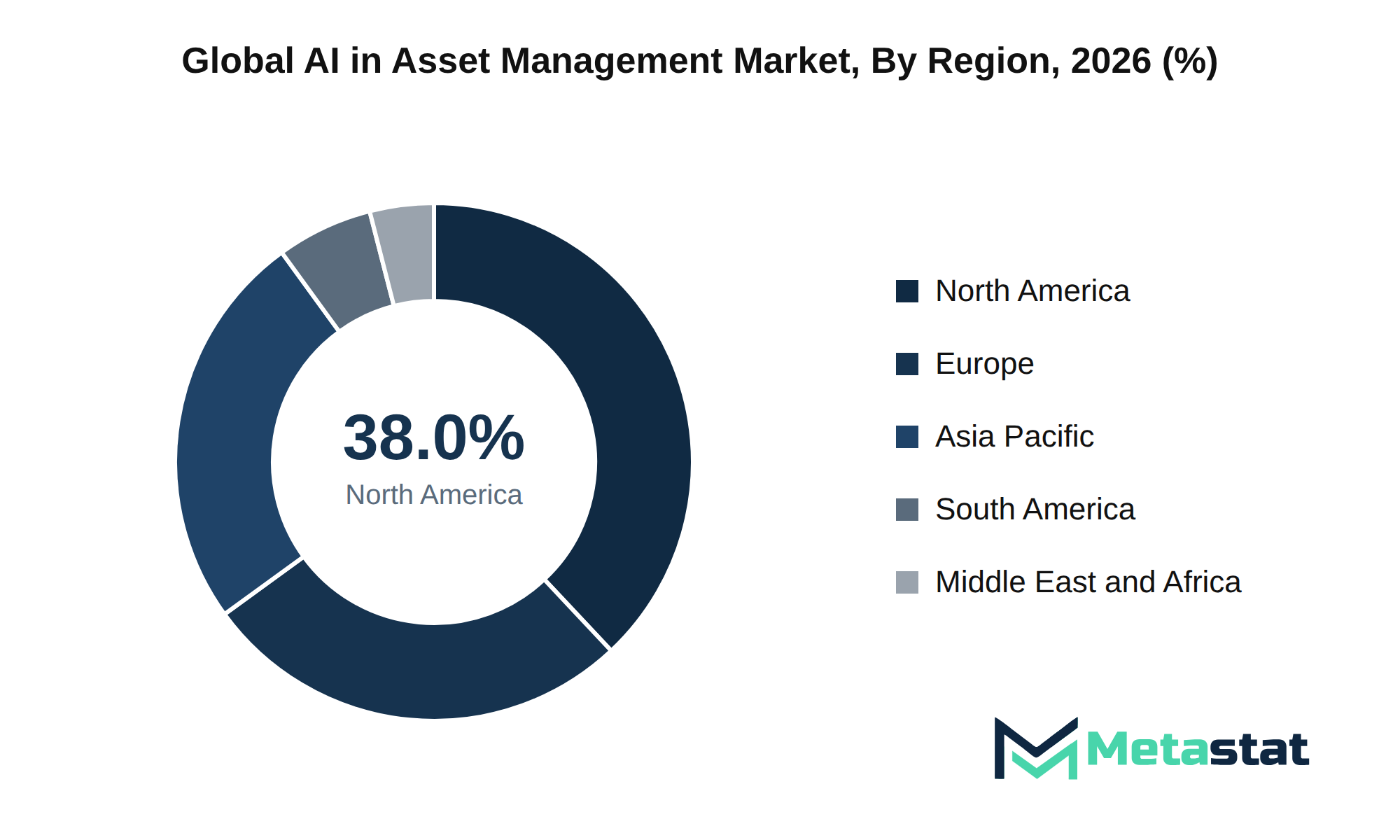
The AI in Asset Management market has seen significant movement through mergers and acquisitions, strategic alliances, and partnerships among key players. Companies including Accenture, IBM, and Microsoft pursue growth through strategic consolidation, while firms like BlackRock, Inc. and Goldman Sachs Asset Management enhance their capabilities via joint ventures, enabling greater market reach and resource sharing. These strategies improve operational synergies and efficiency, enhancing competitive positions within the market.
Product differentiation remains crucial in the market, with firms investing heavily in proprietary technology and R&D pipelines. For instance, Addepar, Inc. and FactSet leverage advanced analytics and machine learning to enhance their service offerings. Firms including Salesforce, Inc. and AWS focus on cloud-based solutions to provide tailored services for asset managers. This ongoing investment in innovation creates barriers to entry for newcomers, ensuring established players maintain competitive advantages.
The market requires companies to actively engage in customer retention strategies and brand equity dynamics. Firms like Charles Schwab & Co., Inc. and Vanguard Group, Inc. prioritize client relationships by offering customized solutions and superior service, thus enhancing loyalty and minimizing switching costs. This focus on customer satisfaction drives long-term growth and aligns with evolving demands within the AI in Asset Management market.
The future competitive outlook indicates a landscape marked by continuous evolution and adaptability. Companies including JPMorgan Chase & Co. and UBS are expected to navigate emerging challenges through strategic growth vectors, ensuring relevance in a rapidly changing environment. The importance of technological defensibility, supported by robust IP portfolios and patent landscapes, will shape competitive dynamics, influencing investment decisions and market positioning.
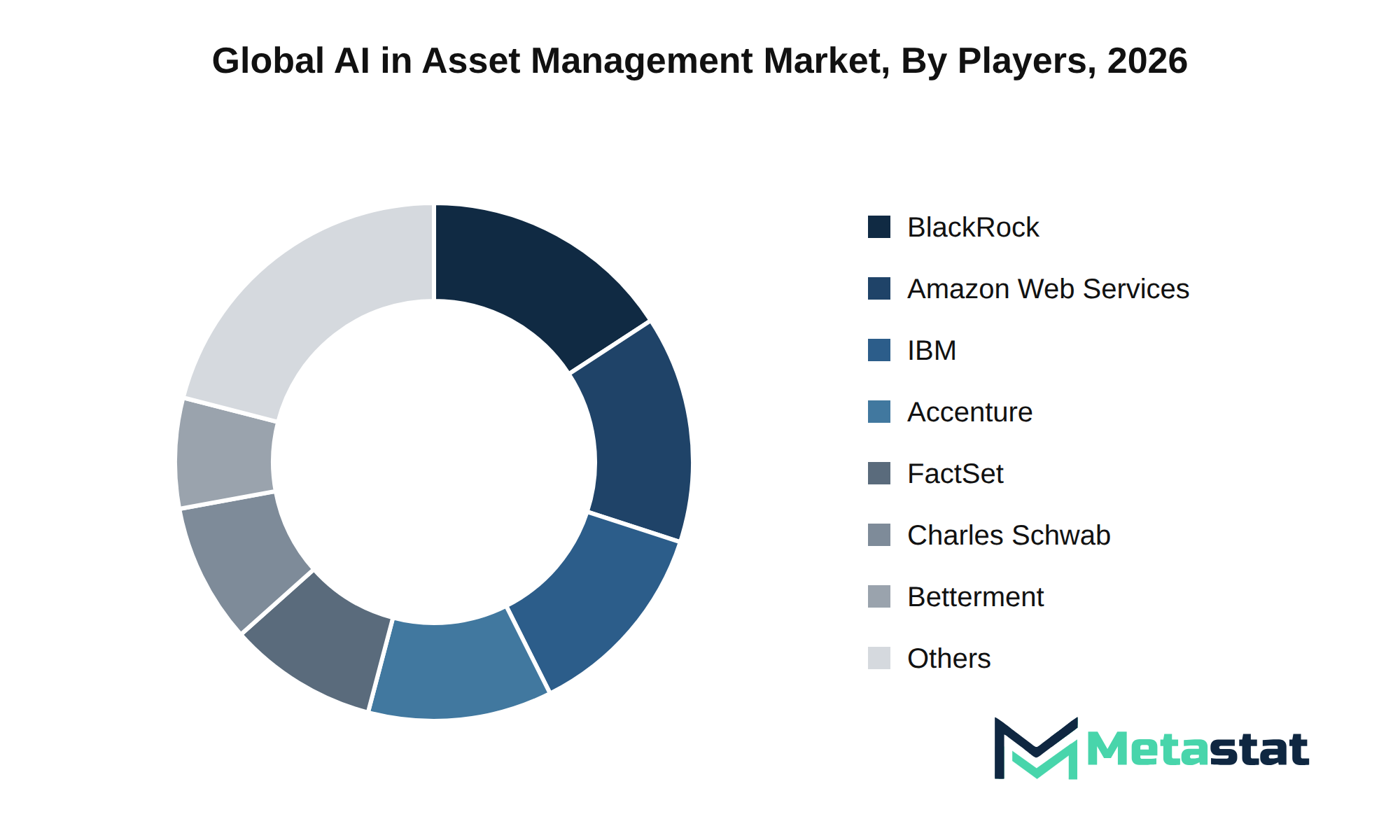
Market size is forecast to rise from USD 113 billion in 2025 to over USD 809.3 billion by 2033. This growth trajectory reflects a robust compound annual growth rate (CAGR) of 27.9%. The base case anticipates this strong performance driven by multiple interrelated factors, including macroeconomic developments, evolving technological landscapes, and increasing regulatory requirements.
The bull case suggests even greater acceleration in adoption rates, propelled by rapid advancements in artificial intelligence technologies and significant investments by financial institutions. Potential headwinds include economic downturns, regulatory delays, and geopolitical tensions that could impede growth. Despite these challenges, the AI in Asset Management market retains a compelling outlook due to relentless innovation and strategic capital allocations by key participants.
While organizations continue to integrate next-generation technologies, substantial shifts in consumer demand will emerge, demanding agile responses from asset managers. Compliance milestones and evolving policy enforcement horizons will further shape operational frameworks, driving firms to prioritize adaptability in their strategies.
Strategic capital allocation, infrastructure commitments, and investment in research and development will create high-growth pockets within the market. Identifying emerging white-space opportunities linked to unmet enterprise needs will present avenues for competitive differentiation. The AI in Asset Management market is poised for significant growth, with executive-level imperatives guiding strategic priorities.
The report strategically identifies and profiles the key market players and analyses their core competencies in each sub-segment of the AI in Asset Management market.
Report Attributes | Details |
Study Period | 2021-2033 |
Base Year | 2025 |
Estimated Year | 2026 |
Forecast Period | 2026-2033 |
Historical Period | 2021-2025 |
Growth Rate | CAGR 27.9% from 2026 to 2033 |
Revenue Unit | USD billion |
Segmentation | By Technology, Asset Type, Application, End Use, and Region |
By Region | North America (By Technology, Asset Type, Application, End Use, and Country)
|
Europe (By Technology, Asset Type, Application, End Use, and Country)
| |
Asia Pacific (By Technology, Asset Type, Application, End Use, and Country)
| |
South America (By Technology, Asset Type, Application, End Use, and Country)
| |
Middle East and Africa (By Technology, Asset Type, Application, End Use, and Country)
|
Find answers to common questions about this report
The Metastat Insights study reveals that the AI in Asset Management market size was valued at USD 113 billion in 2025.
The AI in Asset Management market is projected to grow at a CAGR of 27.9% during the forecast period from 2026 to 2033.
The North America AI in Asset Management market size is estimated to reach USD 284.1 billion by 2033.
The segment leading the AI in Asset Management market is Technology, with a projected value of USD 378.6 billion by 2033. This segment outpaces others based on its significant growth trajectory.
Key drivers for the AI in Asset Management market include ongoing digital transformation across sectors, rising GDP growth, and substantial capital investments. These factors fuel the adoption of AI solutions, enhancing portfolio optimization, risk management, and client servicing, while enabling firms to reduce operational costs and improve efficiency.
North America holds the dominant share of the AI in Asset Management market, with a projected value of USD 284.1 billion in 2033, representing 38 percent of the total market.
The AI in Asset Management market faces challenges from regulatory complexities, increasing scrutiny regarding data privacy, and security compliance hurdles. Macroeconomic headwinds, including inflationary pressures and geopolitical instability, further inhibit investment in AI technologies, leading to slow adoption rates and operational difficulties.
Factors favoring product adoption in the AI in Asset Management market include ongoing digital transformation and the recognition of AI's capabilities to enhance operational efficiency and decision-making. rising consumer demand for personalized financial services drives asset managers to integrate advanced technologies, positioning firms for future growth.
The AI in Asset Management market is estimated to reach a valuation of USD 809.3 billion by 2033.
Key players in the AI in Asset Management market include Accenture, Amazon Web Services, BlackRock, Charles Schwab & Co., FactSet, IBM, Microsoft, and Vanguard Group.
The analysts below cover Banking & Finance research at Metastat Insights.
LEAD ANALYST
Utkarsh Khirodkar is a Lead Market Research Analyst at MetaStat Insight, specializing in market intelligence, technology sector assessments, and competitive strategy.

PRINCIPAL CONSULTANT - ENTERPRISE AI & EMERGING TECHNOLOGIES
Banking & Finance · Electronics and Semiconductor · Energy and Power · Healthcare IT · Information & Technology · Professional Services
Vijay Gunti is a Principal Consultant at MetaStat Insight, bringing over two decades of experience across enterprise digital transformation, technology strategy, and intelligent systems.
Ambulatory surgical centers have very different purchasing cycles for robotic-assisted surgery platforms than major hospital networks. The MetaStat Insight study focused squarely on capital expenditure depreciation, procedural reimbursement pathways, and surgeon training overhead. That operational clarity made it much simpler to validate multi-year procedure growth forecasts against actual ambulatory center adoption patterns.
When planning edge sensor rollouts across refinery environments, generic IoT reports typically miss the harsh-environment certification bottlenecks. MetaStat Insight gave an objective evaluation of ATEX and Class 1 Division 2 hardware availability, along with realistic five-year maintenance cycle cost projections. The comparison of wireless mesh versus private cellular backhaul helped our team pressure-test network reliability models for remote processing facilities.
In the biological seed treatment space, registration timelines vary drastically between the European Union, Brazil, and North America. The MetaStat Insight research handled these cross-border regulatory barriers with genuine nuance, mapping commercialization pathways alongside historical field adoption rates. The segmentation between microbial strains and biochemical active ingredients was particularly well structured.
Explore related market intelligence reports worth reading alongside this one.
Starting from
$2950