
LEAD ANALYST
Utkarsh Khirodkar is a Lead Market Research Analyst at MetaStat Insight, specializing in market intelligence, technology sector assessments, and competitive strategy.

ASEAN Freight Forwarding Market Size, Share, By Mode of Transport (Air Freight Forwarding, Sea Freight Forwarding and Others), By Sea Freight Forwarding (Full-Container-Load (FCL) and Less-than-Container-Load (LCL)), By End User (Manufacturing & Automotive, Oil & Gas, Mining & Quarrying, Agriculture, Fishing & Forestry, Construction and Distributive Trade (Wholesale/Retail, FMCG)), By Region (Singapore, Thailand, Malaysia, Indonesia, Vietnam, Philippines and Rest of ASEAN (Myanmar, Laos, Cambodia, Brunei)), Industry Analysis, Growth, Trends, and Forecast, 2026-2033
Report ID
MSI-5072
Published
August, 2026
Pages
287 Pages
Format
Historical
Base year
Forecast
Forecast period
Report Details
Choose Your License
ASEAN Freight Forwarding Market
The ASEAN Freight Forwarding market was valued at USD 31.9 billion in 2025 and is projected to reach USD 46.1 billion by 2033, growing at a CAGR of 4.7% over the forecast period.
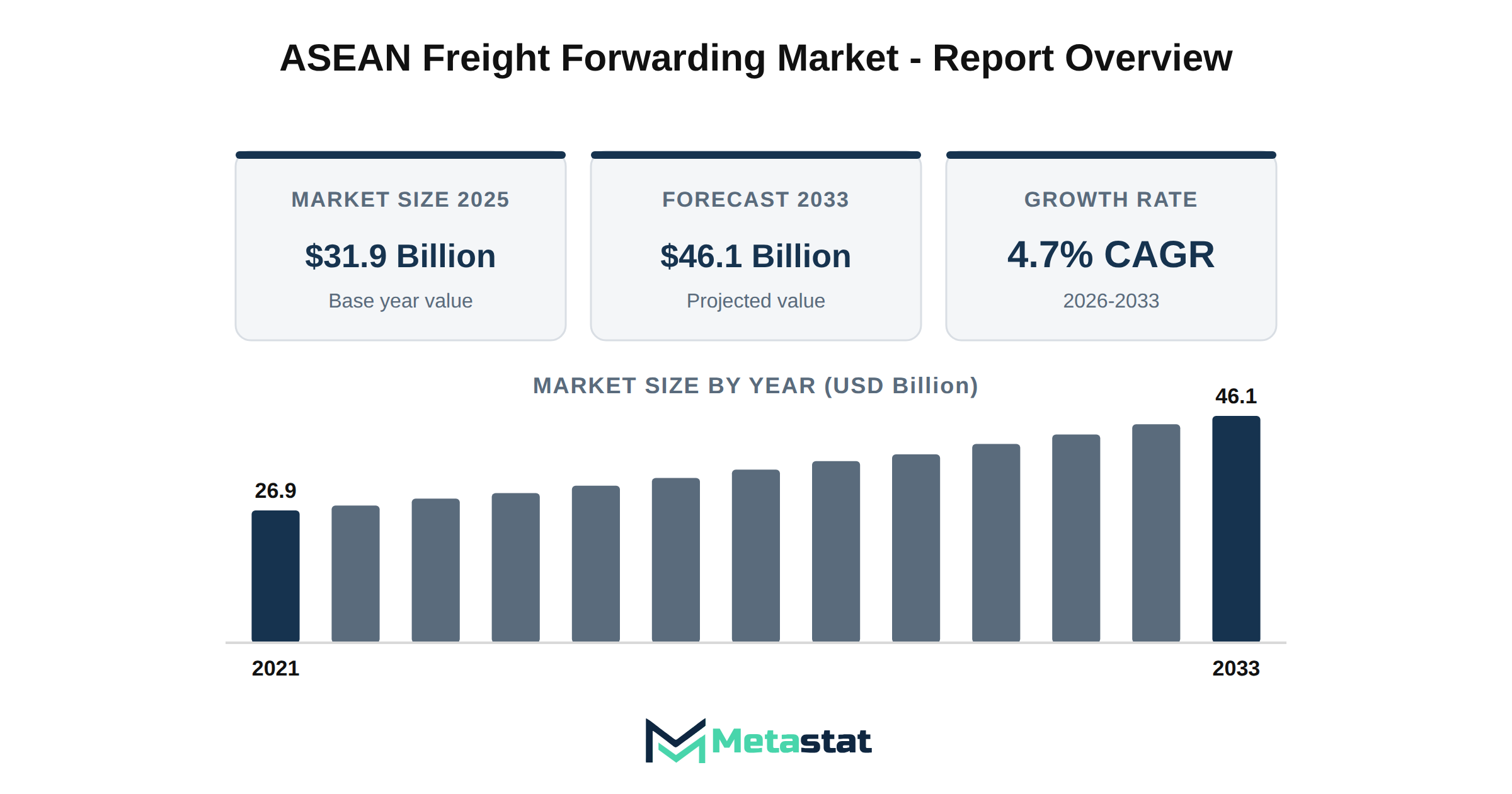
The ASEAN Freight Forwarding market exhibited a significant valuation of USD 31.9 billion in 2025, reflecting a steady increase from USD 26.9 billion in 2021 and USD 27.9 billion in 2022. The market is projected to reach USD 46.1 billion by 2033, representing a compound annual growth rate (CAGR) of 4.7% during the forecast period from 2026 to 2033. This growth trajectory indicates robust demand for freight forwarding services across the region.
Air freight forwarding contributes USD 11.9 billion in 2026, with an anticipated rise to USD 16.9 billion by 2033, achieving a CAGR of 5.2%. In contrast, sea freight forwarding is expected to increase from its current valuation to USD 23.8 billion by 2033, with a CAGR of 4.3%. This performance highlights the expanding reliance on both air and sea transport modes to meet the logistics needs of various industries.
Key drivers impacting the ASEAN Freight Forwarding market include increasing international trade, growing e-commerce activities, and rising demand from sectors including manufacturing and automotive. The operational landscape continues to evolve due to technological advancements that enhance efficiency and transparency in supply chain operations.
Regulatory compliance remains a critical consideration for market players, influencing operational strategies and investment decisions. Geopolitical factors further shape the dynamics of the market, requiring firms to remain agile in responding to changes in trade policies and international relations.
The ASEAN Freight Forwarding market faces various challenges tied to regulatory compliance and geopolitical risk frameworks. The evolving landscape necessitates a thorough understanding of regulations that govern international logistics operations. Compliance with these regulations often involves substantial financial investments, particularly for firms engaging in cross-border trade. Companies that effectively navigate these regulatory complexities position themselves for competitive advantage in the market.
Disruption within global supply chains continues to impact the market significantly. Factors including natural disasters, political instability, and health crises have highlighted vulnerabilities in logistics architecture. Companies are increasingly focused on strengthening their supply chain resilience, which includes diversifying sourcing strategies and investing in technology to enhance operational efficiency. This proactive approach enables greater adaptability in the face of unforeseen disruptions.
Research and development trajectories play a crucial role in shaping the future of the ASEAN Freight Forwarding market. Investment in next-generation innovations, including automation and digitalization, enables firms to streamline operations and reduce costs. The integration of advanced technologies into logistics processes enhances service delivery, ultimately improving customer satisfaction and loyalty.
Sustainable transformation remains a key focus for many players in the market. The shift towards decarbonization and circular economy dynamics reflects a growing commitment to environmental stewardship. Companies that prioritize sustainability not only meet emerging regulatory requirements but attract environmentally conscious consumers. This trend is expected to influence competitive dynamics, impacting market share and profitability.
The market exhibits signs of fragmentation, with numerous players operating across various segments. M&A dynamics contribute to this fragmentation, driven by companies seeking to expand their capabilities and geographic reach. Strategic partnerships and collaborations facilitate resource sharing and knowledge exchange, enhancing overall market competitiveness.
Investment in infrastructure remains critical to support the growth of the ASEAN Freight Forwarding market. Infrastructure investments, particularly in transportation and logistics facilities, create a robust foundation for improved service delivery. This focus on capital allocation aligns with the increasing demand for efficient logistics solutions driven by e-commerce and globalization.
Inflationary pressures and currency volatility present ongoing challenges for companies operating in the market. Fluctuating costs impact profitability, prompting firms to adopt strategies that mitigate risk and enhance price stability. Effective procurement strategies play a vital role in managing these economic pressures, enabling companies to maintain operational effectiveness while navigating a dynamic market environment.
The future strategic outlook for the ASEAN Freight Forwarding market hinges on corporate imperatives that prioritize agility, innovation, and sustainability. Firms that align their operational goals with market demands position themselves for long-term success. High-value recommendations for stakeholders include investing in technology-driven solutions, enhancing supply chain resilience, and promoting sustainable practices that contribute to competitive differentiation.
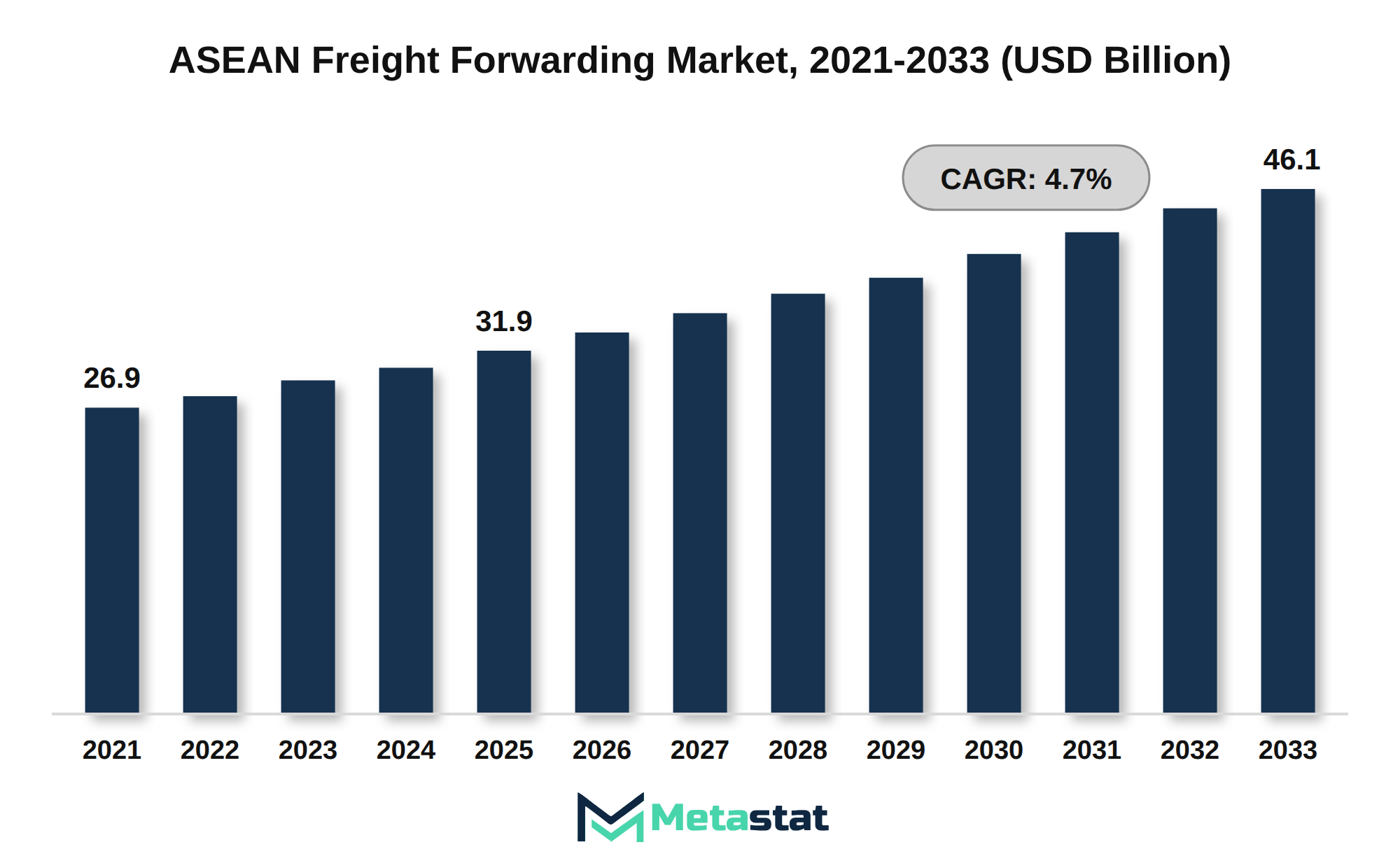
The ASEAN Freight Forwarding market experiences substantial growth driven by increased capital investment across the region. Economic expansion in ASEAN countries fuels demand for freight forwarding services, with GDP growth contributing directly to rising import and export activities. Higher venture funding levels support logistics companies in modernizing infrastructure and digitizing operations, enhancing service efficiency and competitiveness. Public and private spending power, particularly in developing economies, facilitates investments in transportation networks and technology, improving overall freight capabilities.
Investments in automation and advanced logistics solutions support operational productivity, enabling firms to optimize processes and reduce turnaround times. Enhanced collaboration between private and public sectors strengthens the capital investment environment, leading to improved market access and supply chain resilience. The growing emphasis on efficient logistics solutions aligns with rising demand for sustainability and environmental stewardship, prompting firms to adopt greener practices and technologies. Overall, capital investment contributes to the expansion of the ASEAN Freight Forwarding market, positioning it for continued growth through the forecast period of 2026 to 2033.
Infrastructure development significantly influences the growth of the ASEAN Freight Forwarding market. Governments across the region prioritize upgrading transportation networks, including roads, ports, and airports, to enhance connectivity and facilitate trade. This investment creates a more efficient logistics environment, enabling freight forwarders to optimize operations and reduce transit times.
Increased public-private partnerships contribute significantly to infrastructure projects, providing funding and expertise necessary for modernizing existing assets. Enhanced infrastructure directly influences various industries, including manufacturing, agriculture, and retail, reflecting businesses' increasing reliance on efficient freight forwarding solutions to reach markets. The resulting operational efficiencies translate into cost savings, boosting profit margins for both freight forwarders and their clients.
While infrastructure continues to improve, the ASEAN Freight Forwarding market is expected to see increased demand for freight services, driven by a surge in trade volumes and economic growth. This heightened demand encourages innovation in logistics solutions, further enhancing the competitive landscape and attracting new players to the market.
Overall, the ongoing focus on infrastructure development not only supports the growth of the ASEAN Freight Forwarding market but establishes a strong foundation for sustainable long-term expansion.
The ASEAN Freight Forwarding market encounters significant operational challenges stemming from regulatory compliance and tightening standards. These complexities arise from the need for adherence to various legal mandates that govern international trade practices. Compliance hurdles slow down freight operations, affecting the efficiency of logistics providers and increasing the administrative burden on businesses within the market.
Inflationary pressures exacerbate these challenges. Rising costs of raw materials, fuel, and labor contribute to operational expenses, compelling freight forwarders to pass these costs onto customers. The impact of inflation leads to diminished profit margins, creating a less competitive environment for participants in the market.
Geopolitical instability introduces another layer of risk, affecting supply chain reliability. Disruptions caused by political tensions or conflicts result in delays and increased shipping times, which diminish customer satisfaction. Resource scarcity drives up competition for essential materials, increasing costs and complicating logistics planning.
Technological obsolescence poses risks to operational efficiency within the market. While technology evolves rapidly, freight forwarding companies face pressure to invest in new systems and software to remain competitive. High capital investment requirements create barriers for smaller players, limiting their ability to innovate and adapt to changing market dynamics.
Skilled labor deficiencies challenge the market. A shortage of qualified professionals in logistics and supply chain management hinders operational efficiency and affects service quality. The aging workforce compounds this issue, creating a talent gap that impacts the ability of the market to meet growing demand effectively.
These obstacles contribute to a complex operating environment for the ASEAN Freight Forwarding market. A combination of regulatory compliance, inflationary pressures, geopolitical instability, and technological challenges creates a situation where companies navigate carefully to maintain competitiveness and operational effectiveness.
The ASEAN Freight Forwarding market experiences challenges driven by geopolitical fragmentation and trade deficits. Regional tensions disrupt established trade routes and complicate logistics operations, leading to increased uncertainty for freight forwarders. Ongoing tariff friction between countries exacerbates the situation, increasing operational costs and delaying shipments.
Technological disruptions, including the rapid evolution of logistics solutions, introduce friction among systems, complicating integration for freight forwarders. This complexity delays the adoption of new technologies, hindering efficiency improvements in the market. Volatility in feedstock and component availability affects pricing structures, directly impacting profitability for service providers.
The market confronts significant pressures from rising input costs and margin compression. Fluctuations in fuel prices and labor expenses pressurize profit margins, requiring companies to reassess pricing strategies. Workforce skill gaps contribute to operational inefficiencies, complicating talent retention in an evolving industry landscape. Automation displacements create additional challenges because companies navigate the transition toward more technology-driven operations.
Environmental considerations have introduced decarbonization mandates and sustainability demands, requiring companies within the ASEAN Freight Forwarding market to adapt their strategies accordingly. Infrastructure gaps and retrofitting barriers pose further implementation challenges, hindering the pace of necessary upgrades to meet evolving regulatory standards.
Cybersecurity risks and data vulnerabilities present significant threats, complicating operations and undermining customer trust. Organizations within the market address these challenges proactively to safeguard operations and maintain competitive positioning. These factors create a complex environment, influencing market dynamics and shaping future opportunities for growth within the ASEAN Freight Forwarding market.
The ASEAN Freight Forwarding market reflects rising demand driven by regional economic growth, particularly in the manufacturing and distributive trade sectors. Countries including Indonesia, Vietnam, and Thailand exhibit increasing investments in infrastructure, spurring the need for efficient logistics solutions. The modernization of transport networks and facilities enhances connectivity, enabling quick response times and optimizing supply chains.
The focus on sustainability aligns with global trends, prompting companies to adopt environmentally friendly practices. This shift toward green transformations influences client expectations and operational strategies, pushing logistics providers to integrate sustainable methodologies into their offerings. Investment in next-generation innovations, including digital procurement shifts and process automation, supports operational yield maximization and enhances competitive advantage.
Strategic consolidations and cross-industry mergers create opportunities for firms to diversify their services and expand their market reach. These partnerships enable enhanced product integration and niche application growth, catering to evolving buying behaviors and preferences. The market benefits from ongoing asset life-cycle extensions and maintenance upgrades, ensuring that logistics operations remain efficient and cost effective.
The introduction of supply chain localization and strategic buffering frameworks presents opportunities for firms to strengthen resilience against external disruptions. By focusing on import substitution and regulatory shift adaptations, companies enhance operational capabilities while navigating the complexities of the evolving ASEAN Freight Forwarding market.
The ASEAN Freight Forwarding market is segmented based on Mode of Transport, Sea Freight Forwarding, End User, and Region.
Valued at USD 11.9 billion in 2026, the Air Freight Forwarding segment is projected to reach USD 16.9 billion by 2033, with a CAGR of 5.2% during the forecast period. This growth stems from increased demand for rapid delivery services, particularly in sectors including e-commerce, which relies heavily on efficient logistics. The rise in international trade and global supply chains further contributes to the expansion of this segment.
Technological advancements play a significant role in shaping the Air Freight Forwarding segment. Innovations in tracking systems and automated processes enhance operational efficiency, reducing transit times and improving service reliability. Air freight remains vital for industries requiring quick delivery, including pharmaceuticals and perishable goods, where time sensitivity drives demand.
Regulatory frameworks and compliance standards impact market dynamics. Stricter regulations surrounding air transport safety and sustainability push players to adapt their operations, leading to increased costs but opportunities for differentiation. Participants in the ASEAN Freight Forwarding market face pressure to comply with these regulations while remaining competitive in pricing.
Cost structures within the Air Freight Forwarding segment reflect fluctuations in fuel prices, which significantly affect operational expenses. Heightened pricing volatility challenges profitability, requiring firms to develop strategies to manage costs effectively. By optimizing routes and enhancing load factors, companies mitigate these pressures, maintaining profitability despite external factors.
Strategic opportunity windows present avenues for growth within the market. Investments in infrastructure, including modernization of air cargo facilities, enhance service capabilities and attract new customers. Continuous evaluation of market trends and consumer preferences allows firms to adapt their offerings, ensuring alignment with evolving demands in the ASEAN Freight Forwarding market.
Within the ASEAN Freight Forwarding market, the Sea Freight Forwarding segment is estimated to reach USD 23.8 billion by 2033, at a CAGR of 4.3% during the forecast period. Demand for Sea Freight Forwarding reflects growing international trade, primarily fueled by expansions in manufacturing and distribution sectors across the ASEAN region. Increasing reliance on maritime logistics enhances supply chain efficiency, allowing businesses to manage costs effectively while delivering products globally. Companies involved in this segment focus on optimizing routes and enhancing cargo capacity, driving operational growth and improving service delivery.
Technological advancements play a vital role in shaping the Sea Freight Forwarding segment. Innovations including automated tracking systems and vessel optimization software contribute to enhancing operational efficiency and reducing transit times. Regulatory compliance related to environmental standards influences shipping practices, pushing companies to adopt greener technologies and practices. Investment in next-generation vessels and port infrastructure supports capacity expansion, ensuring the segment meets the rising demand from various end-user industries.
End-use dynamics demonstrate significant shifts towards e-commerce and retail sectors, which increasingly rely on efficient sea freight solutions. This trend increases demand for reliable logistics partners capable of managing complex supply chains. The connection between these factors positions the Sea Freight Forwarding segment because a crucial contributor to the broader growth of the ASEAN Freight Forwarding market.
Growth in the Others segment of the ASEAN Freight Forwarding market reflects increasing demand across diverse industries. Factors driving this expansion include the rise of e-commerce, which fuels the need for flexible logistics solutions. Businesses require adaptable transport options to accommodate varying shipment sizes and types, particularly for specialized products that do not fit within conventional air or sea freight categories.
Investment in technological advancements enhances service offerings in the Others segment. Companies focus on digitization and automation to streamline operations, improve tracking capabilities, and boost customer experience. Industry players increasingly adopt innovative approaches to satisfy customer requirements while optimizing resource management, contributing to the segment's projected growth.
The Others segment is projected to reach USD 5.5 billion by 2033. This growth trajectory highlights the importance of specialized freight solutions in the ASEAN Freight Forwarding market. Companies targeting niche markets, including pharmaceuticals or fragile goods, gain competitive advantages by delivering tailored services that align with the evolving needs of end users.
In the ASEAN Freight Forwarding market, Full-Container-Load (FCL) services deliver essential solutions for businesses requiring efficient and reliable shipping options. Demand for FCL services stems from expanding global trade and increasing production activities across various sectors, including manufacturing and construction. These sectors significantly depend on timely and effective logistics to meet customer expectations and maintain competitiveness.
Adoption of FCL services is influenced by growth in e-commerce and international business, which require effective transportation solutions. Advancements in technology, including tracking systems and enhanced cargo handling methods, improve operations and enhance customer satisfaction. The emphasis on supply chain resilience has led to a shift towards more robust logistics strategies, with FCL offering a reliable alternative for businesses facing disruptions.
Cost structures in the FCL segment reflect factors including fuel prices, shipping rates, and port charges. Pricing volatility in the market affects procurement strategies, prompting companies to seek long-term contracts to mitigate risks associated with fluctuating costs. Stable revenue streams for service providers result from this trend and encourage strategic partnerships among stakeholders.
Investment in capacity expansion and infrastructure improvement enhances the overall efficiency of FCL services. Competitive pressures encourage logistics companies to optimize their operations, leading to improved service offerings and customer loyalty. The ongoing evolution of FCL services positions the market to respond effectively to emerging challenges and opportunities within the broader ASEAN Freight Forwarding market.
Demand for Less-than-Container-Load (LCL) services in the ASEAN Freight Forwarding market benefits from the growth of small and medium-sized enterprises (SMEs) that require flexible shipping solutions. SMEs often lack the volume to ship full-container loads, thus driving interest in LCL options. This segment caters to businesses needing efficient logistics for smaller shipments, enhancing market accessibility and participation.
Technological advancements in tracking and inventory management systems strengthen the adoption of LCL services. Improved transparency through technology allows businesses to monitor their shipments in real time, aligning with customer expectations for greater control over supply chain processes. Enhanced visibility contributes to operational efficiencies and better decision-making.
End-user dynamics heavily influence the LCL segment. Industries including retail, manufacturing, and e-commerce increasingly demand quick and reliable shipping solutions that LCL services offer. The ability to ship smaller quantities without incurring costs associated with full container loads provides significant operational advantages, especially for retailers managing fluctuating inventory levels.
Regulatory compliance standards impact the LCL segment significantly, particularly concerning customs clearance and documentation requirements. Enhanced regulatory scrutiny necessitates accurate documentation and adherence to local and international shipping regulations. Companies investing in compliance solutions address these challenges effectively, positioning themselves competitively within the market.
The segment faces pricing volatility driven by fluctuating fuel costs and shipping capacity constraints. These factors necessitate strategic pricing models to maintain profitability while remaining competitive. Companies that absorb these cost pressures through efficient operational practices strengthen their position in the ASEAN Freight Forwarding market.
Strategic opportunity windows exist for companies focusing on enhancing their LCL service offerings. Investments in technology, partnerships with local logistics providers, and the development of tailored solutions for specific industries drive growth. Capital investment focused on improving LCL infrastructure, including dedicated warehousing and enhanced processing capabilities, is essential for companies aiming to capture a larger share of the market.
Growth in the Manufacturing & Automotive sector drives substantial demand within the ASEAN Freight Forwarding market. This segment benefits from a robust increase in production activities, leading to higher shipping volumes. Expanding automotive manufacturing in countries including Thailand and Vietnam contributes to the rising logistics requirement, necessitating enhanced freight forwarding services. The move towards just-in-time manufacturing practices creates pressure on logistics providers to ensure timely deliveries, which boosts demand for efficient freight solutions.
Technological advancements significantly impact this sector, with the adoption of automation and data analytics improving operational efficiency. Next-generation upgrades in logistics platforms facilitate smoother supply chain management, enabling manufacturers to respond swiftly to market changes. The increasing focus on sustainability pushes manufacturers to seek eco-friendly logistics solutions, influencing freight forwarding strategies to align with green practices.
Regulatory compliance, particularly concerning emissions and safety standards, shapes logistics strategies. Adherence to these regulations often requires additional investments in shipping infrastructure and technology. This creates opportunities for logistics providers to differentiate their offerings based on compliance capabilities, enhancing their competitive position in the market.
Pricing volatility in raw materials impacts cost structures for manufacturers, thereby influencing their logistics expenditure. Fluctuating costs necessitate strategic partnerships with freight forwarders to ensure cost-effective solutions while maintaining service quality. The market's resilience in the Manufacturing & Automotive segment hinges on effective supply chain management, which mitigates risks associated with logistics vulnerabilities.
Strategic opportunity windows emerge owing to manufacturers expanding their operations within the ASEAN region. Market players remain agile to capitalize on these shifts, adapting their services to meet evolving customer needs. Continued investment in logistics capabilities will be essential for supporting the growth trajectory of the Manufacturing & Automotive sector within the ASEAN Freight Forwarding market.
In the ASEAN Freight Forwarding market, the Oil & Gas, Mining & Quarrying sector experiences unique demand dynamics stemming from the ongoing growth in energy requirements and resource extraction activities. With increasing global demand for energy and minerals, logistics services tailored to this sector become essential in ensuring timely delivery and compliance with operational timelines. Supply chain resilience remains a priority, driven by disruptions in logistics that could directly affect the ability to meet production targets and regulatory compliance standards.
The expansion of infrastructure in ASEAN countries supports the operational needs of the Oil & Gas, Mining & Quarrying sector. Companies actively seek to enhance their supply chain capabilities to manage raw material sourcing efficiently. Technological advancements in freight forwarding services play a significant role in reducing delays and optimizing routes, creating an environment conducive to growth in this market segment.
Pricing volatility presents challenges, particularly in the context of fluctuating raw materials and transport costs. Organizations operating in this sector implement effective cost structures to navigate these pressures while maintaining profitability. Strategic opportunity windows arise from the need for improved logistics solutions that align with evolving industry standards and practices.
Investment in next-generation upgrades and product evolution underpins the efforts of logistics providers aiming to remain competitive. Companies within the Oil & Gas, Mining & Quarrying segment actively pursue innovative solutions to enhance operational efficiency, thereby strengthening their position within the ASEAN Freight Forwarding market. Overall, the interaction of these factors significantly shapes the dynamics of logistics services in this vital sector.
In the ASEAN Freight Forwarding market, the Agriculture, Fishing & Forestry segment experiences growth driven by rising global food demand and expanding agricultural exports. Increased focus on sustainability influences investment in efficient logistics solutions tailored to these industries. Regulatory compliance related to food safety and environmental standards necessitates robust supply chain management, ensuring timely delivery of perishables and regulatory adherence. Innovations in cold chain logistics and tracking technologies enhance the capacity to maintain product quality throughout transportation.
Investment in infrastructure, including ports and transportation networks, supports the sector's needs by enabling faster transit times and reducing costs associated with delays. The sector's reliance on seasonal variations affects demand patterns, requiring logistics firms to adopt flexible strategies that accommodate fluctuating shipment volumes. Downstream applications in food processing and distribution demonstrate an interconnected relationship within the supply chain, highlighting the importance of logistics resilience in mitigating disruptions.
Technological advances in supply chain management optimize resource allocation, leading to improved operational efficiencies. Enhanced data analytics capabilities assist firms in forecasting demand accurately and managing inventory effectively. Strategic opportunities arise from partnerships between logistics providers and agricultural producers, creating co-created solutions that address unique challenges faced in this segment. This collaboration enhances operational capabilities while ensuring a consistent flow of goods within the ASEAN Freight Forwarding market.
Demand for freight forwarding services within the Construction sector stems from robust infrastructure projects across the ASEAN region. Growth in urbanization and industrialization fuels the need for expedited transportation of construction materials and equipment. Increasing investments in residential, commercial, and public infrastructure projects drive demand for efficient supply chain solutions, ensuring the timely delivery of critical materials.
Technological advancements in logistics and supply chain management enhance the efficiency of construction operations. Adoption of digital tools facilitates real-time tracking and inventory management, improving coordination among stakeholders involved in construction projects. This evolution supports businesses in mitigating delays and keeping projects on schedule, impacting customer satisfaction and project success.
Regulatory compliance standards related to construction materials and environmental concerns influence logistics strategies. Companies navigate various certifications and policy requirements that dictate material sourcing and transportation methods, ensuring adherence to local and international standards. These factors shape the operational landscape, impacting logistics planning and execution.
Fluctuations in material costs present margin pressures for companies within the Construction sector. Increasing prices for raw materials lead to rising shipping costs, prompting stakeholders to seek cost-effective solutions for transportation while maintaining quality. Strategic assessments of pricing volatility enable businesses to optimize their logistics operations and enhance profitability.
Supply chain resilience remains critical for the Construction sector. Disruptive alternatives and logistics vulnerabilities necessitate proactive strategies to ensure continuity in operations. Companies analyze their raw material sourcing and distribution methods, identifying strategic opportunities to enhance operational efficiency and reduce risks associated with supply chain disruptions.
Investment in next-gen upgrades and technological innovations serves because a catalyst for growth within the Construction sub-segment. Companies that prioritize capital investment in advanced logistics solutions are better positioned to adapt to shifting market dynamics. This forward-thinking approach enables firms to capitalize on emerging opportunities, reinforcing their competitive edge within the market.
Consumer trends in the ASEAN Freight Forwarding market reflect increasing preference for convenience and speed in the distribution of goods. Growing e-commerce activity significantly influences demand within the Distributive Trade (Wholesale/Retail, FMCG) sector, driving companies to seek efficient logistics solutions that enhance customer satisfaction. Heightened competition in the retail landscape fuels firms to adopt innovative supply chain strategies, ensuring timely deliveries while managing operational costs.
Technological advancements play a critical role in segment expansion. The adoption of automation and digital tools streamlines processes, allowing businesses to respond rapidly to fluctuating market conditions. Advanced analytics enable firms to optimize inventory management and predict consumer behavior, providing a strategic advantage in a competitive environment. This technological maturation supports the effective movement of goods, fulfilling the growing expectations of consumers.
Regulatory standards continue to shape operations within the market. Compliance with local and international trade regulations influences logistics strategies, requiring firms to maintain robust systems for documentation and reporting. Continuous investment in compliance training and technology enhances operational resilience, ensuring that businesses navigate regulatory complexities effectively.
Pricing pressures involving raw material costs affect operational strategies within the sector. Volatility in global commodity prices impacts profit margins, prompting companies to explore cost-effective sourcing and transportation options. Strategic partnerships and collaborations within the logistics ecosystem emerge driven by effective approaches to mitigate these margin pressures, enhancing resilience in the supply chain.
Overall, shifts in consumer preferences, regulatory compliance, and technological advancements significantly influence the Distributive Trade (Wholesale/Retail, FMCG) segment. These dynamics contribute to the broader trends observed in the ASEAN Freight Forwarding market, positioning firms to capitalize on growth opportunities while addressing inherent challenges within their logistics operations.
In the ASEAN Freight Forwarding market, the Other End Users segment encompasses a variety of industries, including telecommunications and pharmaceuticals. Demand for freight forwarding services in these sectors stems from the necessity to streamline supply chains and enhance efficiency in delivery processes. Strong growth in e-commerce and increasing reliance on digital infrastructure significantly influence logistics strategies within the telecommunications sector. The pharmaceutical industry prioritizes secure and timely delivery of sensitive products, driving demand for specialized logistics solutions.
Technological advancements play a significant role in shaping the logistics landscape for these end users. Innovations including real-time tracking systems and temperature-controlled transportation improve service quality and reliability. Regulatory compliance, particularly concerning pharmaceuticals, necessitates adherence to strict standards, creating a competitive edge for logistics providers that demonstrate expertise in managing compliance and security requirements.
Shifts in consumption patterns, driven by rising expectations of end customers, create further opportunities for service differentiation. The market addresses these evolving demands to ensure efficient delivery of products across various sectors, particularly in fast-growing industries like telecommunications and pharmaceuticals. Ultimately, the market's agility in adapting to these changes will dictate its growth trajectory and competitive positioning in the broader ASEAN Freight Forwarding market.
Singapore's strategic location because a global trade hub drives substantial demand for freight forwarding services. The city-state benefits from advanced logistics infrastructure, enabling efficient air and sea transportation for various sectors. Increased e-commerce activities further fuel demand, with businesses seeking reliable shipping solutions to meet consumer expectations. Regulatory compliance with international standards enhances the attractiveness of Singapore because a logistics center, ensuring the efficient movement of goods across borders.
Technological advancements play a critical role in shaping the market. The rise of digital platforms streamlines shipment tracking and enhances operational transparency, appealing to end users across multiple sectors. Continued investment in next-generation logistics solutions enhances competitiveness, enabling firms to meet evolving customer needs. Supply chain resilience emerges because a key factor, with businesses focusing on enhancing their logistics capabilities to navigate market fluctuations and disruptions.
End-use dynamics indicate significant opportunities within the manufacturing, automotive, and distributive trade sectors. Increased production activities in these industries contribute to heightened freight forwarding demands, aligning with Singapore's robust economic framework. The market sees a shift towards sustainability, prompting companies to adopt green logistics practices, further influencing service offerings in the ASEAN Freight Forwarding market.
Thailand's role in the ASEAN Freight Forwarding market reflects significant potential for growth driven by economic development and infrastructure investments. The country's strategic location acts because a gateway for trade in Southeast Asia, facilitating maritime and air connections. Continued expansion in the manufacturing sector, particularly electronics and automotive industries, generates substantial demand for efficient logistics solutions. The increasing emphasis on e-commerce has heightened the need for reliable and swift freight forwarding services, leading to an uptick in both air and sea freight activities.
Adoption of advanced technologies within the logistics sector, including digital platforms and automated systems, enhances operational efficiency and transparency in freight forwarding services. Regulatory compliance standards focused on environmental sustainability and safety are influencing operational strategies, compelling firms to invest in greener technologies and practices. Given the rising competition, firms within Thailand's freight forwarding market actively seek to differentiate their offerings through enhanced service quality and customer experience.
Investment in supply chain resilience remains critical, especially in response to global disruptions. Firms prioritize robust contingency planning and risk management to mitigate vulnerabilities within logistics networks. The emphasis on raw material sourcing and strategic partnerships further strengthens the market's position, enabling firms to meet diverse customer needs effectively. This dynamic environment positions Thailand because a key player within the ASEAN Freight Forwarding market.
Malaysia's position in the ASEAN Freight Forwarding market benefits from a strong manufacturing base, particularly in electronics and automotive sectors. Growth in these industries drives demand for freight forwarding services, enhancing logistical needs across the region. The government's initiative to improve infrastructure, including road and port facilities, supports segment expansion and facilitates smoother transportation processes.
Technological advancements within the logistics sector, including automated tracking systems and digital freight solutions, contribute to improved service delivery. These innovations enhance shipment visibility, allowing businesses to optimize supply chain operations. Regulatory compliance plays a critical role, with the government implementing stringent standards to ensure safety and efficiency in freight operations.
Shifts in consumer behavior towards e-commerce create additional demands on freight forwarding services. Businesses adapt to rising expectations for faster and more reliable shipping options. This trend drives market dynamics, prompting logistics providers to innovate and expand service offerings to meet customer requirements.
Strategic opportunities in Malaysia arise from increasing demand for sustainable logistics solutions. Companies explore alternative energy sources and eco-friendly practices to align with global sustainability goals. This shift improves corporate responsibility and enhances competitiveness in the ASEAN Freight Forwarding market.
Indonesia's strategic position within the ASEAN Freight Forwarding market influences regional logistics dynamics significantly. The country's expanding manufacturing base creates robust demand for freight forwarding services, particularly in sectors like agriculture, automotive, and e-commerce. While economic activities grow, businesses increasingly rely on efficient transportation networks to manage their supply chains effectively.
Technological advancements further drive the market's evolution in Indonesia. Adoption of digital platforms for tracking shipments and improving customer service enhances operational efficiency. Investments in infrastructure and logistics capabilities support the expansion of freight forwarding services, aiming to meet the rising expectations of customers across various industries.
Regulatory compliance standards, including import and export regulations, shape operational strategies. Firms adapt to these requirements to maintain effective cross-border trade activities. Cost structures and pricing volatility in the logistics sector impact profitability margins, compelling companies to optimize their services to remain competitive.
Supply chain resilience emerges because a key focus for businesses in Indonesia. Companies prioritize risk management strategies, addressing vulnerabilities in logistics networks that could disrupt operations. Strategic investments in technology and infrastructure facilitate adaptability in fluctuating market conditions, ensuring sustained growth in the freight forwarding landscape.
Overall, Indonesia's participation in the ASEAN Freight Forwarding market exhibits significant potential, driven by demand drivers, technological advancements, and an evolving regulatory environment. The market's trajectory hinges on the ability of firms to navigate these complexities while capitalizing on emerging opportunities.
In Vietnam, an expanding economy significantly influences the demand for freight forwarding services. The growth of various industries, particularly manufacturing and technology, accelerates shipments of goods both domestically and internationally. Increased foreign investment strengthens the logistics sector, enhancing the capabilities of local freight forwarders to meet growing customer expectations. Companies seek efficient transport solutions to manage supply chains effectively, leading to greater reliance on air and sea freight services.
The logistics infrastructure in Vietnam continues to develop, further stimulating the ASEAN Freight Forwarding market. Investments in ports and airports facilitate increased cargo movement, which supports the need for reliable forwarding options. Regulatory improvements surrounding international trade enhance operational efficiencies for freight forwarders, creating opportunities for expansion in the market.
Consumer preferences reflect shifts towards faster delivery options, prompting freight forwarders to adopt advanced technologies and improve service offerings. E-commerce growth demonstrates a significant demand driver, with businesses requiring nimble logistics solutions to respond to consumer expectations. This trend rewards freight forwarding companies capable of adapting their services and optimizing supply chain strategies.
Technological advancements, including tracking systems and data analytics, contribute to operational excellence in Vietnam's freight forwarding landscape. Companies investing in these technologies improve transparency and enhance communication with clients, which builds trust and strengthens partnerships within the market. The ability to adapt to changing customer needs positions forwarders competitively in the evolving logistics environment.
In the Philippines, the ASEAN Freight Forwarding market significantly benefits from the growing demand for air and sea freight services driven by the growth of various sectors. The Manufacturing & Automotive sector drives this demand, attributed to increased production and export activities that require efficient logistics solutions for timely delivery. The rise in e-commerce and consumer goods has further fueled the need for efficient freight forwarding services to meet customer expectations.
Technological maturation within the logistics industry in the Philippines enhances operational efficiency, with innovations including real-time tracking and automated processes streamlining operations. This increased efficiency attracts investments in advanced logistics networks, leading to improved service offerings. The regulatory compliance landscape continues to evolve, impacting operational practices and necessitating adherence to new standards, which influences cost structures and pricing strategies in the market.
Downstream applications highlight the importance of freight forwarding solutions in connecting various industries, including Oil & Gas, Construction, and Distributive Trade. Consumption shifts towards more sustainable practices encourage companies to adopt greener logistics strategies, influencing the evolution of services offered. Strategic opportunity windows arise from ongoing infrastructure developments in the Philippines, aimed at enhancing transport connectivity and logistics capabilities. The focus on supply chain resilience, particularly following disruptions, emphasizes the necessity of reliable freight forwarding solutions to ensure uninterrupted operations.
Considering the competitive landscape, several key players in the market position themselves to capitalize on emerging trends and consumer demands. Investments in technological upgrades and process optimizations will shape competitive dynamics, influencing service quality and pricing. Overall, sustained growth in the ASEAN Freight Forwarding market reflects the Philippines’ strategic importance in regional trade, driven by diverse end-use dynamics and a commitment to evolving service capabilities.
Interest in the ASEAN Freight Forwarding market reflects ongoing developments in regional trade dynamics, infrastructure improvements, and growing demand for logistics services. Expansion in Myanmar, Laos, Cambodia, and Brunei occurs due to increasing foreign investment, enhancing transport networks, and rising consumer markets. These factors create opportunities for freight forwarding services to support local industries and facilitate trade within the broader ASEAN region.
Technological advancements drive adoption of digital solutions in freight forwarding, providing better visibility and efficiency in operations. Greater reliance on data analytics and automated systems enhances service delivery, appealing to businesses seeking competitive advantages. The emphasis on sustainability within the ASEAN Freight Forwarding market encourages investment in greener logistics practices, aligning with global environmental goals.
Regulatory compliance emerges because a critical consideration for businesses operating in the region. Changes in trade policies, customs regulations, and tariffs directly impact operations, prompting stakeholders to adapt their strategies. This evolving regulatory landscape influences cost structures and pricing strategies, presenting challenges and opportunities for growth.
Logistics vulnerabilities, including disruptions in supply chains and rising operational costs, compel businesses to rethink their logistics strategies. Companies increasingly focus on building resilient supply chains to mitigate risks associated with geopolitical tensions and natural disasters. Strategic partnerships among logistics providers enhance service offerings and ensure continuity in operations.
The growing emphasis on regional connectivity positions freight forwarding services because a key component in supporting economic growth. Investments in infrastructure, including roads, ports, and airports, contribute to improving logistics capabilities in Myanmar, Laos, Cambodia, and Brunei. This investment creates a conducive environment for expanding freight forwarding services, ultimately influencing the overall landscape of the ASEAN Freight Forwarding market.
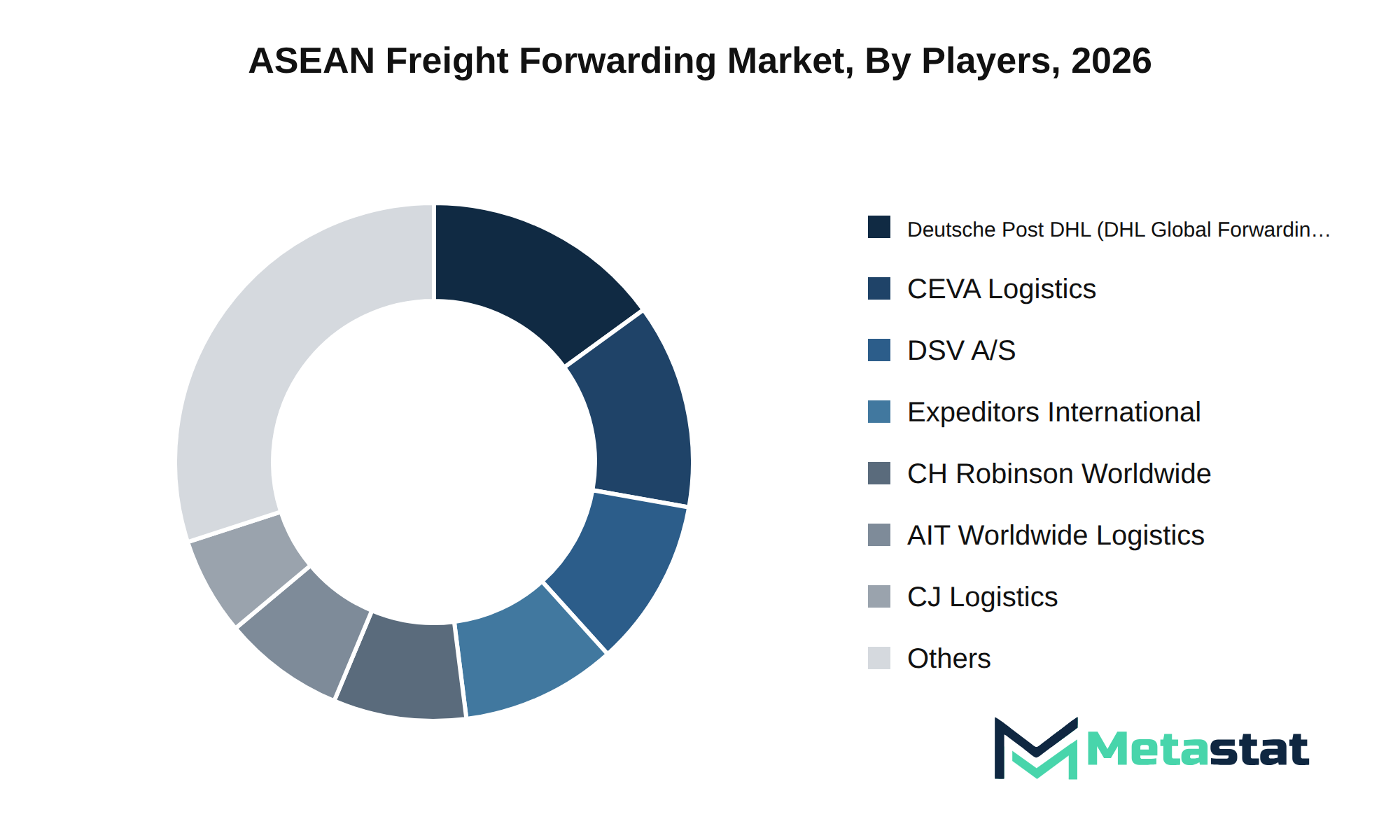
The ASEAN Freight Forwarding market experiences significant activity in mergers, acquisitions, and strategic consolidation among firms. Companies including Deutsche Post DHL Group (DHL Global Forwarding), CEVA Logistics, and FedEx Logistics, Inc. pursue various strategies to enhance market presence and streamline operations. These organizations focus on expanding their service offerings and optimizing pricing architectures, contributing to a competitive environment.
Value chain integration is essential in the strategies of key players. AIT Worldwide Logistics emphasizes procurement leverage and customer retention strategies, which strengthen its market position. The presence of established firms like Kuehne + Nagel International AG and DP World Limited creates substantial barriers to entry for new entrants, limiting access to vital resources and market share.
Strategic alliances and cross-industry partnerships significantly influence competitive dynamics. Companies including CJ Logistics Corporation and DSV A/S engage in collaborative ventures that enhance service capabilities. These partnerships facilitate the sharing of resources and technology, underlining the importance of proprietary technology moats in sustaining competitive advantages within the market.
The future competitive outlook for the ASEAN Freight Forwarding market indicates continued growth driven by innovation and strategic positioning. Firms are expected to adapt their defensive imperatives to counter emerging threats while pursuing strategic growth vectors that capitalize on evolving market demands.
Market size is forecast to rise from USD 31.9 billion in 2025 to over USD 46.1 billion by 2033. This projection reflects a base case scenario with a compound annual growth rate (CAGR) of 4.7%. The bull case anticipates opportunities driven by robust economic recovery and technological advancements, enhancing operational efficiencies and increasing demand in various sectors. Conversely, the bear case suggests potential challenges arising from geopolitical tensions and regulatory constraints, which could hinder growth trajectories in the market.
The ASEAN Freight Forwarding market experiences shifts influenced by macroeconomic factors, including changing demand patterns across core industries. Structural consumption shifts emerge alongside evolving technologies that enhance logistics capabilities. Regulatory changes and compliance milestones create new operational frameworks influencing strategic capital allocation and infrastructure investments. Commitment to infrastructure development remains crucial, aligning with rising demand for efficient freight solutions.
While market dynamics evolve, strategic imperatives focus on addressing unmet enterprise needs while identifying high-growth pockets. Companies operating in the market prioritize defensibility roadmaps and future growth recommendations to navigate challenges and capitalize on emerging opportunities. Continuous research and development (R&D) commercialization timelines define competitive advantages, allowing players to enhance their offerings in a rapidly changing environment.
The report strategically identifies and profiles the key market players and analyses their core competencies in each sub-segment of the Freight Forwarding market.
Report Attributes | Details |
Study Period | 2021-2033 |
Base Year | 2025 |
Estimated Year | 2026 |
Forecast Period | 2026-2033 |
Historical Period | 2021-2025 |
Growth Rate | CAGR 4.7% from 2026 to 2033 |
Revenue Unit | USD billion |
Segmentation | By Mode of Transport, Sea Freight Forwarding, End User, Region, and Region |
Find answers to common questions about this report
The ASEAN Freight Forwarding market size was valued at USD 31.9 billion in 2025.
The ASEAN Freight Forwarding market is projected to grow at a CAGR of 4.7% during the forecast period from 2026 to 2033.
Air Freight Forwarding leads the ASEAN Freight Forwarding market with a projected value of USD 16.9 billion by 2033, compared to Sea Freight Forwarding, which is expected to reach USD 23.8 billion in the same year.
Key drivers for the ASEAN Freight Forwarding market include increased capital investment and economic expansion across the region, which fuel demand for freight services. Enhanced infrastructure development and public-private partnerships further improve logistics capabilities, while a growing emphasis on efficient and sustainable logistics solutions supports market growth.
The ASEAN Freight Forwarding market growth faces restraints from regulatory compliance complexities, inflationary pressures, and geopolitical instability. Compliance hurdles slow operations and increase administrative burdens, while rising costs of materials and labor compress profit margins. Geopolitical tensions disrupt trade routes, creating uncertainty and complicating logistics operations.
Increased capital investment across the ASEAN region favors product adoption in freight forwarding. Economic expansion drives demand for logistics services, while investments in infrastructure enhance operational efficiency. This environment encourages firms to modernize their operations and adopt advanced logistics solutions, positioning them competitively within the market.
The Freight Forwarding market is estimated to reach a valuation of USD 46.1 billion by 2033.
Key players in the ASEAN Freight Forwarding market include AIT Worldwide Logistics, CEVA Logistics, CH Robinson Worldwide Inc, Deutsche Post DHL Group (DHL Global Forwarding), DSV A/S, FedEx Logistics, Inc., Kuehne + Nagel International AG, and Nippon Express Holdings, Inc. / NX Group.
The ASEAN Freight Forwarding market is projected to grow at a CAGR of 4.7% from 2026 to 2033.
The Air Freight Forwarding segment is anticipated to grow from USD 11.9 billion in 2026 to USD 16.9 billion by 2033, reflecting a CAGR of 5.2%.
The analysts below cover Automotive and Transportation research at Metastat Insights.
LEAD ANALYST
Utkarsh Khirodkar is a Lead Market Research Analyst at MetaStat Insight, specializing in market intelligence, technology sector assessments, and competitive strategy.

ENERGY & INFRASTRUCTURE INDUSTRY CONSULTANT
Automotive and Transportation · Electronics and Semiconductor · Energy and Power · Machinery & Equipment
Saurabh Vasant Ganvir consults for Energy & Infrastructure Industry at MetaStat Insight, specializing in renewable energy, solar EPC, and electric vehicle (EV) infrastructure markets.
Assessing 200mm wafer transition schedules and substrate supply bottlenecks requires precise technical intelligence. MetaStat Insight supplied an actionable breakdown comparing planar and trench MOSFET architectures across automotive and industrial drive markets. The regional capacity estimates for Asia-Pacific foundries helped clarify lead-time uncertainties during our strategic planning session. When we needed additional clarification on high-purity raw material sourcing, their analyst team responded with helpful context within twenty-four hours.
Tracking maintenance cycle demand for secondary flight display units and terrain collision avoidance systems across regional jet fleets involves complex aftermarket dynamics. MetaStat Insight provided practical analysis separating airline retrofit programs from OEM forward-fit production schedules in North America and Southeast Asia. The supplier matrix highlighted component obsolescence timelines without resorting to vague generalizations. The dataset served as a dependable reference during our annual program review meetings.
Evaluating secondary resin quality across post-consumer packaging streams requires reliable technical segmentation. MetaStat Insight delivered an objective assessment that distinguished between extrusion-grade flake pricing and optical sorting throughput limitations across Western Europe. The competitive positioning breakdown for licensed depolymerization technology providers answered several questions during our feedstock feasibility audit. Their team clarified regional trade restrictions on mixed plastic scrap quickly when our team submitted follow-up requests.
Explore related market intelligence reports worth reading alongside this one.