
LEAD ANALYST
Utkarsh Khirodkar is a Lead Market Research Analyst at MetaStat Insight, specializing in market intelligence, technology sector assessments, and competitive strategy.

Asia Pacific Hedge Fund Market Size, Share, By Strategy (Long/Short Equity, Event-Driven, Global Macro, Relative Value, Multi-Strategy, Quantitative/Systematic, Fund of Funds and Other), By Investor Type (Institutional Investors, High-Net-Worth & Family Offices and Retail), By Fund Structure (Onshore, Offshore and Hybrid), By Region (China, Japan, India, Southeast Asia and Rest of Asia Pacific), Industry Analysis, Growth, Trends, and Forecast, 2026-2033
MSI-5092
August, 2026
308 Pages
Historical
Base year
Forecast
Forecast period
Report Details
Comprehensive Market Analysis And Insights
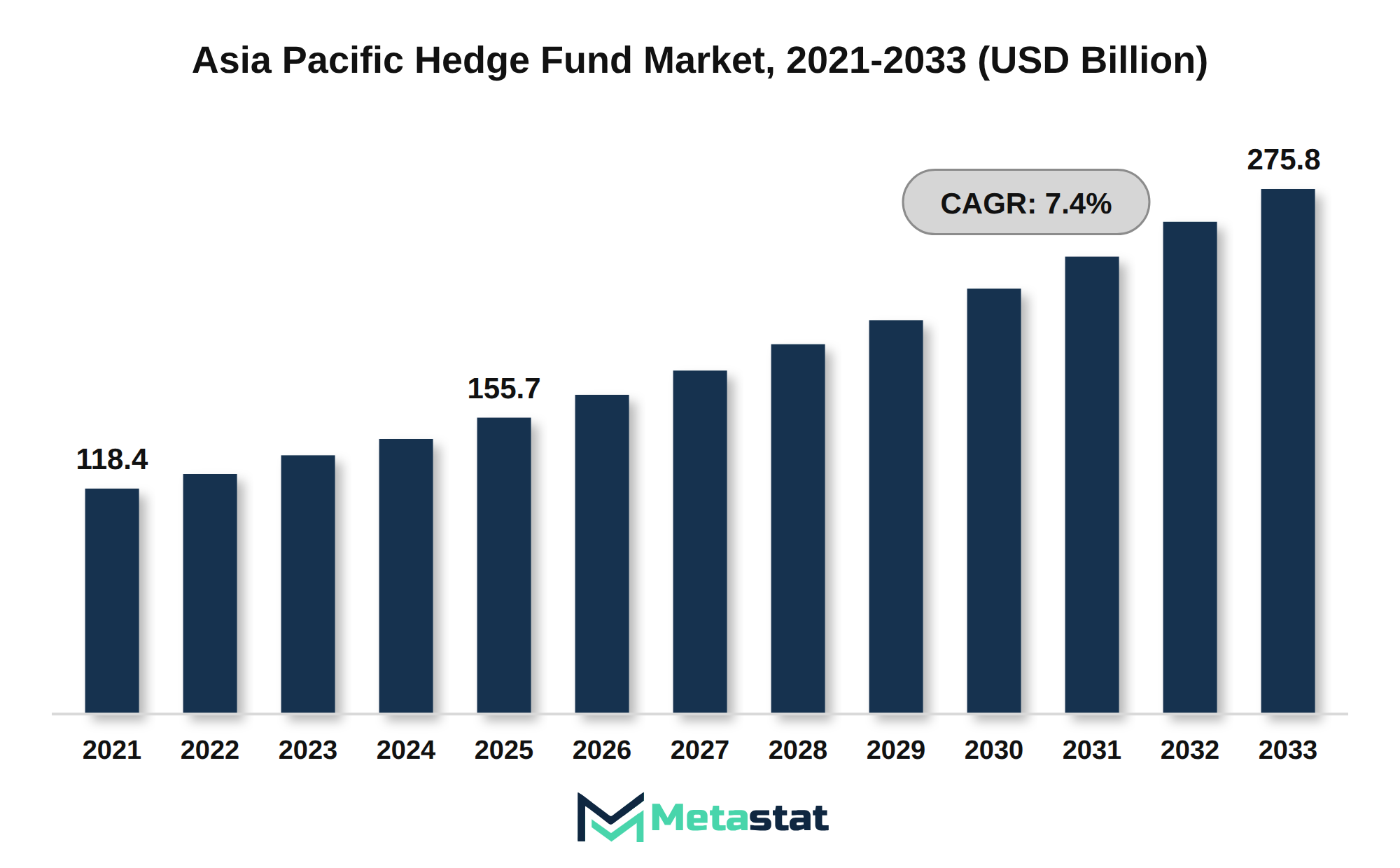
The Asia Pacific Hedge Fund market was valued at USD 155.7 billion in 2025 and is projected to reach USD 275.8 billion by 2033, growing at a CAGR of 7.4% over the forecast period.
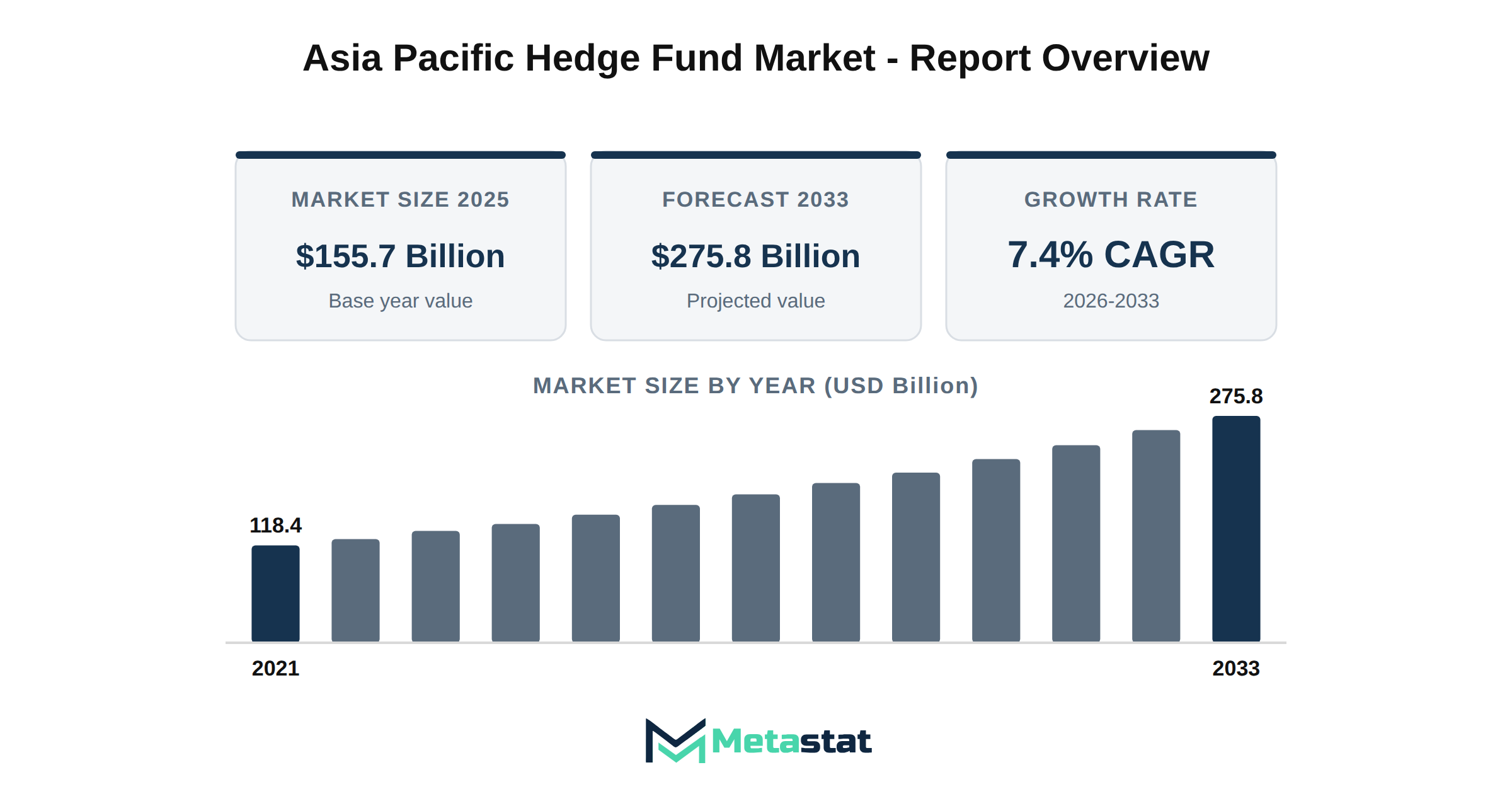
The Asia Pacific Hedge Fund market reached a value of USD 155.7 billion in 2025, reflecting steady growth from USD 118.4 billion in 2021. The market is projected to grow significantly, with an estimated value of USD 275.8 billion by 2033, achieving a compound annual growth rate (CAGR) of 7.4% during the forecast period.
Strategic shifts and evolving investor preferences drive this growth. Institutional investors, particularly pension funds, sovereign wealth funds, and insurers, represent a substantial segment, with expected growth from USD 106.3 billion in 2026 to USD 168.9 billion in 2033, reflecting a CAGR of 6.8%. High-net-worth individuals and family offices will contribute to the market, with a projected value of USD 88 billion by 2033 and a CAGR of 8.1%.
The diverse strategies employed in the market include Long/Short Equity, Event-Driven, Global Macro, and Relative Value, which cater to various investment styles and risk appetites. The Long/Short Equity strategy is anticipated to grow from USD 48 billion in 2026 to USD 74.4 billion in 2033, with a CAGR of 6.5%. Event-Driven strategies will reach USD 24.4 billion by 2033, reflecting a CAGR of 7.1%.
Technological advancements and regulatory changes influence market dynamics, leading to increased competition among hedge fund managers. Innovative investment strategies and robust risk management frameworks enhance operational efficiency and attract new capital. The Asia Pacific Hedge Fund market is positioned for substantial expansion, driven by these factors alongside favorable economic conditions.
The Asia Pacific Hedge Fund market experiences significant influences from regulatory compliance and geopolitical risk frameworks. Regulatory requirements shape operational strategies, compelling firms to adapt to evolving legislation and market conditions. Geopolitical tensions affect investor sentiment and capital flow, introducing challenges to market stability and growth.
Disruption within the market arises from technological advancements and shifting investor preferences. Innovations in trading strategies and risk management enhance operational efficiency, driving competition among hedge fund managers. R&D trajectories focus on developing sophisticated algorithms and data analytics capabilities, driving investor engagement and performance optimization.
Next-generation innovations emphasize the integration of artificial intelligence and machine learning into investment strategies. These technologies facilitate enhanced decision-making processes, enabling funds to respond quickly to market fluctuations and capitalize on emerging opportunities. Such advancements contribute to the overall growth of the Asia Pacific Hedge Fund market.
Sustainable transformation initiatives increasingly gain traction among investors, aligning with global trends toward responsible investing. Hedge funds increasingly incorporate ESG (Environmental, Social, and Governance) criteria into their investment frameworks, enhancing their appeal to socially conscious investors. This shift reflects a broader commitment to decarbonization and circular economy dynamics, shaping future investment strategies.
Market fragmentation poses challenges for firms seeking to establish a competitive edge. With numerous players vying for market share, differentiation through unique investment strategies becomes essential. M&A dynamics influence market consolidation, leading to the emergence of larger entities that leverage economies of scale and enhance operational capabilities.
Value chain dynamics play a crucial role in shaping competitive strategies within the market. Effective procurement processes and customer journey dynamics determine how funds attract and retain investors, ultimately impacting overall performance. Capital allocation decisions reflect an ongoing focus on high-value investments, driving strategic growth initiatives.
Infrastructure investments remain essential for facilitating market expansion. Enhancements in technology and operational capacity support firms in navigating inflationary pressures and currency volatility. These factors influence profitability and operational strategies, reflecting the need for a proactive approach to risk management and investment planning.
The strategic outlook for the Asia Pacific Hedge Fund market emphasizes adaptability and innovation. Firms that prioritize technological integration and sustainable practices position themselves favorably within the evolving environment. High-value recommendations include focusing on investor education and transparent communication to build trust and long-term relationships with stakeholders.
The Asia Pacific Hedge Fund market experiences growth driven by increased investments from institutional investors, including pension funds, sovereign wealth funds, and insurance companies. This surge in funding aligns with rising interest in alternative investment strategies, enabling these entities to enhance portfolio diversification and achieve superior returns.
Institutional investors prioritize hedge funds to navigate volatile market conditions while capitalizing on opportunities for profit generation. The anticipated compound annual growth rate (CAGR) of 6.8% for institutional investments from 2026 to 2033 reflects a strong commitment to the hedge fund sector. These investors contribute significant capital, which supports the expansion and scaling of various strategies, including long/short equity and event-driven approaches.
The focus on alternative investments allows institutional investors to adapt to shifting economic environments and emerging market trends. The Asia Pacific Hedge Fund market stands to benefit from this influx of capital, creating competitive dynamics among hedge funds and driving innovation within the sector. Overall, heightened institutional investment drives growth, enhances market stability, and reinforces the strategic importance of hedge funds in diversified investment portfolios.
The Asia Pacific Hedge Fund market experiences substantial growth driven by increased investment in digital transformation initiatives. Firms prioritize automation, artificial intelligence, and software adoption to enhance operational efficiency and improve decision-making processes. This trend reflects a broader movement toward digitizing legacy processes, allowing hedge funds to streamline operations and reduce costs in a competitive landscape.
Institutional investors increasingly seek hedge funds that leverage advanced technologies, increasing their appeal because operational productivity rises through these digital solutions. The integration of innovation-led product and service diversification enables firms to expand revenue streams and adapt to shifting consumer behaviors effectively. The ongoing focus on technological integration within the market positions leading players to capitalize on emerging opportunities and sustain their growth trajectory.
While firms enhance their digital capabilities, they improve responsiveness to market changes, ultimately driving demand in the Asia Pacific Hedge Fund market. This transformation not only addresses the evolving preferences of investors but reinforces competitive advantages by promoting agility and resilience amid economic fluctuations.
The Asia Pacific Hedge Fund market faces significant regulatory challenges that impede growth. Compliance hurdles create complexities for fund managers, complicating their ability to navigate legal mandates and increasing operational overheads. Regulatory uncertainty often leads to capital stagnation, limiting investment opportunities, while inflationary pressures further strain profitability for hedge funds.
Macroeconomic headwinds contribute to market fragmentation, leading to a lack of clarity in investment strategies. Geopolitical instability introduces risks that deter potential investors, while supply chain disruptions increase costs and delay fund operations. Technological obsolescence poses a threat to fund performance, compelling managers to invest heavily in new systems, which raises capital requirements.
In terms of human resources, the market experiences skilled labor deficiencies, creating talent gaps that hinder effective management and innovation. Rising workforce overhead complicates matters, leading to escalated operational costs. Data security vulnerabilities and privacy concerns present significant obstacles, causing hesitation among institutional investors regarding participation in the market.
Consequently, the Asia Pacific Hedge Fund market encounters several impediments that challenge its growth trajectory, limiting its potential to attract new investors and support the expansion of existing funds. The combination of these factors indicates a pressing need for improved regulatory clarity, better infrastructure, and reduced operational burdens to create a more favorable investment environment.
The Asia Pacific Hedge Fund market experiences challenges stemming from geopolitical fragmentation. Rising tensions among nations create uncertainty that impacts investment flows, resulting in cautious approaches from investors. Heightened trade deficits and tariff friction exacerbate these conditions, leading to a reduction in cross-border investments. The market's reliance on international capital faces strain due to these geopolitical dynamics, affecting liquidity and operational efficiency.
Technological disruptions complicate the landscape, with firms grappling with integration challenges across various platforms. The complexity of research and development processes increases, driven by organizations struggling to achieve interoperability among different technological solutions. This friction contributes to an inefficient use of resources, impacting overall performance and competitiveness. Addressing these technological integrations requires substantial investment, diverting funds from other strategic priorities.
The Asia Pacific Hedge Fund market contends with rising input cost structures. Inflationary pressures and increasing prices for essential resources lead to margin compression, pressing firms to optimize operations while maintaining service quality. Rising costs challenge firms to balance competitive pricing with sustainable profit margins, potentially leading to reduced profitability if not managed effectively.
Talent retention pressures hinder market growth. The demand for skilled professionals in the hedge fund industry intensifies, with firms facing challenges in attracting and retaining talent amid competitive labor markets. This skills gap exacerbates operational inefficiencies, limiting firms' ability to capitalize on growth opportunities. With talent shortages affecting operational capacity, strategic investment in workforce development becomes critical for sustained competitiveness.
The Asia Pacific Hedge Fund market presents significant opportunities driven by technological disruptions that reshape investor engagement and operational frameworks. The rise of digital platforms facilitates access to innovative investment strategies, attracting diverse investor segments, including high-net-worth individuals and institutional investors. Enhanced data analytics and artificial intelligence optimize decision-making processes, enabling fund managers to respond quickly to market fluctuations and investor preferences.
The integration of automation within trading operations streamlines processes, reduces operational costs, and maximizes yield. The shift towards digital procurement models enhances transparency and efficiency in asset management, allowing funds to capitalize on emerging trends in the investment landscape. Technological advancements create avenues for new product offerings and niche applications, catering to evolving investor demands in the Asia Pacific region.
The convergence of these technological developments creates an environment rich in investment potential, positioning the Asia Pacific Hedge Fund market for sustained growth through strategic innovation and adaptation to investor requirements. This ongoing transformation indicates a robust trajectory for the market, driven by collaboration between technology and investment strategies.
The Asia Pacific Hedge Fund market is segmented based on Strategy, Investor Type, Fund Structure, and Region.
Valued at USD 48 billion in 2026, the Long/Short Equity segment is projected to reach USD 74.4 billion by 2033, at a CAGR of 6.5% during the forecast period. Demand for Long/Short Equity strategies stems from institutional investors seeking to capitalize on market inefficiencies while hedging against market downturns. Increased volatility in financial markets has driven the adoption of these strategies, allowing fund managers to implement both long and short positions effectively.
Strategic catalysts include advancements in quantitative analysis and technological maturation, enabling sophisticated trading strategies that enhance performance. Advancements in these areas support fund managers in optimizing risk-return profiles, boosting investor confidence and driving growth in the Asia Pacific Hedge Fund market. The segment benefits from the diversification of investment portfolios, appealing to high-net-worth individuals and family offices seeking alternative investments with lower correlation to traditional asset classes.
Regulatory compliance standards and evolving market dynamics play a critical role in shaping the Long/Short Equity segment. Investment firms navigate a complex landscape of regulations while remaining agile to respond to shifts in market sentiment. The growing focus on transparency and risk management contributes to the segment's robustness. Investors increasingly prioritize due diligence.
Long/Short Equity strategies face cost structures and pricing volatility that influences overall margins. Effective management of operational expenses and strategic allocation of capital remains essential for sustained profitability. These challenges create a competitive landscape where fund managers strive to deliver superior returns, ultimately enhancing their market position within the Asia Pacific Hedge Fund market.
Growth in the Event-Driven segment aligns with increasing market volatility and the demand for strategies that capitalize on corporate events including mergers and acquisitions, restructurings, and other significant corporate actions. The anticipation of such events stimulates investor interest, resulting in a higher allocation of capital towards these funds. Institutional investors, including pension funds and sovereign wealth funds, play a significant role in driving this demand, seeking opportunities for enhanced returns in uncertain market conditions.
Investments in technological resources and data analytics represent critical drivers for the expansion of the Event-Driven segment. Enhanced analytical capabilities allow fund managers to identify and exploit inefficiencies in pricing resulting from corporate developments. These next-generation upgrades in technology support increased precision in decision-making and risk management, enabling fund managers to navigate complex market dynamics effectively.
Regulatory compliance standards significantly impact the operations of funds within this segment. Adhering to evolving regulations related to capital markets presents challenges, but compliance builds investor confidence and enhances market stability. Fund managers are encouraged to maintain robust compliance frameworks, which lead to increased operational efficiency.
The Event-Driven segment is projected to reach USD 24.4 billion by 2033, at a CAGR of 7.1% during the forecast period. This growth reflects the segment's adaptability in response to shifting consumption patterns and investor preferences, positioning it favorably within the Asia Pacific Hedge Fund market.
Strong interest in macroeconomic trends among institutional investors drives the Global Macro segment of the Asia Pacific Hedge Fund market. This interest fuels demand for diversified strategies that capitalize on global economic shifts, currency fluctuations, and interest rate changes. The segment's focus on relative price movements across various asset classes attracts sophisticated investors seeking to hedge risks and enhance portfolio performance.
Investment in advanced analytical tools and quantitative models supports the segment's growth. Such tools enable managers to analyze vast datasets for insights into market trends, improving decision-making processes and strategy execution. Investors increasingly expect these capabilities, enhancing competitive positioning for fund managers proficient in leveraging technology.
Regulatory compliance remains a critical factor influencing the segment. Adherence to evolving regulations ensures operational integrity and investor confidence. Fund managers actively engage with compliance measures, adapting strategies to align with regulatory requirements without compromising performance objectives.
Market projections indicate the Global Macro segment is anticipated to reach USD 31.1 billion by 2033. This growth reflects the increasing sophistication of investors and their willingness to explore innovative strategies in response to market volatility. Overall, dynamics within the Asia Pacific Hedge Fund market continue to evolve, facilitating the expansion of macro-focused strategies.
Continued interest in investment strategies focusing on pricing inefficiencies drives growth in the Relative Value segment of the Asia Pacific Hedge Fund market. Institutions seek to capitalize on subtle market discrepancies, supporting demand among various investor types, including institutional investors and high-net-worth individuals. Increased market complexity and volatility enhance the appeal of this strategy, driven by investors turning to relative value because a means to hedge against risk and achieve stable returns.
The Relative Value segment is projected to grow at a CAGR of 6.9% during the forecast period. Enhanced analytical tools and data-driven approaches facilitate sophisticated modeling, allowing fund managers to identify and exploit pricing anomalies effectively. This technological maturation contributes to a more streamlined investment process, leading to improved performance and attracting additional capital.
The Relative Value strategy aligns closely with evolving market dynamics. Shifts in consumption patterns and regulatory compliance standards shape investor preferences. Increased focus on sustainable investing influences capital allocation, prompting a reevaluation of traditional strategies. While regulatory frameworks evolve, funds adopting transparent and compliant practices position themselves favorably, enhancing their competitive edge in the market.
Investment in innovative technologies and strategic opportunity windows enables firms to capture emerging trends within the Relative Value segment. Managers leveraging advanced quantitative methods and machine learning tools enhance their ability to navigate complex market environments. This focus on continuous improvement and adaptation strengthens the overall growth trajectory of the Asia Pacific Hedge Fund market.
Investor interest in Multi-Strategy hedge funds demonstrates significant growth within the Asia Pacific Hedge Fund market. This segment attracts capital from a diverse range of investors due to its inherent flexibility and adaptability in various market conditions. Institutional investors favor Multi-Strategy funds for their capacity to balance risk and return across multiple strategies, enhancing portfolio diversification.
Adoption of Multi-Strategy approaches aligns with evolving investor preferences for risk management and performance consistency. Investors increasingly prioritize strategies that adapt to changing market dynamics, focusing on maximizing returns while mitigating potential losses. This shift towards more dynamic investment strategies creates a favorable environment for Multi-Strategy funds.
Operational efficiency remains a critical factor driving expansion within the Multi-Strategy segment. Fund managers leverage advanced analytics and technology to optimize performance and improve decision-making processes. Continuous investments in technological advancements strengthen the segment's competitive edge, enabling funds to respond quickly to market changes and enhance overall performance.
Multi-Strategy funds benefit from a diverse array of investment opportunities spanning various asset classes and geographies. This flexibility enables fund managers to capitalize on emerging market trends and dynamics, further augmenting the attractiveness of Multi-Strategy investments. The market experiences heightened demand, positioning the segment for sustained growth.
Increased capital investment in Multi-Strategy funds results from the heightened focus on risk-adjusted returns. Investors actively seek funds that provide stability during market fluctuations while maintaining potential for capital appreciation. This strategic emphasis on risk management reinforces the segment's significance within the broader Asia Pacific Hedge Fund market.
Growth in the Quantitative / Systematic segment aligns with increasing demand for advanced data analytics and algorithmic trading strategies. Institutional investors actively seek innovative approaches to enhance portfolio returns and mitigate risks, driving adoption across this segment. The integration of advanced technologies, including artificial intelligence and machine learning, accelerates the evolution of trading strategies and investment models.
Investment firms invest significantly in technological maturation, focusing on system upgrades and next-generation trading platforms to gain a competitive edge. This focus on product evolution supports the development of more sophisticated algorithms, enabling firms to adapt to rapidly changing market conditions. Enhanced data processing capabilities facilitate data-driven decision-making, significantly impacting end-use dynamics in the Asia Pacific Hedge Fund market.
Regulatory compliance standards continue to shape operational frameworks. Firms monitor evolving regulations related to data handling and trading practices, ensuring alignment with compliance requirements. These standards influence operational costs, prompting firms to invest in robust compliance management systems that create margin pressures while enhancing long-term sustainability.
Strategic opportunity windows for growth emerge owing to firms prioritizing supply chain resilience and raw material sourcing strategies. The focus on developing strong partnerships within the supply chain enables firms to mitigate risks associated with market volatility and supply disruptions. This proactive approach ensures that firms remain agile and responsive to market changes, positioning them favorably in the competitive environment.
Interest in Fund of Funds strategies within the Asia Pacific Hedge Fund market stems from the diversification benefits offered to investors. These funds pool capital from various investors to invest in multiple hedge funds, allowing for broader exposure to different strategies and risk profiles. Institutional investors, including pension funds, increasingly find these vehicles attractive owing to the ability to mitigate risk while accessing high-performing hedge funds. The growing complexity of investment strategies necessitates a more layered approach to hedge fund investment, enhancing demand for Fund of Funds offerings.
Adoption of Fund of Funds strategies sees significant growth attributes linked to the rising wealth of high-net-worth individuals and family offices. These investors seek the expertise of professional managers to navigate the dynamic market. The emergence of technology and data analytics aids in refining fund selection processes, improving performance outcomes. This technological maturation supports greater investor confidence, driving higher allocation to Fund of Funds strategies.
Enhanced focus on regulatory compliance influences the operational frameworks of Fund of Funds. Investors increasingly require transparency and adherence to regulations, prompting fund managers to adopt rigorous compliance mechanisms. This shift offers an opportunity for growth owing to fund managers streamlining operations and improving reporting standards, aligning with investor expectations and regulatory demands.
Competition intensifies among players in the Asia Pacific Hedge Fund market, leading to innovation in Fund of Funds structures and fee arrangements. Managers explore unique strategies that offer differentiated value propositions, including lower fees or performance-linked structures. This strategic opportunity window allows for capturing a broader investor base, particularly among those hesitant to engage with traditional hedge fund structures.
Investment strategies within the Other segment, which includes Managed Futures, Credit, Emerging Markets, Volatility Arbitrage, and Crypto/Digital Assets, reflect a growing diversity in hedge fund offerings. These strategies appeal to a range of investors seeking to capitalize on niche markets and alternative asset classes, enhancing the overall appeal of the Asia Pacific Hedge Fund market. Increased demand for innovative investment approaches drives the exploration of newer asset classes, including digital assets, while established strategies evolve to incorporate advanced analytics and technology.
Adoption of these strategies is influenced by macroeconomic factors and shifts in investor preferences, leading to heightened interest from High-Net-Worth individuals and institutional investors. The search for yield in low-interest-rate environments drives investment in credit and emerging markets, where higher returns are often realized. The volatility present in traditional markets increases interest in strategies that apply volatility arbitrage, allowing investors to hedge against market fluctuations effectively.
Regulatory compliance remains a crucial factor affecting operations within this segment. Stakeholders navigate varying regulations across jurisdictions, ensuring adherence while pursuing strategic opportunities. A focus on transparency and risk management is essential, owing to intensifying regulatory scrutiny. Simultaneously, technological advancements facilitate the development of more sophisticated trading algorithms, enhancing performance and operational efficiency.
Investment in next-generation upgrades positions funds to adapt to changing market dynamics while addressing margin pressures stemming from increased competition. The emphasis on capital investment and strategic opportunity windows reflects the segment's potential for growth within the Asia Pacific Hedge Fund market, driven by market participants applying innovative approaches to asset management.
Institutional Investors (Pension Funds, SWFs, Insurers, etc.) segment is valued at USD 106.3 billion in 2026 and is projected to reach USD 168.9 billion by 2033, at a CAGR of 6.8% during the forecast period. Increased allocations to hedge funds among institutional investors reflect a strategic movement towards diversification and risk management, especially in the context of market volatility. This segment experiences heightened interest due to its potential for superior risk-adjusted returns compared to traditional asset classes. The preference for hedge funds stems from the demand for innovative investment strategies that address complex market dynamics, particularly in turbulent economic environments.
Technology advancements contribute to the appeal of hedge funds among institutional investors. Enhanced data analytics and algorithmic trading offer opportunities for improved decision-making and execution. Investment in next-generation tools enables managers to optimize their strategies, thereby attracting a greater share of institutional capital. Regulatory compliance continues to shape the operational landscape, with institutional investors focusing on funds that adhere to stringent standards while providing transparency and accountability.
In the competitive landscape of the Asia Pacific Hedge Fund market, institutional investors play a crucial role in driving capital inflows towards innovative and adaptive strategies. This segment's growth reflects broader consumption shifts, driven by investors increasingly seeking alternatives to traditional asset management. The outlook for the segment remains positive, supported by ongoing capital investment and a strong demand for sophisticated investment solutions tailored to meet evolving market conditions.
High-Net-Worth & Family Offices segment is estimated to reach USD 88 billion by 2033, at a CAGR of 8.1% during the forecast period. Demand within this segment stems from a growing number of high-net-worth individuals seeking diversified investment options to enhance portfolio performance. Increased awareness of hedge fund strategies among affluent investors, combined with a desire for superior returns compared to traditional investment vehicles, contributes to this growth. Expansion in this segment aligns with the rising adoption of innovative investment strategies, emphasizing the benefits of alternative assets in mitigating risks and achieving long-term financial objectives.
Investor preferences shift towards hedge funds that provide unique risk-return profiles, prompting market players to tailor their offerings to meet the evolving needs of high-net-worth clients. Enhanced access to sophisticated investment tools and platforms facilitates engagement, allowing these investors to participate more actively in hedge fund markets. The Asia Pacific Hedge Fund market benefits from this trend, driven by accelerating wealth creation across the region, particularly in emerging economies.
Regulatory environments increasingly favor the inclusion of hedge funds within the portfolios of high-net-worth individuals, further fueling segment growth. Market players focus on compliance with evolving standards, ensuring that their offerings align with investor expectations while maintaining transparency. This strategic approach enhances investor confidence, encouraging more high-net-worth families to explore hedge fund investments, driving the overall growth of the market.
Investors show increasing interest in the Retail segment of the Asia Pacific Hedge Fund market, with expectations of reaching USD 18.9 billion by 2033. This growth results from rising disposable incomes and heightened awareness of investment opportunities among retail investors, driving demand for alternative investment strategies.
Technological advancements further contribute to segment growth. The accessibility of online trading platforms and robo-advisors simplifies the investment process, allowing retail investors to diversify their portfolios effectively. Enhanced digital platforms facilitate quick access to hedge fund investments, encouraging participation.
Cost structures within the Retail segment remain competitive due to increasing options for fee structures and pricing models designed for retail investors. Firms are adjusting their offerings to attract this group, balancing management fees with performance incentives to maintain investor engagement.
Regulatory compliance significantly shapes the Retail segment. While regulations present challenges, they enhance investor protection and build trust in hedge fund investments. This regulatory framework supports sustainable growth by ensuring that funds adhere to disclosure and transparency standards.
The segment's trajectory reflects broader consumption shifts toward alternative investments. Retail investors increasingly seek out strategies that provide diversification beyond traditional assets, positioning the Retail segment for robust growth in the overall market.
Continued investor preference for Onshore hedge funds directly influences the Asia Pacific Hedge Fund market. Regulatory compliance standards play a crucial role in shaping the operational framework within this sub-segment, ensuring that funds adhere to local laws and regulations while appealing to domestic investors. This compliance builds trust and encourages capital flow, enhancing the attractiveness of Onshore funds.
Technological maturation significantly impacts the operational efficiency of Onshore funds. Investment strategies that leverage advanced analytics and automated trading systems enhance decision-making processes, leading to improved performance. Increasing competition among hedge funds drives innovation, pushing Onshore funds to adopt next-generation upgrades that align with evolving market conditions.
End-use dynamics highlight a growing demand for Onshore funds among institutional investors, family offices, and high-net-worth individuals. This demand aligns with the trend of diversification in investment portfolios, where Onshore funds offer a blend of risk management and potential returns. Evolving investor profiles contribute to a shift in consumption patterns, prioritizing transparency and localized investment opportunities.
Capital investment outlook remains positive for the Onshore segment, driven by sustained interest from institutional players. The presence of established firms in this space enhances market resilience, with companies actively seeking to capture strategic opportunity windows. Increased funding into this sub-segment implies a commitment to long-term growth, supporting the overall Asia Pacific Hedge Fund market.
Pricing volatility and margin pressures specific to Onshore funds necessitate refined cost structures. Operational efficiencies and strategic positioning become essential for firms aiming to maintain competitiveness. While market conditions fluctuate, firms that optimize their pricing strategies and manage costs effectively secure a stronger foothold in the market.
Investor interest in the Offshore sub-segment remains strong due to the flexibility and tax optimization benefits it offers. Regulatory environments in various jurisdictions have prompted many hedge fund managers to establish Offshore funds, allowing for enhanced investment strategies and risk management techniques. This trend has attracted a diverse array of institutional investors, including pension funds and sovereign wealth funds, who seek to maximize returns while navigating complex regulatory landscapes. Strategic allocation into Offshore funds results in improved portfolio diversification, aligning with the broader objectives of the Asia Pacific Hedge Fund market.
Technological advancements play a significant role in the evolution of Offshore hedge funds. Increased adoption of digital platforms and data analytics enhances operational efficiency, allowing fund managers to better serve investor needs. The growing emphasis on regulatory compliance and reporting standards drives innovation in fund structures and operational practices. The sophistication of products available in the Offshore segment attracts a wider range of investors, establishing a competitive edge within the Asia Pacific Hedge Fund market.
Cost structures within Offshore funds reflect the dynamics of the global hedge fund industry. Ongoing pricing volatility and margin pressures necessitate strategic adjustments by fund managers. Investors increasingly evaluate the performance and fee structures of Offshore funds, emphasizing the importance of transparency and value creation. This scrutiny influences investment decisions, pushing managers to optimize their offerings in a competitive market environment.
While market conditions evolve, strategic opportunity windows arise for Offshore hedge funds. Increased globalization and cross-border investments present avenues for growth, because investors seek exposure to diverse markets and asset classes. The Offshore sub-segment stands ready to capitalize on these shifts, positioning itself for sustained relevance and competitiveness within the broader Asia Pacific Hedge Fund market.
Demand for hybrid hedge funds reflects a growing preference among investors for strategies that combine both onshore and offshore elements. This flexibility in fund structure caters to diverse investment objectives while providing risk mitigation benefits associated with varying regulatory environments. Institutional investors increasingly favor such platforms for their ability to adapt to market fluctuations and capitalize on global opportunities.
The hybrid structure enables managers to implement various investment strategies, creating a comprehensive portfolio that enhances returns. Investors actively seek hybrid funds for their potential to diversify investment risk while optimizing asset allocation. The blend of global and regional investment opportunities within the Asia Pacific Hedge Fund market strengthens this segment's appeal.
Significant capital investments into technological advancements further support the evolution of hybrid funds. Innovations in risk management and trading technologies facilitate real-time decision-making, enhancing fund performance. Competition intensifies, and fund managers focusing on hybrid strategies position themselves strategically within the market, leveraging advanced analytics to attract capital.
Regulatory compliance remains a critical factor influencing investor confidence in hybrid funds. Adhering to diverse regulatory requirements enhances the market's credibility and encourages participation from institutional players. This compliance contributes to the overall stability of the Asia Pacific Hedge Fund market, making hybrid funds an attractive option for investors seeking security alongside growth.
The hybrid segment plays an integral role in shaping the investment landscape of the Asia Pacific Hedge Fund market. By addressing unique investor needs through flexible structures, enhanced technology, and compliance, this segment demonstrates strong potential for sustained growth during the forecast period.
Interest in the China segment reflects robust demand for diverse hedge fund strategies driven by the country's rapid economic growth and increasing wealth among high-net-worth individuals. Institutional investors actively seek innovative asset management solutions, contributing to the growth of the Asia Pacific Hedge Fund market. The complexity of investment products and varied risk profiles attract a range of investors, from pension funds to family offices, eager to diversify their portfolios.
Technological advancements enhance the operational efficiency of hedge fund management in China, allowing firms to leverage data analytics for informed decision-making. Adoption of advanced trading systems and automated strategies facilitates improved performance and reduces operational costs, reinforcing the competitive position of hedge funds in this dynamic market.
Regulatory compliance remains a significant factor affecting the hedge fund landscape. Adherence to local and international standards influences operational protocols, impacting fund structure and risk management practices. Regulatory developments prompt hedge funds to adapt their strategies, ensuring alignment with evolving policy frameworks within the Asia Pacific Hedge Fund market.
Investment diversification contributes to consumption shifts within the market, with investors increasingly favoring multi-strategy and event-driven approaches. These strategies enable participants to capitalize on market inefficiencies and volatility, positioning hedge funds because attractive vehicles for risk-adjusted returns. The competitive landscape evolves, presenting strategic opportunity windows for firms willing to innovate and adapt.
Investor engagement within the Japan segment reflects a strong inclination towards hedge funds, driven by a combination of value preservation and capital appreciation strategies. The market benefits from Japan's unique economic conditions, including low-interest rates and a commitment to enhancing corporate governance, which create a favorable backdrop for hedge fund investments. Institutional investors, particularly pension funds and insurance companies, actively seek diversification through hedge fund allocations, recognizing their potential to achieve risk-adjusted returns.
The Asia Pacific Hedge Fund market experiences significant dynamics related to technological maturation and product evolution, particularly in Japan. Innovations in data analytics and algorithmic trading enhance investment strategies, allowing fund managers to identify and capitalize on market inefficiencies. The emergence of digital assets presents new opportunities for hedge fund firms, positioning them to meet evolving investor preferences.
Regulatory compliance standards in Japan further influence market operations, promoting transparency and trust among investors. Strict governance frameworks encourage fund managers to adopt best practices, which enhances the overall reputation of the market. In addition, heightened focus on responsible investing aligns with global trends, prompting hedge funds to integrate Environmental, Social, and Governance (ESG) criteria into their investment frameworks.
Price volatility manifests a significant aspect of the competitive environment. Fund managers in Japan actively navigate this landscape by employing sophisticated risk management techniques, ensuring that they mitigate potential losses while optimizing returns. This approach strengthens investor confidence, contributing to growth within the segment.
Strategic opportunity windows arise from the shifting consumption patterns of investors, driven by their increasing favor for alternative investments over traditional asset classes. The evolving needs of high-net-worth individuals drive demand for customized hedge fund solutions, further enhancing market participation. The Asia Pacific Hedge Fund market is poised for expansion, with Japan serving because a key contributor to regional growth.
Investor interest in the India sub-segment of the Asia Pacific Hedge Fund market reflects a combination of economic growth and increasing wealth among high-net-worth individuals. High-Net-Worth & Family Offices demonstrate significant activity in this region, driven by favorable regulatory conditions and a growing financial services sector, which enhances the appeal of hedge funds.
Adoption of alternative investment strategies continues to expand among institutional investors, including pension funds and sovereign wealth funds, seeking diversification and improved returns. The growing sophistication of these investors facilitates the development of tailored products that align with their investment objectives.
Technological maturation within the financial services industry influences operational efficiencies, allowing hedge funds to leverage advanced analytics and automation to enhance performance. Innovations in financial technology, including algorithmic trading and risk management systems, contribute to the evolution of investment strategies.
Strategic opportunity windows emerge owing to shifts in consumption patterns, with a noticeable increase in demand for ESG-focused investment products. Regulatory compliance standards shape product offerings, creating new avenues for hedge funds to attract investors prioritizing sustainable and responsible investing.
Cost structures and pricing volatility present challenges for hedge funds operating in this environment. Nonetheless, the potential for high returns attracts capital investment, with firms actively seeking to develop innovative solutions to address market demands.
The Asia Pacific Hedge Fund market benefits from the resilience of the supply chain, enabling firms to navigate potential disruptions effectively. While firms focus on optimizing their operational frameworks, the India segment stands poised for growth, supported by an expanding investor base and evolving market dynamics.
Investor interest in the Southeast Asia sub-segment reflects a dynamic financial landscape characterized by increasing wealth and a growing appetite for diverse investment strategies. High-Net-Worth individuals and family offices in the region show a strong inclination towards hedge funds, driven by the desire for portfolio diversification and enhanced returns. Institutional investors, including pension funds and sovereign wealth funds, are expanding their allocations to hedge funds, recognizing the potential for higher yields during fluctuating market conditions.
The Asia Pacific Hedge Fund market experiences various growth factors in Southeast Asia, including favorable regulatory environments and the emergence of innovative investment products. The region's unique economic structure presents opportunities for hedge fund managers to tailor strategies that cater to local market demands. Investors increasingly seek specialized strategies, including event-driven and multi-strategy funds, which capitalize on regional market inefficiencies and corporate actions.
Increased technological maturation within the financial services sector enhances the capabilities of hedge funds operating in Southeast Asia. Advancements in data analytics and algorithmic trading allow fund managers to make informed investment decisions, improving performance and attracting institutional capital. The combination of growing investor sophistication and technological innovation positions the Southeast Asia segment because a critical component of the overall Asia Pacific Hedge Fund market.
Consumption shifts towards sustainable and responsible investing are evident in Southeast Asia, influencing hedge fund strategies. Investors increasingly prioritize environmental, social, and governance (ESG) factors, prompting fund managers to integrate these considerations into their investment processes. This trend aligns with global movements towards sustainability, creating strategic opportunity windows for hedge funds to attract capital from socially-conscious investors.
Investor engagement within the Rest of Asia Pacific segment benefits from a diverse economic landscape and increasing interest in alternative investment strategies. The region's investment climate is characterized by expanding institutional interest, driven by a search for higher returns in a low-yield environment. Emerging market dynamics create opportunities for hedge funds, particularly in countries with developing financial infrastructures.
Technological advancements in trading and analytics enhance operational efficiencies for hedge fund managers, enabling them to optimize strategies and adapt to changing market conditions. This technological maturation supports growth within the Asia Pacific Hedge Fund market, attracting a broader range of investors seeking innovative investment solutions.
Regulatory compliance continues to influence operational frameworks for hedge funds in the region. Adherence to evolving financial regulations, including those related to risk management and transparency, shapes the competitive landscape. Firms that demonstrate robust compliance frameworks position themselves favorably in attracting institutional capital.
Consumption shifts reflect changing investor preferences, with a noticeable move towards more diversified portfolios. Investors increasingly seek exposure to asset classes including digital assets and emerging markets, further driving demand for innovative hedge fund strategies. The market's response to these shifts influences growth trajectories and competitive positioning.
Strategic opportunity windows arise from the increasing sophistication of investors and their desire for tailored investment products. This environment creates a setting ripe for product evolution, where firms regularly refine offerings to align with investor expectations. Strong competition among players in the market leads to the development of new strategies that cater to investor demands.
While the precise market size for this sub-segment remains unspecified, ongoing capital investment reflects confidence in the potential of the Rest of Asia Pacific segment. Investors continually evaluate opportunities, balancing risk and reward in a financial ecosystem that evolves.
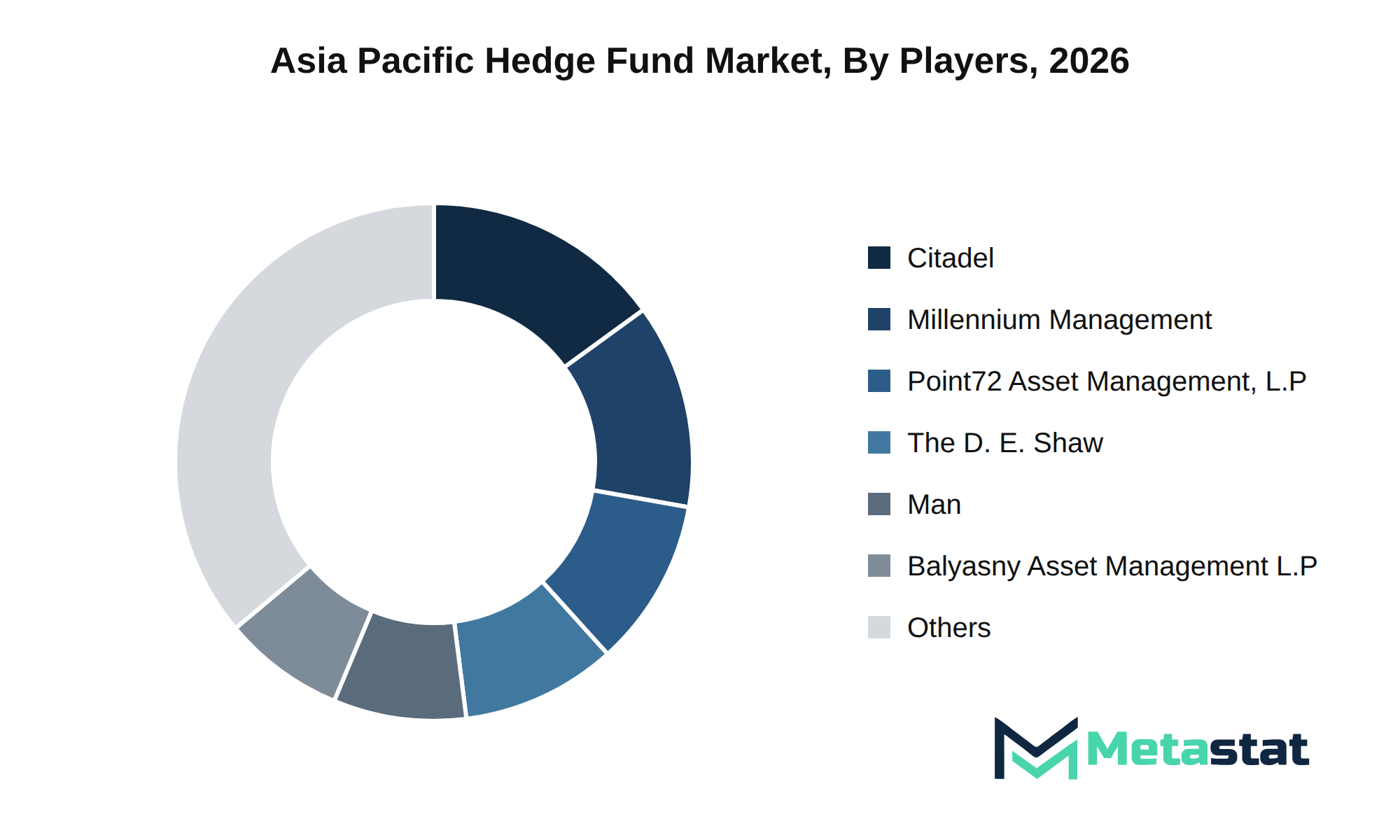
The Asia Pacific Hedge Fund market features a diverse array of players implementing various strategies to enhance their market positions. Major firms like Citadel, Millennium Management, and Point72 Asset Management, L.P. actively engage in strategic partnerships and alliances, strengthening their operational capabilities and expanding their client bases. The D. E. Shaw Group and Man Group plc focus on differentiating their services through innovative investment strategies and advanced technology integration, which creates competitive advantages.
Pricing architectures across the market vary significantly, with firms employing tailored approaches to appeal to different investor types including institutional investors, high-net-worth individuals, and retail clients. Balyasny Asset Management L.P. and Schonfeld Strategic Advisors LLC have established themselves because key players by optimizing their commercial models to ensure customer retention and enhance brand equity. In the area of research and development, Two Sigma Investments, LP and Marshall Wace LLP continuously innovate, leveraging proprietary technology to create defensible market positions.
The market experiences barriers to entry due to stringent regulatory requirements and the necessity for established networks and reputations. New entrants face challenges in overcoming these barriers while existing players capitalize on their established market presence. Companies including AQR Capital Management, LLC and Brevan Howard have fortified their competitive outlook through investments in intellectual property and robust technological infrastructures, positioning themselves favorably for future growth.
Market size is forecast to rise from USD 155.7 billion in 2025 to over USD 275.8 billion by 2033. This growth trajectory reflects a base case CAGR of 7.4%. In a favorable scenario, significant macroeconomic stability and increased investment in hedge fund strategies could accelerate growth beyond the forecasted rate. Economic downturns or increased regulatory burdens constrain market expansion, leading to a slower growth trajectory.
Shifts in downstream demand, driven by institutional investors, high-net-worth individuals, and family offices, shape the market. Core industry maturation influences investment strategies and fund structures, with a notable focus on long/short equity and multi-strategy approaches. Structural consumption shifts, including increasing interest in quantitative and systematic strategies, align with evolving investor preferences.
Integration of next-generation technologies enhances operational efficiencies and investment strategies, influencing portfolio management and research capabilities. Regulatory evolution introduces compliance milestones that affect operational practices and market dynamics. Geopolitical realignments and changing trade corridors play a crucial role in shaping regional supply chains and impacting investment opportunities within the Asia Pacific Hedge Fund market.
Strategic capital allocation directives and infrastructure commitments drive investment in emerging white-space opportunities. High-growth pockets emerge in regions with unmet enterprise needs, particularly in Southeast Asia and India, providing potential for increased investment inflows. Executive-level strategic imperatives focus on developing defensibility roadmaps to navigate evolving market conditions, ensuring sustained growth and competitive positioning within the Asia Pacific Hedge Fund market.
The report strategically identifies and profiles the key market players and analyses their core competencies in each sub-segment of the Hedge Fund market.
Report Attributes | Details |
Study Period | 2021-2033 |
Base Year | 2025 |
Estimated Year | 2026 |
Forecast Period | 2026-2033 |
Historical Period | 2021-2025 |
Growth Rate | CAGR 7.4% from 2026 to 2033 |
Revenue Unit | USD billion |
Segmentation | By Strategy, Investor Type, Fund Structure, Region, and Region |
Find answers to common questions about this report
The Asia Pacific Hedge Fund market size was valued at USD 155.7 billion in 2025.
The Hedge Fund market is projected to grow at a CAGR of 7.4% during the forecast period from 2026 to 2033.
The segment leading the Asia Pacific Hedge Fund market is Fund of Funds, with a regional share of 7 percent. This figure indicates its significant position compared to other segments.
Increased investments from institutional investors, including pension funds and insurance companies, drive the Asia Pacific Hedge Fund market. This growth is fueled by a rising interest in alternative investment strategies, enabling enhanced portfolio diversification and superior returns. The anticipated compound annual growth rate of 6.8% for institutional investments from 2026 to 2033 reflects strong commitment to the hedge fund sector.
The Asia Pacific Hedge Fund market faces significant regulatory challenges, compliance hurdles, and geopolitical fragmentation, which impede growth. These factors create complexities for fund managers, increase operational overheads, and lead to cautious investment approaches, ultimately limiting market potential and attracting new investors.
Increased investments from institutional investors, driven by a focus on alternative investment strategies, favor product adoption in the Asia Pacific Hedge Fund market. The integration of digital transformation initiatives enhances operational efficiency and decision-making, making hedge funds more appealing to these investors. This shift supports the growth and competitiveness of hedge funds in the region.
The Hedge Fund market is estimated to reach a valuation of USD 275.8 billion by 2033.
Key players in the Asia Pacific Hedge Fund market include Citadel, Millennium Management, Point72 Asset Management, L.P., The D. E. Shaw Group, Man Group plc, Balyasny Asset Management L.P., and Two Sigma Investments, LP.
The Asia Pacific hedge fund market is projected to reach USD 167.7 billion in 2026.
The Long/Short Equity segment is anticipated to reach USD 74.4 billion by 2033.
Choose Your License
Asia Pacific Hedge Fund Market
The analysts below cover Banking & Finance research at Metastat Insights.
LEAD ANALYST
Utkarsh Khirodkar is a Lead Market Research Analyst at MetaStat Insight, specializing in market intelligence, technology sector assessments, and competitive strategy.

PRINCIPAL CONSULTANT - ENTERPRISE AI & EMERGING TECHNOLOGIES
Banking & Finance · Electronics and Semiconductor · Energy and Power · Healthcare IT · Information & Technology · Professional Services
Vijay Gunti is a Principal Consultant at MetaStat Insight, bringing over two decades of experience across enterprise digital transformation, technology strategy, and intelligent systems.
Our team was tracking whether regional recycling infrastructure could realistically absorb the growing volume of lithium iron phosphate batteries over the next decade. The report did a solid job separating announced hydrometallurgical plant capacity from active, permitted operational throughput. That distinction made the feedstock availability projections and regional recovery rate models far more credible than standard commercial overviews.
Tracking capacity expansion in single-use bioprocessing requires dependable data on raw material availability and cleanroom-grade polymer supply chains. The competitive landscape chapter gave a grounded evaluation of secondary component suppliers across North America and Asia-Pacific rather than simply reprinting press releases. Having that level of supplier benchmarking helped clarify dual-sourcing considerations for our clinical pipeline planning.
When evaluating distributed energy resource management systems, standard research summaries tend to gloss over the operational differences between front-of-the-meter utility deployments and behind-the-meter industrial sites. The MetaStat Insight report addressed those distinctions directly, especially regarding software interoperability standards and grid interconnection backlogs. The five-year market sizing across regional transmission organizations provided actionable context for our grid modernization strategy.
Explore related market intelligence reports worth reading alongside this one.
Starting from
$2950