
LEAD ANALYST
Utkarsh Khirodkar is a Lead Market Research Analyst at MetaStat Insight, specializing in market intelligence, technology sector assessments, and competitive strategy.

Global Biogas Market Size, Share, By Feedstock (Agricultural Residues, Livestock Manure, Sewage Sludge and Food and Beverage Waste), By Process Technology (Wet Anaerobic Digestion, Dry Anaerobic Digestion and Landfill Gas Recovery), By Application (Electricity Generation, Heat Generation and Vehicle Fuel/RNG), By Plant Capacity (Below 0.5 MW, 0.5 to 2 MW and Above 2 MW), Industry Analysis, Growth, Trends, and Forecast, 2026-2033
Report ID
MSI-5329
Published
September, 2026
Pages
270 Pages
Format
Historical
Base year
Forecast
Forecast period
Report Details
Market Valuation: Valued at $71.6 Billion in 2025, projected to reach $102.6 Billion by 2033 at a 4.6% CAGR.
Dominant Segment: Agricultural residues lead the biogas market, projected to grow from USD 18.6 billion in 2026 to USD 26.6 billion by 2033, driven by sustainable agricultural practices and regulatory compliance.
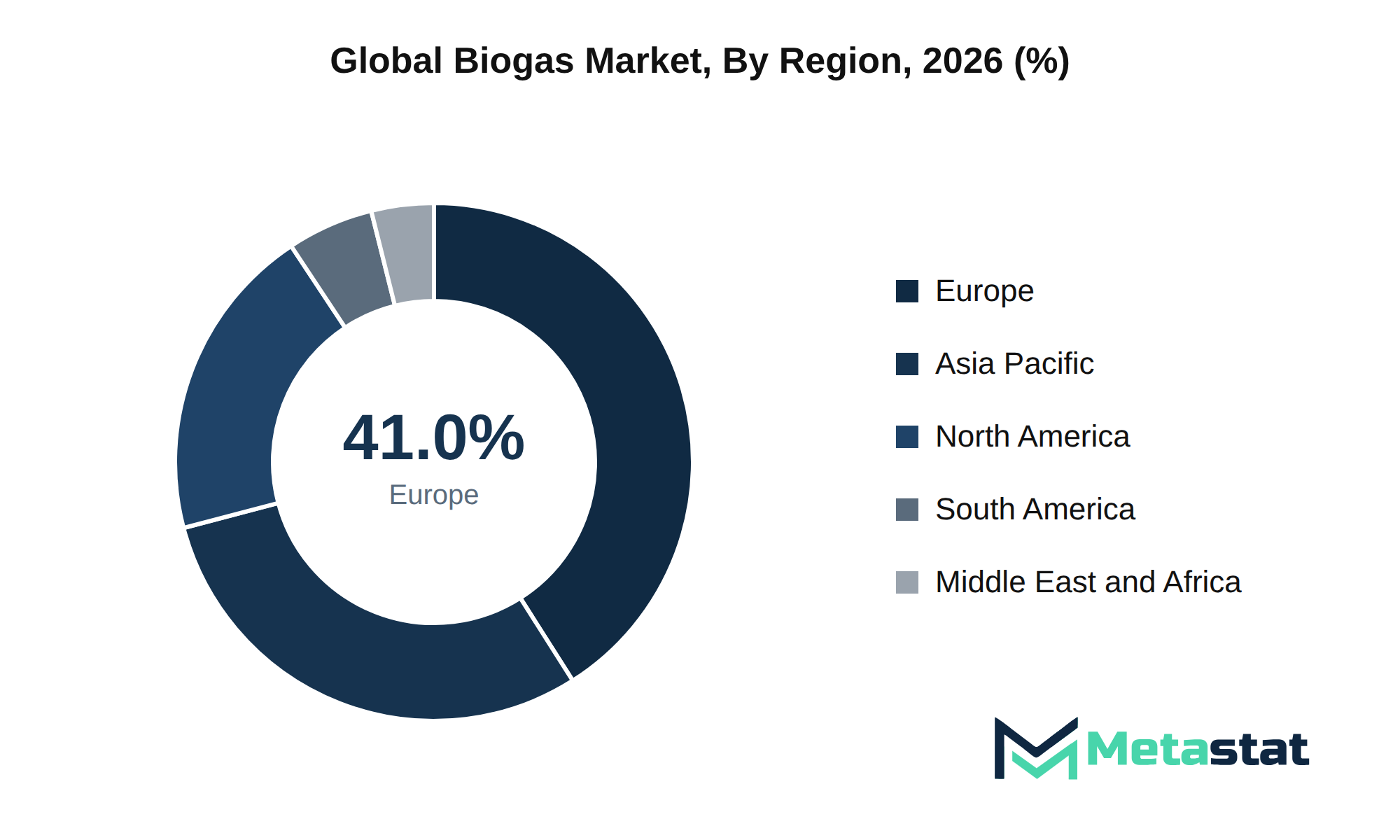
Geographic Lead: Europe is expected to dominate the biogas market due to strong regulatory frameworks and investments in renewable energy technologies, fostering a conducive environment for biogas production.
What's Inside: The report provides a comprehensive analysis of the global biogas market, including competitive coverage, detailed segmentation by feedstock, technology, application, and plant capacity, along with forecasts through 2033.
Emerging Technological Innovations: Technological advancements in anaerobic digestion and biogas upgrading are enhancing efficiency and production capabilities, driving growth and attracting investments in the biogas sector.
Investment Trends: Significant capital investments in biogas infrastructure are modernizing facilities and improving operational efficiency, aligning with global sustainability and renewable energy goals.
Choose Your License
Global Biogas Market
The global Biogas market was valued at USD 71.6 billion in 2025 and is projected to reach USD 102.6 billion by 2033, growing at a CAGR of 4.6% over the forecast period.
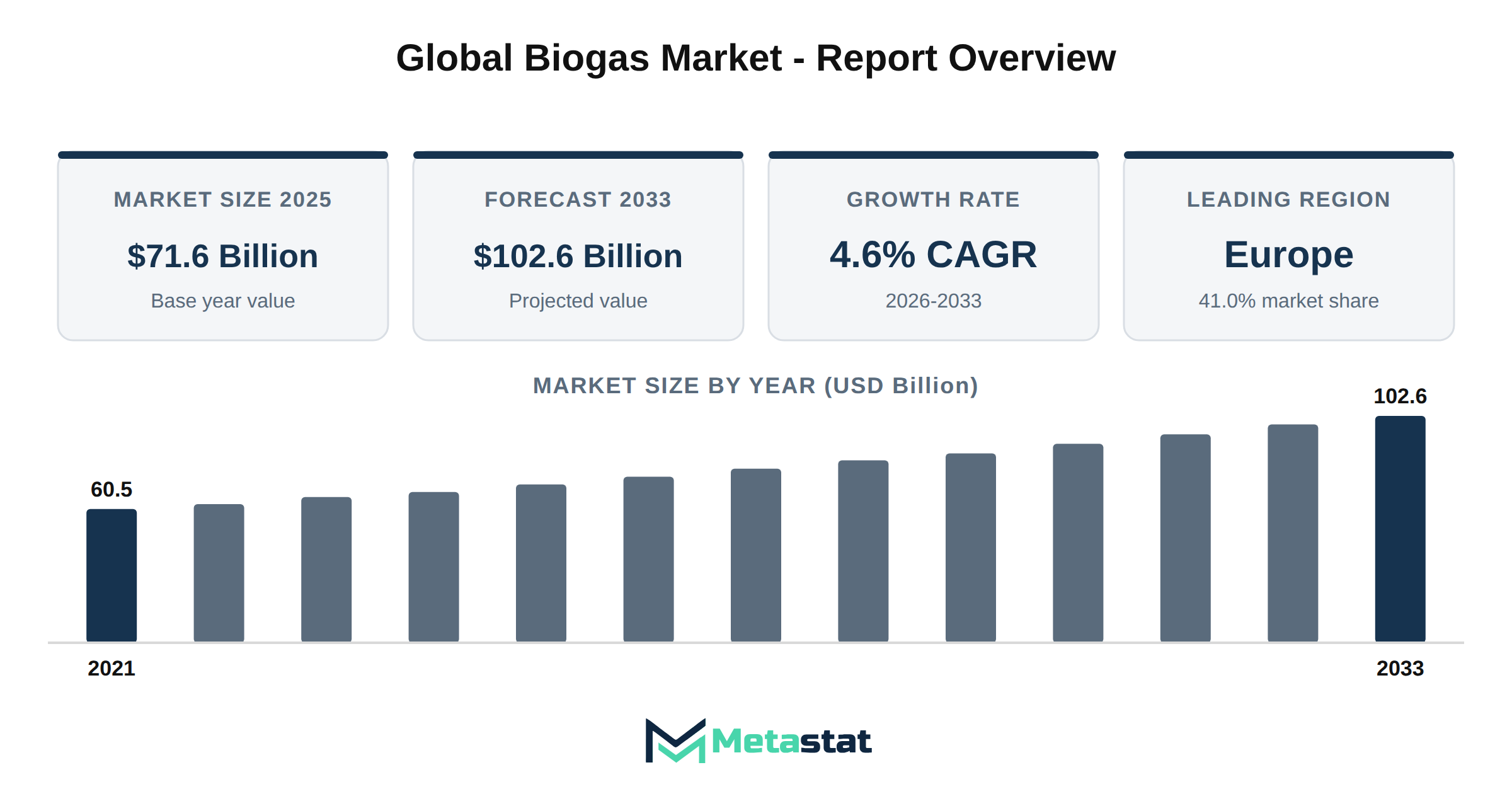
The biogas market experiences growth driven by increasing demand for renewable energy and waste-to-energy solutions. Factors including rising energy costs and environmental concerns push industries and governments to seek sustainable alternatives. The adoption of biogas for electricity generation and combined heat and power applications is particularly prominent, contributing to market expansion. This shift reflects a broader trend towards integrating renewable sources into energy systems, ensuring energy security and sustainability.
Renewable natural gas and biomethane reshape the biogas market, offering cleaner alternatives to fossil fuels. The expansion of these products enhances the viability of biogas projects and encourages investment in advanced technologies. Agricultural waste and livestock manure emerge because key feedstocks, providing significant potential for biogas production. The focus on food waste and organic waste diversion accelerates the growth of biogas facilities, further supporting the transition to a circular economy.
Advancements in anaerobic digestion technology improve biogas yield and efficiency. These innovations enhance operational performance and lower production costs, making biogas more competitive within the energy market. Growing investment in large-scale commercial biogas plants reinforces this trend, allowing for optimized processing capabilities and increased output. Biogas upgrading technologies support renewable natural gas production, facilitating the integration of biogas into existing natural gas networks.
Government incentives and renewable energy policies drive biogas deployment across various regions. Decarbonization targets set by governments strengthen demand for biogas across industries, aligning with global efforts to reduce greenhouse gas emissions. The integration of biogas with natural gas networks and transport fuel infrastructure creates new revenue streams, enhancing market growth potential. Vehicle fuel and renewable natural gas applications represent significant opportunities for biogas producers, diversifying their market offerings and increasing profitability.
Growth in the biogas market is supported by increasing demand for renewable energy and waste-to-energy solutions. This shift reflects a broader trend towards sustainability, where various industries seek to reduce reliance on fossil fuels and lower greenhouse gas emissions. The drive for cleaner energy sources positions biogas because a vital component in the transition to a low-carbon economy.
The adoption of biogas for electricity generation and combined heat and power (CHP) systems is on the rise. These applications enable efficient energy production from organic materials, enhancing energy security and diversifying energy sources. This trend illustrates the market's potential, particularly in regions with favorable policies and infrastructure supporting renewable energy initiatives.
Expansion in renewable natural gas (RNG) and biomethane production significantly reshapes the market landscape. By upgrading biogas to meet pipeline quality standards, producers access new revenue streams and contribute to decarbonization efforts in the natural gas sector. This transformation highlights the versatility of biogas and its role in achieving energy transition goals.
Agricultural waste and livestock manure emerge because key feedstocks for biogas production. The abundance of these resources in agricultural regions enhances the feasibility of biogas projects, promoting circular economy principles by turning waste into valuable energy. This focus on feedstock availability supports project development and drives growth in the market.
Food waste and organic waste diversion significantly accelerate biogas production. Increasing awareness of food waste issues and legislative measures aimed at reducing landfill waste contribute to higher feedstock availability. This trend aligns with broader sustainability goals, positioning biogas because a solution for waste management challenges.
Advances in anaerobic digestion technology improve biogas yield and efficiency. Innovations in reactor design and process optimization enhance the conversion of organic materials into biogas, boosting the economic viability of projects. Continuous technological developments contribute to the market's expansion by increasing operational performance.
Growing investment in large-scale commercial biogas plants reflects increasing confidence in the market's potential. Financial backing from private investors and public entities underlines the commitment to renewable energy projects, facilitating the construction of more biogas facilities. This investment climate encourages competition and drives technological advancements.
Biogas upgrading technologies support renewable natural gas production. Enhanced processes for purifying biogas ensure compliance with stringent quality standards, allowing for integration into existing natural gas networks. This technological progress strengthens the market by expanding the applications of biogas in various sectors.
Government incentives and renewable energy policies drive biogas deployment across multiple regions. Supportive frameworks facilitate project financing and encourage private investment, which promotes the growth of the market. These initiatives contribute to the overall ambition of reducing carbon footprints and enhancing energy independence.
Decarbonization targets strengthen demand for biogas across industries. Commitment to reducing greenhouse gas emissions aligns with the market's objectives, encouraging companies to invest in cleaner energy solutions. This alignment presents opportunities for growth because various sectors implement strategies to meet sustainability goals.
Integration of biogas with natural gas networks and transport fuel infrastructure opens new avenues for market expansion. By using existing infrastructure, biogas contributes to energy supply without necessitating extensive new investments. This integration enhances the operational efficiency of energy systems and supports the transition towards renewable sources.
Vehicle fuel and renewable natural gas applications create new revenue streams for biogas producers. The increasing demand for low-carbon transport fuels aligns with regulatory frameworks promoting cleaner alternatives, thus stimulating biogas production. This trend highlights the market's adaptability and capacity to address evolving energy needs.
Expanding opportunities in industrial and municipal wastewater treatment enhance biogas production potential. Treatment facilities increasingly recognize the value of biogas because a renewable energy source and a method for managing organic waste. This shift opens new business models and partnerships within the market.
Digitalization and process optimization in biogas plants improve operational performance. Data-driven technologies enable better monitoring and management of production processes, leading to enhanced efficiency and reduced costs. This technological integration supports the market's growth by creating a more competitive environment.
Feedstock availability and supply chain economics significantly shape biogas project development. Access to consistent and affordable feedstocks influences project feasibility and profitability, encouraging investment in regions with abundant organic materials. This factor is essential in determining the long-term sustainability of biogas initiatives.
Capital costs and feedstock logistics impact biogas project profitability. Efficient management of these elements is essential for ensuring competitive pricing and attracting investment. Addressing these financial challenges remains a priority for stakeholders aiming to capitalize on the market's growth potential.
Carbon credits and low-carbon fuel programs support biogas investment by providing financial incentives for cleaner energy production. These mechanisms enhance the attractiveness of biogas projects, facilitating access to funding and promoting wider adoption. This support emphasizes the market's role in achieving broader environmental objectives.
Europe's mature biogas industry is shifting towards biomethane production and grid injection. This transition reflects the region's commitment to enhancing energy security and reducing carbon emissions, positioning Europe because a leader in biogas production. The ongoing developments indicate a robust future for biogas in the region.
In Asia Pacific, market growth is supported by agricultural and organic waste resources. Countries in this region increasingly recognize the potential of biogas because a sustainable energy source, leading to investments in infrastructure and technology. This focus on resource use drives the market's expansion and encourages regional collaboration.
North America is witnessing growth in renewable natural gas projects that drive biogas market expansion. The region's favorable policies and technological advancements facilitate the development of biogas facilities, positioning North America because a key player in the global market. This trend highlights the region's strategic importance in the shift towards renewable energy.
Emerging biogas opportunities across Latin America, the Middle East, and Africa reflect the market's global potential. Increased awareness of sustainability issues and investment in renewable energy initiatives signal a growing interest in biogas projects. This development presents diverse opportunities for stakeholders across these regions.
Competitive strategies among biogas developers, technology providers, and energy companies shape the market dynamics. Collaboration and innovation drive advancements in technology and project execution, enabling companies to differentiate themselves in a competitive environment. This strategic engagement enhances the market's resilience and adaptability.
Mergers, partnerships, and project investments are reshaping the competitive environment within the biogas market. These activities facilitate knowledge sharing, resource allocation, and market penetration, leading to stronger positions for participating companies. This collaborative approach supports the market's growth and long-term sustainability.
Circular economy initiatives are increasing the commercial value of biogas and digestate. By promoting sustainable practices, these initiatives enhance the economic viability of biogas projects while addressing waste management challenges. This growing focus on circularity reinforces the market's relevance in contemporary energy discussions.
The biogas market outlook through 2033 is driven by renewable gas and decarbonization trends. Anticipated growth in demand for cleaner energy solutions positions biogas because a key player in the energy transition. This positive trajectory emphasizes the importance of continued investment and innovation within the market.
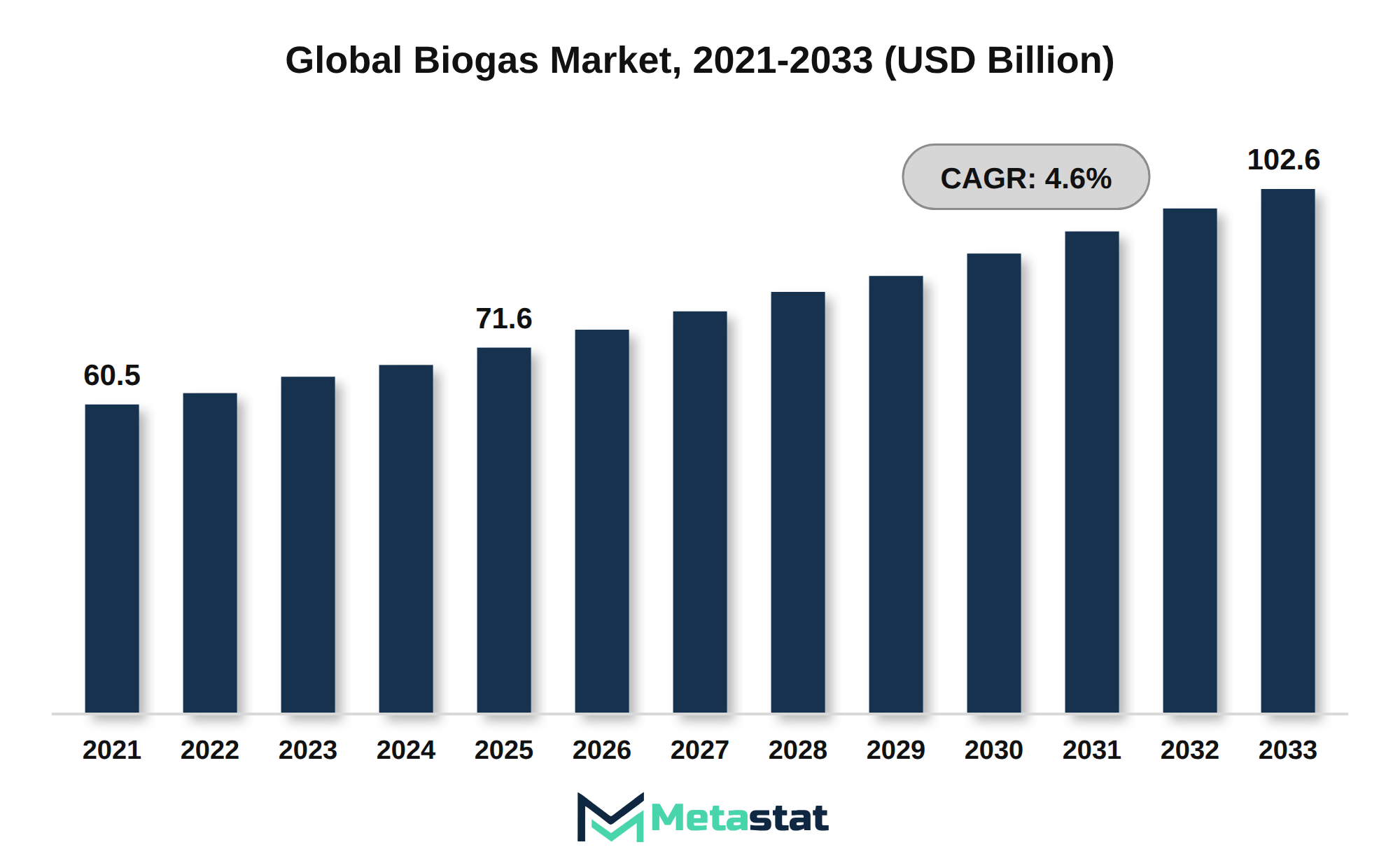
The Biogas market experiences significant momentum from increasing emphasis on sustainability and the need for carbon footprint reduction. Industries and municipalities confront stricter emission limits, prompting investment in closed-loop systems that convert organic waste into biogas. This transformation reduces greenhouse gas emissions and enhances resource efficiency through the utilization of local feedstock.
Organizations leveraging biogas technology benefit from operational cost reductions and enhanced energy security. The integration of biogas production into existing waste management frameworks allows firms to convert waste into valuable energy, addressing both energy needs and environmental responsibilities. The market reflects ongoing investment in green technologies that align with corporate sustainability goals.
Competition among market players intensifies, driven by innovation to meet the rising demand for renewable energy solutions. The emphasis on reducing emissions accelerates technology advancements in biogas systems, including improvements in process efficiency and feedstock diversification. These advancements position the biogas sector because a key player in the transition toward a more sustainable energy ecosystem.
Growth in the biogas market stems from substantial investments in infrastructure development. Capital investment environments, including sources of venture funding and public-private partnerships, play a critical role in expanding biogas production capabilities. Increased investment leads to the modernization of facilities, enhanced operational efficiency, and improved technological integration, which contribute to the overall viability of biogas because a sustainable energy source.
The global appetite for renewable energy solutions drives the market forward, with a concerted focus on sustainability and resource stewardship. Aging infrastructure requires upgrades to support evolving energy needs, prompting stakeholders to invest in biogas technologies. Such investment aligns with ESG mandates that emphasize carbon footprint reduction and the promotion of a circular economy.
Investment in biogas infrastructure enables various industries to adopt cleaner and more efficient energy solutions. This shift not only supports energy independence but enhances operational productivity through cost-efficiency initiatives. By streamlining processes and optimizing labor, stakeholders in the biogas market position themselves for long-term growth while facing increasing demand for renewable energy alternatives.
The biogas market faces significant challenges due to rising capital investment requirements. Establishing and maintaining biogas facilities necessitates substantial financial resources for equipment, infrastructure, and technology. This high initial cost discourages new entrants and limits expansion opportunities for existing players, particularly in regions with tighter budgets or limited access to financing options.
In addition to upfront costs, escalating operating expenses present a barrier for market participants. Operational complexities, including maintenance, staffing, and energy supply, contribute to increased financial burdens. These factors lead to cautious investment strategies, further hindering growth potential in the biogas market.
Economic uncertainties and inflationary pressures exacerbate these challenges, compelling investors to adopt a more conservative approach. High capital requirements and macroeconomic instability restrict overall market expansion, impacting both existing and prospective biogas projects.
Consequently, the necessity for a stable investment climate becomes evident. Investors seek assurance of returns, which are difficult to establish in a fluctuating economic environment. The combination of rising capital investment requirements and economic challenges creates a complex situation for stakeholders in the biogas market, necessitating innovative solutions to stimulate growth and ensure sustainability.
The biogas market encounters considerable challenges attributed to geopolitical fragmentation and trade deficits. These issues contribute to increased tariff friction, complicating international trade and negatively impacting market stability. Various regions experience differing regulations, resulting in inefficiencies in supply chains, which affect the availability and pricing of biogas components.
Technological disruptions play a significant role, requiring complex research and development integrations to adapt to new advancements. The market faces interoperability friction when integrating new technologies with existing systems, hindering growth and slowing down the adoption of innovative biogas solutions. Fluctuations in feedstock prices and component volatility present ongoing challenges for producers striving to maintain operational efficiency.
Logistics disruptions pose additional hurdles, leading to supply chain instability that impacts timely delivery of essential materials. In tandem, tightening global regulatory standards and evolving legal liabilities create an environment of compliance overhead. Companies within the biogas market navigate these complexities, incurring costs associated with meeting new regulations while managing potential risks linked to compliance failures.
Pricing compression and margin pressures arise from escalating input costs, further constraining profitability. Producers within the market encounter workforce skill gaps, complicating the implementation of automated systems necessary for modern operations. Talent retention pressures emerge owing to companies striving to attract skilled workers amid a competitive labor market.
The increasing focus on environmental lifecycle footprints and decarbonization mandates complicates market dynamics. Sustainability demands push companies to innovate, which requires significant investment in infrastructure, retrofitting existing facilities, and overcoming implementation bottlenecks.
Intellectual property protection deficits create vulnerabilities in this competitive market, exposing firms to potential risks of technology theft and erosion of competitive advantage. Cybersecurity risks and data vulnerabilities present ongoing challenges, necessitating vigilance in protecting sensitive information. Overall, these geopolitical and structural factors create a complex environment that impacts the biogas market's growth trajectory and operational stability.
The biogas market benefits from a wave of technological disruptions, enhancing efficiency and expanding production capabilities. Innovations in anaerobic digestion technology, specifically dry and wet digestion methods, improve conversion rates, enabling higher yields from diverse feedstocks. This advancement attracts investments aimed at upgrading existing facilities and constructing new biogas plants, which increases overall market capacity.
Digital transformation initiatives are reshaping the industry by streamlining operations and optimizing plant management. Advanced data analytics and automation facilitate real-time monitoring of biogas production processes, enhancing operational efficiency. This operational yield maximization appeals to stakeholders focused on reducing costs and improving profitability, further supporting the market's growth trajectory.
In addition, geographical expansion into emerging markets drives demand for biogas solutions. Regions with underdeveloped waste management systems increasingly turn to biogas technology, reflecting its provision of a sustainable alternative for waste disposal and energy generation. This shift aligns with global sustainability imperatives and pushes for greener energy sources, aligning with environmental, social, and governance (ESG) objectives.
The market sees opportunities in downstream diversification, where biogas is integrated into various applications including electricity generation and vehicle fuel. These niche applications create new revenue streams for producers. Strategic consolidation among key players further facilitates market penetration and enhances competitive positioning, providing a strong framework for future growth.
The Global Biogas market is segmented based on Feedstock, Process Technology, Application, and Plant Capacity.
Agricultural residues represent a significant segment within the biogas market, valued at USD 18.6 billion in 2026 and projected to reach USD 26.6 billion by 2033, at a CAGR of 5.2% during the forecast period. Increasing emphasis on sustainable agricultural practices drives the demand for biogas production from these residues. Various agricultural by-products, including crop leftovers and food waste, contribute to the raw material supply, enhancing the segment's appeal for biogas generation.
Regulatory compliance standards focused on waste management and renewable energy utilization play a crucial role in segment expansion. Governments worldwide promote policies that incentivize the conversion of agricultural residues into energy, positioning this sub-segment favorably in an evolving energy landscape. Such regulatory frameworks create investment opportunities, further driving growth in the agricultural residues segment.
The increasing need for energy independence and diversification contributes to a shift in consumption patterns, favoring renewable energy sources. Agricultural residues offer a reliable feedstock for biogas facilities, supporting electricity generation and heat production. This trend aligns with broader industry goals of reducing greenhouse gas emissions and promoting sustainable energy solutions.
Technological maturation surrounding anaerobic digestion processes enhances the efficiency and viability of agricultural residues because a feedstock. Innovations in biogas production technologies optimize conversion rates, ensuring that facilities maximize output while minimizing operational costs. In this context, capital investment in next-generation biogas infrastructure continues to rise, emphasizing the strategic opportunity windows associated with agricultural residues.
Growing awareness around sustainable agricultural practices influences demand for livestock manure in the biogas market. This shift stems from environmental regulations and consumer preferences for eco-friendly energy sources. Livestock manure serves because a valuable feedstock, contributing to the circular economy while reducing waste and greenhouse gas emissions. The market benefits from the rising implementation of anaerobic digestion technologies, which efficiently convert organic matter into biogas. Operators experience cost savings and improved profitability through enhanced energy recovery from livestock manure.
Livestock manure segment is estimated to reach USD 26.6 billion by 2033, at a CAGR of 3.9% during the forecast period. This growth results from increased investments in biogas infrastructure and government support for renewable energy initiatives. Strategic partnerships between stakeholders within the agricultural sector and energy companies enhance resource utilization and market penetration. The development of next-generation biogas technologies further optimizes the conversion process, driving adoption across various applications including electricity generation and vehicle fuel.
Regulatory compliance regarding waste management and emissions continues to shape market dynamics. These compliance standards encourage livestock producers to adopt biogas solutions, thus creating a stable supply chain for feedstock. The livestock manure segment remains essential in addressing the global energy demand while promoting sustainable agricultural practices. Future opportunities in the market will arise from innovations in processing techniques and expansion into new geographical regions, thereby enhancing overall market growth.
Increasing focus on sustainable waste management drives the adoption of sewage sludge in the biogas market. The segment benefits from regulatory frameworks promoting the conversion of waste into renewable energy. Local governments and environmental agencies encourage the treatment of sewage sludge to mitigate environmental pollution, resulting in rising investments in necessary infrastructure and technology. Advancements in anaerobic digestion processes enhance efficiency and output, prompting wastewater treatment facilities to integrate biogas production capabilities.
Demand for biodegradable waste treatment solutions fuels the market's growth. The push towards energy recovery from sewage sludge aligns with global energy transition goals, ensuring that energy producers and municipalities contribute to renewable energy portfolios. Cost structures associated with sewage sludge treatment are becoming favorable due to decreasing operational expenses and increasing energy prices, allowing facilities to maximize returns on investment.
Future projections show the sewage sludge segment is expected to reach USD 17.9 billion by 2033. This growth highlights the segment's role in addressing energy needs while managing waste sustainably. Increased collaboration among stakeholders in the waste management and energy sectors will further facilitate technological maturation and enhance market penetration, positioning sewage sludge because a vital resource in the broader biogas market.
Adoption of food and beverage waste because a feedstock for biogas production demonstrates increasing relevance owing to rising awareness of sustainability in waste management. The segment is projected to grow at a CAGR of 6.1% during the forecast period. This growth results from regulatory pressures aimed at reducing landfill waste and enhancing renewable energy sources. Industries involved in food production and processing significantly contribute to this trend by implementing biogas solutions to address waste disposal challenges while generating renewable energy.
Technological maturation in biogas production processes enhances the efficiency of converting food and beverage waste into energy. Innovations in anaerobic digestion technologies allow for better handling of varying waste compositions, optimizing energy yield. Companies within the biogas market are increasingly investing in next-generation upgrades and process improvements to maximize output from this feedstock.
The economic landscape surrounding food and beverage waste indicates favorable cost structures for biogas production. By processing waste that would otherwise incur disposal costs, companies realize a dual benefit: minimizing waste management expenses while generating energy. This dynamic creates strategic opportunity windows where profitability aligns with environmental compliance, making it an attractive proposition for businesses in the market.
Increased collaboration among stakeholders in the biogas market helps reinforce supply chain resilience. Partnerships between waste producers and biogas operators enable efficient raw material sourcing, promoting stability in feedstock availability. This collaboration enhances logistics efficiency, supporting a more sustainable approach to waste management.
Overall, the food and beverage waste segment within the biogas market presents substantial growth potential, driven by regulatory compliance, technological advancements, and strong industry collaboration. Continued investment in this area is expected to enhance the market's overall trajectory, supporting the transition to renewable energy sources.
Increasing interest in energy crops serves because a primary demand driver within the biogas market. The agriculture sector increasingly emphasizes diversification and renewable energy sources, positioning energy crops because an essential component of sustainable farming practices. Adoption of energy crops arises from their potential to improve crop yields while contributing to renewable energy production, attracting farmers and agribusinesses focused on sustainability.
Technological maturation in agricultural practices facilitates the adoption of energy crops, enabling advanced cultivation techniques that enhance productivity and efficiency. Innovations in genetic modification, crop rotation, and soil management contribute to increased viability and attractiveness of energy crops in biogas production. These advancements align with a growing awareness of environmental responsibilities and the need for cleaner energy solutions.
Regulatory compliance standards significantly influence the market, with governments worldwide implementing policies that encourage the use of renewable energy sources, including energy crops. Incentives including subsidies, grants, and favorable tax regimes enhance the economic viability of energy crops in biogas production. Supportive frameworks attract investment and promote expansion within this segment.
End-use dynamics reflect a shift toward renewable energy sources because industries seek greener alternatives to fossil fuels. Energy crops play a critical role in supporting biogas facilities, enhancing the overall sustainability of energy production. This growing trend leads to increased collaboration between energy producers and agricultural stakeholders, creating a resilient supply chain for energy crop sourcing and biogas production.
Strategic opportunity windows arise from the increasing demand for cleaner energy solutions, pushing energy crop development to the forefront. Investment in research and development facilitates the evolution of energy crops and their integration into biogas production systems. This focus on innovation enhances production efficiency and contributes to the overall growth of the biogas market.
Wet Anaerobic Digestion segment is valued at USD 39.1 billion in 2026 and is projected to reach USD 52.2 billion by 2033, at a CAGR of 4.2% during the forecast period. Increasing emphasis on efficient waste management and renewable energy generation drives the demand for wet anaerobic digestion technology. This segment captures organic waste from various sources, including agricultural residues and sewage sludge, aligning with environmental regulations and sustainability goals across multiple industries.
Technological maturation significantly impacts the segment. Advancements in digestion processes enhance efficiency and yield of biogas production. Innovations in biogas plant design and operation support the growth of this segment, allowing for the integration of next-generation upgrades that improve overall productivity. Downstream applications including electricity and heat generation from biogas further stimulate growth, driving adoption among utility and industrial sectors seeking low-carbon energy solutions.
Regulatory compliance standards impose stricter requirements on waste treatment, compelling industries to adopt wet anaerobic digestion to meet environmental targets. The demand for renewable natural gas (RNG) derived from this process presents strategic opportunity windows for investment, particularly within energy markets focused on decarbonization efforts. Cost structures and pricing volatility remain critical considerations for stakeholders, influencing profit margins and investment decisions in the market.
In light of these dynamics, the segment is positioned for expansion, with increasing capital investments targeting process optimization and infrastructure development. Overall, the evolution of wet anaerobic digestion technology aligns with broader trends in the Biogas market, positioning it because a significant contributor to sustainable energy generation and waste management solutions.
Dry Anaerobic Digestion segment is estimated to reach USD 32.1 billion by 2033, at a CAGR of 5.7% during the forecast period. Increasing regulations around waste management and renewable energy adoption drive demand for this technology, because companies seek effective ways to convert organic waste into energy. The segment's growth is influenced by improvements in system efficiencies and advancements in digestion technologies, which enhance energy yield and reduce operational costs.
In the context of the Biogas market, the expansion of the Dry Anaerobic Digestion segment aligns with the rising need for sustainable energy sources across various industries. Enhanced consumer awareness regarding environmental impacts fuels interest in renewable energy solutions, pushing companies to adopt more sustainable practices.
Market players focus on strategic partnerships and innovations to improve their offerings within this segment. Increased investment in research and development accelerates technology maturation, enabling next-generation upgrades that enhance system performance and increase market competitiveness. The growing trends in energy transition and decarbonization further support investment in this area, ensuring significant opportunities for market participants.
Landfill Gas Recovery segment is expected to reach USD 18.4 billion by 2033. Significant regulatory support for renewable energy initiatives enhances opportunities for landfill gas recovery technologies. Compliance with environmental regulations drives investments in clean energy solutions, positioning landfill gas recovery because a viable option for waste management while generating renewable energy. Technological advancements in gas extraction and purification processes contribute to increased efficiency and operational effectiveness within this segment.
End-use dynamics align with the growing demand for sustainable energy sources, where recovered landfill gas provides an alternative to traditional fossil fuels. Various industries are adopting these solutions to meet energy requirements while reducing greenhouse gas emissions. Downstream applications in electricity generation and heat production highlight the versatility of landfill gas, ensuring reliable energy supply across multiple sectors.
Investment in infrastructure for landfill gas recovery systems reinforces the segment's growth trajectory. Enhanced capacity for gas collection and processing leads to improved economic viability, attracting both public and private sector funding. Market players are responding by expanding their operational capabilities, which contributes to increased competition while driving innovation in technology and services.
With evolving consumer preferences towards greener energy solutions, the landfill gas recovery segment is poised for significant growth within the biogas market. Addressing environmental challenges through effective waste management practices will continue to stimulate investments and adoption of landfill gas technologies.
Electricity Generation segment is valued at USD 25.8 billion in 2026 and is projected to reach USD 32.2 billion by 2033, at a CAGR of 3.3% during the forecast period. Demand drivers for this segment stem from the growing necessity for renewable energy sources and the global push towards reducing greenhouse gas emissions. Regulatory frameworks favoring cleaner energy practices significantly influence the market, propelling the adoption of biogas technology for electricity generation.
Technological maturation enhances the expansion of the segment. Advances in anaerobic digestion processes improve efficiency and output, resulting in lower costs and enhanced feasibility for large-scale applications. Capital investment in next-generation upgrades strengthens the competitive landscape, enabling firms to optimize operations and increase production capacities.
End-use dynamics indicate a shift towards integrating biogas-generated electricity into existing energy grids. This integration aligns with rising consumer demand for sustainable energy solutions. Consequently, market participants explore strategic partnerships to facilitate smoother transitions between conventional and biogas-generated electricity.
Cost structures and pricing volatility represent critical considerations within this segment. Fluctuations in feedstock availability and processing costs impact profitability margins, necessitating robust supply chain resilience strategies. Companies focused on securing reliable raw material sources will maintain a competitive edge in the market.
Overall, opportunities abound in the Electricity Generation segment, driven by policy support, technological advancements, and robust demand for sustainable energy solutions within the biogas market.
Heat Generation within the biogas market presents significant growth opportunities driven by increasing energy demands and environmental regulations. This segment is estimated to reach USD 19.2 billion by 2033, at a CAGR of 3.5% during the forecast period. The transition to renewable energy sources drives the demand for biogas, reflecting a sustainable heating solution. Technological advancements in biogas processing enhance efficiency and lower production costs, facilitating broader adoption across various industries.
Regulatory compliance related to carbon emissions and renewable energy standards strengthens the market position of heat generation applications. Industries focusing on reducing their carbon footprint increasingly incorporate biogas into their energy mix. This trend reflects a shift towards cleaner energy sources, aligning with global sustainability goals.
Investment in infrastructure supporting biogas heating systems enhances market resilience. Strategic partnerships between technology providers and energy producers contribute to expanding production capabilities. The evolving energy consumption environment, characterized by a shift towards decentralized energy systems, positions heat generation applications favorably for future growth.
Increased awareness of the benefits of biogas utilization in heating applications contributes to market expansion. Stakeholders recognize the significance of integrating biogas into their energy strategies, ensuring long-term sustainability and compliance with environmental standards. Ongoing investments in innovation and capacity will continue to advance the biogas market forward.
Growing environmental concerns and regulatory pressures fuel demand for the Vehicle Fuel/RNG segment within the biogas market. This segment experiences significant traction due to the increasing need for cleaner transportation fuels, which aligns with global initiatives for carbon neutrality and sustainable development. Cities and nations set ambitious greenhouse gas reduction targets, making investments in renewable natural gas technologies more attractive to stakeholders.
The segment is projected to reach USD 24.5 billion by 2033. This growth reflects advancements in technology and infrastructure that enhance the efficiency of biogas production processes. Companies invest in next-generation upgrades and expand their operational capabilities, increasing the market’s ability to produce high-quality renewable fuel and leading to broader adoption in the transportation sector.
Regulatory compliance standards drive the market forward, influenced by government incentives for the use of renewable energies in vehicles. The resulting consumption shifts toward biogas-derived fuels enable businesses to meet both consumer demand for greener alternatives and regulatory mandates. An evolving landscape of certifications and policy frameworks supports the transition to Renewable Natural Gas, positioning the market for sustained growth.
Ongoing strategic developments and capital investments in infrastructure play a critical role in shaping market dynamics. Supply chain resilience and innovating raw material sourcing allow for enhanced margins amid pricing volatility. This strategic focus ensures that the Vehicle Fuel/RNG segment continues to thrive in a competitive energy environment.
Demand for Combined Heat and Power (CHP) systems in the biogas market reflects the growing focus on energy efficiency and sustainability. Rising energy costs prompt industries and municipalities to seek reliable and cost-efficient energy solutions, thereby accelerating adoption of CHP technologies. These systems enable simultaneous production of electricity and useful heat from biogas, maximizing energy output and enhancing economic viability for end users.
Regulatory compliance and policy initiatives aimed at reducing greenhouse gas emissions enhance market confidence in CHP applications. Governments worldwide implement incentives and support programs to promote renewable energy sources, further facilitating investment in biogas technologies. This regulatory backing ensures a favorable environment for growth, driven by businesses pursuing cleaner energy alternatives.
Technological maturation in biogas processing technologies supports the development of CHP systems. Innovations enhance system efficiency and reliability, resulting in lower operating costs for users. An increasing number of industries are integrating CHP solutions into their energy frameworks, driving demand in the market.
The Combined Heat and Power (CHP) segment is projected to grow at a CAGR of 4% during the forecast period. The anticipated increase in capacity highlights the importance of strategic investments in biogas infrastructure to meet rising energy demands and regulatory requirements. End users across sectors including agriculture, manufacturing, and municipal facilities recognize the economic and environmental benefits associated with CHP systems.
While the market evolves, opportunities for next-generation upgrades and product evolution will arise. Continuous advancements in technology promise improved efficiency and integration capabilities, strengthening the market position of biogas-derived CHP solutions. With an expanding focus on sustainability and energy independence, the biogas market is set for substantial growth in the coming years.
Investment in the Below 0.5 MW capacity segment constitutes a vital aspect of the Biogas market, valued at USD 23.1 billion in 2026 and projected to reach USD 28.7 billion by 2033, at a CAGR of 3.1% during the forecast period. This segment demonstrates strong growth potential driven by increasing adoption of decentralized energy solutions and the need for efficient waste management systems. Small-scale biogas plants, typically operating in rural areas, align with efforts to promote renewable energy sources and enhance energy security.
Technological maturation in anaerobic digestion processes contributes significantly to the segment's expansion. Enhanced efficiency in biogas production and improved operational reliability create favorable conditions for investments in small-capacity plants. Advancements in feedstock processing and biogas upgrading technologies enable operators to maximize output and meet growing energy demands.
Regulatory compliance standards increasingly favor the installation of smaller biogas systems. Policies promoting renewable energy generation and waste reduction drive incentives for investments in this segment. Consequently, stakeholders in the agriculture and waste management sectors benefit from aligning with these regulations, resulting in enhanced profitability and sustainability.
Integration of biogas into local energy systems supports energy independence and resilience. Communities leveraging small-scale biogas plants contribute to local economies and reduce reliance on fossil fuels. This shift aligns with global sustainability goals, reflecting the broader trend within the Biogas market towards increased adoption of renewable energy technologies.
Growth within the 0.5 to 2 MW capacity segment of the biogas market reflects a rising demand for efficient energy solutions. Investments in biogas technologies are driven by regulatory frameworks emphasizing renewable energy adoption and carbon reduction targets. This segment is estimated to reach USD 42.2 billion by 2033, at a CAGR of 4.1% during the forecast period. Increasing emphasis on energy efficiency and sustainability by industries significantly contributes to the market's expansion.
Technological maturity in anaerobic digestion processes enhances operational efficiency, influencing the appeal of biogas systems with a capacity between 0.5 and 2 MW. The integration of advanced monitoring and control systems enables operators to optimize production and reduce operational costs, further supporting market growth. The transition towards cleaner energy options, particularly in electricity generation and heat production, reinforces the strategic importance of this capacity segment.
Demand from various sectors, including agriculture and waste management, significantly shapes market dynamics. Utilization of biogas because an alternative fuel source aligns with global sustainability goals and regulatory compliance standards. The biogas market benefits from increasing acceptance of renewable natural gas (RNG) because a viable substitute for fossil fuels, driving further investment and innovation in this segment.
Investment in biogas technology continues to flourish, driven by the need for renewable energy solutions and sustainable waste management practices. The Above 2 MW segment demonstrates considerable potential within the market, reflecting the industry's evolution and technological advancements. Increased capacity in this segment results from growing demand for larger biogas plants that efficiently process substantial quantities of feedstock, maximizing energy output and operational efficiency.
Regulatory frameworks promoting renewable energy adoption influence the expansion of the Above 2 MW segment. Incentives and standards set by governments worldwide enhance investment attractiveness, encouraging stakeholders to pursue larger-scale biogas projects. This trend aligns with global strategies focused on reducing greenhouse gas emissions, providing an avenue for companies operating within the biogas market to capitalize on infrastructural enhancements and innovations.
Cost structures and pricing volatility directly impact the profitability of investments in this segment. Rising operational costs associated with feedstock procurement and technology implementation pressure margins. However, long-term contracts and renewable energy certificates offer mechanisms for stabilizing revenues. The Above 2 MW segment is projected to reach USD 31.8 billion by 2033, reflecting its critical role in the biogas industry during the forecast period.
Based on geography, the Global Biogas market is divided into North America, Europe, Asia-Pacific, South America, Middle East, and Africa.
North America represents a critical market for biogas, contributing 19.8% to the global market share in 2025. This region benefits from an expanding biogas market, projected to reach USD 19.5 billion by the end of 2033, with a compound annual growth rate (CAGR) of 4.6% during the forecast period. Primary demand drivers include increasing environmental awareness and governmental support for renewable energy sources, facilitating the adoption of biogas solutions across various sectors.
Major countries including the United States, Canada, and Mexico drive market growth. Each country has initiated various programs aimed at promoting renewable energy, further enhancing the market landscape. Infrastructure modernization efforts are underway to support biogas production and distribution, ensuring efficient utilization of resources.
Regional competitive dynamics feature a mix of established players and emerging enterprises expanding operations to capture growing demand. Companies actively invest in localized manufacturing and supply chain regionalization strategies to enhance production capabilities and meet regional requirements. This strategic focus on local procurement dynamics and cultural nuances supports a tailored approach to market entry and growth.
The biogas market in North America reflects a blend of mature market characteristics and emerging growth opportunities. High-value replacement cycles, particularly in established plants, encourage investment in newer technologies and process enhancements. This trend is crucial for maintaining competitiveness and ensuring compliance with evolving regulatory frameworks.
Europe maintains a dominant position in the biogas market, representing 41.00% of the global share in 2025. Countries including Germany, France, the UK, Italy, and Spain lead in biogas adoption, driven by strong regulatory frameworks and substantial investments in renewable energy projects. The region's commitment to sustainability, backed by ambitious climate goals, stimulates demand for biogas technologies and fuels.
Germany exemplifies a mature market dynamic with established infrastructure supporting biogas production and utilization. The prevalence of agricultural residues, coupled with modernized anaerobic digestion plants, positions the country because a frontrunner in biogas generation. France and the UK exhibit significant growth through localized procurement dynamics, creating partnerships between municipalities and private enterprises focused on waste-to-energy initiatives.
Emerging market front-runners within Europe, including Italy and Spain, capitalize on underpenetrated territories and high-value replacement cycles for aging energy systems. The ongoing modernization of the energy grid enhances overall energy resiliency, facilitating the integration of biogas into existing frameworks. This trend aligns with the European Union's emphasis on renewable energy sources, promoting further expansion of biogas applications.
Localized manufacturing densities play a critical role in the competitive landscape, allowing for quicker response times to market demands. Supply chain regionalization trends and nearshoring initiatives contribute to a more agile biogas market, reducing reliance on imports and enhancing domestic production capabilities. The consolidation of domestic market leaders strengthens the overall competitiveness of the biogas sector.
Asia-Pacific represents a growing share of the Biogas market, accounting for 29.9% of the global market in 2025. Countries within this region, including China, Japan, India, South Korea, Australia, Southeast Asia, and the Rest of Asia Pacific, exhibit diverse growth trajectories influenced by various factors.
China's commitment to renewable energy adoption drives substantial investments in biogas facilities, enhancing energy security and reducing greenhouse gas emissions. In Japan, technological advancements in biogas processing and government initiatives in renewable energy create an environment conducive to market expansion.
India's growing population and agricultural sector highlight the potential of agricultural residues because feedstock for biogas production. South Korea's increasing energy demands, paired with an emphasis on sustainable practices, strengthen the market's development in that territory.
Infrastructure modernization plays a crucial role in supporting market growth, particularly in Southeast Asia, where investments in biogas facilities improve energy access and waste management solutions. This focus on local resource availability fuels demand for biogas, emphasizing the importance of localized manufacturing densities.
The competitive landscape in Asia-Pacific is characterized by a range of domestic market participants focused on innovation and efficiency. Regional players leverage localized procurement dynamics and cultural nuances to cater to unique buyer behaviors, facilitating greater market penetration.
Supply chain regionalization and cross-border trade corridors enhance collaboration among stakeholders, with foreign direct investment (FDI) flows supporting the expansion of biogas initiatives. Continued investment in infrastructure readiness strengthens energy grid resiliency, positioning the region for sustained growth in the biogas market.
South America holds a share of 5.4% in the global biogas market in 2025. Brazil and Argentina serve because the primary contributors to market growth in the region, supported by increasing investments in renewable energy and government initiatives promoting sustainable practices. The region experiences a gradual shift towards biogas adoption, driven by a combination of local resource availability and rising energy demand.
Infrastructure modernization efforts play a crucial role in enhancing market dynamics. Investments in energy grid resiliency and local infrastructure readiness facilitate the integration of biogas into existing energy systems. The adoption of biogas technologies in South America is further supported by favorable regulatory frameworks, with both Brazil and Argentina implementing policies aimed at supporting renewable energy projects.
Significant opportunities for growth exist in the agricultural sector, where agricultural residues and livestock manure serve because the primary feedstocks for biogas production. The market benefits from the increasing recognition of biogas because a viable solution to waste management challenges and energy generation needs. With a focus on localized procurement dynamics, companies in the region aim to establish supply chain efficiencies while enhancing collaboration with local stakeholders.
Emerging market front-runners in South America focus on leveraging strategic entry barriers to establish a competitive edge. The presence of domestic market participants, coupled with ongoing vendor consolidation trends, contributes to a more resilient market environment. The region's incremental growth vectors highlight its potential to expand its footprint in the biogas market.
The biogas market in the Middle East and Africa faces unique dynamics that influence its growth trajectory. Countries including Saudi Arabia, UAE, and South Africa show increasing interest in renewable energy solutions, particularly biogas, driven by growing energy demands and sustainability goals. Regulatory frameworks in these nations encourage investment in clean energy projects, facilitating infrastructure modernization and technology adoption.
Localized manufacturing and procurement strategies emerge due to significant factors impacting the market. The establishment of biogas facilities aligns with regional resource availability, particularly in agricultural and waste management sectors. This resource optimization enhances energy grid resiliency, allowing for more efficient energy distribution and consumption.
Market penetration remains relatively low, presenting substantial opportunities for expansion in underdeveloped territories. Strategic entry barriers and foreign direct investment (FDI) flows reflect a shift towards localized production and consumption of biogas. Domestic market participants adapt to evolving demand patterns and consumer preferences, emphasizing cultural nuances in B2B buying behaviour.
Overall, the biogas market in the Middle East and Africa is poised for incremental growth, driven by a combination of regulatory support, resource availability, and increasing recognition of the need for sustainable energy solutions. The competitive landscape continues to evolve, offering a platform for regional players to strengthen their positions and drive future development.
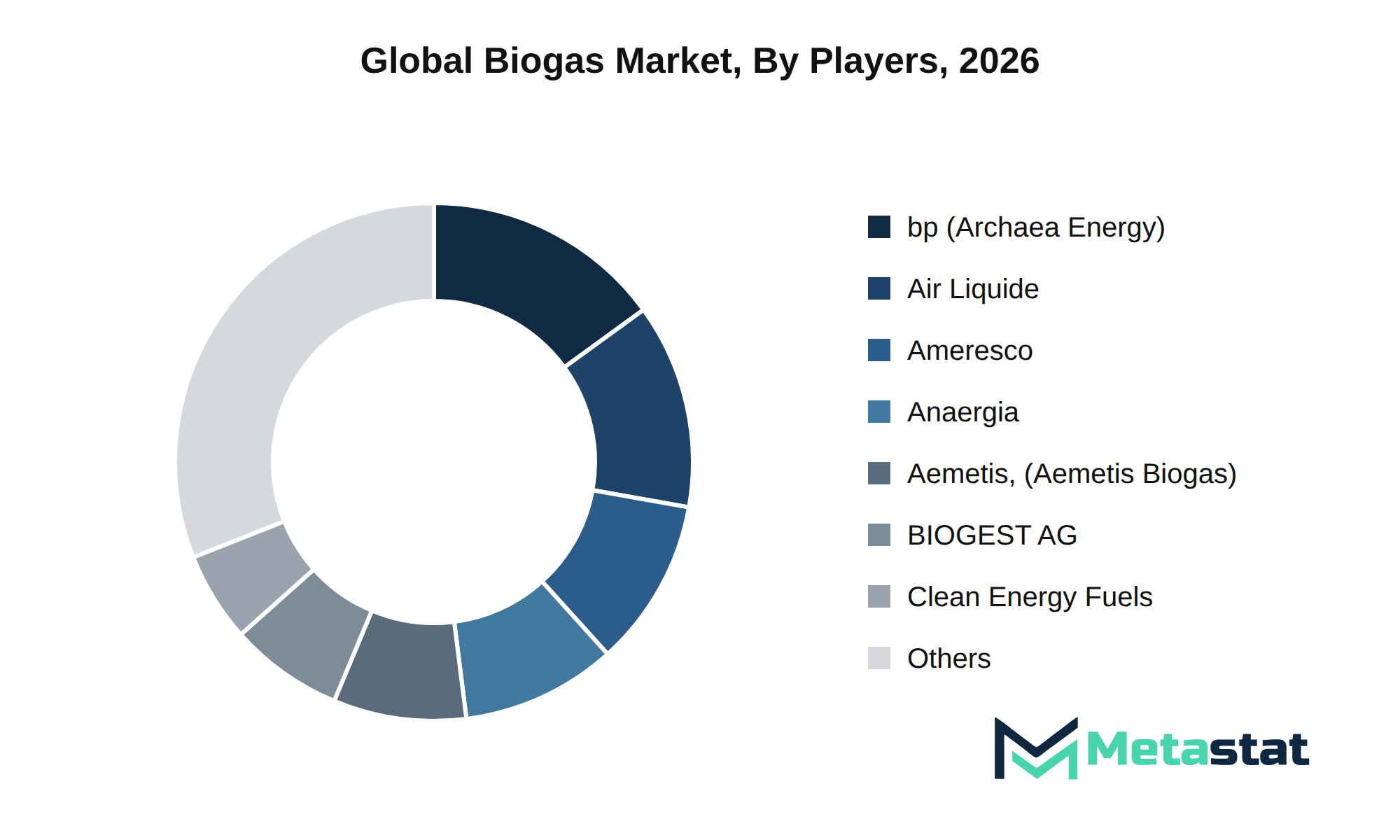
The competitive dynamics within the Biogas market reflect active engagement among leading players who pursue various strategies to enhance their market positions. Strategic consolidation through mergers and acquisitions captures attention, driven by key companies seeking to strengthen their capabilities and expand their geographical reach. For instance, firms like Aemetis, Inc. (Aemetis Biogas) and bp (Archaea Energy) focus on establishing strong positions within their respective segments, leveraging proprietary technologies and R&D pipelines to achieve product differentiation.
Many players emphasize strategic alliances and joint ventures to create partnerships that enhance innovation and market access. Companies including ENGIE and TotalEnergies SE actively engage in cross-industry partnerships to improve their service offerings within the Biogas market. This collaborative approach allows them to address challenges related to supply chain dominance and procurement leverage, driving operational efficiencies while optimizing pricing architectures.
The market landscape poses barriers to entry that affect new entrants, compelling them to innovate or differentiate their offerings significantly. Established brands like Clean Energy Fuels Corp. and Anaergia Inc. maintain strong customer retention strategies, which create switching costs that deter potential competitors. The future competitive outlook remains strong, with ongoing technological advancements and a focus on sustainable solutions set to shape strategic growth vectors in the coming years.
Market size is forecast to rise from USD 71.6 billion in 2025 to over USD 102.6 billion by 2033. The base case anticipates a growth trajectory reflecting a 4.6% compound annual growth rate (CAGR). Within this framework, several factors will influence market dynamics and future outcomes.
Macroeconomic conditions will shape overall demand, affecting sectors reliant on biogas, including agriculture, waste management, and energy generation. Economic cycles contribute to fluctuations in investment and operational commitments, further impacting demand across various industries.
The maturation of core industries adopting biogas drives operational efficiencies and encourages technological advancements. Next-generation technology integration, including improved digestion processes and adoption systems, is critical for enhancing productivity and output quality. Research and development (R&D) commercialization timelines influence the availability of new products and processes, enabling companies to meet evolving market needs.
Regulatory evolution plays a significant role in shaping market conditions. Compliance milestones and policy enforcement horizons create a framework that businesses navigate. These regulations often push for enhanced sustainability practices, driving demand for biogas solutions.
Geopolitical realignments and evolving trade corridors impact global supply chain shifts, affecting raw material availability and pricing. Strategic capital allocation directives focus on infrastructure commitments and capital expenditure (CapEx) investment vectors, promoting growth in biogas facilities and technology.
Emerging white-space opportunities signal unmet enterprise needs, indicating potential high-growth pockets within the biogas market. Identifying these areas guides companies in their strategic planning and product development efforts. Executive-level strategic imperatives determine how businesses adapt to changing conditions, ensuring long-term viability and competitiveness.
The future outlook for the biogas market presents a landscape rich with opportunities driven by technological innovation, regulatory changes, and evolving consumer preferences. Focusing on these strategic areas supports sustainable growth and operational success.
The report strategically identifies and profiles the key market players and analyses their core competencies in each sub-segment of the Biogas market.
Report Attributes | Details |
Study Period | 2021-2033 |
Base Year | 2025 |
Estimated Year | 2026 |
Forecast Period | 2026-2033 |
Historical Period | 2021-2025 |
Growth Rate | CAGR 4.6% from 2026 to 2033 |
Revenue Unit | USD billion |
Segmentation | By Feedstock, Process Technology, Application, Plant Capacity, and Region |
By Region | North America (By Feedstock, Process Technology, Application, Plant Capacity, and Country)
|
Europe (By Feedstock, Process Technology, Application, Plant Capacity, and Country)
| |
Asia Pacific (By Feedstock, Process Technology, Application, Plant Capacity, and Country)
| |
South America (By Feedstock, Process Technology, Application, Plant Capacity, and Country)
| |
Middle East and Africa (By Feedstock, Process Technology, Application, Plant Capacity, and Country)
|
Find answers to common questions about this report
The Biogas market size was valued at USD 71.6 billion in 2025.
The Biogas market is projected to grow at a CAGR of 4.6% during the forecast period from 2026 to 2033.
The North America Biogas market size is estimated to reach USD 19.5 billion by 2033.
The Feedstock segment leads the Biogas market, with a projected value of USD 26.6 billion by 2033. This segment's growth reflects a significant demand for agricultural residues and livestock manure because primary feedstock sources.
The Biogas market experiences growth driven by increasing sustainability efforts and the need for carbon footprint reduction. Investment in closed-loop systems to convert organic waste into biogas enhances resource efficiency and energy security while addressing stricter emission limits imposed on industries and municipalities.
Europe holds the dominant share of the Biogas market, accounting for 41 percent of the total market share. This region's strong position results from significant investments and advancements in biogas technologies and infrastructure.
Significant challenges restrain growth in the Biogas market, including rising capital investment requirements and escalating operating expenses. These factors create financial burdens and cautious investment strategies, limiting expansion opportunities. Economic uncertainties and geopolitical fragmentation further complicate market dynamics, impacting overall stability and profitability.
The biogas market benefits from a growing emphasis on sustainability, stricter emission limits, and substantial investments in infrastructure development. These factors enhance resource efficiency and operational cost reductions while aligning with corporate sustainability goals, driving the adoption of biogas technologies across various industries.
The Biogas market is estimated to reach a valuation of USD 102.6 billion by 2033.
Key players operating in the Biogas market include AB HOLDING SPA, Aemetis, Inc. (Aemetis Biogas), Air Liquide, Ameresco, Anaergia Inc., and ENGIE.
The analysts below cover Energy and Power research at Metastat Insights.
LEAD ANALYST
Utkarsh Khirodkar is a Lead Market Research Analyst at MetaStat Insight, specializing in market intelligence, technology sector assessments, and competitive strategy.

PRINCIPAL CONSULTANT - ENTERPRISE AI & EMERGING TECHNOLOGIES
Banking & Finance · Electronics and Semiconductor · Energy and Power · Healthcare IT · Information & Technology · Professional Services
Vijay Gunti is a Principal Consultant at MetaStat Insight, bringing over two decades of experience across enterprise digital transformation, technology strategy, and intelligent systems.

ENERGY & INFRASTRUCTURE INDUSTRY CONSULTANT
Automotive and Transportation · Electronics and Semiconductor · Energy and Power · Machinery & Equipment
Saurabh Vasant Ganvir consults for Energy & Infrastructure Industry at MetaStat Insight, specializing in renewable energy, solar EPC, and electric vehicle (EV) infrastructure markets.
When evaluating distributed energy resource management systems, standard research summaries tend to gloss over the operational differences between front-of-the-meter utility deployments and behind-the-meter industrial sites. The MetaStat Insight report addressed those distinctions directly, especially regarding software interoperability standards and grid interconnection backlogs. The five-year market sizing across regional transmission organizations provided actionable context for our grid modernization strategy.
Most industry reports on warehouse automation bundle autonomous mobile robots and fixed conveyor installations into the same top-level numbers, which complicates advisory work. This study split the market cleanly by payload tiers, navigation technology, and fleet management software layers. The regional forecast for Western Europe gave our team defensible adoption benchmarks when evaluating capital allocation for logistics clients, saving us days of secondary data scrubbing.
Analyzing the transition from natural gas to green hydrogen in iron ore reduction requires realistic infrastructure timelines. Meta stat insight supplied a detailed regional assessment of DRI plant conversion costs and scrap metal availability in North America and Western Europe. Their report carefully examined pellet quality specs and electrical grid access constraints without making oversimplified market assumptions. The research material served as a practical reference during internal technology roadmap discussions.
Explore related market intelligence reports worth reading alongside this one.