
LEAD ANALYST
Utkarsh Khirodkar is a Lead Market Research Analyst at MetaStat Insight, specializing in market intelligence, technology sector assessments, and competitive strategy.

Global Ceramic Wall Tiles Market Size, Share, By Product Type (Porcelain Tiles, Glazed Ceramic Tiles, Unglazed Ceramic Tiles, Mosaic Tiles and Others), By End Use (Residential, Commercial and Industrial), By Construction Type (New Construction and Renovation), By Size (20 * 20, 30 * 30, 30 * 60, 60 * 120 and Others), Industry Analysis, Growth, Trends, and Forecast, 2026-2033
MSI-5084
August, 2026
257 Pages
Historical
Base year
Forecast
Forecast period
Report Details
Comprehensive Market Analysis And Insights
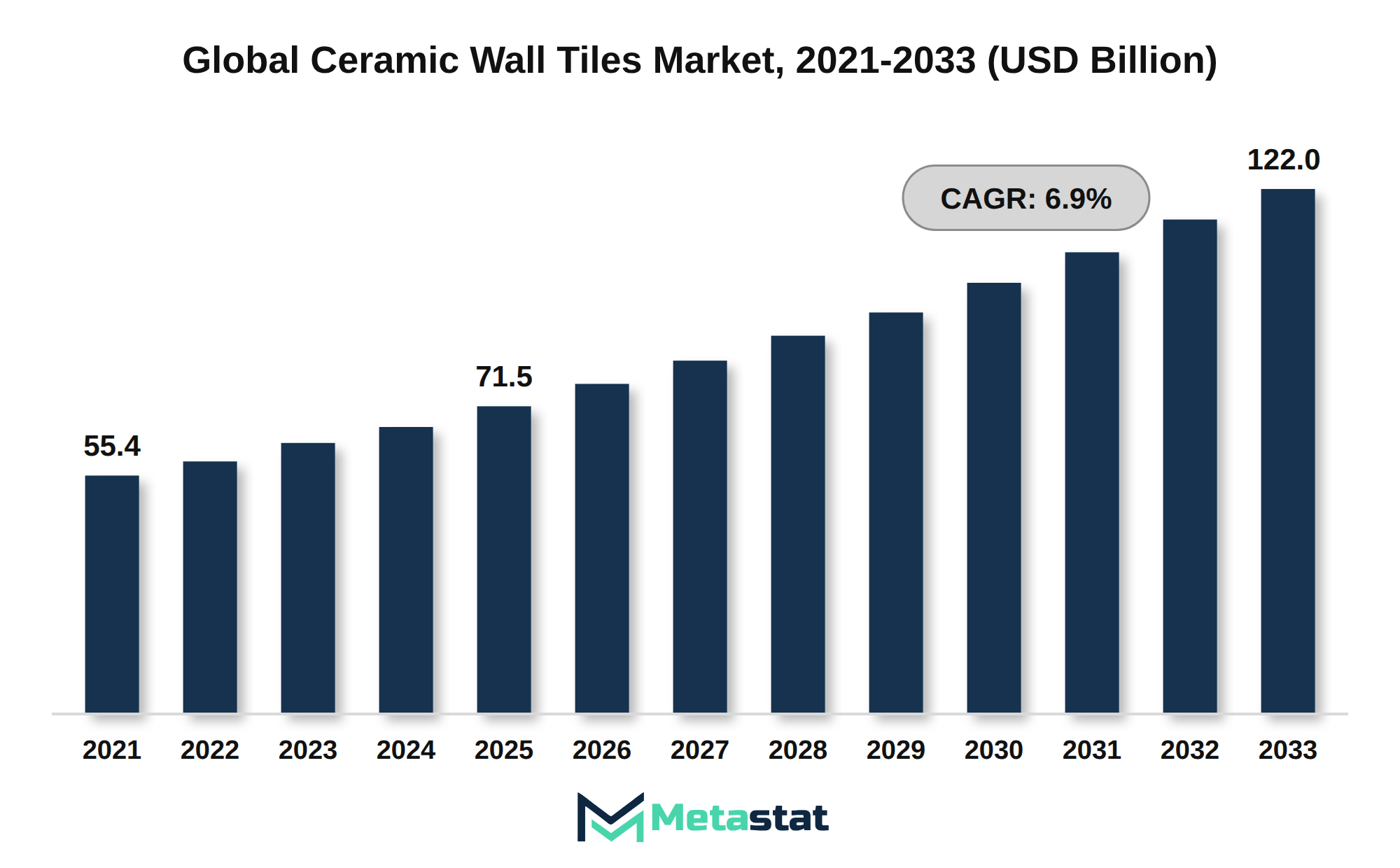
The global Ceramic Wall Tiles market was valued at USD 71.5 billion in 2025 and is projected to reach USD 122 billion by 2033, growing at a CAGR of 6.9% over the forecast period.
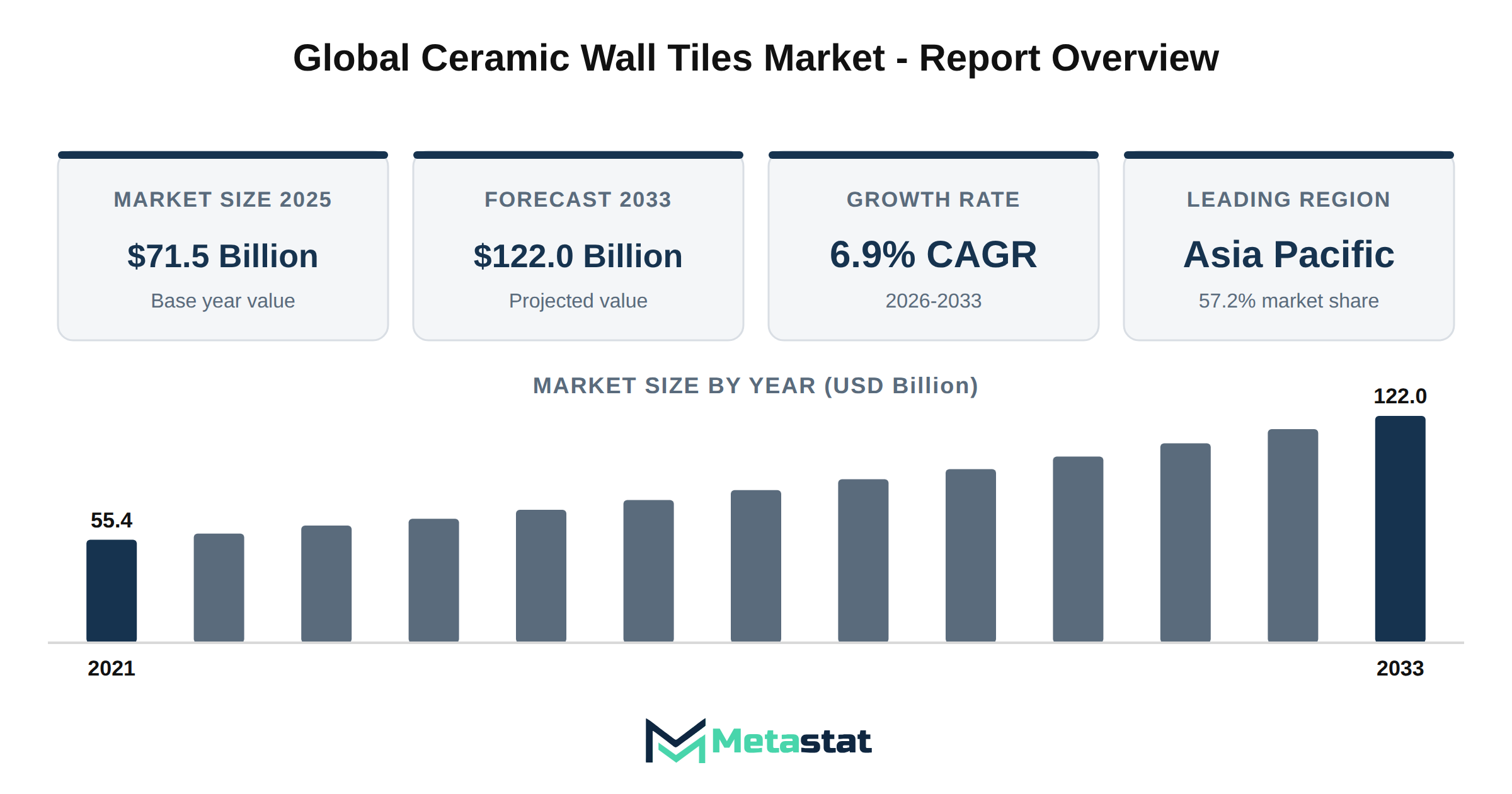
The Ceramic Wall Tiles market reached a value of USD 71.5 billion in 2025, marking a significant increase from USD 55.4 billion in 2021. The market is expected to grow to USD 122 billion by 2033, reflecting a compound annual growth rate (CAGR) of 6.9% throughout the forecast period from 2026 to 2033. This growth trajectory illustrates the increasing demand for ceramic wall tiles across various sectors, driven by evolving consumer preferences, urbanization, and infrastructure development.
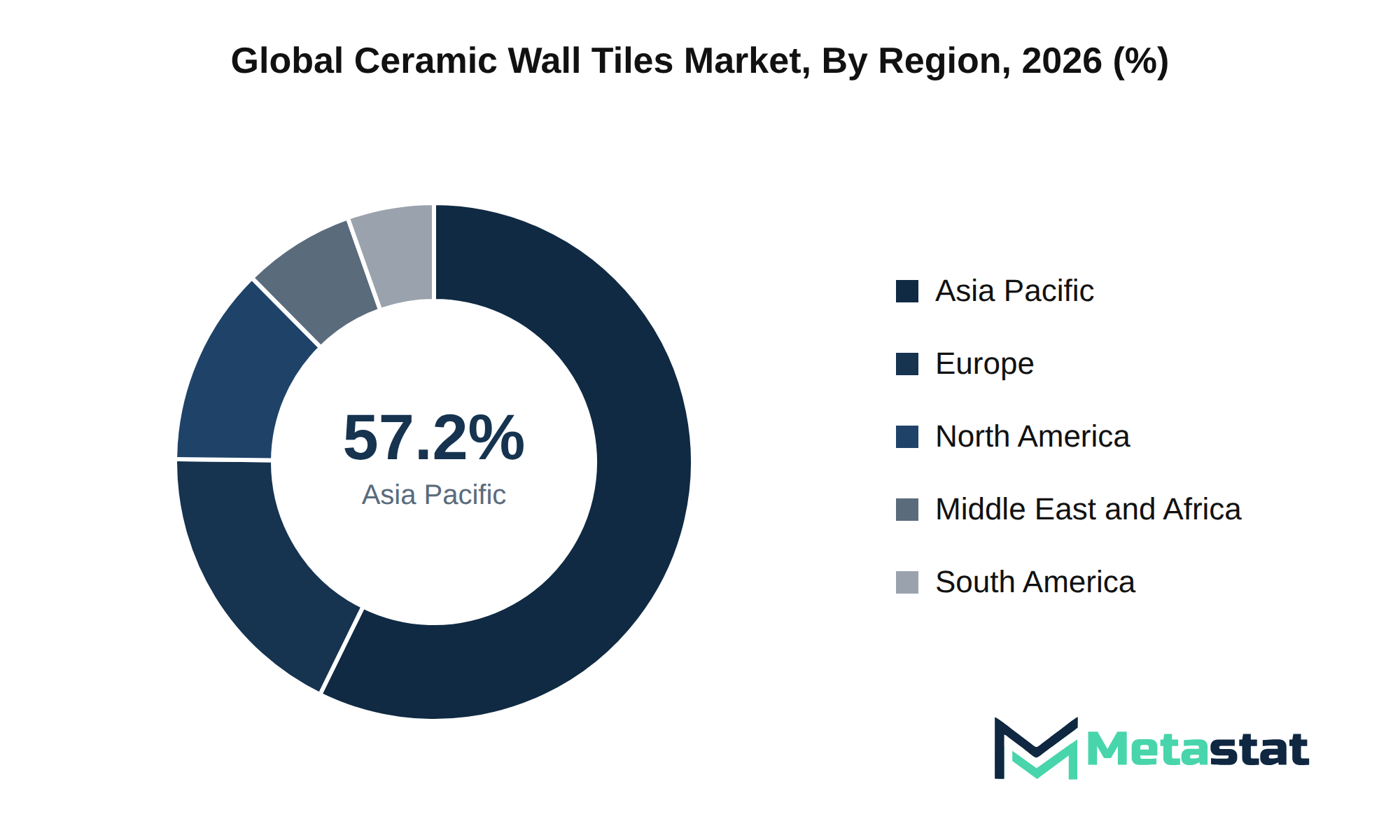
In terms of regional distribution, the market exhibits a diverse structure, with Asia Pacific holding the largest share at 57.2%, followed by Europe at 17.9% and North America at 12.4%. The dominance of the Asia Pacific region is attributed to rapid urbanization and a strong construction sector, particularly in countries like China and India. North America is projected to achieve a market value of USD 14.4 billion by 2033, with a CAGR of 6.9%, highlighting steadily growing demand for ceramic wall tiles.
By product type, porcelain tiles represent a significant segment, with expected growth from USD 29.7 billion in 2026 to USD 50 billion by 2033, demonstrating a CAGR of 7.7%. Glazed ceramic tiles are anticipated to reach USD 48.8 billion by 2033, with a CAGR of 6.3%. The residential end-use segment is experiencing strong growth, expected to rise from USD 50.8 billion in 2026 to USD 77.8 billion by 2033, with a CAGR of 6.3%. This trend indicates a strong preference for ceramic wall tiles in residential construction and renovation projects.
The Ceramic Wall Tiles market experiences significant growth driven by various factors, including increasing demand for aesthetically appealing and durable flooring solutions across residential and commercial sectors. Rapid urbanization and rising disposable incomes in emerging economies generate heightened interest in home improvement and renovation projects, further propelling market expansion.
Technological advancements in manufacturing processes contribute to enhanced product quality and design flexibility, allowing manufacturers to meet evolving consumer preferences. The introduction of innovative products, including eco-friendly tiles and customizable designs, strengthens competitive positioning within the market.
Sustainability continues to play a crucial role in shaping market dynamics. Manufacturers increasingly prioritize materials and processes that minimize environmental impact, aligning with global efforts toward decarbonization and a circular economy. This shift influences procurement strategies, prompting buyers to seek sustainable options while navigating regulatory compliance and standards.
Market fragmentation results from the presence of numerous players across various regions, each offering diverse product portfolios. This diversity drives competitive pricing and innovation, compelling firms to refine their market strategies to maintain relevance. Mergers and acquisitions among key players further alter the market landscape, creating opportunities for growth while enhancing capabilities and resource access.
Infrastructure investments in construction and renovation projects significantly impact the market, driving demand for ceramic wall tiles. Increased capital allocation toward residential and commercial developments highlights the importance of robust supply chain management and logistics architecture in meeting customer demands efficiently.
The future strategic outlook for the Ceramic Wall Tiles market remains positive, supported by ongoing investments in research and development. Firms are projected to focus on high-value recommendations that prioritize customer journey dynamics and innovative product offerings, ensuring alignment with market trends and consumer expectations.
The Ceramic Wall Tiles market benefits from favorable macroeconomic conditions, including an increase in global GDP and rising consumer spending. Strengthening economic growth stimulates demand in the construction and renovation sectors, which directly influences tile installation rates. Residential and commercial construction projects contribute significantly to market expansion, driven by heightened investment in real estate and infrastructure development.
Capital investment environments, characterized by low interest rates and increased venture funding, facilitate access to financing for construction projects. This financial support enables builders and homeowners to undertake renovations or new constructions, boosting tile demand. In addition, public-private spending power influences the market, driven by increased government budgets for infrastructure projects that lead to higher consumption of ceramic wall tiles.
Urbanization and changing demographics, including an increasing population and evolving lifestyle preferences, further enhance market growth. Consumers favor modern and aesthetically pleasing designs for homes and commercial spaces, prompting manufacturers to innovate. This trend aligns with the growing need for sustainable and durable materials, creating opportunities for ceramic wall tile suppliers to diversify their product offerings.
Overall, macroeconomic factors significantly shape the Ceramic Wall Tiles market, driving demand and creating an environment conducive to investment and innovation. This situation supports the continued growth trajectory of the market through 2033.
Shifting demographic patterns significantly influence the Ceramic Wall Tiles market. An aging population, particularly in developed regions, leads to increased demand for home renovations and upgrades, aligning with lifestyle changes that favor aesthetics and functionality. Urbanization trends contribute to higher housing demand, resulting in new construction projects, which directly boost ceramic tile consumption in residential and commercial sectors.
Young consumers prioritize aesthetics and sustainability in their purchasing decisions, driving a shift towards modern and eco-friendly materials. Digital transformation, marked by online shopping and virtual showrooms, enhances accessibility, enabling consumers to explore diverse product offerings. This behavioral change reinforces market expansion, driven by buyers increasingly seeking unique designs and environmentally responsible options.
A growing emphasis on home improvement projects and interior design trends enhances the market's attractiveness. The intersection of these demographic trends cultivates a robust environment for innovation, compelling manufacturers to diversify their product lines to meet evolving consumer preferences. The Ceramic Wall Tiles market is positioned for substantial growth, fueled by these dynamic demographic shifts.
Challenges related to regulatory compliance pose significant obstacles in the Ceramic Wall Tiles market. Tightening regulations around environmental standards impact manufacturing processes and increase operational costs for producers. Compliance with these regulations requires investments in cleaner technologies and materials, straining budgets and limiting growth potential.
In addition, the market faces hurdles from fluctuating macroeconomic conditions, including inflationary pressures that raise raw material costs. This situation constrains profit margins and deters new entrants from investing in the market. Supply chain disruptions further complicate the environment, causing delays in production and distribution, thereby affecting overall market performance.
Geopolitical instability influences trade dynamics, adding another layer of uncertainty that impacts the supply chain. This instability leads to resource scarcity, causing prices to surge. The resulting financial strain on manufacturers often results in reduced capacity to innovate or expand, hindering the market’s growth.
Technological obsolescence presents ongoing risks, particularly because existing manufacturing techniques fail to keep pace with advancements in materials and processes. The market's fragmented nature complicates adaptation, because smaller players struggle to compete with larger enterprises that invest heavily in new technologies. Rising workforce overhead and talent gaps further exacerbate challenges, limiting the skilled labor pool necessary for expansion and innovation.
These factors contribute to slower downstream demand within the Ceramic Wall Tiles market, leading to a maturation of the industry cycle. Market saturation in certain regions limits growth opportunities, compelling companies to seek differentiation through innovative products and strategic partnerships. The dynamics of these factors shape the competitive environment, influencing how businesses navigate the current situation.
The Ceramic Wall Tiles market faces significant challenges from geopolitical fragmentation, which disrupts supply chains and creates uncertainty in material procurement. Trade deficits and tariff friction contribute to volatility in costs and availability of essential raw materials. Such circumstances undermine the operational stability of suppliers and lead to pricing compression across the market.
Technological disruptions present additional challenges by complicating research and development integrations among manufacturers. These complexities hinder innovation cycles, resulting in stalled product development and delays in bringing new offerings to market. Supply chain instability exacerbates these issues, with logistics disruptions contributing to longer lead times and increased costs.
The market encounters pressures from rising input costs, which stem from fluctuating prices of feedstock and components. These conditions necessitate a reevaluation of pricing strategies among manufacturers to maintain profit margins while remaining competitive. Alongside this, workforce skill gaps arise owing to automation displacing traditional roles, leading to talent retention pressures and impacting overall productivity.
Environmental lifecycle footprints and sustainability demands further complicate the market landscape. Companies face heightened expectations for decarbonization initiatives and compliance with tightening global standards, which require substantial investments in technology and processes. Addressing these demands results in lost market share and erosion of brand reputation in an increasingly eco-conscious consumer base.
The ongoing evolution of downstream demands poses challenges, with market saturation and substitution vector pressures impacting traditional sales channels. Manufacturers adapt to shifting consumer preferences and enhance product offerings to remain relevant in this dynamic environment. Ultimately, these factors collectively shape the competitive landscape of the Ceramic Wall Tiles market, necessitating strategic responses to navigate these complexities.
The Ceramic Wall Tiles market is positioned to capitalize on the increasing emphasis on sustainability and eco-friendly materials. Rising consumer awareness regarding environmental impact drives demand for products that employ sustainable manufacturing practices and materials. This trend particularly impacts the residential and commercial segments, where buyers seek efficient and environmentally responsible solutions.
Infrastructure modernization initiatives across various regions enhance the market landscape by encouraging the adoption of advanced ceramic wall tiles. Investments in construction projects reflect a growing preference for innovative materials that offer durability and aesthetic appeal. The integration of technology in manufacturing processes further supports the development of high-performance tiles that align with strict sustainability standards.
Geographical expansion into emerging markets results in additional opportunities for the Ceramic Wall Tiles market, particularly in Asia Pacific and South America. Rapid urbanization and infrastructure projects in these regions create demand for ceramic wall tiles, driven by builders and developers prioritizing quality and design in their projects.
The market experiences technological disruptions that facilitate digital transformation and innovation in design. Enhanced digital procurement processes streamline the purchasing experience for buyers, aligning with evolving consumer behaviors. This shift enables market participants to connect more effectively with customers, offering personalized solutions that cater to specific design preferences.
Next-generation innovations, including sustainable production methods and reduced waste processes, enhance the operational efficiency of manufacturers. These advancements support the transition toward greener practices, aligning with global sustainability imperatives and attracting environmentally conscious buyers.
Strategic consolidation among leading players in the industry strengthens market positioning and allows for diversified product offerings. Mergers and acquisitions facilitate access to new technologies and markets, driving the development of innovative products that meet the changing demands of consumers.
Overall, the Ceramic Wall Tiles market stands to benefit from these emerging trends, aligning product offerings with the increasing demand for sustainable solutions and technological advancements, while responding effectively to shifting consumer preferences.
The Global Ceramic Wall Tiles market is segmented based on Product Type, End Use, Construction Type, and Size.
Valued at USD 29.7 billion in 2026, the Porcelain Tiles segment is projected to reach USD 50 billion by 2033, achieving a CAGR of 7.7% during the forecast period. Increasing consumer preference for durable and aesthetically appealing flooring options drives significant demand within this segment. The rise in residential and commercial construction activities supports this demand, driven by contractors and homeowners prioritizing the longevity and low maintenance requirements of porcelain tiles.
Technological advancements contribute to the expansion of the Porcelain Tiles segment, with innovations enhancing product performance and design versatility. Manufacturers increasingly invest in next-generation production techniques, allowing for a wider array of designs and finishes that cater to evolving consumer tastes. These advancements facilitate the adoption of porcelain tiles in diverse applications, from high-end residential installations to commercial spaces that demand robustness and style.
End-use dynamics play a crucial role in shaping the market landscape. The residential sector, accounting for a significant share, fuels growth through renovations and new builds that emphasize design and functionality. Meanwhile, the commercial sector shows a notable increase in adoption, driven by an emphasis on aesthetics and durability in public spaces. The combination of these factors positions the Porcelain Tiles segment because a key player within the overall Ceramic Wall Tiles market.
Pricing volatility presents challenges for manufacturers, who face fluctuating raw material costs that impact margins. Strategic sourcing of materials and efficient production processes become essential for maintaining competitiveness in the market. The threat of substitution from alternative flooring materials necessitates continuous innovation and marketing efforts to highlight the unique benefits of porcelain tiles.
The Porcelain Tiles segment stands poised for growth due to sustained demand, technological advancements, and dynamic end-use applications. Strategic opportunities exist for players that effectively navigate the challenges of cost structures and competitive pressures, ensuring that they capture market share in the evolving landscape of the Ceramic Wall Tiles market.
Growth in the Glazed Ceramic Tiles segment aligns with increasing demand for versatile and aesthetically appealing flooring solutions in residential and commercial applications. Expanding construction and renovation activities drive this demand, particularly in urban areas experiencing population growth. The segment is projected to reach USD 48.8 billion by 2033, at a CAGR of 6.3% during the forecast period. Technological advancements enhance product capabilities, introducing innovative designs and improved durability that attract a broader customer base.
Regulatory compliance regarding sustainability and environmental impact influences manufacturing processes, encouraging suppliers to adopt eco-friendly practices. This shift attracts environmentally conscious consumers, further supporting growth in the segment. Competitive pricing structures and the availability of diverse styles contribute to the segment's expansion, with significant opportunities in emerging markets. Continuous product evolution, including the introduction of next-generation upgrades, strengthens the segment's position within the Ceramic Wall Tiles market.
The unglazed ceramic tiles segment within the Ceramic Wall Tiles market is projected to reach USD 8.5 billion by 2033. Growing demand for unglazed ceramic tiles arises from their aesthetic appeal and functional characteristics, making them suitable for various applications. Increased adoption in residential and commercial sectors fuels this segment's growth, driven by a preference for eco-friendly and sustainable construction materials.
Technological maturation leads to enhanced production processes, enabling manufacturers to meet the rising demand efficiently. Innovations in design and durability attract consumers and expand the market's reach. End-use dynamics influence consumer preferences, with a shift towards natural finishes that unglazed tiles provide.
Regulatory compliance standards related to sustainability and environmental impact encourage suppliers to innovate, enhancing product offerings. Pricing volatility influenced by raw material sourcing pressures impacts production costs. Strategic opportunities for investment in sustainable practices arise. Overall, the unglazed ceramic tiles segment demonstrates strong potential for expansion within the broader market.
Mosaic Tiles experience robust demand attributed to their aesthetic appeal and versatility in various applications. This segment is particularly popular in residential and commercial installations, where unique designs add visual interest. The growth at a CAGR of 7.6% during the forecast period reflects strong consumer preferences for personalized and decorative flooring solutions.
Technological advancements in manufacturing processes have enhanced the quality and durability of mosaic tiles, further driving adoption. Buyers benefit from increased design options and improved performance characteristics, positively influencing market dynamics. The integration of eco-friendly and sustainable materials within product offerings aligns with growing consumer awareness regarding environmental impact, creating new opportunities within the market.
Continued expansion in the construction sector supports the mosaic tiles segment, driven by rising investments in residential and commercial projects. Urbanization trends increase demand, with developers seeking innovative flooring solutions to differentiate their offerings. The market adapts to these shifts by providing mosaic tiles that cater to evolving end-use preferences and consumption patterns.
Competition within the market intensifies, with several key players actively pursuing strategic partnerships and technological enhancements to maintain market presence. This competitive environment leads to pricing pressures but encourages innovation, allowing the segment to remain resilient against potential economic fluctuations. Mosaic tiles represent a significant opportunity for growth, contributing to the overall expansion of the Ceramic Wall Tiles market.
Consumer preferences increasingly shift towards unique and customized designs, influencing the Others sub-segment within the Ceramic Wall Tiles market. Diverse applications in residential, commercial, and industrial settings drive demand for various tile types that do not fall into standard categories. This segment experiences expansion driven by technological advancements that enhance product quality and aesthetic appeal.
Innovative production processes enable the development of new materials and designs, prompting manufacturers to explore creative avenues in tile production. Emerging trends in interior design, including eco-friendly materials and sustainable practices, shape product evolution within this sub-segment. The market embraces next-generation upgrades, while consumer awareness of environmental impact guides purchasing decisions.
Regulatory compliance standards influence the Others sub-segment, particularly regarding sustainability certifications and safety regulations. These compliance measures reflect growing consumer demand for eco-friendly products, compelling manufacturers to align their offerings with market expectations. Price volatility and margin pressures within the broader market influence pricing strategies and product positioning specific to this sub-segment.
Strategic opportunities arise because manufacturers identify white space in the market, allowing for the introduction of niche products that cater to specific consumer needs. Raw material sourcing and supply chain resilience play crucial roles in ensuring product availability and maintaining quality standards. Overall, innovative strategies and responsiveness to consumer preferences will continue to define the future trajectory of the Others sub-segment in the Ceramic Wall Tiles market.
Valued at USD 50.8 billion in 2026, the Residential segment is projected to reach USD 77.8 billion by 2033, at a CAGR of 6.3% during the forecast period. Rising demand for residential properties, driven by urbanization and increasing disposable incomes, fuels the growth of this segment. Homeowners prioritize aesthetics and durability in their choice of flooring materials, leading to a preference for ceramic wall tiles due to their versatile designs and ease of maintenance. Trends favoring eco-friendly construction materials support the adoption of ceramic tiles, which feature sustainable production processes.
Technological advancements contribute to the evolution of ceramic wall tiles, enabling manufacturers to offer improved products that enhance performance and design. Innovations in printing technologies allow for intricate designs that mimic natural stones and other materials, appealing to a broader range of consumer preferences. These developments position the market favorably, attracting investment from established and emerging players keen to capitalize on evolving consumer tastes. The ceramic wall tiles market is expected to experience sustained growth, with the Residential segment leading the way.
Demand for Ceramic Wall Tiles in the commercial sector is driven by the expansion of various industries, including retail, hospitality, and office spaces. Increased investment in commercial construction projects and renovations significantly influences this segment's growth. In urban areas, the rise in commercial establishments and the need for durable, aesthetically pleasing surfaces enhance the demand for wall tiles.
Technological advancements in manufacturing processes contribute to product evolution, allowing for the production of high-quality tiles that meet diverse design preferences. Innovations in materials and finishes enable manufacturers to cater to specific commercial applications, creating opportunities for market penetration. Sustainability trends further enhance demand, driven by businesses seeking environmentally friendly options that align with corporate social responsibility goals.
Commercial segment is estimated to reach USD 37.8 billion by 2033, at a CAGR of 8.1% during the forecast period. Supply chain resilience ensures availability, while raw material sourcing strategies affect pricing stability. Price volatility linked to fluctuating raw material costs impacts profit margins, compelling manufacturers to adopt efficient cost structures.
Regulatory compliance standards governing building materials significantly shape market dynamics. Enterprises operating within the commercial sector adhere to these standards, influencing product certifications and adoption rates. Shifts in consumption patterns indicate a growing preference for customized and unique designs, propelling demand for innovative ceramic wall tiles.
Strategic opportunity windows emerge, driven by market players focusing on enhancing product offerings and expanding distribution channels. Companies that effectively leverage technological advancements and align their strategies with the evolving needs of the market achieve sustained growth and competitive advantages.
Industrial applications for ceramic wall tiles demonstrate increasing demand driven by growth in the construction and manufacturing sectors. Significant investments in infrastructure development, particularly in emerging markets, support this trend. Industrial facilities prioritize durable and resistant materials, resulting in greater reliance on ceramic wall tiles, which offer longevity and performance in demanding environments.
Valued at USD 6.3 billion by 2033, the segment reflects strong adoption of innovative designs and finishes, appealing to manufacturers seeking to enhance operational efficiency and aesthetic appeal within their facilities. The market evolves with advancements in production techniques, resulting in improved product quality and expanded design options.
Regulatory compliance standards influence the segment, encouraging manufacturers to invest in materials that meet safety and environmental regulations. Compliance with these standards enhances market penetration, particularly among industrial buyers focused on sustainability and responsible sourcing. The industrial ceramic wall tiles segment presents strategic opportunities for suppliers aiming to capture market share through differentiated offerings and tailored solutions.
Pricing volatility within the raw materials market impacts cost structures for ceramic wall tiles, challenging manufacturers to optimize their supply chains. Enhanced supplier relationships and strategic sourcing initiatives contribute to improved cost management, allowing the market to remain competitive amid fluctuating material prices. Industrial applications expand, aligning the segment's growth trajectory with broader trends in construction and industrial design.
Current trends in the Ceramic Wall Tiles market indicate a significant focus on new construction projects. Increased urbanization and infrastructure development drive demand for ceramic wall tiles, aligning with the global emphasis on modern housing and commercial spaces. New construction activities require durable and aesthetically pleasing materials, making ceramic wall tiles a preferred choice for builders and developers.
The transition towards energy-efficient and sustainable construction practices influences tile selection. The market sees heightened interest in environmentally friendly materials, prompting manufacturers to innovate and provide products that meet these rising standards. Ceramic wall tiles undergo continuous evolution to incorporate advanced technologies that ensure quality and sustainability.
Factors including architectural trends and consumer preferences shape the direction of new construction. A growing preference for stylish designs and diverse textures compels suppliers to enhance their offerings, ensuring they meet market expectations. This expansion of product variety drives competition and encourages greater investment in research and development within the sector.
Regulatory compliance standards related to construction materials further impact the market. Stricter regulations encourage manufacturers to adopt innovative solutions that fulfill safety and environmental criteria. This shift enhances product quality and promotes industry growth, driven by builders favoring compliant materials for new projects.
Emerging markets contribute to the evolving landscape of new construction. Rapid economic development in regions including Asia Pacific supports increased investments in residential and commercial properties, thereby uplifting demand for ceramic wall tiles. The market's resilience against potential disruptions strengthens its position, attributed to manufacturers focusing on reliable raw material sourcing and adaptive supply chains.
Continued advancements in technology play a significant role in shaping product evolution within the market. Innovations including digital printing and enhanced glazing techniques allow for the creation of unique designs and finishes. These upgrades cater to the demand for customization in new construction projects, driving consumer interest and enhancing market growth potential.
Market dynamics surrounding renovation and replacement significantly influence the Ceramic Wall Tiles market. Increasing urbanization and home improvement activities drive demand owing to homeowners and investors seeking to upgrade aesthetics and functionality. Renovation projects often prioritize durable materials, with ceramic wall tiles offering a blend of longevity and design versatility, appealing to a wide range of consumers.
Technological advancements contribute to segment expansion, enabling the development of innovative tile designs and finishes that enhance visual appeal. Enhanced adhesion technologies and improved surface treatments increase the usability of ceramic tiles in various environments, particularly in high-moisture areas including kitchens and bathrooms. These advancements strengthen competitive positioning against alternative materials.
Consumer preferences increasingly reflect a desire for sustainable and low-maintenance options, highlighting the environmental benefits of ceramic wall tiles. The industry responds with products that incorporate recycled materials and environmentally friendly manufacturing processes, reinforcing market growth within this segment.
Regulatory compliance and certification requirements play a role in shaping the market landscape. Adherence to standards ensures product quality and safety, building consumer confidence and driving adoption rates. This aspect remains crucial in maintaining market integrity, especially in regions with stringent building codes.
The renovation and replacement segment experiences heightened activity amid growing disposable income levels and an expanding middle class. These factors allow more consumers to invest in home improvements, stimulating demand for ceramic wall tiles. Economic stability and favorable housing market conditions enhance opportunities for this segment.
Adoption of 20 * 20 ceramic wall tiles aligns with consumer preferences for versatile and compact design solutions. This size offers practicality, making it suitable for various applications, including residential and commercial spaces. Market trends indicate a growing inclination towards smaller tile formats, driven by their ease of installation and ability to create intricate patterns.
Technological advancements facilitate the production of high-quality 20 * 20 tiles, enhancing their durability and aesthetic appeal. Manufacturers invest in innovative processes to improve color retention and surface finish, ensuring tiles meet evolving design standards. This trend contributes positively to the overall market's competitiveness.
Demand dynamics reflect a shift towards eco-friendly products, with a segment of consumers prioritizing sustainable materials. Regulatory compliance standards drive manufacturers to adopt greener practices, further boosting the appeal of 20 * 20 tiles. The market benefits from this emphasis on sustainability, because consumers are more inclined to select products that align with their environmental values.
Cost structures for producing smaller tiles demonstrate resilience, despite fluctuations in raw material prices. Manufacturers leverage strategic sourcing and optimize supply chains to mitigate potential pressures on margins. This adaptability enhances the market's ability to cater to diverse customer needs while maintaining profitability.
Future opportunities for the 20 * 20 segment arise from the expanding renovation market. Homeowners invest in renovations, seeking cost-effective and stylish options. This trend is expected to support the growth of the ceramic wall tiles market, with 20 * 20 tiles playing a significant role in modernizing spaces.
Consumer preferences for floor and wall coverings reflect a growing inclination towards the 30 * 30 size in ceramic tiles, driven by the balance of aesthetics and functionality. This size fits seamlessly into various interior designs, meeting demands for both traditional and contemporary styles. The emergence of technological advancements in tile manufacturing allows for improved durability and precision in design, enhancing the appeal of this format.
Residential construction projects increasingly favor the 30 * 30 size, aligning with trends emphasizing open spaces and cohesive design elements. Architects and designers recognize the versatility of this tile size, using it in multiple applications from kitchens to bathrooms. Developers seek to differentiate their projects, and the incorporation of 30 * 30 tiles contributes to unique selling propositions.
Price stability in the market influences the adoption of the 30 * 30 tiles, with competitive pricing strategies strengthening this segment. Consumers express willingness to invest in quality products, understanding the long-term benefits of ceramic tiles in terms of maintenance and longevity. The steady demand for the 30 * 30 size reflects positively on market performance.
While sustainability becomes a priority, manufacturers increasingly emphasize eco-friendly practices in sourcing materials for the 30 * 30 tiles. This shift addresses consumer concerns regarding environmental impact, enhancing the market's reputation. Regulatory compliance with environmental standards further enhances the appeal of this size within the wider market.
Investment in design innovations continues to stimulate interest in the 30 * 30 segment, with companies exploring new textures and finishes that expand the product offering. These advancements attract a broader customer base and drive competition within the Ceramic Wall Tiles market. The variety of design possibilities positions the 30 * 30 tiles because a key player in future market developments.
In the Ceramic Wall Tiles market, the 30 * 60 sub-segment experiences increasing demand driven by its versatility and aesthetic appeal in both residential and commercial applications. Buyer preferences for larger tile sizes contribute to the adoption, particularly in spaces requiring a smooth and expansive look. The segment benefits from technological advancements in manufacturing processes, enabling improved designs and durability of tiles.
Consumer interest in easy maintenance and contemporary design further fuels the growth of this sub-segment. The trend towards minimalistic interiors encourages the use of larger tiles, creating a smoother visual flow. Ongoing developments in materials and production techniques enhance aesthetic qualities, catering to the demands of a discerning customer base.
Regulations and certifications surrounding environmental sustainability impact the 30 * 60 segment, prompting manufacturers to adopt eco-friendly practices. These compliance standards align with the preferences of environmentally conscious consumers, increasing market opportunities. Overall, the 30 * 60 sub-segment within the Ceramic Wall Tiles market is poised for expansion, reflecting the evolving needs of various end-use sectors.
Consumer preferences increasingly favor larger tile formats, driving interest in the 60 * 120 segment within the Ceramic Wall Tiles market. This size offers aesthetic versatility and practical advantages, including reduced installation time and fewer grout lines. Increased adoption in residential and commercial sectors stems from the segment's ability to create sophisticated looks in various applications, supporting long-term demand.
Technological advancements in manufacturing processes enhance the performance and design options of 60 * 120 tiles. Innovations in printing and glazing techniques improve durability and visual appeal, attracting buyers seeking high-quality finishes. Product evolution reflects a combination of modern aesthetics and functional requirements, ensuring alignment with contemporary design trends, which is expected to strengthen market adoption.
End-use dynamics play a critical role in shaping demand for this segment. Growth in new construction and renovation projects fuels market interest, with homeowners and designers opting for larger tiles to achieve a more unified look. The 60 * 120 segment benefits from this trend, meeting rising expectations for both style and practicality, thereby expanding the addressable base.
Pricing volatility and margin pressures remain significant considerations within the market. Fluctuations in raw material costs influence the overall pricing strategy for manufacturers, impacting profit margins. Maintaining competitive pricing while ensuring high-quality products presents challenges and opportunities for businesses operating in this segment, affecting their operational strategies.
Strategic opportunity windows exist for manufacturers to innovate further and expand their offerings within the 60 * 120 segment. Identifying and addressing the unique needs of different end users will facilitate market penetration and growth. Continuous investment in product development and marketing will be essential for capitalizing on emerging trends and consumer preferences, reinforcing the segment's position in the market.
Increasing interest in diverse sizes of ceramic wall tiles drives demand for the "Others" sub-segment. Unique applications and creative designs appeal to end users seeking to differentiate their spaces. Current trends reflect a preference for tiles that transcend traditional dimensions, encouraging innovation in production processes. This segment attracts attention due to its capability to accommodate custom designs and artistic expressions, reflecting broader consumer trends towards personalization.
Technological advancements contribute to the evolution of this segment. Manufacturers leverage improved techniques to produce tiles in non-standard sizes, enhancing design flexibility. This innovation caters to architects and designers aiming to push creative boundaries in residential and commercial projects. Adoption of these unique sizes is expected to support growth within the market while addressing the needs of niche consumers.
Regulatory compliance influences the landscape of the "Others" segment. Standards regarding sustainability and safety affect manufacturers' approaches to production. Companies that prioritize adherence to these standards gain competitive advantages, meeting increasing consumer demand for eco-friendly options. This focus positions the segment for growth, appealing to environmentally conscious buyers.
Supply chain resilience remains significant in the context of raw material sourcing and logistics. Companies that establish strong relationships with suppliers mitigate risks associated with sourcing unconventional materials. This strategy enhances operational efficiency, allowing for a responsive approach to market changes. With strategic investments in supply chain robustness, the segment adapts to evolving consumer preferences.
Based on geography, the Global Ceramic Wall Tiles market is divided into North America, Europe, Asia-Pacific, South America, Middle East, and Africa.
North America demonstrates significant potential within the Ceramic Wall Tiles market, projected to reach USD 14.4 billion by the end of 2033, expanding at a CAGR of 6.9% during the forecast period. The region's contribution to the global market stood at 12.4% in 2025, reflecting a solid presence in the industry.
Key demand drivers in North America include a rise in remodeling activities and construction projects, particularly in the residential sector. The growing tendency for modern aesthetics among homeowners increases the preference for stylish and durable ceramic wall tiles. This trend is particularly evident in the United States, Canada, and Mexico, where consumers prioritize quality and design.
Emerging market front-runners, particularly in urban areas, exhibit a strong inclination towards innovative tile designs. Continuous infrastructure modernization and an emphasis on energy-efficient buildings contribute to this trend. Consequently, suppliers and manufacturers increasingly focus on product differentiation to capture evolving demand.
Regional competitive dynamics highlight several domestic market participants, driving vendor consolidation trends and increasing competitive pressure. Companies including Mohawk Industries, Inc. and Dal-Tile, LLC (Daltile) contribute to the market, enhancing their positions through strategic partnerships and localized manufacturing capabilities.
Localized procurement dynamics demonstrate a shift towards regional supply chains, with initiatives emphasizing nearshoring and localized manufacturing densities. Such strategies enable companies to reduce lead times and enhance responsiveness to market changes, further strengthening their competitive stance in the Ceramic Wall Tiles market.
High-value replacement cycles in residential and commercial sectors drive incremental growth vectors. The demand for ceramic wall tiles continues to evolve, influenced by factors including consumer preferences for sustainable materials and aesthetic versatility, ensuring a robust outlook for the market in the coming years.
Europe accounts for 17.9% of the global Ceramic Wall Tiles market in 2025. Key demand drivers include a strong emphasis on design aesthetics and sustainable living, which align with consumers in Germany, France, the UK, Italy, Spain, and Russia. These countries exhibit increasing investments in infrastructure modernization and renovation projects, contributing to growth in the residential and commercial segments.
The region's mature market dynamics highlight a robust replacement cycle for older tiles, further fueling market expansion. Domestic market participants leverage localized manufacturing densities and supply chain regionalization to enhance their competitive positions. This strategic approach facilitates faster response times and better alignment with consumer preferences.
Emerging market front-runners in Europe capitalize on cultural nuances and localized procurement dynamics, ensuring tailored solutions for diverse consumer segments. While energy grid resiliency and local infrastructure readiness improve, opportunities for market penetration and expansion intensify. Overall, the Ceramic Wall Tiles market in Europe is projected to experience steady growth through increased demand and evolving consumer expectations.
Asia Pacific commands a dominant share of 57.2% in the global Ceramic Wall Tiles market in 2025. The region's rapid urbanization and economic growth fuel demand across various sectors, particularly in countries like China, India, and Southeast Asia. Residential construction projects drive significant volumes, reflecting a shift towards modern living spaces and aesthetic enhancements. In South Korea and Japan, a focus on quality and design influences tile selection, leading to emerging trends in innovative product offerings.
Infrastructure modernization projects across Asia Pacific significantly contribute to market expansion. Government initiatives targeting urban development and housing improvements create substantial opportunities for ceramic wall tile manufacturers. The shift towards sustainable building practices and energy-efficient solutions spurs the adoption of eco-friendly tiles, aligning with global sustainability goals.
In terms of supply chain dynamics, localization emerges because a key theme within Asia Pacific. Manufacturers increasingly establish production facilities closer to their target markets, reducing lead times and costs associated with long-distance shipping. This trend enhances regional competitiveness and improves responsiveness to consumer demands.
The market landscape remains competitive, with several domestic players vying for market share. Companies including Asian Granito India Limited and Mohawk Industries, Inc. actively pursue technological advancements and product diversification to meet evolving consumer preferences. While regional procurement dynamics shift, collaboration with local suppliers strengthens market positioning and ensures product availability.
Continuous innovation in tile sizes, designs, and finishes caters to diverse consumer tastes across Asia Pacific. The Ceramic Wall Tiles market is expected to see incremental growth driven by the introduction of new collections reflecting cultural nuances and aesthetic trends. Overall, the region's strong economic fundamentals and dynamic market conditions position it favorably for sustained growth in the ceramic wall tile sector.
In South America, the Ceramic Wall Tiles market experiences distinct dynamics influenced by local economic conditions, consumer preferences, and infrastructure developments. Brazil and Argentina represent primary markets for ceramic wall tiles, with residential applications driving demand. The region's market share in 2025 stands at 5.4% of the global total, reflecting ongoing growth in construction and renovation activities.
Infrastructure modernization enhances market potential. Increased investment in residential and commercial projects creates opportunities for ceramic wall tiles. Local compliance mandates and cultural preferences influence buying behaviors, leading to a preference for aesthetically appealing designs in tile selections. The market in South America is projected to benefit from foreign direct investment flows, promoting localized manufacturing densities and supporting competitive pricing strategies.
Emerging domestic market participants, including regional manufacturers, contribute to the competitive landscape by offering innovative designs and sustainable products. Demand for ceramic wall tiles in South America aligns with broader trends in home improvement and architectural aesthetics, creating avenues for growth in the coming years. Renovation cycles and evolving consumer tastes will shape the market's expansion trajectory.
Market dynamics in the Middle East and Africa show a growing interest in ceramic wall tiles, driven by rising urbanization and infrastructure development. Countries including Saudi Arabia and the UAE invest heavily in construction projects, facilitating demand for high-quality ceramic wall tiles. South Africa's expanding residential and commercial sectors contribute to increasing adoption rates within the region.
Localized manufacturing capacities are on the rise, supported by foreign direct investment (FDI) inflows aimed at enhancing production efficiency. This trend reflects a shift toward regional supply chains and localized procurement dynamics, responding to the market's evolving needs. The market benefits from strategic entry barriers that promote competition among domestic players.
Emerging market front-runners in the region exhibit potential for significant growth in the ceramic wall tiles market. The gradual transition from traditional materials to ceramic wall tiles enhances aesthetic appeal and durability in construction. Various segments within the market, including residential and commercial, demonstrate different growth trajectories, presenting opportunities for vendors to capitalize on diverse consumer preferences.
Resource availability and energy grid resiliency contribute to the operational effectiveness of ceramic tile manufacturers. Increased infrastructure readiness supports the expansion of the market, attracting investments geared toward innovation and sustainability. The competitive landscape continues to evolve, driven by domestic market leaders consolidating and adapting to changing consumer behaviors and preferences.
Overall, the Middle East and Africa's ceramic wall tiles market is positioned for incremental growth, driven by modernization efforts and a commitment to enhancing local manufacturing capabilities. Robust demand for ceramic wall tiles aligns with broader economic trends, marking the region because a key player in the global market.
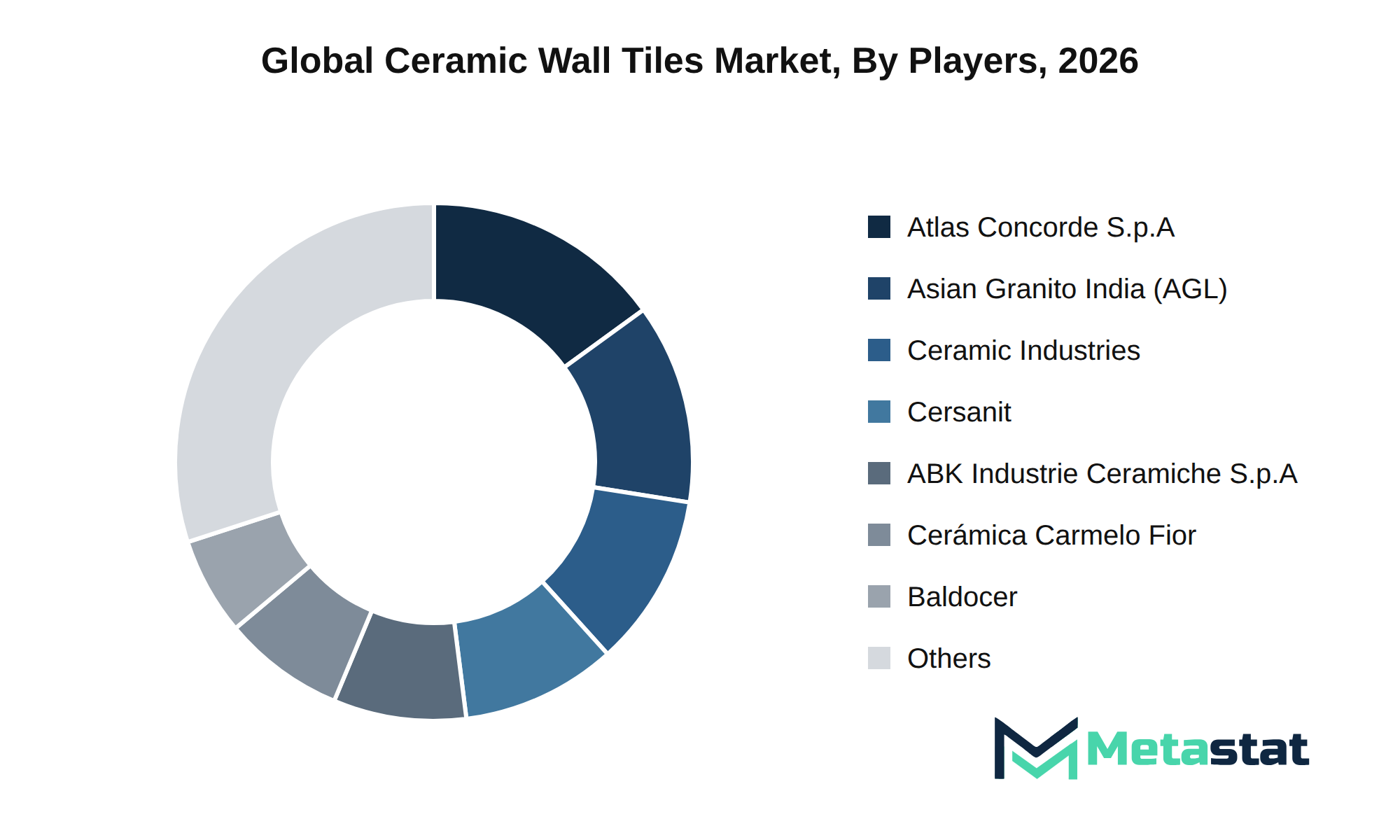
The Ceramic Wall Tiles market features a dynamic competitive environment shaped by diverse strategic initiatives. Key players engage in mergers, acquisitions, and strategic consolidations to enhance market presence and operational efficiency. Companies including ABK Group Industrie Ceramiche S.p.A., Atlas Concorde S.p.A., and Mohawk Industries, Inc. actively pursue these strategies to strengthen market positioning and expand product offerings.
Product differentiation stands central to competitive strategies, with firms like CERA Sanitaryware Limited and Cerâmica Carmelo Fior investing in research and development to innovate new designs and materials. This focus on innovation supports customer retention and enhances brand equity, creating sustainable competitive advantages. Several players form strategic alliances and joint ventures to leverage complementary strengths, improving market reach and product capabilities.
Barriers to entry in the Ceramic Wall Tiles market remain significant due to established brand loyalty and the capital-intensive nature of manufacturing processes. Companies like Dal-Tile, LLC (Daltile) and Villeroy & Boch benefit from strong supply chain networks, which provide procurement leverage and pricing advantages. The competitive outlook indicates an emphasis on technological advancements and intellectual property development, ensuring robust defenses against potential market disruptions.
Market size is forecast to rise from USD 71.5 billion in 2025 to over USD 122 billion by 2033. The base case outlines growth at a 6.9% CAGR. Factors influencing this growth encompass a combination of macroeconomic trends, shifts in downstream demand, and the maturation of core industries. Economic cycle fluctuations drive changes in consumer preferences, prompting an adjustment in the demand for ceramic wall tiles.
Downstream industries focus on next-generation technology integration, enhancing product offerings through research and development commercialization. Regulatory evolution influences compliance milestones and policy enforcement horizons, impacting market dynamics. Geopolitical realignments and evolving trade corridors create opportunities for strategic capital allocation, affecting supply chain shifts and necessitating infrastructure commitments.
Emerging white-space opportunities present high-growth pockets within the ceramic wall tiles market. Addressing unmet enterprise needs requires executive-level strategic imperatives that promote defensibility roadmaps. Future growth recommendations highlight the importance of strategic investment in innovation and market adaptation to capture expanding demand.
The report strategically identifies and profiles the key market players and analyses their core competencies in each sub-segment of the Ceramic Wall Tiles market.
Report Attributes | Details |
Study Period | 2021-2033 |
Base Year | 2025 |
Estimated Year | 2026 |
Forecast Period | 2026-2033 |
Historical Period | 2021-2025 |
Growth Rate | CAGR 6.9% from 2026 to 2033 |
Revenue Unit | USD billion |
Segmentation | By Product Type, End Use, Construction Type, Size, and Region |
By Region | North America (By Product Type, End Use, Construction Type, Size, and Country)
|
Europe (By Product Type, End Use, Construction Type, Size, and Country)
| |
Asia Pacific (By Product Type, End Use, Construction Type, Size, and Country)
| |
South America (By Product Type, End Use, Construction Type, Size, and Country)
| |
Middle East and Africa (By Product Type, End Use, Construction Type, Size, and Country)
|
Find answers to common questions about this report
The Ceramic Wall Tiles market size was valued at USD 71.5 billion in 2025.
The Ceramic Wall Tiles market is projected to grow at a CAGR of 6.9% during the forecast period from 2026 to 2033.
The North America Ceramic Wall Tiles market size is estimated to reach USD 14.4 billion by 2033.
Porcelain Tiles lead the Ceramic Wall Tiles market with a projected value of USD 50 billion by 2033, based on the highest growth rate among product types.
Key drivers for the Ceramic Wall Tiles market include favorable macroeconomic conditions, including increased global GDP and rising consumer spending, which stimulate demand in construction and renovation sectors. Urbanization trends and changing demographics further enhance market growth by driving higher housing demand and prompting consumers to prioritize modern, sustainable designs.
Asia Pacific holds the dominant share of the Ceramic Wall Tiles market, accounting for USD 57.2 billion of the total market. This substantial share positions Asia Pacific ahead of North America, Europe, South America, and the Middle East and Africa.
Regulatory compliance challenges and tightening environmental standards increase operational costs for producers, restraining growth in the Ceramic Wall Tiles market. Fluctuating macroeconomic conditions, inflationary pressures, and supply chain disruptions complicate the landscape, causing production delays and negatively impacting overall market performance.
Favorable macroeconomic conditions, including increasing global GDP and rising consumer spending, drive demand for ceramic wall tiles. Strengthening economic growth in the construction and renovation sectors, combined with urbanization trends and changing demographics, enhances product adoption because consumers prioritize aesthetics and sustainability in their purchasing decisions.
The Ceramic Wall Tiles market is estimated to reach a valuation of USD 122 billion by 2033.
Key players in the Ceramic Wall Tiles market include ABK Group Industrie Ceramiche S.p.A., Asian Granito India Limited (AGL), Atlas Concorde S.p.A., CERA Sanitaryware Limited, Dal-Tile, LLC (Daltile), and Iris Ceramica Group.
Choose Your License
Global Ceramic Wall Tiles Market
The analysts below cover Chemicals and Materials research at Metastat Insights.
LEAD ANALYST
Utkarsh Khirodkar is a Lead Market Research Analyst at MetaStat Insight, specializing in market intelligence, technology sector assessments, and competitive strategy.

INDUSTRY CONSULTANT - CHEMICALS & ADVANCED MATERIALS
Chemicals and Materials · Machinery & Equipment · Packaging
Amit Gadhekar Consultant for Chemicals and Materials at MetaStat Insight, directing sector-specific intelligence, research, and strategic consulting across global chemical and processing markets.
Transitioning ultra-class mining haul trucks to alternative power requires concrete data on remote hydrogen refueling infrastructure economics. The report evaluated megawatt-scale electrolyzer installation expenses, onsite storage safety mandates, and heavy-duty fuel cell stack degradation under continuous duty cycles. That technical rigor helped our engineers benchmark realistic total operating cost horizons for off-highway fleet decarbonization.
Enterprise zero-trust network rollouts are often slowed down by multi-cloud transit latency and proprietary hardware retirement schedules. This study provided realistic total cost of ownership models comparing cloud-delivered security edge solutions against traditional hardware refreshes. The analysis of contract renewal lengths and software maintenance fees gave us clear visibility into enterprise replacement cycles over the next three to five years.
Scaling antibody-drug conjugate manufacturing hinges on contract manufacturing availability for high-potency active ingredients. The MetaStat Insight analysis looked closely at global cleanroom slot constraints, bioconjugation batch failure rates, and supply chain redundancies between the US, Europe, and India. The supplier capability matrix proved genuinely useful for our team when mapping secondary source options across our clinical pipeline.
Explore related market intelligence reports worth reading alongside this one.