
LEAD ANALYST
Utkarsh Khirodkar is a Lead Market Research Analyst at MetaStat Insight, specializing in market intelligence, technology sector assessments, and competitive strategy.

Global Dried Fruit & Snacks Market Size, Share, By Fruit Type (Raisins & Sultanas, Dates, Mango, Cranberries & Other Berries, Prunes, Apricots, Figs, Pineapple, Banana, Others (Papaya, Coconut, Jackfruit, Apple, Pear, Citrus and Passion Fruit)), By Processing & Texture (Soft-Dried, Sun-Dried, Air-Dried & Dehydrated, Freeze-Dried, Infused & Sweetened Dried), By Nature (Organic and Conventional), By Distribution Channel (Supermarkets & Hypermarkets, Specialty & Health Food Stores, Convenience Stores, Online Retailers & Marketplaces, Direct-to-Consumer E-commerce, Foodservice and Others (Vending and Travel Retail)), Industry Analysis, Growth, Trends, and Forecast, 2026-2033
MSI-5082
August, 2026
310 Pages
Historical
Base year
Forecast
Forecast period
Report Details
Comprehensive Market Analysis And Insights
The global Dried Fruit & Snacks market was valued at USD 7,294.2 million in 2025 and is projected to reach USD 11,368.8 million by 2033, growing at a CAGR of 5.7% over the forecast period.
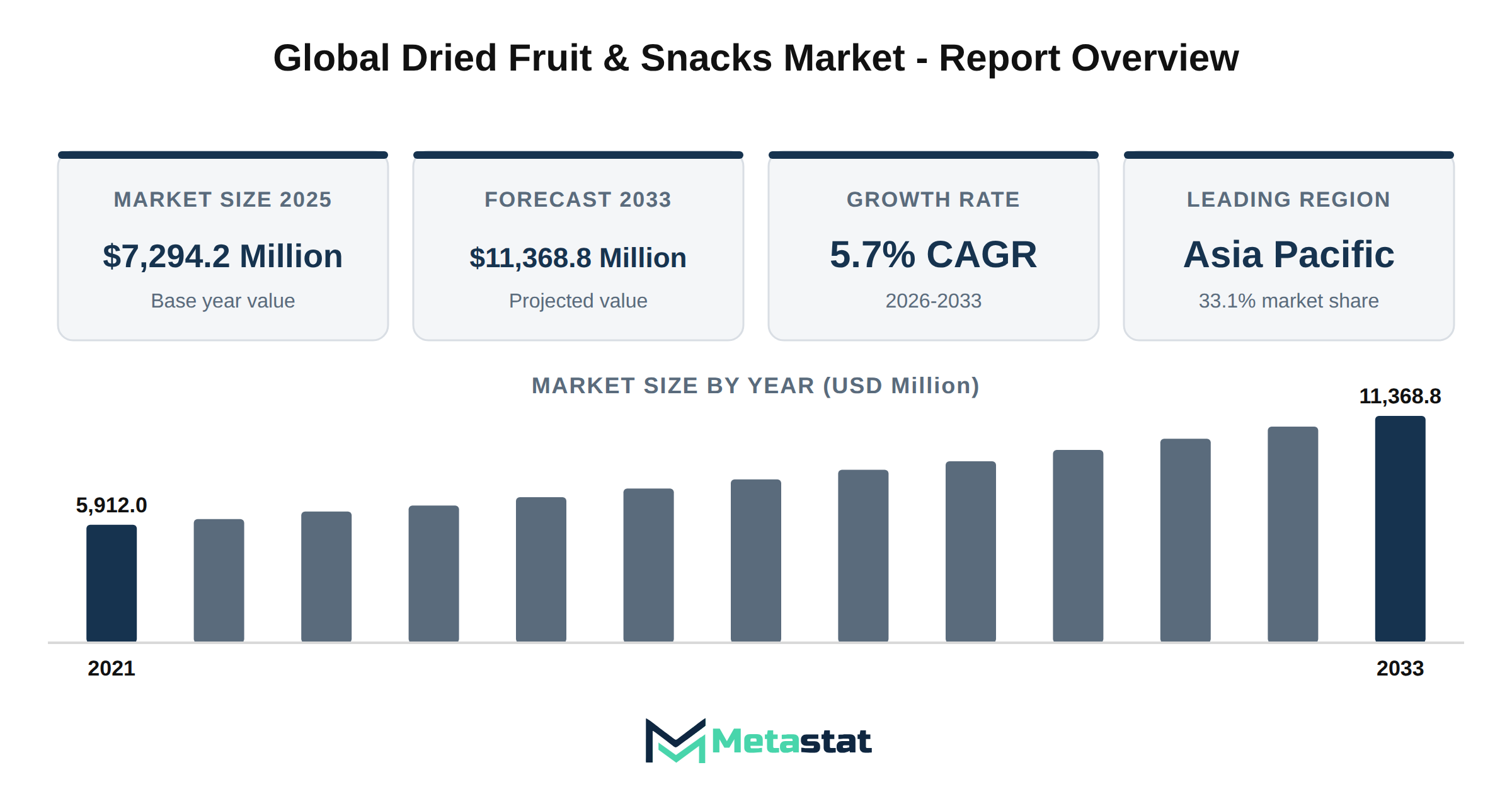
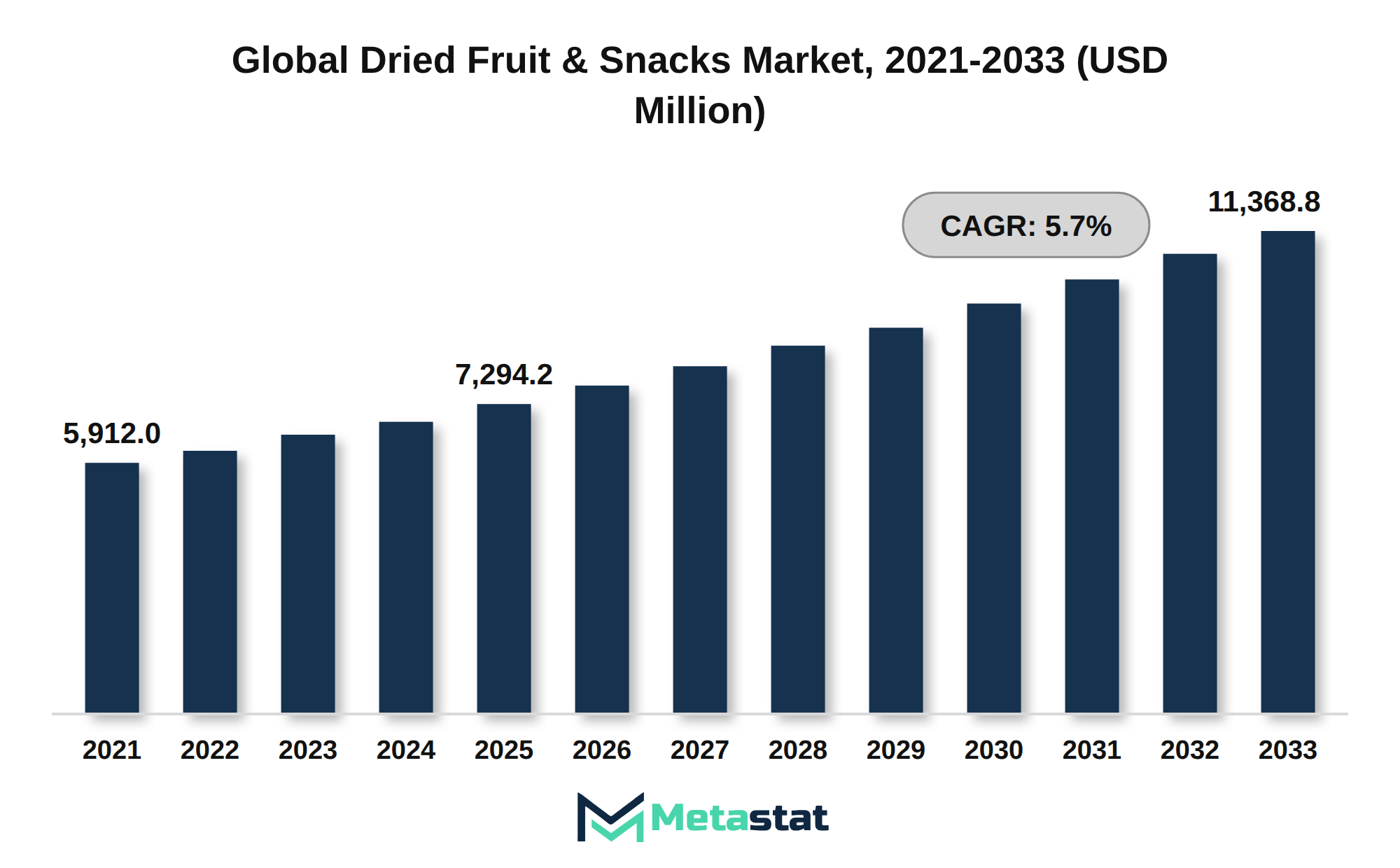
The Dried Fruit & Snacks market has demonstrated substantial growth, with a base value of USD 7,294.2 million recorded in 2025. Historical data shows a steady increase in market value, starting from USD 5,912 million in 2021 and reaching USD 6,573.4 million in 2023. The market is projected to expand significantly, attaining a forecast value of USD 11,368.8 million by 2033, corresponding to a compound annual growth rate (CAGR) of 5.7% during the forecast period from 2026 to 2033.
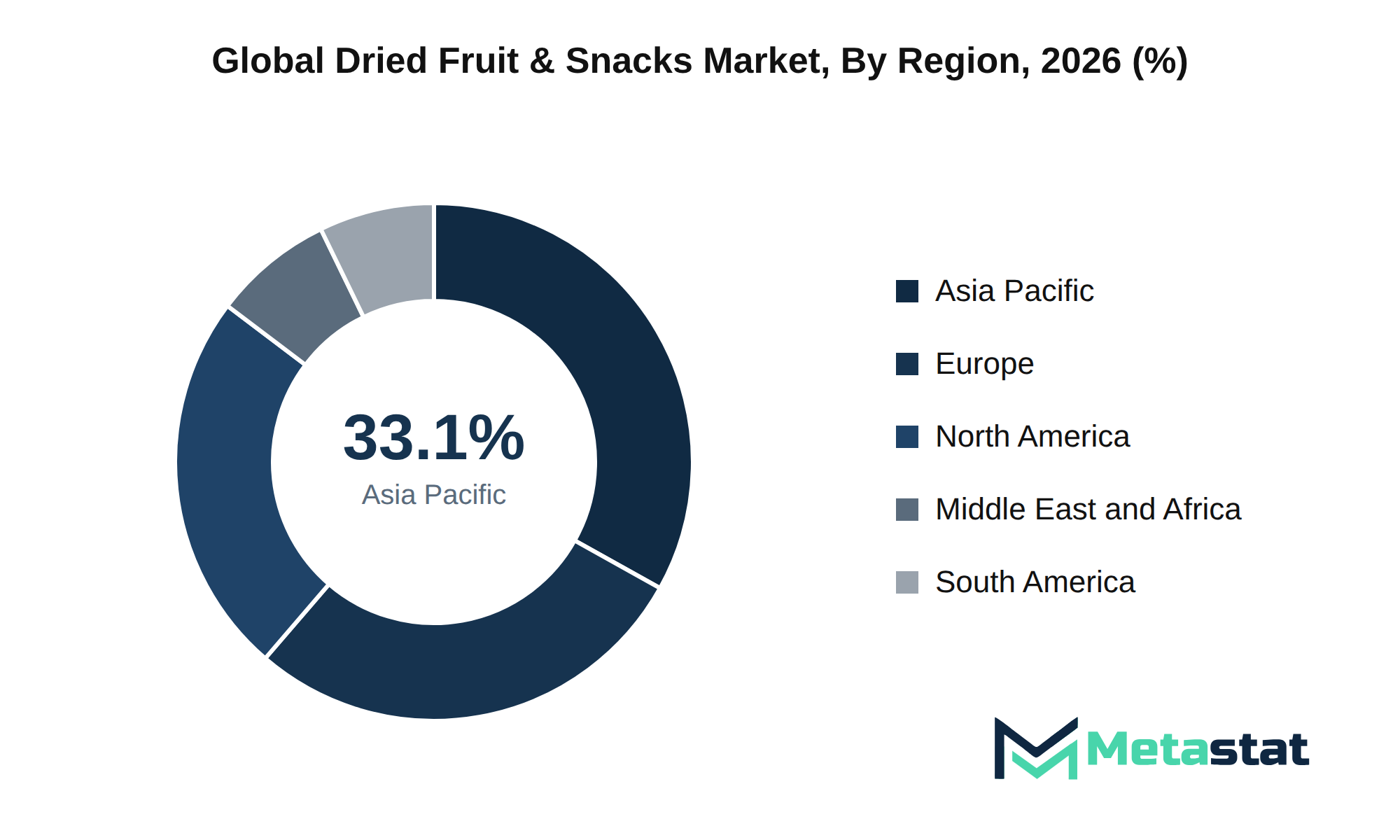
Regionally, the market exhibits varied shares, with Asia Pacific holding the largest portion at 33.1%, followed by Europe at 28.2%, and North America at 24%. The North American segment is expected to reach USD 2,585.3 million by 2033, growing at a CAGR of 5.7%. This regional distribution reflects diverse consumer preferences and purchasing patterns, influencing overall market dynamics.
In terms of product segmentation, the Dried Fruit & Snacks market comprises several categories, including fruit type, processing and texture, and nature. Raisins and sultanas represent a significant segment, with projections indicating growth from USD 2,075.3 million in 2026 to USD 3,607.3 million by 2033, achieving a CAGR of 8.2%. Dates and organic products are expected to follow suit, reflecting a trend towards healthier snacking options.
Processing methods influence market performance, with soft-dried products anticipated to grow from USD 2,609.6 million in 2026 to USD 3,898.4 million by 2033, reflecting a CAGR of 5.9%. The preference for various processing techniques enhances product appeal, driving consumer demand for diverse snack options. The Dried Fruit & Snacks market is poised for continued growth, supported by shifting consumer preferences towards healthier and convenient snacking solutions.
The Dried Fruit & Snacks market experiences evolving dynamics influenced by global trends and consumer preferences. Regulatory frameworks increasingly shape production practices, emphasizing food safety, quality standards, and transparency in sourcing. Adherence to such regulations enhances market credibility and builds consumer trust, which is essential for sustained growth.
Innovation drives the market forward, with research and development focusing on enhancing product offerings, flavor profiles, and nutritional content. Next-generation products, including functional dried fruits and snacks enriched with vitamins and minerals, cater to health-conscious consumers seeking nutritious alternatives. This trend aligns with the broader movement towards sustainable transformation within the industry.
The supply chain landscape undergoes significant changes, with a shift towards more resilient logistics architectures. Companies prioritize local sourcing and diversification of suppliers to mitigate risks associated with geopolitical tensions and economic fluctuations. This strategic approach enhances supply chain efficiency while reducing transportation costs and environmental impact.
Market fragmentation presents both challenges and opportunities. Numerous players operate in the Dried Fruit & Snacks market, each vying for consumer attention. This competitive environment encourages innovation and differentiation, compelling companies to invest in branding and marketing strategies to establish a unique market presence.
Macroeconomic headwinds, including inflationary pressures and currency volatility, impact procurement strategies. Companies face rising costs for raw materials and logistics, prompting a reevaluation of capital allocation. Strategic investments in infrastructure and operational efficiencies become critical to navigating these challenges while maintaining profitability.
Future strategic outlooks for the Dried Fruit & Snacks market indicate strong growth potential. Industry players are encouraged to align with consumer trends favoring health, sustainability, and convenience. High-value recommendations include investing in sustainable practices and enhancing product transparency to build consumer loyalty and capitalize on growing market demand.
Increasing health consciousness among consumers drives demand in the Dried Fruit & Snacks market. This trend arises from greater awareness of the benefits of nutritious snacking options, particularly among health-focused and environmentally conscious individuals. Urbanization and lifestyle changes contribute to shifting consumer preferences towards natural, low-calorie, and nutrient-rich snacks, leading to a rise in the consumption of dried fruits and snacks.
Young adults and health-conscious individuals seek convenient snack alternatives that align with their dietary choices, fueling growth in the market. The preference for organic and natural products highlights a commitment to health and wellness, encouraging suppliers to innovate and expand product offerings. This demand invites companies to invest in research and development for new product lines that cater to evolving consumer tastes, effectively capturing a larger market share.
The increased focus on healthy snacks aligns with the global trend of adopting healthier lifestyles. Consequently, this shift enhances market growth and encourages competition among suppliers to meet the demands of health-conscious consumers. Overall, the growing health consciousness among consumers significantly impacts the Dried Fruit & Snacks market, driving sustained expansion and innovation.
Convenience influences the Dried Fruit & Snacks market. Rapid urbanization and busy lifestyles drive consumers to seek on-the-go snack options that provide both nutrition and ease of consumption. The increasing availability of dried fruit and snacks in various retail formats, including supermarkets, convenience stores, and online platforms, enhances market accessibility and attracts a wider audience.
This trend aligns with the growing focus on health and wellness, driven by consumers prioritizing snacks that not only satisfy hunger but offer health benefits. Dried fruit, known for its nutritional properties, remains a popular choice for health-conscious individuals. The rise in demand for convenient yet healthy snack options influences manufacturers to innovate and diversify their product offerings, ultimately boosting market growth.
Advancements in packaging technology ensure longer shelf life and maintain product freshness, further appealing to consumers. The Dried Fruit & Snacks market benefits from these evolving preferences, with brands adapting to align with consumer expectations, thereby enhancing competitive positioning and driving overall market expansion.
The Dried Fruit & Snacks market encounters significant challenges due to persistent supply chain disruptions. Factors including geopolitical instability, resource scarcity, and inflationary pressures strain logistics and production, resulting in delays and increased costs. Producers face difficulties in sourcing raw materials, impacting their ability to meet consumer demand efficiently.
Supply chain disruptions affect various segments within the market. For instance, the availability of key ingredients like fruits and nuts is compromised, leading to higher prices and potential shortages. This situation creates a ripple effect, influencing the pricing strategies of companies and reducing profit margins. Consequently, firms experience challenges in investing in innovation and expansion, limiting overall market growth.
The ongoing disruptions result in longer lead times for product delivery, affecting retailers and consumers alike. Delays in product availability decrease customer satisfaction and loyalty, ultimately slowing demand in the Dried Fruit & Snacks market. Firms striving to adapt to these challenges face increased operational complexities, necessitating a reevaluation of their supply chain strategies to mitigate future risks.
The Dried Fruit & Snacks market faces significant challenges stemming from geopolitical tensions that create trade deficits and tariff friction. Countries impose tariffs that affect the pricing and availability of dried fruits and snacks, impacting suppliers and consumers alike. Trade barriers complicate access to essential markets and drive up costs for manufacturers in the market.
Technological disruptions further exacerbate these challenges, introducing complexities in research and development integrations. Companies struggle to keep pace with rapid technological advancements, hindering innovation and development efforts. The resulting pressure on margins compels several suppliers to seek cost reductions, which compromise product quality.
Logistics disruptions and supply chain instability contribute to inconsistent product delivery and increased operational costs. Fluctuations in feedstock and component availability affect production schedules, making it difficult for suppliers to meet growing demand. Pricing compression emerges in response to these challenges, forcing companies to reconsider pricing strategies and operational efficiencies.
Environmental sustainability and decarbonization mandates create additional pressures on the market. Companies face heightened scrutiny regarding their environmental impact, leading to increased compliance overhead. Aligning operations with evolving legal liabilities demands significant investment in sustainable practices, straining resources and diverting focus from core business operations.
Ultimately, the combination of these factors poses substantial challenges for the Dried Fruit & Snacks market, affecting growth trajectories and competitive dynamics. Addressing these challenges requires strategic responses from stakeholders to enhance resilience and ensure product availability while maintaining quality and sustainability standards.
The Dried Fruit & Snacks market experiences significant opportunity driven by regional diversification. Emerging markets in Asia Pacific, particularly China and India, exhibit increasing demand for dried fruit products owing to shifting consumer preferences towards healthier snack options. This demand surge results from rising disposable incomes and growing awareness of the nutritional benefits of dried fruits, creating an environment conducive for market expansion.
Infrastructure modernization supports this growth, facilitating improved distribution channels and enhancing accessibility for consumers. Investments in logistics and storage facilities enable suppliers to meet the expanding demand while ensuring product quality. Geographical expansion into underserved regions allows suppliers to tap into new customer bases, enhancing market penetration and revenue generation.
Technological disruptions, particularly in processing and packaging, augment the market's appeal by increasing efficiency and product shelf life. Innovations in freeze-drying and air-drying techniques enhance product quality, aligning with consumer expectations for freshness and taste. Digital transformation initiatives streamline procurement processes, enabling suppliers to respond swiftly to market changes and consumer demands.
Next-generation innovations, including eco-friendly packaging and sustainable sourcing practices, align with growing consumer preferences for environmentally responsible products. This trend strengthens brand loyalty and opens avenues for market differentiation. Strategic consolidation through mergers and acquisitions among key players enhances competitive positioning and resource sharing, further driving growth in the market.
The evolving buying behaviors of consumers highlight a shift towards online retail and direct-to-consumer models. This transition offers suppliers greater visibility and access to target demographics, increasing sales opportunities. While consumer awareness of the nutritional benefits of dried fruits continues to rise, the Dried Fruit & Snacks market is poised for substantial growth, particularly in emerging regions with favorable economic conditions.
The Global Dried Fruit & Snacks market is segmented based on Fruit Type, Processing & Texture, Nature, and Distribution Channel.
Valued at USD 2,075.3 million in 2026, the Raisins & Sultanas segment is projected to reach USD 3,607.3 million by 2033, reflecting a compound annual growth rate (CAGR) of 8.2% during the forecast period. This growth is primarily supported by increasing consumer preferences for healthy snacking options, which positions raisins and sultanas because nutritious alternatives to traditional snacks. Rising awareness of the health benefits associated with these dried fruits, including high antioxidant content and natural sweetness, supports this trend.
The expansion of the Raisins & Sultanas segment finds further momentum in the growing incorporation of these products in various culinary applications. Food manufacturers increasingly incorporate raisins and sultanas in baked goods, cereals, and snack bars, enhancing the versatility of the segment. This adaptability aligns with evolving consumer tastes, prompting a shift towards ingredient transparency and cleaner labels. Regulatory compliance regarding food safety and quality standards significantly influences the market, encouraging producers to adopt best practices in sourcing and processing.
Price volatility in raw materials, driven by climatic factors impacting grape yields, poses a challenge to profitability within the segment. Effective supply chain management remains essential for manufacturers to mitigate risks associated with sourcing and distribution. Strategic opportunities arise from investments in sustainable agricultural practices and partnerships with local growers, enhancing the resilience of the supply chain while meeting the rising demand for organic and ethically sourced options.
Overall, the Raisins & Sultanas segment contributes significantly to the Dried Fruit & Snacks market, supported by health-conscious consumer trends and the versatility of product applications. The anticipated growth reflects the segment's ability to adapt to changing market dynamics while addressing challenges related to sourcing and pricing stability.
The growing recognition of the nutritional benefits associated with dates drives substantial interest among health-conscious consumers. Dates serve because a natural source of energy, vitamins, and minerals, appealing to a wide range of dietary preferences, including vegan and gluten-free diets. The increasing incorporation of dates into snacks and health foods highlights their versatility and suitability for various culinary applications.
Market expansion is supported by rising consumer demand for functional foods that promote overall well-being. The shift towards healthier snacking options encourages manufacturers to innovate and develop new products incorporating dates, enhancing their market presence. Retail channels, particularly online platforms, provide consumers with easy access to a variety of date products, contributing to segment growth.
Regulatory compliance and certifications play a crucial role in the market, ensuring product quality and safety. Consumers increasingly seek assurance regarding the sourcing and processing of dates. Brands emphasizing organic and sustainably sourced options strengthen their market position, attracting discerning buyers.
The dates segment is projected to reach USD 2,378.3 million by 2033, with a CAGR of 6.2% during the forecast period. The combination of growing health trends and innovative product offerings positions the dates segment for sustained growth within the Dried Fruit & Snacks market.
Growth in the mango segment of the Dried Fruit & Snacks market aligns with increasing consumer interest in healthy snacking options. The segment is expected to reach USD 576.4 million by 2033. Rising awareness of the nutritional benefits of dried mango, including its high vitamin content and natural sweetness, drives demand among health-conscious consumers. Innovations in packaging and processing methods enhance product appeal, making dried mango more accessible in various retail formats.
Consumer preferences have shifted towards convenient, on-the-go snacking, boosting sales in the dried fruit sector, particularly for fruits like mango. Enhanced marketing strategies promote the versatility of dried mango, encouraging its use in baking, cooking, and because a standalone snack, which further expands its market presence. While retailers continue to adapt to consumer trends, the mango segment demonstrates significant growth potential within the broader context of the Dried Fruit & Snacks market.
Overall, the mango segment benefits from favorable dynamics that support its continued expansion. Ongoing innovations and strategic marketing initiatives strengthen the position of dried mango in the snack aisle, catering to evolving consumer preferences and contributing positively to the growth trajectory of the overall market.
Growing consumer interest in healthy snacking options fuels demand for cranberries and other berries within the Dried Fruit & Snacks market. This shift reflects a broader trend towards natural and nutritious dietary choices, where consumers seek alternatives to processed snacks. The segment is projected to grow at a CAGR of 5.1% during the forecast period, indicating strong growth for this category.
Demand for cranberries and other berries aligns with health and wellness trends, promoting their consumption in various applications, including trail mixes and baking. Increasing availability through online retail channels enhances accessibility, contributing to segment growth. The market exhibits resilience, driven by the ongoing preference for convenient and nutritious food options.
Investment in product innovation strengthens the segment's position, with manufacturers exploring new flavors and forms. This evolution in product offerings meets consumer expectations for variety and quality. The Dried Fruit & Snacks market adapts to changing consumer preferences, ensuring sustained growth and relevance in a competitive environment.
The segment of prunes within the Dried Fruit & Snacks market enjoys a unique position, driven by increasing consumer awareness surrounding health benefits. The nutritional attributes of prunes, particularly their high fiber content and potential digestive health benefits, attract health-conscious buyers looking for natural and wholesome snack options. This growing awareness contributes significantly to the demand for this sub-segment, leading to higher consumption rates.
Product evolution aligns closely with modern dietary preferences, with manufacturers developing various forms of prunes to cater to diverse consumer tastes. Innovations include flavored prunes and those packaged in convenient formats, enhancing appeal among busy consumers seeking healthy snacks on the go. This adaptability positions the segment for sustained growth, reflecting evolving consumer preferences.
End-use dynamics play a crucial role in shaping market trends, driven by prunes' applications in various culinary contexts. Their incorporation in baked goods, salads, and energy bars expands their market relevance, encouraging broader adoption across different consumer segments. The versatility of prunes supports a steady demand, reinforcing their significance within the overall dried fruit market.
Regulatory compliance standards remain integral to the segment's growth. While health regulations tighten globally, manufacturers increasingly focus on certifications that assure consumers of product safety and quality. Ensuring compliance with these standards enhances market confidence and facilitates access to wider distribution channels.
With raw material sourcing critical to the segment, producers emphasize sustainable practices that ensure quality supply chains. The focus on sustainability engages environmentally conscious consumers, further enhancing the appeal of prunes. Strategic opportunity windows emerge because producers leverage this emphasis on sustainability to differentiate their offerings in a crowded market.
Growing consumer interest in healthy snacking options drives demand for dried apricots in the Dried Fruit & Snacks market. This trend aligns with rising awareness regarding the health benefits of dried fruits, specifically apricots, which are rich in vitamins and antioxidants. The segment benefits from increasing adoption across various distribution channels, including supermarkets, online platforms, and health food stores, enhancing accessibility for consumers.
Technological advancements in drying and preservation techniques improve product quality and shelf life, contributing to segment expansion. Enhanced processing methods allow for better flavor retention and nutritional preservation, appealing to health-conscious consumers. The rise of organic products aligns with changing preferences, encouraging brands to explore organic apricot options and further diversifying their portfolios.
End-use dynamics indicate a strong preference for dried apricots in both retail and foodservice sectors. Increased consumption in baking, cooking, and snacking applications highlights versatility, driving overall market growth. This trend emphasizes the importance of positioning dried apricots because a desirable ingredient in various culinary applications.
Regulatory compliance and certifications play a crucial role in shaping the market landscape. Standards for quality and safety assurance encourage consumer trust, while compliance with organic certification requirements enhances market positioning for suppliers. While demand for transparency in food sourcing rises, brands emphasizing compliance with these standards gain competitive advantages.
Pricing volatility remains a challenge for this segment, influenced by fluctuations in raw material sourcing and production costs. Strategic investments in supply chain resilience mitigate risks associated with material availability and pricing pressures. Addressing these factors enables sustainable growth opportunities, allowing producers to maintain profitability while expanding market reach.
Growing consumer demand for healthy snacking options influences the Figs sub-segment within the Dried Fruit & Snacks market. Increased awareness of the nutritional benefits of figs, including their high fiber and antioxidant content, drives consumer preferences toward this fruit. The segment benefits from evolving dietary trends favoring natural and organic products, leading to an uptick in both fresh and dried fig consumption.
Expansion catalysts include the rising popularity of figs in various culinary applications, ranging from salads to desserts. This versatility allows figs to penetrate diverse market segments, enhancing their appeal to health-conscious consumers. Ongoing product evolution, including the introduction of fig-based snacks and convenience packaging, supports growth in this area. Innovations in processing techniques, including improved drying methods, enhance the quality and shelf life of dried figs, appealing to a larger consumer base.
Consumption shifts toward plant-based diets highlight the significance of figs because a natural sweetener and ingredient in vegan recipes. Regulatory compliance standards increasingly emphasize the importance of organic certification, which further benefits the organic fig segment. The market experiences pressures related to cost structures and pricing volatility, influenced by raw material sourcing and climate conditions impacting fig production. Supply chain resilience remains critical, because logistical vulnerabilities affect the distribution of figs, especially in regions prone to adverse weather.
Strategic opportunity windows arise from consumer trends favoring minimally processed snacks, enhancing the market's potential for figs. The sub-segment exhibits a strong alignment with the overall growth trajectory of the Dried Fruit & Snacks market, leveraging health trends and product diversification to capture market share.
Consumer interest in innovative snack options, including dried pineapple, drives growth in the Dried Fruit & Snacks market. The fruit's unique flavor profile and nutritional benefits appeal to health-conscious consumers seeking convenient, on-the-go snacks. Increasing awareness about the health advantages of pineapple, including its high vitamin C content and antioxidants, supports its adoption among various demographics, enhancing long-term demand.
Technological advancements in drying methods enhance product quality and shelf life, further supporting segment expansion. Innovations in freeze-drying and air-drying techniques maintain the fruit's nutritional integrity while improving texture and taste. These enhancements enable producers to meet rising consumer expectations for high-quality snacks, reinforcing competitive positioning within the market.
Shifts in consumer preferences towards organic and natural products reinforce the demand for dried pineapple. Regulatory compliance standards that promote transparency in labeling and sourcing practices enhance consumer confidence. A noticeable trend towards organic certifications exists, with consumers willing to pay a premium for products that align with their health and sustainability values, expanding the addressable base for producers.
Pricing volatility in raw materials impacts profit margins for producers. Fluctuations in pineapple supply due to climatic conditions or agricultural challenges lead to increased costs. Consequently, companies operating in this segment implement strategies to ensure supply chain resilience, including diversifying sourcing options and optimizing logistics, which limits adoption among price-sensitive buyers.
The emergence of new distribution channels, particularly e-commerce platforms, facilitates access to dried pineapple products, contributing to market growth. Consumers increasingly favor online shopping due to its convenience, prompting brands to enhance their digital presence and engagement strategies. This trend enhances visibility for dried pineapple products, positioning them favorably for future demand within the broader market.
Banana products within the Dried Fruit & Snacks market enjoy a favorable position due to increasing health awareness and dietary trends favoring natural snacks. The rising popularity of plant-based diets and the emphasis on clean eating contribute significantly to the adoption of banana snacks. This segment benefits from the versatility of bananas, leading to various product applications, including convenient snack options and ingredients in health-focused recipes.
Consumer preferences shift towards snacks that offer nutritional benefits, driving demand for banana products. The segment's expansion correlates with the growing popularity of on-the-go snacking, reflecting a lifestyle change among busy consumers seeking healthier alternatives. Broader awareness of the nutritional value of bananas, including their high potassium content and natural sweetness, enhances their appeal, particularly among fitness enthusiasts.
Technological maturation in processing techniques enables the production of high-quality banana snacks that retain flavor and nutritional properties. Innovations in dehydration and freeze-drying methods support product evolution, allowing manufacturers to introduce new formats and textures. The market's response to these advancements highlights a strategic opportunity for brands aiming to capture a share of the health-conscious consumer base.
Regulatory compliance and certification standards play a critical role in ensuring the safety and quality of banana products. Adherence to food safety regulations strengthens consumer trust while potentially impacting cost structures and pricing strategies. The segment's resilience against supply chain vulnerabilities and raw material sourcing challenges enhances its competitive positioning.
Overall, the banana segment within the Dried Fruit & Snacks market demonstrates significant growth potential driven by evolving consumption patterns and a strong emphasis on health and wellness trends. This segment's ability to adapt to changing consumer demands positions it favorably for sustained expansion in the years ahead.
Growing consumer preferences for diverse and exotic snack options enhance the appeal of the Others sub-segment, encompassing dried papaya, coconut, jackfruit, apple, pear, citrus, and passion fruit within the Dried Fruit & Snacks market. This segment experiences a rise in popularity attributed to its unique flavor profiles and nutritional benefits, attracting health-conscious consumers seeking alternatives to traditional snacks. Product innovation and the introduction of new variations within the sub-segment contribute to market expansion, driven by producers exploring creative combinations and flavors that cater to evolving consumer tastes.
Technological advancements in drying and preservation techniques improve product quality and shelf life, further supporting adoption across various distribution channels. Retailers increasingly feature these products in health food stores and online marketplaces, driving visibility and availability for consumers. Continued emphasis on natural and organic ingredients aligns with environmental and health considerations, prompting brands to pursue certifications and compliance with regulatory standards. The ongoing development of packaging solutions aimed at enhancing product appeal and convenience will likely play a crucial role in the growth trajectory of the Others category within the market.
Demand for the Soft-Dried segment in the Dried Fruit & Snacks market reflects a growing preference for convenient and nutritious snack options. Valued at USD 2,609.6 million in 2026, the segment is projected to reach USD 3,898.4 million by 2033, achieving a CAGR of 5.9% during the forecast period. An increasing focus on health and wellness, along with a shift towards plant-based diets, drives demand for soft-dried fruits. Consumers seek options that deliver both taste and nutritional benefits, leading to heightened interest in products like soft-dried mangoes and other fruits.
Adoption of innovative processing techniques enhances the appeal of soft-dried fruits, contributing to their popularity. Manufacturers invest in advanced drying methods, improving product texture and flavor while retaining essential nutrients. This technological maturation enables companies to differentiate their offerings, catering to evolving consumer preferences. The growing availability of soft-dried products across various distribution channels, including supermarkets and online retailers, supports wider accessibility and convenience for consumers.
Shifting consumption habits towards healthier snacks emphasize the importance of this segment within the market. Increased awareness of the health benefits provided by soft-dried fruits, including antioxidants and fiber, influences purchasing decisions among health-conscious consumers. Regulatory compliance standards and certifications reinforce the segment's credibility, ensuring that products meet safety and quality requirements. These factors position the Soft-Dried segment for continued growth within the Dried Fruit & Snacks market.
Consumer preference for natural and nutritious options drives the Sun-Dried segment within the Dried Fruit & Snacks market. This trend aligns with the increasing focus on health and wellness, prompting more consumers to opt for convenient snack alternatives that offer nutritional benefits. While lifestyles become busier, on-the-go snacking options, including sun-dried fruits, gain traction due to their portability and rich flavor profiles.
Technological advancements in drying methods contribute significantly to product quality, enhancing flavor retention and nutritional value. Innovations in processing techniques enable producers to optimize product texture and taste, making sun-dried options more appealing. The segment is projected to reach USD 2,695.5 million by 2033, with a CAGR of 4.4% during the forecast period.
Shifts in consumption patterns reflect a growing desire for diverse and flavorful snacks. The demand for sun-dried fruits aligns with broader trends favoring organic and minimally processed products. Increased availability of these items through various distribution channels further supports market penetration. Heightened consumer awareness of health benefits leads to consistent growth in the segment.
Consumer preference for nutritious, convenient snack options drives growth in the Air-Dried & Dehydrated segment. This segment is expected to reach USD 3,094.6 million by 2033, reflecting a significant increase in demand for healthier snack alternatives. Increasing awareness of the health benefits associated with dried fruits and the convenience of on-the-go snacking contributes to segment growth.
Technological advancements in food processing enhance the quality and appeal of air-dried and dehydrated products. Innovations in drying techniques preserve the nutritional value of fruits while extending shelf life. These improvements support the expansion of the segment within the Dried Fruit & Snacks market, driven by manufacturers focusing on delivering high-quality products that meet evolving consumer preferences.
End-use dynamics highlight a shift in consumption patterns toward healthy snacks. Retailers increasingly promote air-dried and dehydrated products in health-conscious segments, targeting consumers who prioritize nutrition and wellness. This trend increases the segment's visibility and attractiveness, further strengthening its position in the market.
Regulatory compliance standards supporting health claims on packaging and labeling enhance consumer trust in air-dried and dehydrated products. Certifications, including organic and non-GMO, influence purchasing decisions, making these products more appealing to specific consumer segments. The impact of these compliance measures illustrates the importance of transparency and quality in the market.
Consumer interest in nutrient-rich and convenient snack options significantly influences the growth of the Freeze-Dried segment within the Dried Fruit & Snacks market. This segment is projected to grow at a CAGR of 8.1% during the forecast period. Enhanced preservation methods in freeze-drying maintain the flavor and nutritional profile of fruits, appealing to health-conscious consumers. The versatility of freeze-dried products allows incorporation into a variety of applications, including breakfast cereals, smoothies, and trail mixes, broadening the market appeal.
Technological advancements in processing techniques contribute to consumer preference for freeze-dried products, ensuring higher quality and longer shelf life. The segment attracts consumers seeking convenient and healthy snack alternatives, particularly among the younger demographic, which prioritizes on-the-go options. Regulatory compliance standards ensuring food safety increase consumer confidence in freeze-dried products, strengthening demand and expanding market share.
Investment in marketing and product innovation enhances visibility, allowing brands to capture consumer interest effectively. The growing trend of outdoor and travel activities drives increased consumption of lightweight, nutrient-dense freeze-dried snacks. The Freeze-Dried segment offers significant growth opportunities within the Dried Fruit & Snacks market, driven by evolving consumer preferences and ongoing technological advancements.
Consumer adoption of infused and sweetened dried fruits aligns with a rising preference for uniquely flavored snacks that merge traditional and modern tastes. This trend results from the demand for diverse and enjoyable snacking experiences, compelling manufacturers to innovate and expand product offerings. Demand for these products stems from a variety of consumers, including health-conscious individuals and those seeking indulgent snack alternatives.
Evolution in processing techniques enhances product quality and taste, encouraging manufacturers to invest in next-generation upgrades. Innovations in flavor profiles, particularly those that blend fruits with spices or other sweeteners, support market expansion by appealing to adventurous eaters. This segment benefits from rising health awareness, driven by consumers gravitating toward snacks that combine flavor with perceived health benefits.
The market experiences notable shifts in consumer consumption patterns, with a growing inclination toward natural sweeteners rather than artificial additives. This shift influences manufacturers to focus on clean labeling and transparency, strengthening brand loyalty and attracting new customers. Regulatory compliance related to food safety and ingredient sourcing shapes product formulation and marketing strategies.
Pricing volatility emerges because a significant factor in the infused and sweetened dried segment, with raw material costs fluctuating based on weather conditions and agricultural yields. These fluctuations impact profit margins, prompting companies to explore strategic sourcing options and enhance supply chain resilience. Companies that effectively navigate these challenges position themselves favorably within the competitive landscape of the Dried Fruit & Snacks market.
Strategic opportunities exist for brands willing to invest in sustainable practices and transparent sourcing. Engaging consumers through educational marketing about the benefits of infused and sweetened products drives sales. Overall, the segment holds promise for growth supported by consumer preferences for unique flavors, healthier options, and ethical production practices.
Consumer demand for organic snacks reflects a notable trend towards healthier food choices. This movement towards organic products enhances opportunities within the Dried Fruit & Snacks market. The organic segment is valued at USD 1,529.1 million in 2026 and is projected to reach USD 2,551.2 million by 2033, at a CAGR of 7.6% during the forecast period. Factors contributing to this growth include increased awareness of health and wellness, alongside rising incidences of lifestyle-related diseases. Consumers increasingly seek products perceived because natural and free from synthetic additives, driving preference for organic dried fruits.
Regulatory compliance regarding food safety and quality standards influences the organic segment's growth trajectory. Certifications related to organic farming and processing provide essential credibility, enhancing consumer trust. The market experiences heightened competition among suppliers who strive to meet these rigorous standards while expanding their product offerings. Innovations in organic farming techniques and sustainable sourcing practices support segment expansion, allowing producers to effectively manage costs while addressing consumer preferences.
Consumer interest in organic dried fruits corresponds with broader trends towards plant-based diets, highlighting the segment's alignment with evolving dietary habits. The introduction of organic options across various distribution channels, including supermarkets and e-commerce platforms, increases accessibility for consumers. This diversification encourages market penetration, ultimately contributing to the sustained growth of organic dried fruits in the Dried Fruit & Snacks market.
Growing consumer awareness regarding health and nutrition drives the demand for conventional dried fruits within the Dried Fruit & Snacks market. This segment is characterized by its accessibility and affordability, appealing to a broad consumer base. The consistent demand for convenient and nutritious snacks fuels market expansion, driven by consumers increasingly seeking alternatives to traditional snacks. Trends show a shift towards healthier eating habits, leading to enhanced consumption of conventional products, which are often perceived because more cost-effective compared to organic options.
Conventional segment is projected to reach USD 8,817.6 million by 2033, at a CAGR of 5.2% during the forecast period. The growth of this segment reflects the ongoing evolution of product offerings and increased awareness of their nutritional benefits. Retail environments, including supermarkets and online channels, significantly influence the availability and visibility of conventional dried fruits. Marketing strategies that highlight value and convenience will likely boost consumer engagement and drive sales within this segment.
Consumer preference for convenient shopping experiences significantly influences the growth of the Supermarkets & Hypermarkets distribution channel within the Dried Fruit & Snacks market. The convenience of purchasing a variety of snacks under one roof enhances consumer satisfaction and encourages increased spending. This trend aligns with the broader shift toward health-conscious eating, driven by the prominence of healthy options in these retail environments, catering to the rising demand for nutritious snacks.
Retailers maximize shelf space to highlight dried fruits and snacks, which drives visibility and accessibility. Innovative marketing strategies, including product placement and promotional campaigns, further enhance consumer engagement in supermarkets and hypermarkets. This strategic positioning results in higher sales volumes compared to alternative channels, reinforcing the importance of this distribution method for suppliers seeking to capitalize on market growth.
Regulatory compliance standards regarding food safety and labeling play a crucial role in shaping product offerings within this segment. Suppliers that adhere to stringent regulations gain consumer trust, thereby enhancing brand loyalty and driving repeat purchases. While the market evolves, compliance with health and safety regulations will continue to influence the product range available in supermarkets and hypermarkets.
Price volatility in raw materials affects pricing strategies in supermarkets and hypermarkets. Retailers often face margin pressures due to fluctuations in the cost of dried fruits and snacks while trying to maintain competitive pricing. Effective supply chain management and strategic sourcing of raw materials help mitigate these challenges, enabling retailers to offer attractive prices without compromising on quality.
Investment in technology for inventory management and customer engagement enhances operational efficiency within this distribution channel. Automation in inventory tracking and data-driven marketing initiatives supports retailers in better understanding consumer preferences, leading to targeted promotions. Such advancements contribute to an improved shopping experience, driving growth in the Dried Fruit & Snacks market.
Health-conscious consumers increasingly favor specialty and health food stores for their dried fruit and snack purchases. This trend aligns with a growing awareness of nutritional value and the benefits of organic options. Retailers in this segment often curate a selection of high-quality products that appeal to consumers seeking healthier snack alternatives. The Dried Fruit & Snacks market benefits from this shift, driven by these stores typically offering unique and diverse product lines that cater to specific dietary preferences.
Educational initiatives and promotional activities within specialty and health food stores enhance consumer understanding of the health benefits associated with dried fruits. Knowledgeable staff and product labeling contribute to informed purchasing decisions. Consequently, increased consumer confidence and loyalty to these retail channels strengthen demand for various dried fruit products, driving growth within the market.
The expansion of specialty and health food stores directly influences product innovation and development. Brands prioritize quality, sustainability, and unique flavors, responding to consumer desires for transparency in sourcing and processing. While consumers seek diverse options, retailers continue to expand their offerings, which supports ongoing growth in the Dried Fruit & Snacks market.
Increasing consumer focus on health-conscious choices drives strong demand for nutritious snacks in convenience stores. The appeal of dried fruit and snacks aligns with the rising trend of on-the-go consumption, attracting busy consumers seeking quick and healthy options. Retailers benefit from stocking these products, which enhances their overall offerings and meets the evolving preferences of shoppers.
Product variety in convenience stores supports segment growth. The inclusion of diverse dried fruits, including raisins and dates, alongside innovative snacks, caters to an expanding customer base. Convenience stores that adapt their product ranges based on consumer trends strengthen their competitive edge in the market.
Convenience stores contribute to the Dried Fruit & Snacks market by providing accessible locations for consumers. This format supports impulse buying, allowing customers to purchase snacks without the commitment of a larger shopping trip. Retailers gain from increased foot traffic and a greater average transaction value driven by consumers seeking convenient snacking solutions.
Staying current with health trends proves crucial for convenience stores, given competition from specialty health food retailers and online marketplaces. Engaging marketing strategies, including highlighting nutritional benefits and sourcing organic products, enhance brand loyalty among health-conscious consumers. This approach is essential for maintaining relevance in a competitive environment.
Strategic partnerships with local suppliers enhance product freshness and support community engagement, appealing to consumers' preferences for locally sourced goods. This initiative not only enriches the product selection but leads to increased sales and customer satisfaction in convenience stores.
Shifts in consumer shopping behavior towards online platforms significantly influence the Dried Fruit & Snacks market. Increasing reliance on e-commerce channels for the purchase of snacks enhances accessibility for consumers, leading to higher sales volumes. The rise of digital payment solutions and improved logistics further support the growth of online retailers and marketplaces, reflecting changing buyer preferences for convenience and variety.
Adoption of subscription services and personalized marketing strategies by online platforms encourages repeat purchases and strengthens brand loyalty. The market benefits from innovations in packaging and presentation tailored for e-commerce, improving shelf appeal and attracting consumer attention. Enhanced consumer education regarding the health benefits of dried fruits and snacks drives engagement and purchasing through these online channels.
Technological maturation in analytics and data mining enables retailers to refine their offerings based on consumer preferences and trends. This data-driven approach allows for optimal inventory management and targeted marketing strategies, contributing to a more robust supply chain. Competition intensifies among online retailers, and differentiation through product quality and customer experience emerges, reflecting a key factor for success in the Dried Fruit & Snacks market.
Consumer interest in direct-to-consumer e-commerce channels for dried fruits and snacks reflects a significant shift in purchasing behaviors. Increased reliance on online platforms allows consumers easier access to a variety of products, enhancing convenience and choice. This trend aligns with the broader digital transformation across retail sectors, where direct online interaction offers tailored shopping experiences and facilitates brand engagement.
Rapid growth in mobile commerce further supports this segment, driven by consumers increasingly shopping using smartphones for their needs. Enhanced online marketing strategies, including targeted promotions and social media engagement, attract health-conscious shoppers looking for nutritious and convenient options. Businesses operating in the dried fruit and snacks market aim to strengthen their online presence to capture a larger share of this growing consumer base.
Concerns about health and nutrition drive consumers to seek out organic and natural products, boosting demand for e-commerce platforms that specialize in these offerings. Investments in logistics and technology from suppliers enhance the overall supply chain, addressing consumer expectations for swift and reliable delivery. The integration of user-friendly interfaces and personalized recommendations enhances the shopping experience, ensuring customer satisfaction and loyalty.
Strategic partnerships with delivery services and e-commerce platforms streamline the distribution process, contributing to the sector's resilience amid changing market dynamics. This adaptive approach positions businesses favorably to capitalize on emerging opportunities within the e-commerce landscape for dried fruit and snacks.
Growing recognition of the health benefits associated with dried fruits and snacks drives substantial demand within the foodservice sector. Operators increasingly incorporate these items into their menus, recognizing their appeal to health-conscious consumers. The emphasis on nutrition aligns with consumer preferences for wholesome ingredients, resulting in higher sales across various dining establishments.
Innovation in product offerings further supports market expansion. Foodservice operators seek unique and diverse ingredients to differentiate their menus, encouraging creativity in dish development. Enhanced flavor profiles, textures, and aesthetics contribute to appealing dining experiences that attract customers.
Consumer trends towards convenience and on-the-go options significantly influence the foodservice segment. Quick-service restaurants and casual dining establishments leverage dried fruits and snacks to enhance their offerings, catering to the busy lifestyles of consumers. This adaptation supports increased foot traffic and boosts sales in the market.
Regulatory compliance with food safety standards remains a critical factor within the foodservice sector. Operators prioritize sourcing from trusted suppliers that adhere to stringent quality regulations. This focus ensures consumer safety and enhances brand reputation, encouraging loyalty in a competitive landscape.
While the market evolves, sustainability initiatives gain traction among foodservice operators. Emphasizing eco-friendly sourcing and packaging appeals to environmentally conscious consumers. This strategic alignment enhances brand image and captures a share of the growing market segment focused on sustainable practices.
Overall, the foodservice segment within the Dried Fruit & Snacks market continues to thrive, driven by innovation, consumer trends, and a commitment to quality and sustainability.
Consumer interest in convenient snack options influences the growth of the Others (Vending and Travel Retail) segment within the Dried Fruit & Snacks market. This segment benefits from the increasing popularity of on-the-go snacking, which aligns with busy lifestyles. Vending machines and travel retail locations provide easy access to nutritious snacks, capturing the attention of health-conscious consumers seeking alternatives to traditional snacks. Innovations in packaging enhance product visibility and accessibility, further encouraging impulse purchases in vending environments. The demand for portable and shelf-stable snacks continues to rise, particularly among travelers and commuters who prioritize convenience without sacrificing nutrition. Regulatory compliance and certification standards for health claims build trust and encourage brand loyalty among consumers. Strategic partnerships with vending operators and travel retail outlets enable brands to expand their reach, tapping into a diverse customer base. This alignment with consumer preferences and strategic distribution channels positions the Others segment because a vital component in the overall growth trajectory of the Dried Fruit & Snacks market.
Based on geography, the Global Dried Fruit & Snacks market is divided into North America, Europe, Asia-Pacific, South America, Middle East, and Africa.
North America represents 24.0% of the Dried Fruit & Snacks market, contributing USD 2,585.3 million to the global market in 2025. The market is set to expand at a CAGR of 5.7% within the forecast period, reaching a market size (TAM) of USD 2,585.3 million by the end of 2033. Factors driving this growth include robust demand for health-conscious snack alternatives, increasing awareness about nutritious diets, and the rise of organic product offerings.
The presence of established players including Sun-Maid Growers of California and Mariani Packing Company, Inc. enhances competitive dynamics in the region. The mature market exhibits characteristics of high-value replacement cycles, driven by evolving consumer preferences and the need for innovative product offerings. Localized procurement dynamics and cultural nuances influence regional buying behaviors, further shaping market opportunities.
Strategic entry barriers for new entrants include established distribution channels and the necessity for compliance with local regulations. The availability of resources and energy grid resiliency contribute to a favorable environment for investment in the market. Cross-border trade corridors facilitate accessibility to diverse product offerings, enhancing the competitive landscape for Dried Fruit & Snacks.
The Dried Fruit & Snacks market in Europe exhibits substantial growth potential driven by an increasing consumer focus on health and wellness. Countries including Germany, France, the UK, Italy, and Spain display a growing trend towards organic and natural snack options, underpinning demand for dried fruit products. In Russia, rising disposable incomes contribute to a shift in consumer preferences towards healthier snack alternatives.
Infrastructure modernization across the region enhances distribution capabilities, facilitating access to a wider range of dried fruit products. The market experiences emerging opportunities in e-commerce and online retailing, driven by evolving consumer purchasing behaviors that favor convenience and accessibility. Specialty and health food stores are becoming significant players in the market, offering a curated selection of dried fruit and snacks to health-conscious consumers.
The competitive landscape encompasses established domestic participants alongside emerging players, creating a dynamic environment for innovation and product differentiation. Vendor consolidation trends further influence market dynamics, enabling companies to streamline operations and enhance product offerings. Cultural nuances across European countries dictate local procurement dynamics, affecting how dried fruit products are marketed and sold.
While the share of the global market in 2025 stands at 28.2%, strategic entry barriers and foreign direct investment flows indicate a promising outlook for new entrants. Geographic regulatory frameworks and local compliance mandates ensure that products meet safety and quality standards, enhancing consumer trust in the market. Overall, the Dried Fruit & Snacks market in Europe is projected to experience steady growth, driven by evolving consumer preferences and innovative distribution strategies.
The Asia-Pacific region accounts for a projected contribution of 33.1% in the Dried Fruit & Snacks market in 2025. Rapid urbanization in countries including China, India, and Japan drives the demand for convenient and nutritious snack options. Increasing disposable incomes among consumers in these nations support higher spending on premium dried fruit products.
The market experiences a notable expansion in segment offerings, especially with the rise of health-conscious consumers opting for organic and functional snacks. Innovations in processing techniques, alongside the introduction of value-added products, enhance the appeal of dried fruits and snacks. Regional players focus on improving product quality and diversifying their portfolios to capture emerging health trends.
Infrastructure modernization in the Asia-Pacific region facilitates efficient distribution channels, enhancing accessibility for consumers. The rise of online retail platforms, particularly in Southeast Asia, offers convenient shopping experiences, further propelling market growth. Local compliance mandates and health regulations impact product formulations, pushing manufacturers to align with consumer preferences for clean and healthy ingredients.
Domestic market participants invest in localized manufacturing to reduce operational costs and improve supply chain efficiencies. This trend aligns with the growing consumer preference for locally-sourced products, which builds trust and loyalty. Increasing foreign direct investment (FDI) flows into the region are expected to enhance production capabilities, leading to an expanded market presence for key players in the Dried Fruit & Snacks market.
Competition intensifies due to international brands entering the region, creating a diverse landscape. Regional players adopt aggressive strategies to maintain market share, including partnerships and strategic collaborations. This competitive environment encourages innovation and adaptation, ensuring the market remains responsive to evolving consumer preferences and trends.
The Dried Fruit & Snacks market in South America presents unique opportunities for growth driven by shifting consumer preferences and increasing health consciousness. Countries including Brazil and Argentina lead the region in consumption, supported by a growing demand for nutritious and convenient snack options. The market's estimated share of 7.2% in 2025 highlights its potential within the global context.
Investment in local infrastructure enhances supply chain efficiencies and supports the distribution of dried fruit products across the region. Manufacturers focus on aligning their offerings with Brazilian and Argentine culinary traditions, which builds consumer loyalty and drives repeat purchases. Engagement in localized procurement strategies allows suppliers to optimize their operations and respond effectively to regional demand fluctuations.
Rising awareness of the health benefits associated with dried fruits fuels the market's expansion. Increased education and marketing efforts targeting health-conscious consumers significantly impact sales, particularly among younger demographics. The Dried Fruit & Snacks market is set to experience incremental growth driven by the evolution of these trends.
The Dried Fruit & Snacks market in the Middle East and Africa benefits from a growing population that increasingly seeks healthy snack alternatives. This region's interest in health-oriented products drives demand for dried fruits and snacks, particularly in countries like Saudi Arabia, UAE, and South Africa. Urbanization contributes to changing consumer lifestyles, prompting a shift toward convenient and nutritious snack options. Local production efforts align with increasing health awareness, promoting regional sourcing and reducing reliance on imports.
Domestic players gain traction due to their ability to cater to local tastes and preferences. Cultural nuances shape buying behaviors in this market, resulting in unique product offerings that appeal to consumers. The Dried Fruit & Snacks market experiences incremental growth fueled by the emergence of new players and innovative products that align with health trends.
Investment in local infrastructure enhances production capacities and distribution networks. Increased foreign direct investment supports growth, enabling businesses to expand their reach in underpenetrated territories. The competitive landscape displays a mix of established brands and new entrants actively consolidating their positions, enhancing competition in the region and improving product availability for consumers.
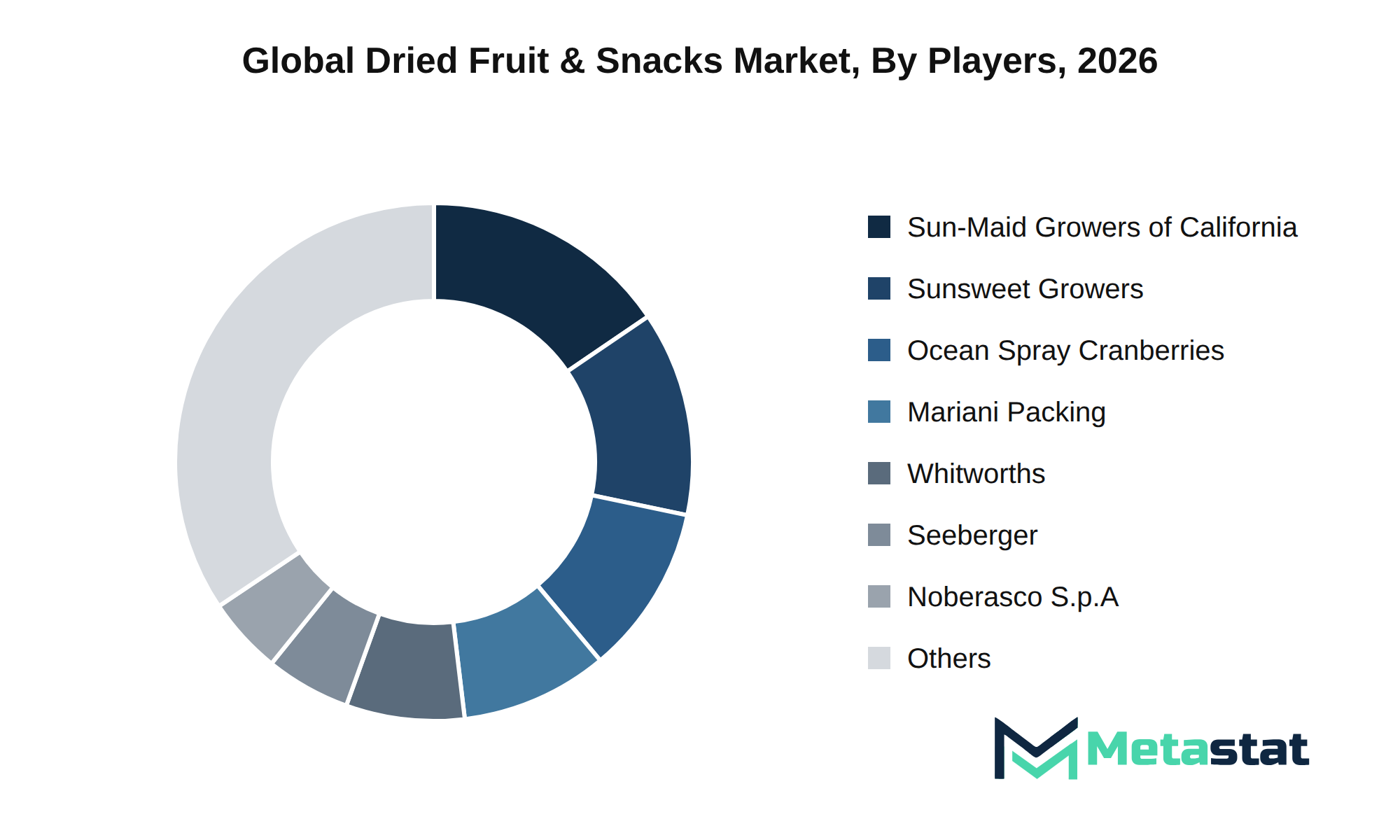
The Dried Fruit & Snacks market features a dynamic competitive environment shaped by strategic behaviors among key players. Companies including Sun-Maid Growers of California, Mariani Packing Company, Inc., and Sunsweet Growers Inc. engage in product differentiation and research and development efforts to enhance their market presence. Innovations in processing methods, including freeze-drying and soft-drying, contribute to the unique offerings from these companies, strengthening their position in the market.
Strategic alliances and partnerships support market players like Ocean Spray Cranberries, Inc. and Whitworths Limited in expanding their distribution channels, including supermarkets, specialty stores, and online retail. These collaborative efforts enhance supply chain dominance and procurement leverage, ensuring access to quality raw materials and efficient logistics. Competition involves barriers to entry, where established brands benefit from customer loyalty and brand equity, making it challenging for new entrants to gain traction.
Proprietary technology and intellectual property play crucial roles in maintaining competitive advantage. Companies including Seeberger GmbH and Noberasco S.p.A. develop robust R&D pipelines to explore new flavors and formulations, aligning with evolving consumer preferences toward organic and health-oriented dried fruit products. The competitive outlook for the Dried Fruit & Snacks market indicates continued growth driven by innovation, strategic partnerships, and a focus on consumer health trends.
Market size is forecast to rise from USD 7,294.2 million in 2025 to over USD 11,368.8 million by 2033. The base case anticipates a CAGR of 5.7% during this period. In a bullish scenario, factors including increasing health awareness, rising consumer preference for natural snacks, and growing distribution channels drive demand beyond initial projections. Conversely, a bearish outlook highlights challenges including supply chain disruptions, rising production costs, and potential regulatory hurdles that hinder growth. These factors shape the dynamics of the Dried Fruit & Snacks market and influence investment strategies.
Macroeconomic trends influence downstream demand shifts, creating opportunities for innovation and market penetration. Core industry maturation presents challenges and encourages companies to focus on product differentiation and quality enhancement. Integration of next-generation technologies, including advanced processing methods and packaging solutions, enhances product appeal and operational efficiency. R&D commercialization timelines play a critical role in introducing new products that align with evolving consumer preferences.
Regulatory evolution and compliance timelines remain essential, necessitating agility in adapting to changing market conditions. Geopolitical realignments and shifting trade corridors impact supply chain dynamics, affecting sourcing strategies and cost structures. Strategic capital allocation directives emphasize investment in infrastructure and technology to support growth and resilience within the market. Emerging white-space opportunities highlight unmet consumer needs, positioning companies to capture high-growth pockets driven by trends in sustainability and health-focused consumption.
Executive-level strategic imperatives focus on defensibility roadmaps that leverage innovation, operational excellence, and customer-centric approaches. Future growth recommendations include enhancing online presence, expanding partnerships, and exploring new markets to optimize reach and profitability. The Dried Fruit & Snacks market stands at a crossroads, with significant potential for companies prepared to navigate these evolving dynamics effectively.
The report strategically identifies and profiles the key market players and analyses their core competencies in each sub-segment of the Dried Fruit & Snacks market.
Report Attributes | Details |
Study Period | 2021-2033 |
Base Year | 2025 |
Estimated Year | 2026 |
Forecast Period | 2026-2033 |
Historical Period | 2021-2025 |
Growth Rate | CAGR 5.7% from 2026 to 2033 |
Revenue Unit | USD million |
Segmentation | By Fruit Type, Processing & Texture, Nature, Distribution Channel, and Region |
By Region | North America (By Fruit Type, Processing & Texture, Nature, Distribution Channel, and Country)
|
Europe (By Fruit Type, Processing & Texture, Nature, Distribution Channel, and Country)
| |
Asia Pacific (By Fruit Type, Processing & Texture, Nature, Distribution Channel, and Country)
| |
South America (By Fruit Type, Processing & Texture, Nature, Distribution Channel, and Country)
| |
Middle East and Africa (By Fruit Type, Processing & Texture, Nature, Distribution Channel, and Country)
|
Find answers to common questions about this report
The Dried Fruit & Snacks market size was valued at USD 7,294.2 million in 2025.
The Dried Fruit & Snacks market is projected to grow at a CAGR of 5.7% during the forecast period from 2026 to 2033.
The North America Dried Fruit & Snacks market size is estimated to reach USD 2,585.3 million by 2033.
Raisins & Sultanas lead the Dried Fruit & Snacks market with a projected value of USD 3,607.3 million by 2033, reflecting the highest growth within the fruit type segment.
Increasing health consciousness among consumers and the demand for convenient, nutritious snack options drive growth in the Dried Fruit & Snacks market. Urbanization and lifestyle changes contribute to shifting preferences towards natural, low-calorie, and nutrient-rich snacks, resulting in sustained expansion and innovation in the sector.
The Dried Fruit & Snacks market faces significant challenges due to persistent supply chain disruptions, geopolitical tensions, and inflationary pressures. These factors strain logistics and production, resulting in delays, increased costs, and difficulties in sourcing raw materials, ultimately limiting market growth and innovation.
Increasing health consciousness among consumers drives product adoption in the Dried Fruit & Snacks market. This trend results from a greater awareness of nutritious snacking options among health-focused individuals, leading to a preference for convenient, low-calorie, and nutrient-rich snacks. Consequently, suppliers are encouraged to innovate and expand their product offerings to meet evolving consumer tastes.
The Dried Fruit & Snacks market is estimated to reach a valuation of USD 11,368.8 million by 2033.
Key players in the Dried Fruit & Snacks market include Sun-Maid Growers of California, Mariani Packing Company, Inc., Sunsweet Growers Inc., Ocean Spray Cranberries, Inc., Whitworths Limited, and Seeberger GmbH.
The Raisins & Sultanas segment is projected to reach USD 3,607.3 million by 2033, reflecting a compound annual growth rate of 8.2%.
Choose Your License
Global Dried Fruit & Snacks Market
The analysts below cover Food and Beverages research at Metastat Insights.
LEAD ANALYST
Utkarsh Khirodkar is a Lead Market Research Analyst at MetaStat Insight, specializing in market intelligence, technology sector assessments, and competitive strategy.

LEAD PRINCIPAL ANALYST, PHARMA AND HEALTHCARE
Food and Beverages · Healthcare · Healthcare IT · Medical Devices
Ajay Devgire is the Lead Healthcare Analyst at MetaStat Insight, leading strategic research and market intelligence initiatives across the global healthcare domain.

SENIOR RESEARCH ANALYST
Biotechnology · Food and Beverages · Medical Devices · Packaging
Snehal Pasalkar is a Research Analyst at MetaStat Insight, operating at the intersection of life sciences research, competitive strategy, and market intelligence.
Replacing petrochemical surfactants with bio-based alternatives requires realistic timelines on industrial precision fermentation scaling. The market research broke down commercialization timelines, feedstock sugar price sensitivities, and regional cosmetic ingredient regulatory approvals in Europe and East Asia. That supplier readiness mapping gave our formulations team reliable context when comparing renewable chemical sourcing roadmaps.
Tracking ceramic matrix composite adoption in high-bypass aero engines requires strict attention to material qualification cycles and FAA airworthiness testing milestones. The MetaStat Insight team provided a detailed timeline of silicon carbide fiber manufacturing capacity and commercial foundry lead times. Having clear visibility into upstream thermal barrier coating supply helped us stress-test our long-term component procurement strategy.
Transitioning ultra-class mining haul trucks to alternative power requires concrete data on remote hydrogen refueling infrastructure economics. The report evaluated megawatt-scale electrolyzer installation expenses, onsite storage safety mandates, and heavy-duty fuel cell stack degradation under continuous duty cycles. That technical rigor helped our engineers benchmark realistic total operating cost horizons for off-highway fleet decarbonization.
Explore related market intelligence reports worth reading alongside this one.