
LEAD ANALYST
Utkarsh Khirodkar is a Lead Market Research Analyst at MetaStat Insight, specializing in market intelligence, technology sector assessments, and competitive strategy.

Drug-Eluting Stents Market By Coating Type (Polymer-based Coating, Polymer-free Coating), By Material (Metal, Stainless Steel, Cobalt-Chromium, Nitinol, Others), By Application (Coronary Artery Disease, Peripheral Artery Disease), By End User (Hospitals, Ambulatory Surgical Centers, Others), Industry Analysis, Size, Share, Growth, Trends, and Forecasts 2025-2032
Report ID
MSI-4478
Published
November, 2025
Pages
257 Pages
Format
Report Details
Choose Your License
Drug-Eluting Stents Market
The global drug-eluting stents market and its related industries have undergone remarkable growth from a narrow invention in cardiovascular area to the medical solution that has become popular all over the world and was gradually molded by clinical experience, engineering innovations, and regulation approvals. The tale of the market was initiated in the 1990s when the application of bare-metal stents was extensive; however, the metal often caused the tissue inside the vessel to regrow. Polymer-coated devices that released their medication slowly to prevent this complication were introduced by the researchers in the early 2000s, thus marking an important turning point for the drug-eluting stents market and the medical industry as a whole. Their first usage generated a lot of interest in these devices and by mid-2000s, the data presented by large cardiac societies like the American College of Cardiology indicated that the stents with drug-eluting coatings had already cut down the rate of restenosis to below 10%, in contrast to the 20-30% observed with the previous types of devices.
With the help of the increased experience of the medical teams, the focus began to shift toward the long-term safety aspect. In the United States, Europe, and Japan, the regulatory agencies will still be tightening the standards for evaluating the products, and the manufacturers will then have to improve their coatings, come up with thinner struts, and test greater biocompatibility. The direction of the market changed one more time when biodegradable polymers entered the scene in the 2010s. The initial results from national health research programs indicated that the use of solvable materials controlled late-stage inflammation which had been a concern for doctors for many years. The trend towards safer and more innovative designs will be strengthened over the next decade since hospitals will need devices that can cater to a broader range of patient profiles.
Moreover, consumer demands changed. The patients of today are looking for faster healing and the interventional cardiology units are witnessing an increase in the proportion of minimally invasive procedures. World Health Organization reports indicate that coronary artery disease is still responsible for more than 17 million deaths annually and almost half of the countries are expanding their catheterization laboratory capacity. These changes signify that the pressure on the manufacturers will be on the rise as the health systems will be asking for stents with a controlled release of medication that is suitable for the complicated arterial structures.
The global drug-eluting stents market will no longer be stagnant. The next generation of products will make use of the progress in the fields of nanotechnology, drug-polymer science, and precision imaging which are all part of the new aspect of the device that will closely mimic the behavior of the blood vessel. The market’s path will continue to mirror the uphill struggle of making coronary interventions safer, more predictable and easier to access as the standards of care shift and the regulatory frameworks keep on developing.
The global drug-eluting stents market is mainly classified based on Coating Type, Material, Application, End User.
|
Forecast Period |
2025-2032 |
|
Market Size in 2025 |
$6355.6 Million |
|
Market Size by 2032 |
$11182.3 Million |
|
Growth Rate from 2025 to 2032 |
8.4% |
|
Base Year |
2024 |
|
Regions Covered |
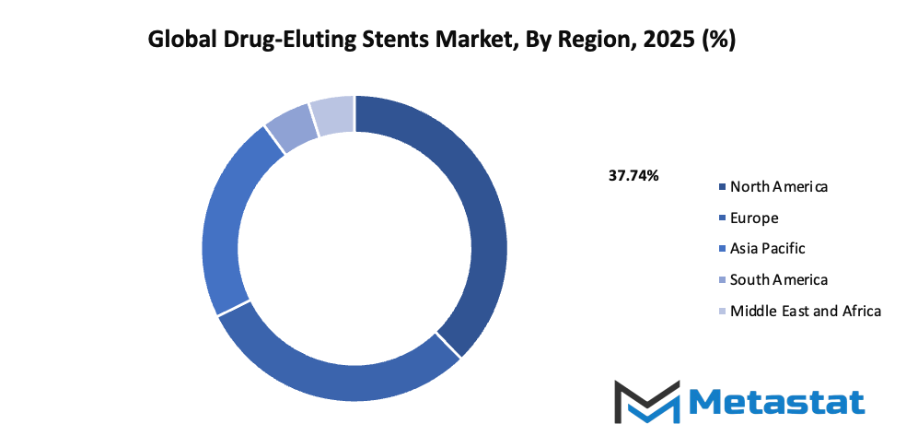
North America, Europe, Asia-Pacific, South America, Middle East & Africa |
Rising importance of the global drug-eluting stents market reflects steady demand supported by broader healthcare needs and clinical expectations: Rising Prevalence of Cardiovascular Diseases Worldwide: Growing cardiac cases across diverse age groups create urgent demand for safer and more dependable stent solutions, encouraging wider use of advanced options that support better recovery, reduced complications, and steady long-term patient stability across multiple treatment settings worldwide.
Technological Advancements Offering Improved Safety and Long-Term Efficacy: Continuous innovation in stent coatings, drug release methods, and structural design supports stronger performance across complex procedures. Enhanced precision, better vascular healing, and reduced adverse reactions contribute to wider acceptance of advanced devices, supporting expanding traction within the global drug-eluting stents market and reinforcing trust among medical teams, hospitals, and broader healthcare networks.
High Cost of Drug-Eluting Stents Compared to Bare-Metal Stents: Higher pricing limits accessibility for many healthcare systems, especially in regions with restricted budgets. Financial strain influences treatment decisions and often shifts preference toward older alternatives, slowing wider adoption of modern solutions and creating obstacles for manufacturers aiming for broader global reach and sustained market expansion.
Risk of Late Stent Thrombosis and Need for Prolonged Antiplatelet Therapy: Clinical concerns linked to delayed clot formation increase caution among healthcare professionals. Extended antiplatelet treatment raises additional expenses and monitoring needs, which may discourage broader usage. These challenges highlight the importance of enhanced designs, better materials, and stronger evidence that can reduce hesitation and support safer, more predictable outcomes in cardiac interventions.
Growing Adoption of Biodegradable and Next-Generation Polymer-Free DES Technologies: Rising interest in biodegradable frameworks and polymer-free coatings encourages wider confidence in future treatment options. These advances support natural vessel recovery, reduce long-term complications, and broaden acceptance across global healthcare facilities, contributing to stronger advancement potential within the global drug-eluting stents market through safer and more adaptive therapeutic choices.
The industry is a mix of international leaders and rising regional competitors, creating steady movement across research, production, and global placement. Growth in the Drug-Eluting Stents market reflects broad investment, steady hospital demand, and constant product updates shaped by clinical needs. Strong participation from long-standing companies and newer specialized groups encourages wider access, stronger safety records, and focused technological progress.
Abbott Laboratories, Boston Scientific Corporation, Terumo Corporation, Medtronic plc, Biosensors International, Cook Medical, B. Braun, Biotronik, Lepu Medical Technology, OrbusNeich Medical Company Limited, Shanghai MicroPort Medical Co., Ltd., Sino Medical Sciences Technology Inc., and Eurocor GmbH help guide major decisions in design standards, coating methods, and long-term performance tracking. Each organization follows different development paths, yet consistent attention to material strength and controlled drug release supports shared goals across the entire field. Collaboration with hospitals and academic teams also supports early testing and balanced guidance for future product changes.
Global demand encourages manufacturers to examine many healthcare settings, from large treatment centers to growing regional networks. Broader attention to affordability, patient safety, and easy placement helps strengthen acceptance among healthcare workers. Continued updates in product lines allow wider matching with patient needs, especially for areas requiring long-term vessel support and steady healing.
Competition encourages steady improvements, as each company aims for stronger durability, smoother placement, and more predictable drug delivery. Clear communication among regulatory groups, hospitals, and producers supports careful monitoring and dependable performance standards. These combined efforts help create steady movement toward safer options and well-defined manufacturing steps.
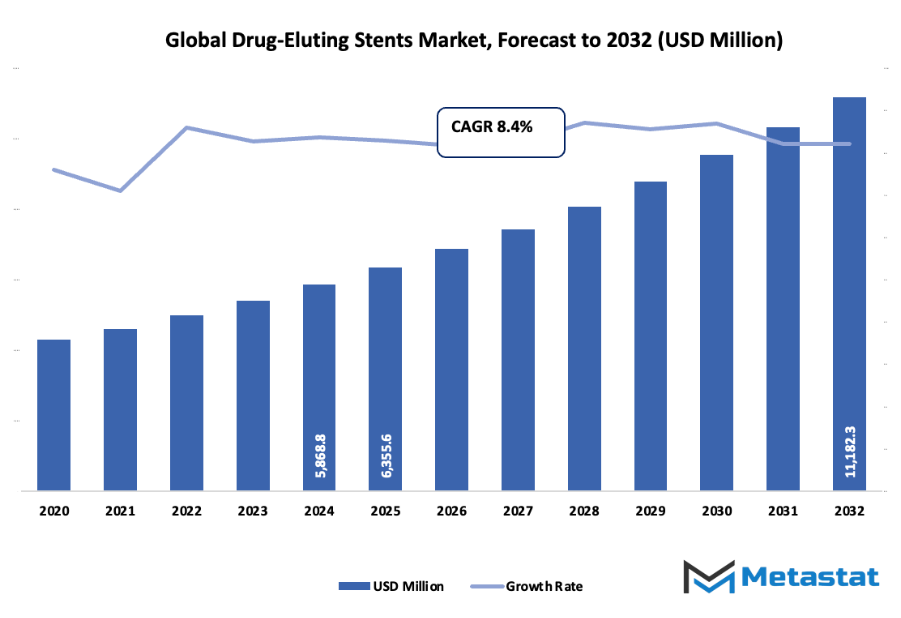
Market size is forecast to rise from USD 6355.6 million in 2025 to over USD 11182.3 million by 2032. Drug-Eluting Stents will maintain dominance but face growing competition from emerging formats.
With many companies contributing advanced designs and focused research, the Drug-Eluting Stents market shows balanced progress supported by strong scientific work and practical clinical needs. Broad participation from global and regional manufacturers encourages consistent improvements, helping healthcare systems gain access to dependable solutions for long-term cardiovascular support.
This research report categorizes the global drug-eluting stents market based on various segments and regions, forecasts revenue growth, and analyzes trends in each submarket. The report analyses the key growth drivers, opportunities, and challenges influencing the global drug-eluting stents market. Recent market developments and competitive strategies such as expansion, type launch, development, partnership, merger, and acquisition have been included to draw the competitive landscape in the market. The report strategically identifies and profiles the key market players and analyses their core competencies in each sub-segment of the global drug-eluting stents market.
Find answers to common questions about this report
Global Drug-Eluting Stents market is valued at $6355.6 million in 2025.
Global Drug-Eluting Stents market is estimated to grow with a CAGR of 8.4% from 2025 to 2032.
Global Drug-Eluting Stents market is estimated to reach $11182.3 million by 2032.
Top players operating in the Drug-Eluting Stents industry includes Abbott Laboratories, Boston Scientific Corporation, Terumo Corporation, Medtronic p
The analysts below cover Medical Devices research at Metastat Insights.
LEAD ANALYST
Utkarsh Khirodkar is a Lead Market Research Analyst at MetaStat Insight, specializing in market intelligence, technology sector assessments, and competitive strategy.

LEAD PRINCIPAL ANALYST, PHARMA AND HEALTHCARE
Food and Beverages · Healthcare · Healthcare IT · Medical Devices
Ajay Devgire is the Lead Healthcare Analyst at MetaStat Insight, leading strategic research and market intelligence initiatives across the global healthcare domain.

SENIOR RESEARCH ANALYST
Biotechnology · Food and Beverages · Medical Devices · Packaging
Snehal Pasalkar is a Research Analyst at MetaStat Insight, operating at the intersection of life sciences research, competitive strategy, and market intelligence.
Evaluating calorific value requirements and air permit compliance across municipal waste facilities requires localized data. Metastat Insight structured their analysis around operational throughput capacity and feedstock composition variations in Latin America and Eastern Europe. Their competitive mapping of sorting equipment vendors helped clarify technology differences between optical separators and heavy media systems. The study provided an objective baseline during our capital expenditure reviews.
Decarbonizing industrial thermal processes hinges on refrigerant regulations and compressor efficiency limits. Metastat Insights delivered a thorough market analysis that evaluated natural refrigerants like CO2 and hydrocarbons against synthetic low-GWP alternatives. The breakdown of utility incentives and grid capacity constraints across key European manufacturing hubs offered valuable perspective. The follow-up conversation with their sector analysts addressed our specific questions on mechanical vapor recompression systems efficiently.
Assessing 200mm wafer transition schedules and substrate supply bottlenecks requires precise technical intelligence. MetaStat Insight supplied an actionable breakdown comparing planar and trench MOSFET architectures across automotive and industrial drive markets. The regional capacity estimates for Asia-Pacific foundries helped clarify lead-time uncertainties during our strategic planning session. When we needed additional clarification on high-purity raw material sourcing, their analyst team responded with helpful context within twenty-four hours.
Explore related market intelligence reports worth reading alongside this one.