
LEAD ANALYST
Utkarsh Khirodkar is a Lead Market Research Analyst at MetaStat Insight, specializing in market intelligence, technology sector assessments, and competitive strategy.

Global Electromagnetic Weapons Market Size, Share, By Weapon Type (High-Energy Laser (HEL) Weapons, High-Power Microwave (HPM) Weapons, Electromagnetic Pulse (EMP) Weapons, Electromagnetic Railgun Weapons, Active Denial / Millimeter-Wave Weapons, Electrolaser Weapons and Others (Particle Beam Weapons, Laser-Induced Plasma Channel Weapons)), By Platform (Land-Based Systems, Naval Systems, Airborne Systems and Space-Based Systems), By Application (Counter-Unmanned Aircraft Systems (C-UAS), Air and Missile Defense, Counter-Electronics and Counter-Communications, Counter-Vehicle and Counter-Vessel, Counter-Personnel and Area Denial and Explosive Ordnance / IED Neutralization), By End User (Military, Homeland Security, Law Enforcement and Security Agencies and Critical Infrastructure Operators), Industry Analysis, Growth, Trends, and Forecast, 2026-2033
Report ID
MSI-5181
Published
September, 2026
Pages
295 Pages
Format
Historical
Base year
Forecast
Forecast period
Report Details
Choose Your License
Global Electromagnetic Weapons Market
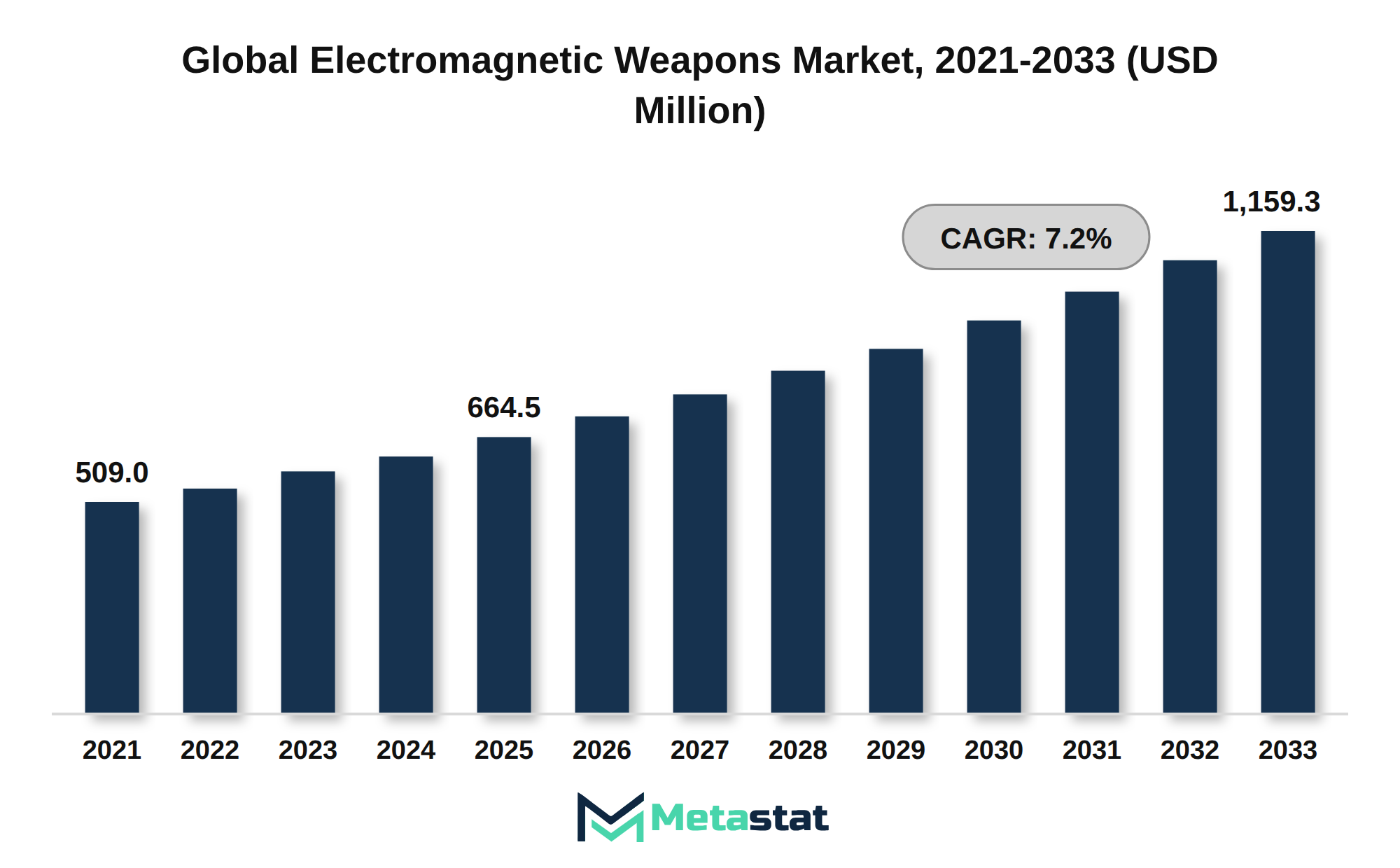
The global Electromagnetic Weapons market was valued at USD 664.5 million in 2025 and is projected to reach USD 1,159.3 million by 2033, growing at a CAGR of 7.2% over the forecast period.
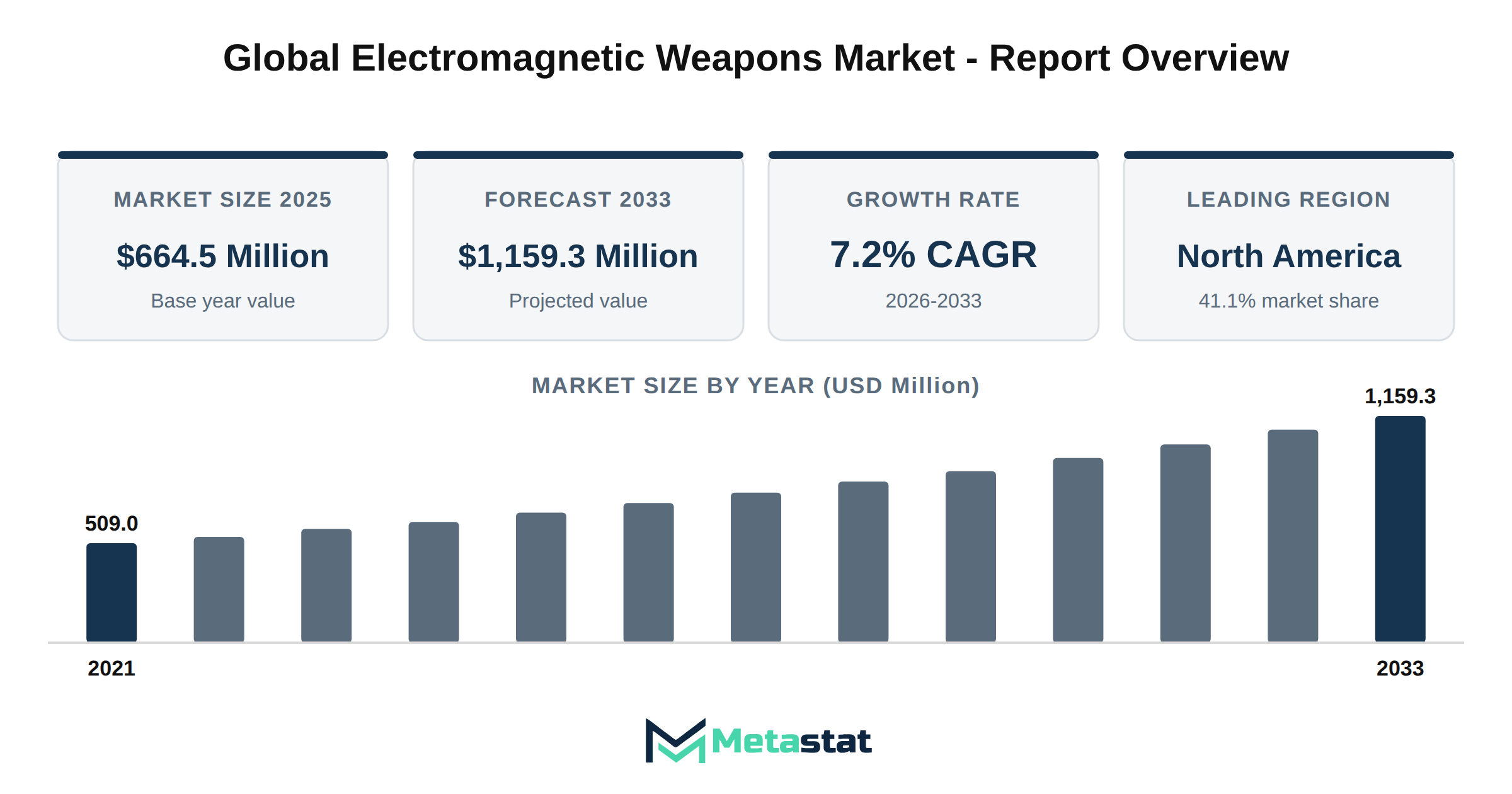
The Electromagnetic Weapons market reached a valuation of USD 664.5 million in 2025, reflecting a steady growth trajectory from USD 509.0 million in 2021. Anticipated growth through the forecast period, extending to USD 1,159.3 million by 2033, reflects a compound annual growth rate (CAGR) of 7.2%. This growth is underpinned by increasing investments in advanced defense technologies and rising demand for effective countermeasures against evolving threats.
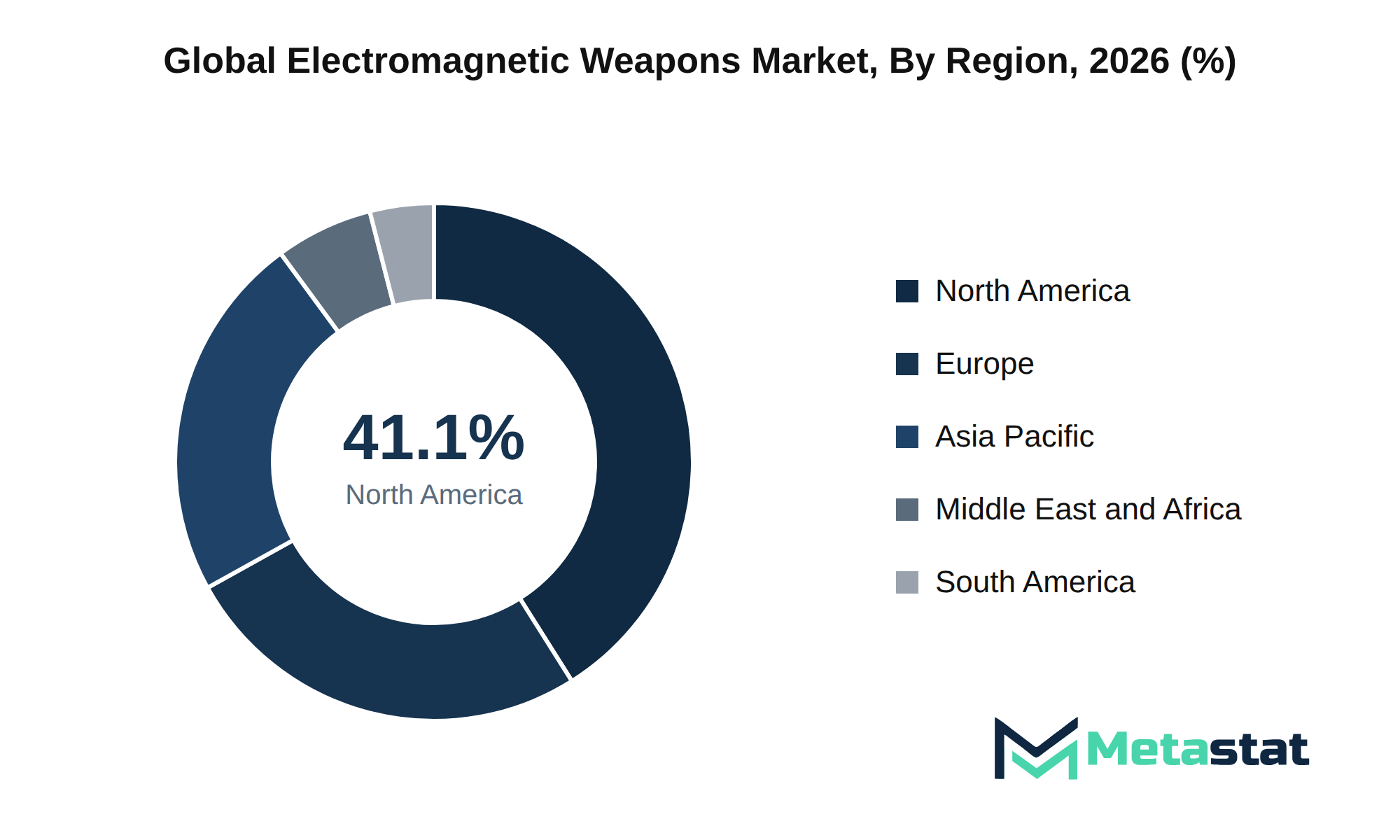
Regional dynamics play a significant role in shaping the market. North America leads with a 41.1% market share, driven by substantial military budgets and a focus on technological advancement. Europe follows with a 25.9% share, where countries prioritize strengthening defense capabilities. Asia Pacific accounts for 23.0% of the market, with growing investments in military modernization. Other regions, including South America at 4.0% and the Middle East and Africa at 6.1%, present emerging opportunities for market players.
The market fragmentation is evident across various segments, including weapon types, platforms, applications, and end users. High-Energy Laser (HEL) Weapons demonstrate significant growth potential, with a projected increase from USD 140.1 million in 2026 to USD 255.1 million in 2033, reflecting a CAGR of 8.9%. High-Power Microwave (HPM) Weapons are expected to reach USD 359.4 million by 2033, with a CAGR of 6.0%. The demand for Counter-Unmanned Aircraft Systems (C-UAS) applications is projected to rise significantly, from USD 186.5 million in 2026 to USD 343.2 million in 2033, achieving a CAGR of 9.1%.
The value chain within the Electromagnetic Weapons market encompasses various stakeholders, including manufacturers, suppliers, and end users. Military organizations serve because the primary end users, with expenditures projected to grow from USD 512.6 million in 2026 to USD 784.9 million in 2033, reflecting a CAGR of 6.3%. Concurrently, the homeland security sector is anticipated to expand to USD 162.3 million by 2033, contributing to overall market growth.
The evolving landscape of the Electromagnetic Weapons market is influenced by several factors, including regulatory compliance and standards that shape product development and deployment. Governments worldwide implement regulations that dictate the use of these technologies, impacting how companies design and manufacture electromagnetic weapons. Compliance with such regulations ensures that products meet safety, environmental, and operational standards, enabling smoother entry into various markets.
Disruption within the market stems from rapid advancements in technology, which drive research and development trajectories. Companies are investing significantly in next-generation innovations that enhance the capabilities of electromagnetic weapons. These innovations focus on improving efficiency, lethality, and integration with existing defense systems, positioning firms to gain a competitive edge in the marketplace.
Sustainable transformation is becoming increasingly important within the Electromagnetic Weapons market. Stakeholders are emphasizing decarbonization efforts and circular economy dynamics, which encourage the development of environmentally friendly technologies. Companies that prioritize sustainability in their production processes attract customers who value responsible business practices, further boosting market growth.
The supply chain landscape is significant in the market's dynamics. Firms are adapting their logistics architecture and sourcing strategies to ensure timely delivery and cost-effective production. Enhanced collaboration among suppliers and manufacturers leads to streamlined operations, ultimately benefiting end users.
Market fragmentation characterizes the competitive environment, with numerous players vying for market share. M&A dynamics influence the landscape, driven by companies pursuing strategic acquisitions to expand their portfolios and capabilities. This consolidation drives innovation and enhances the overall value chain within the market.
Capital allocation toward infrastructure investments signals strong confidence in the market's future. Key players are directing resources toward enhancing production facilities and developing advanced technologies. This strategic focus positions firms to respond effectively to increasing demand and evolving market needs.
The future strategic outlook for the Electromagnetic Weapons market remains positive, driven by ongoing advancements and increased military spending. Corporate imperatives focus on maintaining technological superiority and responding to emerging threats. Companies that align their strategies with market trends and invest in high-value recommendations stand to benefit significantly from the anticipated growth in the coming years.
The rising military expenditure across multiple nations significantly influences the Electromagnetic Weapons market. Increased geopolitical tensions and the need for advanced defense capabilities lead countries to prioritize spending on sophisticated military technologies. This trend results in greater investment in research and development, enhancing the capabilities of electromagnetic weapon systems.
Military organizations prioritize advanced technologies to maintain operational superiority, driving demand for solutions including High-Energy Laser (HEL) and High-Power Microwave (HPM) weapons. Countries focusing on strengthening their defense infrastructure invest heavily in these technologies to counter emerging threats, particularly in the context of counter-unmanned aircraft systems and missile defense applications.
Nations allocating substantial budgets towards modernizing defense capabilities create significant growth opportunities for manufacturers of electromagnetic weapons. Collaboration between government entities and defense contractors drives innovation, ensuring the market continues to evolve and meet the dynamic needs of military operations.
The expansion of infrastructure development enhances the growth of the Electromagnetic Weapons market. Increased investments in advanced military capabilities have prompted nations to enhance their technological frameworks and defense systems. Governments allocate substantial budgets towards upgrading physical and digital capacities, ensuring modernized facilities that enable the deployment of sophisticated electromagnetic weapons.
This push for modernization aligns with the growing emphasis on automation and technological integration within defense operations. Military agencies adopting automation and digitizing legacy processes contribute to rising demand for advanced electromagnetic solutions. This trend reflects a broader shift towards innovative defense strategies, positioning the market for substantial growth through 2033.
The focus on infrastructure development encompasses public-private partnerships, which increase investment opportunities in the sector. Collaboration between government entities and private sector players creates an environment conducive to research and development, further propelling advancements within the Electromagnetic Weapons market. Such dynamics encourage a competitive landscape that supports innovation and enhances overall market potential.
The Electromagnetic Weapons market faces significant challenges owing to regulatory burdens and compliance hurdles that complicate market entry and expansion. Stringent legal mandates surrounding the development and deployment of advanced weaponry result in lengthy approval processes and increase operational costs. These hurdles often lead to delays in product launches and limit the ability of manufacturers to respond swiftly to market demands.
Inflationary pressures further complicate the operational landscape, straining budgets and requiring higher capital investment for research and development. This dynamic restricts investment in innovation and technological advancements, contributing to the risk of technological obsolescence. Geopolitical instability creates an unpredictable environment, discouraging investment and collaboration among key stakeholders in the Electromagnetic Weapons market.
Resource scarcity presents another challenge, driven by the materials required for the production of advanced weapon systems becoming increasingly limited. This scarcity drives up costs and affects supply chain stability, posing risks to manufacturers aiming to deliver products on time and within budget. The combination of these factors significantly hampers growth prospects and adoption in the market.
Talent gaps and a shortage of skilled labor further contribute to operational delays and inefficiencies. The need for specialized expertise in the development and maintenance of electromagnetic weapon systems highlights the importance of workforce development in ensuring a sustainable market. Connectivity deficits and infrastructure gaps hinder effective deployment of these technologies, impacting their operational readiness and effectiveness.
The Electromagnetic Weapons market encounters significant challenges stemming from geopolitical fragmentation. Tensions between nations result in trade deficits and tariff friction, disrupting supply chains and increasing costs for manufacturers. Countries impose tariffs on key components, leading to higher input costs and margin pressures for firms operating in the market.
Technological disruptions add complexity to research and development integrations, hindering the pace of innovation. Companies struggle to maintain interoperability of systems across different platforms, impacting effectiveness and operational readiness. This instability affects military and defense spending, creating fluctuations in demand for various electromagnetic weapon systems.
Evolving legal liabilities and tightening global regulatory standards introduce compliance overhead that complicates operations. Organizations face increasing pressures to meet environmental sustainability demands, requiring significant investments in retrofitting existing systems and developing low-carbon alternatives. Infrastructure gaps impede rapid implementation of new technologies in the Electromagnetic Weapons market.
Challenges related to skilled workforce shortages contribute to talent retention pressures. Companies navigate workforce skill gaps while addressing automation displacements through strategic training initiatives. These factors create a challenging environment for stakeholders within the market, limiting growth potential and increasing competition among providers.
The Electromagnetic Weapons market experiences significant opportunities driven by technological disruptions and emerging innovations. Advancements in high-energy laser (HEL) and high-power microwave (HPM) weapons enable more effective countermeasures against modern threats, attracting interest from military and defense sectors. The integration of these technologies into existing defense systems enhances operational capabilities and ensures alignment with evolving security needs.
Geographical expansion across regions, particularly in North America and Europe, creates a demand for advanced defense solutions. Countries prioritize modernization efforts to enhance national security and improve military readiness, resulting in increased investments in electromagnetic weapons. This trend drives growth in the market, creating a competitive environment for suppliers aiming to capture regional demand.
Digital transformation initiatives reshape procurement processes, promoting the adoption of advanced weapons systems. The shift towards digital procurement facilitates access to innovative solutions and strengthens supplier relationships. Consequently, the market benefits from streamlined operations, leading to improved efficiency and cost-effectiveness for end-users.
Sustainability imperatives influence purchasing decisions, with a push towards eco-friendly technologies in defense applications. Organizations strive to align their strategies with environmental, social, and governance (ESG) criteria. This alignment opens avenues for market players to develop sustainable electromagnetic weapon systems, addressing both operational requirements and eco-conscious mandates.
The Electromagnetic Weapons market presents opportunities for product integration and niche application growth. Demand for specialized defense systems increases, prompting companies to diversify their offerings to cater to specific needs, enhancing their competitive positioning. This focus on tailored solutions drives market growth and attracts investments in the development of next-generation electromagnetic technologies.
The Global Electromagnetic Weapons market is segmented based on Weapon Type, Platform, Application, and End User.
Valued at USD 140.1 million in 2026, High-Energy Laser (HEL) Weapons are projected to reach USD 255.1 million by 2033, reflecting a CAGR of 8.9% during this forecast period. Rapid technological advancements drive demand, particularly in military applications where precision targeting and reduced collateral damage are critical. The ongoing evolution of HEL technologies enhances effectiveness, with developments in beam control and energy management improving performance in various environments.
Adoption of HEL weapons across military platforms is rising due to effectiveness in countering unmanned aerial systems and missile threats. The defense sector prioritizes higher efficiency and reduced operational costs, making HEL systems increasingly attractive. Strategic partnerships among leading players including Lockheed Martin Corporation and Northrop Grumman emphasize research and development efforts, enabling faster deployment of next-generation upgrades.
Regulatory compliance standards and national security policies significantly influence market dynamics. Countries prioritize the development of HEL technologies to enhance defense capabilities, promoting investments in advanced weaponry. Increased funding from governmental bodies creates a conducive environment for innovation, allowing manufacturers to scale production to meet evolving defense needs.
Challenges including pricing volatility and margin pressures arise from the complexities of sourcing key materials for HEL systems. Manufacturers focus on supply chain resilience, ensuring a stable flow of raw materials while mitigating risks associated with geopolitical tensions. The competitive environment remains robust, with companies striving to maintain technological leadership amid rapid advancements.
The Electromagnetic Weapons market stands to benefit from strategic opportunity windows driven by global defense spending and technological maturation. With the ongoing focus on enhancing defense capabilities, the HEL weapons segment is poised for growth, aligning with broader trends in military modernization and innovation.
High-Power Microwave (HPM) Weapons segment is estimated to reach USD 359.4 million by 2033, at a CAGR of 6% during the forecast period. Demand for HPM Weapons derives from their capacity to disrupt electronic systems, providing military and defense sectors with advanced capabilities for counteracting threats. Adoption within military frameworks occurs due to the need for effective countermeasures against unmanned aerial vehicles and other electronic threats. Significant investment in research and development facilitates the evolution of this technology, driving enhancements in performance and reliability.
Technological maturation continues, with advancements enabling next-generation upgrades. HPM Weapons evolve to meet stringent performance benchmarks, resulting in increased competitiveness within the market. End-use dynamics reflect a growing emphasis on securing airspace and protecting critical infrastructure, leading to greater consumption shifts toward these systems. Regulatory compliance standards shape market accessibility, influencing the effective deployment of various technologies.
Cost structures remain a crucial factor, with pricing volatility affecting procurement strategies for end users. Challenges in raw material sourcing and supply chain resilience impact the overall cost framework, necessitating strategic partnerships and alternative sourcing. The emergence of disruptive alternatives, including advancements in directed energy systems, contributes to ongoing market evolution, presenting both risks and strategic opportunity windows for established players. The investment outlook remains optimistic, driven by defense budgets and escalating global security concerns.
Growing demand for Electromagnetic Pulse (EMP) Weapons stems from heightened concerns regarding electronic warfare and cyber threats. Military and defense organizations increasingly recognize the need for systems capable of disabling enemy electronics without causing physical damage. EMP Weapons serve because a strategic solution for countering various threats, particularly in modern warfare scenarios.
Technological advancements contribute significantly to the expansion of EMP Weapons. Innovations in design and functionality enhance the effectiveness of these systems, leading to increased interest from defense contractors and military entities. Countries invest in advanced military capabilities, and EMP Weapons attract attention for their unique deterrent properties.
Regulatory compliance and certification standards are crucial for the proliferation of EMP Weapons. Governments impose strict guidelines on the development and deployment of these systems, ensuring their safe and effective use in operational environments. This compliance builds confidence in potential buyers, including military agencies and law enforcement organizations.
Market prospects indicate that the Electromagnetic Pulse (EMP) Weapons segment is expected to reach USD 231.9 million by 2033. This growth reflects ongoing investments in research and development, aimed at creating next-generation EMP Technologies that address emerging threats. Strategic partnerships and collaborations among industry players drive innovation and market penetration.
Electromagnetic Railgun Weapons represent a key focus area within the Electromagnetic Weapons market, projected to grow at a CAGR of 4.5% during the forecast period. Increased investment in advanced military technologies drives demand for these weapons, particularly in defense sectors where high precision and effectiveness are critical. This segment experiences growth driven by nations seeking to enhance their strategic capabilities while ensuring operational efficiency.
Advancements in railgun technology contribute to the evolution of this segment, with significant investments aimed at improving range, speed, and overall performance. The development of next-generation railguns aligns with the trend of enhanced lethality and reduced operational costs, appealing to military organizations globally. Such innovation supports competitive positioning in a market characterized by rapid technological advancement.
Railgun systems find application in various military scenarios, especially in naval and land-based platforms, emphasizing their role in modern warfare. The transition towards electromagnetic weapons aligns with broader defense strategies aimed at countering emerging threats. Continued demand from military end-users highlights the importance of railgun technology in addressing security challenges.
Regulatory frameworks surrounding military technology affect the adoption of railgun systems, with compliance standards ensuring operational integrity and safety. Strategic partnerships among defense contractors facilitate innovation and efficiency while navigating policy landscapes. Such collaborations enhance supply chain resilience, supporting the production of railgun technologies.
The market's outlook remains positive owing to increasing defense budgets globally, reflecting a commitment to advanced military solutions. Investments in research and development play a crucial role in determining the future trajectory of the Electromagnetic Railgun Weapons segment, shaping its potential for sustained growth and expansion in the coming years.
The integration of Active Denial / Millimeter-Wave Weapons into defense strategies reflects a response to evolving threats in modern warfare. This segment benefits from growing concerns over unmanned aerial systems and other emerging aerial threats, creating a demand for effective countermeasures. Governments and defense organizations increasingly prioritize technologies capable of non-lethal engagement, minimizing collateral damage while maintaining operational effectiveness. The market's focus on such technologies aligns with broader trends in military modernization and the shift towards precision-targeting capabilities.
Technological advancements in Active Denial / Millimeter-Wave Weapons spur ongoing development and innovation. The maturation of these technologies creates an environment ripe for next-generation upgrades, enhancing performance and increasing operational versatility. Military applications increasingly emphasize the need for adaptable and scalable solutions that are deployed across various platforms, including land and naval systems.
End-use dynamics reflect a growing commitment to integrating Active Denial / Millimeter-Wave Weapons within broader defense architectures. Law enforcement agencies and security organizations show heightened interest in these capabilities, particularly for crowd control and perimeter security applications. Increased investment in research and development further supports the evolution of this segment, with significant potential for future applications within civilian and military frameworks.
Regulatory compliance standards and certification processes play crucial roles in shaping the segment's growth. While defense agencies align their procurement strategies with evolving policy frameworks, the influence of governmental regulations on the adoption of these technologies becomes increasingly apparent. This focus on compliance impacts design and development and influences market dynamics and competitive positioning.
Investment outlook remains positive for Active Denial / Millimeter-Wave Weapons, with strategic opportunity windows emerging owing to expanding defense budgets. The market's resilience is supported by robust supply chains and a commitment to sourcing advanced materials necessary for production. Overall, the segment is poised for significant growth within the broader Electromagnetic Weapons market, driven by technological advancements and an evolving landscape of military and security needs.
Electrolaser Weapons represent a noteworthy segment within the Electromagnetic Weapons market, demonstrating unique attributes in both functionality and application. Growing interest in precision targeting and non-lethal options drives demand for these weapons. Enhanced safety profiles, which minimize collateral damage compared to traditional munitions, further contribute to their appeal among military and law enforcement agencies.
Adoption rates of Electrolaser Weapons are influenced by advancements in laser technology and optics, enabling the development of systems that offer greater efficacy and operational range. Innovations in energy efficiency and compact design play important roles in expanding their deployment across various platforms, including land, naval, and airborne systems. Increased funding for research and development strengthens technological maturation, leading to next-generation upgrades that enhance performance and reduce operational costs.
Electrolaser Weapons find applications in counter-unmanned aircraft systems (C-UAS) and other defense initiatives, responding to the growing necessity for advanced solutions in an evolving threat landscape. The integration of these systems into broader military strategies reflects an evolving end-use dynamic, where defense forces prioritize adaptability and effectiveness.
Regulatory compliance standards and certification processes shape the development trajectory, ensuring that new technologies align with international guidelines and operational safety requirements. These factors reinforce strategic opportunity windows for manufacturers, prompting increased investment in production capabilities and creating a competitive market environment dedicated to innovation.
Innovations in directed energy technologies contribute to the growing interest in Particle Beam Weapons and Laser-Induced Plasma Channel Weapons. These advanced systems, which leverage high-energy physics, offer unique operational advantages in military applications. Demand for non-kinetic solutions increases among defense organizations, driven by the need for precision targeting and minimal collateral damage.
Adoption of these technologies occurs within several military applications, including missile defense and anti-drone systems. While advancements in related technologies progress, the capabilities of Particle Beam Weapons and Laser-Induced Plasma Channel Weapons become more viable for integration into existing defense systems. This trend promotes further exploration of next-generation upgrades, enhancing performance and reliability, which supports operational effectiveness.
Strategic opportunity windows emerge due to decreasing costs associated with research and development. Investment in these technologies increases owing to entities seeking innovative solutions to combat evolving threats. The market for Electromagnetic Weapons expands, with a growing focus on enhancing the effectiveness of military operations through advanced weaponry.
The defense procurement environment reflects an increased emphasis on compliance with regulatory standards and certifications, ensuring that new technologies meet established guidelines. This focus influences the development processes for Particle Beam Weapons and Laser-Induced Plasma Channel Weapons, encouraging alignment with evolving military requirements and operational standards.
Valued at USD 214.3 million in 2026, the Land-Based Systems segment is projected to reach USD 336.2 million by 2033, at a CAGR of 6.6% during the forecast period. The increasing focus on enhancing ground-based defense capabilities drives demand within this segment. Investment in military modernization and strategic initiatives emphasizes the need for advanced electromagnetic weapon systems in land-based operations. This investment momentum reflects a significant determination to counter evolving threats, supporting growth in the Electromagnetic Weapons market.
Technological maturation plays a critical role in advancing land-based systems, promoting innovation in weapon designs and operational effectiveness. Next-generation upgrades enhance system capabilities, directly impacting adoption rates among military and defense organizations. The ongoing evolution of land-based electromagnetic systems aligns with military strategies focused on multi-domain operations, further emphasizing their importance in defense arsenals.
Downstream applications encompass a variety of operational scenarios, including counter-unmanned aircraft systems and ground defense operations. The adaptability of land-based systems to various end-use dynamics emphasizes their relevance across different military branches. Regulatory compliance standards and certifications ensure these systems meet safety and performance requirements, facilitating broader acceptance and integration into military operations.
Cost structures and pricing strategies significantly influence market dynamics for land-based systems. Manufacturers face pressures related to pricing volatility and margin considerations, necessitating strategic approaches to maintain competitiveness. Supply chain resilience becomes increasingly important in securing raw material sourcing, ensuring uninterrupted production capabilities during potential disruptions. Strategic opportunities for investment in land-based systems highlight the importance of capital allocation towards innovative solutions in the Electromagnetic Weapons market.
Demand for Naval Systems in the Electromagnetic Weapons market derives from advanced military strategies emphasizing the need for effective maritime defense. Increased focus on naval capabilities and security against emerging threats drives the adoption of innovative electromagnetic technologies. The segment is expected to reach USD 394.2 million by 2033, at a CAGR of 5.7% during the forecast period. This growth reflects a broader trend towards enhancing naval defense systems to counteract evolving maritime challenges.
Technological maturation drives investment in next-generation naval systems, with significant advancements in High-Power Microwave (HPM) and High-Energy Laser (HEL) weapons. These developments enhance operational flexibility and responsiveness, catering to the demands of modern naval warfare. The deployment of such systems aligns with strategic objectives to improve defense capabilities and protect critical maritime interests, further shaping the dynamics within the market.
Regulatory compliance and certifications shape investment strategies within the naval systems segment. Adherence to established standards reinforces the credibility and effectiveness of deployed technologies in operational scenarios. Consequently, investments in this area reflect a commitment to maintaining security and operational integrity against potential threats.
Capital investment outlook within the segment emphasizes long-term growth and sustained innovation. Stakeholders focus on strategic opportunity windows to integrate advanced electromagnetic technologies, enhancing the operational capabilities of naval systems. This proactive approach ensures alignment with defense priorities and facilitates the segment's overall expansion in the evolving Electromagnetic Weapons market.
Investments in Airborne Systems represent a critical component of the Electromagnetic Weapons market, with an expected valuation of USD 289.8 million by 2033. Advancements in military technology and the need for enhanced defense mechanisms drive robust demand from defense organizations worldwide. The integration of next-generation upgrades strengthens the capabilities of airborne systems, allowing for improved targeting and engagement with threats including unmanned aerial vehicles.
Technological maturation enables more efficient energy consumption and increases reliability in the evolution of airborne systems. This evolution aligns with the broader trend of modernizing defense strategies, particularly in counter-unmanned aircraft applications. Prime end-users, including military forces and homeland security agencies, emphasize the importance of rapid response and operational flexibility, propelling further investment in these systems.
Cost structures face scrutiny, especially with rising component prices and the need for ongoing research and development. Strategic investment in innovation and partnerships with leading defense contractors ensures resilience against pricing volatility. The market remains dynamic, with ongoing assessments of regulatory compliance and certification processes impacting growth trajectories.
The demand for airborne systems reflects a strategic priority within the defense landscape, highlighting the importance of maintaining technological superiority through advanced electromagnetic weapon systems. The commitment to capital investment in this segment signifies continued growth and adaptation to evolving security challenges.
Investment in Space-Based Systems continues to attract attention within the Electromagnetic Weapons market due to advancements in satellite technologies and space capabilities. These systems provide strategic advantages in monitoring and neutralizing threats, aligning with military and defense objectives. Increasing reliance on satellite communications and data transmission heightens the demand for effective and reliable systems capable of counteracting potential threats in space.
The Space-Based Systems segment is projected to grow at a CAGR of 7.3% during the forecast period. This growth results from ongoing developments in satellite defense technologies and the need for comprehensive security measures. Military organizations prioritize capabilities that enhance situational awareness and offer proactive defense solutions against emerging threats.
The integration of advanced technologies in Space-Based Systems drives the evolution of product offerings, enabling enhanced operational flexibility and effectiveness. Continuous upgrades and innovations in satellite technology support the transition from traditional defense methods to more sophisticated solutions, enhancing performance metrics and reducing vulnerability to countermeasures.
A focus on countering anti-satellite weapons influences strategic investments in this segment. The emergence of space-based threats requires nations to strengthen their defensive posture, increasing the necessity for robust countermeasures. This alignment with defense needs underscores the relevance of Space-Based Systems within the broader context of the Electromagnetic Weapons market.
Man-Portable Systems within the Electromagnetic Weapons market benefit from increasing adoption driven by the need for flexible and portable defense solutions. Military forces require systems that enable rapid deployment and effective engagement in diverse operational environments. Enhanced mobility and ease of use make these systems attractive for ground troops, leading to their integration into various missions.
Technological maturation influences the evolution of Man-Portable Systems. Advancements in miniaturized components and energy sources contribute to the efficiency and effectiveness of these weapons. Innovations in battery technology and lightweight materials enable prolonged usage and improve maneuverability on the battlefield.
Next-gen upgrades influence segment expansion through the introduction of advanced targeting systems and improved accuracy. Enhanced capabilities in electronic warfare and countermeasures improve the operational effectiveness of Man-Portable Systems, providing military forces with critical advantages in combat scenarios.
Regulatory compliance standards and certifications impact the development and deployment of these systems. Adhering to international regulations ensures that manufacturers meet safety and performance requirements, building trust and credibility within the market. This compliance, coupled with ongoing investments in research and development, supports strategic opportunities for growth in this segment.
Cost structures and pricing volatility remain crucial considerations for stakeholders involved in the Electromagnetic Weapons market. Manufacturers face challenges in managing material costs and ensuring competitive pricing while maintaining margins. Strategic partnerships and supply chain resilience mitigate these pressures, allowing for continued investment in innovative Man-Portable Systems.
Counter-Unmanned Aircraft Systems (C-UAS) segment is valued at USD 186.5 million in 2026 and is projected to reach USD 343.2 million by 2033, at a CAGR of 9.1% during the forecast period. This segment experiences growth driven by increasing reliance on unmanned aerial vehicles (UAVs) across military and civilian applications. Enhanced security concerns regarding unauthorized drone operations fuel demand from military organizations tasked with countering aerial threats. Technological advancements in electromagnetic weapons align with the growing sophistication of UAVs, leading to greater adoption of C-UAS solutions. Investments in R&D to develop next-generation systems improve capabilities and increase effectiveness against evolving threats. Military organizations prioritize integrating these systems into existing defense frameworks, promoting the C-UAS segment within the broader Electromagnetic Weapons market. Regulatory compliance regarding airspace safety further supports segment growth, prompting governments to invest in advanced C-UAS technologies. The market experiences a shift in consumption patterns, driven by end users seeking efficient and reliable methods to counter unmanned threats. The C-UAS segment reflects a dynamic response to changing security landscapes, driven by technological maturation and increasing strategic investments, positioning it for sustained growth through 2033.
Investments in the Air and Missile Defense application reflect a strong response to increasing threats from airborne assaults. Heightened geopolitical tensions and the proliferation of advanced missile technologies drive demand for effective defensive systems. The segment is estimated to reach USD 231.9 million by 2033, at a CAGR of 6% during the forecast period. This growth results from the rising need for effective countermeasures against various aerial threats.
Technological advancements play a critical role in shaping this segment. Innovations in radar systems, interception technologies, and integration with existing military infrastructures enhance overall effectiveness. These advancements support military forces in maintaining air superiority, leading to increased adoption rates within defense budgets across various nations.
End-user dynamics significantly influence market trends. Militaries worldwide prioritize investments in Air and Missile Defense systems to protect civilian populations and critical infrastructure. The ongoing emphasis on interoperability and joint operations further accelerates the demand for solutions that integrate with diverse platforms and systems across the Electromagnetic Weapons market.
Regulatory compliance and policy frameworks contribute to market momentum. Governments establish standards for defense procurement, ensuring that systems meet specific performance criteria. This focus on compliance encourages investments in advanced technologies that align with national defense strategies.
The Air and Missile Defense segment displays significant growth, fueled by increasing threats, technological innovations, and strategic investments. The anticipated growth trajectory positions this segment because a crucial component of the overall Electromagnetic Weapons market.
Technological advancements drive interest in Counter-Electronics and Counter-Communications within the Electromagnetic Weapons market. This segment focuses on neutralizing electronic systems and communications networks, which have become critical in modern warfare. The increasing reliance on electronic devices in military operations increases the need for effective countermeasures, prompting defense agencies to invest significantly in this area.
Investment trends indicate a rising demand for robust solutions to mitigate threats from adversarial electronics, leading to forecasts of USD 220.3 million by 2033. The urgency to enhance military capabilities against electronic warfare tactics serves because a catalyst for segment growth. Development of next-generation technologies aims to address evolving threats, ensuring operational readiness in diverse combat scenarios.
Expanded implementation across various military branches, including air, land, and naval forces, demonstrates the segment's versatility. Strategic investments by defense contractors in R&D efforts contribute to innovations, reinforcing market competitiveness. Enhanced capabilities in jam-resistant communications and electronic countermeasures emerge because vital components in contemporary defense strategies, emphasizing the segment's significance within the broader Electromagnetic Weapons market.
Investment in the Counter-Vehicle and Counter-Vessel segment aligns with the increasing focus on advanced defense capabilities. This segment is projected to grow at a CAGR of 8.3% during the forecast period, fueled by rising demand for effective solutions against emerging threats to both land and maritime assets. The emphasis on enhancing military readiness and operational effectiveness drives adoption among defense forces globally.
Technological maturation contributes significantly to this growth, with advancements in directed energy systems and enhanced targeting capabilities transforming operational strategies. The market experiences a shift in consumption dynamics, driven by the need for efficient and scalable solutions that address diverse operational environments. Regulatory compliance standards influence procurement decisions, ensuring that systems meet operational requirements while maintaining safety and effectiveness.
Cost structures and pricing volatility play crucial roles in shaping market strategies. Increased competition among key players drives innovation and product evolution, allowing military and defense agencies to access a broader range of effective solutions. Strategic opportunity windows emerge in response to geopolitical uncertainties, pushing investments in this segment forward.
Overall, the Counter-Vehicle and Counter-Vessel applications within the Electromagnetic Weapons market reflect a robust and dynamic growth trajectory, promising significant returns for stakeholders engaged in this vital domain.
Technological advancements in electromagnetic weapons have created strong interest in the Counter-Personnel and Area Denial application. This segment addresses the growing need for effective and non-lethal means of personnel management in various operational theaters, including military and security environments. Enhanced performance characteristics of electromagnetic systems contribute to their adoption in scenarios requiring rapid response and precision targeting.
Investment in research and development supports expanding the capabilities of these systems. The development of next-generation electromagnetic technologies supports increased effectiveness in countering threats without causing collateral damage. This evolution aligns with contemporary military strategies focused on minimizing civilian impact while maintaining operational effectiveness.
Policy headwinds and regulatory compliance standards influence the deployment of Counter-Personnel and Area Denial systems. Governments increasingly emphasize the importance of non-lethal options in military engagements, driving demand for innovative solutions that adhere to international regulations. This trend shapes the market landscape, positioning these systems because vital components in future defense frameworks.
Changing end-use dynamics further enhance the segment's relevance. Military organizations and law enforcement agencies seek methods to control crowds and neutralize threats with precision. The ability to deploy these systems in diverse environments enhances their appeal, expanding their utilization across sectors beyond traditional military applications.
Supply chain resilience remains crucial for the development and distribution of these technologies. Dependable sourcing of raw materials and components minimizes disruptions, ensuring continuous innovation and delivery to end users. Strategic partnerships among manufacturers and suppliers contribute to the stability of the market, supporting growth prospects within the Counter-Personnel and Area Denial segment of the Electromagnetic Weapons market.
Addressing the critical challenge of Explosive Ordnance and Improvised Explosive Devices (IED) Neutralization significantly influences the Electromagnetic Weapons market. Heightened concerns over security and the persistent threat of terrorism drive demand for advanced neutralization solutions. Governments and military agencies prioritize the development of innovative technologies to enhance operational safety, leading to increased investments in this area.
Technological advancements play a significant role in shaping this segment. The maturation of electromagnetic weaponry facilitates the deployment of more precise and effective neutralization solutions. Increased collaboration between defense contractors and governmental organizations supports the creation of next-generation systems specifically designed for explosive ordnance and IED applications.
End-use dynamics significantly affect investment strategies in this segment. Military organizations require reliable solutions to mitigate risks posed by explosive threats, pushing suppliers to refine their product offerings. An increased focus on regulatory compliance and safety standards further necessitates the development of advanced technologies tailored for this application, ensuring that systems meet stringent operational requirements.
Ongoing shifts in consumption patterns reflect an evolving market. Enhanced awareness of explosive threats prompts military and security agencies to adopt more sophisticated neutralization techniques. This evolution leads to the emergence of strategic opportunity windows, inviting new entrants to innovate within the sector and reinforcing the importance of supply chain resilience.
Investment outlooks for the Explosive Ordnance / IED Neutralization segment remain robust. Stakeholders recognize the potential for growth driven by advancements in technology and an increasing need for effective countermeasures against explosive threats. This segment continues to attract attention, contributing to the overall expansion of the Electromagnetic Weapons market.
Growing concerns regarding the security of critical infrastructure services fuel demand for advanced protective technologies. Governments and organizations prioritize safeguarding facilities, utilities, and data centers against increasingly sophisticated attacks, driving interest in electromagnetic weapons. The market experiences a surge in investments aimed at enhancing resilience against potential threats, including cyber-attacks and physical intrusions. Technological advancements facilitate the development of innovative solutions tailored to meet these security challenges. Enhanced capabilities in counteracting potential threats and improving operational efficiency drive these advancements.
End-user dynamics significantly shape the market landscape. Military and homeland security sectors emphasize the integration of advanced electromagnetic technologies to protect critical assets. The need for robust systems that mitigate vulnerabilities aligns with regulatory compliance standards, which increasingly emphasize the necessity of protective measures for critical infrastructure. While regulations evolve, organizations adapt by seeking advanced technologies that enhance their security postures.
Strategic opportunity windows arise from the ongoing need for modernization and upgrades of existing systems. This evolution in technology leads to increased capital investments, reflecting a commitment to maintaining operational integrity and security. Downstream application dynamics highlight the significance of electromagnetic weapons in enhancing overall security strategies, improving protection across various sectors. While organizations navigate the complexities of modern threats, the demand for advanced protective solutions continues to strengthen, emphasizing the critical role these technologies play within the broader electromagnetic weapons market.
Investment in the Military segment reflects a significant commitment to advanced weaponry, with a valuation of USD 512.6 million in 2026, projected to escalate to USD 784.9 million by 2033 at a CAGR of 6.3% during the forecast period. Increased geopolitical tensions and the demand for sophisticated defense solutions drive the need for effective electromagnetic weapons within military applications.
Technological maturation alongside next-generation upgrades significantly shapes the Military segment. Enhanced performance capabilities, including precision targeting and reduced collateral damage, appeal to military forces seeking to modernize their arsenals. Adoption of high-energy laser (HEL) and high-power microwave (HPM) weapons within this segment enables military operators to counter evolving threats and strengthen national security strategies.
Budget allocations towards defense and homeland security initiatives further support market expansion. Governments increasingly prioritize defense spending to enhance military readiness and maintain strategic advantages. This regulatory environment encourages collaboration between defense contractors and military entities, promoting innovation in the development of next-gen electromagnetic weapons.
The focus on countering unmanned systems and improving air and missile defense capabilities highlights end-use dynamics within the Military segment. Initiatives to safeguard critical infrastructure and enhance operational effectiveness position electromagnetic weapons because essential assets in modern warfare. Consequently, the demand for military applications within the Electromagnetic Weapons market is anticipated to gain momentum, aligning with broader defense strategies on a global scale.
Investments in the Homeland Security segment reflect a strategic focus on addressing emerging threats and enhancing national safety protocols. This segment is expected to reach USD 162.3 million by 2033, exhibiting a CAGR of 9% during the forecast period. The increasing frequency of security breaches and the rise of sophisticated threats drive demand for advanced electromagnetic weapons. Technological maturation significantly contributes to this growth, with emerging applications in surveillance, communication disruptions, and counter-drone operations becoming vital for effective homeland defense strategies.
Regulatory compliance standards and certifications play a crucial role in shaping market dynamics. Governments prioritize the acquisition of systems that meet strict safety and operational guidelines, influencing procurement decisions. The competitive landscape encompasses various players striving to innovate and refine their offerings in response to evolving threats. This competition drives continuous advancements in product evolution, ensuring that solutions remain effective against emerging challenges.
Strategic opportunity windows arise from the need for next-gen upgrades to existing systems, enhancing capabilities across multiple domains. The growing emphasis on homeland security among governments worldwide encourages investment in advanced technologies. This trend strengthens the electromagnetic weapons market, positioning it for sustainable growth through 2033.
Growing interest in advanced technology within the Law Enforcement and Security Agencies segment drives consistent demand for innovative electromagnetic weapons. Law enforcement agencies prioritize the need for sophisticated systems to enhance public safety and counter emerging threats, leading to increased investment in this area. Technological maturation in high-energy laser and high-power microwave systems supports the development of effective solutions tailored to the specific operational needs of security forces.
The Law Enforcement and Security Agencies segment is projected to reach USD 69.6 million by 2033. Strategic opportunities arise from the increasing focus on countering unmanned threats and enhancing surveillance capabilities. Regulatory compliance standards related to public safety and national defense influence purchasing decisions within this segment, ensuring that solutions meet both operational and legal requirements.
The evolving security landscape prompts agencies to seek next-generation upgrades, enhancing effectiveness and operational efficiency. Investment in electromagnetic weapons addresses diverse operational challenges, including countering advanced threats and securing critical infrastructure. End-use dynamics shift towards incorporating more technologically advanced systems, and the market responds with innovative solutions designed to meet evolving needs.
Investment in the Critical Infrastructure Operators segment reflects a surge in demand for advanced defense solutions. The evolving threat landscape, characterized by cyber-attacks and physical threats to essential services, drives the necessity for enhanced protective measures. These operators increasingly adopt electromagnetic weapons to secure critical assets, ensuring operational continuity and safety. The segment is projected to grow at a CAGR of 10.6% during the forecast period, driven by heightened awareness of the vulnerabilities associated with critical infrastructure. Regulatory compliance and standards play an important role in shaping investment strategies, compelling operators to integrate advanced systems that meet strict security requirements.
Technological maturation within the electromagnetic weapons market presents opportunities for next-generation upgrades. The integration of advanced systems enhances response capabilities against emerging threats, aligning with the strategic objectives of critical infrastructure operators. Cost structures associated with these technologies influence purchasing decisions, resulting from operators seeking to balance effectiveness and budgetary constraints. The competitive landscape continues to evolve, with ongoing advancements in electromagnetic weaponry prompting shifts in consumption patterns among operators, who prioritize reliability and performance in their procurement strategies.
Research and Development Organizations play a crucial role in the Electromagnetic Weapons market by driving innovation and technological advancements. These organizations focus on developing next-generation systems, enhancing performance and efficiency in electromagnetic weaponry. The demand for advanced systems stems from the need for improved defense capabilities and the ability to address emerging threats, influencing investment patterns within this segment.
Adoption of advanced research methodologies fuels segment expansion by promoting collaboration among various stakeholders, including government bodies, military agencies, and technology providers. This collaborative approach allows for the sharing of resources and expertise, accelerating the development of advanced technologies. The emphasis on technological maturation enhances reliability and effectiveness, appealing to end users who prioritize performance in critical defense applications.
Next-generation upgrades play a significant role in shaping the development landscape, with organizations targeting enhanced capabilities including precision targeting and increased operational range. Regulatory compliance and certifications drive the development process, ensuring that new technologies meet established safety and performance standards.
Cost structures remain a critical consideration, owing to research initiatives that demand significant investment in resources and skilled personnel. Pricing volatility in raw materials impacts project budgets, necessitating careful financial planning. Ongoing innovations and strategic opportunity windows provide avenues for organizations to create competitive advantages within the market.
Disruptive alternatives, while posing challenges, present opportunities for organizations willing to adapt and innovate. Organizations in this segment remain vigilant about technological obsolescence, ensuring that their research efforts align with the evolving demands of the defense landscape. Overall, the focus on research and development within the Electromagnetic Weapons market will significantly influence future advancements and the competitive dynamics of the industry.
Focus on strategic advancements marks the approach of Other Government and Defense Organizations within the Electromagnetic Weapons market. Demand arises from the necessity of maintaining national security and addressing emerging threats, prompting investments in advanced technology. Adoption trends indicate a shift toward modernization, with agencies prioritizing capabilities that enhance operational effectiveness and readiness against evolving adversaries.
Technological maturation influences procurement strategies, leading to partnerships with defense contractors specializing in electromagnetic weapon systems. This segment emphasizes next-generation upgrades to existing systems, reflecting a commitment to integrating innovative solutions for countering contemporary threats. End-use dynamics demonstrate a growing reliance on advanced electromagnetic capabilities, aligning with the broader trend toward automation and smart defense systems.
Regulatory compliance standards shape procurement decisions, necessitating adherence to stringent guidelines that dictate the operational deployment of these technologies. Cost structures and pricing volatility present challenges, affecting budget allocations and investment timelines for these organizations. Strategic opportunity windows emerge due to technological advancements that provide options for tailored solutions that meet specific operational requirements.
Supply chain resilience becomes integral to maintaining the flow of critical components necessary for effective deployment. The threat of substitution risks looms, emphasizing the need for continuous innovation to remain competitive. Disruptive alternatives in the market necessitate a proactive approach to research and development, ensuring that offerings evolve in response to shifting demand and technological obsolescence.
Overall, the segment captures significant interest within the Electromagnetic Weapons market, driven by strategic priorities and the imperative for enhanced defense capabilities against a backdrop of evolving threats.
Based on geography, the Global Electromagnetic Weapons market is divided into North America, Europe, Asia-Pacific, South America, Middle East, and Africa.
Regional dynamics in the North America Electromagnetic Weapons market reflect a strong growth trajectory, driven by significant investment in defense technologies and modernization efforts. The United States, Canada, and Mexico each play important roles in driving market expansion, supported by a high level of government funding and a commitment to enhancing national security capabilities. The forecasted market size is projected to reach USD 449.8 million by the end of 2033, with a CAGR of 7.2% throughout the forecast period.
This market benefits from a concentration of advanced technological infrastructure and localized manufacturing facilities. High demand for sophisticated defense systems, particularly in military applications, drives investment in new weapon types, including High-Energy Laser (HEL) and High-Power Microwave (HPM) weapons. The military sector remains the predominant end user, with projected growth in the segment supported by ongoing defense contracts and a focus on next-generation systems.
North America commands a 41.1% share of the global market in 2025, emphasizing its strategic importance in the development and deployment of electromagnetic weapons. Key players including Lockheed Martin Corporation and Northrop Grumman contribute to a competitive landscape characterized by innovation and a focus on emerging technologies. The regional market structure allows for significant collaboration among defense contractors, enhancing the capacity for research and development, which enables the introduction of advanced solutions.
Investment in homeland security and critical infrastructure protection presents additional growth opportunities within the market. Local compliance mandates and regulatory frameworks shape procurement dynamics, ensuring alignment with national security strategies. The presence of a skilled workforce and strong supply chain networks further strengthens the market's resilience, supporting continued expansion and adaptation to evolving threats.
Europe accounts for 25.9% of the Electromagnetic Weapons market in 2025. The region's strategic investments in defense technologies contribute to strong demand for advanced electromagnetic systems. Countries including Germany, France, and the UK prioritize modernization of their military capabilities, enhancing their position within the market. Regulatory frameworks in Europe support the development and deployment of these technologies, encouraging local compliance and driving innovation.
Infrastructure modernization initiatives across Europe drive the adoption of electromagnetic weapons, particularly in military and homeland security applications. The demand for high-energy laser and high-power microwave systems reflects the European focus on enhancing defense mechanisms against emerging threats, including unmanned aerial systems. Localized procurement dynamics shape purchasing behaviors, leading to increased demand for tailored solutions that meet specific regional needs.
Key players in the European market, including established manufacturers and emerging ventures, compete to capture market share through innovative product offerings and localized manufacturing capabilities. Collaboration among industry players drives vendor consolidation trends, strengthening the overall competitive landscape. The presence of domestic market participants allows for accelerated integration of advanced electromagnetic systems into existing defense infrastructures.
Investment in research and development remains a critical component of the market's growth strategy. Nations prioritize funding to advance technologies that enhance energy grid resiliency and local infrastructure readiness, ensuring effective integration of electromagnetic weapons. The combination of strategic entry barriers and favorable foreign direct investment (FDI) flows supports the development of a strong regional ecosystem for these advanced defense technologies.
The Asia-Pacific region plays a critical role in the Electromagnetic Weapons market, driven by increasing demand for advanced military capabilities. Countries like China, Japan, and India invest significantly in upgrading their defense systems, emphasizing modernization and technological advancements. The necessity for efficient counter-unmanned aircraft systems (C-UAS) fuels development, particularly in nations with heightened security concerns.
Regional dynamics reveal varied adoption rates, with South Korea and Australia pursuing strategic partnerships to enhance domestic capabilities. Emerging markets within Southeast Asia reflect escalating interest in localized manufacturing, contributing to a more resilient supply chain. These nations prioritize defense spending, aligning with geopolitical shifts that influence regional security policies.
Infrastructure modernization remains a focus, with governments channeling resources into enhancing local manufacturing densities and ensuring energy grid resiliency. The market experiences incremental growth driven by high-value replacement cycles of outdated systems. This situation presents opportunities for domestic vendors to capitalize on emerging needs.
Competitive landscapes within the region highlight a mix of domestic market participants and global players vying for market share. Companies like Northrop Grumman and Lockheed Martin operate strategically to meet localized procurement dynamics, encouraging innovation tailored to specific regional challenges. This competitive environment is expected to stimulate further investment and technological advancements within the Electromagnetic Weapons market.
The Electromagnetic Weapons market in South America shows significant potential for growth, driven by increasing demand for advanced defense systems. Countries including Brazil and Argentina exhibit rising interest in military modernization and enhanced security measures. The regional share of the global market stands at 4.00% for 2025, indicating a developing landscape for electromagnetic weapon technologies.
Investment in infrastructure modernization accelerates market development. Upgrading defense capabilities, alongside government initiatives to enhance regional security, leads to increased procurement of advanced systems. The focus on localized manufacturing and supply chain regionalization further strengthens market prospects.
Domestic players are beginning to emerge, emphasizing collaborative ventures and partnerships aimed at increasing local production capacity. This trend creates competitive advantages and aligns with broader geopolitical dynamics influencing the region.
Overall, the South American market for electromagnetic weapons is characterized by incremental growth vectors, driven by strategic investments and a shift towards advanced defense technologies. This progress enables increased adoption of these systems, contributing to the evolution of the overall market landscape.
The Middle East and Africa represent an evolving market for electromagnetic weapons, with a share of 6.1% of the global market in 2025. Countries like Saudi Arabia and the UAE exhibit significant investment in military modernization and advanced defense technologies. Geopolitical tensions and regional security concerns drive demand for robust defense capabilities, particularly in the military and homeland security segments.
The growth of the electromagnetic weapons market in this region is supported by infrastructure modernization efforts and increasing government budgets for defense procurement. The presence of domestic market leaders, alongside an influx of foreign direct investment, enhances local manufacturing capabilities and promotes localized procurement dynamics. These factors contribute to the strategic expansion of the market, driven by stakeholders seeking to strengthen national security and address evolving threats.
South Africa, along with other countries in the Rest of Middle East and Africa, reflects a diverse demand landscape. Regional supply chain dynamics and geopolitical fragmentation influence market strategies, while cultural nuances shape B2B buying behaviors in defense procurement. While the market matures, factors including high-value replacement cycles and incremental growth vectors become increasingly relevant, positioning the Middle East and Africa because a vital player in the global electromagnetic weapons market.
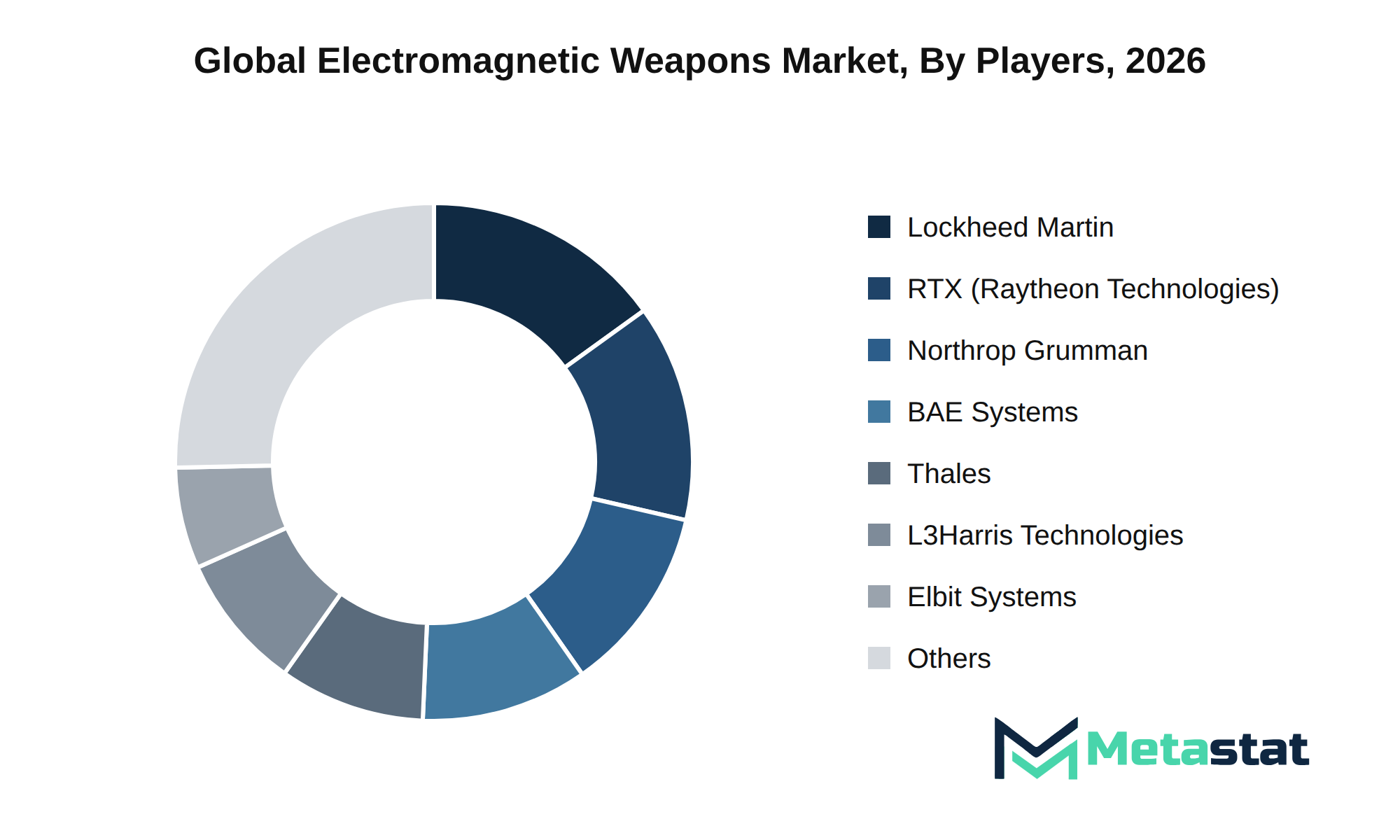
The competitive environment within the Electromagnetic Weapons market reflects a diverse range of strategic behaviors among key players. Companies including Lockheed Martin Corporation, Northrop Grumman, and BAE Systems engage in product differentiation by investing heavily in research and development, focusing on proprietary technologies that enhance performance and operational efficacy.
Strategic alliances and joint ventures play a significant role in the market, with firms like RTX (Raytheon Technologies) and Thales partnering to augment their product offerings and expand market reach. The landscape experiences dynamics related to supply chain dominance, where established players leverage procurement capabilities to secure advantageous positions against emerging entrants.
A strong emphasis on intellectual property remains crucial, with companies including Elbit Systems Ltd. and Rheinmetall (Rheinmetall AG) maintaining robust patent portfolios to protect their innovations. The threat of new entrants persists due to high barriers to entry, driven by advanced technology requirements and significant capital investment, which fortifies the competitive stance of established firms.
The future outlook for the Electromagnetic Weapons market indicates a focus on defensive imperatives and strategic growth vectors, ensuring that leading companies remain adaptive to evolving threats and market demands.
Market size is forecast to rise from USD 664.5 million in 2025 to over USD 1,159.3 million by 2033. The base case reflects a growth trajectory at a 7.2% CAGR, highlighting robust demand for advanced technologies in military and defense sectors.
In an optimistic scenario, the market experiences accelerated growth driven by increased investments in next-generation technologies, leading to enhanced operational capabilities for defense applications. This scenario reflects a significant uptick in research and development, resulting in faster commercialization timelines for innovative products.
Conversely, the bearish outlook indicates potential headwinds arising from geopolitical tensions and regulatory challenges that could hinder market expansion. Economic cycles and shifts in downstream demand create fluctuations in growth rates, attributed to industries adapting to changing compliance requirements and policy enforcement horizons.
Strategic capital allocation significantly influences the pace of investment in the electromagnetic weapons market. Infrastructure commitments and capital expenditure investment vectors will significantly influence market dynamics, shaping future opportunities. Emerging white-space opportunities continue to align with unmet enterprise needs, driving executives to formulate strategic imperatives for sustained growth.
While the market evolves, maturation in core industries will lead to strategic realignments and adaptation to evolving trade corridors. This landscape encourages new partnerships and supply chain shifts, enhancing the market's resilience and capacity to meet increasing demands in defense and security.
The report strategically identifies and profiles the key market players and analyses their core competencies in each sub-segment of the Electromagnetic Weapons market.
Report Attributes | Details |
Study Period | 2021-2033 |
Base Year | 2025 |
Estimated Year | 2026 |
Forecast Period | 2026-2033 |
Historical Period | 2021-2025 |
Growth Rate | CAGR 7.2% from 2026 to 2033 |
Revenue Unit | USD million |
Segmentation | By Weapon Type, Platform, Application, End User, and Region |
By Region | North America (By Weapon Type, Platform, Application, End User, and Country)
|
Europe (By Weapon Type, Platform, Application, End User, and Country)
| |
Asia Pacific (By Weapon Type, Platform, Application, End User, and Country)
| |
South America (By Weapon Type, Platform, Application, End User, and Country)
| |
Middle East and Africa (By Weapon Type, Platform, Application, End User, and Country)
|
Find answers to common questions about this report
The Electromagnetic Weapons market size was valued at USD 664.5 million in 2025, according to the Metastat Insights study.
The Electromagnetic Weapons market is projected to grow at a CAGR of 7.2% during the forecast period from 2026 to 2033.
The North America Electromagnetic Weapons market size is estimated to reach USD 449.8 million by 2033.
The High-Power Microwave (HPM) Weapons segment leads the Electromagnetic Weapons market, with a projected value of USD 359.4 million by 2033. This segment's growth reflects its increasing adoption in various applications compared to other weapon types.
The Electromagnetic Weapons market is driven by rising military expenditure, increased geopolitical tensions, and the need for advanced defense capabilities. Nations prioritize investment in sophisticated military technologies, enhancing research and development of systems including High-Energy Laser and High-Power Microwave weapons to counter emerging threats and maintain operational superiority.
North America holds the dominant share of the Electromagnetic Weapons market, with a projected value of USD 449.8 million in 2033, representing 41.1 percent of the total market.
The Electromagnetic Weapons market faces significant challenges due to regulatory burdens, compliance hurdles, and inflationary pressures that complicate market entry and expansion. Geopolitical instability and resource scarcity further hinder growth by increasing costs and limiting supply chain stability. Talent gaps and skilled labor shortages contribute to operational delays and inefficiencies, impacting overall market potential.
Increased military expenditure and geopolitical tensions drive investment in advanced defense capabilities, favoring product adoption in the Electromagnetic Weapons market. Nations prioritize sophisticated technologies, particularly High-Energy Laser and High-Power Microwave systems, to enhance their defense infrastructure and counter emerging threats. Collaboration between government entities and defense contractors further propels innovation and market growth.
The Electromagnetic Weapons market is estimated to reach a valuation of USD 1,159.3 million by 2033.
Key players operating in the Electromagnetic Weapons market include Lockheed Martin Corporation, RTX (Raytheon Technologies), Northrop Grumman, BAE Systems, Thales, L3Harris Technologies, Inc., and Elbit Systems Ltd.
The analysts below cover Aerospace and Defense research at Metastat Insights.
LEAD ANALYST
Utkarsh Khirodkar is a Lead Market Research Analyst at MetaStat Insight, specializing in market intelligence, technology sector assessments, and competitive strategy.
Integrating zero-trust access controls across legacy electronic health record systems involves complex compliance overhead. Team produced an analysis that clearly separated identity governance and administration tools from privileged access management platforms. Their evaluation of HIPAA and GDPR compliance features across cloud native solutions gave our architecture group clear baseline criteria. The custom data request regarding biometric authentication adoption in hospital networks was returned promptly with clear documentation.
Evaluating calorific value requirements and air permit compliance across municipal waste facilities requires localized data. Metastat Insight structured their analysis around operational throughput capacity and feedstock composition variations in Latin America and Eastern Europe. Their competitive mapping of sorting equipment vendors helped clarify technology differences between optical separators and heavy media systems. The study provided an objective baseline during our capital expenditure reviews.
Decarbonizing industrial thermal processes hinges on refrigerant regulations and compressor efficiency limits. Metastat Insights delivered a thorough market analysis that evaluated natural refrigerants like CO2 and hydrocarbons against synthetic low-GWP alternatives. The breakdown of utility incentives and grid capacity constraints across key European manufacturing hubs offered valuable perspective. The follow-up conversation with their sector analysts addressed our specific questions on mechanical vapor recompression systems efficiently.
Explore related market intelligence reports worth reading alongside this one.
Starting from
$2950
Starting from
$2950