
LEAD ANALYST
Utkarsh Khirodkar is a Lead Market Research Analyst at MetaStat Insight, specializing in market intelligence, technology sector assessments, and competitive strategy.

Global Enterprise Governance, Risk and Compliance Market Size, Share, By Type (Risk Management, Compliance Management, Audit Management, Policy Management, Incident Management, Third-Party Risk Management, Regulatory Change Management and Others), By Application (BFSI, Construction & Engineering, Energy & Utilities, Government, Healthcare, Manufacturing, Retail & Consumer Goods, Telecom & IT and Transportation & Logistics), By Component (Software and Services), By Deployment Mode (Cloud-Based and On-Premise), Industry Analysis, Growth, Trends, and Forecast, 2026-2033
Report ID
MSI-4990
Published
August, 2026
Pages
299 Pages
Format
Historical
Base year
Forecast
Forecast period
Report Details
Choose Your License
Global Enterprise Governance, Risk and Compliance Market
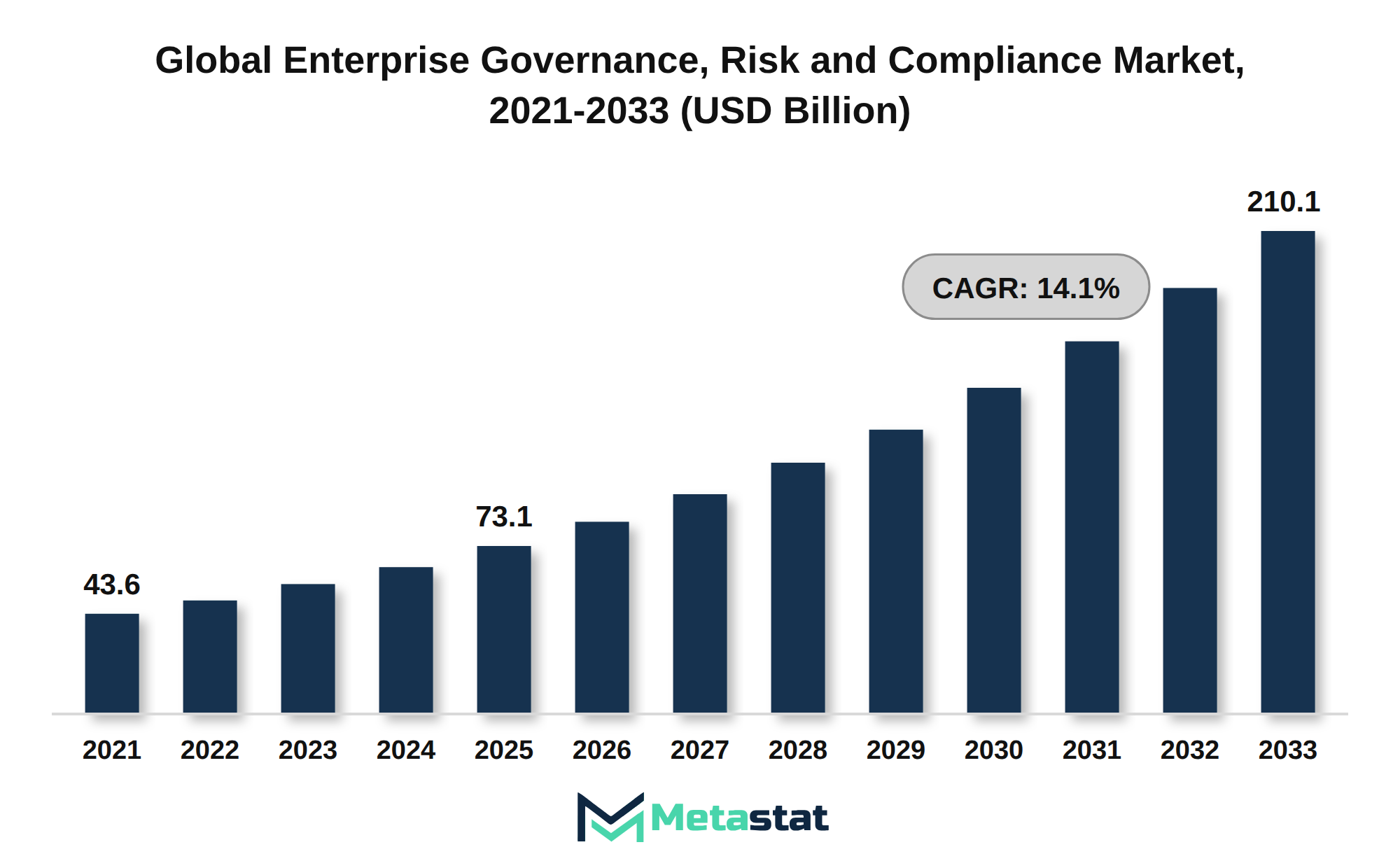
The global Enterprise Governance, Risk and Compliance market was valued at USD 73.1 billion in 2025 and is projected to reach USD 210.1 billion by 2033, growing at a CAGR of 14.1% over the forecast period.
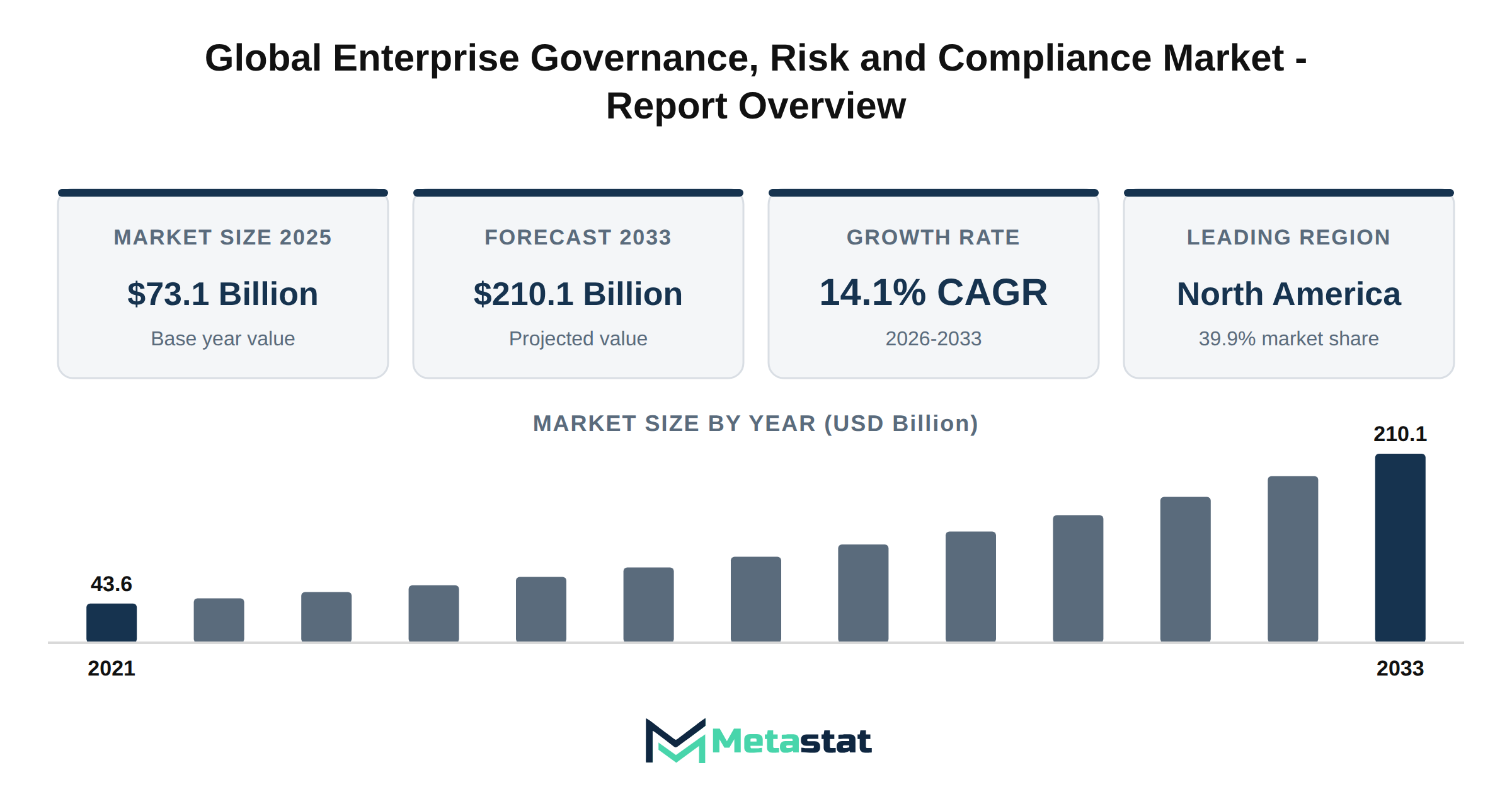
The Enterprise Governance, Risk and Compliance market reached USD 73.1 billion in 2025, demonstrating a growth trajectory from USD 43.6 billion in 2021. Forecasts indicate the market is expected to expand significantly, reaching USD 210.1 billion by 2033, reflecting a compound annual growth rate (CAGR) of 14.1%. This growth stems from increasing regulatory requirements and the necessity for organizations to maintain compliance across various sectors.
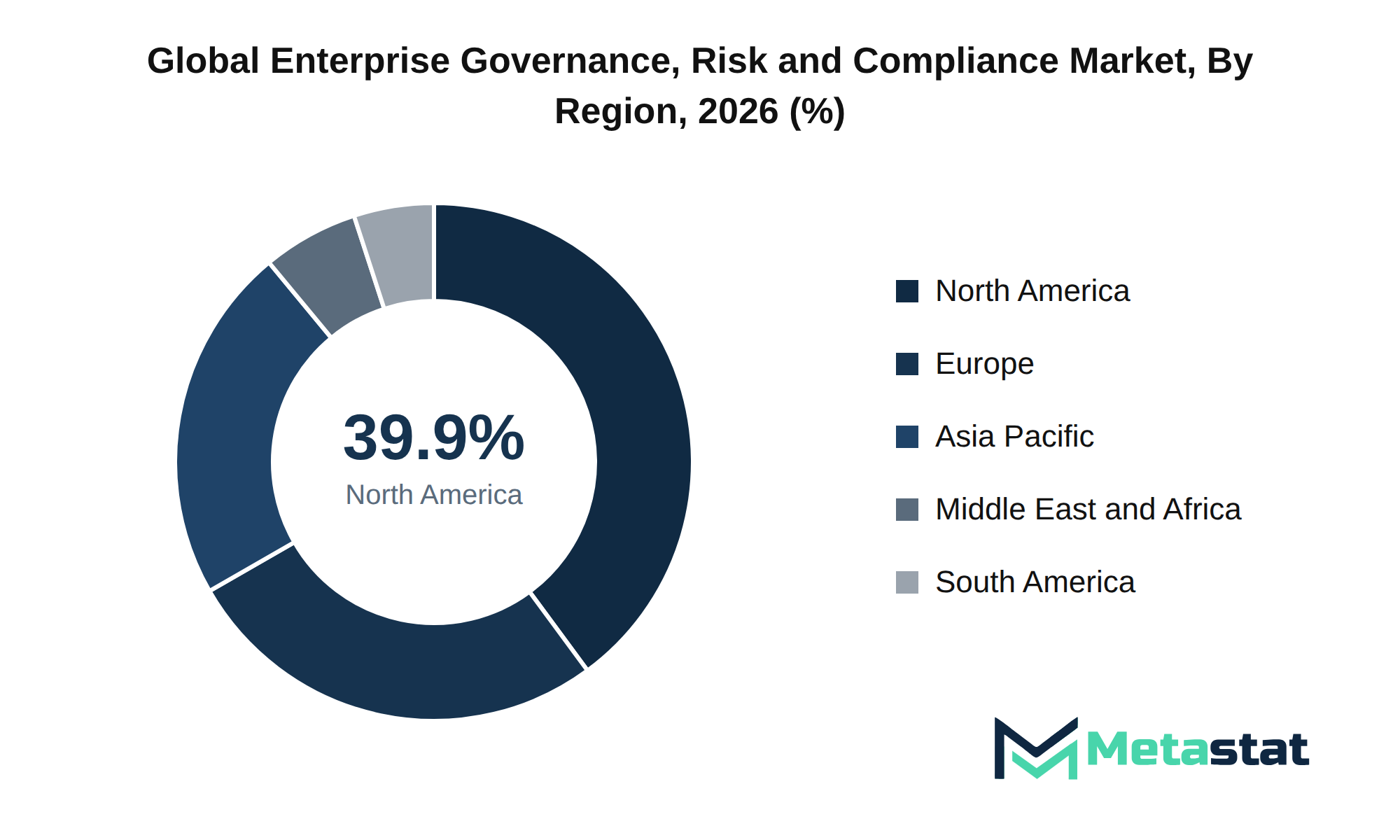
In terms of regional distribution, North America holds a significant market share of 39.9%, followed by Europe at 26.8%, and Asia Pacific at 22.3%. The strong presence of enterprises in North America drives demand for governance and compliance solutions, with the region expected to reach USD 81.3 billion by 2033, indicating a CAGR of 14.1% during the forecast period.
Market segmentation shows distinct growth patterns across various components. The software segment, which accounted for USD 56.5 billion in 2026, is anticipated to grow to USD 138.9 billion by 2033, with a CAGR of 13.7%. Services are expected to experience growth, reaching USD 71.2 billion by 2033, demonstrating a CAGR of 14.8%. These trends highlight the increasing reliance on technology and services to enhance risk and compliance management.
The Enterprise Governance, Risk and Compliance market includes various applications, with notable growth in the Banking, Financial Services, and Insurance (BFSI) sector. This segment is projected to expand from USD 20 billion in 2026 to USD 49.7 billion by 2033, with a CAGR of 13.9%. The demand for comprehensive solutions in this sector fuels overall market growth, driven by organizations seeking to mitigate risks associated with financial transactions and regulatory compliance.
Regulatory compliance remains a critical concern for organizations operating across various sectors. The increasing complexity of regulations, driven by evolving governmental policies and industry standards, necessitates robust governance frameworks. Organizations investing in compliance management solutions realize enhanced operational efficiency and reduced risk exposure. This trend significantly influences growth within the Enterprise Governance, Risk and Compliance market, particularly in heavily regulated industries including financial services and healthcare.
Next-generation innovations, particularly in technology, continue to reshape the market. The adoption of artificial intelligence and machine learning enhances risk management capabilities, allowing organizations to identify and mitigate potential threats more effectively. This technological advancement supports the market's expansion, providing organizations with tools that streamline compliance processes and improve decision-making.
Macroeconomic headwinds, including inflationary pressures and currency volatility, impact organizational budgets and capital allocation strategies. Businesses increasingly prioritize investments in governance, risk, and compliance solutions to safeguard against potential financial losses associated with non-compliance. This trend positions the market for significant growth, with organizations recognizing the need for proactive risk management strategies during economic uncertainties.
The evolving supply chain landscape introduces additional complexities in governance and compliance. Disruptions caused by geopolitical factors and environmental challenges require organizations to adapt their risk management frameworks. Companies focusing on sustainable transformation and circular economy dynamics prioritize compliance initiatives that align with corporate social responsibility goals. This alignment enhances brand reputation and drives demand for comprehensive governance solutions.
Overall, the Enterprise Governance, Risk and Compliance market experiences dynamic growth driven by regulatory demands, technological advancements, and macroeconomic factors. Organizations prioritizing robust governance frameworks position themselves for success in an increasingly complex environment. The strategic outlook for the market remains positive, with significant opportunities for investment and innovation.
The Enterprise Governance, Risk and Compliance market experiences significant growth driven by heightened investment in digital transformation initiatives. Organizations increasingly prioritize the adoption of advanced technologies including automation and artificial intelligence to enhance their governance frameworks and optimize compliance processes. This investment drives a shift toward digitizing legacy systems, enabling real-time monitoring of risks and compliance requirements.
Industries including banking, financial services, and insurance (BFSI) lead in this transformation due to their regulatory responsibilities and need for operational efficiency. Enhanced digital capabilities contribute to improved decision-making and operational productivity, directly impacting the effectiveness of governance and compliance strategies. The focus on digital transformation aligns with cost-efficiency initiatives, driven by organizations striving to minimize overhead expenses through streamlined processes and optimized labor utilization.
The ongoing push for digital integration significantly influences the market landscape, resulting in increased demand for sophisticated solutions to meet evolving compliance challenges. While organizations navigate a complex regulatory environment, the integration of advanced technologies supports the development of innovative governance frameworks. This dynamic establishes a solid foundation for sustained growth within the Enterprise Governance, Risk and Compliance market.
Infrastructure development and asset modernization significantly influence the Enterprise Governance, Risk and Compliance market. Increasing investments in upgrading both physical and digital infrastructure enhance organizations' capability to manage risks and comply with regulations effectively. Rising public and private spending power contributes to this trend, enabling firms to allocate resources toward improving their governance frameworks.
Investments in modernizing facilities and network capabilities drive efficiency and effectiveness in compliance processes. Organizations adopting cloud-based solutions streamline operations, allowing for improved audit trails and real-time monitoring of compliance activities. This technological integration supports businesses in mitigating risks associated with regulatory changes.
The market reflects a response to evolving market demands and consumer behaviors, necessitating robust governance processes. The ongoing focus on sustainability and resource stewardship emphasizes the importance of modernizing assets to support environmental, social, and governance (ESG) initiatives. Companies prioritizing these developments position themselves competitively in the Enterprise Governance, Risk and Compliance market.
Regulatory tightening presents challenges for the Enterprise Governance, Risk and Compliance market. Organizations face increasing compliance hurdles, leading to significant operational and financial burdens. Companies invest substantial resources in legal mandates and compliance frameworks, diverting attention from innovation and strategic initiatives.
Macroeconomic headwinds, including inflationary pressures, impact operational costs and capital investment requirements. These factors contribute to heightened uncertainty in business planning and investment strategies. Organizations encounter difficulties in resource allocation, limiting their ability to adopt new governance, risk, and compliance technologies effectively.
Supply chain disruptions and geopolitical instability further complicate the market landscape. Companies experience challenges in maintaining continuity of operations due to fluctuating supply sources and instability in key regions. This volatility creates reluctance to invest in robust compliance frameworks, impacting overall market demand.
Technological obsolescence represents another significant restraint. Rapid advancements in technology render existing solutions inadequate, necessitating frequent upgrades and investments. Organizations grapple with budget constraints that limit their ability to pursue necessary technological enhancements.
Infrastructure gaps and connectivity deficits hinder the implementation of comprehensive governance frameworks. Many regions experience inadequate digital infrastructure, restricting the deployment of cloud-based solutions. This limitation reduces the market's growth potential, particularly in emerging economies where adoption lags.
Skilled labor deficiencies and talent gaps contribute to operational challenges within the industry. Organizations struggle to find qualified personnel for compliance and risk management roles, impacting their ability to implement effective governance strategies. Rising workforce overhead complicates these challenges, straining budgets and resources.
Data security vulnerabilities and privacy concerns complicate the compliance landscape. Organizations face increased scrutiny regarding data handling practices, leading to the necessity for enhanced security measures. Failure to address these vulnerabilities exposes companies to significant legal and financial risks.
Market fragmentation poses additional challenges for the Enterprise Governance, Risk and Compliance market. The presence of numerous players with varying levels of capabilities makes it difficult for organizations to identify suitable partners and solutions. This fragmentation slows decision-making processes and hinders the pace of market growth.
The combination of regulatory complexities, economic pressures, and operational challenges limits the growth potential of the Enterprise Governance, Risk and Compliance market. Organizations navigate these obstacles to optimize their governance and compliance strategies effectively.
Geopolitical fragmentation significantly disrupts the Enterprise Governance, Risk and Compliance market. Rising trade deficits and tariff friction create obstacles for companies seeking to expand into new markets, resulting in increased costs and greater uncertainty. These dynamics particularly impact organizations in industries reliant on international supply chains, hindering their ability to comply with evolving regulations and standards.
Technological disruptions further complicate the landscape, with companies facing challenges in integrating advanced technologies into their existing frameworks. Complex research and development integrations delay the deployment of innovative solutions, often raising compliance overhead. Mounting pressures from tightening global regulatory standards require organizations to adapt quickly, straining resources and increasing operational difficulties.
Additional pressures stem from workforce skill gaps, which create barriers to effective implementation of compliance strategies. While companies seek to navigate these challenges, talent retention becomes critical, particularly in sectors facing automation displacements. The Enterprise Governance, Risk and Compliance market encounters significant hurdles due to these compounding factors, impacting growth trajectories and competitive dynamics.
Environmental sustainability demands drive organizations to rethink their compliance approaches. Decarbonization mandates, coupled with the manage environmental lifecycle footprints, add complexity to compliance programs. Companies balance these requirements against pricing compression and margin pressures, complicating their operational strategies.
In this evolving landscape, organizations within the Enterprise Governance, Risk and Compliance market confront intricate challenges stemming from a multitude of factors, necessitating a proactive and adaptive approach to maintain compliance and drive operational efficiency.
Growing regional demands significantly influence the Enterprise Governance, Risk and Compliance market. The increasing focus on sustainability and environmental, social, and governance (ESG) frameworks drives organizations to adopt comprehensive risk management and compliance solutions. This trend is particularly evident in North America and Europe, where regulatory pressures and proactive corporate governance strategies necessitate robust compliance measures.
Infrastructure modernization acts because a catalyst for growth, allowing organizations to integrate advanced technologies and enhance operational efficiencies. Companies invest in next-generation innovations, including cloud-based solutions and automation tools, to streamline compliance processes. This shift not only reduces operational costs but enhances compliance capabilities, increasing confidence among stakeholders.
The geographical expansion into emerging markets presents vast opportunities for the market. Companies increasingly seek to penetrate regions with growing economic activities, aligning their governance frameworks with local regulations. This approach enhances their competitive advantage while ensuring adherence to international compliance standards.
Technological disruptions underpin the shift towards digital transformation within organizations. The integration of sophisticated software solutions enables firms to adapt to evolving regulatory environments, allowing real-time monitoring and reporting capabilities. This agility enhances the overall effectiveness of compliance strategies, ensuring alignment with global best practices.
Demand for innovative compliance solutions persists due to businesses diversifying their service offerings across various sectors. Organizations in industries including BFSI, healthcare, and manufacturing increasingly prioritize sector-specific compliance frameworks. This diversification enhances the Enterprise Governance, Risk and Compliance market's growth trajectory, catering to unique industry requirements.
Strategic consolidations within the market fuel competitive dynamics, with mergers and acquisitions allowing companies to expand their service portfolios. This trend supports the development of integrated solutions that address multifaceted compliance challenges, further enhancing market positioning.
Changes in buying behaviors and digital procurement shifts indicate a transition towards more agile purchasing models. Organizations prioritize collaborations with technology providers that offer scalable and customizable compliance solutions. This transition enhances the market's ability to address diverse client needs while increasing innovation and flexibility.
The Global Enterprise Governance, Risk and Compliance market is segmented based on Type, Application, Component, and Deployment Mode.
Valued at USD 20.3 billion in 2026, the Risk Management segment is projected to reach USD 52.3 billion by 2033, at a CAGR of 14.5% during the forecast period. Demand drivers for Risk Management primarily stem from heightened regulatory scrutiny and an increasing awareness of organizational vulnerabilities. Industries including finance, healthcare, and manufacturing emphasize risk assessment and management to ensure compliance with evolving regulations and standards.
Technological maturation facilitates the adoption of advanced risk management tools, enabling organizations to proactively identify and mitigate potential risks. The integration of artificial intelligence and machine learning enhances predictive analytics, allowing for more informed decision-making. These next-gen upgrades help organizations streamline risk management processes and improve operational efficiency.
End-use dynamics reflect a shift towards more integrated risk management solutions that encompass various aspects of governance, compliance, and operational risk. Companies increasingly seek comprehensive solutions that address not only regulatory compliance but broader business risks that could impact performance. This demand for comprehensive approaches presents significant growth opportunities within the Enterprise Governance, Risk and Compliance market.
Pricing volatility in the risk management software space results from fluctuations in demand and the emergence of new competitors. Organizations face margin pressures due to the need for ongoing investment in technology and expertise to stay ahead of regulatory changes. Strategic opportunity windows arise from the need for businesses to adopt agile approaches to risk management, driving capital investment in innovative solutions.
Compliance Management ensures organizations adhere to regulatory standards and internal policies. This segment is estimated to reach USD 44.2 billion by 2033, at a CAGR of 13.5% during the forecast period. Increasing emphasis on regulatory compliance across various sectors drives the demand for robust compliance management solutions. Organizations actively seek to mitigate risks associated with non-compliance, which increases investment in compliance technologies and services.
The growing complexity of regulatory environments, coupled with the need for organizations to maintain operational integrity, fuels the market's expansion. Industries including BFSI, healthcare, and energy & utilities experience heightened pressure to comply with evolving regulations, further promoting the adoption of compliance management solutions. These solutions facilitate efficient tracking of compliance obligations and aid in risk assessment and mitigation strategies.
Technological advancements serve because critical enablers for compliance management. The integration of artificial intelligence and machine learning enhances the capability of compliance solutions by automating processes and providing real-time insights. Organizations recognize the strategic value of compliance management in enhancing their reputation, which influences investment decisions. While compliance requirements continue to evolve, the demand for innovative solutions within the Enterprise Governance, Risk and Compliance market is expected to grow substantially.
In the increasingly complex landscape of governance, risk management, and compliance, the Audit Management segment is poised for growth, projected to reach USD 31.2 billion by 2033. Demand for robust audit solutions stems from heightened scrutiny on compliance and risk management across various sectors. Organizations recognize the necessity for effective audit management tools to ensure adherence to regulations, mitigate risks, and enhance operational efficiency.
Technological advancements play a crucial role in driving the evolution of audit management solutions. The shift towards automation and data analytics enables organizations to streamline audit processes, reduce manual intervention, and improve accuracy. This evolution positions audit management because a vital component in the Enterprise Governance, Risk and Compliance market, facilitating real-time monitoring and reporting capabilities.
End-user dynamics significantly influence the adoption of audit management solutions. Industries including BFSI and Government prioritize compliance and risk management, resulting in consistent demand for effective audit tools. Regulatory compliance standards dictate stringent auditing practices, compelling organizations to invest in reliable audit management systems that adapt to changing regulations and support internal controls.
Organizations increasingly focus on transparency and accountability, expanding the strategic opportunity for audit management solutions. Companies seek to enhance supply chain resilience while managing costs effectively. This combination of factors encourages investment in innovative audit technologies, reinforcing the importance of audit management within the broader Enterprise Governance, Risk and Compliance market.
Demand for effective policy management solutions significantly influences the growth trajectory of the Enterprise Governance, Risk and Compliance market. Organizations increasingly prioritize compliance with regulatory standards, driving the need for robust policy frameworks. While businesses strive to mitigate risks and enhance operational efficiency, investment in automation and technology solutions becomes essential. This shift towards digital transformation facilitates the development and management of policies that align with compliance requirements.
Policy Management segment is projected to grow at a CAGR of 12.8% during the forecast period. This growth reflects the rising complexity of regulatory environments across various industries, necessitating advanced policy management tools. Organizations in sectors including healthcare, finance, and energy increasingly adopt these tools to streamline compliance processes and ensure adherence to evolving regulations.
Technological advancements play a crucial role in shaping the capabilities of policy management solutions. Integration with artificial intelligence and machine learning enhances the ability to analyze vast amounts of data, enabling organizations to identify compliance gaps and respond proactively. The need for real-time monitoring of regulatory changes further drives the adoption of innovative policy management systems.
The increasing emphasis on regulatory compliance and the adoption of advanced technologies position the Policy Management segment because a key driver within the Enterprise Governance, Risk and Compliance market. This segment's anticipated growth highlights the critical role that effective policy management plays in enabling organizations to navigate complex regulatory landscapes successfully.
Effective Incident Management emerges because a crucial component within the Enterprise Governance, Risk and Compliance market. Organizations face heightened scrutiny regarding compliance, necessitating robust incident management frameworks to address potential breaches and mitigate risks efficiently. The increasing complexity of regulatory requirements fuels demand for sophisticated incident management solutions that enable prompt reporting, response, and resolution of incidents.
Technological advancements significantly influence the evolution of incident management practices. Solutions leveraging artificial intelligence and machine learning enhance the ability of organizations to predict, identify, and respond to incidents proactively. Integration of these technologies into incident management systems supports organizations in streamlining processes, reducing response times, and minimizing operational disruptions.
End-user dynamics reflect a growing recognition of the necessity for dynamic incident management capabilities across various sectors. Industries including financial services, healthcare, and manufacturing prioritize investments in incident management systems to safeguard sensitive data and ensure compliance with regulatory standards. This sector-specific focus drives the adoption of tailored solutions that address unique challenges and operational requirements.
Emerging regulatory compliance standards and certifications further shape the incident management landscape, compelling organizations to develop comprehensive frameworks for incident reporting and resolution. Organizations that achieve compliance with relevant standards demonstrate their commitment to risk management and operational integrity, attracting investments and building stakeholder confidence.
Strategic opportunity windows arise because organizations seek to enhance incident management capabilities in light of evolving threats and regulatory expectations. Investment in advanced incident management solutions positions firms to navigate emerging challenges, ensuring operational resilience and sustained growth in the competitive landscape of the Enterprise Governance, Risk and Compliance market.
Growing awareness of third-party risks significantly influences the demand for Third-Party Risk Management solutions. Organizations increasingly rely on a complex network of suppliers and partners, leading to a heightened focus on managing associated risks. Regulatory compliance standards, particularly in industries including BFSI and healthcare, require stringent oversight of third-party relationships, prompting investments in robust risk management frameworks.
Technological maturation plays a crucial role in supporting the adoption of advanced risk management tools. Innovations in AI and data analytics enhance the ability to assess and mitigate third-party risks effectively. These technologies enable businesses to automate risk assessments, track compliance, and monitor vendor performance in real-time, resulting in improved operational efficiency and reduced risk exposure.
Industry-specific challenges drive the need for tailored solutions within the Enterprise Governance, Risk and Compliance market. For instance, the construction and engineering sector faces unique risks involving subcontractors, necessitating specialized risk management strategies. Strategic opportunity windows arise from these challenges, encouraging vendors to innovate and expand their service offerings to address specific client needs, thereby enhancing market penetration.
Investment in next-generation upgrades and product evolution is essential for maintaining a competitive edge. Organizations prioritize solutions that integrate seamlessly into existing compliance frameworks while providing comprehensive visibility into third-party risks. This evolution supports businesses in navigating increasingly complex regulatory landscapes and emphasizes the importance of risk management in supply chain resilience, ultimately strengthening long-term demand.
The emergence of disruptive alternatives highlights the dynamic nature of the market. Companies exploring automated solutions and platforms for third-party risk management create competitive pressure, pushing established players to refine their offerings. Strategic investment in these technologies positions firms to better respond to evolving market demands and regulatory pressures, enhancing their competitive positioning.
Organizations face increasing pressure to adapt to regulatory changes, driving demand for effective Regulatory Change Management solutions. The evolving compliance landscape necessitates agility in response to new policies and regulations impacting various industries, including finance, healthcare, and manufacturing. Businesses strive to stay ahead of regulatory requirements, ensuring operations align with compliance standards to mitigate risks associated with non-compliance.
Technological advancements in automation and data analytics enhance the effectiveness of Regulatory Change Management. These innovations facilitate the tracking of regulatory updates and streamline processes, enabling organizations to respond promptly to changes in the regulatory environment. Investment in advanced technologies presents a strategic opportunity for firms seeking to improve compliance workflows and reduce associated costs.
Continuous scrutiny and enforcement by regulatory bodies contribute to the urgency for robust change management practices. Companies adopting proactive measures to monitor and adapt to regulatory shifts demonstrate resilience, enhancing their reputation and operational stability. This proactive approach builds trust among stakeholders, contributing to long-term growth within the Enterprise Governance, Risk and Compliance market.
The increasing complexity of compliance requirements necessitates a focus on employee training and awareness. Organizations investing in comprehensive training programs cultivate a culture of compliance, equipping employees to navigate regulatory shifts effectively. This investment in human capital aligns with the growing emphasis on regulatory compliance standards, positioning firms to thrive in a competitive environment.
Consumer demand for innovative governance, risk, and compliance solutions drives the expansion of the "Others" segment within the Enterprise Governance, Risk and Compliance market. Companies seek tailored applications that address unique operational challenges, resulting in diverse product offerings beyond traditional categories. Factors influencing this demand include the need for enhanced risk visibility, operational resilience, and regulatory alignment, pushing organizations to explore customized solutions that fit their specific requirements.
Rapid technological advancements support the growth of alternative solutions in this sub-segment. Organizations increasingly adopt next-generation technologies, including artificial intelligence and machine learning, to automate processes and improve decision-making capabilities. These advancements enhance the effectiveness and efficiency of governance, risk management, and compliance initiatives, attracting investment and interest from various sectors.
Market dynamics reflect shifts in organizational priorities, with an emphasis on integrated risk management frameworks. The move towards comprehensive governance strategies encourages investment in diversified offerings within the "Others" sub-segment. Businesses increasingly recognize the benefits of aligning risk management with broader strategic objectives, leading to a more interconnected approach to compliance and risk initiatives.
Regulatory compliance standards continue to evolve, presenting both challenges and opportunities for enterprises. Organizations maintain agility in adapting to new regulations while striving for operational excellence. This landscape encourages innovation in the "Others" segment, driven by firms seeking solutions that not only meet compliance requirements but enhance overall business performance.
Investment in supply chain resilience further drives growth within this sub-segment. Companies prioritize solutions that mitigate risks associated with supply chain disruptions, reinforcing the importance of robust governance frameworks. The demand for strategic solutions that encompass risk assessment, vendor management, and compliance assurance positions the "Others" segment because a critical component of the overall market.
Overall, the "Others" segment within the Enterprise Governance, Risk and Compliance market thrives due to diverse demand drivers, technological maturation, and a focus on regulatory compliance. Firms that adapt to changing market conditions and invest in innovative solutions stand to gain a competitive advantage.
Valued at USD 20 billion in 2026, the BFSI segment is projected to reach USD 49.7 billion by 2033, at a CAGR of 13.9% during the forecast period. Increased regulatory scrutiny drives demand for robust governance, risk, and compliance solutions within the banking, financial services, and insurance sectors. Financial institutions prioritize technology adoption to enhance risk management frameworks and streamline compliance processes, influenced by the evolving regulatory landscape.
The rising complexity of financial transactions and the growing interdependence of global markets intensify the challenges faced by institutions in maintaining compliance. Consequently, firms invest in integrated solutions that provide real-time insights into regulatory requirements and risk exposure. Enhanced data analytics capabilities facilitate informed decision-making while optimizing operational efficiency, positioning organizations for competitive advantage.
Technological maturation and the introduction of next-generation solutions support the segment’s expansion. Cloud-based platforms offer scalable resources and flexibility, enabling organizations to adapt to changing regulatory mandates efficiently. The transition to automated compliance processes reduces manual intervention, lowering the risk of human error and ensuring adherence to compliance standards.
End-use dynamics illustrate a trend towards prioritizing risk management within the BFSI segment. With the increasing frequency of cyber threats and financial fraud, institutions allocate resources to strengthen their cybersecurity and risk mitigation strategies. While organizations navigate these challenges, demand for comprehensive governance, risk, and compliance solutions within the Enterprise Governance, Risk and Compliance market continues to grow, reinforcing overall market expansion.
Increasing focus on regulatory compliance drives demand within the Construction & Engineering segment of the Enterprise Governance, Risk and Compliance market. This segment addresses the need for robust management solutions that align projects with evolving compliance requirements, ensuring adherence to local and international standards. Given the sector's complexity and scale, organizations prioritize effective risk management strategies to mitigate potential liabilities associated with construction projects.
Investment in next-generation governance tools enhances operational efficiency while reducing risks. Technological advancements in software solutions facilitate real-time monitoring, reporting, and decision-making processes, enabling organizations to respond promptly to compliance challenges. These developments attract significant capital investment and support segment growth.
The Construction & Engineering segment is projected to reach USD 5.7 billion by 2033, at a CAGR of 12.8% during the forecast period. This growth reflects the sector's increasing reliance on specialized software and services that streamline compliance management and risk mitigation efforts. Enhanced digital capabilities support organizations in navigating complex regulatory landscapes, ultimately contributing to the sustained expansion of the Enterprise Governance, Risk and Compliance market.
Investment in the Energy & Utilities segment reflects the ongoing shift towards sustainable practices and regulatory compliance, leading to an anticipated market value of USD 17.1 billion by 2033. Increasing regulatory pressures and the necessity for energy providers to manage risks significantly drive the demand for advanced governance frameworks. While firms transition to renewable energy sources, the need for effective compliance management solutions escalates, ensuring adherence to evolving environmental standards.
Technological maturation within the sector drives innovation, with next-generation upgrades enhancing the capabilities of governance, risk, and compliance applications. Integration of artificial intelligence and data analytics equips organizations to identify and mitigate risks proactively. This technological evolution enhances operational efficiency, ultimately contributing to the growth of the Enterprise Governance, Risk and Compliance market.
Downstream applications within Energy & Utilities emphasize the importance of compliance with regulatory standards, influencing investment strategies. Firm-level shifts towards sustainability enhance company reputations and align with consumer preferences for environmentally responsible practices. Capital investment in robust governance frameworks serves because a strategic opportunity window for firms seeking to differentiate themselves in the competitive environment.
Heightened awareness around operational risks associated with energy production encourages firms to adopt comprehensive risk management solutions. The ongoing evolution of regulatory compliance standards necessitates continuous adaptation, driving firms to enhance their governance practices. This dynamic environment presents a favorable outlook for the Enterprise Governance, Risk and Compliance market, with growing investments in innovative solutions that address unique challenges within the Energy & Utilities sector.
Growing requirements for compliance and effective risk management significantly influence the Enterprise Governance, Risk and Compliance market. Government entities face increasing pressure to implement robust governance frameworks, which drives investment in advanced compliance solutions. Regulatory compliance standards necessitate that government organizations adopt solutions that simplify risk assessment, policy management, and audit processes, ensuring accountability and transparency.
Technological maturation in this sector permits the integration of innovative software solutions that improve operational efficiency. Features including automation and data analytics support real-time monitoring and reporting, allowing government entities to better manage risks associated with regulatory changes. This technological evolution positions organizations to respond swiftly to emerging challenges, thereby creating an environment of proactive governance.
The government segment is projected to grow at a CAGR of 14% during the forecast period. The increasing prevalence of cyber threats and data breaches raises the urgency for governments to adopt comprehensive risk management strategies. Investment in advanced cybersecurity measures becomes essential to protect sensitive information from potential threats, directly impacting market growth.
The shift towards digital transformation in government services creates opportunities for advanced application deployment. Cloud-based solutions facilitate integration of governance, risk management, and compliance tools, enhancing accessibility and scalability. This transition allows government agencies to optimize resources and improve service delivery to citizens, reinforcing their commitment to transparency and accountability.
Strategic opportunity windows arise from the demand for enhanced compliance management, particularly in sectors including public health and environmental regulation. Governments face increasing scrutiny regarding adherence to compliance standards, prompting them to invest in solutions that mitigate risks tied to operational failures. This proactive approach to compliance strengthens public trust and supports long-term sustainability in the market.
Healthcare organizations increasingly recognize the necessity for robust governance, risk, and compliance frameworks. The dynamic nature of regulations in this sector drives demand for advanced compliance management solutions. Regulatory compliance standards, including those related to patient safety and data protection, play a crucial role in shaping the strategies of healthcare providers. Ensuring adherence to these standards directly influences operational efficiency and risk mitigation efforts.
Technological maturation within the healthcare sector accelerates the adoption of next-generation compliance solutions. Innovations in software and analytics enhance the ability of organizations to respond to compliance challenges effectively. Enhanced data analytics capabilities enable healthcare providers to monitor compliance in real-time, thus improving overall governance. The integration of these technologies streamlines processes and reduces potential risks associated with non-compliance.
Investment in the healthcare segment remains a strategic priority, with significant capital directed towards upgrading existing compliance systems. Organizations seek to enhance their capabilities to address evolving regulatory requirements and improve patient outcomes. This ongoing investment reflects broader trends present in the Enterprise Governance, Risk and Compliance market, where the focus on compliance and risk management continues to intensify.
Healthcare organizations face unique challenges related to cost structures and pricing volatility. Rising costs associated with compliance initiatives place pressure on profit margins. Organizations strategically allocate resources to balance compliance demands with financial sustainability. This balancing act drives innovation within the sector, prompting the development of cost-effective compliance solutions that meet both regulatory and operational needs. This ongoing evolution creates opportunities for growth.
Overall, the healthcare segment's commitment to compliance and risk management positions it for growth in the Enterprise Governance, Risk and Compliance market. The continued development of tailored solutions aligned with regulatory frameworks is expected to further enhance the segment's performance in the coming years.
Investment in the Manufacturing application segment reflects the increasing importance of regulatory compliance and effective risk management strategies. Compliance with strict regulations and standards drives organizations to invest in governance frameworks, enhancing their operational resilience. This segment benefits from technological maturation, with next-generation upgrades offering advanced solutions for risk and compliance needs.
The evolving landscape of the Enterprise Governance, Risk and Compliance market emphasizes the need for product evolution that caters to the unique challenges of the Manufacturing sector. Efforts to meet downstream application demands lead to customization and integration of governance solutions, enabling businesses to address specific industry requirements. End-use dynamics indicate a shift towards comprehensive solutions that enhance risk visibility and compliance adherence.
Regulatory compliance standards continue to influence investment decisions, with organizations seeking certifications to validate their governance strategies. Cost structures and pricing volatility in raw materials exert pressure on profit margins, prompting firms to adopt innovative technologies that optimize resource utilization. Strategic opportunity windows emerge owing to industry players adapting to disruptive alternatives and technological obsolescence, ensuring competitiveness in the market.
Supply chain resilience has become a crucial focus, with organizations prioritizing risk management to mitigate vulnerabilities. The Manufacturing sector faces unique challenges, including raw material sourcing issues and logistics vulnerabilities, compelling businesses to adopt more robust compliance measures. These factors contribute to a dynamic environment where organizations actively seek solutions within the Enterprise Governance, Risk and Compliance market to safeguard operations and enhance performance.
In the Retail & Consumer Goods sector, organizations increasingly prioritize compliance and risk management solutions to address the unique challenges of this dynamic market. Heightened consumer awareness around data privacy, product safety, and ethical sourcing drives firms to adopt comprehensive governance frameworks, ensuring compliance with regulatory standards. Companies face pressure to navigate a complex web of regulations, which creates robust demand for tools that enhance accountability and transparency.
Technological advancements play a critical role in shaping the segment, enabling organizations to streamline their compliance processes through automation and data analytics. These innovations simplify the management of vast amounts of information, enhancing decision-making and reducing the potential for human error. While organizations continue to evolve, the integration of next-generation technologies, including artificial intelligence and machine learning, offers strategic opportunities for product evolution. This integration allows firms to respond more effectively to emerging risks and regulatory demands.
Shifts in consumer expectations and behaviors further influence the segment. The rise of e-commerce and digital transactions necessitates stronger governance frameworks to protect customer data and maintain trust. Companies investing in advanced governance solutions position themselves strategically, capitalizing on the growing importance of transparency in the retail and consumer goods landscape. This focus on regulatory compliance and operational resilience strengthens overall market competitiveness, ensuring long-term sustainability in the Enterprise Governance, Risk and Compliance market.
Regulatory compliance requirements significantly shape demand within the Telecom & IT segment of the Enterprise Governance, Risk and Compliance market. Organizations in this sector prioritize robust governance frameworks to mitigate risks associated with data breaches and cyber threats. The increasing prevalence of regulations including GDPR and CCPA drives firms to adopt advanced compliance solutions that address these challenges effectively.
Technological advancements drive growth in this segment, driven by companies seeking next-gen upgrades to enhance their compliance capabilities. Cloud-based solutions offer flexibility and scalability, enabling organizations to adapt to changing regulatory landscapes. This shift towards digital transformation facilitates operational efficiencies and reinforces governance protocols, which increases confidence among stakeholders.
Cost structures and pricing volatility represent critical considerations for organizations within Telecom & IT. Firms focus on optimizing their governance and compliance expenditures while ensuring they meet regulatory standards, which impacts overall profitability. Investment in innovative solutions and strategic partnerships enhances resilience against market fluctuations.
Downstream applications of governance, risk, and compliance solutions extend across various operational areas, supporting effective decision-making and risk mitigation. By prioritizing compliance, organizations not only safeguard their assets but enhance their reputational standing. The ongoing evolution of the Enterprise Governance, Risk, and Compliance market highlights the importance of continuous adaptation to maintain competitive advantage.
Investment in the Transportation & Logistics application segment reflects the increasing need for compliance with evolving regulatory standards. Organizations within this space recognize the importance of implementing effective governance, risk, and compliance solutions to mitigate operational risks and enhance overall efficiency. The rising complexity of supply chain operations drives the demand for integrated platforms that simplify compliance processes while ensuring adherence to industry regulations.
Regulatory compliance standards significantly impact the operational frameworks of businesses within the Transportation & Logistics sector. Mandatory requirements compel organizations to adopt robust risk management protocols, which drives investment in advanced technologies that enable real-time monitoring and reporting. This shift toward compliance-driven solutions safeguards organizations against potential penalties and enhances their reputational standing in the market.
Technological maturation significantly shapes the Transportation & Logistics segment within the Enterprise Governance, Risk and Compliance market. Innovations in software solutions facilitate the integration of compliance management systems, enabling organizations to adapt swiftly to changing regulatory landscapes. Continuous advancements in technology enhance operational transparency and efficiency, thereby attracting investment into more comprehensive compliance frameworks.
Investment into next-generation upgrades and product evolution remains crucial for organizations seeking to remain competitive in the market. Enhanced capabilities in data analytics and artificial intelligence enable businesses to proactively identify and address compliance risks. This proactive approach addresses immediate regulatory concerns and aligns with long-term strategic goals, promoting sustained growth within the Transportation & Logistics application segment.
Supply chain resilience emerges due to a key focus area for businesses operating in this segment. By adopting robust governance frameworks, organizations better navigate disruptions and uncertainties, ensuring efficient operations. The strategic emphasis on risk management ultimately positions businesses to capitalize on market opportunities, enhancing their overall competitive advantage.
Investment in the Others application segment highlights a shift in focus towards specialized risk management and compliance solutions tailored to unique business environments. Organizations increasingly require customized tools to address the diverse challenges faced in their operations, resulting in a heightened demand for innovative applications that align with specific regulatory and operational needs. This demand drives the need for enhanced product features that cater to niche segments, ultimately driving growth within the Enterprise Governance, Risk and Compliance market.
Technological advancements enable the development of next-generation products that enhance flexibility and responsiveness to regulatory changes. Adaptation and evolution of existing solutions remain critical, driven by organizations pursuing integration of advanced technologies that streamline processes and ensure compliance with evolving standards. Consequently, this dynamic environment significantly influences product evolution and consumption patterns across various industries.
Regulatory compliance standards exert a substantial impact within this segment, because businesses ensure adherence to varying local, national, and international regulations. These standards often dictate the operational framework, compelling organizations to invest in tools that effectively manage compliance risks. Such investments contribute to overall market resilience and position firms to effectively address unforeseen challenges.
Cost structures and pricing volatility specific to this segment remain critical considerations for organizations. The necessity for tailored solutions often leads to increased operational expenditures, which challenge budget allocations. Strategic opportunity windows emerge because businesses seek competitive advantages through investment in specialized applications, driving further interest in the Enterprise Governance, Risk and Compliance market.
Downstream applications of these tailored solutions influence overall organizational performance, allowing firms to manage risks more effectively. The strategic integration of compliance tools encourages proactive risk management, which enhances an organization's reputation and operational efficiency. This combination of technology and strategy positions the Others segment because an increasingly vital component within the broader market.
Valued at USD 56.5 billion in 2026, the software segment is projected to reach USD 138.9 billion by 2033, achieving a CAGR of 13.7% during the forecast period. Increasing reliance on digital solutions for governance, risk, and compliance drives demand for software offerings. Organizations focus on enhancing operational efficiency and ensuring regulatory compliance, creating strong demand for advanced software solutions. The evolution of enterprise software, characterized by next-generation upgrades and continuous product innovation, positions this segment for significant growth. Companies in various industries prioritize the integration of software tools that streamline compliance processes and improve risk management capabilities.
The Enterprise Governance, Risk and Compliance market reflects a growing trend toward automation and data analytics within software solutions. Firms recognize the importance of leveraging technology to enhance decision-making processes and improve compliance measures. Regulatory requirements, particularly in highly regulated sectors including finance and healthcare, further fuel demand for effective software solutions. Investment in software aids in meeting compliance obligations and contributes to long-term strategic objectives, driving organizations to seek scalable and resilient solutions that adapt to changing market conditions.
Services within the Enterprise Governance, Risk and Compliance market represent a significant growth area, estimated to reach USD 71.2 billion by 2033, at a CAGR of 14.8% during the forecast period. This expansion is driven by increasing demand for comprehensive risk management solutions and compliance strategies across various industries. Organizations prioritize technology that enhances operational efficiency and meets evolving regulatory standards, thus supporting service adoption.
The ongoing trend towards digital transformation fuels investment in advanced service offerings. Organizations seek to streamline their risk and compliance processes, leading to increased reliance on service providers capable of delivering tailored solutions. This shift highlights the importance of strategic partnerships between technology providers and businesses, optimizing service delivery and driving innovation.
Technological maturation in service delivery enhances the ability of organizations to manage complex regulatory environments effectively. The increasing complexity of compliance requirements across sectors encourages the integration of innovative service solutions, which supports the overall growth trajectory within the market. Heightened scrutiny from regulators increases the demand for robust compliance services, making them critical for organizations.
Investment in this segment emphasizes the necessity for ongoing upgrades to service offerings, ensuring that they remain competitive and relevant. The evolving landscape of regulatory compliance standards urges service providers to develop dynamic solutions capable of adapting to changing requirements. This adaptability significantly influences market share and growth opportunities for leading players within the services segment.
Overall, the strong upward trend in the services sector presents a strategic opportunity window for investment and development within the Enterprise Governance, Risk and Compliance market. Companies that leverage innovative technologies and maintain flexibility in service offerings are likely to capture a larger portion of the expanding market.
Growing preference for cloud-based solutions significantly shapes the Enterprise Governance, Risk and Compliance market. Organizations increasingly prioritize flexibility, scalability, and cost-effectiveness, favoring cloud deployments for managing complex governance and compliance requirements. Enhanced data accessibility and collaboration capabilities contribute to higher adoption rates among various sectors, including BFSI, Government, and Healthcare. Integration of advanced technologies, including artificial intelligence and machine learning, within cloud platforms drives operational efficiency and improves decision-making processes.
Regulatory compliance standards impose stringent requirements, compelling organizations to seek cloud-based solutions for efficient management of risk and compliance. These platforms facilitate real-time monitoring and reporting, enabling businesses to respond swiftly to regulatory changes. Increased investment in cloud infrastructures reflects a shift towards digital transformation, enhancing organizational resilience and agility.
Heightened concerns about data security and privacy influence the development of robust cloud-based governance frameworks. Organizations strive to align with industry certifications and standards, ensuring compliance with evolving regulations. This focus on regulatory adherence creates a competitive advantage within the market, particularly for firms offering comprehensive cloud-based governance, risk, and compliance solutions. Continuous innovation in cloud technology drives the market forward, providing opportunities for growth and differentiation.
Adoption of On-Premise solutions in the Enterprise Governance, Risk and Compliance market experiences strong growth driven by heightened security concerns and the necessity for data control. Organizations operating in sensitive sectors, including finance and healthcare, often prefer on-premise systems to maintain strict oversight of data security and regulatory compliance.
Technological maturation enhances segment expansion, enhancing the capabilities of on-premise solutions to accommodate complex compliance frameworks. The integration of advanced analytics and artificial intelligence within these systems facilitates proactive risk management, offering organizations a competitive advantage.
Regulatory compliance standards increasingly dictate the functionalities required in on-premise systems, compelling providers to innovate and upgrade their offerings to meet evolving requirements. This constant evolution drives investments in next-gen upgrades and product evolution, resulting in enhanced features and improved performance for end users.
Consumption shifts among enterprises favor on-premise solutions, particularly for organizations prioritizing data sovereignty and privacy. These shifts reflect a broader trend where businesses recognize the importance of ensuring compliance with various regulations, further emphasizing the value of governance and risk management frameworks.
Strategic opportunity windows arise owing to organizations seeking to fortify their compliance infrastructure amid tightening regulations. This demand creates potential for growth within the on-premise segment, positioning it favorably in the evolving landscape of the Enterprise Governance, Risk and Compliance market.
Based on geography, the Global Enterprise Governance, Risk and Compliance market is divided into North America, Europe, Asia-Pacific, South America, Middle East, and Africa.
North America exhibits significant growth potential within the Enterprise Governance, Risk and Compliance market, set to expand at a CAGR of 14.1% during the forecast period, reaching a market size (TAM) of USD 81.3 billion by the end of 2033. The region accounts for 39.9% of the global market in 2025.
Driving factors include stringent regulatory frameworks and compliance mandates, prompting businesses across the United States, Canada, and Mexico to prioritize robust risk management and compliance strategies. The increasing complexity of regulations necessitates advanced governance solutions, driving demand for innovative technologies and services in the market.
Investment in infrastructure modernization significantly influences adoption rates, with organizations seeking to enhance their operational resilience and efficiency. Emerging market front-runners within the region leverage localized manufacturing densities and nearshoring initiatives to optimize their supply chains. This trend influences the expansion of the Enterprise Governance, Risk and Compliance market.
Domestic market participants and vendor consolidation trends play crucial roles in shaping the competitive landscape. The presence of established players creates a dynamic environment, characterized by strategic partnerships and collaborations aimed at enhancing service offerings and market penetration. Cultural nuances and regional B2B buying behaviors impact procurement dynamics, influencing how organizations approach their governance and compliance needs.
In Europe, the Enterprise Governance, Risk and Compliance market presents significant opportunities driven by evolving regulatory frameworks and heightened compliance mandates. Countries including Germany, France, the UK, Italy, and Spain contribute substantially to the market's growth, reflecting local compliance dynamics and sector-specific requirements that influence adoption rates. Increasing complexity of regulations across various industries drives organizations to invest in effective governance and risk management solutions.
Participants in this region emphasize tailored solutions that address the unique cultural nuances and procurement behaviors of European businesses. The presence of robust domestic players alongside foreign entrants creates a competitive landscape characterized by innovation and adaptability. European organizations prioritize investments that support compliance with stringent regulations, enhancing operational resilience.
The region's diverse industries, including BFSI and Government, actively seek solutions that mitigate risks and ensure compliance with local and cross-border mandates. Emerging technologies and localized manufacturing capacities further drive the market, enabling firms to respond swiftly to changing regulatory conditions. By 2025, the European share of the global market is projected to reach 26.8%, highlighting its significance in the overall landscape.
Continued expansion in this market reflects a commitment to maintaining high compliance standards and effective risk management protocols. The Enterprise Governance, Risk and Compliance market in Europe stands poised for incremental growth, with stakeholders focusing on innovative approaches to meet evolving demands.
The Asia Pacific region accounts for 22.3% of the global Enterprise Governance, Risk and Compliance market in 2025. The growing emphasis on regulatory compliance and risk management among organizations in China, Japan, India, and South Korea drives demand. These nations experience rapid economic growth, pushing companies to adopt robust governance frameworks that align with global standards.
Emerging markets within Southeast Asia and the Rest of Asia Pacific demonstrate substantial growth potential. Continued infrastructure modernization and the adoption of digital solutions enhance the ability of local firms to implement compliance strategies effectively. Heightened awareness of cybersecurity threats prompts organizations to invest in risk management tools and frameworks.
The competitive landscape features domestic market participants leveraging localized insights to tailor solutions for specific industries. Cultural nuances influence B2B buying behaviors, necessitating vendors to adapt their offerings to align with regional expectations. This adaptability strengthens relationships with clients and promotes loyalty in the Enterprise Governance, Risk and Compliance market.
Foreign Direct Investment (FDI) flows into the region signify increased interest from international players seeking to capitalize on the expanding market. Strategic entry barriers, including regulatory complexities and local compliance mandates, challenge new entrants. Established firms consolidate their positions through partnerships and acquisitions, creating opportunities in the region.
South America represents a smaller segment of the Enterprise Governance, Risk and Compliance market, accounting for 5.00% of the global share in 2025. Brazil and Argentina emerge because the primary countries driving market demand, complemented by the Rest of South America.
Growth in this region aligns with increasing regulatory requirements, particularly in the financial services sector. Local companies actively seek solutions that improve compliance and risk management capabilities to navigate evolving regulations effectively. The focus on compliance management creates an environment conducive to investment in governance frameworks that enhance operational efficiency.
Infrastructure modernization efforts support market entry and expansion opportunities for vendors. Investments in local compliance mandates and regulatory frameworks drive demand for tailored solutions, emphasizing the importance of understanding regional nuances. Domestic players, alongside international firms, participate in shaping the competitive landscape, offering a range of software and services that cater to local market needs.
Emerging market front-runners in South America capitalize on localized procurement dynamics, leveraging cultural nuances and regional B2B buying behaviors to enhance their market presence. Growing foreign direct investment (FDI) flows contribute to market expansion, facilitating access to advanced technologies and innovative solutions. The Enterprise Governance, Risk and Compliance market stands poised for growth, driven by these factors.
The Middle East and Africa region represents a developing segment within the Enterprise Governance, Risk and Compliance market. Countries including Saudi Arabia, UAE, and South Africa increasingly focus on enhancing compliance frameworks and risk management strategies, driven by local regulatory requirements and international business standards. The market share for this region is projected at 6.0% in 2025, indicating notable growth opportunities fueled by infrastructural modernization and rising investments in technology.
Regional players face a market characterized by a growing emphasis on localized procurement dynamics and cultural nuances in B2B buying behaviors. Domestic market participants strive to align their offerings with the specific compliance mandates prevalent in these markets. Foreign Direct Investment (FDI) flows into the region continue to support advancements in governance and risk management technologies, ensuring robust market expansion.
Strategic entry barriers remain relevant, but ongoing geopolitical stability enhances cross-border trade corridors, facilitating market penetration. Overall, the regional focus on compliance and risk management provides significant growth vectors within the Enterprise Governance, Risk and Compliance market.
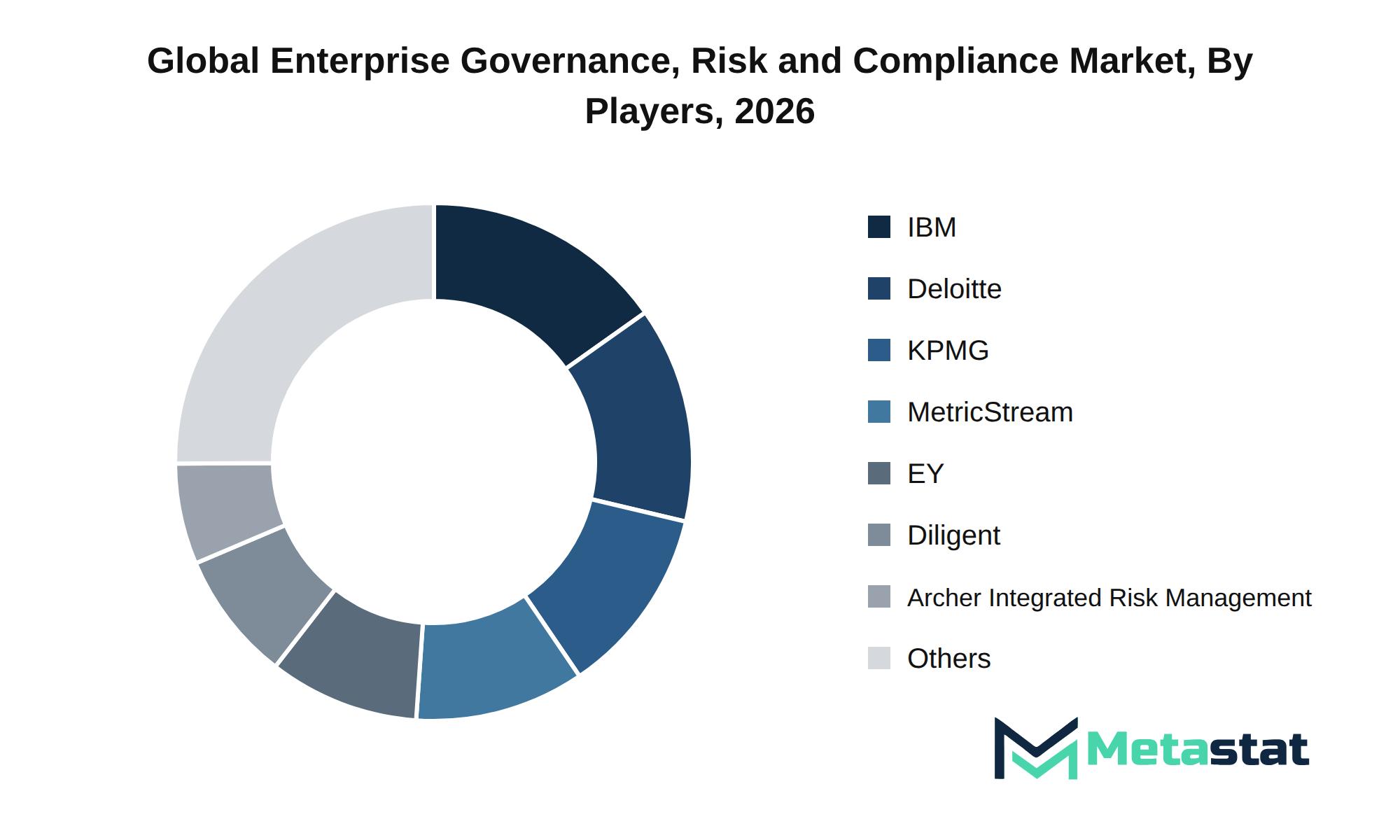
The Enterprise Governance, Risk and Compliance market features a diverse range of players, each employing unique strategies to capture market share. Companies including Appian, IBM Corporation, and Oracle Corporation leverage technological expertise and robust product portfolios to position themselves competitively. Strategic alliances and partnerships, including initiatives by Deloitte and PwC, enhance service offerings and expand reach across various sectors.
Pricing architectures reflect a competitive environment, where firms like KPMG and EY adopt flexible commercial models to attract a broad customer base. Significant investment in research and development by players including MetricStream and Diligent Corporation strengthens product differentiation and technological moats. This focus on innovation creates a dynamic market atmosphere, enabling companies to respond effectively to emerging customer needs and regulatory demands.
Barriers to entry for new competitors remain substantial due to established brand equity and customer retention strategies employed by incumbents. Companies like Riskonnect and ServiceNow prioritize customer loyalty through tailored solutions and high-quality service. Future competitive outlooks indicate that continuous adaptation and strategic growth vectors will determine market positioning in the evolving landscape of enterprise governance, risk, and compliance.
Market size is forecast to rise from USD 73.1 billion in 2025 to over USD 210.1 billion by 2033. The base case is USD 73.1 billion in 2025 to USD 210.1 billion by 2033 at a 14.1% CAGR. Various macroeconomic factors influence growth in the Enterprise Governance, Risk and Compliance market. Economic cycles, along with downstream demand changes, play critical roles in shaping overall market behavior. Core industry maturation alongside structural consumption shifts generates opportunities for innovation and development.
Integration of next-generation technologies drives the advancement of solutions within the market. R&D commercialization timelines, coupled with awareness of product life cycles, impact how businesses approach compliance and risk management. Regulatory evolution and imminent compliance milestones require ongoing adaptation within enterprises, emphasizing the need for robust governance frameworks.
Geopolitical realignments and evolving trade corridors affect global supply chain dynamics, influencing how organizations allocate strategic capital. Infrastructure commitments and CapEx investment vectors direct resources toward high-growth sectors within the market. Identifying emerging white-space opportunities and addressing unmet enterprise needs remain critical for companies aiming to capture high-growth pockets.
Executive-level strategic imperatives shape organizational responses to the evolving landscape, with defensibility roadmaps guiding future growth recommendations. Companies operating in the Enterprise Governance, Risk and Compliance market remain agile, leveraging insights to navigate challenges and capitalize on growth opportunities.
The report strategically identifies and profiles the key market players and analyses their core competencies in each sub-segment of the Enterprise Governance, Risk and Compliance market.
Report Attributes | Details |
Study Period | 2021-2033 |
Base Year | 2025 |
Estimated Year | 2026 |
Forecast Period | 2026-2033 |
Historical Period | 2021-2025 |
Growth Rate | CAGR 14.1% from 2026 to 2033 |
Revenue Unit | USD billion |
Segmentation | By Type, Application, Component, Deployment Mode, and Region |
By Region | North America (By Type, Application, Component, Deployment Mode, and Country)
|
Europe (By Type, Application, Component, Deployment Mode, and Country)
| |
Asia Pacific (By Type, Application, Component, Deployment Mode, and Country)
| |
South America (By Type, Application, Component, Deployment Mode, and Country)
| |
Middle East and Africa (By Type, Application, Component, Deployment Mode, and Country)
|
Find answers to common questions about this report
The Enterprise Governance, Risk and Compliance market size was valued at USD 73.1 billion in 2025, according to the Metastat Insights study.
The Enterprise Governance, Risk and Compliance market is projected to grow at a CAGR of 14.1% during the forecast period from 2026 to 2033.
The North America Enterprise Governance, Risk and Compliance market size is estimated to reach USD 81.3 billion by 2033.
The Risk Management segment leads the Enterprise Governance, Risk and Compliance market, with a projected value of USD 52.3 billion by 2033. This figure reflects the highest growth potential compared to other segments.
Key drivers for the Enterprise Governance, Risk and Compliance market include heightened investment in digital transformation initiatives and the adoption of advanced technologies including automation and artificial intelligence. These investments enhance governance frameworks, optimize compliance processes, and support organizations in navigating complex regulatory environments.
North America holds the dominant share of the Enterprise Governance, Risk and Compliance market, with a value of USD 81.3 billion projected for 2033, representing 39.9 percent of the total market.
Regulatory tightening and increasing compliance hurdles create significant operational and financial burdens for organizations, diverting resources from innovation. Macroeconomic headwinds, including inflationary pressures and geopolitical instability, further complicate resource allocation and investment strategies, limiting the adoption of new governance, risk, and compliance technologies.
Significant factors favoring product adoption in the Enterprise Governance, Risk and Compliance market include increased investment in digital transformation initiatives and the prioritization of advanced technologies including automation and artificial intelligence. These developments enhance governance frameworks and optimize compliance processes, particularly in industries like banking, financial services, and insurance, which demand operational efficiency.
The Enterprise Governance, Risk and Compliance market is estimated to reach a valuation of USD 210.1 billion by 2033.
Key players in the Enterprise Governance, Risk and Compliance market include Appian, Deloitte, IBM Corporation, KPMG, Oracle Corporation, PwC, Riskonnect, and Workiva Inc.
The analysts below cover Banking & Finance research at Metastat Insights.
LEAD ANALYST
Utkarsh Khirodkar is a Lead Market Research Analyst at MetaStat Insight, specializing in market intelligence, technology sector assessments, and competitive strategy.

PRINCIPAL CONSULTANT - ENTERPRISE AI & EMERGING TECHNOLOGIES
Banking & Finance · Electronics and Semiconductor · Energy and Power · Healthcare IT · Information & Technology · Professional Services
Vijay Gunti is a Principal Consultant at MetaStat Insight, bringing over two decades of experience across enterprise digital transformation, technology strategy, and intelligent systems.
Our team was tracking whether regional recycling infrastructure could realistically absorb the growing volume of lithium iron phosphate batteries over the next decade. The report did a solid job separating announced hydrometallurgical plant capacity from active, permitted operational throughput. That distinction made the feedstock availability projections and regional recovery rate models far more credible than standard commercial overviews.
Tracking capacity expansion in single-use bioprocessing requires dependable data on raw material availability and cleanroom-grade polymer supply chains. The competitive landscape chapter gave a grounded evaluation of secondary component suppliers across North America and Asia-Pacific rather than simply reprinting press releases. Having that level of supplier benchmarking helped clarify dual-sourcing considerations for our clinical pipeline planning.
When evaluating distributed energy resource management systems, standard research summaries tend to gloss over the operational differences between front-of-the-meter utility deployments and behind-the-meter industrial sites. The MetaStat Insight report addressed those distinctions directly, especially regarding software interoperability standards and grid interconnection backlogs. The five-year market sizing across regional transmission organizations provided actionable context for our grid modernization strategy.
Explore related market intelligence reports worth reading alongside this one.
Starting from
$2950
Starting from
$2950