
Europe Consumer Television Market
Europe Consumer Television Market Size, Share, By Resolution (HD / HD Ready, Full HD, 4K UHD, 8K UHD), By Screen Size (Up to 32 Inches, 33-42 Inches, 43-49 Inches, 50-59 Inches, 60-69 Inches, 70-79 Inches, 80-89 Inches and 90 Inches and Above), By Sales Channel (Online Retail, Consumer Electronics Specialty Stores, Mass Merchandisers and Hypermarkets, Independent Electronics and Appliance Stores, Brand-Owned Stores, Department Stores and Others), By Region (Germany, UK, France, Italy and Rest of Europe), Industry Analysis, Growth, Trends, and Forecast, 2026-2033
MSI-5008
August 20, 2026
Updated
264 Pages
Historical
Base year
Forecast
Forecast period
Report Details
Comprehensive Market Analysis And Insights
Market Overview
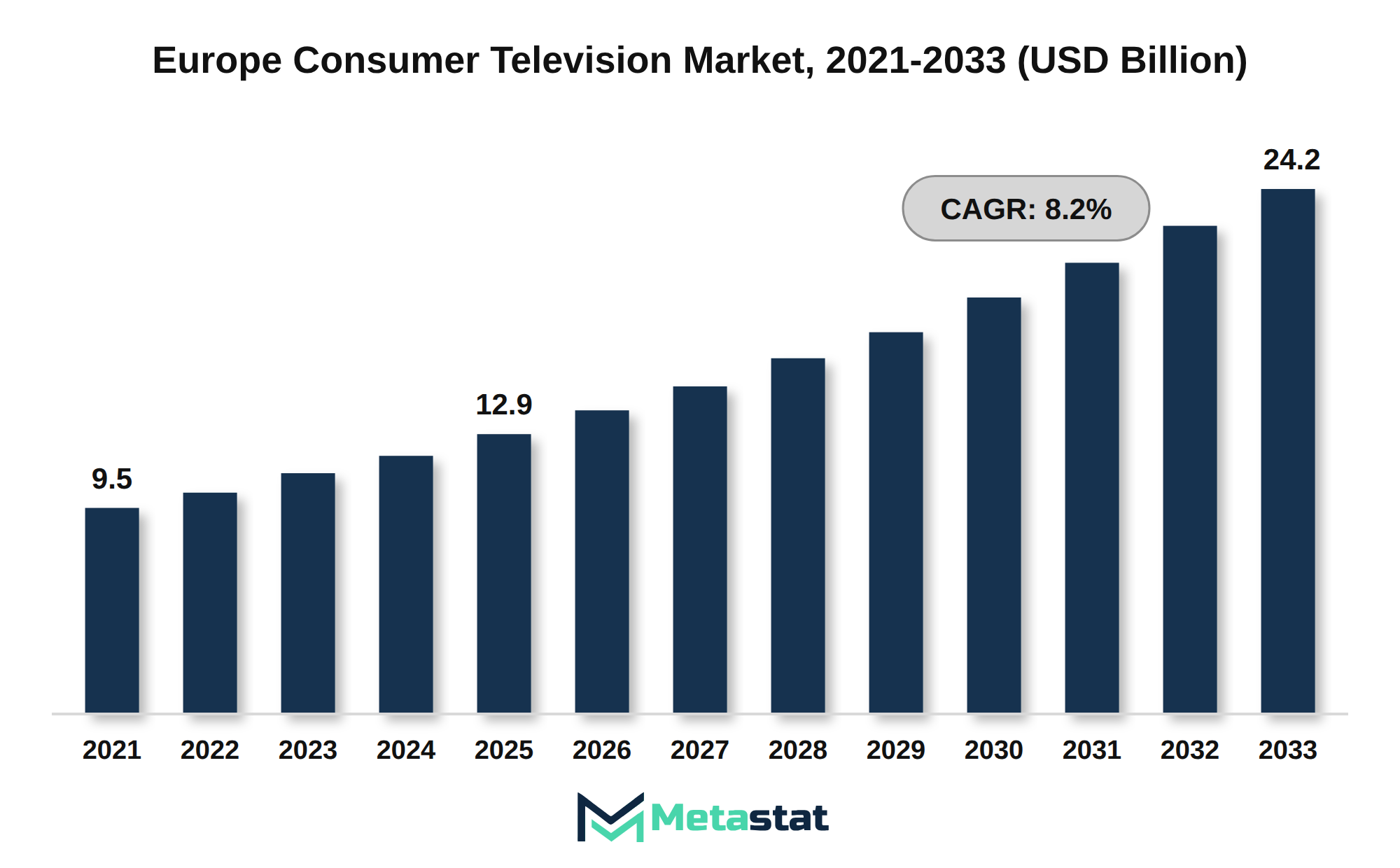
The Europe Consumer Television market was valued at USD 12.9 billion in 2025 and is projected to reach USD 24.2 billion by 2033, growing at a CAGR of 8.2% over the forecast period.
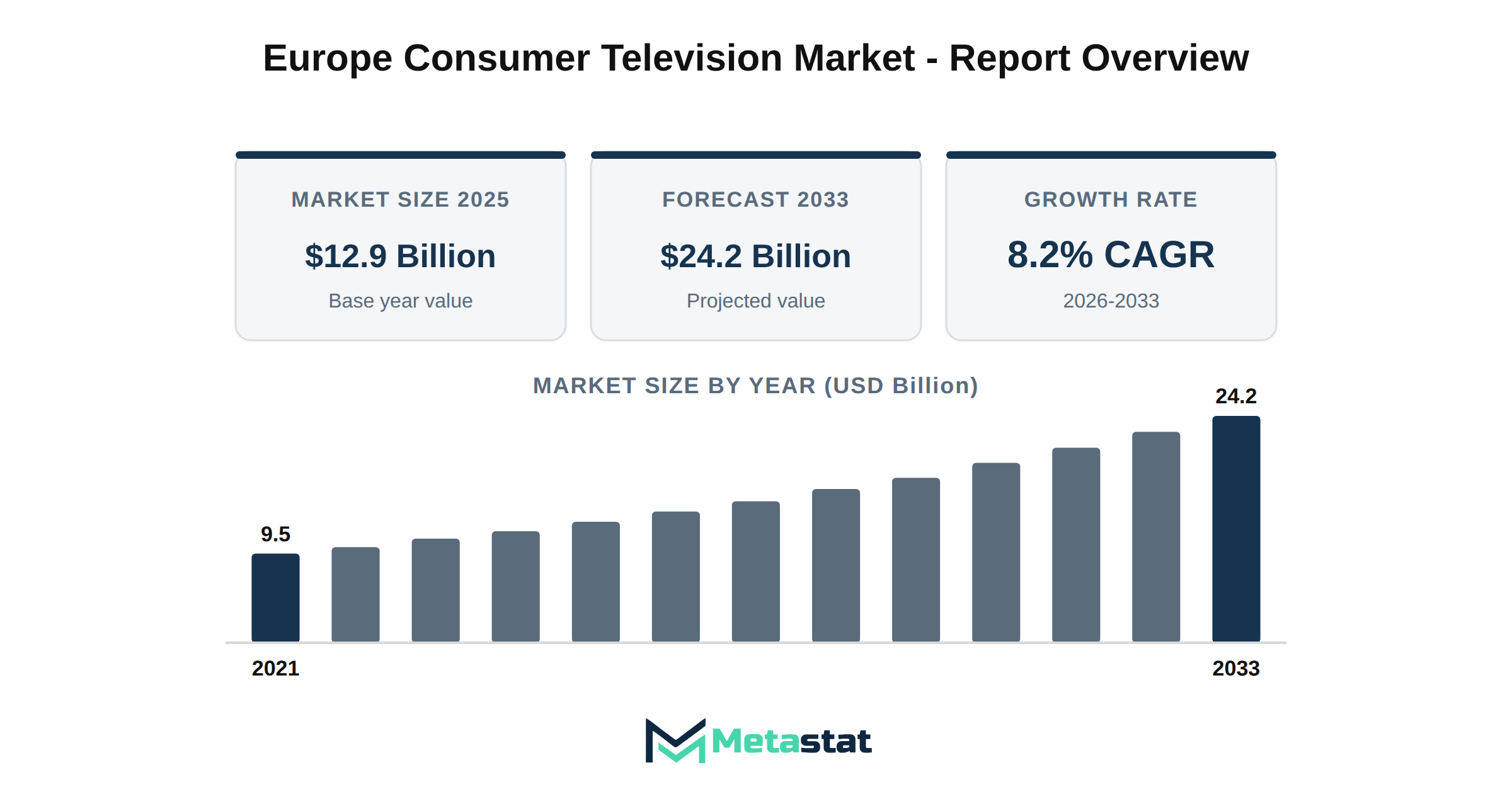
The Europe Consumer Television market reached a value of USD 12.9 billion in 2025 and is projected to expand to USD 24.2 billion by 2033, reflecting a compound annual growth rate (CAGR) of 8.2%.
Key segments within the market include various resolutions including HD / HD Ready, Full HD, 4K UHD, and 8K UHD. The 4K UHD segment dominates with a forecast value of USD 19.8 billion by 2033. The 8K UHD segment is expected to experience significant growth, with a CAGR of 25%.
Screen size preferences influence purchasing decisions, with the 43-49 inches segment projected to reach a value of USD 4.1 billion by 2033. The online retail sales channel is anticipated to significantly contribute to market expansion, with a projected growth from USD 4.9 billion in 2026 to USD 10.4 billion by 2033 at a CAGR of 11.5%, reinforcing the segment's position.
Regional dynamics indicate that Germany stands out with a projected market value of USD 5.1 billion by 2033, while the UK anticipates a value of USD 4.1 billion. France and Italy will contribute to the overall market growth, supported by increasing consumer demand for advanced television technologies, expanding the addressable base.
The Europe Consumer Television market experiences significant advancements in AI-enabled TV features. Benchmarking these capabilities demonstrates a growing emphasis on machine learning and user interaction, enhancing the overall viewing experience. Consumers increasingly favor smart televisions that integrate seamlessly with various content ecosystems. This trend drives competition among manufacturers to develop proprietary operating systems that provide unique content offerings and user interfaces.
Gaming performance remains a critical factor in the market, with refresh rates serving because a key differentiator for consumers. High refresh rates contribute to smoother gameplay, attracting gamers to premium models. This focus on performance aligns with the rising popularity of gaming because a primary entertainment medium, further influencing purchasing decisions.
Lifestyle televisions are becoming prominent, with manufacturers positioning models because art displays when not in use. This innovative approach appeals to consumers seeking multifunctional devices that blend seamlessly into their living spaces. Regulatory compliance and standards around energy efficiency and emissions continue to evolve, affecting the design and production of televisions across Europe.
Geopolitical risk frameworks impact supply chains, with manufacturers adjusting sourcing strategies to mitigate disruptions. Research and development trajectories focus on next-generation innovations, prioritizing sustainable transformation and decarbonization. Circular economy dynamics influence product design, encouraging manufacturers to consider the lifecycle of their products from production to disposal.
The market experiences fragmentation, with various players competing across segments and regions. M&A dynamics reflect the need for consolidation among companies seeking to enhance their market position and broaden their technological capabilities. The value chain involves complex interactions among manufacturers, suppliers, and retailers, influencing procurement strategies and customer journey dynamics. This complexity shapes the competitive environment.
Capital allocation strategies emphasize infrastructure investments, directing resources towards technology upgrades and expansion into emerging markets. CapEx and OpEx realities shape operational budgets, with companies navigating macroeconomic headwinds including inflationary pressures and currency volatility. The future strategic outlook for the Europe Consumer Television market highlights the importance of corporate imperatives, focusing on innovation, sustainability, and high-value recommendations for stakeholders.
Market Dynamics
Technological integration drives market growth
Technological integration significantly influences the growth of the Europe Consumer Television market. The rise of automation, artificial intelligence, and software adoption improves operational efficiency and enhances user experiences. These advancements facilitate the transition from legacy systems to more digitized processes, allowing manufacturers to innovate and differentiate their offerings. Increased demand for smart televisions with integrated apps and streaming capabilities aligns with consumer preferences for connectivity and enhanced functionalities, strengthening long-term demand.
Ongoing investment in research and development drives market growth. Companies prioritize creating products with improved resolution, screen sizes, and features that cater to evolving consumer behaviors, including the shift towards larger screens and higher resolutions. Digital transformation accelerates because manufacturers refine their strategies to leverage emerging technologies, thereby enhancing competitive advantage and expanding market share. The combination of these technological advancements and consumer demands positions the Europe Consumer Television market for sustained growth throughout the forecast period.
Market access through digital transformation
The Europe Consumer Television market experiences growth driven by the increasing digital transformation across multiple sectors. Economic conditions, including GDP growth and public-private spending power, encourage consumers to invest in advanced television technologies. This transformation enables manufacturers to adopt innovative business models, enhancing customer experiences and expanding market reach.
Shifting demographic patterns and evolving consumer behaviors further influence this growth. An aging population and urbanization prompt demand for larger screens and higher resolution televisions, including 4K and 8K UHD models. While buying preferences evolve, consumers prioritize smart features and connectivity, stimulating manufacturers to innovate their offerings.
The combination of these macro-economic factors and changing consumer behaviors creates a conducive environment for the Europe Consumer Television market. Investment in advanced technologies and marketing strategies directly correlates with increased revenues and market expansion, driven by manufacturers adapting to meet the demands of modern consumers.
Regulatory compliance challenges hinder market growth
Compliance hurdles within the Europe Consumer Television market create obstacles for manufacturers and retailers. Evolving regulations impose significant requirements related to energy efficiency, safety standards, and environmental impact. These requirements drive additional costs for compliance, impacting operational budgets and pricing strategies. The financial burden of adapting to such regulations often leads to higher prices for consumers, resulting in reduced demand.
Rising inflationary pressures contribute to economic challenges faced by consumers and businesses within the market. Increased costs of raw materials and transportation affect profit margins for manufacturers. Such economic conditions lead to constrained spending on consumer electronics, resulting in slower market growth. In addition, supply chain disruptions stemming from geopolitical instability and resource scarcity hinder production capabilities and delay product availability. These factors contribute to a fragmented market, complicating competitive dynamics and limiting overall market efficiency.
Technological obsolescence presents another significant restraint. Rapid advancements in television technologies necessitate continuous investment in research and development. This cycle strains the financial resources of smaller manufacturers, limiting their ability to remain competitive. The presence of alternative offerings in the entertainment space, including streaming services, diverts consumer attention and spending away from traditional television products. Consequently, these challenges influence the growth trajectory of the Europe Consumer Television market.
Geopolitical fragmentation impacts supply chains
The Europe Consumer Television market faces significant challenges owing to geopolitical fragmentation, which disrupts trade flows and raises logistical complexities. This fragmentation often leads to increased trade deficits and tariff friction among countries, complicating the import of critical components needed for television manufacturing. The resulting cost pressures affect operational margins, ultimately influencing pricing strategies across the market.
Technological disruptions, including rapid advancements in display technologies, create additional hurdles. Manufacturers struggle with the integration of various technologies, raising research and development costs. This complex environment necessitates substantial investment in innovation, while simultaneously requiring companies to navigate interoperability friction across diverse platforms and standards.
Supply chain instability emerges because a critical concern, driven by feedstock and component volatility. Fluctuating prices for essential materials contribute to rising production costs, compelling producers to evaluate their supply chain strategies. These challenges impede growth, leading to delays in product launches and market entry.
Environmental and sustainability demands increasingly shape consumer preferences within the Europe Consumer Television market. Manufacturers address tightening regulatory standards and compliance overhead related to decarbonization mandates and lifecycle assessments. Adapting to these evolving demands impacts market competitiveness and consumer loyalty.
Lastly, workforce skill gaps present obstacles to operational efficiency. The rapid pace of technological change requires skilled labor capable of adapting to new production processes and emerging technologies. Companies face challenges in retaining talent and implementing effective training programs, which directly influences their ability to capitalize on growth opportunities in the market.
Market opportunity through digital procurement shifts
The Europe Consumer Television market benefits from significant shifts in digital procurement behaviors, leading to enhanced consumer engagement and streamlined purchasing processes. These shifts arise from the growing adoption of online retail platforms, which facilitate direct access to a broader range of products and brands. The anticipated growth of online retail from USD 4.9 billion in 2026 to USD 10.4 billion in 2033, with a CAGR of 11.5%, highlights the increasing reliance on digital channels for purchasing televisions.
This transition aligns with evolving buyer expectations, particularly among tech-savvy consumers who prioritize convenience and speed. Efficient online experiences are increasingly sought by consumers, driving manufacturers to optimize their digital offerings and enhance customer interactions. The rise of online sales channels supports market expansion, allowing companies to tap into new customer segments across different regions.
Investments in digital transformation initiatives facilitate improvements in operational efficiency and customer satisfaction. Companies focusing on optimizing their online presence and integrating advanced technologies, including artificial intelligence and machine learning, enhance their ability to personalize marketing efforts and improve inventory management. This strategic focus enhances competitiveness and attracts discerning customers who favor innovative purchasing experiences.
Overall, the evolution of procurement behaviors within the Europe Consumer Television market presents significant opportunities for growth. Companies that effectively utilize digital channels and adapt to changing consumer preferences position themselves to capture a larger share of the market, ultimately driving revenue and market share during the forecast period.
Market Segmentation Analysis
The Europe Consumer Television market is segmented based on Resolution, Screen Size, Sales Channel, and Region.
By Resolution, the market is further segmented into:
- HD / HD Ready
- Full HD
- 4K UHD
- 8K UHD
HD / HD Ready
Market dynamics for HD / HD Ready televisions reflect a transition in consumer preferences towards higher resolution options. The segment is valued at USD 0.7 billion in 2026 and is projected to reach USD 0.6 billion by 2033, at a CAGR of -2.2% during the forecast period. Factors including increasing consumer demand for 4K UHD and 8K UHD televisions contribute to the declining interest in HD / HD Ready models. Technological maturation and next-generation upgrades significantly influence purchasing decisions, with consumers favoring advanced features in their television systems.
Adoption of HD / HD Ready televisions faces challenges due to evolving market trends. Various end-use dynamics illustrate a shift in consumption patterns, reflecting consumer prioritization of products that provide enhanced viewing experiences. Regulatory compliance standards for energy efficiency and image quality create additional pressures on manufacturers, further complicating the segment's outlook. Price volatility impacts margins, while the availability of disruptive alternatives, including smart TVs with advanced capabilities, poses substitution risks. Investment in product evolution remains critical to maintaining relevance in the competitive environment of the Europe Consumer Television market.
Full HD
Growth in the Full HD segment benefits from increasing consumer preference for high-quality viewing experiences. Enhanced content availability on streaming platforms promotes adoption, driven by viewers seeking better picture quality and immersive experiences. While technology matures, manufacturers continuously improve Full HD offerings, making them attractive to cost-sensitive consumers looking for value without compromising quality.
The Full HD segment reaches USD 1.1 billion by 2033, at a CAGR of 0.8% during the forecast period. This growth reflects a gradual yet steady increase in market presence, driven by the ongoing evolution of content production and consumption trends. While 4K UHD televisions dominate the market, Full HD remains relevant for budget-conscious buyers who value affordability alongside adequate performance.
Increased production efficiency and economies of scale contribute to more favorable cost structures for manufacturers, enabling competitive pricing strategies. The market benefits from a diverse sales channel landscape, with online retail becoming an essential platform for reaching consumers. Retailers leverage digital marketing strategies to target specific demographics, ultimately enhancing visibility and driving sales for Full HD televisions within the Europe Consumer Television market.
4K UHD
Growth in the 4K UHD segment results from increased consumer demand for high-resolution displays that enhance viewing experiences. Televisions with higher resolutions become more mainstream, and adoption rates surge, particularly driven by the availability of 4K content from streaming services and broadcasters. This shift correlates with advancements in display technology that improve picture quality, attracting a broader audience seeking the latest features.
In the Europe Consumer Television market, the 4K UHD segment is anticipated to reach USD 19.8 billion by 2033. This growth reflects significant investments in next-generation upgrades and product evolution, with manufacturers focusing on features including HDR (High Dynamic Range) and larger screen sizes. These enhancements attract consumers and reshape end-use dynamics, encouraging shifts in consumption patterns towards premium products.
Regulatory compliance standards regarding energy efficiency and environmental impact play an important role in shaping product offerings. Manufacturers proactively align their strategies with these regulations, ensuring competitiveness while addressing sustainability. Cost structures within the market evolve owing to improvements in production techniques, allowing manufacturers to offer 4K UHD televisions at more accessible price points.
Overall, the segment experiences strong growth potential, fueled by strategic opportunity windows for new entrants and established players. Continuous technological maturation and consumer appetite for immersive experiences drive the 4K UHD segment's expansion within the Europe Consumer Television market.
8K UHD
Demand for 8K UHD televisions experiences rapid growth, with projections indicating a CAGR of 25% during the forecast period. Several factors drive this increase, including advancements in display technology and rising consumer interest in superior viewing experiences. While media consumption shifts towards high-resolution content, manufacturers are motivated to enhance product offerings, resulting in broader adoption of 8K UHD displays.
The maturity of streaming platforms and the availability of 8K content contribute to expanding market dynamics. With sports and cinematic releases progressively presenting content in 8K, consumers seek televisions that support these formats, propelling sales. The market for 8K UHD televisions strengthens through strategic partnerships between manufacturers and content providers, ensuring a steady pipeline of compatible media.
Considerable price reductions for 8K UHD models, driven by increased competition among key players, enhance consumer access. This trend enables market penetration across varied demographics, with affluent buyers driving 8K television acquisitions. The Europe Consumer Television market benefits from this inflation in demand, encouraging innovation and investment in complementary technologies.
Regulatory compliance standards and certifications surrounding energy efficiency and display quality further influence purchasing decisions. Manufacturers focusing on meeting these standards gain competitive advantages within the market, appealing to environmentally conscious consumers. The market for 8K UHD televisions becomes increasingly favorable for growth and sustained market presence.
By Screen Size, the market is further segmented into:
- Up to 32 Inches
- 33-42 Inches
- 43-49 Inches
- 50-59 Inches
- 60-69 Inches
- 70-79 Inches
- 80-89 Inches
- 90 Inches and Above
Up to 32 Inches
Valued at USD 1.3 billion in 2026, the Up to 32 Inches segment is projected to reach USD 1.2 billion by 2033, reflecting a CAGR of -1.2% during the forecast period. This decline highlights a shift in consumer preferences towards larger screen sizes, driven by advancements in technology and increased demand for immersive viewing experiences. Manufacturers face challenges in maintaining competitive pricing while adapting to market trends that favor larger formats and higher resolutions.
Market dynamics stem from evolving consumer habits that favor higher screen sizes for enhanced entertainment. While overall demand for televisions shifts towards larger units, manufacturers directing resources towards innovation in larger screen technologies encounter the necessity to balance production costs with pricing strategies. The decline in this segment leads to strategic realignments focusing on consumer engagement and targeted promotions that retain market relevance amid changing preferences.
Technological maturation influences consumer behavior, with consumers increasingly seeking features that enhance viewing quality. Factors including connectivity options and smart technology integration influence purchasing decisions for televisions within the Europe Consumer Television market. While this segment experiences contraction, opportunities arise in upgrading existing technologies and meeting consumer demands through tailored solutions, ensuring that manufacturers remain competitive in an evolving marketplace.
33-42 Inches
Demand for the 33-42 Inches television segment demonstrates a steady growth trajectory within the Europe Consumer Television market. Factors driving this segment include a shift towards medium-sized screens for urban living spaces and enhanced viewing experiences. Increasing urbanization and smaller living spaces are increasing demand for televisions that fit comfortably without sacrificing display quality.
Technological advancements play a critical role in shaping consumer preferences, with features including smart capabilities and improved picture quality influencing purchasing decisions. Competitive pricing strategies among manufacturers enhance adoption rates, allowing consumers to access advanced technologies at lower price points. The segment is expected to reach USD 1.7 billion by 2033, at a CAGR of 1.9% during the forecast period.
Changing consumption patterns reflect a preference for streaming services, leading to increased screen time and a greater emphasis on home entertainment systems. The growth of this segment aligns with consumer trends toward more personalized viewing experiences, resulting in higher engagement with content across various platforms. Overall, these dynamics contribute positively to the expansion of the segment within the broader market.
43-49 Inches
Demand for televisions within the 43-49 Inches segment demonstrates notable growth in the Europe Consumer Television market. This expansion arises from a combination of consumer preferences shifting towards larger screens for enhanced viewing experiences and the ongoing transition towards higher resolution formats. Households increasingly seek televisions that balance size with affordability, making the 43-49 Inches category a popular choice, accommodating diverse viewing environments.
Technological advancements in display quality significantly influence market dynamics. Manufacturers focus on next-gen upgrades, integrating features including 4K UHD resolution, which enhances picture clarity and detail. The projected reach of USD 4.1 billion by 2033 indicates a robust trajectory, driven by evolving consumer expectations and the ongoing adoption of advanced technologies.
End-use dynamics reflect a growing inclination for versatile television sizes that fit various room configurations. This segment attracts buyers seeking a balance between large screen immersion and manageable dimensions. The Europe Consumer Television market benefits from these consumption shifts, positioning the 43-49 Inches segment favorably for sustained growth and increasing market penetration.
50-59 Inches
Growth in the 50-59 Inches segment reflects evolving consumer preferences toward larger screen sizes, driven by a shift in viewing habits toward immersive experiences. This segment is projected to grow at a CAGR of 7.2% during the forecast period. Increased demand for high-definition content fuels adoption of televisions within this size range, particularly with the availability of streaming services offering 4K and higher resolution content. Product innovation enhances the appeal of these televisions, incorporating advanced features including smart technology and improved sound systems, which further attracts consumers.
Competitive pricing strategies adopted by manufacturers create a conducive environment for expansion in the Europe Consumer Television market. Enhanced production efficiencies and the availability of diverse models facilitate penetration into various consumer segments. Strategic marketing efforts highlight the benefits of 50-59 Inches televisions, including optimal viewing experiences in medium-sized living spaces, contributing to increased sales. Overall, the segment positions itself favorably within the broader market, reflecting a strong capital investment outlook driven by manufacturers seeking to capitalize on this growth opportunity.
60-69 Inches
Consumer preferences increasingly trend toward larger screen sizes, with the 60-69 Inches segment experiencing notable interest. This demand stems from a strong desire for immersive viewing experiences, particularly for sports and cinematic content. The market sees a growing appreciation for high-resolution options, which enhances the overall viewing experience. Advances in display technology contribute to the segment's appeal, providing sharper images and vivid colors that attract consumers.
Increased investment in smart TV features significantly influences the adoption of larger screen televisions. Integration of streaming services and smart home compatibility aligns with consumer expectations for modern entertainment solutions. Consumers seek versatile options that accommodate various content sources. The market benefits from this shift toward multifunctional devices, encouraging broader adoption of larger screens.
Segment expansion faces challenges including pricing pressures and competition from alternative screen sizes. Price sensitivity among consumers limits the potential for larger televisions, particularly in more budget-conscious demographics. However, the increasing availability of financing options and promotional offers provides opportunities for growth within the segment.
The market's trajectory aligns with evolving entertainment consumption patterns, leading to sustained demand for larger televisions. Enhanced home entertainment setups, fueled by trends in remote work and leisure activities, further support the segment's growth. Evolving consumer preferences position the 60-69 Inches segment to capture market share within the broader Europe Consumer Television market.
70-79 Inches
Consumer interest in large television screens, particularly sizes in the 70-79 Inches segment, reflects a growing preference for immersive viewing experiences. Factors driving this demand include the proliferation of high-resolution content, advancements in display technology, and a shift toward home entertainment systems that rival cinema experiences. Significant adoption of larger screens occurs in the Europe Consumer Television market due to these consumer trends.
Technological maturation supports the expansion of this segment, with innovations in OLED and QLED technologies enhancing picture quality and energy efficiency. Manufacturers invest in next-gen upgrades, focusing on features including higher refresh rates and improved color accuracy. These advancements appeal to consumers seeking enhanced performance for gaming and streaming, contributing to market growth.
End-use dynamics indicate that consumers increasingly prioritize entertainment value, leading to shifts in consumption patterns. The rise of streaming platforms offering original content in high definition encourages the purchase of larger televisions. Regulatory compliance standards around energy efficiency and safety further influence consumer purchasing decisions, driven by eco-conscious buyers seeking compliant models.
Supply chain resilience for larger screens incorporates sourcing high-quality raw materials, ensuring availability in an expanding market. Competition intensifies, and manufacturers face pressures related to pricing volatility and margin challenges. Strategic opportunity windows emerge for players offering innovative models that incorporate advanced technologies and cater to evolving consumer preferences, cementing their position in the Europe Consumer Television market.
80-89 Inches
Adoption of televisions within the 80-89 Inches segment relies on consumer demand for immersive viewing experiences, particularly in home entertainment and gaming contexts. Expanding interest in larger displays aligns with trends toward premium content consumption, including streaming services offering high-definition video. This shift creates significant opportunities for manufacturers focusing on this screen size.
Technological maturation significantly impacts this segment, with advancements in display technology enhancing picture quality and energy efficiency. Features including OLED and QLED technologies attract consumers seeking high-performance televisions, further driving interest in larger screen formats. The market responds to these technological developments, resulting in an evolving product landscape that prioritizes enhanced performance and user experience.
Investment in next-gen upgrades features prominently in the strategy of key players. Manufacturers actively seek to optimize production processes, balancing cost structures while introducing innovative designs and features. This focus positions the segment for growth, aligning with consumer expectations for advanced technology.
Regulatory compliance standards and certifications play a critical role in shaping market dynamics. Adherence to these standards ensures product quality and safety, building consumer trust. The market benefits from clear guidelines, allowing manufacturers to focus on delivering products that meet or exceed these regulations.
Logistics vulnerabilities within the supply chain impact the ability to deliver large-screen televisions efficiently. Disruptive alternatives, including smaller screen sizes, present challenges but opportunities for innovation in the segment. Strategic opportunity windows emerge, encouraging manufacturers to adapt to shifts in consumer preferences while addressing potential supply chain disruptions.
Overall, segment expansion within the Europe Consumer Television market reflects growing consumer interest in larger screen sizes, driven by advancements in technology and changing viewing habits. Key players maintain a focus on innovation, positioning themselves for success amid evolving market dynamics.
90 Inches and Above
Increasing consumer interest in larger televisions drives demand for models measuring 90 inches and above. This trend aligns with the growing preference for immersive viewing experiences, particularly among consumers investing in home cinema systems. The market experiences a shift toward these oversized models due to advancements in display technologies, including enhancements in resolution and picture quality.
Adoption of 90 inches and above televisions reflects evolving entertainment consumption patterns, with consumers prioritizing high-quality visuals for streaming services and gaming. Manufacturers respond by developing innovative features, including improved panel technologies that enable integration with smart home ecosystems. This segment's evolution highlights the significance of next-generation upgrades, which enhance functionality and overall user experience.
Competitive dynamics within the Europe Consumer Television market prompt brands to focus on this high-demand segment. Companies explore strategic partnerships and collaborations to leverage technological advancements, ensuring relevance to consumer preferences. Such initiatives strengthen brands' positions in this lucrative market, contributing to sustained growth.
Investment in marketing and distribution channels expands the reach of 90 inches and above televisions. Companies increasingly use online retail platforms to tap into a broader audience, recognizing the shift in consumer purchasing behaviors. This segment's growth potential encourages brands to innovate continually, creating a cycle of product evolution that aligns with market demand.
By Sales Channel, the market is further segmented into:
- Online Retail
- Consumer Electronics Specialty Stores (Offline)
- Mass Merchandisers and Hypermarkets (Offline)
- Independent Electronics and Appliance Stores (Offline)
- Brand-Owned Stores (Offline)
- Department Stores (Offline)
- Others (Other Offline Retail Formats)
Online Retail
Valued at USD 4.9 billion in 2026, the online retail segment is projected to reach USD 10.4 billion by 2033, at a CAGR of 11.5% during the forecast period. Factors driving this growth include increasing consumer preference for the convenience of online shopping, coupled with a trend toward home entertainment solutions. Enhanced online platforms and service offerings enable consumers to access a wider range of product selections, promoting competitive pricing and improving customer experiences.
Technological advancements in logistics and delivery channels facilitate faster shipping options, attracting customers to online retail. Growing penetration of internet access and mobile devices contributes to this segment's expansion, allowing consumers to research and purchase televisions seamlessly. This shift towards digital purchasing channels signifies a transformation in consumer behavior, influencing demand patterns in the Europe Consumer Television market.
Strategic partnerships between online retailers and manufacturers enhance product visibility and streamline supply chain operations. These alliances allow retailers to offer exclusive deals and promotions, generating increased traffic and sales. Overall, the online retail segment influences the competitive dynamics of the market, reflecting a broader trend towards digital commerce in consumer electronics.
Consumer Electronics Specialty Stores (Offline)
Interest in Consumer Electronics Specialty Stores (Offline) continues to grow, driven by the increasing demand for high-quality television products. This growth stems from evolving consumer preferences for enhanced viewing experiences, pushing shoppers toward specialty outlets that offer personalized service and expert advice. The segment is estimated to reach USD 5.8 billion by 2033, at a CAGR of 6.8% during the forecast period.
Specialty stores benefit from the rising adoption of advanced television technologies, particularly 4K UHD and 8K UHD resolutions. These stores often provide consumers with the opportunity to experience superior picture quality and enhanced features firsthand. The market attracts tech-savvy consumers seeking the latest innovations, which further supports revenue growth.
Increased competition from online retail channels results in strategic adjustments within the specialty store segment. Retailers focus on creating unique in-store experiences, including interactive displays and product demonstrations, to differentiate themselves from online platforms. This strategy enables them to maintain relevance in the Europe Consumer Television market.
Price sensitivity among consumers influences purchasing decisions, prompting retailers to offer competitive pricing and bundled deals. Strategies including financing options and promotional campaigns enhance affordability, appealing to budget-conscious shoppers. The segment's ability to adapt pricing strategies is critical in sustaining consumer interest and driving sales.
Overall, the Consumer Electronics Specialty Stores (Offline) segment serves because a critical component of the Europe Consumer Television market, leveraging consumer demand for high-quality products and superior service. Continued investment in customer engagement and innovative in-store experiences will enhance its competitive position over the forecast period.
Mass Merchandisers and Hypermarkets (Offline)
Valued at USD 3.1 billion by 2033, the Mass Merchandisers and Hypermarkets (Offline) segment reflects a significant shift in consumer purchasing behavior within the Europe Consumer Television market. Increasing consumer preference for shopping in physical retail environments drives demand, supported by the tactile experience these outlets provide. Retailers focus on offering a diverse range of television options, positioning themselves to attract a variety of customers.
Competitive pricing strategies play a crucial role in this segment's success, enabling firms to cater to various market segments while maintaining reasonable margins. The presence of promotional campaigns and bundled offers enhances consumer appeal, encouraging larger purchases and driving revenue growth. The expansion of retail locations allows for better accessibility, further stimulating demand for televisions sold through this channel.
Technological advancements in television features and functionalities contribute to segment growth. Retailers emphasize the latest innovations, including 4K and 8K UHD, in their displays to attract customers seeking superior viewing experiences. This trend aligns with the overall growth of the market, driven by consumers increasingly investing in advanced technology for home entertainment.
Independent Electronics and Appliance Stores (Offline)
Projecting a growth rate of 4% CAGR during the forecast period, the Independent Electronics and Appliance Stores (Offline) segment reflects a steady demand trajectory within the Europe Consumer Television market. Factors driving this growth include the increasing consumer preference for in-person shopping experiences, where customers engage with products directly before making a purchase. This trend highlights the significance of personalized customer service provided in these offline stores, enhancing customer satisfaction and strengthening brand loyalty.
Technological advancements play a crucial role in shaping the product offerings within this segment. The availability of next-generation televisions, including 4K UHD and 8K UHD, attracts consumers seeking superior viewing experiences. The ongoing evolution of product features, including smart technology integration and improved display technologies, positions independent electronics and appliance stores because vital players in the retail landscape.
The competitive landscape intensifies, prompting stores to adapt their strategies to include promotions and exclusive deals that appeal to consumers. Pricing volatility, influenced by global supply chain factors, impacts the cost structures within this segment. Nonetheless, retailers continue to focus on optimizing their margins through strategic partnerships with manufacturers and effective inventory management. These developments contribute to the overall growth potential within the market.
Continued investment in marketing and customer engagement strategies enhances brand visibility, encouraging increased foot traffic to independent electronics and appliance stores. This dynamic relationship between consumer behavior, technological maturation, and strategic positioning highlights the significant role of this segment within the Europe Consumer Television market.
Brand-Owned Stores (Offline)
In the Europe Consumer Television market, Brand-Owned Stores (Offline) play a significant role in shaping consumer purchasing behavior. These retail outlets allow brands to create immersive shopping experiences, enabling customers to engage directly with the latest television technologies and features. The in-store experience serves because an essential touchpoint where consumers assess product quality, specifications, and design, influencing their purchasing decisions.
Factors driving adoption within this segment include increasing demand for high-quality visual experiences, with advancements in screen resolution technologies including 4K UHD and 8K UHD. Brand-Owned Stores provide consumers with access to premium products that attract customers seeking the latest innovations. The presence of knowledgeable staff enhances the shopping experience, offering personalized assistance and in-depth product demonstrations.
Challenges in the market include pricing volatility, which affects consumer sentiment and spending behavior. Fluctuations in raw material costs and supply chain disruptions impact product availability and pricing, influencing overall market dynamics. Brands navigate these challenges while maintaining competitive pricing to attract consumers to their stores.
Strategic opportunity windows for Brand-Owned Stores emerge because consumer preferences shift toward integrated smart home solutions. These stores leverage partnerships with technology providers to offer bundled solutions that include televisions and compatible home devices, enhancing the overall value proposition for consumers.
Overall, the Brand-Owned Stores (Offline) segment within the Europe Consumer Television market presents unique opportunities and challenges. By focusing on delivering a superior in-store experience and responding to evolving consumer preferences, brands strengthen their market presence and drive continued growth.
Department Stores (Offline)
Consumer interest in Department Stores (Offline) channels reflects evolving shopping behaviors within the Europe Consumer Television market. With an increasing preference for in-person shopping experiences, consumers prioritize the ability to physically inspect televisions before making purchases. This channel benefits from knowledgeable staff who provide personalized assistance, enhancing customer confidence in their decisions.
The segment experiences expansion catalysts driven by promotional events and exclusive offers that attract consumers to physical retail locations. Department stores often host demonstrations, allowing shoppers to experience advanced television features firsthand, which influences purchasing choices. This interactive engagement creates a deeper understanding of product capabilities, particularly because technological advancements continue to enhance viewing experiences.
End-use dynamics indicate a growing tendency for consumers to choose televisions based on brand reputation and in-store experiences. The importance of brand loyalty significantly impacts purchasing decisions, driving consumers toward established brands available in department stores. This trend reinforces the competitive positioning of these retail channels within the market.
Pricing volatility remains a factor affecting Department Stores (Offline), with fluctuations in manufacturing costs impacting retail pricing strategies. These pressures influence margins, compelling retailers to adapt pricing structures to maintain competitiveness. Ensuring attractive price points while preserving profitability becomes crucial for sustaining market share in this segment.
Strategic opportunity windows emerge owing to department stores enhancing their online presence, integrating e-commerce capabilities with traditional retail. This hybrid model addresses shifting consumer preferences for convenience while retaining the advantages of in-person shopping. Such adaptability positions department stores favorably within the evolving environment of the Europe Consumer Television market.
Others (Other Offline Retail Formats)
Shifting consumer behaviors significantly impact the Others (Other Offline Retail Formats) segment within the Europe Consumer Television market. Retail formats including convenience stores and local electronics outlets play a vital role in meeting diverse customer needs. The rise of personalized shopping experiences is increasing foot traffic, enhancing overall sales potential. Retailers within this segment utilize localized marketing strategies to attract a broader consumer base, catering to shoppers seeking immediate purchase options.
Adaptation to consumer preferences drives innovation among retailers, resulting in enhanced product offerings and customer service initiatives. The segment experiences evolving competition dynamics, with traditional retail channels facing pressure from online platforms. Specific offline formats maintain market relevance by emphasizing product availability, immediate access, and in-person customer interactions. Strategic positioning of these retail formats is crucial in a landscape where consumers prioritize convenience and accessibility.
The Others (Other Offline Retail Formats) segment contributes to the diversity of purchasing options within the Europe Consumer Television market. While retailers continue to evolve their strategies, the segment's unique characteristics highlight the importance of local engagement, ultimately shaping consumer experiences and influencing purchasing decisions.
By Region, the market is further segmented into:
- Germany
- UK
- France
- Italy
- Rest of Europe
Germany
Television demand in Germany shows significant growth potential, with the segment valued at USD 3 billion in 2026 and projected to reach USD 5.1 billion by 2033, reflecting a CAGR of 7.6% during the forecast period. Increasing consumption of digital content and the growing trend of high-definition viewing contribute to market expansion. Consumers exhibit a strong preference for advanced resolution technologies, particularly 4K UHD televisions, which drive sales.
Shifts in consumer behavior toward online retail channels have accelerated during recent years, leading to an increase in e-commerce sales for televisions. The market benefits from strategic investments by key players focused on enhancing product features and improving customer experience. Innovations in technology, including next-generation upgrades and improved display technologies, support evolving consumer needs, further enhancing market growth.
Regulatory compliance standards and certifications related to energy efficiency and environmental impact shape the product offerings available in the market. German consumers prioritize eco-friendly options, influencing manufacturers to enhance sustainability practices. These factors collectively enhance competitive dynamics, attract investments, and improve the overall environment of the Europe Consumer Television market.
UK
Market dynamics in the UK indicate a significant growth trajectory for the Europe Consumer Television market. This segment is expected to reach USD 4.1 billion by 2033, at a CAGR of 8.9% during the forecast period. Several factors contribute to this growth, including rising consumer demand for high-definition and larger screen televisions. Technological advancements in display technologies, including 4K and 8K resolutions, enhance viewing experiences and attract consumers seeking superior quality.
Changes in consumption patterns reflect a shift towards online purchasing channels, allowing consumers to access a wider variety of television models conveniently. The rise of streaming services and smart TV functionalities fuels demand for advanced television models, aligning with modern entertainment preferences. Retail strategies focusing on enhanced customer experiences, including product demonstrations and interactive displays, strengthen market penetration.
Competitive pressures prompt manufacturers to innovate continually, leading to the development of new features and improved energy efficiency in television products. Such advancements enhance product desirability and cater to growing consumer awareness regarding sustainability.
The UK segment illustrates robust potential within the Europe Consumer Television market, driven by evolving consumer preferences and technological enhancements. Growth in this segment reflects a broader trend towards high-quality television solutions across the region.
France
Growing consumer demand for advanced television technologies fuels market growth in France. An increasing preference for high-resolution displays drives the shift toward 4K UHD and 8K UHD televisions. This trend results from the rising availability of streaming services and high-quality content production. In France, consumers prioritize superior picture quality, which drives the adoption of 4K UHD displays projected to reach significant sales by 2033.
Market dynamics indicate that the France segment is projected to reach USD 3.5 billion by 2033. The popularity of online retail channels significantly impacts sales strategies, with consumers leaning toward the convenience of purchasing televisions online. Retailers in the market adapt to this trend by enhancing their online platforms and offering competitive pricing. Growth of online sales channels outpaces traditional retail segments, reinforcing the need for robust digital marketing strategies to capture consumer interest.
Strategic investment in innovative display technologies forms a vital component of market expansion. Manufacturers focus on research and development to introduce next-generation products that align with consumer preferences. The France segment emphasizes sleek designs and energy efficiency, contributing to competitive positioning in the broader Europe Consumer Television market. Companies strengthen their market presence through a commitment to sustainable practices and enhanced customer experiences.
Regulatory compliance and evolving consumer preferences create opportunities for brands to differentiate themselves. Certifications for energy efficiency and product performance increasingly influence purchasing decisions, leading to a rise in the demand for environmentally friendly options. With consumer awareness of sustainability rising, manufacturers in the market prioritize eco-friendly products to align with the expectations of modern consumers.
Italy
Consumer technology trends contribute to the growth of the Italy segment, projected to grow at a CAGR of 7.6% during the forecast period. The increasing adoption of advanced television technologies, particularly 4K UHD and 8K UHD, drives consumer interest, significantly influencing purchasing decisions. While households upgrade from standard definitions to high-definition, market revenue for 4K UHD televisions is expected to reach USD 19.8 billion by 2033, demonstrating a strong shift towards higher resolutions.
Competition among leading manufacturers intensifies, leading to enhanced product offerings and pricing strategies. Companies including Samsung Electronics Co., Ltd. and LG Electronics Inc. focus on innovation and feature-rich models to attract discerning consumers. The evolution of smart TVs, integrating streaming services, further boosts consumer engagement, aligning with the broader trends in the Europe Consumer Television market.
Retail channels play an essential role in the distribution of televisions in Italy. Online retail channels are projected to grow significantly, with sales reaching USD 10.4 billion by 2033, reflecting the changing shopping habits of consumers. This growth highlights the importance of e-commerce in driving market penetration and expanding the consumer base.
Affordability and promotional pricing strategies are crucial, driven by consumers exploring various options. Pricing volatility affects purchasing behavior, compelling manufacturers to adopt competitive pricing tactics. This pricing dynamic shapes the overall consumption landscape, influencing consumer demand across different segments.
Investment in marketing and promotional activities increases consumer awareness, further stimulating demand. While manufacturers highlight the benefits of new technologies, consumer education becomes vital in driving adoption rates. Overall, the segment's growth reflects a robust response to changes in consumer preferences and technological advancements within the Europe Consumer Television market.
Rest of Europe
Trends in the Rest of Europe segment reflect increasing consumer engagement with advanced television technologies. Adoption of 4K UHD models continues to rise, driven by enhanced viewing experiences and the proliferation of high-definition content. Technological maturation within the segment facilitates the transition from traditional resolutions to higher-definition formats, allowing manufacturers to target consumers seeking superior visual quality.
Product evolution is evident through the introduction of next-generation upgrades, including improved picture processing and connectivity features. Consumers prioritize smart capabilities, leading to greater integration of streaming services and interactive functionalities. These shifts in consumption patterns influence demand dynamics within the market, emphasizing the importance of technological advancements in meeting consumer expectations.
Regulatory compliance standards play a vital role in shaping the market landscape, particularly regarding energy efficiency ratings and environmental considerations. Compliance with these standards impacts product development and pricing strategies, requiring manufacturers to balance performance with sustainability. Cost structures and pricing volatility remain critical factors, resulting from manufacturers navigating the challenges posed by raw material sourcing and supply chain resilience.
The emergence of disruptive alternatives, including new display technologies, presents strategic opportunity windows for businesses within the segment. Companies that capitalize on these opportunities enhance their market positions and drive further growth. Overall, the Rest of Europe segment contributes to the broader dynamics of the Europe Consumer Television market, with significant implications for investment and product strategy.
Competitive Landscape and Strategic Insights
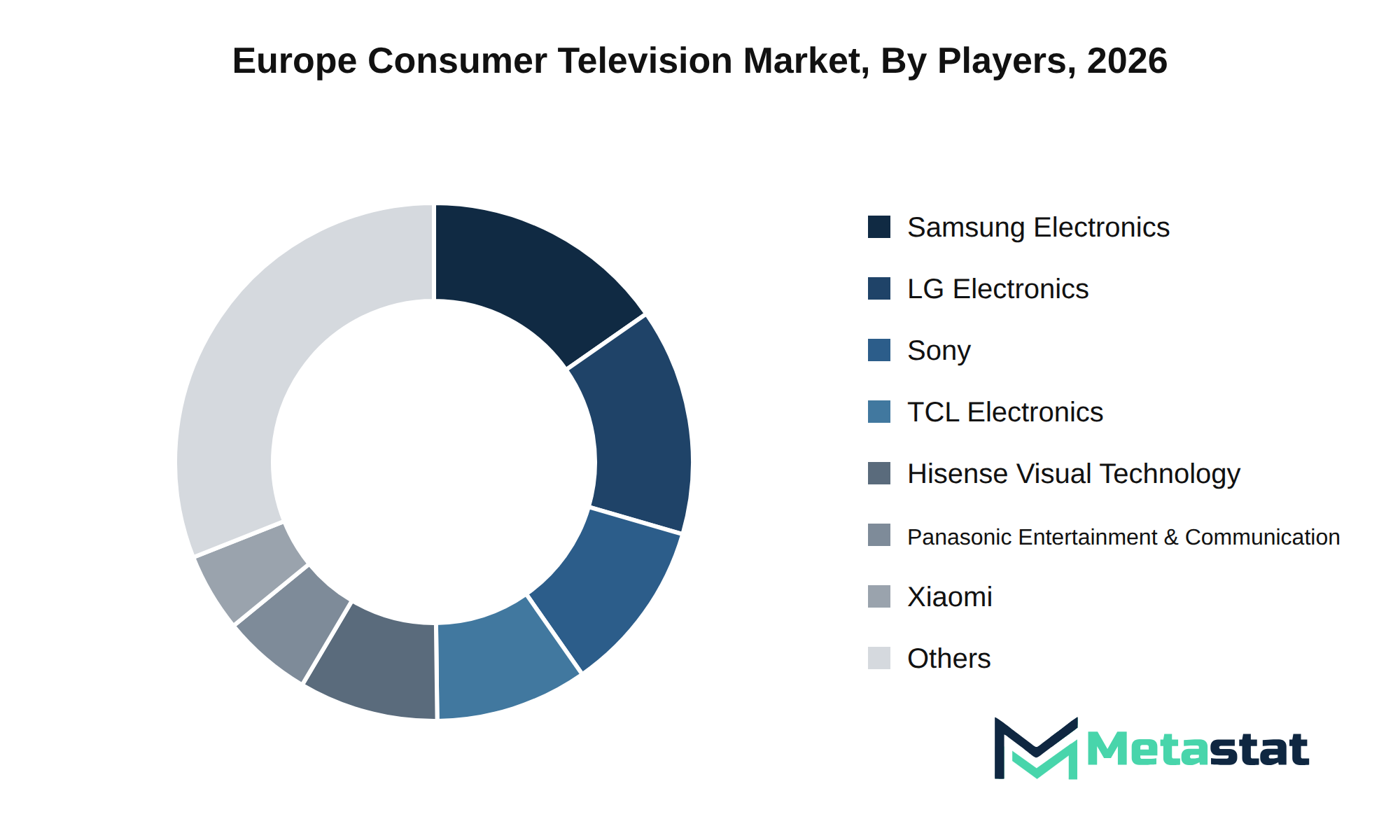
The Europe Consumer Television market features a diverse array of players engaging in various strategic behaviors. Companies including Samsung Electronics Co., Ltd., LG Electronics Inc., and Sony Corporation leverage product differentiation through advanced technologies. Their commitment to research and development drives innovation and strengthens competitive positioning within the market.
Strategic alliances and joint ventures contribute to the competitive dynamics, allowing companies like Hisense Visual Technology Co., Ltd. and TCL Electronics Holdings Limited to expand their market presence. These collaborations provide access to new technologies and enhance capabilities across different segments, contributing to overall market growth.
Pricing architectures play a significant role in shaping market competition. Companies like Xiaomi Corporation and Panasonic Entertainment & Communication Co., Ltd. adopt competitive pricing strategies to attract a wider consumer base while maintaining brand equity through quality offerings. This approach aids in customer retention and increases switching costs.
The competitive outlook for the Europe Consumer Television market highlights the importance of intellectual property portfolios and technological defensibility. Players including TP Vision Europe B.V. and Sharp Consumer Electronics focus on building robust patent landscapes to safeguard innovations and maintain a strategic advantage. High barriers to entry limit the threat of new entrants while established players continue to strengthen their market positions.
Market size is forecast to rise from USD 12.9 billion in 2025 to over USD 24.2 billion by 2033. The base case for the Europe Consumer Television market anticipates a growth trajectory characterized by an 8.2% CAGR. A bull case scenario indicates potential for accelerated adoption driven by advancements in next-generation technology and increasing consumer demand for high-resolution displays, significantly enhancing revenue prospects. Conversely, a bear case scenario presents challenges stemming from macroeconomic uncertainties, regulatory shifts, and evolving trade dynamics, which could hinder growth and market stability.
Anticipated structural consumption shifts towards 4K and 8K UHD televisions reflect a maturation of core industry segments, propelling demand for advanced features and integrated technologies. Strategic capital allocation directives influence infrastructure commitments and capital expenditure investment vectors. Emerging white-space opportunities, particularly in online retail channels, present avenues for market expansion by addressing unmet enterprise needs within the evolving consumer landscape.
Ongoing geopolitical realignments and regional supply chain shifts necessitate adjustments in strategic imperatives for market players. Compliance with regulatory frameworks and timely adaptation to policy enforcement horizons shape the competitive landscape, reinforcing the importance of executive-level strategic imperatives. These factors establish a foundation for future growth recommendations, driving the Europe Consumer Television market toward enhanced dynamism and resilience.
Europe Consumer Television Market Key Segments
By Resolution:
- HD / HD Ready
- Full HD
- 4K UHD
- 8K UHD
By Screen Size:
- Up to 32 Inches
- 33-42 Inches
- 43-49 Inches
- 50-59 Inches
- 60-69 Inches
- 70-79 Inches
- 80-89 Inches
- 90 Inches and Above
By Sales Channel:
- Online Retail
- Consumer Electronics Specialty Stores (Offline)
- Mass Merchandisers and Hypermarkets (Offline)
- Independent Electronics and Appliance Stores (Offline)
- Brand-Owned Stores (Offline)
- Department Stores (Offline)
- Others (Other Offline Retail Formats)
By Region:
- Germany
- UK
- France
- Italy
- Rest of Europe
Key Europe Consumer Television Industry Players
- Samsung Electronics Co., Ltd.
- LG Electronics Inc.
- TCL Electronics Holdings Limited
- Hisense Visual Technology Co., Ltd.
- Sony Corporation
- TP Vision Europe B.V.
- Panasonic Entertainment & Communication Co., Ltd.
- Sharp Consumer Electronics
- Xiaomi Corporation
- Vestel Elektronik Sanayi ve Ticaret A.Ş.
- Amazon.com Services LLC
- Sky UK Limited
- Loewe Technology GmbH
- Metz Consumer Electronics GmbH
- Beko Germany GmbH (Grundig)
- medion GmbH
- TechniSat Digital GmbH
- Comtrade Distribution (Tesla)
- KIVI
- STRONG
- Cello Electronics (UK) Ltd
- Mitchell & Brown
- Salora
- Manta S.A.
- Imtron GmbH (PEAQ)
Report Coverage
The report strategically identifies and profiles the key market players and analyses their core competencies in each sub-segment of the Consumer Television market.
Report Attributes | Details |
Study Period | 2021-2033 |
Base Year | 2025 |
Estimated Year | 2026 |
Forecast Period | 2026-2033 |
Historical Period | 2021-2025 |
Growth Rate | CAGR 8.2% from 2026 to 2033 |
Revenue Unit | USD billion |
Segmentation | By Resolution, Screen Size, Sales Channel, Region, and Region |
What Report Provides
- Company Market Share, Revenue and Ranking for the Europe Consumer Television Market
- Key Company Market Leaders in the Europe Consumer Television Market
- Full In-Depth Analysis of the Parent Industry
- Industry Statistics and Important Changes in Market Dynamics
- Segmentation Details of the Europe Consumer Television Market
- Historical, Ongoing and Projected Market Analysis
- Key Strategies of Major Players in the Market
- Company Profiles of Key Players in the Europe Consumer Television Market
Frequently Asked Questions
Find answers to common questions about this report
The Consumer Television market size in Europe was valued at USD 12.9 billion in 2025.
The Consumer Television market is projected to grow at a CAGR of 8.2% during the forecast period from 2026 to 2033.
The 4K UHD segment leads the Europe Consumer Television market, with a projected value of USD 19.8 billion by 2033, representing the highest share among resolution categories.
Technological integration drives the Europe Consumer Television market, enhancing operational efficiency and user experiences. Increased demand for smart televisions with advanced features aligns with consumer preferences, while ongoing investment in research and development supports innovation. Economic conditions and demographic shifts further stimulate growth, encouraging manufacturers to adapt their offerings to meet evolving consumer behaviors.
Several factors restrain the growth of the Europe Consumer Television market. Compliance hurdles related to energy efficiency and safety standards impose additional costs, while rising inflation and supply chain disruptions hinder production capabilities. Technological obsolescence and geopolitical fragmentation further complicate the market landscape, affecting operational margins and pricing strategies.
Technological integration, including automation and artificial intelligence, enhances operational efficiency and user experiences, driving product adoption. Increased demand for smart televisions with advanced features aligns with consumer preferences for connectivity and functionality, facilitating market growth. ongoing investment in research and development supports innovation in product offerings.
The Consumer Television market is estimated to reach a valuation of USD 24.2 billion by 2033.
Key players in the Europe Consumer Television market include Samsung Electronics Co., Ltd., LG Electronics Inc., TCL Electronics Holdings Limited, Hisense Visual Technology Co., Ltd., Sony Corporation, and Panasonic Entertainment & Communication Co., Ltd.
The 8K UHD segment experiences a compound annual growth rate of 25% through the forecast period.
The Full HD segment is projected to reach a value of USD 1.1 billion by 2033.
Choose Your License
Europe Consumer Television Market
Related Reports
Explore related market intelligence reports worth reading alongside this one.
Global Home Entertainment Audio and Video Content Market
Starting from
$2950