
LEAD ANALYST
Utkarsh Khirodkar is a Lead Market Research Analyst at MetaStat Insight, specializing in market intelligence, technology sector assessments, and competitive strategy.

Europe Courier, Express and Parcel (CEP) Market Size, Share, By Business (B2B, B2C and C2C), By Destination (Domestic and International), By Service Type (Courier Services, Express Services and Parcel Services), By End User (Services (BFSI- Banking, Financial Services and Insurance), Wholesale and Retail Trade (E-commerce), Manufacturing, Construction and Utilities and Others), Industry Analysis, Growth, Trends, and Forecast, 2026-2033
Report ID
MSI-4920
Published
August, 2026
Pages
265 Pages
Format
Historical
Base year
Forecast
Forecast period
Report Details
Choose Your License
Europe Courier, Express and Parcel (CEP) Market
The Europe Courier, Express and Parcel (CEP) market was valued at USD 95.8 billion in 2025 and is projected to reach USD 125.5 billion by 2033, growing at a CAGR of 3.5% over the forecast period.
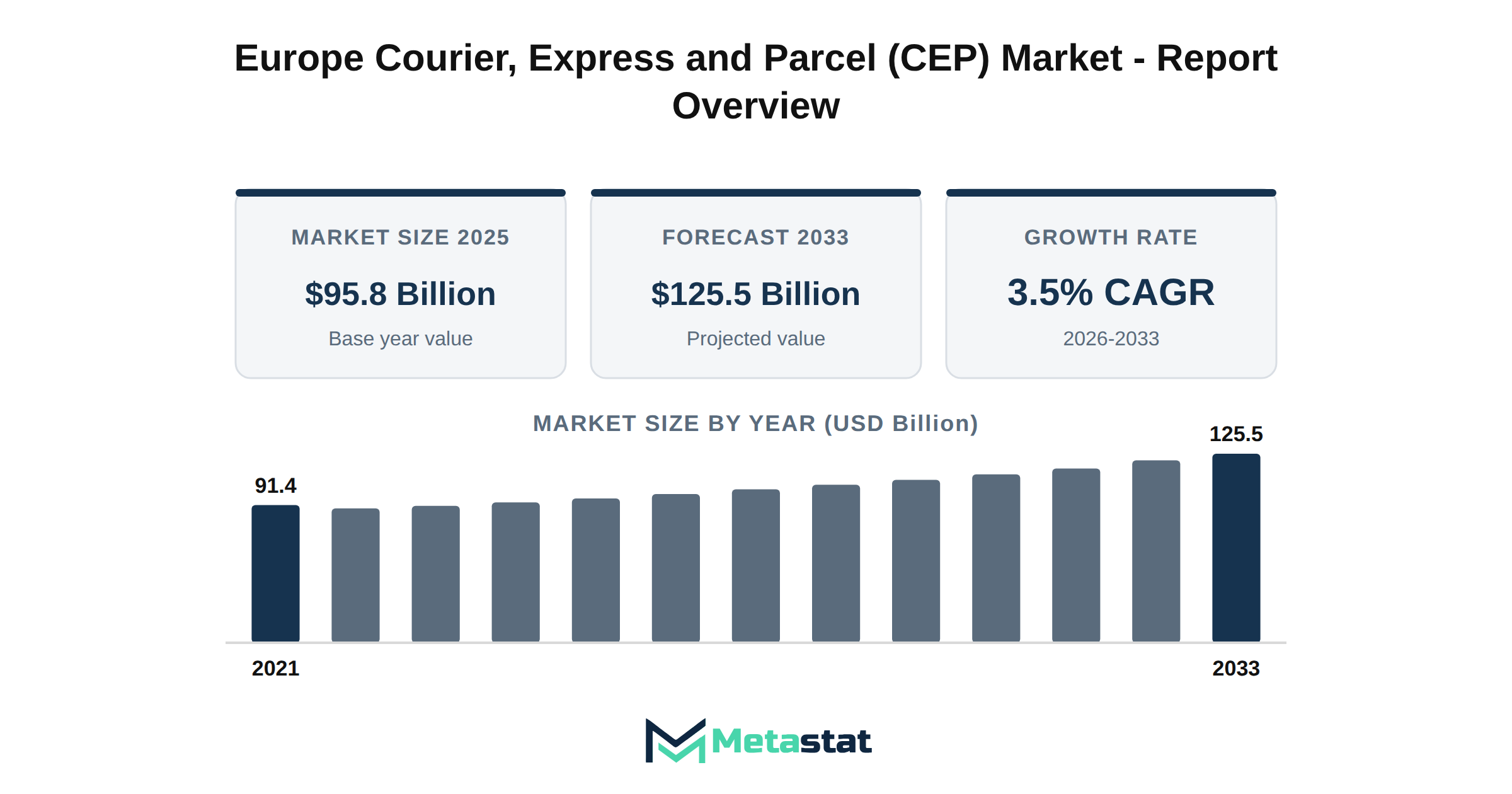
Market momentum is driven by sustained online retail penetration, expanding B2B industrial supply chains, and consumer expectations for same-day delivery. While domestic parcel movements account for over 60% of total regional shipments, cross-border e-commerce remains the fastest-growing segment by volume and value.
Standard road shipping maintains the largest market share due to cost efficiency in intra-European transit. However, express and time-definite options are capturing higher revenue yields in metropolitan clusters. Tight capacity, driver availability, and urban congestion continue to shape parcel yields, leading carriers to invest heavily in terminal infrastructure and automated hub expansions.
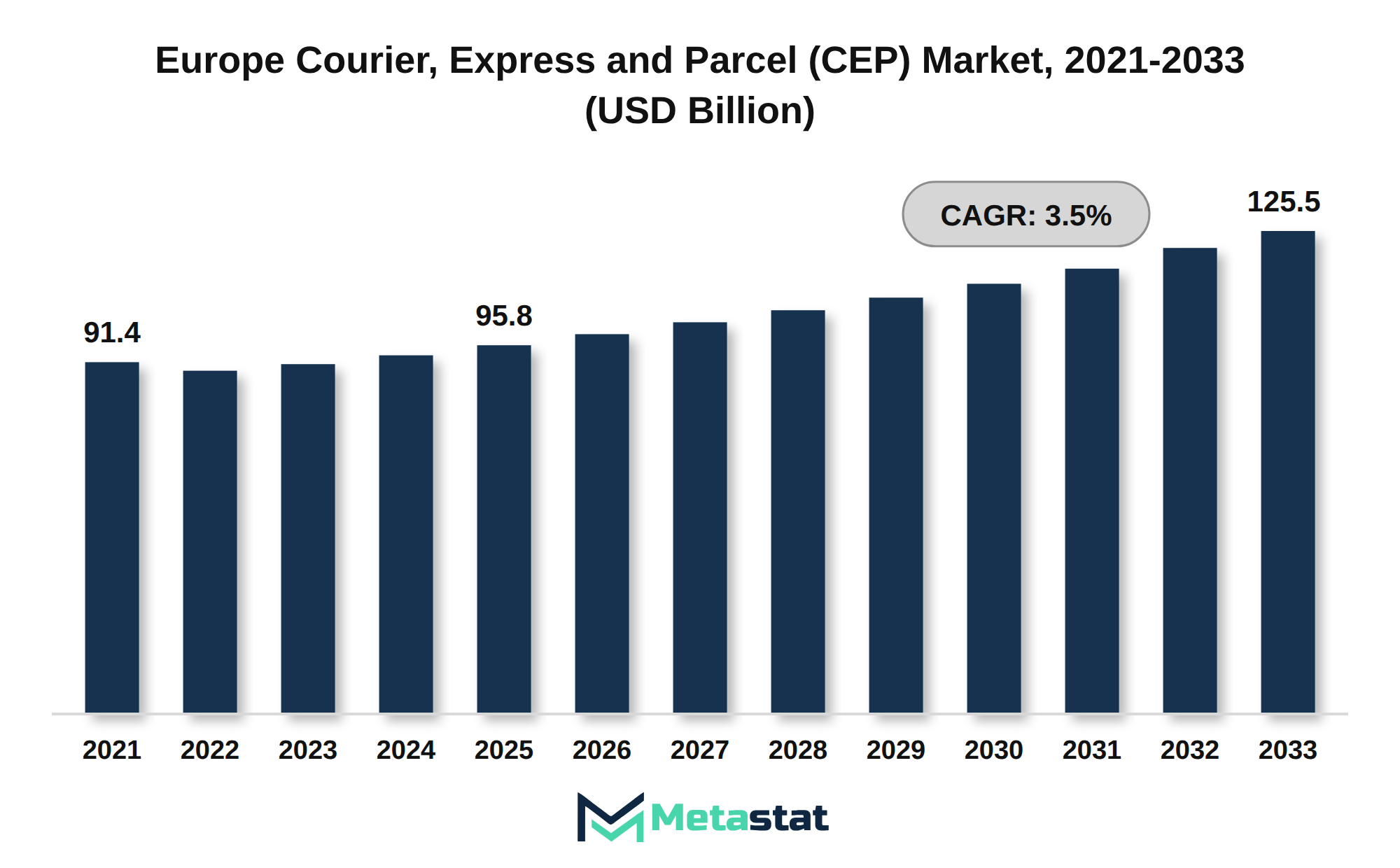
The Europe Courier, Express and Parcel (CEP) market achieved a valuation of USD 95.8 billion in 2025, demonstrating a slight increase from USD 93.2 billion in 2024. Projections indicate a growth trajectory with an estimated market value of USD 125.5 billion by 2033, reflecting a compound annual growth rate (CAGR) of 3.5% during the forecast period from 2026 to 2033. This growth is supported by a steady increase in demand across various segments, including business-to-business (B2B), business-to-consumer (B2C), and consumer-to-consumer (C2C) services.
The B2B segment, projected to grow from USD 66.2 billion in 2026 to USD 82.6 billion by 2033, is anticipated to experience a CAGR of 3.2%. The B2C segment is expected to reach USD 31.8 billion by 2033, with a CAGR of 4.2%. The C2C segment, while smaller, indicates a significant value of USD 11.1 billion by 2033. This diverse growth across segments highlights the evolving dynamics of consumer behavior and the increasing reliance on CEP services for both personal and business needs.
In addition to the core growth factors, trends including cross-border e-commerce growth reshape the market. The expansion of e-commerce platforms necessitates efficient logistics solutions, driving demand for CEP services across international borders. This trend requires companies to invest in infrastructure and technology that streamline operations and enhance delivery capabilities in a competitive environment.
Pricing and yield management strategies are essential for maintaining profitability within the market. Companies focus on optimizing their pricing structures to adapt to fluctuating operational costs, influenced by macroeconomic factors including inflation and currency volatility. These strategic adjustments play a crucial role in safeguarding profit margins while navigating the competitive environment.
Technological advancements, particularly in sorting automation and network capital expenditure (CapEx), contribute to operational efficiency. Investments in automated sorting systems enable faster processing times and improved accuracy, ultimately enhancing service delivery. The integration of next-generation technologies positions companies to respond effectively to changing consumer demands and competitive pressures.
Overall, the Europe Courier, Express and Parcel (CEP) market reflects a complex set of growth drivers, operational challenges, and technological advancements. The market continues to evolve, influenced by factors including regulatory compliance, geopolitical risks, and sustainability initiatives aimed at decarbonization and circular economy dynamics. These elements collectively shape the strategic outlook for participants operating within the market.
The Europe Courier, Express and Parcel (CEP) market experiences significant transformation driven by various factors. Businesses increasingly focus on consolidation strategies to enhance operational efficiencies and market share. Mergers and acquisitions serve because critical tools for companies seeking to expand their service offerings and geographic reach. This consolidation trend supports competitive positioning, allowing firms to leverage synergies and optimize resource allocation.
Investment in automation technologies shapes revenue growth and margin benchmarking across the industry. Companies prioritize sorting automation to enhance their operational processes, reducing labor costs and improving delivery times. This technology improves efficiency and enables firms to manage increasing parcel volumes effectively.
The growth of cross-border e-commerce significantly impacts the market landscape. Businesses navigate regulatory compliance and geopolitical risks while expanding their international operations. This complexity necessitates robust frameworks to ensure adherence to varying regulations across different regions, directly influencing operational costs and strategic planning.
Parcel density and network economics play essential roles in shaping pricing strategies. Firms analyze market dynamics to optimize pricing and yield management, ensuring they remain competitive while maintaining profitability. Strategic capital allocation towards infrastructure investments supports network scalability, enabling companies to address rising demand effectively.
Macroeconomic headwinds, including inflationary pressures and currency volatility, present challenges to the market. These factors influence operational costs and pricing strategies, prompting companies to adapt to changing economic conditions. Future strategic outlooks focus on resilience and adaptability, ensuring firms remain competitive in a dynamic environment.
Overall, the Europe Courier, Express and Parcel (CEP) market undergoes substantial changes driven by technological advancements, regulatory landscapes, and economic factors. Companies that prioritize innovation and efficiency are well-positioned to thrive amid emerging challenges and opportunities.
The Europe Courier, Express and Parcel (CEP) market benefits significantly from digital transformation initiatives. Businesses increasingly adopt automation, artificial intelligence, and advanced software solutions to streamline operations and improve service delivery. This shift facilitates a more efficient allocation of resources and accelerates order processing times, enhancing customer satisfaction and retention.
The integration of digital tools supports real-time tracking and visibility across the supply chain. Enhanced data analytics capabilities enable firms to optimize logistics and adapt to shifting consumer demands more effectively. This operational agility positions companies to respond promptly to market changes, driving competitive advantage within the CEP market.
Investment in digital infrastructure reflects a broader trend toward technological integration within the sector. The ongoing modernization of legacy systems allows businesses to reduce overhead costs and improve overall productivity. While firms leverage these technologies, the CEP market is projected to experience sustained growth, with significant enhancements in efficiency and service quality.
The growth of the Europe Courier, Express and Parcel (CEP) market is driven by increased consumer demand for e-commerce services. Changes in consumer behavior, particularly the shift towards online shopping, significantly influence logistics providers. Factors including convenience and accessibility of goods online prompt more consumers to opt for digital purchasing, enhancing package delivery requirements and increasing operational demands on logistics companies.
Investment in digital platforms and technology enhances the ability to meet the evolving needs of e-commerce customers. Logistics companies focus on developing advanced software solutions and integrating automation to streamline operations. This investment supports faster delivery times and improved tracking capabilities, essential for attracting and retaining customers in a competitive market.
The demographic shift towards urbanization contributes to the rising demand for delivery services. Urban populations possess higher purchasing power, driving an increase in the volume of shipments requiring efficient logistics solutions. The emphasis on sustainability and efficiency in logistics operations aligns with growing consumer awareness regarding environmental impacts, influencing purchasing decisions and shaping service offerings.
Shifts in buying preferences towards reliable and speedy delivery models emphasize the importance of enhancing service offerings within the market. Companies that adapt to these consumer trends and invest in service diversification secure competitive advantages. Overall, the ongoing transformation in consumer purchasing habits significantly shapes the growth trajectory of the Europe Courier, Express and Parcel (CEP) market.
The Europe Courier, Express and Parcel (CEP) market faces significant challenges stemming from regulatory compliance hurdles. Stringent regulations impose high compliance costs, impacting operational efficiency for providers. Increased scrutiny on environmental practices complicates logistics, requiring additional investments in compliance technologies and processes, which raises operational expenses and limits profitability.
Macroeconomic headwinds, including inflationary pressures, contribute to rising operational costs. Suppliers absorb these costs, influencing pricing strategies and profit margins throughout the market. Inflation leads to increased prices for fuel, labor, and materials, creating a challenging environment for service providers and limiting their ability to maintain competitive pricing.
Supply chain disruptions resulting from geopolitical instability impact timely deliveries and overall service reliability. Dependence on international suppliers heightens vulnerability to trade tensions and disruptions in logistics networks. This instability affects planning and execution, leading to potential revenue losses and diminished customer trust across the market.
Resource scarcity presents another significant restraint. Limited availability of skilled labor affects service quality and operational capacity. The industry struggles to attract and retain talent, leading to bottlenecks in service delivery and customer satisfaction. The decline in service quality creates challenges for providers in meeting customer expectations and maintaining competitive advantage.
Cultural barriers and regional adoption resistors create disparities in market penetration across different areas. Variability in regional preferences and expectations affects the adoption of CEP services, challenging providers to tailor offerings effectively. Consequently, market fragmentation increases, complicating competitive dynamics and strategic positioning within the Europe Courier, Express and Parcel (CEP) market.
The Europe Courier, Express and Parcel (CEP) market faces challenges stemming from geopolitical fragmentation and trade deficits. Ongoing tensions and evolving trade relations among countries disrupt established logistics channels, resulting in higher operational costs and delays. These trade barriers complicate cross-border shipping, impacting delivery times and cost structures within the market.
Increasing tariffs and trade friction exacerbate these issues, placing pressure on margins for service providers. Companies involved in international logistics encounter escalating compliance overhead, necessitating investments in regulatory frameworks and operational adjustments. These factors lead to pricing compression within the market, where maintaining competitive rates becomes increasingly difficult.
Technological disruptions introduce another layer of complexity, with rapid advancements necessitating consistent adaptation. Companies experience challenges integrating new systems effectively, which impacts overall efficiency and service quality. Workforce skill gaps hinder the ability of organizations to leverage technological innovations fully, stalling growth potential within the Europe Courier, Express and Parcel (CEP) market.
Supply chain instability results from these interconnected issues, impacting the reliability of service delivery. Market participants navigate these dynamics while addressing environmental demands, which include sustainability initiatives and decarbonization mandates. The cumulative effect of these challenges influences investment decisions and shapes overall market growth, affecting the future of the CEP sector in Europe.
The Europe Courier, Express and Parcel (CEP) market presents substantial opportunities driven by emerging regional demands and evolving consumer preferences. Increasing e-commerce activities across various sectors necessitate enhanced delivery solutions, prompting logistics providers to adapt their service offerings. The shift towards localized supply chains reflects a growing emphasis on operational resilience and efficiency, aligning with the market's long-term growth trajectory.
Infrastructure modernization plays a critical role in supporting the expanding volume of goods transported. Investments in technology and logistics infrastructure, alongside digital procurement shifts, ensure responsiveness to consumer needs and expectations. Enhanced delivery networks, including last-mile solutions, facilitate timely service and contribute to customer satisfaction, which is essential for market participants.
Technological disruptions are reshaping operational paradigms within the market. Innovations in automation and data analytics drive process optimization, enhancing operational yield and reducing costs. These advancements enable logistics providers to offer diverse service types, from courier to express and parcel services, ultimately attracting a broader customer base.
Sustainability imperatives exert influence on the market, reflecting stakeholders' prioritization of eco-friendly practices. Companies align their strategies with environmental, social, and governance (ESG) criteria, seeking to address consumer concerns regarding sustainability. Investments in green technologies and practices not only enhance brand reputation but open new avenues for market growth.
The growing inclination toward strategic consolidation and cross-industry mergers further strengthens competitive positioning within the market. Collaborative ventures between logistics firms and technology companies drive innovation and operational synergies, enhancing service delivery capabilities. This trend positions participants to better navigate changing market dynamics while capturing new opportunities.
The Europe Courier, Express and Parcel (CEP) market stands poised for growth driven by emerging demands, technological advancements, and sustainability initiatives. The combination of these factors is expected to shape the competitive landscape and influence the market's trajectory in the coming years.
The Europe Courier, Express and Parcel (CEP) market is segmented based on Business, Destination, Service Type, and End User.
Valued at USD 66.2 billion in 2026, the B2B segment is projected to reach USD 82.6 billion by 2033, at a CAGR of 3.2% during the forecast period. Increasing demand for efficient logistics solutions drives growth in this sector. Businesses across various industries, particularly in manufacturing and wholesale, require timely delivery of goods to maintain operational efficiency and meet customer expectations. The adoption of advanced technologies, including automated sorting systems and route optimization software, enhances service quality and efficiency, supporting segment expansion.
Regulatory compliance standards regarding transportation and safety further influence operational practices within the B2B segment. Companies strive to adhere to these regulations while managing costs and maintaining competitive pricing. The volatility in fuel prices and other operational costs poses a challenge, affecting profit margins for logistics providers. Strategic partnerships and investments in technology facilitate resilience within supply chains, allowing businesses to adapt to market fluctuations and disruptions.
Next-gen upgrades in logistics infrastructure, including smart warehousing and integrated digital platforms, significantly enhance service delivery. These advancements cater to the evolving needs of businesses, ensuring reliability and speed in the transportation of goods. The downstream application of these services remains vital, driven by businesses increasingly relying on efficient logistics to support their supply chain operations. Overall, the Europe Courier, Express and Parcel (CEP) market reflects a dynamic environment, where the B2B segment continually adapts to changing demands and market conditions.
Consumer demand for efficient delivery services drives the expansion of the B2C segment within the Europe Courier, Express and Parcel (CEP) market. E-commerce growth fuels this demand, with increased online shopping leading to higher volumes of parcel shipments. By 2033, the B2C segment is expected to reach USD 31.8 billion, at a CAGR of 4.2% during the forecast period. Rising consumer expectations for quick and reliable delivery options influence service providers to enhance their offerings.
Technological advancements play a crucial role in segment expansion. Companies increasingly adopt innovative solutions, including real-time tracking and automated delivery systems, to meet customer expectations. These upgrades improve delivery efficiency and enhance customer satisfaction, further stimulating demand. The shift towards sustainable delivery options influences investment in greener technologies and practices, aligning with consumer preferences for environmentally friendly solutions.
Changing consumption patterns impact the B2C segment. Consumers prioritize convenience and rapid delivery, leading to a shift in purchasing behaviors. This trend encourages logistics providers to enhance their delivery networks and develop partnerships with local retailers, facilitating faster service. Regulatory compliance standards around data protection and delivery practices require ongoing adaptation and investment, impacting operational costs.
Price volatility and margin pressures remain critical considerations in the B2C segment. Fluctuations in fuel prices and operational costs challenge service providers to maintain competitive pricing without sacrificing service quality. Strategic opportunity windows arise from these challenges, pushing companies to optimize their supply chain and logistics operations. Investments in technology and infrastructure development are essential for long-term growth and resilience in the evolving market.
In the Europe Courier, Express and Parcel (CEP) market, the C2C segment is expected to reach USD 11.1 billion by 2033. This growth is driven by increasing consumer interest in online marketplaces, facilitating peer-to-peer transactions and personal shipping needs. The trend towards digitalization and the rising popularity of e-commerce platforms create robust demand for C2C services, particularly among younger demographics who prefer online shopping and social commerce.
Segment expansion results from technological advancements, including improved mobile applications and user-friendly interfaces, which enhance customer experience and streamline processes. Enhanced logistics capabilities, including real-time tracking and flexible delivery options, significantly contribute to the attractiveness of C2C solutions. Users benefit from greater convenience and transparency in their shipping activities.
Downstream applications across various industries, including retail and home-based businesses, validate the growing relevance of C2C shipping. E-commerce platforms leverage these services to enhance consumer satisfaction and retention. Consumption shifts towards personalized services and faster delivery times drive competition among service providers within the market.
Regulatory compliance standards and certifications play a crucial role in ensuring security and reliability in the C2C segment. Adhering to these regulations enhances consumer confidence, which in turn stimulates growth. Supply chain resilience becomes increasingly important owing to service providers seeking to mitigate potential disruptions and reinforce their operational capabilities.
Technological obsolescence poses challenges; however, continuous investment in next-gen upgrades ensures that service providers remain competitive. Strategic opportunity windows arise from the growing trend of remote work and digital transactions, presenting avenues for businesses to capture a larger share of the market. Overall, the C2C segment's trajectory aligns with broader trends in the Europe Courier, Express and Parcel (CEP) market, demonstrating significant potential for growth and innovation.
Demand for domestic delivery services within the Europe Courier, Express and Parcel (CEP) market arises from several sectors, including e-commerce, retail, and essential goods. The rapid growth of online shopping fuels significant demand for reliable and timely domestic shipments. Increased consumer expectations regarding delivery speed and tracking capabilities enhance competition among service providers.
Technological advancements play a critical role in segment expansion. Automation and improved logistics software streamline operational efficiencies, enabling providers to manage higher volumes of domestic shipments. Investments in next-generation technologies, including real-time tracking systems and predictive analytics, enhance supply chain resilience, allowing companies to respond effectively to fluctuating consumer demands.
Regulatory compliance and evolving standards shape operational protocols within the domestic segment. Adherence to local regulations regarding environmental sustainability influences pricing structures and service offerings. Providers pursue certifications that demonstrate commitment to sustainable practices, appealing to environmentally conscious consumers.
Supply chain vulnerabilities remain a concern, including disruptions from external factors including natural disasters or geopolitical tensions. Strategic investment in local infrastructure and partnerships with reliable delivery networks enhances operational stability and ensures continued service availability. These factors contribute to the growth trajectory of the domestic segment within the Europe Courier, Express and Parcel (CEP) market.
International delivery services in the Europe Courier, Express and Parcel (CEP) market experience heightened demand driven by globalization and e-commerce growth. Businesses increasingly rely on cross-border shipping to expand market reach, enhancing the necessity for efficient international logistics solutions. The competitive landscape strengthens owing to logistics providers investing in technology, improving operational efficiency and customer service.
Technological advancements play a critical role in streamlining international shipping processes. Enhanced tracking systems and automated customs clearance reduce delays and improve the customer experience. These innovations contribute to a more resilient supply chain, building greater confidence among users.
Regulatory compliance remains a significant factor in shaping international delivery services. Changes in trade agreements and cross-border regulations affect operational strategies, prompting logistics providers to adapt swiftly. Businesses focusing on regulatory standards gain a competitive edge, ensuring compliance while minimizing disruptions.
Rising consumer expectations regarding delivery speed and reliability push logistics companies to optimize their international service offerings. Increased competition in the market compels providers to enhance service levels and differentiate their offerings. Strategic investments in infrastructure and technologies drive this evolution, presenting opportunities for growth and market expansion.
While international trade dynamics evolve, logistics providers adapt to shifting market conditions. Monitoring consumption trends, regulatory changes, and technological developments will be essential for success in the highly competitive Europe Courier, Express and Parcel (CEP) market. Maintaining flexibility and responsiveness to these factors will drive the ongoing development of international delivery services.
Significant trends influence the Courier Services segment within the Europe Courier, Express and Parcel (CEP) market. Rapid e-commerce growth drives essential demand, prompting businesses to seek faster and more reliable delivery options. This shift highlights the need for logistics providers to enhance their service offerings, focusing on reliability and speed. The expansion of online retail, coupled with increasing consumer expectations for same-day or next-day delivery, is driving investment in delivery network optimization and logistical innovations.
Technological maturation shapes the Courier Services segment. Advancements including real-time tracking, route optimization algorithms, and automated sorting systems streamline operations and enhance customer satisfaction. Companies investing in next-generation technologies experience improved efficiency, allowing them to respond swiftly to customer needs while managing operational costs effectively.
Pricing volatility remains a challenge within the segment, influenced by fluctuating fuel prices and evolving regulatory compliance standards. To maintain margins, providers adopt dynamic pricing models that reflect real-time market conditions. This approach enables businesses to remain competitive while balancing operational expenses.
Strategic opportunities arise from shifting consumption patterns, with an increasing preference for environmentally friendly delivery options. Companies focusing on green logistics differentiate themselves, capturing a niche market that prioritizes sustainability. The emphasis on eco-friendly practices results in higher consumer loyalty and increased market share.
Overall, the Courier Services segment in the Europe Courier, Express and Parcel (CEP) market faces a dynamic environment, driven by technological advancements and changing consumer expectations. The focus on innovation, efficiency, and sustainability is projected to shape the competitive landscape and stimulate growth in the coming years.
Demand for express services within the Europe Courier, Express and Parcel (CEP) market reflects a shift towards faster delivery options, driven by the increasing expectations of consumers for prompt service. E-commerce growth significantly influences this demand, resulting from businesses striving to meet consumer preferences for rapid fulfillment. The expansion of online shopping platforms necessitates more efficient logistics solutions, propelling investments in express services.
Technological advancements enhance service efficiency, improving the overall customer experience. Automation in sorting facilities and the integration of real-time tracking systems enable providers to streamline operations and reduce delays. These innovations contribute to increasing competitiveness among operators, encouraging continuous upgrades and service enhancements.
Changing consumer behavior shapes the dynamics of express services, with a noticeable shift towards same-day and next-day delivery options. This trend compels service providers to adapt their offerings, focusing on reliability and speed to capture market share. Consequently, companies invest in optimizing their delivery networks to align with customer demands.
Regulatory compliance remains a critical factor for providers, particularly concerning international shipping. Adhering to various standards across different regions ensures smooth operations and customer satisfaction. Providers actively engage with regulatory frameworks to avoid disruptions and maintain their market position.
Pricing volatility presents challenges within the express services sector, influenced by fluctuating fuel costs and supply chain disruptions. Providers face pressure to manage operational costs while maintaining competitive pricing. Strategic planning and cost management are essential for stabilizing margins in a competitive environment.
Opportunities for growth reside in leveraging partnerships and collaborations with e-commerce platforms. These alliances allow service providers to enhance their reach and improve service offerings. The potential for expansion into underserved markets presents an avenue for increased revenues, driven by businesses seeking to capitalize on the growing demand for express delivery solutions.
While providers navigate these complexities, strategic investments in infrastructure, technology, and human resources will shape the future of express services in the Europe Courier, Express and Parcel (CEP) market. The focus on enhancing customer experience and operational efficiency will remain critical in driving sustained growth.
Demand for parcel services within the Europe Courier, Express and Parcel (CEP) market arises primarily from the increasing reliance on e-commerce and the need for timely delivery solutions. Retailers, businesses, and individual consumers increasingly seek efficient methods to ship parcels, leading to heightened competition among service providers. This intensifying demand promotes investment in advanced logistics technologies and enhanced delivery networks. Providers focus on optimizing operational efficiencies to meet consumer expectations for speed and reliability.
Technological maturation plays a critical role in the expansion of parcel services. Innovations in tracking systems, automated sorting facilities, and data analytics drive service enhancements and operational effectiveness. Integration of next-generation upgrades, including drone delivery and autonomous vehicles, highlights the evolving landscape of this sub-segment, generating interest from various stakeholders. Improved logistics capabilities align with shifts toward more sustainable practices, influencing the adoption of electric vehicles and eco-friendly packaging solutions.
End-use dynamics reflect diverse applications of parcel services across sectors. Industries including retail, manufacturing, and healthcare increasingly leverage reliable and efficient delivery solutions to support their operations. The growing trend of direct-to-consumer shipping models further illustrates the evolving needs of businesses and consumers alike. While regulatory compliance standards tighten, providers enhance their services to meet these new requirements, ensuring safety and reliability in delivery processes.
Pricing volatility and margin pressures remain relevant concerns for parcel service providers. Fluctuations in fuel prices, labor costs, and demand patterns impact operational costs and profitability. Strategic opportunity windows arise from businesses exploring partnerships and collaborations to expand market reach and improve service offerings. These dynamics underline the need for agility in adapting to market changes, ensuring that service providers maintain competitiveness in a changing environment.
Investment in supply chain resilience continues to shape the operational landscape, with stakeholders recognizing the importance of robustness in logistics networks. Challenges related to raw material sourcing and logistics vulnerabilities require proactive strategies to mitigate risks. Addressing substitution risks, including shifts toward alternative delivery methods or channels, further emphasizes the necessity for continuous innovation and adaptation. The ongoing evolution of consumer expectations and technological advancements positions parcel services for sustained growth within the Europe Courier, Express and Parcel (CEP) market.
Demand within the banking, financial services, and insurance (BFSI) sector significantly influences the Europe Courier, Express and Parcel (CEP) market. The BFSI end users rely on timely and secure deliveries for critical documents and transactions, creating a strong demand for efficient services. Regulatory compliance standards and data protection regulations further drive the need for reliable logistics, pushing companies to seek specialized delivery solutions that meet strict compliance requirements.
Technological maturation within the CEP market enhances service offerings for BFSI clients. Innovations in tracking systems and real-time communication capabilities enable financial institutions to monitor their shipments closely. This transparency not only improves operational efficiency but builds trust with clients, emphasizing the importance of secure deliveries in the BFSI sector.
Next-gen upgrades, including automation and digitalization, play a crucial role in enhancing service efficiency. Automation of sorting and routing processes allows for quicker turnaround times, meeting the demands of BFSI clients who require prompt deliveries. Evolving consumer preferences for instantaneous services exert additional pressure on logistics providers to streamline operations and adopt innovative delivery methods.
Cost structures remain a significant consideration, with pricing volatility impacting service providers. Fluctuations in fuel costs and operational expenses influence pricing strategies, prompting companies to adapt to maintain margin pressures. Companies within the BFSI segment actively search for cost-effective solutions that do not compromise service quality, ensuring they remain competitive in a demanding marketplace.
Strategic opportunity windows emerge owing to businesses increasingly recognizing the value of reliable courier services. Investing in partnerships with logistics providers specializing in financial deliveries helps BFSI companies enhance their service offerings. This collaboration drives further growth in the Europe Courier, Express and Parcel (CEP) market, positioning it because a vital component of the wider financial ecosystem.
Growing online shopping trends fuel demand within the Wholesale and Retail Trade (E-commerce) segment of the Europe Courier, Express and Parcel (CEP) market. Customers expect fast and reliable delivery services, driving retailers to invest in efficient logistics solutions. Increased competition among retailers results in a heightened focus on customer satisfaction, pushing firms to enhance their delivery capabilities. Enhanced technology adoption, including automation and data analytics, supports operational efficiencies and improves service offerings. The shift toward sustainable practices influences logistics strategies, with companies exploring eco-friendly delivery options to meet consumer preferences.
The segment's expansion is supported by rising consumer expectations for real-time tracking and flexible delivery options. Retailers invest in advanced logistics infrastructure and partnerships with courier services to meet these demands. Cost pressures from rising transportation expenses challenge profit margins, prompting companies to optimize their operations. Regulatory compliance, including safety and environmental standards, shapes operational strategies and costs within this segment. Continuous innovation in last-mile delivery solutions contributes to better service quality and improves customer experiences.
Strategic opportunities arise from evolving consumer behaviors, with businesses leveraging data insights to refine targeting and enhance engagement. The expansion of the e-commerce sector leads to an influx of new entrants in the logistics space, increasing competition and driving innovation. Firms focusing on developing tailored logistics solutions for specific customer segments capture market share. This environment positions the Wholesale and Retail Trade (E-commerce) segment for sustained growth within the Europe Courier, Express and Parcel (CEP) market.
Primary demand drivers for the Manufacturing, Construction and Utilities sector within the Europe Courier, Express and Parcel (CEP) market include ongoing growth in construction activities and industrial production. Investment in infrastructure projects enhances demand for reliable logistics services, enabling efficient delivery of materials and equipment. Expansion of facilities in various regions influences service requirements, prompting logistics providers to adapt to increased volumes and complexity in transportation.
Technological maturation significantly impacts this segment, with advancements in tracking and automation improving operational efficiency and transparency. Implementation of next-generation technologies, including real-time tracking systems and automated delivery solutions, contributes to improved service levels and customer satisfaction. These upgrades align with evolving consumer expectations, driving growth.
Increased focus on regulatory compliance standards and certifications shapes the landscape. Strict adherence to safety and environmental regulations necessitates logistics partners with proven capabilities. Firms demonstrating compliance gain a competitive advantage, reinforcing their positions in the market.
Cost structures and pricing volatility further influence dynamics within this sector. Fluctuations in raw material costs impact overall logistics expenses, compelling firms to devise strategies to mitigate margin pressures. Efficient supply chain management and strategic partnerships facilitate resilience against these challenges, ensuring continued service delivery during market uncertainty.
Opportunities for strategic investment arise, particularly in emerging technologies and process improvements. Companies identifying white-space areas within the logistics framework enhance operational capabilities, driving revenue growth. Capital investment in innovative solutions results in long-term benefits, positioning firms advantageously in the competitive landscape of the Europe Courier, Express and Parcel (CEP) market.
Demand within the "Others" sub-segment of the Europe Courier, Express and Parcel (CEP) market reflects a diverse range of industries and applications beyond traditional business-to-business and business-to-consumer dynamics. Industries including healthcare, automotive, and agriculture contribute to growing demand for tailored delivery solutions that address specific regulatory compliance standards and logistical challenges. Increased prioritization of supply chain resilience drives strategic investments in innovative delivery methods and technologies, enhancing operational efficiency and reliability.
Investment in next-generation upgrades, including advanced tracking systems and automation in logistics, enhances efficiency and reliability across various segments. The evolution of products catering to specialized needs, including temperature-controlled shipping for pharmaceuticals, demonstrates a strong response to end-use dynamics that require precise handling and timely delivery. These developments support operational effectiveness and improve service quality.
Shifts in consumer behavior, particularly towards e-commerce and online services, introduce new challenges and opportunities for logistics providers. This evolving landscape requires flexibility in pricing structures to manage costs while maintaining service quality. Overall, evolving dynamics within this sub-segment position it for significant growth, driven by continuous innovation and the need for responsive delivery solutions within the Europe Courier, Express and Parcel (CEP) market.
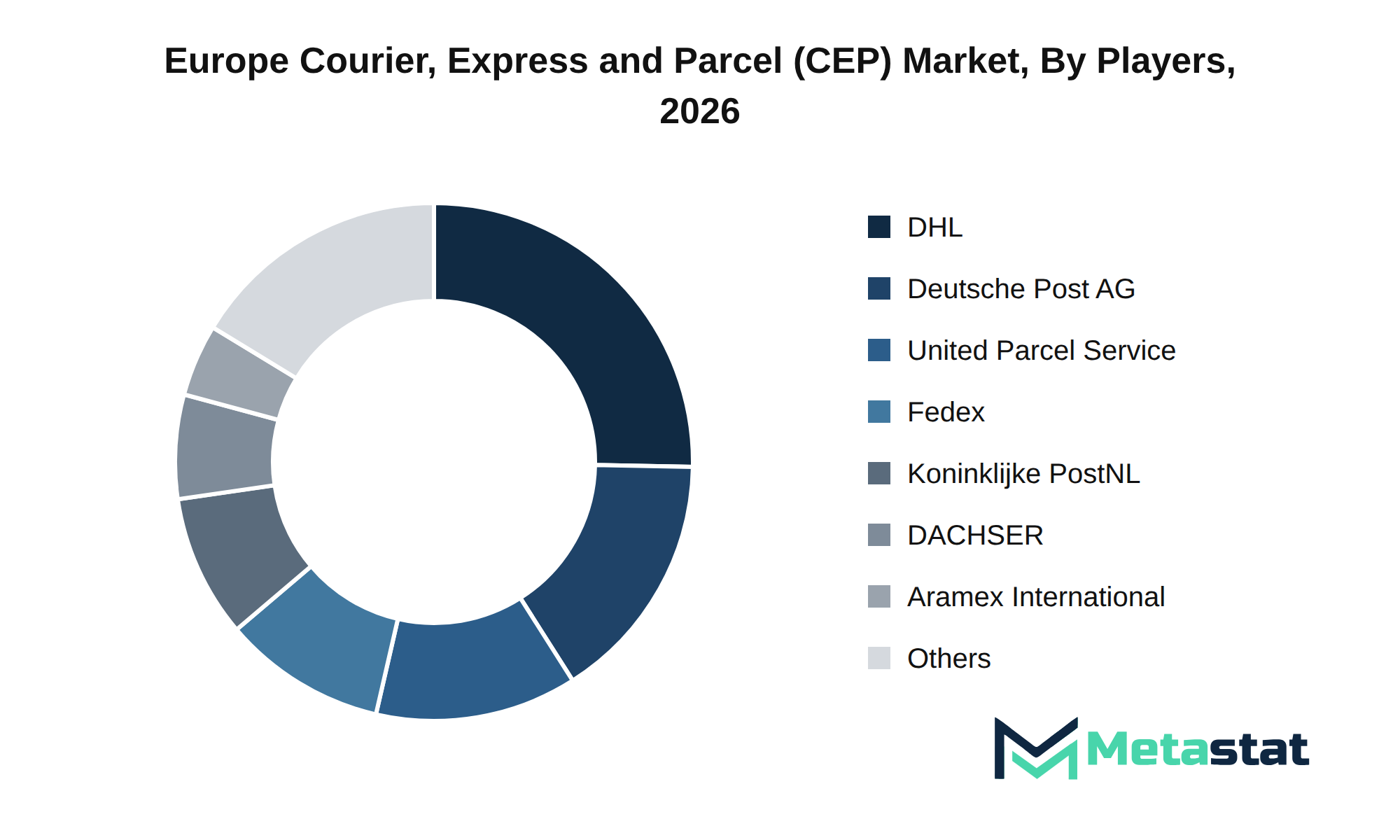
The Europe Courier, Express and Parcel (CEP) market features various strategic behaviors among key players, including Fedex Corporation, United Parcel Service Inc, and Deutsche Post AG. These companies focus on mergers and acquisitions to enhance their market positions, employing strategic consolidation to strengthen operational capabilities and expand service offerings.
Pricing architectures remain a significant competitive factor, with companies applying diverse commercial models to attract and retain customers. Aramex International LLC and DHL Group emphasize product differentiation, investing in proprietary technology to create competitive advantages while enhancing customer experiences.
Strategic alliances and joint ventures contribute to market growth, allowing firms including Singapore Post Limited and Koninklijke PostNL to leverage cross-industry partnerships. This collaboration drives innovation and strengthens supply chain dominance, creating barriers to entry that challenge new entrants aiming to penetrate the market.
Customer retention strategies are vital in maintaining brand equity, with firms like Royal Mail Group Limited and InPost SA focusing on improving service quality and responsiveness. Intellectual property portfolios play a crucial role in maintaining technological defensibility, allowing established players to sustain competitive positions in the evolving market.
The future competitive outlook for the Europe Courier, Express and Parcel (CEP) market highlights the importance of defensive imperatives and strategic growth vectors. Companies are expected to continue adapting to changing market dynamics, ensuring their offerings align with customer expectations and technological advancements.
DHL Group: The dominant player across Western and Central Europe, leveraging a vast air and road network, automated sorting mega-hubs, and deep domestic market penetration in Germany.
FedEx: A market leader in global express connectivity, operating extensive European air-ground corridors reinforced by the unified network integration of TNT Express.
United Parcel Service (UPS): A major force in pan-European supply chains, with high market concentration in B2B transport, healthcare express logistics, and end-to-end retail fulfillment.
La Poste Group: Operates internationally through its Geopost subsidiary, deploying the extensive DPD (DPDgroup) road network across Western, Southern, and Eastern Europe.
GLS (General Logistics Systems): A key subsidiary under International Distributions Services, specializing in high-density European ground freight and parcel services for small-to-medium enterprises.
International Distributions Services: The corporate parent of Royal Mail and GLS (General Logistics Systems), steering major freight flows between the UK and continental Europe.
DPD (DPDgroup): A leading road express network characterized by innovative end-user tracking, carbon-neutral commitments, and scalable out-of-home delivery models.
Hermes: A high-volume B2C courier network (operating as Evri in select territories), focused on cost-effective retail delivery, doorstep drop-offs, and community drop shops.
Amazon Logistics: A rapidly expanding captive delivery operator that continues to insource marketplace parcel volumes while expanding external merchant shipping services.
TNT Express: Fully assimilated within FedEx's European ground network, providing high-capacity road freight connections across major cross-border economic zones.
Market size is forecast to rise from USD 95.8 billion in 2025 to over USD 125.5 billion by 2033. This growth represents a 3.5% CAGR, indicating a stable upward trajectory for the Europe Courier, Express and Parcel (CEP) market. Various factors influence this forecast, including macroeconomic conditions, evolving demand patterns, and technological advancements.
The macroeconomic scenario anticipates a gradual recovery from recent economic fluctuations, which will positively impact downstream demand across several industries, specifically e-commerce and manufacturing. These sectors increasingly rely on efficient delivery services, contributing to the demand within the market.
Core industry maturation continues, with established players investing in next-generation technology integration to enhance service efficiency and customer satisfaction. This focus on technological upgrades aims to reduce operational costs while improving service delivery timelines, thereby creating competitive advantages within the market.
Research and development (R&D) commercialization timelines are critical in shaping future service offerings in the Europe Courier, Express and Parcel (CEP) market. Companies prioritizing R&D efforts to innovate delivery solutions are better positioned to capture emerging white-space opportunities and meet unmet enterprise needs.
Regulatory evolution and compliance milestones present both challenges and opportunities. Adapting to new regulations requires strategic capital allocation and infrastructure commitments. Companies proactively engaging with regulatory changes enhance their defensibility and market position.
Geopolitical realignments and shifting trade corridors necessitate adjustments in regional supply chain strategies. Companies navigating these changes effectively strengthen their operational resilience while capitalizing on growth pockets across various regions.
Future growth recommendations emphasize the importance of strategic capital investment and infrastructure development. Organizations aligning their investments with market trends and consumer demands will likely achieve sustainable growth in the evolving landscape of the Europe Courier, Express and Parcel market.
Carriers are pivoting from volume acquisition to yield management and capital efficiency. Escalating operating costs have pushed major operators, including DHL Group, FedEx, and United Parcel Service (UPS), to refine volumetric weight calculations and implement dynamic seasonal surcharges.
Strategic alliances in out-of-home logistics have accelerated. Rather than deploying redundant physical infrastructure, key carriers such as DPD (DPDgroup) and GLS (General Logistics Systems) have launched shared locker initiatives in competitive markets to minimize capital expenditure. Concurrently, logistics operators are acquiring regional software providers and micro-warehousing platforms to optimize suburban sortation and strengthen local delivery loops.
This industry evaluation uses a multi-tiered data validation framework combining primary and secondary research models:
Quantitative Market Sizing: Bottom-up aggregation of annual report disclosures, courier traffic indices, postal authority data, and shipment volumes across 27 EU member states and the UK.
Qualitative Industry Interviews: Semi-structured consultations with logistics executives, supply chain analysts, warehouse managers, and e-commerce fulfillment directors.
Econometric Modeling: Regression analysis mapping parcel growth against GDP, retail internet penetration, fuel inflation, and urban demographic shifts to project five- to ten-year CAGR (Compound Annual Growth Rate) trends.
Cross-Verification: Triangulation of carrier revenue metrics against customs clearance data and national highway freight tallies to eliminate segment discrepancies.
Digitalization in the European parcel sector focuses on speed, visibility, and algorithmic efficiency. Machine learning algorithms now forecast daily line-haul volumes, dynamically recalculating delivery routes to avoid traffic congestion and reduce missed drops. Optical parcel recognition and high-speed automated cross-belt sorters in central facilities allow operators to process more than 35,000 parcels per hour with 99.9% scanning precision.
Cloud-native multi-carrier shipping management tools allow retailers to toggle between regional carriers based on on-time delivery rates, while automated warehouse mobile robots (AMRs) accelerate parcel handling at urban feeder hubs.
Because last-mile delivery accounts for up to 50% of the total shipping cost structure, logistics operators are re-engineering the final touchpoint:
Parcel Lockers: Automated, open-access, carrier-neutral parcel lockers are scaling across transit terminals, fuel stations, and apartment complexes, consolidating drops and cutting failed delivery attempts.
Micro-Fulfillment Hubs: Urban dark stores and inner-city depots position inventory within a 5-kilometer radius of consumers, enabling sub-two-hour and same-day delivery windows.
Light Electric Vehicles & Cargo Bikes: Couriers navigate low-emission urban centers and pedestrian zones efficiently without running into local vehicle access penalties.
Interactive Consumer Re-Routing: Real-time geofencing apps allow recipients to alter delivery addresses, grant neighbor permissions, or divert to nearby drop shops mid-route.
Decarbonization is a commercial mandate driven by European climate policy and corporate supply chain targets. Major players are transitioning vehicle fleets to battery electric vehicles (BEVs) for urban last-mile delivery and adopting Hydrotreated Vegetable Oil (HVO) or biomethane for long-distance line-haul trucking.
Operators such as DPD (DPDgroup), DHL Group, and United Parcel Service (UPS) are retrofitting legacy sortation centers with rooftop solar installations, rainwater harvesting, and intelligent LED management. Reusable packaging pilots, right-sized packaging software that eliminates void space, and route-density optimization further lower carbon footprints per unit delivered.
The single European market presents significant opportunities for cross-border e-commerce, though non-EU freight requires specialized compliance expertise. Cross-border e-commerce parcel flows within the EU benefit from harmonized tax rules like the Import One-Stop Shop (IOSS) and centralized digital customs procedures, lowering border dwell times.
Consumers routinely buy from regional European retailers, demanding the same speed and tracking transparency as domestic shipments. This trade pattern favors integrated operators like FedEx (bolstered by TNT Express), DHL Group, and GLS (General Logistics Systems), whose cross-border road trucking networks connect European capital cities within 24 to 48 hours without air freight premiums.
Postal and logistics regulations across Europe balance fair market competition with environmental policy:
European Union Directives: The EU Postal Services Directive guarantees standard universal service, while the European Green Deal and Corporate Sustainability Due Diligence Directive place direct accountability on carriers for subcontractor emissions and labor standards.
Germany: The revised German Postal Act places strict controls on sub-contractor supply chains, implements digital transport monitoring, and imposes safety rules regarding the maximum weight of single-driver parcels.
United Kingdom: Governed by Ofcom regulations covering parcel delivery service quality and fair competition, with stringent post-Brexit customs procedures (HMRC declarations and VAT compliance) for all inbound and outbound EU cargo.
France: Stringent enforcement of Low Emission Zones (ZFE-m) across major cities prohibits older diesel vans, forcing logistics companies to adopt alternative-fuel fleets or face municipal access bans.
Italy and Spain: Focused on tightening courier labor protections, platform worker status regulations, and municipal access permits for commercial vehicles entering central historic districts.
The report strategically identifies and profiles the key market players and analyses their core competencies in each sub-segment of the Courier, Express and Parcel (CEP) market.
|
Report Attributes |
Details |
|
Study Period |
2021-2033 |
|
Base Year |
2025 |
|
Estimated Year |
2026 |
|
Forecast Period |
2026-2033 |
|
Historical Period |
2021-2025 |
|
Growth Rate |
CAGR 3.5% from 2026 to 2033 |
|
Revenue Unit |
USD billion |
|
Segmentation |
By Business, Destination, Service Type, End User, and Region |
Regulatory changes significantly influence the operations of the Europe Courier, Express and Parcel (CEP) market, presenting both challenges and opportunities for logistics providers. The implementation of the EU Green Deal mandates a reduction in carbon emissions, prompting companies to invest in sustainable practices and technologies. Compliance with the General Data Protection Regulation (GDPR) requires logistics firms to enhance their data management systems, ensuring customer information is handled securely. Additionally, evolving customs regulations, such as the EU Customs Data Hub, streamline cross-border shipping processes but necessitate investments in compliance technologies. These regulatory frameworks compel logistics providers to adapt their operational strategies while also presenting opportunities for differentiation through enhanced service offerings that align with sustainability and compliance standards.
Find answers to common questions about this report
The Courier, Express and Parcel (CEP) market size in Europe was valued at USD 95.8 billion in 2025.
The Courier, Express and Parcel (CEP) market is projected to grow at a CAGR of 3.5% during the forecast period from 2026 to 2033.
The B2B segment leads the Europe Courier, Express and Parcel (CEP) market with a value of USD 66.2 billion in 2026. This segment represents the largest share compared to B2C and C2C segments.
Key drivers for the Europe Courier, Express and Parcel (CEP) market include increased consumer demand for e-commerce services and the ongoing digital transformation within logistics. The shift towards online shopping enhances package delivery requirements, while investments in technology and automation support faster delivery times and improved service quality.
Significant challenges restraining the Europe Courier, Express and Parcel (CEP) market growth include regulatory compliance hurdles, high operational costs due to inflation, and supply chain disruptions from geopolitical tensions. Limited availability of skilled labor and cultural barriers further complicate market penetration, impacting service quality and operational capacity.
Increased consumer demand for e-commerce services and the shift towards online shopping favor product adoption in the Europe Courier, Express and Parcel (CEP) market. Investment in digital platforms and technology enhances delivery efficiency and tracking capabilities, meeting the evolving needs of customers and driving growth.
The Courier, Express and Parcel (CEP) market is estimated to reach a valuation of USD 125.5 billion by 2033.
Key players in the Europe Courier, Express and Parcel (CEP) market include FedEx Corporation, United Parcel Service Inc, Deutsche Post AG, DHL Group, Royal Mail Group Limited, and PostNord AB.
The B2C segment is projected to grow at a CAGR of 4.2% through 2033, reaching a value of USD 31.8 billion.
The B2B segment is expected to increase from USD 66.2 billion in 2026 to USD 82.6 billion by 2033, driven by rising demand for efficient logistics solutions.
While Germany and the UK generate the highest overall parcel volumes, the strongest CEP growth rates emerge from Central, Eastern, and Southern Europe. Poland, Romania, the Czech Republic, and Spain lead annual growth, propelled by accelerating e-commerce retail penetration, out-of-home locker network rollouts, and expanding cross-border trade corridors.
Automation optimizes sorting speed and throughput across European hubs through high-capacity automated cross-belt sorters, optical scanning tunnels, and autonomous mobile robots (AMRs). AI-powered sortation and automated dimensioning reduce processing times to over 30,000 parcels per hour, mitigate chronic labor shortages, and minimize volumetric freight errors before dispatch.
European logistics consolidation focuses on density and out-of-home networks. Notable transactions include EP Group's acquisition of International Distributions Services (Royal Mail and GLS), InPost’s strategic network acquisitions of Yodel and Sending to expand parcel lockers, and DHL Group's acquisition of Turkish carrier MNG Kargo to widen regional transit corridors.
Brexit ended frictionless UK-EU trade, imposing formal customs declarations, complex rules of origin, and VAT compliance requirements under the Import One-Stop Shop (IOSS). These post-Brexit regulatory hurdles increase clearance paperwork, trigger customs handling surcharges, and lengthen transit dwell times for UK-to-Europe cross-border parcel shipments.
Western Europe is a mature, high-volume CEP market characterized by established road networks, fierce competition, and dense automated parcel locker networks. Eastern Europe represents a faster-growing market driven by rapid e-commerce expansion, rising domestic purchasing power, and modern fulfillment infrastructure investments led by domestic postal networks and regional cross-border couriers.
Electric vehicles (EVs) are essential for compliant last-mile urban logistics across Europe. Driven by municipal Low Emission Zones (LEZs) and corporate decarbonization mandates, carriers deploy electric delivery vans and e-cargo bikes to reduce fuel costs, avoid urban access penalties, and achieve zero-emission delivery targets in high-density city centers.
B2B parcel deliveries feature scheduled weekday business-hour routing, higher average parcel weights, multi-package consignments, and predictable commercial recipients. In contrast, B2C fulfillment focuses on single-item residential orders, high return rates, evening or weekend delivery windows, tight last-mile margins, and consumer drop options like parcel lockers and PUDO points.
The analysts below cover Automotive and Transportation research at Metastat Insights.
LEAD ANALYST
Utkarsh Khirodkar is a Lead Market Research Analyst at MetaStat Insight, specializing in market intelligence, technology sector assessments, and competitive strategy.

ENERGY & INFRASTRUCTURE INDUSTRY CONSULTANT
Automotive and Transportation · Electronics and Semiconductor · Energy and Power · Machinery & Equipment
Saurabh Vasant Ganvir consults for Energy & Infrastructure Industry at MetaStat Insight, specializing in renewable energy, solar EPC, and electric vehicle (EV) infrastructure markets.
Assessing commercial microgrid software adoption requires looking past top-level installation numbers and examining utility interconnection queues. The research provided verifiable data on average permitting timelines, tariff structures, and battery storage integration costs across regional utility territories. That grounded perspective was valuable for our team when building five-year demand projections for industrial microgrid controllers.
Ambulatory surgical centers have very different purchasing cycles for robotic-assisted surgery platforms than major hospital networks. The MetaStat Insight study focused squarely on capital expenditure depreciation, procedural reimbursement pathways, and surgeon training overhead. That operational clarity made it much simpler to validate multi-year procedure growth forecasts against actual ambulatory center adoption patterns.
When planning edge sensor rollouts across refinery environments, generic IoT reports typically miss the harsh-environment certification bottlenecks. MetaStat Insight gave an objective evaluation of ATEX and Class 1 Division 2 hardware availability, along with realistic five-year maintenance cycle cost projections. The comparison of wireless mesh versus private cellular backhaul helped our team pressure-test network reliability models for remote processing facilities.
Explore related market intelligence reports worth reading alongside this one.