
Europe High-Voltage Bushing Market
Europe High-Voltage Bushing Market Size, Share, By Voltage Rating (25-36 kV, 36-72.5 kV, 72.5-145 kV, 145-245 kV, 245-420 kV, 420-550 kV, 550-800 kV and Above 800 kV), By Insulation Technology (Oil-Impregnated Paper (OIP) Condenser, Resin-Impregnated Paper (RIP) Condenser, Resin-Impregnated Synthetic/Fiber (RIS/RIF) Condenser, Resin-Bonded Paper (RBP) Condenser, Oil-Filled / Oil-Communicating Non-Condenser, Solid Cast-Resin / Epoxy Non-Condenser, Solid Porcelain and Others (Gas-Insulated and Specialty Hybrid Designs)), By Application (AC Power & Distribution Transformers, HVDC Converter Transformers, Shunt & Series Reactors, Gas-Insulated Switchgear & Gas-Insulated Lines, Circuit Breakers & Other Switchgear, Generators & Isolated-Phase Bus Systems, Wall & Building Feedthroughs and Rail Traction & Specialty Electrical Equipment), By Region (Germany, France, Ukraine, United Kingdom and Rest of Europe), Industry Analysis, Growth, Trends, and Forecast, 2026-2033
MSI-5031
August 25, 2026
264 Pages
Historical
Base year
Forecast
Forecast period
Report Details
Comprehensive Market Analysis And Insights
Market Overview
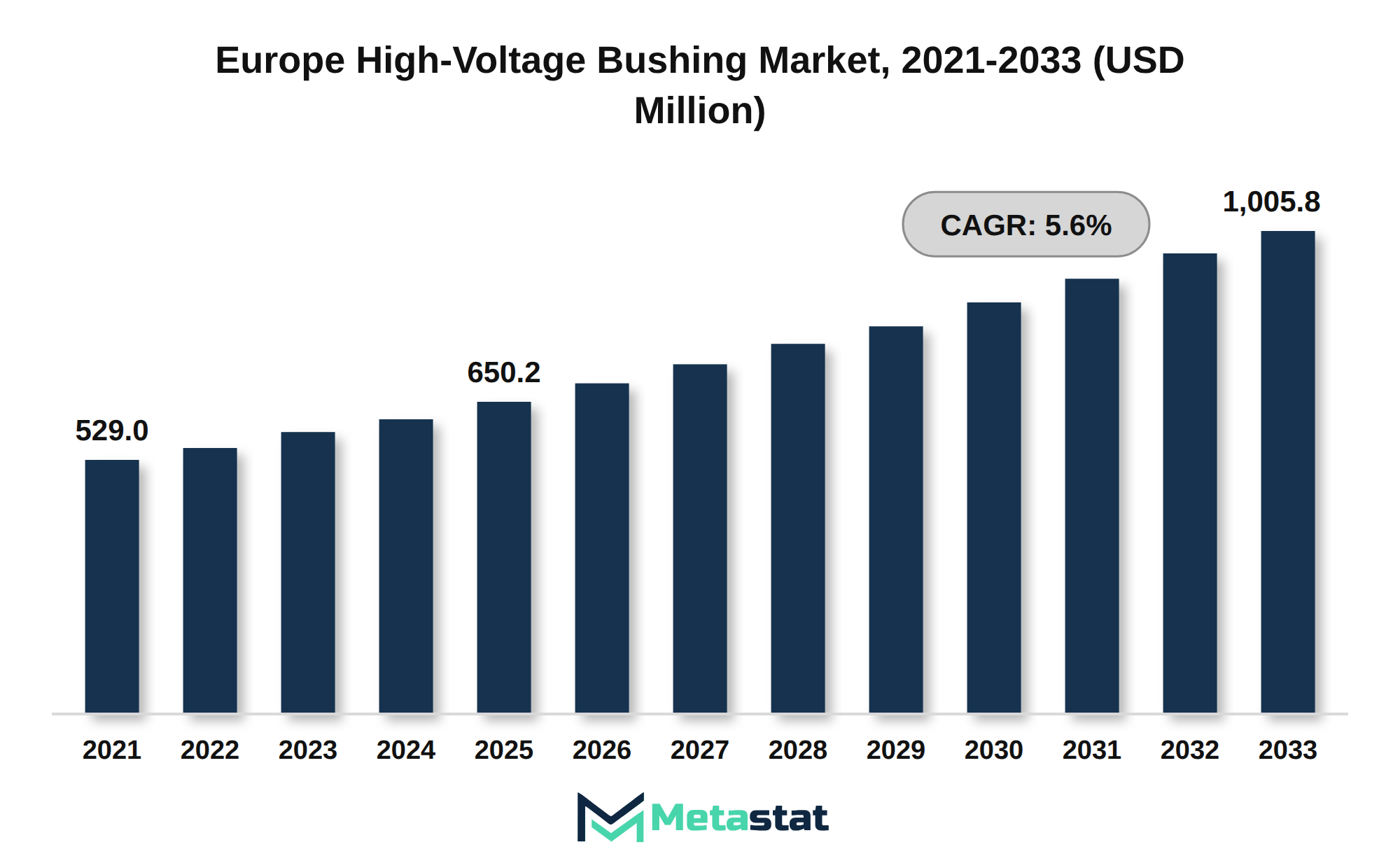
The Europe High-Voltage Bushing market was valued at USD 650.2 million in 2025 and is projected to reach USD 1,005.8 million by 2033, growing at a CAGR of 5.6% over the forecast period.
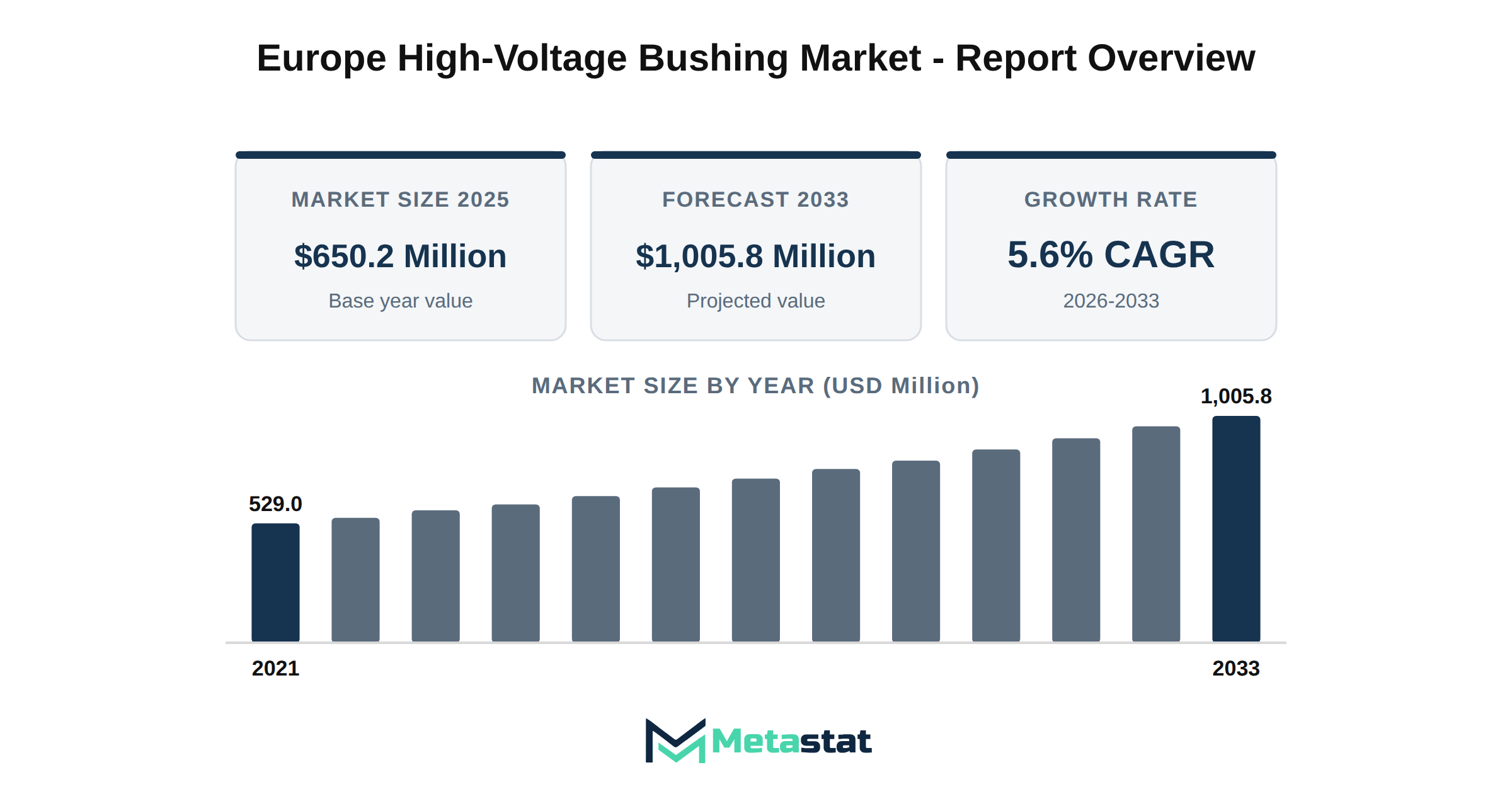
The Europe High-Voltage Bushing market is projected to grow from USD 650.2 million in 2025 to USD 1,005.8 million by 2033, reflecting a compound annual growth rate (CAGR) of 5.6%. Historical market values indicate steady growth, starting from USD 529 million in 2021 and reaching USD 613.6 million in 2024.
This growth is driven by increasing demand for high-voltage solutions across various sectors, including energy and infrastructure. Regulatory compliance and the need for sustainable technologies significantly influence market dynamics. The market's evolution aligns with broader trends in decarbonization and circular economy, emphasizing the transition to eco-friendly practices.
Investment in infrastructure significantly shapes the future of the Europe High-Voltage Bushing market. Stakeholders prioritize capital allocation towards enhancing production capabilities and meeting emerging regulatory standards. Macroeconomic headwinds, including inflationary pressures and currency volatility, affect market performance and investment strategies.
Technological advancements and R&D trajectories contribute to innovation within the sector. The introduction of next-generation insulation technologies and materials enhances product efficiency and reliability. Companies operating in this market focus on building resilient supply chains and optimizing logistics architecture to respond to shifting demands and mitigate disruptions.
The Europe High-Voltage Bushing market faces evolving dynamics influenced by regulatory compliance and geopolitical risk frameworks. These factors shape operational strategies for suppliers and affect the overall market. Compliance with stringent regulations regarding safety and environmental standards necessitates ongoing investment in R&D, ensuring that new products align with emerging requirements.
Next-generation innovations in insulation technology and materials are essential for enhancing product performance and reliability. The shift towards sustainable transformation aligns with decarbonization efforts across the energy sector, pushing manufacturers to develop eco-friendly materials and processes. This transition supports the circular economy dynamics, where recycling and reusing materials become integral to production practices.
The supply chain remains a critical area for stakeholders, with logistics architecture and sourcing strategies adapting to meet changing demand patterns. Market fragmentation leads to increased competition among suppliers, pushing them to differentiate their offerings. M&A dynamics have gained momentum owing to companies seeking to expand their portfolios and capabilities, enhancing their competitive positioning.
Value chain analysis emphasizes the importance of strategic procurement and understanding customer journey dynamics. Capital allocation decisions directly impact infrastructure investments, with firms prioritizing CapEx and OpEx realities to optimize financial performance. Macroeconomic headwinds, including inflationary pressures and currency volatility, influence pricing strategies and overall market growth.
Future strategic outlook highlights the necessity for corporate imperatives that align with market trends. High-value recommendations emphasize the importance of agility and responsiveness in operational frameworks, ensuring that firms remain competitive in the evolving Europe High-Voltage Bushing market.
Market Dynamics
Capital investment drives market expansion
In the Europe High-Voltage Bushing market, an increase in capital investment significantly influences growth. Economic conditions including GDP growth and favorable interest rates encourage companies to allocate funds towards infrastructure development and asset modernization. These factors enhance the operational capacity of energy providers and utilities, leading to increased demand for high-voltage bushings.
Investment in advanced technologies significantly drives the adoption of high-voltage bushings across various applications. Companies invest in digital transformation initiatives, streamlining processes through automation and software adoption. This shift improves efficiency and boosts the overall performance of power systems, creating a sustainable environment for high-voltage bushing demand.
Shifting demographic patterns and evolving consumer behaviors fuel infrastructure projects. Urbanization and the need for reliable energy sources prompt governments and private sector entities to invest heavily in power generation and distribution systems. The resulting expansion in the Europe High-Voltage Bushing market reflects this ongoing transformation, with significant implications for energy security and sustainability.
Overall, the combination of capital investment, technological integration, and demographic shifts drives growth in the market, positioning it for expansion through the forecast period.
Digital transformation enhances operational efficiency
In the Europe High-Voltage Bushing market, digital transformation drives operational efficiency through the integration of advanced technologies. Companies increasingly adopt automation and artificial intelligence to optimize processes and enhance productivity. The transition from traditional methods to digitized operations results in streamlined workflows, reduced downtime, and improved responsiveness to market demands.
This transformation requires significant capital investment in software and infrastructure, impacting growth across various sectors. By leveraging these technologies, companies achieve greater accuracy in manufacturing and reduce the risk of errors. The emphasis on digitizing legacy processes enables better data management, informing strategic decisions and resource allocation.
While digital transformation progresses, operational productivity within the market continues to improve. Enhanced efficiency reduces overhead costs while providing a competitive advantage. This trend aligns with shifting consumer behaviors prioritizing innovation and efficiency, further supporting the growth trajectory of the Europe High-Voltage Bushing market.
Regulatory compliance and infrastructure gaps
The Europe High-Voltage Bushing market encounters challenges stemming from stringent regulatory compliance requirements. These regulations necessitate significant investments in technology and materials to ensure adherence, increasing operational costs for manufacturers. Compliance hurdles often delay product development timelines, ultimately affecting market growth.
Infrastructure gaps further complicate the market, particularly in aging electrical grids that struggle to accommodate newer bushing technologies. Inefficient infrastructure contributes to deployment bottlenecks, hampering timely market entry for innovative solutions.
Macroeconomic headwinds, including inflationary pressures and geopolitical instability, pose additional constraints. Rising costs of raw materials and supply chain disruptions limit manufacturers’ ability to maintain competitive pricing. Uncertainty surrounding geopolitical tensions deters investment in new projects and infrastructure upgrades, affecting overall demand within the market.
Technological obsolescence represents another significant restraint, with rapid advancements in materials and designs leading to an increasing risk of older products becoming outdated. This shift creates challenges for companies in maintaining their market relevance and necessitates continuous innovation.
The combination of these factors leads to market fragmentation, with varying adoption rates across different regions. Companies navigate these complexities to sustain growth within the evolving Europe High-Voltage Bushing market.
Geopolitical fragmentation constrains market stability
The Europe High-Voltage Bushing market experiences significant challenges due to geopolitical fragmentation, which generates uncertainty in trade relations and tariffs. Trade deficits and tariff friction disrupt the supply chain, leading to inflated costs and potential delays in project execution. Manufacturers face increased pressure to comply with tightening regional regulatory standards, raising compliance overhead and complicating operations.
Technological disruptions, coupled with complex R&D integrations, hinder innovation in the market. This situation results in interoperability friction among different insulation technologies and applications, impacting the efficiency of high-voltage equipment. Volatility in feedstock and component availability complicates procurement strategies, constraining production capacities and leading to rising input costs.
Logistics disruptions further complicate these challenges, affecting the timely delivery of essential components. Supply chain instability creates additional hurdles, resulting in increased pricing compression and margin pressures for manufacturers. The Europe High-Voltage Bushing market is impacted by skill gaps in the workforce, complicating talent retention and exacerbating operational challenges.
Environmental lifecycle footprints and decarbonization mandates demand more sustainable practices from manufacturers, adding pressure to operational processes. Infrastructure gaps and retrofitting barriers complicate the implementation of advanced technologies, resulting in delays and inefficiencies. Intellectual property protection deficits raise concerns about cybersecurity risks and data vulnerabilities, further challenging market participants.
Changing downstream demands, market saturation, and substitution vector pressures contribute to a complex environment for manufacturers. These factors lead to increased competition, necessitating strategic adjustments to address evolving market dynamics effectively. The cumulative impact of these challenges shapes the overall trajectory of the Europe High-Voltage Bushing market.
Emerging technological advancements drive market potential
The Europe High-Voltage Bushing market benefits from rapid technological advancements that enhance product performance and reliability. Innovations in insulation technologies, particularly with Resin-Impregnated Paper (RIP) and Resin-Impregnated Synthetic/Fiber (RIS/RIF) condensers, contribute to improved efficiency and durability. These advancements attract investment and drive demand from industries focused on operational excellence and sustainability.
Infrastructure modernization initiatives across Europe create substantial growth opportunities within the market. Upgrading aging electrical grids and increasing transmission capacity align with the need for efficient power distribution systems. While countries prioritize renewable energy integration, high-voltage bushings serve because critical components in facilitating this transition, ensuring that energy systems meet evolving demands.
Geographical expansion into emerging markets presents additional avenues for growth. Countries in Eastern Europe are experiencing increased investments in energy infrastructure, prompting higher demand for high-voltage bushings. This trend allows manufacturers to cultivate new relationships with utility companies and industrial clients, enhancing market penetration capabilities.
Sustainability imperatives drive shifts toward eco-friendly solutions, further impacting the Europe High-Voltage Bushing market. The emphasis on green transformations aligns with the growing focus on Environmental, Social, and Governance (ESG) criteria. Companies responding to these demands are likely to enhance their competitive positioning by offering sustainable products that appeal to environmentally conscious consumers.
Strategic consolidation and cross-industry mergers present significant opportunities for industry players. Collaborations between traditional electrical manufacturers and technology firms accelerate innovation cycles, allowing for better integration of smart technologies into high-voltage bushing solutions. This collaboration enables a comprehensive approach to product development, ensuring that new offerings meet both current and future market requirements.
Evolving buying behaviors and digital procurement shifts shape purchasing dynamics within the market. Clients increasingly seek convenient and efficient procurement processes, driving suppliers to adopt digital tools and platforms that streamline transactions. This transition not only enhances customer experience but opens avenues for data-driven decision-making, enabling suppliers to better align their offerings with market needs.
Market Segmentation Analysis
The Europe High-Voltage Bushing market is segmented based on Voltage Rating, Insulation Technology, Application, and Region.
By Voltage Rating, the market is further segmented into:
- 25-36 kV
- 36-72.5 kV
- 72.5-145 kV
- 145-245 kV
- 245-420 kV
- 420-550 kV
- 550-800 kV
- Above 800 kV
25-36 kV
Valued at USD 54.3 million in 2026, the 25-36 kV segment is projected to reach USD 73.6 million by 2033, reflecting a CAGR of 4.5% during the forecast period. This growth stems from increasing demand for efficient power distribution and the rise in renewable energy projects, where reliable high-voltage bushings play a critical role in ensuring operational stability and safety. The segment benefits from technological maturation, supporting the evolution of products that align with modern energy distribution needs.
Significant factors influencing adoption include regulatory compliance standards emphasizing safety and reliability in electrical infrastructure. Investments in upgrading aging electrical systems contribute to segment expansion, while the push for enhanced efficiency in power distribution drives product evolution in the Europe High-Voltage Bushing market. Cost structures remain a consideration, with pricing volatility potentially impacting profit margins for suppliers.
End-use dynamics highlight the importance of high-voltage bushings in AC power and distribution transformers, where the need for robust insulation technology, including Oil-Impregnated Paper (OIP) Condenser and Resin-Impregnated Paper (RIP) Condenser, is critical. Strategic opportunity windows arise for manufacturers focusing on innovative insulation materials that deliver improved performance and longevity. Overall, the 25-36 kV segment positions itself because a vital component of the broader Europe High-Voltage Bushing market, with continued investment and technological advancements driving future growth.
36-72.5 kV
Growth in the 36-72.5 kV segment of the Europe High-Voltage Bushing market correlates with increasing investments in renewable energy and infrastructure upgrades across the region. Adoption of high-voltage bushings in applications including transmission lines and substations drives demand, supported by the transition to cleaner energy sources. The expansion of electricity networks to accommodate renewable generation has heightened the need for reliable and robust electrical components, including bushings.
Technological advancements in insulation materials and design contribute to segment growth. The shift toward more efficient insulation technologies, including resin-impregnated options, enhances performance and reliability. Adoption of these innovations aligns with evolving regulatory compliance standards that emphasize safety and energy efficiency, further stimulating demand in the market.
Investment in modernization of existing electrical grids and the development of new high-voltage infrastructure allows the segment to expand its market presence. The increasing focus on reducing energy losses during transmission drives demand for high-voltage bushings, which are essential in maintaining system performance. The 36-72.5 kV segment is projected to reach USD 170.5 million by 2033, at a CAGR of 4.9% during the forecast period.
The rising prevalence of shunt reactors and transformers in power systems boosts consumption within this voltage range. End-users, including utility companies and large-scale industrial facilities, prioritize reliable components that ensure smooth operation. Addressing these dynamics demonstrates growth prospects driven by both technological evolution and strategic investments in infrastructure.
72.5-145 kV
Demand for the 72.5-145 kV segment in the Europe High-Voltage Bushing market aligns with the increasing need for efficient energy distribution and transformation systems. Investment in infrastructure to support renewable energy initiatives further drives this demand. The segment is expected to reach USD 233.2 million by 2033, reflecting a growing emphasis on high-capacity transformers and associated technologies.
Technological maturation supports the expansion of this segment. Advancements in insulation materials and designs enhance performance and reliability. The shift toward more resilient electrical systems positions this segment favorably within the broader market. End-use dynamics, particularly in industries including renewable energy and smart grids, create a robust environment for the adoption of high-voltage bushings, emphasizing the importance of efficient energy management.
Regulatory compliance standards play a significant role, driven by stricter regulations around energy efficiency and safety protocols that influence purchasing decisions. These factors, combined with shifting consumer preferences towards sustainable solutions, drive significant growth in the segment. Strategic investments and innovations in product design position suppliers to capture emerging opportunities within the market.
145-245 kV
Projecting strong growth, the 145-245 kV segment is anticipated to expand at a CAGR of 5.5% during the forecast period. This segment benefits significantly from increased investments in electrical infrastructure, driven by rising demand for reliable power transmission systems across various industries. Enhanced focus on renewable energy integration and grid modernization increases the need for high-voltage bushings, particularly in this voltage range.
The adoption of advanced insulation technologies plays a critical role in the segment's growth trajectory. Manufacturers prioritize oil-impregnated paper and resin-impregnated solutions, ensuring optimal performance and longevity. Technological advancements in materials and design improve operational efficiencies, further attracting investments in the segment.
In the context of downstream applications, the 145-245 kV segment sees significant utilization in AC power and distribution transformers, and HVDC converter transformers. This trend aligns with the broader shift toward more efficient energy transmission solutions. The segment's growth remains closely tied to regulatory compliance standards and sustainability initiatives, driving demand for high-performance bushings.
Valued at USD 650.2 million in 2025, the segment's market value reflects its critical importance in the Europe High-Voltage Bushing market. With a projected increase to USD 1,005.8 million by 2033, strong demand signals a favorable outlook for manufacturers and suppliers operating in this space.
245-420 kV
Growth in the 245-420 kV segment of the Europe High-Voltage Bushing market is driven by rising investments in power infrastructure and the increasing demand for electricity across various sectors. Expanding renewable energy projects, particularly in wind and solar, underpin the need for higher capacity transmission and distribution systems, thus boosting the requirement for high-voltage bushings within this voltage range.
Technological advancements play a significant role in enhancing product reliability and efficiency, contributing to the segment's appeal. Innovations in insulation technology and materials lead to better performance metrics and longer lifespans for high-voltage bushings, aligning with industry demands for sustainable and efficient energy solutions.
End-use dynamics reflect a growing shift towards more sophisticated electrical grid systems and the integration of smart grid technologies. Utilities and power generation companies prioritize robust infrastructure to enhance grid stability and accommodate fluctuating energy sources, driving demand for high-voltage bushings in the 245-420 kV range.
Regulatory compliance standards and policies surrounding energy efficiency and environmental impacts influence market dynamics significantly. Legislative measures aimed at reducing carbon footprints necessitate the adoption of advanced technologies, driving growth within the segment owing to companies seeking to align with these regulations.
While the market evolves, strategic opportunities arise for investment in research and development to innovate and improve product offerings. Companies focusing on next-generation upgrades and product evolution position themselves advantageously in competitive pressures and changing consumer preferences. This proactive approach enhances market resilience and responsiveness to emerging trends.
420-550 kV
Significant drivers shape the growth of the 420-550 kV segment within the Europe High-Voltage Bushing market. The emphasis on renewable energy sources and the expansion of high-capacity transmission networks fuel demand in this voltage range. Investments in infrastructure modernization, particularly in countries like Germany and France, contribute to the segment's expansion, facilitating the integration of high-voltage lines necessary for efficient energy transmission.
Technological advancements play a crucial role in the maturation of products within this segment. Enhanced insulation materials improve performance and reliability while addressing the increasing demand for efficient energy systems. Adoption of next-generation upgrades, including smart grid technologies, aligns with regulatory compliance standards prioritizing operational safety and environmental sustainability.
Changes in consumption patterns highlight a shift towards more efficient power distribution solutions. Energy providers increasingly favor high-voltage bushings that guarantee longevity and reduced maintenance costs. This trend reflects a broader end-use dynamic prioritizing cost-effective, high-performance solutions.
In terms of market challenges, pricing volatility influences cost structures, affecting profit margins. The segment faces pressures from fluctuating raw material costs, necessitating strategic sourcing and supply chain resilience. Disruptive alternatives, including technological innovations, pose risks to existing product lines while simultaneously creating strategic opportunity windows for market participants.
Strategic investment outlooks indicate sustained growth potential within the 420-550 kV segment. Players in the Europe High-Voltage Bushing market are likely to focus on capital investments to enhance production capabilities and meet rising demand. This focus promises to strengthen market positions and drive further advancements in product offerings.
550-800 kV
Growth in the 550-800 kV segment within the Europe High-Voltage Bushing market aligns with increasing demand for reliable and efficient energy transmission solutions. This demand arises from heightened renewable energy generation and the need for modernized grid infrastructure. Emerging economies across Europe focus on expanding their energy networks, often incorporating high-voltage solutions to enhance capacity and reliability. Technological maturation within this segment facilitates the development of advanced bushing designs, improving performance and durability.
Next-generation upgrades integrate innovative insulation technologies and materials, enhancing overall product performance. Adoption of these technologies influences product evolution, allowing for improved efficiency and lower operating costs. End-use dynamics indicate a shift towards greater integration of high-voltage systems in power generation, transmission, and distribution applications, supporting the overall energy transition strategy in Europe.
Regulatory compliance standards and policy frameworks drive investments in high-voltage infrastructure, compelling manufacturers to adapt and innovate continually. Pricing volatility in raw materials influences cost structures, potentially affecting profit margins within the segment. Strategic opportunity windows emerge owing to energy companies seeking reliable partners capable of delivering high-quality bushing solutions, enhancing competition among suppliers in the market.
Supply chain resilience remains critical, ensuring consistent access to essential materials and components. Disruptive alternatives pose a challenge, encouraging ongoing innovation to maintain a competitive edge. Overall, the 550-800 kV segment contributes to the growth trajectory expected within the Europe High-Voltage Bushing market, underscoring its importance in the evolving energy landscape.
Above 800 kV
Strong interest in high-capacity transmission networks influences demand for high-voltage bushings in the Above 800 kV segment. The increase in renewable energy projects, coupled with extensive grid upgrades, creates a favorable environment for the adoption of advanced insulation technologies. Industries focused on improving energy transmission efficiency prioritize high-voltage systems to reduce losses and enhance overall system reliability, strengthening long-term demand.
Technological maturation enables new product developments within this segment. Innovations in materials and designs lead to enhanced performance, reduced maintenance costs, and extended service lifespans. Manufacturers focus on integrating next-generation upgrades that cater to the evolving needs of energy utilities and large-scale industrial consumers, enhancing their competitive position.
Regulatory compliance standards shape industry dynamics, driving investments towards more efficient and environmentally friendly solutions. Stringent regulations regarding emissions and environmental impact compel suppliers to develop products that meet these growing demands while maintaining competitive pricing structures. This ongoing evolution in the regulatory landscape significantly affects product pricing and market dynamics, emphasizing the importance of compliance and innovation for market participants.
Strategic opportunity windows arise from the increasing global focus on power grid resilience and sustainability. The integration of smart grid technologies with high-voltage systems supports better load management and enhances operational flexibility. This trend opens avenues for investment in infrastructure upgrades across Europe, creating long-term growth in the market.
By Insulation Technology, the market is further segmented into:
- Oil-Impregnated Paper (OIP) Condenser
- Resin-Impregnated Paper (RIP) Condenser
- Resin-Impregnated Synthetic/Fiber (RIS/RIF) Condenser
- Resin-Bonded Paper (RBP) Condenser
- Oil-Filled / Oil-Communicating Non-Condenser
- Solid Cast-Resin / Epoxy Non-Condenser
- Solid Porcelain
- Others (Gas-Insulated and Specialty Hybrid Designs)
Oil-Impregnated Paper (OIP) Condenser
Valued at USD 206.5 million in 2026, the Oil-Impregnated Paper (OIP) Condenser segment is projected to reach USD 248 million by 2033, demonstrating a CAGR of 2.7% during the forecast period. Increasing demand for OIP condensers arises from their widespread use in high-voltage applications, particularly in transformers and switchgear. The growing emphasis on renewable energy projects and the need for efficient power transmission further drive this demand.
Technological maturation in insulation materials significantly influences the segment. Innovations in manufacturing processes enhance the performance and reliability of OIP condensers, making them attractive to end-users. Regulatory compliance standards focused on sustainability and energy efficiency support the adoption of OIP technology, aligning with broader industry goals.
Pricing volatility challenges market players, driven by fluctuations in raw material costs and global supply chain disruptions. These factors apply pressure on margins and influence pricing strategies, impacting the competitiveness of products within the Oil-Impregnated Paper (OIP) Condenser segment. Despite these challenges, strategic opportunity windows exist for manufacturers to invest in advanced technologies and improve product offerings, enhancing their market position in the Europe High-Voltage Bushing market.
Resin-Impregnated Paper (RIP) Condenser
Strong market potential exists for the Resin-Impregnated Paper (RIP) Condenser segment, projected to reach USD 321.1 million by 2033, at a CAGR of 6.3% during the forecast period. This growth stems from increasing demand for efficient and reliable insulation solutions in high-voltage applications. Industries including energy and utilities, which require robust insulation materials for transformers and switchgear, drive this demand. The transition towards renewable energy sources necessitates reliable components that withstand high operating voltages while maintaining performance and safety standards.
Technological advancements in insulation materials enhance the performance characteristics of RIP condensers, making them preferable for various high-voltage applications. Continuous product evolution and upgrades significantly influence adoption rates, with manufacturers focusing on improving thermal stability and dielectric strength. Compliance with stringent regulatory standards and certifications further strengthens the position of RIP condensers in the market.
Pricing volatility in raw materials impacts the cost structure of the segment, requiring manufacturers to adopt strategic sourcing and supply chain resilience. Despite potential substitution risks from alternative insulation technologies, the established performance and reliability of RIP condensers ensure their continued relevance in the Europe High-Voltage Bushing market. Investment in research and development, focusing on next-generation materials, presents strategic opportunity windows for market participants looking to expand their offerings and capture a larger share of the market.
Resin-Impregnated Synthetic/Fiber (RIS/RIF) Condenser
Resin-Impregnated Synthetic/Fiber (RIS/RIF) Condenser segment is projected to reach USD 151.5 million by 2033, reflecting a focused trend towards advanced insulation technologies in the Europe High-Voltage Bushing market. The increasing demand for high-performance insulating materials drives the adoption of RIS/RIF condensers, particularly in applications requiring enhanced electrical properties and durability.
Technological maturation in insulation materials contributes significantly to market dynamics. The evolution of manufacturing processes enhances the properties of RIS/RIF condensers, leading to improved efficiency in various applications including AC power and distribution transformers and HVDC converter transformers. Energy reliability requirements push industries to opt for advanced insulation solutions, stimulating segment growth and fostering innovation.
Regulatory compliance and environmental standards influence the RIS/RIF segment, necessitating adherence to safety and performance benchmarks. Innovations in this segment actively respond to these regulations, ensuring that products align with emerging compliance expectations.
Price volatility and cost structures specifically impacting the RIS/RIF segment reflect ongoing fluctuations in raw material sourcing, affecting profit margins. Strategic opportunity windows emerge owing to manufacturers optimizing production capabilities and assessing market demand shifts, ultimately positioning themselves for long-term growth in the competitive environment.
Resin-Bonded Paper (RBP) Condenser
Demand for the Resin-Bonded Paper (RBP) Condenser segment reflects a steady trajectory in the Europe High-Voltage Bushing market, with expectations of growth at a CAGR of 1.5% during the forecast period. This segment benefits from its unique characteristics, including enhanced durability and efficient performance in high-voltage applications. Various industries, particularly energy and utilities, increasingly adopt RBP condensers for their reliability and effectiveness in managing electrical loads.
Technological maturation significantly influences segment expansion. Ongoing advancements in insulation technology enhance the performance of RBP condensers, reducing failure rates and extending service life. These improvements prompt manufacturers to invest in next-generation upgrades, thereby improving the segment's profile within the market.
Regulatory compliance standards and certifications drive further adoption. Strict safety and performance regulations mandate the use of reliable insulation solutions, influencing end-users to select RBP condensers over alternative options. This regulatory landscape aligns with overall consumption shifts toward more sustainable and efficient electrical components.
Valued at USD 206.5 million in 2026, the segment is projected to reach USD 248 million by 2033, highlighting its commercial viability. The growing emphasis on energy efficiency and sustainability in power systems positions RBP condensers because a strategic choice for utilities and energy providers within the market.
Oil-Filled / Oil-Communicating Non-Condenser
In the field of high-voltage insulation technologies, Oil-Filled / Oil-Communicating Non-Condenser solutions represent a significant segment, driven by the demand for reliable and efficient performance in electrical systems. These technologies find extensive applications in AC power and distribution transformers, ensuring optimal functionality under varying load conditions. The growing emphasis on energy efficiency and sustainability in the Europe High-Voltage Bushing market highlights the relevance of these insulation methods.
Technological maturation in oil-filled insulation systems enables continuous improvements in reliability and operational efficiency. Innovations contribute to enhanced thermal performance and increased lifespan, leading to greater adoption in critical infrastructure projects. This segment's evolution aligns with industry shifts towards advanced solutions that accommodate higher voltage ratings and increased power demands.
Regulatory compliance influences the adoption of these insulation technologies. Manufacturers and operators face stringent standards aimed at minimizing environmental impact and ensuring safety in high-voltage applications. Adhering to these regulations necessitates investment in advanced insulation materials and technologies, positioning Oil-Filled / Oil-Communicating Non-Condenser products because essential components in meeting compliance requirements.
Market dynamics reflect cost structures that influence pricing volatility and margin pressures specific to this segment. Factors including raw material sourcing and supply chain resilience impact production costs, shaping the financial landscape for manufacturers. The Oil-Filled / Oil-Communicating Non-Condenser segment presents a strategic opportunity window for companies aiming to enhance their offerings in high-voltage insulation technologies.
Overall, the growth trajectory of the Oil-Filled / Oil-Communicating Non-Condenser segment aligns with broader trends in the Europe High-Voltage Bushing market, emphasizing the need for reliable, efficient, and compliant solutions in the changing energy landscape.
Solid Cast-Resin / Epoxy Non-Condenser
Strong interest in Solid Cast-Resin / Epoxy Non-Condenser technology aligns with rising demand for efficient insulation solutions in the Europe High-Voltage Bushing market. This segment benefits from technological maturation, enabling enhanced performance and reliability for high-voltage applications. Manufacturers focus on innovation to meet increasing regulatory compliance standards, driving upgrades and product evolution.
End-use dynamics reflect a shift towards modernized power infrastructures, emphasizing the need for materials that support higher voltage ratings and improved efficiency. Consumption shifts towards environmentally friendly solutions influence the adoption of solid cast-resin technology, providing advantages in both performance and sustainability.
Strategic opportunity windows encourage investments in this segment, with capital flowing towards development and enhancement of solid cast-resin products. Supply chain resilience remains a focus, ensuring raw material sourcing aligns with demand while mitigating risks from potential disruptions. The market evolves, with ongoing assessments of cost structures and pricing volatility shaping future strategies within the sector.
Solid Porcelain
Adoption of Solid Porcelain insulation technology within the Europe High-Voltage Bushing market aligns with increasing emphasis on durability and reliability in high-voltage applications. This technology benefits from robust structural integrity, enabling optimal performance under high electrical stress conditions. Demand in this area derives from sectors prioritizing long-lasting solutions, including power generation and transmission, which require components that withstand challenging environmental factors.
Technological maturation plays a critical role, with advancements enhancing the performance and application scope of Solid Porcelain. Innovations in manufacturing processes have led to improved product quality, creating opportunities for broader implementation across various high-voltage systems. This evolution in technology encourages investments from stakeholders aiming to enhance operational capabilities within the market.
End-use dynamics significantly influence the segment, with utilities and infrastructure developers increasingly investing in solid porcelain products for high reliability and minimal maintenance needs. Shifts in consumption patterns indicate a growing preference for materials that ensure long-term performance, leading to strategic opportunities for manufacturers focusing on this insulation technology. Regulatory compliance standards compel industry players to adopt solid porcelain solutions, given their effectiveness in meeting stringent safety and performance requirements.
Supply chain resilience remains a focal point, driven by the availability of raw materials and logistics capabilities that dictate overall market dynamics. Strategic sourcing of high-quality raw materials is imperative for ensuring consistent product performance. Emerging challenges, including pricing volatility and margin pressures, present critical considerations for stakeholders in the segment. Awareness of substitute technologies, including alternative insulation materials, influences product evolution and competitive positioning within the market.
Investments in Solid Porcelain insulation technology signify a strategic opportunity window for players aiming to expand product lines in the Europe High-Voltage Bushing market. Capital investment outlook remains positive, supported by ongoing infrastructure projects and the growing need for reliable high-voltage technologies across Europe.
Others (Gas-Insulated and Specialty Hybrid Designs)
Innovations in insulation technology drive interest in the Others (Gas-Insulated and Specialty Hybrid Designs) segment of the Europe High-Voltage Bushing market. This segment benefits from advancements that enhance efficiency and safety in high-voltage applications. A trend toward more compact and efficient designs facilitates integration within existing infrastructure, supporting adoption among end-users looking for reliable solutions in stringent environments.
Technological maturation is essential for expanding this segment, with manufacturers investing in research and development to create next-generation products. The transition to gas-insulated solutions offers advantages including reduced footprint and enhanced environmental performance, appealing to utilities aiming for sustainability. Regulatory compliance standards push for the adoption of these technologies, ensuring that new installations meet rigorous safety and performance benchmarks.
Downstream applications in sectors including renewable energy and urban infrastructure create significant demand for innovative insulation technologies. Continuous upgrades in energy transmission and distribution systems increase the need for reliable components. Consumption shifts toward more environmentally friendly solutions are evident, with stakeholders increasingly prioritizing technologies that support lower emissions and improved energy efficiency.
Strategic opportunity windows open owing to utilities seeking to modernize infrastructure, driving investment in specialized designs that enhance operational resilience. Cost structures within this segment reflect the influence of raw material sourcing and production efficiencies, impacting pricing volatility. Manufacturers focus on maintaining supply chain resilience while navigating potential challenges linked to raw material availability, ensuring they meet growing demand for high-voltage solutions.
By Application, the market is further segmented into:
- AC Power & Distribution Transformers
- HVDC Converter Transformers
- Shunt & Series Reactors
- Gas-Insulated Switchgear & Gas-Insulated Lines
- Circuit Breakers & Other Switchgear
- Generators & Isolated-Phase Bus Systems
- Wall & Building Feedthroughs
- Rail Traction & Specialty Electrical Equipment
AC Power & Distribution Transformers
Valued at USD 242.3 million in 2026, the AC Power & Distribution Transformers segment is projected to reach USD 316.9 million by 2033, at a CAGR of 3.9% during the forecast period. Demand for high-voltage bushings within this segment aligns with the growing need for efficient power distribution systems, emphasizing reliability and performance. The expansion of renewable energy sources and the modernization of existing power infrastructure drive investments in high-voltage technologies, enhancing grid stability and enabling the integration of intermittent energy sources.
Technological advancements in insulation materials and designs contribute significantly to market growth. Innovations, including improved oil-impregnated paper and resin-impregnated technologies, enhance the longevity and efficiency of bushings used in transformers. These advancements improve operational performance and reduce maintenance costs, appealing to end-users focused on long-term reliability.
Regulatory standards governing emissions and energy efficiency influence demand, prompting utilities and manufacturers to invest in compliant technologies. Environmental concerns escalate, making compliance with stringent standards essential for market participants in the Europe High-Voltage Bushing market. This dynamic encourages firms to continuously innovate and adopt next-generation technologies that align with regulatory frameworks.
Consumer preferences shift towards sustainable and efficient energy solutions, impacting purchasing decisions across various sectors. The AC Power & Distribution Transformers segment reflects this transition, with end-users prioritizing products that demonstrate enhanced performance and sustainability. Strategic opportunities arise for manufacturers that offer innovative solutions addressing evolving consumer demands.
HVDC Converter Transformers
Demand for HVDC Converter Transformers drives growth within the Europe High-Voltage Bushing market. With an estimated value of USD 141.2 million by 2033, this segment demonstrates a robust CAGR of 9.6% during the forecast period. The increasing need for efficient electricity transmission across long distances fuels interest in HVDC technologies, particularly for renewable energy integration.
Technological advancements enhance the performance and reliability of HVDC Converter Transformers, aligning with industry trends toward modernization and efficiency. These transformers play a critical role in high-voltage direct current systems, facilitating the movement of energy generated from renewable sources including wind and solar. Market players invest in next-generation upgrades and innovations to meet rising demand.
Regulatory compliance and policy frameworks favor the adoption of HVDC solutions, promoting sustainable energy practices. Increased investment in renewable energy projects across Europe strengthens the market's growth trajectory. The ongoing shift toward cleaner energy sources leads to expanding applications for HVDC Converter Transformers, resulting in significant opportunities for manufacturers.
The HVDC Converter Transformers segment represents a vital component within the broader Europe High-Voltage Bushing market, with a strong outlook driven by technological evolution, regulatory support, and shifts in energy consumption patterns.
Shunt & Series Reactors
Value in the Shunt & Series Reactors segment is expected to reach USD 81.6 million by 2033. Rapid expansion in renewable energy sources and the increasing need for grid stability drive demand for this segment. High-voltage bushings play an essential role in ensuring reliable operation within modern electrical systems, particularly in conjunction with renewable energy integration.
Technological advancements enhance the efficiency and reliability of shunt and series reactors, supporting adoption in various applications. The shift towards smart grid solutions encourages utility companies to invest in upgrades, creating opportunities within the Europe High-Voltage Bushing market. A focus on sustainability and energy efficiency aligns with the growing emphasis on reducing carbon footprints in power generation and transmission.
Cost structures and pricing volatility present challenges for manufacturers in the segment. Fluctuations in raw material prices influence profit margins, prompting companies to seek innovative solutions to manage production costs. Strategic partnerships within the supply chain improve sourcing and mitigate risks associated with material availability.
Regulatory compliance standards increasingly shape market dynamics, compelling manufacturers to innovate and enhance product offerings. Certifications validating performance and reliability become critical factors in maintaining competitiveness. The ongoing evolution of power systems influences the role of shunt and series reactors in managing power quality and stability, significantly impacting future market growth.
Gas-Insulated Switchgear & Gas-Insulated Lines
Growth in the Gas-Insulated Switchgear & Gas-Insulated Lines segment aligns with the increasing demand for efficient and reliable power distribution systems. This segment is projected to grow at a CAGR of 7.3% during the forecast period. Advances in technology and rising investments in renewable energy infrastructure contribute significantly to this upward trajectory.
While utilities modernize their electrical grids, the adoption of gas-insulated switchgear becomes a key focus due to its compact design and enhanced safety features. These systems facilitate greater energy efficiency and reduce maintenance costs, driving their popularity among end-users.
Investment in smart grid technology further increases demand for gas-insulated switchgear solutions, allowing for improved monitoring and control of electrical networks. Regulatory compliance and stringent safety standards push manufacturers to innovate continuously in this space, ensuring products meet the latest industry requirements.
Market dynamics indicate strong potential within the Europe High-Voltage Bushing market. Utilities transition towards more sustainable and resilient energy solutions. The increasing penetration of HVDC technologies and the need for reliable connections in high-voltage applications support the expansion of this segment.
Circuit Breakers & Other Switchgear
Significant advancements in technology drive demand for Circuit Breakers & Other Switchgear applications within the Europe High-Voltage Bushing market. Increased focus on grid reliability and efficiency remains a primary demand driver. Utility companies and industries prioritize the integration of advanced switchgear technologies to enhance operational performance and minimize downtime. The transition towards renewable energy sources necessitates robust infrastructure, increasing the need for high-performance circuit breakers.
Technological maturation facilitates the adoption of next-generation upgrades in switchgear systems. Innovations in smart grid technologies and automation enhance the operational capabilities of circuit breakers, contributing to overall system efficiency. Regulatory compliance standards influence investment in modernized switchgear systems, ensuring safety and reliability within electrical networks. The emphasis on enhancing grid stability and reducing maintenance costs drives manufacturers to evolve product offerings continuously.
End-user dynamics reflect a shift towards sustainable energy solutions, leading to increased consumption of advanced switchgear technologies. Strategic opportunity windows arise from the need for improved energy management practices, driving investments in circuit breaker systems. The evolution of the Europe High-Voltage Bushing market presents manufacturers and suppliers with various opportunities for growth and expansion in this crucial segment.
Generators & Isolated-Phase Bus Systems
Within the Europe High-Voltage Bushing market, the segment dedicated to Generators & Isolated-Phase Bus Systems experiences substantial relevance due to rising demand for reliable power distribution solutions. This segment benefits from increasing investments in energy infrastructure, particularly in renewable energy sources that necessitate advanced electrical systems for efficiency and stability.
Adoption of next-generation upgrades within the segment aligns with technological maturation trends. Enhanced performance and lower operational costs associated with modern Generators & Isolated-Phase Bus Systems actively influence market dynamics. The emphasis on energy efficiency and regulatory compliance standards drives innovation in product evolution, ensuring that manufacturers meet stringent requirements while enhancing system reliability.
Downstream applications encompassing various sectors, including industrial, commercial, and utility services, contribute to segment growth. The shift toward cleaner energy sources influences consumption patterns, prompting utility companies to invest in new technologies for improved grid stability. In this context, strategic opportunity windows arise, encouraging capital investment aimed at meeting future energy demands.
Supply chain resilience plays a critical role, since raw material sourcing and logistics vulnerabilities affect pricing structures. Fluctuations in raw material availability and costs impact margin pressures within the segment, necessitating agile responses from suppliers. Substitution risks associated with older technologies require manufacturers to prioritize innovation and adapt to evolving market conditions.
The segment of Generators & Isolated-Phase Bus Systems continues to evolve, with an increasing focus on disruptive alternatives that enhance performance. Technological obsolescence poses challenges, but proactive companies strategically position themselves to capitalize on emerging trends. Overall, the segment represents a vital component of the Europe High-Voltage Bushing market, highlighting the importance of ongoing investment in advanced electrical solutions.
Wall & Building Feedthroughs
Recent advancements in high-voltage systems significantly influence the demand for Wall & Building Feedthroughs within the Europe High-Voltage Bushing market. This sub-segment benefits from the increasing integration of renewable energy sources and the expansion of smart grid technologies. The installation of advanced infrastructure requires reliable insulation solutions that ensure operational efficiency and safety in electrical systems.
Technological maturation plays a critical role in enhancing the performance of feedthroughs, contributing to broader adoption across various applications. Manufacturers focus on developing innovative designs that provide improved durability and resistance to environmental factors. Evolving regulatory compliance sets higher standards for electrical equipment, driving the need for certified products that meet stringent requirements.
Cost structures exhibit variability due to fluctuations in raw material prices and manufacturing processes. Strategic opportunity windows arise from the growing emphasis on energy efficiency and sustainable practices, encouraging investments in next-generation upgrades. This focus aligns with the push towards modernizing existing power infrastructure, thus propelling the development of more efficient wall and building feedthrough solutions.
Increased emphasis on infrastructure resilience influences consumption shifts in the market. End-users demonstrate a growing preference for durable and reliable electrical components that withstand demanding conditions. Consequently, the demand landscape for Wall & Building Feedthroughs evolves, presenting challenges and opportunities for stakeholders in the Europe High-Voltage Bushing market.
Rail Traction & Specialty Electrical Equipment
Increasing emphasis on electrification in transportation systems drives demand for high-voltage bushings in rail traction and specialty electrical equipment. Innovations in this sector focus on enhancing energy efficiency and minimizing operational disruptions, addressing the needs of rail operators and infrastructure developers. The transition towards electrified rail systems necessitates robust insulation solutions capable of withstanding high voltage levels, leading to increased adoption of advanced bushing technologies.
Shifts in energy consumption patterns further influence the market, with rail systems seeking to integrate renewable energy sources. This shift contributes to the development of specialized high-voltage bushings designed for efficient energy transfer and management. The combination of stringent regulatory compliance standards and growing sustainability efforts emphasizes the importance of advanced insulation technologies tailored for rail applications.
The Europe High-Voltage Bushing market benefits from strategic investments aimed at upgrading aging infrastructure and expanding electrification capabilities. Rail operators increasingly recognize the need for reliable, high-performance components that enhance system resilience and performance. This focus on product evolution, driven by technological maturation, positions the segment for growth opportunities.
Ongoing advancements in materials and designs align with the industry's goals of improving safety and reliability. Enhanced insulation systems mitigate risks associated with voltage fluctuations and environmental factors, providing rail operators with confidence in their equipment. The focus on rail traction and specialty electrical equipment within the Europe High-Voltage Bushing market illustrates the industry's commitment to meeting the demands of an evolving energy landscape.
By Region, the market is further segmented into:
- Germany
- France
- Ukraine
- United Kingdom
- Rest of Europe
Germany
Valued at USD 150.2 million in 2026, the Germany segment is projected to reach USD 209 million by 2033, at a CAGR of 4.8% during the forecast period. Strong demand arises from the ongoing investments in energy infrastructure and the transition towards renewable energy sources. The increasing focus on maintaining grid stability and reliability drives the growth of high-voltage bushings, especially in power generation and distribution applications.
Technological advancements play a critical role in enhancing the performance and durability of high-voltage bushings in Germany. Innovations in insulation technologies, including the adoption of Resin-Impregnated Paper (RIP) Condensers, contribute to improved efficiency and reduced maintenance costs. Regulatory compliance standards influence the market, driven by stringent guidelines that necessitate the use of high-quality and reliable components in electrical systems.
Downstream applications, particularly within AC Power & Distribution Transformers, experience significant growth and align with the trends in the Europe High-Voltage Bushing market. The ongoing transition towards smart grid technologies and enhanced transmission networks increases the demand for advanced high-voltage solutions. Continuous investments in infrastructure modernization further support the expansion of the market in Germany.
France
France represents a significant segment in the Europe High-Voltage Bushing market, estimated to reach USD 136 million by 2033, at a CAGR of 5.2% during the forecast period. Increased focus on upgrading aging electrical infrastructure and integrating renewable energy sources drives demand for high-voltage bushings in this region. The ongoing transition towards smart grids and sustainable energy solutions increases investments in advanced electrical components, including high-voltage bushings.
Technological advancements in insulation materials, particularly Resin-Impregnated Paper (RIP) Condenser technology, enhance the performance and reliability of high-voltage bushings. Adoption of these technologies aligns with regulatory compliance standards for efficiency and safety. End-users, including utility companies and industrial manufacturers, increasingly prioritize high-performance solutions to improve operational efficiency and minimize downtime.
Competition among key players in the market intensifies, driven by innovation and the expansion of product offerings tailored for specific applications. Strategic partnerships and collaborations among manufacturers and technology providers enhance market penetration and product evolution. Increased capital investment in research and development allows companies to create next-generation products that meet the evolving needs of the market.
The combination of regulatory drivers, technological maturation, and strong demand dynamics positions the France segment for significant growth, contributing significantly to the overall expansion of the Europe High-Voltage Bushing market.
Ukraine
Strategic investment in Ukraine's energy infrastructure influences the demand for high-voltage bushings. The ongoing transition towards modernized power systems alongside regulatory support for renewable energy sources drives growth in the Europe High-Voltage Bushing market. In 2026, the segment is expected to reach USD 85.5 million by 2033, reflecting significant market potential. Demand for high-voltage solutions aligns with the country's goals of enhancing grid reliability and integrating advanced technologies. Investment in research and development of energy-efficient technologies strengthens the competitive landscape, offering opportunities for suppliers to introduce innovative products that meet evolving regulatory standards. The focus on sustainable energy solutions increases the adoption of advanced insulation technologies, establishing Ukraine because an important player in the broader European market.
United Kingdom
Anticipated growth in the United Kingdom segment drives interest in the Europe High-Voltage Bushing market, with a projected CAGR of 4.6% during the forecast period. Factors contributing to this growth include the ongoing modernization of electrical infrastructure and increasing investments in renewable energy sources. The demand for efficient power transmission and distribution systems reinforces the need for high-voltage bushings.
Technological advancements, particularly in insulation technology, significantly enhance the performance and reliability of high-voltage bushings used in various applications. Adoption among utility companies prioritizing safety and efficiency in power systems supports segment expansion. The transition toward greener energy solutions influences consumption patterns, leading to greater reliance on advanced high-voltage equipment.
Regulatory compliance standards surrounding energy efficiency and environmental sustainability create a favorable environment for market growth. Manufacturers responding to these standards by upgrading their product offerings contribute to a more competitive landscape. The segment's capacity to adapt to changing regulations and consumer expectations remains crucial for sustained success in the market.
Valued at USD 150.2 million in 2026, the United Kingdom segment highlights significant investment opportunities within the Europe High-Voltage Bushing market. Collaboration among key players, including established firms and emerging innovators, creates a dynamic ecosystem that encourages the development of next-generation technologies. Strategic partnerships and capital investments enhance supply chain resilience, further supporting the region's growth trajectory.
Rest of Europe
Investment in renewable energy sources significantly impacts the Europe High-Voltage Bushing market, spurring demand for reliable and efficient energy transmission solutions. The transition towards greener energy infrastructures creates a rising need for high-voltage equipment, including bushings, which support the integration of renewable energy sources into existing grids. In addition, the progressive electrification of transportation systems drives further adoption of high-voltage technology, enhancing the overall demand within the market.
Technological advancements in materials and design enhance the performance of high-voltage bushings, promoting their application across various sectors. Innovations improve insulation technologies, leading to increased efficiency and durability of products. This trend aligns with the push for higher operational standards and greater reliability in energy transmission systems, positioning bushings because critical components in modern power systems.
Regulatory frameworks aimed at reducing carbon emissions influence purchasing decisions across the region. Compliance with stringent regulations encourages manufacturers and utilities to upgrade their existing infrastructure, driving investments in high-voltage bushings. These dynamics create strategic opportunities for market players aiming to meet the evolving needs of the energy sector, ensuring readiness for future energy demands.
Overall, the Rest of Europe segment reflects a robust environment for growth driven by technological maturation, regulatory compliance needs, and the increasing emphasis on sustainability within the energy sector. This evolution highlights the significance of the Europe High-Voltage Bushing market in supporting energy transformation initiatives across the region.
Competitive Landscape and Strategic Insights
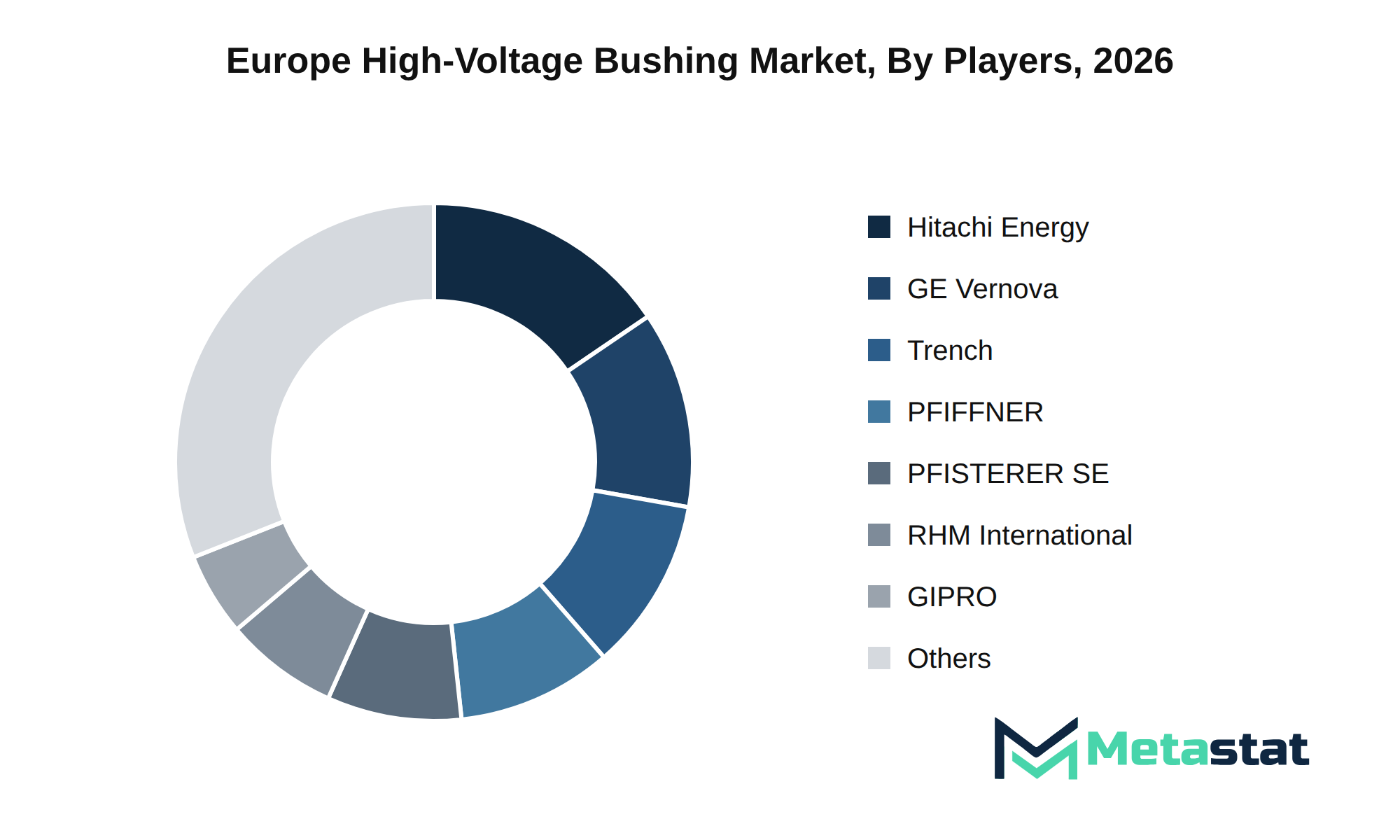
The Europe High-Voltage Bushing market features a diverse range of players focused on strategic consolidation and collaborative efforts. Companies including Hitachi Energy Ltd., GE Vernova Inc., and ABB Ltd. emphasize product differentiation through proprietary technologies and innovative insulation solutions. Investment in research and development remains crucial, with firms continuously enhancing their product portfolios to meet evolving customer demands.
Strategic alliances and partnerships play a significant role in shaping competitive dynamics. Companies pursue joint ventures and cross-industry collaborations to leverage complementary strengths and expand market reach. This approach supports value chain integration and enhances supply chain efficiency, allowing players to respond effectively to market trends.
Barriers to entry within the market include established brand equity and technological defensibility, which present challenges for potential new entrants. Existing companies benefit from customer retention strategies that create switching costs, which build loyalty among clients. The competitive outlook suggests ongoing defensive imperatives resulting from firms navigating industry restructuring and maintaining their market position.
While the Europe High-Voltage Bushing market evolves, continuous monitoring of competitive strategies and market developments will remain essential for stakeholders aiming to capitalize on growth opportunities.
Forecast and Future Outlook
Market size is forecast to rise from USD 650.2 million in 2025 to over USD 1,005.8 million by 2033. This growth reflects a 5.6% compound annual growth rate (CAGR) during the forecast period. The base case represents a steady progression in the Europe High-Voltage Bushing market, driven by increasing demand for reliable electrical infrastructure and growing investments in renewable energy projects.
In a bullish scenario, enhanced regulatory support and accelerated adoption of next-generation technologies could lead to even higher growth rates. Factors including improved manufacturing processes and increased government spending on infrastructure projects create favorable conditions for expansion. Conversely, a bearish outlook highlights potential challenges, including geopolitical tensions and fluctuating raw material costs, which could impede market growth.
The market continues to evolve through structural consumption shifts, with a significant emphasis on sustainability and efficiency. Integration of advanced technologies and ongoing R&D initiatives further shapes the competitive landscape, driving innovation and addressing unmet enterprise needs. Strategic capital allocation towards high-growth pockets within the Europe High-Voltage Bushing market signals an optimistic future, driven by the quest for improved performance and reliability in electrical applications.
Europe High-Voltage Bushing Market Key Segments
By Voltage Rating:
- 25-36 kV
- 36-72.5 kV
- 72.5-145 kV
- 145-245 kV
- 245-420 kV
- 420-550 kV
- 550-800 kV
- Above 800 kV
By Insulation Technology:
- Oil-Impregnated Paper (OIP) Condenser
- Resin-Impregnated Paper (RIP) Condenser
- Resin-Impregnated Synthetic/Fiber (RIS/RIF) Condenser
- Resin-Bonded Paper (RBP) Condenser
- Oil-Filled / Oil-Communicating Non-Condenser
- Solid Cast-Resin / Epoxy Non-Condenser
- Solid Porcelain
- Others (Gas-Insulated and Specialty Hybrid Designs)
By Application:
- AC Power & Distribution Transformers
- HVDC Converter Transformers
- Shunt & Series Reactors
- Gas-Insulated Switchgear & Gas-Insulated Lines
- Circuit Breakers & Other Switchgear
- Generators & Isolated-Phase Bus Systems
- Wall & Building Feedthroughs
- Rail Traction & Specialty Electrical Equipment
By Region:
- Germany
- France
- Ukraine
- United Kingdom
- Rest of Europe
Key Europe High-Voltage Bushing Industry Players
- Hitachi Energy Ltd.
- GE Vernova Inc.
- Trench Group
- PFIFFNER Group
- PFISTERER Holding SE
- RHM International, LLC
- GIPRO GmbH
- Slavenergoprom
- Bushing (Beijing) HV Electric Co., Ltd.
- Yash Highvoltage Limited
- Reinhausen GmbH
- Hubbell Incorporated (PCORE Electric)
- PREIS GmbH
- Shandong ChinSun Electrical Equipment Co., Ltd. (ChinSun)
- ABB Ltd.
- Eaton Corporation plc
- KUVAG GmbH & Co KG
- Arteche
- Georg Jordan GmbH
- POINSA European Insulator
- ESPI Europe s.r.o.
- Elektroporcelan A.D. Novi Sad
Report Coverage
The report strategically identifies and profiles the key market players and analyses their core competencies in each sub-segment of the High-Voltage Bushing market.
Report Attributes | Details |
Study Period | 2021-2033 |
Base Year | 2025 |
Estimated Year | 2026 |
Forecast Period | 2026-2033 |
Historical Period | 2021-2025 |
Growth Rate | CAGR 5.6% from 2026 to 2033 |
Revenue Unit | USD million |
Segmentation | By Voltage Rating, Insulation Technology, Application, Region, and Region |
What Report Provides
- Key Company Market Share, Revenue and Ranking for the Europe High-Voltage Bushing Market
- Key Market Leaders in the Europe High-Voltage Bushing Industry
- Full In-Depth Analysis of the Parent Industry
- Industry Statistics for the Europe High-Voltage Bushing Market
- Important Changes in Market Dynamics and Trends
- Segmentation Details of the Europe High-Voltage Bushing Market
- Historical, Ongoing and Projected Market Analysis
- Key Strategies of Major Players in the Market
Frequently Asked Questions
Find answers to common questions about this report
The High-Voltage Bushing market size in Europe was valued at USD 650.2 million in 2025, according to the Metastat Insights study.
The High-Voltage Bushing market is projected to grow at a CAGR of 5.6% during the forecast period from 2026 to 2033.
The segment leading the Europe High-Voltage Bushing market is the 72.5-145 kV category, with a projected value of USD 233.2 million by 2033. This segment surpasses others based on its anticipated revenue growth.
Key drivers for the Europe High-Voltage Bushing market include increased capital investment in infrastructure development and asset modernization, along with the adoption of advanced technologies that enhance operational efficiency. Demographic shifts, urbanization, and the demand for reliable energy sources further support market growth, reflecting a significant transformation in energy security and sustainability.
The Europe High-Voltage Bushing market faces restraints from stringent regulatory compliance requirements, which increase operational costs and delay product development timelines. geopolitical fragmentation creates uncertainty in trade relations, resulting in inflated costs and project execution delays. Technological obsolescence and skill gaps within the workforce further complicate growth prospects.
Capital investment significantly influences product adoption in the Europe High-Voltage Bushing market. Economic growth and favorable interest rates encourage infrastructure development, while digital transformation initiatives enhance operational efficiency. These factors create a sustainable environment for increased demand for high-voltage bushings across various applications.
The High-Voltage Bushing market is estimated to reach a valuation of USD 1,005.8 million by 2033.
Key players in the Europe High-Voltage Bushing Market include Hitachi Energy Ltd., GE Vernova Inc., Trench Group, PFIFFNER Group, PFISTERER Holding SE, and ABB Ltd. These companies significantly influence the market dynamics and contribute to the development of high-voltage bushing technologies.
Germany leads the Europe High-Voltage Bushing market, with a projected value of USD 209 million by 2033.
Resin-Impregnated Paper (RIP) Condensers are expected to reach USD 321.1 million by 2033.
Choose Your License
Europe High-Voltage Bushing Market
Related Reports
Explore related market intelligence reports worth reading alongside this one.