
LEAD ANALYST
Utkarsh Khirodkar is a Lead Market Research Analyst at MetaStat Insight, specializing in market intelligence, technology sector assessments, and competitive strategy.

Europe Online and Retail Sports Betting Market Size, Share, By Betting Channel (Online Sports Betting and Retail Sports Betting), By Sport Type (Football, Horse Racing, Tennis, Basketball, Ice Hockey, Cricket, Rugby, Esports, Handball and Others (Motorsports, Volleyball, Table Tennis, Combat Sports)), By Betting Timing (Pre-Match Betting and Live/In-Play Betting), By Country (United Kingdom, Italy, Germany, France, Spain, Russia, Poland, Sweden, Netherlands and Others (Denmark, Ireland, Belgium, Finland, Norway, Greece, Portugal, Czech Republic)), Industry Analysis, Growth, Trends, and Forecast, 2026-2033
Report ID
MSI-4975
Published
August, 2026
Pages
282 Pages
Format
Historical
Base year
Forecast
Forecast period
Report Details
Choose Your License
Europe Online and Retail Sports Betting Market
The Europe Online and Retail Sports Betting market was valued at USD 49.8 billion in 2025 and is projected to reach USD 119.1 billion by 2033, growing at a CAGR of 11.5% over the forecast period.
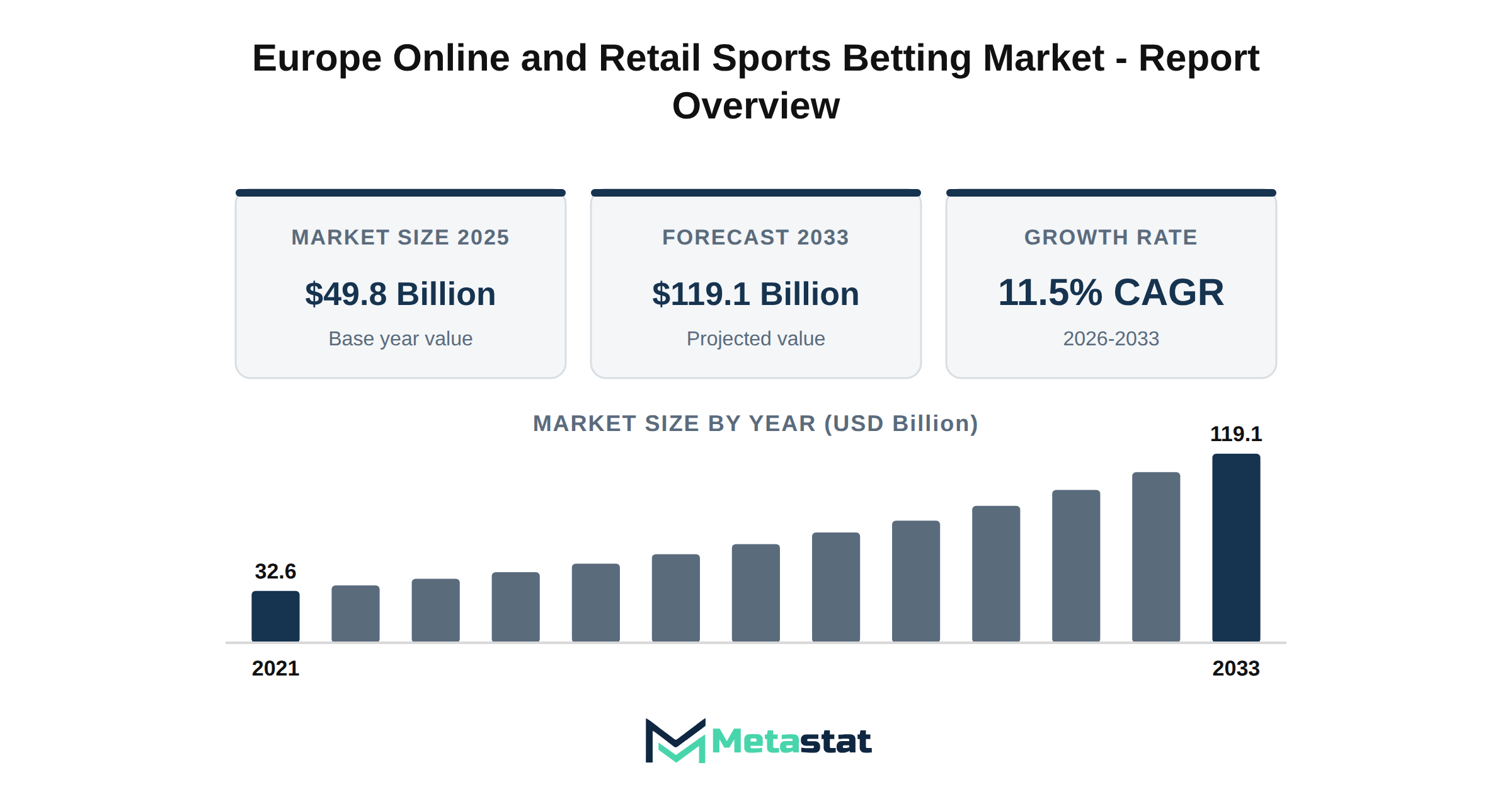
The Europe Online and Retail Sports Betting market is positioned for significant growth, with a base value of USD 49.8 billion in 2025, projected to reach USD 119.1 billion by 2033. This represents a compound annual growth rate (CAGR) of 11.5%. Historical data shows the market's trajectory, starting from USD 32.6 billion in 2021 and demonstrating steady growth each year, culminating in USD 49.8 billion in 2025.
Online sports betting, a key segment within the market, is expected to experience robust expansion. Growth in this sector is projected at a CAGR of 13.3%, increasing from USD 37.8 billion in 2026 to USD 90.5 billion by 2033. In contrast, retail sports betting is anticipated to grow at a slower pace, with a projected value of USD 28.6 billion by 2033, reflecting a CAGR of 6.9%. These dynamics highlight the shifting preferences of consumers towards digital platforms for sports betting.
The Europe Online and Retail Sports Betting market involves a diverse array of stakeholders, including established players including Flutter Entertainment plc, Entain plc, and bet365 Group. These companies drive innovation and competition, shaping the market through strategic investments and enhanced user experiences. The competitive environment influences pricing strategies and service offerings, impacting overall market growth.
Economic factors, including inflationary pressures and currency volatility, pose challenges to market stability. These macroeconomic headwinds affect consumer spending patterns and operational costs for operators. Nevertheless, the anticipated growth in the Europe Online and Retail Sports Betting market reflects an overall positive outlook, supported by increasing consumer engagement and technological advancements.
Regulatory compliance plays a crucial role in the Europe Online and Retail Sports Betting market, with varying regulations across countries impacting operational frameworks. The need for stringent adherence to local laws and standards influences market players' strategies, shaping their product offerings and marketing approaches. Compliance with these regulations ensures legal operation and builds consumer trust, which is critical for market growth.
Geopolitical risk frameworks have a significant impact on the market landscape. Political instability or changes in government policies affect market dynamics and investment opportunities. Stakeholders assess these risks to develop strategies that mitigate potential disruptions, ensuring business continuity and resilience in an unpredictable environment.
Disruption from technological advancements continues to reshape the market. Innovations in mobile betting applications, digital payment systems, and data analytics enhance user experiences and operational efficiencies. R&D trajectories are crucial for companies aiming to stay competitive, driving investment into next-generation technologies that cater to evolving consumer preferences.
Sustainable transformation emerges due to a key consideration for stakeholders in the Europe Online and Retail Sports Betting market. Companies increasingly focus on responsible gambling initiatives and environmental sustainability, reflecting a commitment to corporate social responsibility. This shift meets regulatory expectations and aligns with consumer demand for ethical business practices.
Market fragmentation presents both challenges and opportunities for companies operating in this space. The presence of numerous players and varying offerings complicates customer journey dynamics, making it essential for companies to differentiate themselves through unique value propositions. Understanding customer preferences and behaviors is vital for crafting targeted marketing strategies that enhance loyalty and increase market share.
Capital allocation in the market reflects a strategic approach to investment in technology, marketing, and infrastructure. Companies prioritize spending that drives growth and operational efficiency while navigating macroeconomic headwinds including inflationary pressures and currency volatility. These factors necessitate a careful assessment of CapEx and OpEx realities to ensure sustainable profitability.
The future strategic outlook for the Europe Online and Retail Sports Betting market hinges on continuous innovation, regulatory adaptability, and responsiveness to consumer trends. High-value recommendations for stakeholders encompass leveraging technology to enhance user engagement, investing in responsible gambling initiatives, and maintaining agility in operations to adapt to shifting market dynamics.
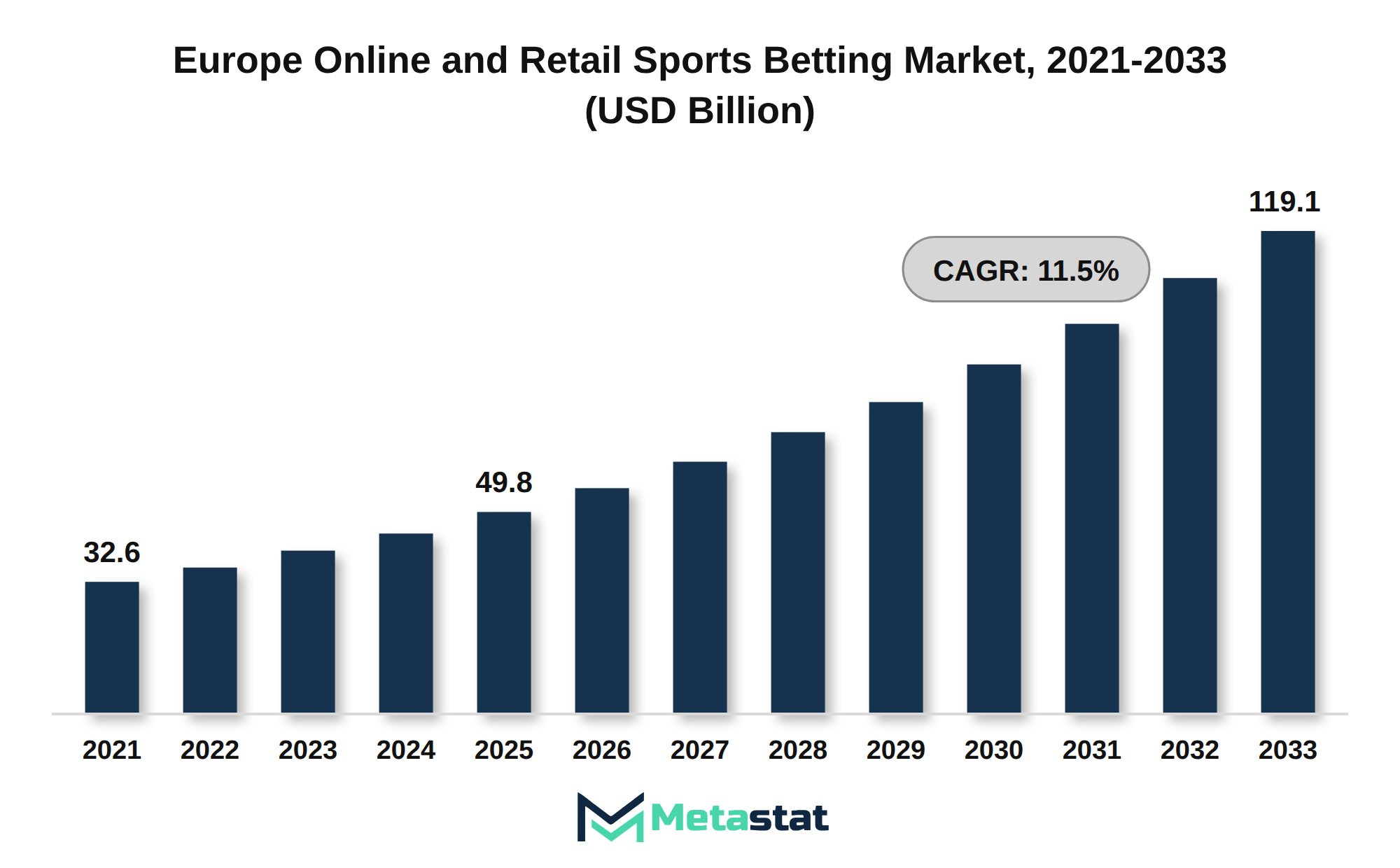
Favorable capital investment environments significantly influence the Europe Online and Retail Sports Betting market. Economic indicators including GDP growth and interest rates create a robust atmosphere for venture funding and public-private spending. Increased investment in technology and infrastructure directly correlates with heightened market activity, enabling operators to enhance their offerings and customer experiences, resulting in strengthened long-term demand.
The growing interest in digital transformation significantly influences this environment, encouraging companies to adopt innovative technologies and automate processes. Investments in digital platforms improve operational efficiency and customer engagement, attracting a broader audience. With a projected compound annual growth rate (CAGR) of 11.5 percent, the market demonstrates strong potential for expansion, driven by these macro-economic factors and increasing investment across the value chain.
Consumer behavior shifts, including increased acceptance of online betting, further stimulate market growth. A younger demographic, characterized by a preference for digital solutions, increases demand for online offerings. This trend compels operators to invest in technology and resources, positioning themselves to capitalize on emerging opportunities within the Europe Online and Retail Sports Betting market, thereby reinforcing the segment's position.
Shifting demographic patterns significantly influence the growth trajectory of the Europe Online and Retail Sports Betting market. An aging population increasingly engages with various forms of entertainment, including online and retail sports betting, contributing to rising consumer participation. Urbanization trends further enhance market expansion, driven by densely populated areas cultivating a culture of sports engagement and betting activities.
Evolving consumer behaviors reflect a preference for innovative betting experiences, including mobile platforms and real-time betting options. These preferences align with advancements in digital transformation and technological integration, enhancing market accessibility and user engagement. Regions with robust internet infrastructure experience heightened participation, further driving revenue generation within the market.
The market anticipates continued growth, supported by demographic shifts favoring diverse sports betting options. Increased participation from younger consumers, alongside the older demographic seeking leisure activities, creates a balanced consumer base. This dynamic environment promotes a competitive landscape where innovation thrives, enhancing the overall appeal of the Europe Online and Retail Sports Betting market.
The Europe Online and Retail Sports Betting market faces significant challenges due to regulatory tightening and compliance hurdles. Governments across various regions implement increasingly stringent regulations aimed at safeguarding consumer interests and ensuring responsible gaming practices. These legal mandates demand substantial investments in compliance systems and processes, placing financial strain on operators and restricting market access for new entrants.
Macroeconomic headwinds, including inflationary pressures and capital stagnation, further complicate the landscape. Rising operational and investment costs, driven by economic uncertainty, deter potential entrants and limit the expansion of existing operators. This situation results in a more concentrated market, with few players able to bear the financial burden of compliance and operational costs.
Infrastructure gaps and connectivity deficits affect the operational capabilities of the market. Inadequate infrastructure hinders the deployment of essential services and technologies, leading to connectivity issues that impact user experience and satisfaction. These challenges exacerbate market fragmentation and limit growth opportunities for smaller operators.
Data security vulnerabilities and privacy concerns present substantial risks. With the increasing reliance on digital platforms, operators face potential breaches that could compromise sensitive consumer information. Such incidents damage reputations and drive customers away, negatively affecting revenue within the Europe Online and Retail Sports Betting market.
Geopolitical fragmentation significantly complicates the dynamics of the Europe Online and Retail Sports Betting market. Fragmented regulations across different jurisdictions create compliance overhead for operators. Companies face challenges in navigating varying legal requirements, which lead to increased operational costs and deter potential entrants into the market. This fragmented regulatory environment restricts the establishment of unified standards, complicating the integration of technology and services across borders.
Trade deficits and tariff friction contribute to financial strains on market players. Increased costs from tariffs on imported technology and services compress pricing structures, leading to tighter margins. The necessity for compliance with evolving legal liabilities further compounds these pressures on profitability. Operators invest considerable resources to adapt to regulatory changes, diverting funds from innovation and marketing efforts.
Technological disruptions pose ongoing challenges. The need for interoperability between various platforms and systems creates friction that hinders customer experiences. Heightened competition from both established and emerging players intensifies these challenges, leading to market saturation and increasing substitution pressures. The Europe Online and Retail Sports Betting market faces a delicate balancing act; operators strive to maintain profitability while meeting changing consumer demands and navigating complex regulatory landscapes.
Rising input costs driven by inflationary pressures impact the overall operational efficiency of market participants. Talent retention pressures and skill gaps in the workforce further complicate efforts to adapt to market changes. Companies invest in training programs to fill these gaps, but the associated costs strain resources. The combination of these factors creates an intricate web of challenges that market players strategically address to maintain competitive positioning.
The Europe Online and Retail Sports Betting market experiences significant transformation driven by emerging technologies that enhance user experience and operational efficiency. Technologies including artificial intelligence and machine learning facilitate personalized betting experiences, enabling operators to analyze customer preferences and behaviors effectively. This technological integration improves engagement and optimizes marketing strategies, leading to increased customer acquisition and retention.
Digital transformation reshapes the betting landscape, with mobile applications and online platforms gaining traction among consumers. Enhanced accessibility and convenience boost participation across various demographics, leading to a broader customer base. The shift towards mobile platforms aligns with evolving consumer behaviors, where users prefer instant access to betting services through smartphones and tablets.
Geographical expansion presents a crucial opportunity for stakeholders in the market. New regulations in various European countries create pathways for legal and regulated online and retail sports betting operations. This expansion into untapped markets drives revenue potential and increases competition among operators, benefiting consumers through improved offerings and services.
Strategic consolidation shapes the competitive landscape, with mergers and acquisitions allowing companies to enhance their portfolios and cross-promote services. This consolidation enables firms to leverage synergies, streamline operations, and optimize resource allocation, contributing to market growth and stability.
The focus on sustainability and environmental, social, and governance (ESG) considerations influences investment strategies in the Europe Online and Retail Sports Betting market. Companies aligning with eco-friendly practices and responsible gambling initiatives appeal to a socially conscious customer base, enhancing their reputation and market share.
Overall, the combination of technological advancements, geographical expansion, and strategic alignments promotes a dynamic environment for the Europe Online and Retail Sports Betting market, driving growth and innovation in the coming years.
The Europe Online and Retail Sports Betting market is segmented based on Betting Channel, Sport Type, Betting Timing, and Country.
Valued at USD 37.8 billion in 2026, the Online Sports Betting segment is projected to reach USD 90.5 billion by 2033, reflecting a CAGR of 13.3% during the forecast period. Factors driving growth in this segment include increasing adoption of digital platforms for sports betting and rising popularity of live betting options. Enhanced user experiences through advanced technology, including mobile applications and real-time data analytics, significantly contribute to consumer engagement and retention.
Technological maturation plays a critical role in expanding the Online Sports Betting segment. Integration of artificial intelligence and machine learning enhances predictive modeling and personalization, allowing operators to tailor offerings to individual preferences. These innovations lead to improved customer satisfaction and increased betting frequency, ultimately driving revenue growth within the Europe Online and Retail Sports Betting market.
Regulatory frameworks increasingly support the evolution of this segment. Countries within Europe are adopting clearer policies and licenses for online betting operations, creating a secure environment for both consumers and operators. This regulatory clarity encourages investment, resulting in intensified competition among established players and new entrants, further stimulating market expansion.
Consumer behavior shifts, especially among younger demographics, show a growing preference for online platforms over traditional retail betting. This trend indicates a significant market opportunity for operators focusing on digital strategies. Effective marketing campaigns that highlight the advantages of online sports betting, including convenience and accessibility, enhance customer acquisition and retention.
Retail Sports Betting segment is estimated to reach USD 28.6 billion by 2033, at a CAGR of 6.9% during the forecast period. Growing consumer interest in live sports events drives demand within this segment, driven by bettors' preference for engaging with their favorite sports in real-time. Innovations in retail betting venues, including enhanced customer experiences and technological integrations, support this growth. The expansion of sports betting legislation across various European countries further stimulates market activity, creating a dynamic environment for retail operators.
Investment in retail infrastructure remains essential for capturing market share. Operators that provide attractive environments and effective betting experiences are likely to see increased patronage. Enhancements in service delivery and tailored offerings to meet local preferences play a significant role in attracting diverse customer bases. With the increasing acceptance of sports betting, traditional retail channels adapt to incorporate modern features that appeal to a younger demographic.
Technological advancements, including mobile integration within retail locations, facilitate convenience for users and enhance engagement. This trend towards hybrid models, combining in-person and digital experiences, creates strategic opportunities for existing operators and new entrants within the Europe Online and Retail Sports Betting market. Overall, the segment's growth reflects broader trends in consumer behavior and regulatory developments, ensuring a strong environment for future investment and innovation.
Football betting represents a significant portion of the Europe Online and Retail Sports Betting market, driven by the sport's immense popularity across various demographics. Factors including increasing viewer engagement, enhanced accessibility through digital platforms, and the continuous rise of live betting options drive demand within this segment. Adoption of innovative technologies, including mobile applications and real-time data analytics, enhances user experience and promotes higher participation rates among bettors.
Changing consumer behavior indicates a shift towards in-play betting, allowing bettors to place wagers during live events. This trend complements the sport's dynamic nature, where outcomes shift rapidly, presenting new opportunities for engagement. Regulatory developments across different European countries further shape the landscape, influencing the operational framework and market access for various stakeholders.
Football betting's evolution continues to be marked by strategic partnerships between betting operators and sports organizations, enhancing visibility and credibility. This dynamic creates an environment where established brands leverage their reputation while newer entrants find pathways to market entry. In turn, these collaborations contribute to the long-term growth trajectory of the market.
Pricing strategies play a crucial role in influencing bettor participation and retention. Competitive odds and promotional offers enhance consumer appeal, while market fragmentation necessitates operators to differentiate their services effectively. Alongside these factors, operational efficiencies gained through technological advancements allow betting companies to optimize their cost structures, ultimately benefiting consumers.
Through continued investment in next-generation platforms and customer-centric solutions, the segment demonstrates potential for further expansion. Football betting's prominent position within the Europe Online and Retail Sports Betting market suggests strong growth prospects driven by its adaptability to changing preferences and technological advancements.
Primary demand drivers for horse racing betting in the Europe Online and Retail Sports Betting market include the popularity of the sport and the availability of major racing events. Increased viewer engagement through digital platforms enhances participation in betting activities. High-profile races attract significant media attention, resulting in heightened public interest and increased betting volumes.
Adoption in this segment aligns with technological advancements including mobile betting applications and live-streaming services. These innovations provide easy access to events, encouraging users to place bets in real-time, thereby enhancing user experiences and supporting overall market growth.
Segment expansion catalysts involve collaborations between sports betting operators and racing organizations, facilitating promotional events and partnerships. These collaborations enable operators to reach wider audiences and create tailored betting options that appeal to both casual and dedicated horse racing enthusiasts.
Consumption shifts towards in-play betting reflect evolving customer preferences. Punters increasingly favor placing bets during live events, which encourages operators to offer more dynamic betting options tailored to real-time outcomes. This shift significantly influences market strategies and product offerings.
Regulatory compliance standards establish a framework within which operators function. Adherence to these standards ensures consumer protection and promotes responsible gambling practices, essential for maintaining market integrity and building customer trust.
Strategic opportunity windows arise from growing interest in alternative betting formats, including virtual horse racing. This trend presents new avenues for operators to diversify their offerings, potentially attracting a broader customer base and enhancing revenue streams.
Capital investment in technology and marketing strategies supports the growth of horse racing betting. Investments in data analytics enhance operators' ability to personalize experiences, thereby improving customer retention and engagement in the competitive environment of the Europe Online and Retail Sports Betting market.
Strong demand drivers for tennis betting in the Europe Online and Retail Sports Betting market stem from the sport's widespread popularity and high-profile tournaments, including Grand Slam events. This popularity creates a substantial audience base, leading to increased engagement in betting activities. The segment benefits from a growing number of online platforms facilitating easy access to betting options, contributing to higher participation rates.
Technological advancements play a crucial role in the segment's expansion. Innovations in mobile technology and live-streaming services enhance user experiences, allowing bettors to engage in real-time betting during matches. This capability attracts a tech-savvy demographic, further boosting market penetration.
Regulatory compliance remains an essential factor driving market dynamics. Countries with clear regulations promote a safer betting environment, encouraging more participants to engage legally. The establishment of responsible gambling measures builds consumer trust, positively impacting overall market growth.
Pricing volatility and margin pressures specific to tennis betting influence operators' strategies. Competition among platforms often leads to promotional offers and bonuses, enhancing customer retention and acquisition. These pricing strategies contribute to a more competitive market environment.
Strategic opportunities for growth include expanding partnerships with tennis organizations and tournaments. Collaborations enhance brand visibility and credibility, attracting more bettors to platforms offering tennis betting. The tennis segment within the Europe Online and Retail Sports Betting market demonstrates significant growth potential driven by a combination of demand, technology, and regulatory support.
In the Europe Online and Retail Sports Betting market, basketball betting attracts a dedicated audience, driven by the sport's global popularity and engaging nature. Increased viewership and fan engagement in basketball create favorable conditions for betting activities. Technological advancements in digital platforms enhance user experiences, allowing real-time betting and data analytics, which improve overall participation. Strategic partnerships with basketball leagues and teams facilitate promotional campaigns, expanding reach and visibility in the market.
Adoption of basketball betting continues to grow, fueled by younger demographics actively seeking interactive and immersive betting experiences. Regulatory frameworks across various European countries support this growth, enabling a more structured and safe betting environment. Innovative betting formats, including live or in-play betting, attract more participants and encourage higher stakes, providing players with real-time engagement during matches.
Challenges exist within this sub-segment, including regulatory compliance and the need for responsible gambling measures. Operators emphasize transparency and ethical practices to build trust and maintain competitive positioning. Overall, the basketball betting sub-segment represents a significant opportunity for growth within the broader Europe Online and Retail Sports Betting market, with potential for increased capital investment and market expansion.
Interest in ice hockey betting continues to grow within the Europe Online and Retail Sports Betting market. Factors driving this interest include the sport's expanding fan base and the increasing visibility of ice hockey leagues through media broadcasts and digital platforms. Enhanced marketing efforts by betting operators effectively target demographics enthusiastic about ice hockey, contributing to higher engagement levels.
Technological advancements facilitate real-time betting opportunities, allowing bettors to place wagers during live matches. This shift towards in-play betting aligns with changing consumer preferences, driven by bettors increasingly seeking dynamic and interactive experiences. The integration of data analytics into betting platforms enhances the ability of operators to offer tailored promotions, attracting new bettors interested in ice hockey.
Regulatory developments across various European countries establish clear frameworks for sports betting, supporting market growth. Compliance with these regulations enables operators to offer a broader range of betting options on ice hockey, building consumer trust and safety. Stakeholders in the market actively monitor regulatory changes to adapt their strategies, ensuring alignment with compliance requirements.
Ice hockey's global popularity creates strategic opportunities for betting companies to expand their reach, particularly in regions where the sport is gaining traction. Enhanced partnerships with ice hockey leagues and teams facilitate promotional initiatives that connect with target audiences. This alignment positions operators favorably within the competitive environment, ultimately propelling growth in the market.
Interest in cricket betting continues to grow within the Europe Online and Retail Sports Betting market. Factors driving this demand include increased visibility of cricket events, particularly from popular leagues and international tournaments, which attract a diverse audience. The rise in digital platforms facilitates easier access to betting options, encouraging greater participation from both seasoned bettors and newcomers. Adoption of advanced technologies, including real-time data analytics and mobile applications, enhances user experience and engagement, further stimulating this segment's expansion. Regulatory frameworks in various countries support the integration of cricket betting within established legal sports betting environments, promoting market growth.
Consumption shifts show a growing preference for digital betting platforms over traditional methods, reflecting broader trends in consumer behavior. Strategic opportunities arise from partnerships between betting operators and cricket organizations that create unique betting products, enhancing the overall appeal to users. Investment in marketing and promotional activities targeting cricket fans strengthens the position of cricket betting within the competitive landscape. Continuous technological advancements contribute to improving the betting experience and overall market attractiveness, positioning cricket because a significant segment in the Europe Online and Retail Sports Betting market.
Interest in rugby betting within the Europe Online and Retail Sports Betting market reflects a growing fanbase and increased engagement with the sport. Factors contributing to this trend include enhanced media coverage of rugby events and the expansion of professional leagues, which create a more substantial betting environment. Stakeholders, including sportsbooks and betting operators, recognize the potential of rugby betting because a viable revenue stream.
Technological advancements influence the rugby betting segment significantly, with platforms providing innovative features and real-time data analytics. These enhancements improve user experience and attract more bettors. The introduction of mobile betting apps facilitates immediate access to betting markets, catering to an on-the-go audience.
Changing preferences in sports consumption present opportunities for rugby betting expansion. With younger audiences gravitating toward dynamic and engaging sports content, rugby has positioned itself because an appealing option. This shift drives operators to develop more tailored betting products and promotions that connect with this demographic.
Regulatory frameworks governing sports betting continue to evolve, impacting how operators approach rugby betting. Compliance with these regulations ensures a secure and transparent environment for bettors, building trust in the market. Certifying bodies play a crucial role in maintaining standards, which ultimately supports segment growth.
Market dynamics indicate that the rugby betting segment is expected to experience significant evolution through strategic partnerships and collaborations among key players. This cooperative approach strengthens market presence and enhances product offerings while addressing consumer demand for diverse betting options. The Europe Online and Retail Sports Betting market stands to benefit from these developments, positioning itself for sustained growth in the coming years.
Growth in the esports segment of the Europe Online and Retail Sports Betting market aligns with the increasing popularity of competitive gaming. A surge in viewership and participation among younger demographics drives demand for esports betting. This segment thrives on a changing technological landscape that enhances user experience through real-time statistics and live streaming capabilities, promoting greater engagement among bettors.
Adoption of esports betting benefits from strategic partnerships between sportsbooks and esports organizations, increasing the profile of esports events and attracting a broader audience. Regulatory frameworks surrounding online betting continue to change, influencing how sportsbooks approach esports offerings. Compliance with these standards enhances operational credibility and trust among potential consumers.
While technology matures, platforms that support esports betting continue to innovate, allowing for more diverse betting options, including in-play betting and unique market offerings. This evolution keeps customers engaged and encourages higher betting volumes. Supply chain resilience remains critical, driven by firms navigating logistics and integrating new technologies, ensuring efficient betting experiences across various devices.
Competition among key players in the market intensifies, with firms investing in marketing strategies that target esports enthusiasts. This competitive environment drives innovation, leading to new product developments that cater specifically to the needs of esports fans. Continued investment in next-generation upgrades positions companies for growth amid a changing market environment.
Handball betting has gained traction among sports enthusiasts, driven by the sport's dynamic nature and increasing viewership across Europe. Engaging events and a growing fan base contribute to heightened interest, leading to a rise in betting activities associated with this sport. The increasing accessibility of online platforms has facilitated participation, enabling bettors to engage with handball matches more easily. Strategic marketing initiatives aimed at promoting handball events push the market, enhancing visibility and interest.
Technological advancements play a crucial role in shaping the handball betting landscape. The integration of live betting features and mobile applications enriches user experience, creating opportunities for real-time wagering during matches. Enhanced data analytics tools provide bettors with valuable insights, influencing betting decisions and driving engagement. Evolving regulatory compliance in various jurisdictions shapes the operational framework and impacts how handball betting is conducted within the Europe Online and Retail Sports Betting market.
Consumer preferences are shifting toward more interactive and immersive betting experiences. Bettors increasingly seek diverse engagement options, and the demand for innovative betting formats expands. This growing trend presents strategic opportunities for operators to enhance their offerings and attract a wider audience. The handball segment remains a vital component of the overall market, indicating potential for further growth during the forecast period.
Interest in motorsports, volleyball, table tennis, and combat sports expands within the Europe Online and Retail Sports Betting market. This segment appeals to diverse audiences, driven by rising popularity and increasing media coverage. Enhanced viewing experiences through technological advancements enable real-time engagement, creating a deeper connection with fans and bettors alike. Strong promotional campaigns by sports leagues and brands support this growth, creating attractive betting opportunities that cater to various consumer preferences.
The evolving technology of sports betting introduces innovative betting formats and options, enhancing user experience. Platforms increasingly integrate interactive features, allowing users to place bets during live events, particularly for sports like motorsports and combat sports, which feature dynamic action. This shift towards in-play betting caters to a growing audience seeking immediate involvement in ongoing competitions.
Regulatory developments across Europe influence the segment's growth trajectory. Stricter compliance standards aim to ensure fair play and responsible gambling, impacting operators and consumers. Adapting to these regulations requires investment in robust compliance systems, influencing cost structures and profit margins for operators in this niche. Strategic partnerships with established betting platforms facilitate entry into this market for smaller operators, enhancing competition and driving innovation.
The expanding interest in diverse sports types within the Europe Online and Retail Sports Betting market signifies a robust opportunity for operators. The convergence of technology, regulatory compliance, and shifting consumer interests creates a dynamic environment for betting on motorsports, volleyball, table tennis, and combat sports.
Interest in pre-match betting remains strong within the Europe Online and Retail Sports Betting market. Consumers increasingly prefer placing bets prior to the start of sporting events, driven by the anticipation of outcomes and the potential for strategic advantages. The appeal of pre-match betting stems from its alignment with traditional sports viewing practices, enabling bettors to engage more deeply with their favorite sports and athletes.
Technological advancements contribute to the segment's growth, enhancing user experience through intuitive interfaces and real-time data analytics. These developments enable bettors to access comprehensive statistics and insights, allowing for informed decision-making prior to placing bets. Increased access to online platforms further supports this trend, with many operators investing in user-friendly mobile applications that facilitate effective pre-match betting experiences.
Regulatory compliance shapes the pre-match betting landscape. Operators adhere to strict regulations governing betting practices, ensuring transparency and fairness in their offerings. This regulatory framework builds consumer trust, encouraging more individuals to participate in pre-match betting activities.
While consumer preferences shift towards more interactive and engaging betting experiences, the market responds by introducing innovative features tailored to pre-match betting. These enhancements broaden the appeal of this segment and attract a diverse range of consumers, from casual bettors to seasoned enthusiasts.
Overall, pre-match betting represents a dynamic component of the Europe Online and Retail Sports Betting market, characterized by robust demand drivers and ongoing technological maturation. The combination of evolving consumer preferences, regulatory frameworks, and technological advancements positions this segment for continued growth during the forecast period.
Live/In-Play Betting within the Europe Online and Retail Sports Betting market thrives on an evolving landscape where real-time engagement enhances the betting experience. Increasing smartphone penetration and improved internet connectivity drive demand for this segment, enabling users to place bets during live events and capitalize on changing dynamics. The integration of advanced analytics and data-driven insights facilitates informed decision-making, allowing bettors to adjust strategies instantaneously. This segment benefits from shifting consumer preferences towards instant gratification and immersive experiences, attracting a younger demographic eager for interactive entertainment.
Technological maturation supports the expansion of Live/In-Play Betting. Innovations in mobile applications and live streaming technologies enhance user interaction, creating a straightforward betting experience. Regulatory compliance standards and policies in various jurisdictions shape the operational framework, ensuring that consumers engage within a secure environment. The segment's resilience against economic fluctuations stems from its adaptability and ongoing investment in next-gen upgrades.
Competitive pressures prompt operators to evolve their product offerings continuously. This dynamic environment creates opportunities for differentiation through innovative features, including cash-out options and bet builders, appealing to a diverse audience. The market's landscape indicates that Live/In-Play Betting is projected to remain a crucial component of the overall betting ecosystem, responding robustly to consumer demands while navigating the ongoing challenges posed by regulation and market volatility.
Consumer interest in sports betting within the United Kingdom significantly influences the development of the Europe Online and Retail Sports Betting market. Factors driving this interest include an expanding array of available sports and betting options, alongside increasing accessibility through digital platforms. The integration of advanced technologies enhances the user experience, allowing for real-time betting and personalized services, thus attracting a broader audience.
Regulatory frameworks in the United Kingdom provide a structured environment for betting operations, building consumer confidence. Compliance with these regulations contributes to operational stability for suppliers and increases market participation. The evolving landscape of technology adoption, particularly mobile applications, streamlines customer engagement and supports market penetration.
Segment expansion within the United Kingdom is driven by competitive pricing strategies and promotional offers from operators, creating an appealing environment for consumers. This competitive atmosphere compels operators to innovate continually, enhancing product offerings and improving customer retention. Downstream applications, including advertising partnerships and sponsorships in various sports, further increase brand visibility, driving consumer engagement.
Various sports types, including football, tennis, and horse racing, dominate the betting landscape, reflecting consumer preferences. This diversity in sports betting options aligns with shifting consumption patterns, where younger demographics show a growing propensity toward digital betting solutions. The market anticipates sustained growth resulting from emerging trends that continue to evolve.
Interest in sports betting within Italy reflects significant engagement, driven by the country’s rich sports culture and increasing accessibility to both online and retail betting platforms. A rising number of Italian consumers embrace the convenience of mobile applications, enhancing participation in various sports betting activities.
Technological advancements in payment solutions and user interfaces contribute to attracting new users, streamlining the betting process and increasing customer satisfaction. These advancements create a robust environment for innovative products and services, thereby supporting segment expansion within the Europe Online and Retail Sports Betting market.
Regulatory compliance is essential in shaping the betting landscape in Italy. The government’s efforts to enhance legal frameworks ensure consumer protection, which promotes trust among users. This regulatory clarity encourages both established and new players to invest, facilitating healthy competition and driving market growth.
Shifts in consumer behavior, particularly among younger demographics, reflect an increasing preference for digital channels over traditional betting options. This transition increases the demand for online sports betting solutions, driving the evolution of offerings to meet changing consumer expectations. The Italy segment stands ready to benefit from these trends, contributing to the overall growth of the market.
Cost structures within the segment have adapted in response to growing competition and changing consumer preferences. Operators work towards providing competitive pricing strategies while maintaining profitability. These dynamics highlight the importance of strategic investment in technology and marketing to capture and retain market share effectively.
Germany demonstrates a strong interest in the Europe Online and Retail Sports Betting market, driven primarily by a cultural affinity for sports, particularly football. Sports betting remains a popular pastime, fueled by the increasing acceptance of online platforms that facilitate effective betting experiences. The expansion of this market segment benefits from the adoption of innovative technologies, enhancing user engagement and providing real-time betting options that appeal to a younger demographic.
Regulatory compliance shapes the market landscape, with a well-defined legal framework ensuring consumer protection while promoting responsible gambling. This framework attracts new entrants and investors, encouraging competition and the development of diverse betting options. The integration of next-generation upgrades, including mobile applications and live streaming services, enhances the overall betting experience, driving higher engagement rates.
Shifts in consumption patterns reflect a growing preference for online betting over traditional retail options, demonstrating the market's adaptability to changing consumer behavior. With the increasing penetration of smartphones and high-speed internet, bettors frequently seek convenience and accessibility, contributing to the segment's growth. Cost structures and pricing strategies remain vital in this competitive environment, influencing consumer choices and shaping market dynamics.
Strategic opportunities abound within Germany, particularly driven by technological advancements that continue to transform the betting landscape. Capital investments in advanced solutions, including artificial intelligence and data analytics, promise to enhance customer experiences and operational efficiencies. The relationship between evolving consumer preferences and regulatory standards positions Germany because a key player in the Europe Online and Retail Sports Betting market.
France represents a significant market within the Europe Online and Retail Sports Betting market, driven by a cultural affinity for sports and a developed betting ecosystem. The popularity of football and rugby contributes to sustained engagement among consumers, while a strong presence of local operators encourages competition and innovation. Regulatory compliance shapes market dynamics, influencing operational strategies and consumer trust. The emergence of digital platforms enhances accessibility, catering to a tech-savvy audience eager for effective betting experiences.
Investment in next-generation upgrades, including mobile applications and live betting features, supports user engagement and retention, while evolving consumer preferences shift toward on-demand betting options. The market observes a trend toward diversification in sport offerings, responding to changing interests among bettors. Overall, the outlook for France within the Europe Online and Retail Sports Betting market reflects robust demand, driven by traditional sports and emerging digital trends.
Spain positions itself because a significant player in the Europe Online and Retail Sports Betting market. Demand drivers in this segment include a strong sports culture and the increasing popularity of both online and retail betting formats. Consumers engage actively in various sports, particularly football and basketball, facilitating broad market adoption.
Regulatory compliance standards in Spain influence the operational landscape, promoting responsible gambling practices while ensuring market integrity. This regulatory framework creates a more secure environment for consumers and enhances market credibility.
Technological maturation introduces next-generation upgrades, including mobile betting applications and real-time data analytics, enhancing the consumer experience. These advancements cater to shifting consumption patterns, with bettors favoring convenient and accessible platforms.
The competitive landscape features a mix of established players and emerging operators, each vying for market share. Strategic opportunity windows arise from evolving consumer preferences and the potential for product evolution, allowing participants to tailor offerings in response to specific market demands.
The market evolves, and capital investment in innovative technologies and marketing strategies becomes essential for growth. Overall, the Spain segment within the Europe Online and Retail Sports Betting market presents a dynamic environment with significant opportunities for expansion and enhanced engagement.
Growth in the Russia sub-segment of the Europe Online and Retail Sports Betting market stems from a combination of increasing consumer engagement and the expanding digital infrastructure. The rising number of online platforms enhances access to betting options, attracting a broader audience. Regulatory adjustments within the country facilitate market participation, encouraging both new entrants and established operators to expand their offerings.
Technological advancements contribute to the evolution of betting products, with innovations in mobile applications and live betting features enhancing user experience. The integration of secure payment methods builds consumer trust and promotes adoption. Promotional activities and marketing strategies targeting specific demographics have proven effective in driving participation.
Regulatory compliance presents both challenges and opportunities. Adapting to local laws influences operational frameworks and impacts pricing strategies. Ongoing developments in enforcement and consumer protection laws shape the competitive environment, compelling operators to establish robust compliance measures while pursuing market growth.
Investment in marketing and technology remains critical for operators navigating the competitive environment. Strategic partnerships among key players enhance market reach and resource sharing, driving innovation. These factors position Russia because a noteworthy player in the Europe Online and Retail Sports Betting market.
Poland exhibits a dynamic environment for the Europe Online and Retail Sports Betting market, characterized by a growing interest in various sports segments, including football, basketball, and tennis. The increasing penetration of mobile technology significantly enhances the user experience, leading to higher engagement rates among consumers. Rising disposable incomes and changing consumer preferences contribute to a notable expansion in online betting activities, while traditional retail betting sites continue to attract loyal customers. Regulatory compliance remains a critical factor, influencing how operators conduct business and ensuring that consumer protection standards are upheld.
Technological maturation significantly shapes market dynamics, with advancements in live betting capabilities and mobile applications driving real-time engagement. Innovative payment solutions further streamline the betting process, enhancing user satisfaction and retention in a competitive landscape. The evolving landscape encourages significant investment in next-gen upgrades, enabling a shift toward more interactive platforms and personalized betting experiences. This strategic opportunity window allows operators to differentiate themselves, ensuring sustained growth within the market.
In Poland, consumption shifts toward online channels highlight the importance of digital transformation within the sports betting sector. The adaptability of businesses to changing consumer behavior and preferences is crucial for capturing market share. Pricing volatility and margin pressures present challenges but encourage operators to adopt new strategies aimed at optimizing profitability. Enhanced supply chain resilience ensures the timely delivery of innovative products, while raw material sourcing impacts operational capacities across the region.
The potential for disruptive alternatives, including virtual sports and esports betting, introduces exciting possibilities for market participants. Companies are exploring these avenues to capture new audiences, further broadening their reach within the Europe Online and Retail Sports Betting market. Regulatory considerations and certifications remain essential for operators, ensuring compliance with local and EU standards, thus creating a transparent and trustworthy betting environment.
Interest in the Sweden market remains prominent within the Europe Online and Retail Sports Betting market, driven by a strong sports culture and high digital engagement. The popularity of various sports, including football and ice hockey, significantly influences betting behaviors, encouraging a diverse array of betting options among consumers. Regulatory compliance continues to shape the landscape, with authorities implementing standards that enhance consumer protection while creating a competitive environment for operators.
Innovation is essential in product evolution, with tech advancements enabling features like in-play betting and personalized user experiences. These upgrades enhance customer engagement, encouraging higher participation rates. Adoption of mobile platforms continues to grow, reflecting changing consumption shifts toward on-the-go access, which aligns with trends in consumer behavior across the region.
Investment in next-generation technologies provides strategic opportunity windows for operators looking to differentiate themselves in a crowded market. Marketing strategies emphasizing local sports and events connect with Swedish consumers, creating brand loyalty and encouraging sustained engagement. The market atmosphere supports continuous growth potential, positioning Sweden because a vital player within the broader Europe Online and Retail Sports Betting market.
Demand for online and retail sports betting in the Netherlands reflects a growing interest among consumers for various betting options. The adoption of mobile technology facilitates convenient access to betting platforms, leading to increased participation in this segment. Segment expansion shows strong potential driven by a youthful demographic keen on engaging with sports through digital channels. Technological maturation supports enhanced user experiences and streamlined betting processes, making participation more attractive. Product evolution incorporates innovative features including live betting and in-game wagering, catering to the preferences of modern bettors. Regulatory compliance standards establish a framework for safe and responsible betting, contributing to consumer confidence in the market. Continuous shifts in consumption patterns indicate a preference for engaging with sports in real-time, fueling growth. The Europe Online and Retail Sports Betting market benefits from these dynamics, reflecting how stakeholders align strategies to capture emerging opportunities.
Interest in sports betting across Denmark, Ireland, Belgium, Finland, Norway, Greece, Portugal, and the Czech Republic reveals unique characteristics, driven by diverse consumer behaviors and preferences. The regulatory landscape varies significantly across these countries, influencing market operations and player engagement. Recent legislative changes in several regions have streamlined the licensing process, creating an environment conducive to market growth. The rising popularity of online platforms enhances accessibility, enabling more users to participate in sports betting activities.
Technological advancements play a critical role in shaping market dynamics. Enhanced mobile applications and user-friendly interfaces attract a broader audience, facilitating real-time betting experiences. The integration of secure payment methods supports consumer confidence in placing bets. Local sports events and international tournaments boost betting participation, leading to increased revenue opportunities for operators.
Challenges exist within the segment, including stringent regulatory compliance and potential market saturation. Operators navigate varying regulations that govern advertising, promotional practices, and responsible gambling measures. Adaptability among businesses in this segment is crucial to maintaining competitive advantages. Strategic partnerships with local sports organizations present significant opportunities for brands to enhance visibility and reach within this diverse market.
Consumer demand continues to shift towards more engaging betting experiences, prompting operators to innovate and evolve their offerings. Increasing interest in virtual sports and esports betting represents a growing segment within the market, contributing to overall expansion. By leveraging technological advancements and adapting to consumer preferences, companies within the Europe Online and Retail Sports Betting market are well positioned to capitalize on emerging trends and opportunities in the region.
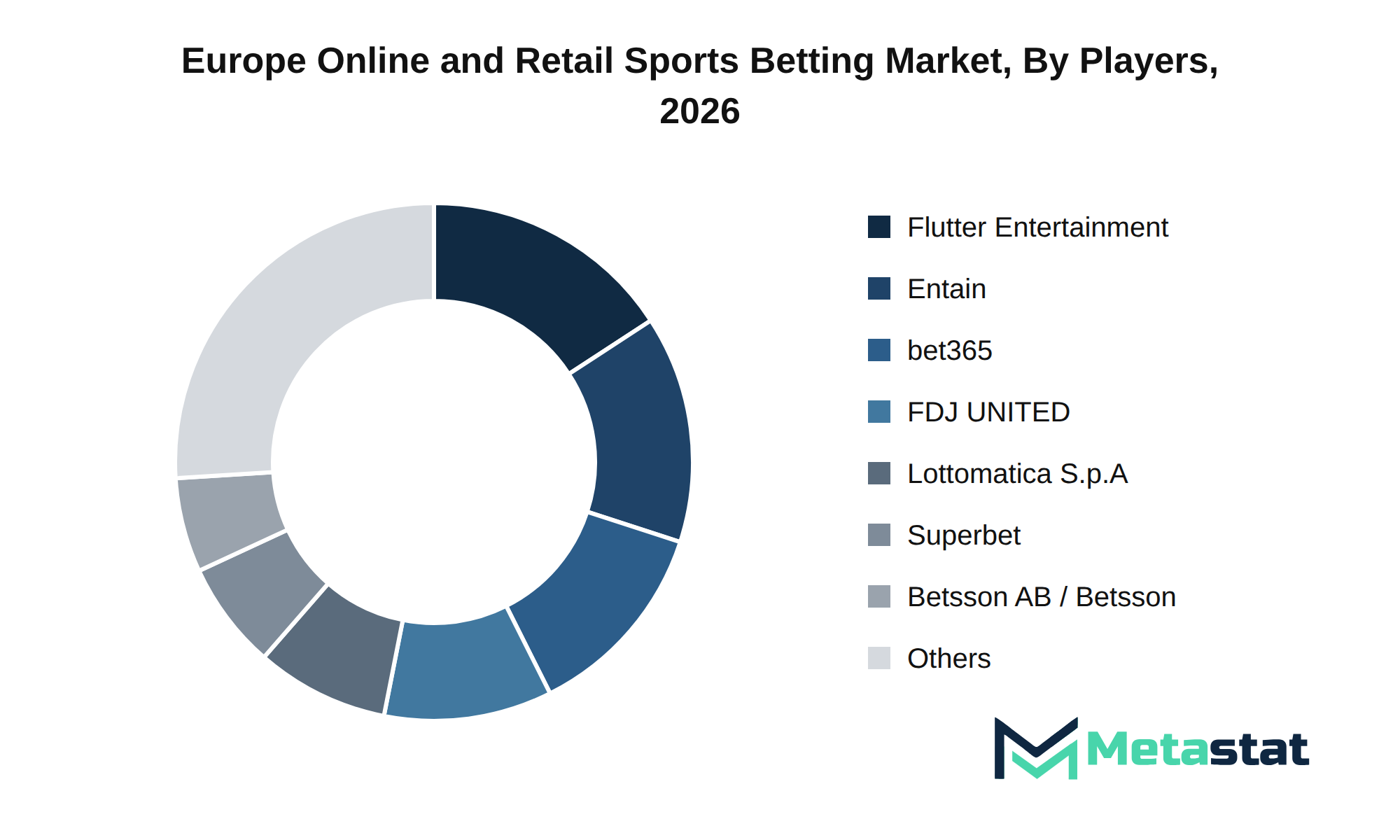
The Europe Online and Retail Sports Betting market features a dynamic competitive landscape driven by mergers and acquisitions, strategic consolidation, and industry restructuring. Companies including Flutter Entertainment plc, Entain plc, and bet365 Group actively pursue growth through strategic alliances and joint ventures, enhancing their presence across various regions. This behavior influences market dynamics, enabling firms to capitalize on emerging opportunities and increase market share.
Pricing architectures within the market reflect diverse commercial models that address customer preferences while maintaining competitive advantages. Lottomatica Group S.p.A. and Superbet Group focus on product differentiation, integrating proprietary technology to create unique betting experiences. This emphasis on technology creates a significant barrier to entry for new entrants, thereby reducing the threat of startup disruption.
Customer retention strategies play an important role in sustaining brand equity. Companies like FDJ UNITED and Kaizen Gaming implement effective loyalty programs to enhance engagement and increase switching costs for consumers. This approach reinforces their positions in the market, establishing long-term relationships with their customer bases.
Looking ahead, the Europe Online and Retail Sports Betting market is expected to experience shifts influenced by ongoing innovations and competitive dynamics. Strategic growth vectors are anticipated to emerge, enabling established players to maintain their leadership while navigating the evolving landscape.
Market size is forecast to rise from USD 49.8 billion in 2025 to over USD 119.1 billion by 2033. The base case reflects a compound annual growth rate (CAGR) of 11.5%. Various macroeconomic factors impact growth trajectories, influencing downstream demand and shaping industry maturation. Economic cycles, including fluctuating consumer spending and disposable income levels, drive shifts in betting patterns, particularly in the Europe Online and Retail Sports Betting market.
Strategic capital allocation becomes essential, focusing on infrastructure commitments and capital expenditure investments to support market expansion. Emerging technologies play a significant role in reshaping customer experiences, improving engagement through innovative platforms and streamlined processes. Regulatory evolution and compliance milestones define operational parameters, influencing investment decisions and player participation in the market.
Geopolitical realignments and evolving trade corridors present challenges and opportunities, impacting supply chains and market accessibility. Strategic imperatives for industry stakeholders include identifying unmet enterprise needs, pursuing high-growth pockets, and adapting to structural consumption shifts. Investment in research and development enhances competitive positioning, facilitating the commercialization of next-generation technologies and offering new betting products.
Overall, the Europe Online and Retail Sports Betting market is expected to experience growth, driven by a combination of economic trends, regulatory frameworks, and technological advancements. Stakeholders focus on leveraging these dynamics to capture emerging white-space opportunities while navigating the evolving market.
The report strategically identifies and profiles the key market players and analyses their core competencies in each sub-segment of the Online and Retail Sports Betting market.
Report Attributes | Details |
Study Period | 2021-2033 |
Base Year | 2025 |
Estimated Year | 2026 |
Forecast Period | 2026-2033 |
Historical Period | 2021-2025 |
Growth Rate | CAGR 11.5% from 2026 to 2033 |
Revenue Unit | USD billion |
Segmentation | By Betting Channel, Sport Type, Betting Timing, Country, and Region |
Find answers to common questions about this report
The Online and Retail Sports Betting market size in Europe was valued at USD 49.8 billion in 2025.
The Online and Retail Sports Betting market is projected to grow at a CAGR of 11.5% during the forecast period from 2026 to 2033.
Online Sports Betting leads the Europe Online and Retail Sports Betting market, with a projected value of USD 90.5 billion by 2033, compared to Retail Sports Betting, which is expected to reach USD 28.6 billion in the same year.
Key drivers for the Europe Online and Retail Sports Betting market include favorable capital investment environments, increased consumer acceptance of online betting, and demographic shifts favoring diverse betting options. The growing interest in digital transformation and advancements in technology further enhance market accessibility and user engagement, supporting overall market expansion.
Regulatory tightening and compliance hurdles significantly restrain growth in the Europe Online and Retail Sports Betting market. Increasingly stringent regulations require substantial investments in compliance systems, creating financial strain on operators and limiting market access for new entrants. macroeconomic headwinds, including inflation and rising operational costs, further complicate the landscape.
Favorable capital investment environments, driven by economic indicators including GDP growth and interest rates, enhance product adoption in the Europe Online and Retail Sports Betting market. The growing interest in digital transformation and the increasing acceptance of online betting among younger demographics further stimulate demand, encouraging operators to invest in innovative technologies and improve customer experiences.
The Online and Retail Sports Betting market is estimated to reach a valuation of USD 119.1 billion by 2033.
Key players in the Europe Online and Retail Sports Betting market include Flutter Entertainment plc, Entain plc, bet365 Group, FDJ UNITED, Lottomatica Group S.p.A., Betsson AB / Betsson Group, and Fortuna Entertainment Group a.s.
Online sports betting is expected to grow at a compound annual growth rate (CAGR) of 13.3 percent from USD 37.8 billion in 2026 to USD 90.5 billion by 2033.
Significant participation in the Europe Online and Retail Sports Betting market comes from countries including the United Kingdom, Germany, and France, where sports engagement and betting activities are prominent.
The analysts below cover Banking & Finance research at Metastat Insights.
LEAD ANALYST
Utkarsh Khirodkar is a Lead Market Research Analyst at MetaStat Insight, specializing in market intelligence, technology sector assessments, and competitive strategy.

PRINCIPAL CONSULTANT - ENTERPRISE AI & EMERGING TECHNOLOGIES
Banking & Finance · Electronics and Semiconductor · Energy and Power · Healthcare IT · Information & Technology · Professional Services
Vijay Gunti is a Principal Consultant at MetaStat Insight, bringing over two decades of experience across enterprise digital transformation, technology strategy, and intelligent systems.
Decarbonizing industrial thermal processes hinges on refrigerant regulations and compressor efficiency limits. Metastat Insights delivered a thorough market analysis that evaluated natural refrigerants like CO2 and hydrocarbons against synthetic low-GWP alternatives. The breakdown of utility incentives and grid capacity constraints across key European manufacturing hubs offered valuable perspective. The follow-up conversation with their sector analysts addressed our specific questions on mechanical vapor recompression systems efficiently.
Assessing 200mm wafer transition schedules and substrate supply bottlenecks requires precise technical intelligence. MetaStat Insight supplied an actionable breakdown comparing planar and trench MOSFET architectures across automotive and industrial drive markets. The regional capacity estimates for Asia-Pacific foundries helped clarify lead-time uncertainties during our strategic planning session. When we needed additional clarification on high-purity raw material sourcing, their analyst team responded with helpful context within twenty-four hours.
Tracking maintenance cycle demand for secondary flight display units and terrain collision avoidance systems across regional jet fleets involves complex aftermarket dynamics. MetaStat Insight provided practical analysis separating airline retrofit programs from OEM forward-fit production schedules in North America and Southeast Asia. The supplier matrix highlighted component obsolescence timelines without resorting to vague generalizations. The dataset served as a dependable reference during our annual program review meetings.
Explore related market intelligence reports worth reading alongside this one.