
LEAD ANALYST
Utkarsh Khirodkar is a Lead Market Research Analyst at MetaStat Insight, specializing in market intelligence, technology sector assessments, and competitive strategy.

Global Fiber Reinforced Polymer Rebar Market Size, Share, By Product Type (Glass Fiber Reinforced Polymer (GFRP) Rebar, Carbon Fiber Reinforced Polymer (CFRP) Rebar, and Aramid Fiber Reinforced Polymer (AFRP) Rebar), By Resin Type (Vinyl Ester Resin, Epoxy Resin, and Polyester Resin), By Bar Size (Less Than 10 mm Diameter, 10 mm to 20 mm Diameter, and More Than 20 mm Diameter), By End-User Industry (Construction, Infrastructure, Marine, and Other Industrial Applications), Industry Analysis, Growth, Trends, and Forecast, 2026-2033
Report ID
MSI-4994
Published
August, 2026
Pages
287 Pages
Format
Historical
Base year
Forecast
Forecast period
Report Details
Choose Your License
Global Fiber Reinforced Polymer Rebar Market
The global Fiber Reinforced Polymer Rebar market was valued at USD 619.4 million in 2025 and is projected to reach USD 1,578.5 million by 2033, growing at a CAGR of 12.4% over the forecast period.
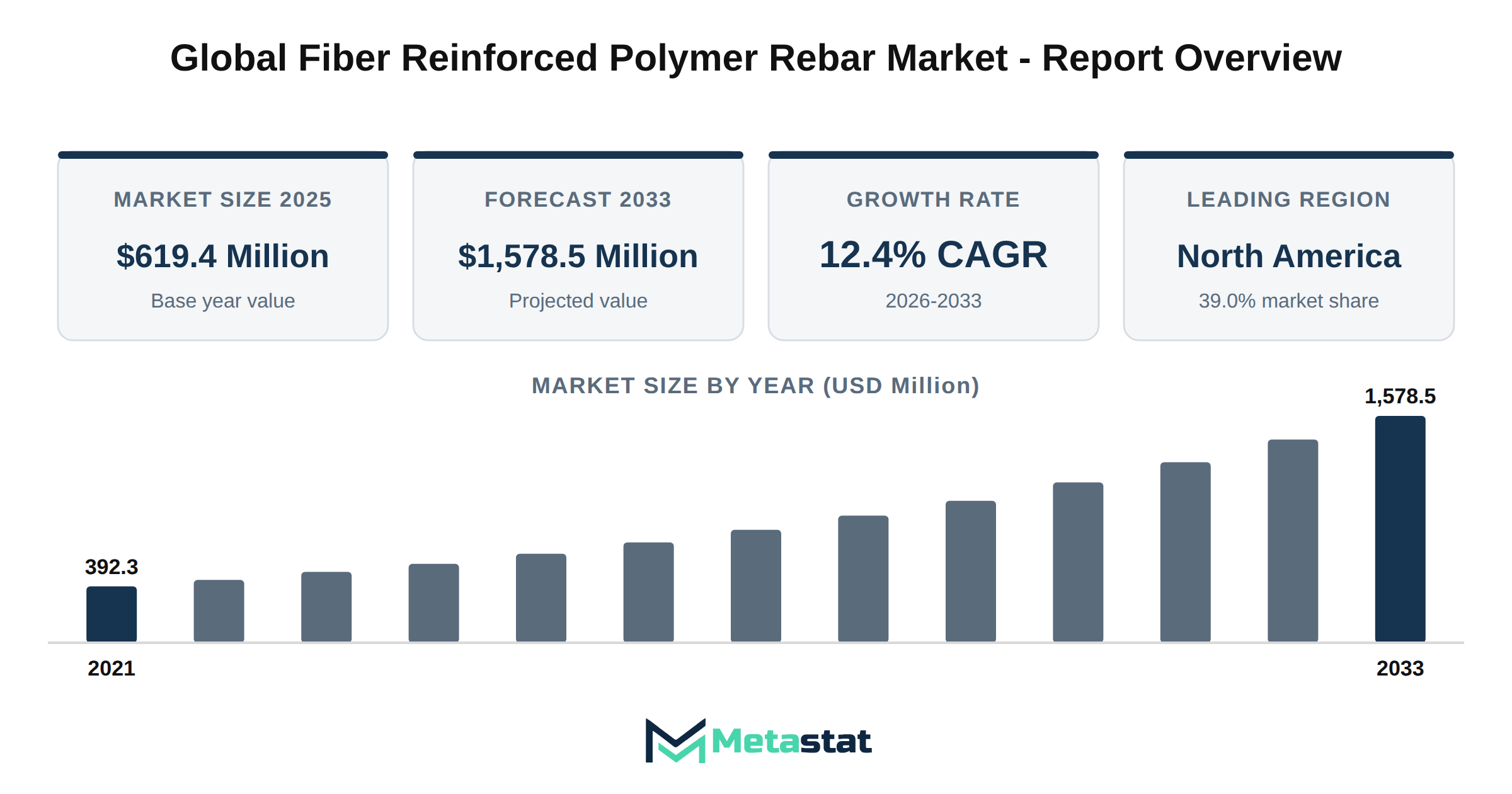
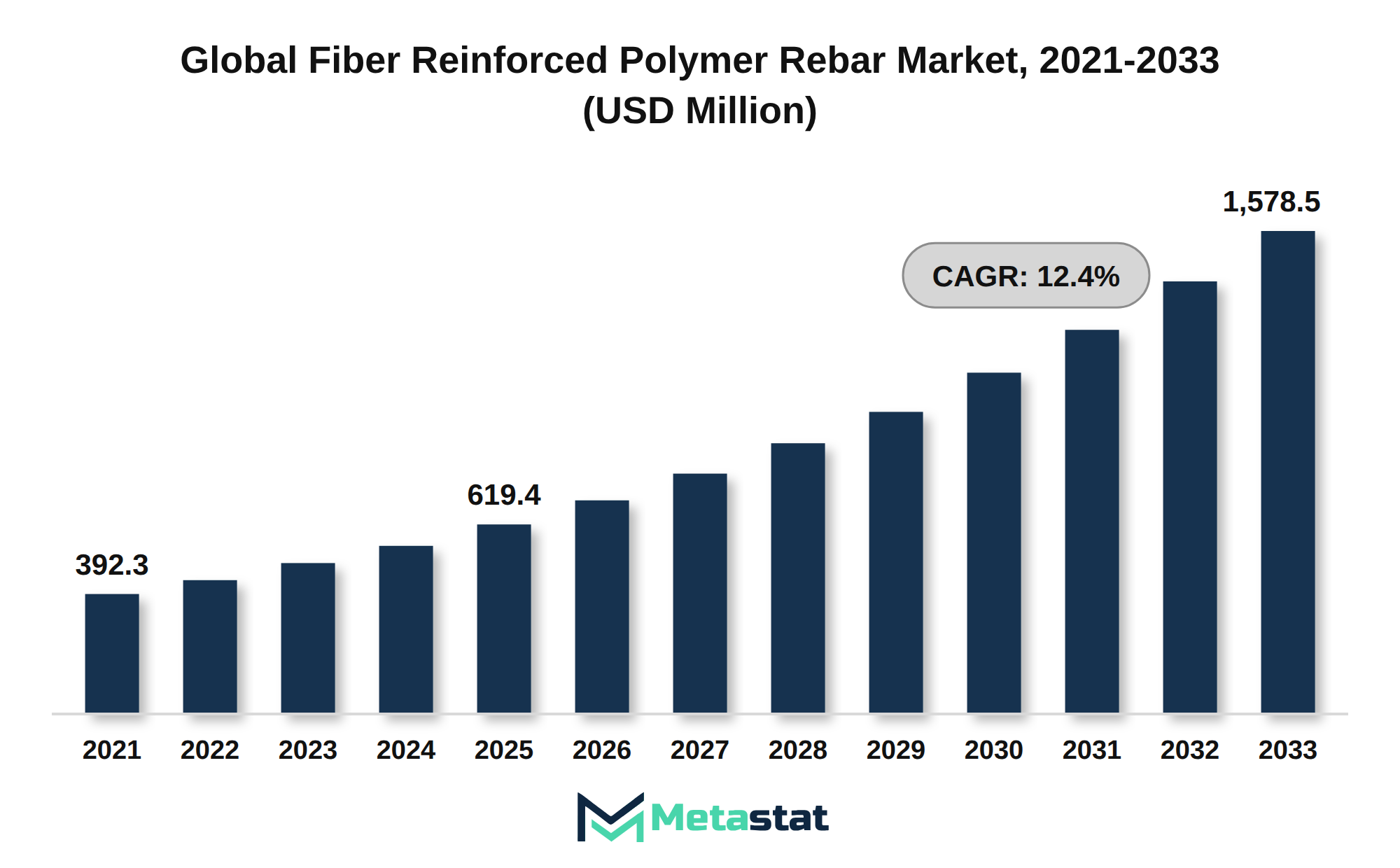
The Fiber Reinforced Polymer Rebar market reached a value of USD 619.4 million in 2025, with a compound annual growth rate (CAGR) of 12.4% projected from 2026 to 2033. By the end of the forecast period in 2033, the market is expected to achieve a value of USD 1,578.5 million. Historical growth data indicates an increase from USD 392.3 million in 2021 to USD 549.3 million in 2024, reflecting strong market momentum.
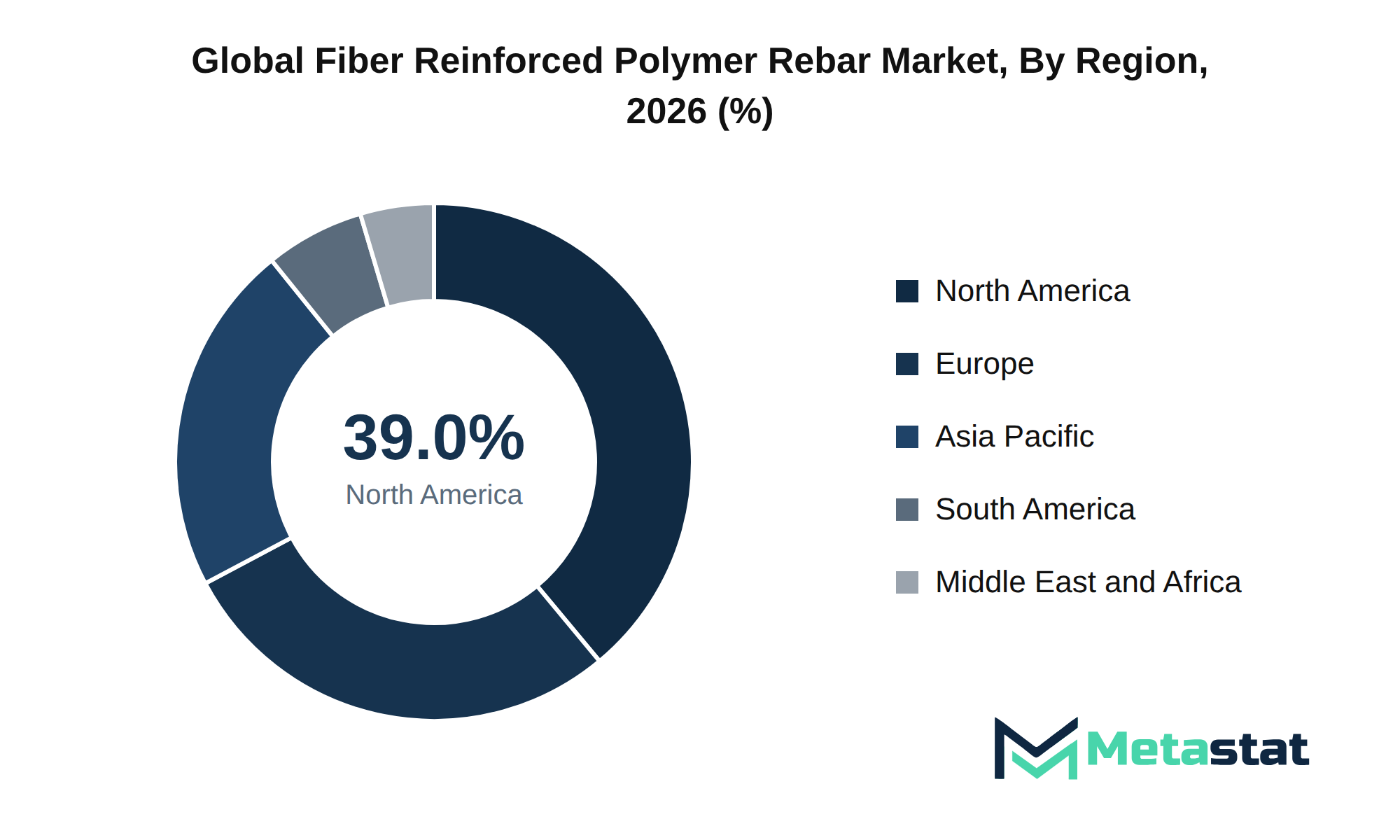
Regional distribution of the market shows North America commanding the largest share at 39%, followed by Europe at 28.3% and Asia Pacific at 22%. South America and the Middle East and Africa contribute smaller shares of 6.2% and 4.6%, respectively. This regional landscape influences competition, investment opportunities, and strategic planning for stakeholders within the Fiber Reinforced Polymer Rebar market.
Product segmentation highlights Glass Fiber Reinforced Polymer (GFRP) Rebar because a prominent category, with a projected growth from USD 449.1 million in 2026 to USD 976.8 million by 2033, achieving a CAGR of 11.7%. Carbon Fiber Reinforced Polymer (CFRP) Rebar follows closely, expected to reach USD 435.3 million by 2033 with a CAGR of 13.6%. Aramid Fiber Reinforced Polymer (AFRP) Rebar, while smaller in scale, demonstrates growth potential because well.
The market operates within a complex ecosystem influenced by regulatory compliance, supply chain dynamics, and macroeconomic factors. Investments in infrastructure and innovation are critical drivers, enhancing the competitive landscape. Stakeholders navigate these dynamics to optimize their market position and capitalize on emerging opportunities.
The Fiber Reinforced Polymer Rebar market experiences significant transformation driven by innovation and sustainability efforts. Companies invest in research and development to enhance product capabilities, targeting improved performance characteristics and environmental benefits. The pursuit of next-generation materials, including advanced composites, aligns with growing demand for sustainable construction solutions. This drive for innovation influences market dynamics, leading to increased competition among manufacturers.
Regulatory compliance and standards play a critical role in shaping the market landscape. Adherence to safety and environmental regulations ensures product integrity and consumer trust. Geopolitical factors introduce complexities that impact sourcing and supply chains, emphasizing the need for strategic planning among market participants. Companies navigate these challenges while pursuing growth opportunities across various end-user industries.
The supply chain landscape remains a focal point for market players. Efficient logistics architecture enhances the distribution of products, ensuring timely delivery to construction sites. Sourcing strategies evolve to incorporate sustainable practices, facilitating a circular economy approach that reduces waste and promotes recycling. This shift aligns with end-users increasingly prioritizing sustainability in their procurement processes.
Market fragmentation presents both challenges and opportunities. A diverse range of manufacturers contributes to competitive pricing and innovation. However, consolidation trends emerge owing to companies seeking to enhance market positioning through mergers and acquisitions. These dynamics reshape the competitive landscape, influencing capital allocation and investment strategies across the sector. The ongoing changes in the market structure will likely drive further evolution in competitive practices.
Macroeconomic headwinds, including inflationary pressures and currency volatility, influence procurement decisions and cost structures. Companies adjust pricing strategies to mitigate the impact of these economic factors while maintaining competitiveness. The future strategic outlook for the Fiber Reinforced Polymer Rebar market remains optimistic, driven by ongoing infrastructure investments and a commitment to advancing sustainable practices.
The Fiber Reinforced Polymer Rebar market benefits from favorable capital investment environments, characterized by increasing GDP growth and enhanced public-private spending power. These conditions support various construction and infrastructure projects, which require advanced materials for durability and performance. A robust economy encourages venture funding, facilitating innovation and expansion within the sector.
Investments in infrastructure development create significant demand for Fiber Reinforced Polymer Rebar, driven by stakeholders seeking to integrate sustainable and cost-effective solutions into their projects. This increased focus on material efficiency and longevity in construction leads to greater adoption of Fiber Reinforced Polymer Rebar, aligning with market trends prioritizing sustainability and resource stewardship.
A competitive landscape emerges because companies strive to utilize the financial environment for technological integration and operational productivity enhancements. These dynamics position the Fiber Reinforced Polymer Rebar market for substantial growth, resulting in increased demand and revenue opportunities for suppliers and manufacturers.
The Fiber Reinforced Polymer Rebar market experiences considerable acceleration driven by the rising emphasis on digital transformation across various industries. Companies increasingly adopt advanced technologies including automation, artificial intelligence, and software solutions, which enhance operational efficiency and streamline processes. This shift enables manufacturers to optimize production capabilities while maintaining cost-effectiveness, positioning them favorably in a competitive landscape.
Investment in digital transformation initiatives supports improved data management and analysis within the market. Enhanced analytics capabilities assist companies in making informed decisions regarding product development and customer engagement. The integration of digital tools facilitates quicker responses to market demands, contributing to overall market agility. Consequently, stakeholders experience increased productivity and profitability, driving sustained growth in the Fiber Reinforced Polymer Rebar market.
The ongoing digitization of legacy processes allows organizations to modernize operations, leading to reduced overhead costs and enhanced resource allocation. This trend aligns with broader macroeconomic factors that favor technological integration, placing companies at the forefront of innovation and market responsiveness. The emphasis on digital transformation significantly influences competitive dynamics within the market, creating an environment ripe for expansion and investment.
The Fiber Reinforced Polymer Rebar market faces significant challenges owing to regulatory compliance hurdles and macroeconomic headwinds. Stricter regulations related to construction materials impact adoption rates, resulting from manufacturers investing in compliance measures. This adds to operational costs, influencing pricing structures and limiting competitive dynamics within the market.
Macroeconomic factors, including inflationary pressures and capital stagnation, further complicate the environment. Rising costs of raw materials and labor reduce available capital for investment in new projects, hindering growth opportunities. The market experiences a slowdown in downstream demand, directly affecting revenue generation across various sectors.
Supply chain disruptions caused by geopolitical instability hamper the ability to source materials efficiently. These issues create delays in project timelines, resulting in increased operational overheads. Firms involved in the Fiber Reinforced Polymer Rebar market navigate these complexities to maintain profitability and market presence.
Infrastructure gaps pose another challenge, particularly in emerging regions where adequate facilities for installation and support are lacking. Limited connectivity and deployment bottlenecks create barriers to entry for new players. This fragmentation in the market inhibits growth potential, especially in areas that require urgent infrastructure development.
The combination of these restraints necessitates strategic planning and adaptability among market participants. While stakeholders address these challenges, maintaining competitiveness will rely on innovation and effective resource management.
The Fiber Reinforced Polymer Rebar market faces significant disruptions due to geopolitical tensions affecting supply chain stability. Trade deficits and tariff frictions hinder the smooth flow of materials and components essential for production. Consequently, manufacturers experience increased operational costs and delays in sourcing key inputs, impacting overall market growth.
Technological disruptions arising from industry shifts complicate research and development integrations. Manufacturers struggle to synchronize advanced technologies with existing production systems, leading to interoperability challenges. This situation results in higher compliance overheads and evolving legal liabilities, placing additional pressure on market participants.
Pricing compression exacerbates margin pressures within the Fiber Reinforced Polymer Rebar market. Rising input cost structures, influenced by feedstock volatility, necessitate cost-cutting measures that affect product quality and innovation. In this competitive environment, retaining skilled talent proves challenging, complicating operational efficiency.
Environmental sustainability demands and decarbonization mandates create further complexities. Addressing environmental lifecycle footprints leads to increased costs and implementation bottlenecks. Market participants are compelled to invest in more sustainable practices, often without the immediate financial return to justify such expenditures.
Infrastructure gaps and retrofitting barriers contribute to delays in project timelines. The market encounters challenges in scaling up effective solutions, impacting overall adoption rates. While demand for Fiber Reinforced Polymer Rebar continues to rise, addressing these geopolitical and operational challenges remains crucial for long-term success in the market.
The Fiber Reinforced Polymer Rebar market expands significantly due to emerging regional demands driven by infrastructure modernization and urbanization trends. Regions including North America and Asia Pacific exhibit heightened investments in construction and infrastructure projects, which increase the need for advanced materials. These materials offer benefits including corrosion resistance and lightweight properties, making them favorable for developers seeking durable solutions.
Technological disruptions enable the market to adapt to evolving customer preferences and project requirements. Innovations in production processes and material formulations enhance product performance and reduce costs, allowing manufacturers to offer competitive solutions. The integration of digital procurement shifts facilitates streamlined purchasing processes, enhancing the accessibility of Fiber Reinforced Polymer Rebar products across various sectors. This transformation aligns with the growing focus on sustainability imperatives, driven by construction firms seeking eco-friendly materials that align with environmental, social, and governance (ESG) objectives.
The geographic expansion of suppliers and manufacturers creates a diverse marketplace, enabling stakeholders to capture opportunities in less saturated regions. Strategic consolidation and cross-industry mergers enhance resource sharing and knowledge transfer, positioning companies to meet specific market demands more effectively. Downstream market diversification into niche applications, including marine and infrastructure projects, further increases growth potential.
The Fiber Reinforced Polymer Rebar market benefits from a confluence of regional demands, technological advancements, and strategic alignments. Industry players that leverage these factors enhance their competitive positioning while contributing to the overall growth trajectory of the market.
The Global Fiber Reinforced Polymer Rebar market is segmented based on Product Type, Resin Type, Bar Size, and End-User Industry.
Valued at USD 449.1 million in 2026, the Glass Fiber Reinforced Polymer (GFRP) Rebar segment is projected to reach USD 976.8 million by 2033, achieving a CAGR of 11.7% during the forecast period. Several factors contribute to this growth trajectory, including increasing adoption in construction and infrastructure projects. Enhanced durability and corrosion resistance attributes of GFRP rebar appeal to end-users seeking sustainable solutions in modern applications.
Technological maturation plays a critical role in promoting the segment's expansion. Innovations in manufacturing processes and material formulations lead to improved performance characteristics, aligning with industry demands for higher strength and lighter weights. The market's evolution reflects a shift toward next-generation upgrades, where advancements in epoxy and vinyl ester resin applications further enhance product capabilities.
End-use dynamics show a pronounced rise in GFRP rebar utilization across various sectors, particularly in marine and industrial applications. Regulatory compliance standards advocating for sustainable construction materials support increased consumption. The segment's cost structures are influenced by pricing volatility in raw materials, impacting profit margins across the supply chain.
Strategic opportunity windows emerge for players focusing on material innovation and quality certifications. Heightened demand for GFRP rebar in infrastructure projects indicates growing market potential, creating competitive positioning for manufacturers. The Fiber Reinforced Polymer Rebar market reflects a positive investment outlook, with ongoing capital investments aimed at enhancing production capabilities and expanding market reach.
In the Fiber Reinforced Polymer Rebar market, Carbon Fiber Reinforced Polymer (CFRP) Rebar demonstrates strong potential for growth, estimated to reach USD 435.3 million by 2033, at a CAGR of 13.6% during the forecast period. Increased adoption stems from the superior strength-to-weight ratio of CFRP compared to traditional materials, which appeals to sectors focusing on lightweight and durable construction solutions. Demand from the construction and infrastructure sectors drives the segment's expansion, particularly in high-performance applications where corrosion resistance and reduced maintenance costs are essential.
Technological maturation has led to advancements in CFRP manufacturing processes, enhancing product performance and driving down production costs. This evolution facilitates broader application across diverse industries, including marine and other industrial sectors. Regulatory compliance standards promoting robust and sustainable building practices support the adoption of CFRP solutions, reinforcing its position in the market.
The segment's pricing dynamics reflect the specialized nature of CFRP materials, balancing production costs with the premium attributes offered. Increasing competition among suppliers influences pricing strategies, leading to more competitive offerings in the market. While demand continues to rise, investment in research and development projects targeting next-generation CFRP solutions will likely strengthen the segment's growth trajectory.
Overall, the Carbon Fiber Reinforced Polymer (CFRP) Rebar segment positions itself because a key player within the Fiber Reinforced Polymer Rebar market, driven by robust demand, technological advancements, and evolving end-use dynamics.
Growth in the Aramid Fiber Reinforced Polymer (AFRP) Rebar segment reflects increasing demand for lightweight, high-strength materials in construction and infrastructure projects. The segment's expansion is fueled by advancements in production technologies and the rising adoption of AFRP rebar in various applications, including bridges, marine structures, and industrial facilities. Consequently, these factors drive the segment toward a projected value of USD 166.4 million by 2033.
The adoption of AFRP rebar aligns with the need for materials that offer resistance to corrosion and high tensile strength. These characteristics make AFRP rebar particularly appealing in regions with harsh environmental conditions. Various end-user industries are shifting toward these materials to enhance durability and reduce maintenance costs, further supporting segment growth. The market experiences significant interest from construction firms committed to optimizing structural performance while meeting regulatory compliance standards.
Investment in research and development serves because a catalyst for product evolution within the segment. Ongoing innovations in manufacturing processes enhance performance and expand the potential applications of AFRP rebar. Increased collaboration between suppliers and end-user industries creates strategic opportunity windows for market players, encouraging capital investment in this growing segment of the Fiber Reinforced Polymer Rebar market.
In the Fiber Reinforced Polymer Rebar market, the Vinyl Ester Resin segment experiences growth driven by favorable mechanical properties, including high strength and corrosion resistance. Adoption of Vinyl Ester Resin in construction and infrastructure projects stems from its ability to withstand harsh environmental conditions, enhancing the durability of reinforced structures. Industries implementing this material realize reduced maintenance costs and extended service life for their projects.
Technological advancements support segment expansion through the development of new formulations that enhance performance characteristics. Continuous improvements in production techniques enable manufacturers to meet increasing demand for high-performance materials. End-user industries, particularly construction and marine applications, rely on this resin for superior bonding capabilities and resistance to chemical attacks.
Regulatory compliance standards push manufacturers to innovate, ensuring that products meet safety and performance requirements. This pressure, combined with a growing emphasis on sustainability, encourages investments in eco-friendly production processes and materials. Overall, the Vinyl Ester Resin segment within the Fiber Reinforced Polymer Rebar market presents strategic opportunities for companies seeking to strengthen their positions in this competitive environment.
Increasing demand for durable, lightweight materials in various construction and infrastructure projects drives adoption of epoxy resin within the Fiber Reinforced Polymer Rebar market. This resin type exhibits superior bonding characteristics and resistance to chemicals and corrosion, enhancing the longevity of structures. End-users across construction, marine, and industrial applications prioritize epoxy for projects requiring robust performance under harsh conditions.
Technological advancements contribute to the segment's evolution, with manufacturers investing in research and development to improve epoxy formulations. Innovations focus on enhancing thermal stability and optimizing the mechanical properties of the finished product. Adoption of epoxy resin aligns with industry trends towards sustainable materials, further increasing its appeal. Regulatory compliance with environmental standards influences procurement decisions, promoting the use of epoxy resin in projects targeting green certifications.
Market dynamics reflect consumption shifts towards higher-performance materials, with end-users increasingly recognizing the advantages of epoxy resin in terms of efficiency and overall project cost savings. Strategic opportunity windows exist for companies investing in supply chain resilience, ensuring raw material sourcing and production capabilities remain robust. Competition intensifies, and manufacturers address pricing volatility and margin pressures while maintaining product quality to secure a competitive position in the Fiber Reinforced Polymer Rebar market.
Demand for Polyester Resin in the Fiber Reinforced Polymer Rebar market experiences strong support from the construction and infrastructure sectors. Unique properties of polyester resin, including resistance to corrosion and chemical exposure, contribute to its attractiveness for various applications. This segment benefits from advancements in manufacturing technology, which enhance product performance and lower production costs, facilitating wider adoption.
Increased focus on sustainability drives innovation within the market, leading to the development of eco-friendly resin formulations. Regulatory compliance regarding environmental standards encourages industry players to explore high-performance alternatives. End-user industries prioritize materials that demonstrate enhanced durability and lower maintenance costs, positioning polyester resin because a preferred choice in construction projects.
Consumption shifts toward lightweight and high-strength materials influence the segment's dynamics. Emphasis on reducing the overall weight of construction materials aligns with the benefits offered by polyester resin, promoting its adoption in modern building practices. Strategic investments in infrastructure continue, positioning the segment for growth, with significant opportunities arising from emerging markets.
Demand for the Less Than 10 mm Diameter segment benefits from its application in projects requiring lightweight yet strong materials. This segment caters to niche markets where precise specifications for size and strength are crucial. Increased adoption in construction and infrastructure projects highlights the segment's significant contribution to meeting specific engineering requirements, reinforcing its market position.
Technological maturation supports the development of this segment, with advancements in manufacturing processes enhancing the performance characteristics of Fiber Reinforced Polymer Rebar. These improvements lead to higher quality products that fulfill stringent regulatory compliance standards, boosting market confidence and adoption rates among construction firms.
End-use dynamics shift towards using lightweight materials for various construction applications, positively impacting the overall market. Rising awareness about the benefits of using advanced materials drives increased consumption, particularly in smaller-scale projects where weight reduction is critical for structural integrity.
Strategic opportunity windows emerge through the potential for next-gen upgrades in material composition and strength, promoting product evolution within the segment. Increased investment in research and development contributes to innovation, ensuring that the market remains competitive and responsive to changing industry demands.
The Less Than 10 mm Diameter segment of the Fiber Reinforced Polymer Rebar market demonstrates strong growth potential driven by technological advancements, evolving end-use demands, and regulatory frameworks that support the adoption of lightweight materials in construction projects.
Demand for the 10 mm to 20 mm Diameter sub-segment in the Fiber Reinforced Polymer Rebar market stems from its applications in various construction and infrastructure projects. The emphasis on lightweight, corrosion-resistant materials influences significant adoption among builders focusing on durability and sustainability. This segment finds utility in both residential and commercial construction, with builders increasingly recognizing the advantages of using fiber reinforced polymer rebar over traditional steel alternatives.
Technological maturation influences the 10 mm to 20 mm Diameter segment. Enhanced production techniques and innovations in composite materials contribute to improved performance characteristics including tensile strength and flexibility. These advancements facilitate the introduction of next-generation products that better meet the demands of modern construction practices. Regulatory compliance standards emphasizing sustainability and environmental impact further drive the segment's growth.
Shifts in consumption patterns occur because rising awareness of the benefits of fiber reinforced polymer rebar influences purchasing decisions. End-user industries, particularly construction, prioritize materials that offer long-term benefits and lower maintenance costs. The strategic opportunity window for the 10 mm to 20 mm Diameter segment involves capturing market share through targeted marketing efforts focused on the advantages of using fiber reinforced polymer rebar in infrastructural investments.
Investments in research and development are expected to enhance the segment’s product evolution, aligning offerings with emerging industry needs. Supply chain resilience remains a priority, ensuring consistent access to high-quality raw materials. In a competitive environment, maintaining pricing stability addresses margin pressures while positioning suppliers favorably within the market.
Increasing demand for high-strength materials in construction applications drives interest in the More Than 20 mm Diameter segment of the Fiber Reinforced Polymer Rebar market. This segment supports various structural applications where load-bearing capacity is critical, particularly in large-scale infrastructure projects. Significant advancements in manufacturing processes enhance product quality and widen adoption across key sectors.
Technological maturation of Fiber Reinforced Polymer Rebar enables the development of next-generation products tailored for specialized applications. Innovations in material science lead to improved performance characteristics, allowing for greater design flexibility in construction projects. The evolving construction codes and regulations emphasize the importance of using high-performance materials, thereby reinforcing the market's relevance.
Cost structures are influenced by raw material sourcing and pricing volatility, presenting challenges for manufacturers. Strategic partnerships within the supply chain enhance resilience, ensuring consistent access to quality materials. Increased investment in infrastructure development enhances the attractiveness of this market segment, positioning it because a key player in the overall Fiber Reinforced Polymer Rebar market.
Shifts in consumption patterns among end-users focus on lightweight, durable solutions that deliver performance without compromising on safety. Regulatory compliance standards continue to shape product specifications, compelling manufacturers to adapt quickly. Opportunities arise from innovations that address environmental concerns, creating sustainable growth in the Fiber Reinforced Polymer Rebar market.
Demand for Fiber Reinforced Polymer Rebar in the construction sector arises from the need for robust, lightweight, and corrosion-resistant materials. The construction industry increasingly adopts these materials owing to their ability to enhance structural integrity while reducing overall weight, which translates to cost savings in transportation and installation.
Investment in infrastructure projects globally has significantly contributed to this demand. Governments and private entities prioritize sustainability and durability in construction practices, further driving the adoption of advanced materials like Fiber Reinforced Polymer Rebar. This shift aligns with broader trends towards eco-friendly building practices, where reducing carbon footprints and improving energy efficiency takes precedence.
Technological maturation within the market supports advancements in Fiber Reinforced Polymer Rebar, leading to enhanced performance characteristics. Continuous product evolution addresses the specific needs of the construction sector, ensuring compliance with stringent regulations and certifications. These improvements create a conducive environment for growth. Construction companies seek innovative solutions to meet their project requirements.
Consumption shifts towards high-performance materials reflect the construction industry's response to market demands for longevity and reduced maintenance costs. Regulatory compliance standards increasingly favor materials that contribute to the overall sustainability of building practices, positioning Fiber Reinforced Polymer Rebar because a preferred choice. This alignment with regulatory frameworks enhances market opportunities and encourages capital investment in the segment.
Supply chain resilience plays a critical role in the availability of raw materials necessary for Fiber Reinforced Polymer Rebar production. Strategic sourcing and partnerships with reliable suppliers mitigate risks associated with material shortages or price volatility. This stability supports consistent production levels and allows manufacturers to respond effectively to varying project demands in the construction sector.
Overall, the construction sector's dynamics indicate a promising trajectory for the Fiber Reinforced Polymer Rebar market. The combination of evolving technologies, regulatory alignment, and a focus on sustainable practices positions this segment for significant growth in the coming years.
Infrastructure development increasingly relies on solutions that enhance performance and longevity. Fiber Reinforced Polymer Rebar offers significant benefits in this area, particularly in terms of corrosion resistance and reduced weight. These advantages lead to lower maintenance requirements and extended service life for infrastructure projects, appealing to governmental and private sector stakeholders.
Technological maturation within the industry influences adoption rates. Increased awareness of the benefits of Fiber Reinforced Polymer Rebar prompts investment in research and development, leading to innovative applications in various infrastructure projects. This momentum supports a strong growth trajectory in the market.
Regulatory compliance standards emphasize sustainability and safety, driving demand for advanced materials like Fiber Reinforced Polymer Rebar. Stricter regulations surrounding construction materials push industry players to seek compliant and efficient alternatives, further enhancing market penetration.
Consumption shifts toward environmentally friendly and high-performance materials reflect changing consumer preferences. Infrastructure projects increasingly incorporate these materials, positioning Fiber Reinforced Polymer Rebar because a strategic choice owing to evolving market demands.
Strategic opportunity windows arise from the need for durable materials that withstand harsh environmental conditions. Infrastructure applications, particularly in coastal and industrial settings, benefit greatly from the unique properties of Fiber Reinforced Polymer Rebar, creating a favorable growth environment.
Growing interest in lightweight and corrosion-resistant materials drives the adoption of Fiber Reinforced Polymer Rebar in marine applications. Increasing offshore construction activities and stringent regulations regarding durability in marine environments support segment growth. The unique properties of fiber reinforced polymer rebar, including resistance to saltwater and reduced maintenance costs, make it a preferred choice for marine infrastructure projects, including docks, piers, and other coastal structures.
Technological advancements continue to enhance product performance, contributing to wider acceptance among end-users. Innovations in resin formulations and manufacturing processes enable improved strength-to-weight ratios, further expanding the market's competitive edge. The push for sustainable construction practices encourages the use of materials like fiber reinforced polymer rebar, which offer long-lasting performance while minimizing environmental impact.
Shifts in consumption patterns within the marine sector indicate a preference for high-performance building materials that offer reduced lifecycle costs. Regulatory compliance standards emphasizing sustainability and durability influence purchasing decisions. While marine construction projects increase globally, the Fiber Reinforced Polymer Rebar market is expected to benefit from this evolving landscape, aligning with the industry's pursuit of innovative and resilient construction solutions.
Demand within the Other Industrial Applications sub-segment of the Fiber Reinforced Polymer Rebar market stems from the need for innovative construction solutions across diverse industries. These applications leverage the lightweight and corrosion-resistant properties of fiber reinforced polymers, making them suitable for specialized projects including marine structures and industrial facilities. The emphasis on durability and performance in industrial settings drives the adoption of these materials, supporting growth in this segment.
Technological advancements enable the evolution of fiber reinforced polymer rebar, with manufacturers focusing on next-generation materials and production techniques. This trend opens strategic opportunities for firms looking to expand their offerings and address specific industrial needs. Regulatory compliance standards related to construction safety and environmental sustainability influence material selection, prompting industries to transition to fiber reinforced options for their projects.
Supply chain resilience plays a critical role in the viability of using fiber reinforced polymer rebar, particularly concerning raw material sourcing and logistics. Ensuring a reliable supply of high-quality materials mitigates risks associated with production delays and pricing volatility. Given the dynamic nature of the market, strategic investment in technology and infrastructure is essential for companies aiming to capitalize on emerging opportunities within the Other Industrial Applications segment.
Based on geography, the Global Fiber Reinforced Polymer Rebar market is divided into North America, Europe, Asia-Pacific, South America, Middle East, and Africa.
North America represents a significant portion of the Fiber Reinforced Polymer Rebar market, accounting for 39% of the global market share in 2025. This region is set to expand at a CAGR of 12.4% within the forecast period, reaching a market size of USD 583.1 million by the end of 2033.
Key demand drivers in North America include infrastructure modernization initiatives and a growing emphasis on sustainability in construction materials. The construction and infrastructure sectors increasingly adopt Fiber Reinforced Polymer Rebar for its superior performance characteristics, including lightweight properties and resistance to corrosion. These features align with the region's focus on enhancing structural integrity and longevity.
The market benefits from a mature environment characterized by established players including Owens Corning and TUF-BAR, which drive innovation and competitive dynamics. Local strengths in manufacturing capabilities and the presence of specialized suppliers enhance the region's competitiveness. Increasing investment in construction projects supports steady demand, particularly in urban development and transportation infrastructure.
Geographic regulatory frameworks and compliance mandates further influence market dynamics. Stringent building codes and environmental regulations promote the use of high-performance materials like Fiber Reinforced Polymer Rebar. Supply chain regionalization and nearshoring initiatives strengthen local sourcing, facilitating a responsive supply chain. Overall, these elements position North America because a key market for Fiber Reinforced Polymer Rebar, offering promising growth opportunities through 2033.
Europe accounts for 28.3% of the Fiber Reinforced Polymer Rebar market in 2025. Key countries driving this market include Germany, France, the UK, Italy, Spain, Russia, and the Rest of Europe.
The demand for Fiber Reinforced Polymer Rebar in Europe closely relates to infrastructure modernization initiatives, particularly in construction and civil engineering. Increasing investments in sustainable building practices lead to rising adoption of lightweight and durable materials that exhibit superior performance compared to traditional alternatives.
Economic factors, including government spending on infrastructure projects, further stimulate growth. Regional players benefit from favorable conditions, including regulatory frameworks that endorse the use of advanced composite materials. The presence of established domestic manufacturers alongside new entrants creates competitive dynamics, allowing for innovation and enhanced product offerings.
Emerging trends in localized manufacturing align with the region's focus on sustainability, attracting foreign direct investment (FDI) flows. Continued investment in construction and infrastructure underpins revenue growth, expanding opportunities for Fiber Reinforced Polymer Rebar adoption within the market.
The Asia Pacific region shows significant potential in the Fiber Reinforced Polymer Rebar market, accounting for 22.0% of the global share in 2025. Countries including China, Japan, India, South Korea, and Australia drive this growth through expanding infrastructure projects and construction activities. Local manufacturers increasingly focus on lightweight, corrosion-resistant solutions that align with sustainability goals, enhancing their competitive position.
Infrastructure modernization remains a critical factor in the region. Governments prioritize investments in transportation networks, energy projects, and urban development, fueling demand for advanced construction materials. Emerging market front-runners, China and India, lead in adopting innovative technologies, while South Korea and Japan emphasize high-quality standards in construction practices, reinforcing long-term demand for Fiber Reinforced Polymer Rebar products.
Localized manufacturing densities enhance supply chain efficiency, contributing to competitive pricing and availability. Geopolitical factors influence trade corridors and regulatory frameworks, impacting market dynamics. Domestic market participants, including established firms, position themselves strategically to capitalize on these developments, driving vendor consolidation trends and increasing competition.
Regional resource availability and energy grid resiliency support the growing interest in Fiber Reinforced Polymer Rebar products. Compliance with local mandates drives procurement practices, ensuring alignment with sustainability initiatives. Continued investment in infrastructure projects is anticipated to position the region for growth in the Fiber Reinforced Polymer Rebar market, offering numerous opportunities for stakeholders.
South America represents a developing segment within the Fiber Reinforced Polymer Rebar market. Brazil and Argentina emerge because key players, supported by increasing investments in infrastructure projects. Modernization efforts in urban areas create demand for innovative construction materials that offer durability and resistance to environmental factors.
The region's existing infrastructure shows significant potential for enhancement through the adoption of Fiber Reinforced Polymer Rebar, which provides advantages over traditional materials. Local manufacturing initiatives contribute to the market's growth by addressing demand for customized solutions tailored to regional construction needs.
Supply chain regionalization facilitates easier access to these advanced materials, allowing for more efficient procurement processes. The market is expected to experience incremental growth driven by ongoing investment in construction and infrastructure, supported by domestic market participants focused on expanding their influence in South America.
The Fiber Reinforced Polymer Rebar market in the Middle East and Africa faces unique challenges and opportunities. The region holds a share of 4.6% of the global market in 2025, reflecting a growing interest in advanced construction materials driven by ongoing infrastructure projects. Countries including Saudi Arabia and the UAE invest heavily in modernization efforts, creating demand for high-performance materials that enhance structural integrity and longevity.
Localized production initiatives support the market's growth, enabling better alignment with regional compliance mandates and cultural preferences in procurement practices. South Africa plays a significant role, focusing on sustainable construction practices and the adoption of innovative materials. The emphasis on renewable energy projects further stimulates demand for Fiber Reinforced Polymer Rebar, positioning the market for continued expansion within this dynamic region.
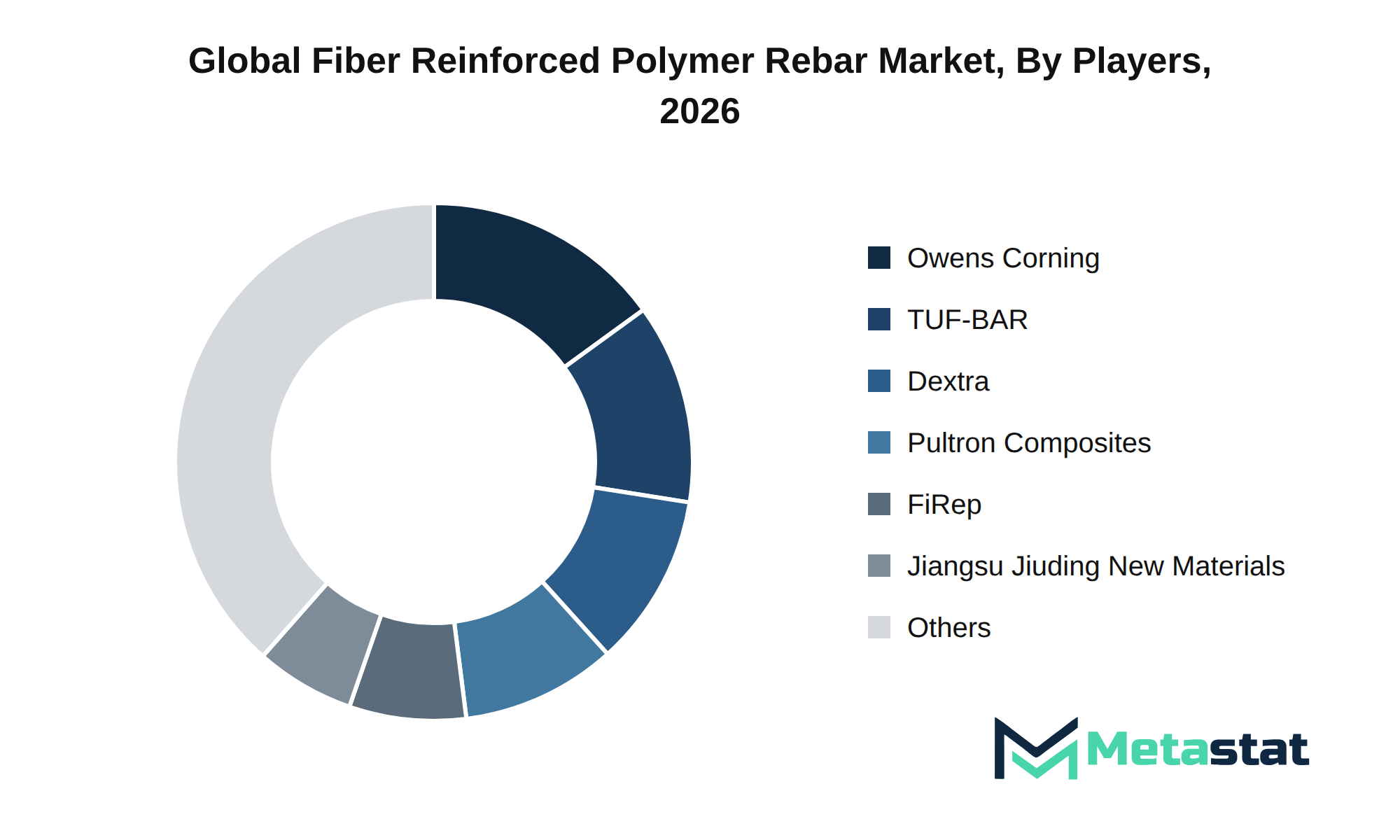
The competitive landscape of the Fiber Reinforced Polymer Rebar market reflects a diverse group of players engaging in various strategic behaviors. Companies including Owens Corning, TUF-BAR, and Dextra Group pursue product differentiation through innovative offerings tailored to specific applications. This approach enhances their competitive positioning and appeals to a broad customer base in sectors including construction and infrastructure.
Research and development efforts drive technological advancements within the market. Firms like Pultron Composites and Jiangsu Jiuding New Materials Co. Ltd focus on developing proprietary technologies and enhancing product properties, which strengthen their market presence. Strategic alliances and joint ventures among players increase collaboration, improve operational efficiencies, and expand market reach.
The threat of new entrants remains a consideration in the Fiber Reinforced Polymer Rebar market. Established companies leverage strong brand equity and intellectual property portfolios to maintain competitive advantages. Customer retention strategies and high switching costs contribute to the market's stability, allowing incumbents to secure their positions in a continually evolving environment.
Future competitive outlook hinges on companies adapting to emerging market trends and addressing potential disruptions. Firms like Schock Bauteile GmbH and Reliance Industries Ltd prioritize value chain integration and procurement leverage, positioning themselves to capitalize on growth opportunities while mitigating risks associated with market fluctuations. This adaptability will influence their ability to compete effectively in the market.
Market size is forecast to rise from USD 619.4 million in 2025 to over USD 1,578.5 million by 2033. The base case anticipates growth at a compound annual growth rate (CAGR) of 12.4%. The bullish scenario presents an accelerated adoption of Fiber Reinforced Polymer Rebar driven by increased investments in infrastructure and construction sectors. A bearish outlook highlights potential slowdowns resulting from economic fluctuations or supply chain disruptions that could impede growth.
Macroeconomic factors influence downstream demand dynamics, with the construction industry representing a significant driver for the Fiber Reinforced Polymer Rebar market. Ongoing structural shifts in consumption patterns, heightened by regulatory changes and environmental considerations, create opportunities for market participants. Companies prioritizing next-generation technology integration and R&D commercialization enhance their competitive position, aligning product offerings with evolving regulatory and compliance requirements.
Strategic capital allocation directives and infrastructure commitments shape the market landscape. A focus on emerging white-space opportunities and unmet enterprise needs guides firms towards high-growth pockets. Geopolitical realignments and evolving trade corridors present challenges and opportunities within the global supply chain, necessitating a proactive approach to adaptation and resilience.
The report strategically identifies and profiles the key market players and analyses their core competencies in each sub-segment of the Fiber Reinforced Polymer Rebar market.
|
Report Attributes |
Details |
|
Study Period |
2021-2033 |
|
Base Year |
2025 |
|
Estimated Year |
2026 |
|
Forecast Period |
2026-2033 |
|
Historical Period |
2021-2025 |
|
Growth Rate |
CAGR 12.4% from 2026 to 2033 |
|
Revenue Unit |
USD million |
|
Segmentation |
By Product Type, Resin Type, Bar Size, End-User Industry, and Region |
|
By Region |
North America (By Product Type, Resin Type, Bar Size, End-User Industry, and Country)
|
|
Europe (By Product Type, Resin Type, Bar Size, End-User Industry, and Country)
|
|
|
Asia Pacific (By Product Type, Resin Type, Bar Size, End-User Industry, and Country)
|
|
|
South America (By Product Type, Resin Type, Bar Size, End-User Industry, and Country)
|
|
|
Middle East and Africa (By Product Type, Resin Type, Bar Size, End-User Industry, and Country)
|
Find answers to common questions about this report
The Fiber Reinforced Polymer Rebar market size was valued at USD 619.4 million in 2025, according to the Metastat Insights study.
The Fiber Reinforced Polymer Rebar market is projected to grow at a CAGR of 12.4% during the forecast period from 2026 to 2033.
The North America Fiber Reinforced Polymer Rebar market size is estimated to reach USD 583.1 million by 2033.
The Glass Fiber Reinforced Polymer (GFRP) Rebar segment leads the Fiber Reinforced Polymer Rebar market with a projected value of USD 976.8 million by 2033, compared to the Carbon Fiber Reinforced Polymer (CFRP) Rebar segment, which is expected to reach USD 435.3 million in the same year.
Favorable capital investment environments, characterized by increasing GDP growth and enhanced public-private spending power, drive demand for Fiber Reinforced Polymer Rebar. Investments in infrastructure development and a focus on sustainability further support the adoption of advanced materials, positioning the market for substantial growth.
North America holds the dominant share of the Fiber Reinforced Polymer Rebar market, with a value of USD 583.1 million projected for 2033, representing 39 percent of the total market.
The Fiber Reinforced Polymer Rebar market faces significant challenges due to regulatory compliance hurdles, macroeconomic headwinds, and geopolitical tensions. Stricter regulations increase operational costs, while inflation and supply chain disruptions hinder growth opportunities and project timelines. Environmental sustainability demands further complicate market dynamics by increasing costs and creating implementation bottlenecks.
Favorable capital investment environments, characterized by increasing GDP growth and enhanced public-private spending power, support the adoption of Fiber Reinforced Polymer Rebar. Investments in infrastructure development create significant demand because stakeholders seek sustainable and cost-effective solutions, aligning with market trends prioritizing material efficiency and longevity.
The Fiber Reinforced Polymer Rebar market is estimated to reach a valuation of USD 1,578.5 million by 2033.
Key players operating in the Fiber Reinforced Polymer Rebar market include Owens Corning, TUF-BAR, Armastek USA, Dextra Group, Pultron Composites, and FiRep Inc.
The analysts below cover Chemicals and Materials research at Metastat Insights.
LEAD ANALYST
Utkarsh Khirodkar is a Lead Market Research Analyst at MetaStat Insight, specializing in market intelligence, technology sector assessments, and competitive strategy.

INDUSTRY CONSULTANT - CHEMICALS & ADVANCED MATERIALS
Chemicals and Materials · Machinery & Equipment · Packaging
Amit Gadhekar Consultant for Chemicals and Materials at MetaStat Insight, directing sector-specific intelligence, research, and strategic consulting across global chemical and processing markets.
Analyzing the transition from natural gas to green hydrogen in iron ore reduction requires realistic infrastructure timelines. Meta stat insight supplied a detailed regional assessment of DRI plant conversion costs and scrap metal availability in North America and Western Europe. Their report carefully examined pellet quality specs and electrical grid access constraints without making oversimplified market assumptions. The research material served as a practical reference during internal technology roadmap discussions.
Integrating zero-trust access controls across legacy electronic health record systems involves complex compliance overhead. Team produced an analysis that clearly separated identity governance and administration tools from privileged access management platforms. Their evaluation of HIPAA and GDPR compliance features across cloud native solutions gave our architecture group clear baseline criteria. The custom data request regarding biometric authentication adoption in hospital networks was returned promptly with clear documentation.
Evaluating calorific value requirements and air permit compliance across municipal waste facilities requires localized data. Metastat Insight structured their analysis around operational throughput capacity and feedstock composition variations in Latin America and Eastern Europe. Their competitive mapping of sorting equipment vendors helped clarify technology differences between optical separators and heavy media systems. The study provided an objective baseline during our capital expenditure reviews.
Explore related market intelligence reports worth reading alongside this one.